Summary
Table of Content

Renal Diet Protein Hydrolysates Market
Get a free sample of this report
Form submitted successfully!
Error submitting form. Please try again.
Thank you!
Your inquiry has been received. Our team will reach out to you with the required details via email. To ensure that you don't miss their response, kindly remember to check your spam folder as well!
Request Sectional Data
Thank you!
Your inquiry has been received. Our team will reach out to you with the required details via email. To ensure that you don't miss their response, kindly remember to check your spam folder as well!
Form submitted successfully!
Error submitting form. Please try again.
Renal Diet Protein Hydrolysates Market Size
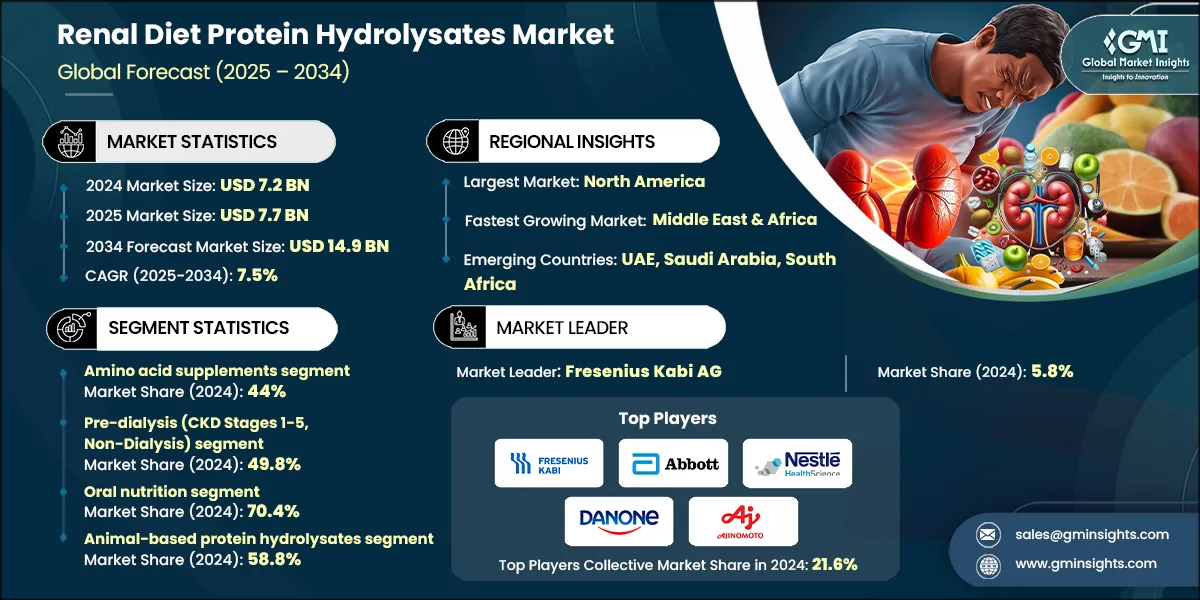
The global renal diet protein hydrolysates market was estimated at USD 7.2 billion in 2024. The market is expected to grow from USD 7.7 billion in 2025 to USD 14.9 billion in 2034, at a CAGR of 7.5% according to latest report published by Global Market Insights Inc.
Renal Diet Protein Hydrolysates Market Key Takeaways
Market Size & Growth
- 2024 Market Size: USD 7.2 Billion
- 2025 Market Size: USD 7.7 Billion
- 2034 Forecast Market Size: USD 14.9 Billion
- CAGR (2025–2034): 7.5%
Regional Dominance
- Largest Market: North America
- Fastest Growing Region: Middle East & Africa
Key Market Drivers
- High production costs & regulatory complexity.
- Limited clinical evidence for specific hydrolysates.
Challenges
- High production costs & regulatory complexity.
- Limited clinical evidence for specific hydrolysates.
Opportunity
- Personalized nutrition & precision medicine.
- Plant-based innovation & sustainability.
Key Players
- Market Leader: Fresenius Kabi AG led with over 5.8% market share in 2024.
- Leading Players: Top 5 players in this market include Fresenius Kabi AG, Abbott Laboratories, Nestlé Health Science, Danone Nutricia, Ajinomoto Co., which collectively held a market share of 21.6% in 2024.
Get Market Insights & Growth Opportunities
- The global market for renal diet protein hydrolysates has witnessed remarkable growth due to the rising numbers of cases of chronic kidney disease and an increasing awareness of specialized nutritional solutions. The systems of healthcare that consider protein management in kidney health have expanded the market enormously. This strong trend has been bolstered by demographic changes of aging whereby kidney diseases are becoming more prevalent.
- The clinical studies prove the therapeutic benefits of protein hydrolysates in the management of kidney disease by ensuring proper nutrition with less stress to the kidneys. Chronic kidney diseases affect a large portion of the global population, with a great number of such individuals needing dietary interventions on a more individualized basis. With growing focus areas on early detection and nutritional management, demand for these products will be ensured.
- Technological advancements in enzymatic hydrolysis have been improving production efficiency and product quality, hence making such solutions more accessible. Increasing healthcare spending and necessity for affordable approaches to slow disease progression are additional factors favoring the growth of the market. At present, developed regions lead in market value, while emerging economies are expected to be the fastest growing because of the increasing disease burden and the ever-expanding healthcare infrastructure.
To get key market trends
Renal Diet Protein Hydrolysates Market Trends
- Enzymatic hydrolysis is rapidly evolving in product quality, scalability, and cost-efficiency of renal protein hydrolysates. Modern processes such as ultrasound and high-pressure treatments promotes hydrolysis and bioactivity, while more optimized protease systems and continuous reactor technologies are addressing cost and consistency issues. Enzyme selection, together with process design, is less risky and faster with the introduction of AI and bioinformatics, thus allowing for precise formulations for clinical nutrition.
- Approach towards personalized nutrition is gaining ground in renal care as variability among patients regarding protein metabolism and speed of disease progression is better understood. Biomarker-based engagements and insights from gut microbiome researches are steering the way towards designing formulation targeted at the hydrolysate type with much improved outcomes and complications lessened. Digital health platforms along with real-time monitoring tools are facilitating intervention at an individualized level by merging clinical data with AI-generated recommendations to best dietary strategies in CKD management.
- Plant-based protein hydrolysates are quickly becoming the renal diet of choice due to clinical advantages and environmental benefits. These proteins lower phosphorus load, minimize the generation of uremic toxins, and help to lower dietary acid load in support of CKD. Advances in enzyme processing are enhancing digestibility and amino acid profiles, while considerations of sustainability and regulatory support are speeding up adoption.
Renal Diet Protein Hydrolysates Market Analysis
Learn more about the key segments shaping this market
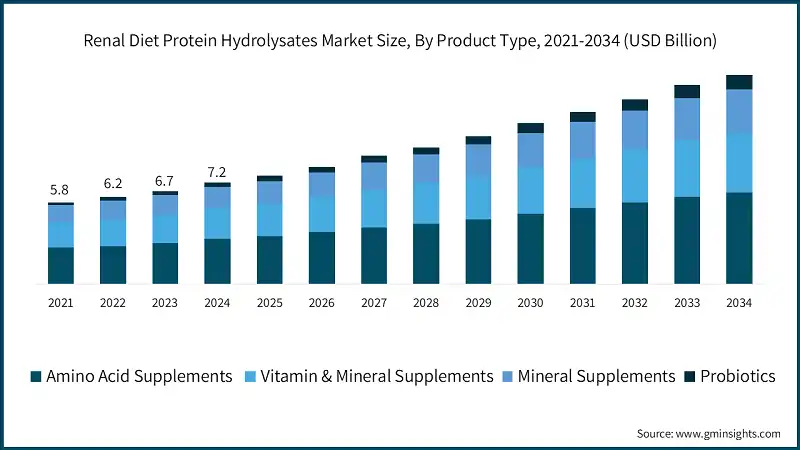
Based on product type, the market is segmented into amino acid supplements, vitamin & mineral supplements, mineral supplements, probiotics. The amino acid supplements dominated around 44% market share in 2024 and is expected to grow with a CAGR of 7.5% by 2034.
- Amino acid supplements dominate the renal diet protein hydrolysates market. Their importance lies in the exact tailoring of proteins required for chronic kidney disease patients to take in essential nutrients without the adverse effects brought about by intact proteins. When it comes to individualized amino acid supplementation, it has clinical justification, especially in patients on protein-restricted diets, and ongoing advances in formulation technologies should further improve bioavailability and targeted delivery.
- Probiotics have presently the smallest segment but are fast becoming the highest growing sector. The current kidney function research suggesting the influence of gut health and microbiome modulation in reducing toxin production strictly propels that fast. Increasing scientific evidence and overwhelming consumer interest with gut-kidney interactions translate to new opportunities for probiotic applications within renal nutrition.
- Vitamin and mineral supplements are growing rapidly owing to the awareness of micronutrient deficiencies in kidney disease management. The regulatory framework concerning micronutrient management also strengthens their placing in clinical practice.
Learn more about the key segments shaping this market
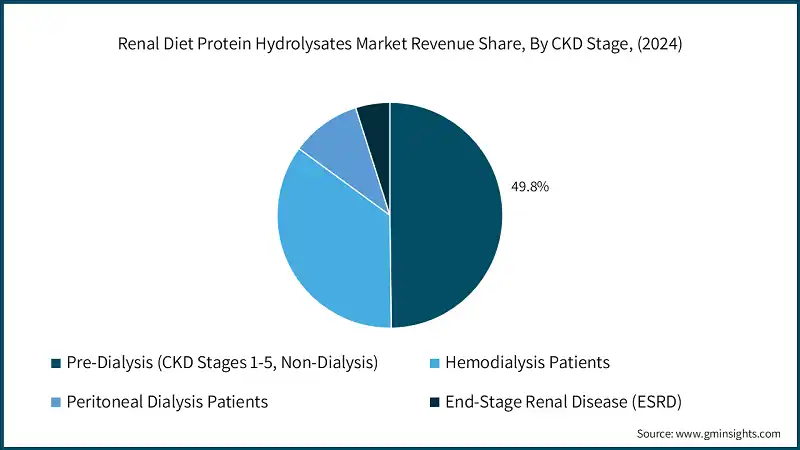
Based on CKD stage, the renal diet protein hydrolysates market is segmented into pre-dialysis (CKD Stages 1-5, Non-Dialysis), hemodialysis patients, peritoneal dialysis patients, end-stage renal disease (ESRD). Pre-dialysis (CKD Stages 1-5, Non-Dialysis) holds the largest market share of 49.8% in 2024 and is expected to grow at a CAGR of 7.4% during 2025 to 2034.
- The pre-dialysis chronic (CKD Stages 1-5, Non-Dialysis) kidney disease segment is the largest market, encompassing patients in the early to moderate stages are managed conservatively without dialysis. This segment's dominance is attributed to the large number of patients and the increasing emphasis on nutritional approaches for slowing disease progression. Clinical guidelines advise these patients to have controlled protein intake, creating an insatiable demand for specialized protein hydrolysate products.
- Hemodialysis is a growing market segment, given the protein needs of patients and the metabolic challenges posed by the dialysis treatment. The nutritional regimen of this group includes a higher protein intake with the intention of preventing protein-energy wasting, a very common state in the population. Despite being smaller, the rapid growth of peritoneal dialysis has sustained the growth momentum as home dialysis executes its way into widespread acceptance. Growth of this segment is aided by the demand for customized nutritional solutions due to ongoing protein losses in this mode of therapy. End-stage renal disease encompasses a smaller segment, yet it is of exceptionally high value, with extremely complex nutritional needs and associated with recurrent complications.
Based on administration mode, the renal diet protein hydrolysates market is segmented into oral nutrition, enteral nutrition, parenteral nutrition. The oral nutrition segment dominated with an approximate market share of 70.4% in 2024 and is expected to grow with the CAGR of 7.7% by 2034.
- Oral nutrition is the principal mode of delivery for protein hydrolysates in renal diets, mainly due to patient consent preferring easy and non-invasive means. With ease of administration, autonomy, and safety of handling, these products gain preference over enteral or parenteral alternatives on cost. A constant innovation in taste masking, formulation, and packaging is evidently improving taste and thus compliance. Clinical evidence favors oral supplementation as the best route in cases where gastrointestinal function is intact.
- The enteral nutrition segment is for patients who are unable to meet their nutritional requirements by means of oral diet, usually due to malnourishment or gastrointestinal impairment. This segment operates largely in the clinical field under standardized protocols, with practitioner’s familiar with their use.
- Parenteral nutrition is reserved for patients with non-function gastrointestinal tracts or those severely impaired in absorption. The segment is but tiny in volume in comparison with enteral ones but commands premium pricing due to the complexity of administration and formulation.
Based on protein source, the renal diet protein hydrolysates market is segmented into animal-based protein hydrolysates, plant-based protein hydrolysates. The animal-based protein hydrolysates segment dominated an approximate market share of 58.8% in 2024 and is expected to grow with a CAGR of 5.8% by 2034.
- Protein hydrolysates from animals are dominating the renal nutrition industry. The main sources of these protein hydrolysates are whey, casein, and collagen. Proteins are very efficient sources of complete amino acids and high biological value, however, they are being challenged because more clinical evidence shows that the advantages of plant protein might be better. Concerns are higher phosphorus bioavailability, more dietary acid load, and more fermentation-derived toxins, which are not good for chronic kidney disease.
- Plant-based protein hydrolysates are emerging as the fastest-growing with supportive clinical research, regulatory endorsement, and sustainability considerations. These formulations have benefits such as less phosphorus absorption, lower toxin production, and anti-inflammatory properties. Studies show their efficacy in enhancing metabolic health and retarding disease progression while guidelines increasingly recommend plant-based nutrition as a strategy for kidney care.
Looking for region specific data?
The North America renal diet protein hydrolysates market dominated a market share of 35.3% in 2024.
- North America is the leader in renal diet protein hydrolysates industry, with an advanced healthcare infrastructure, string reimbursement systems, and high prevalence of chronic kidney diseases. The region advantages from early adoption of advanced nutrition products and strong clinical guidelines that ascertain dietary management's role in CKD care.
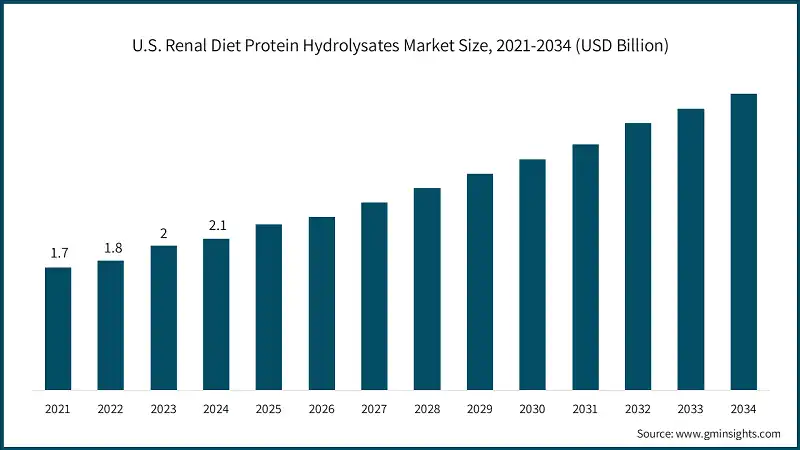
U.S. dominates the North America renal diet protein hydrolysates market with USD 2.1 billion in 2024, showcasing strong growth potential.
- U.S. occupies a significant portion of this demand, as millions of adults suffer from CKD requiring specialized nutritional interventions. A large patient pool presents continuous opportunity for product uptake and innovation. The strong clinical research infrastructure available in North America accelerates product development and regulatory approvals for faster introduction of new formulations.
Europe renal diet protein hydrolysates market accounted for USD 1.9 billion in 2024 and is anticipated to show lucrative growth over the forecast period.
- While modern healthcare systems, an aging population, and the growing importance of prevention coupled with renal diet protein hydrolysates are advantageous for the renal diet protein hydrolysate market in Europe. The market will consequently be more prone to accept and innovate based on harmonized regulatory frameworks and established clinical guidelines across Europe, promoting nutritional intervention for CKD management.
Germany dominates the European renal diet protein hydrolysates market, showcasing strong growth potential.
- Significant share is contributed by Germany, specific to chronic kidney disease prevalence and established clinical infrastructures create demand for specialized nutrition products in one of the largest healthcare markets in Europe. Recent market trends in Europe are characterized by an emphasis on sustainability and plant-based nutrition.
The Asia Pacific renal diet protein hydrolysates market is anticipated to grow at a CAGR of 8.1% till 2034.
- Asia Pacific is escalating due to large patient populations, improved healthcare access, and higher healthcare expenditure in the market. The growth in the region can be attributed to burgeoning middle-class populations, rapid urbanization, and increasing incidences of lifestyle-related diseases such as diabetes and hypertension, all of which have contributed to an increased awareness of preventive care.
China renal diet protein hydrolysates market is estimated to grow with a significant CAGR in the Asia Pacific region.
- China plays a big part because it contains a large share of worldwide chronic renal cases and therefore creates very strong demand for specialized nutritional solutions. Affording opportunities to manufacturers to introduce new formulations according to preferences of local diets and their clinical needs. In such a action-free environment, the region stands as a huge market that is expected to grow for renal nutrition solutions.
Latin America renal diet protein hydrolysates accounted for 8.2% market share in 2024 and is anticipated to show lucrative growth over the forecast period.
- Latin America, supported by improvements in healthcare infrastructure and rising awareness of chronic kidney disease management, represents an upcoming and growing market for renal diet protein hydrolysates. The region is being aided by huge investments in healthcare and improved access to specialized nutrition products.
Brazil leads the Latin American renal diet protein hydrolysates market, exhibiting remarkable growth during the analysis period.
- Brazil is the center of the growth due to the availability of established healthcare systems and growing concern regarding nutritional intervention in chronic diseases. With advancing initiatives designed to enhance the care of chronic diseases to provide a window for manufacturers to introduce advanced formulations that cater to local needs. Brazil's strong market presence constitutes yet another propellant for the segment's potential in Latin America.
Middle East & Africa renal diet protein hydrolysates market accounted for 5.1% share in 2024 and is anticipated to show lucrative growth over the forecast period.
- The renal diet protein hydrolysates industry is promising for the Middle East & Africa region due to rapidly developing healthcare systems as well as increasing health expenditures. With initiatives to enhance chronic illness management, create opportunities to roll out innovative renal nutrition products designed to address needs in local markets.
Saudi Arabia renal diet protein hydrolysates market to experience substantial growth in the Middle East and Africa region in 2024.
- Contribution of Saudi Arabia, which has a high prevalence of chronic kidney disease and an increasing demand for specialized nutritional solutions. Healthcare investment expansion paired with better access to superior healthcare is driving market growth in countries like Saudi Arabia, the UAE, and South Africa.
Renal Diet Protein Hydrolysates Market Share
The top 5 companies in renal diet protein hydrolysates industry include Fresenius Kabi AG, Abbott Laboratories, Nestlé Health Science, Danone Nutricia, Ajinomoto Co. These are prominent companies operating in their respective regions covering 21.6% of the market share in 2024. These companies hold strong positions due to their extensive experience in renal diet protein hydrolysates market. Their diverse product portfolios, backed by robust production capabilities and distribution networks, enable them to meet the rising demand across various regions.
- Fresenius Kabi AG is a global healthcare company based in Germany and one of the part of Fresenius SE & Co. KGaA. The company deals with infusion therapy, clinical nutrition, injectable drugs, and medical devices. Enteral and parenteral nutrition solutions, biosimilars, and infusion technologies constitute its portfolio.
- Abbott Laboratories is an American healthcare company with a significant share in both post-brand generic pharmaceuticals and pre-brand generic pharmaceuticals. This is a company involved with primary and ancillary medical devices and diagnostics, nutrition, and branded generic pharmaceuticals.
- Nestlé Health Science, a subsidiary of Nestlé, specializes in science-based nutritional solutions for medical and consumer health markets. Company occupies a product portfolio that cuts across medical nutrition, nutrition for active lifestyles, as well as vitamins, minerals, and supplements.
- Danone Nutricia is a division of Specialized Nutrition today and focuses on early life nutrition and medical nutrition.
- Ajinomoto Co., Inc. is engaged in the fields of food products and healthcare. The business activities of the company include sale of seasonings, frozen foods, and that based on amino-acid solutions to pharmaceuticals, nutrition, and personal care.
Renal Diet Protein Hydrolysates Market Companies
Major players operating in the renal diet protein hydrolysates industry include:
- Fresenius Kabi AG
- Abbott Laboratories
- Nestlé Health Science
- Danone Nutricia
- Ajinomoto Co.
- B. Braun Melsungen
- Grifols S.A.
- Baxter/Vantive
- Ajanta Pharma Limited
- Mankind Pharma Ltd.
Renal Diet Protein Hydrolysates Market Report Attributes
| Key Takeaway | Details |
|---|---|
| Market Size & Growth | |
| Base Year | 2024 |
| Market Size in 2024 | USD 7.2 Billion |
| Market Size in 2025 | USD 7.7 Billion |
| Forecast Period 2025 - 2034 CAGR | 7.5% |
| Market Size in 2034 | USD 14.9 Billion |
| Key Market Trends | |
| Pitfalls & Challenges | Impact |
| High production costs & regulatory complexity | Limits profitability and slows market penetration |
| Limited clinical evidence for specific hydrolysates | Restricts physician endorsement and consumer trust |
| Pitfalls & Challenges | Impact |
| High production costs & regulatory complexity | Limits profitability and slows market penetration |
| Limited clinical evidence for specific hydrolysates | Restricts physician endorsement and consumer trust |
| Opportunities: | Impact |
| Personalized nutrition & precision medicine | Creates premium product segments with higher margins |
| Plant-based innovation & sustainability | Aligns with global health and ESG trends, attracting eco-conscious consumers |
| Market Leaders (2024) | |
| Market Leaders |
5.8% Market Share |
| Top Players |
Collective market share in 2024 is 21.6% |
| Competitive Edge |
|
| Regional Insights | |
| Largest Market | North America |
| Fastest growing market | Middle East & Africa |
| Emerging countries | UAE, Saudi Arabia, South Africa |
| Future outlook |
|
What are the growth opportunities in this market?
Renal Diet Protein Hydrolysates Industry News
- In January 2025, Abbott Laboratories announced the conclusion of a Phase II clinical trial of its novel formulation of plant-based protein hydrolysates in pre-dialysis CKD patients. The study showed significantly improved nutritional status and lower levels of uremic toxins when compared with standard protein supplementation.
- In December 2024, Fresenius Kabi AG obtained FDA approval for a new amino acid supplement designed specifically for hemodialysis patients. The product uses advanced amino acid ratios aimed at compensating for losses due to dialysis while restraining uremic toxin production.
- In November 2024, Nestlé Health Science launched a digital nutrition platform for patients with CKD that integrates personalized protein recommendations with real-time monitoring.
This renal diet protein hydrolysates market research report includes in-depth coverage of the industry, with estimates & forecasts in terms of revenue (USD Billion) and volume (Kilo Tons) from 2025 to 2034, for the following segments:
Market, By Product Type
- Amino acid supplements
- Alpha-ketoanalogues
- Branched-chain amino acids (BCAAS)
- Complete protein hydrolysates
- Vitamin & mineral supplements
- Water-soluble vitamins
- Vitamin D analogues
- Controlled mineral formulations
- Mineral supplements
- Iron supplements
- Calcium-based products
- Phosphorus-restricted formulations
- Probiotics
- Single-strain formulations
- Multi-strain combinations
- Synbiotic products
Market, By CKD Stage
- Pre-dialysis (CKD stages 1-5, non-dialysis)
- Early-stage CKD (stages 1-2)
- Moderate CKD (stage 3)
- Advanced CKD (stages 4-5)
- Hemodialysis patients
- Conventional hemodialysis
- High-flux hemodialysis
- Hemodiafiltration
- Peritoneal dialysis patients
- Continuous ambulatory peritoneal dialysis (CAPD)
- Automated peritoneal dialysis (APD)
- End-stage renal disease (ESRD)
- Pre-transplant patients
- Conservative management
- Acute kidney injury (AKI) recovery
Market, By Administration Mode
- Oral nutrition
- Ready-to-drink formulations
- Powder supplements
- Solid dosage forms
- Enteral nutrition
- Tube feeding formulations
- Oral nutritional supplements (ONS)
- Modular products
- Parenteral nutrition
- Total parenteral nutrition (TPN)
- Peripheral parenteral nutrition (PPN)
Market, By Protein Source
- Animal-based protein hydrolysates
- Whey protein hydrolysates
- Casein hydrolysates
- Egg white protein hydrolysates
- Fish protein hydrolysates
- Plant-based protein hydrolysates
- Pea protein hydrolysates
- Soy protein hydrolysates
- Rice protein hydrolysates
- Hemp protein hydrolysates
The above information is provided for the following regions and countries:
- North America
- U.S.
- Canada
- Europe
- Germany
- UK
- France
- Spain
- Italy
- Rest of Europe
- Asia Pacific
- China
- India
- Japan
- Australia
- South Korea
- Rest of Asia Pacific
- Latin America
- Brazil
- Mexico
- Argentina
- Rest of Latin America
- Middle East and Africa
- Saudi Arabia
- South Africa
- UAE
- Rest of Middle East and Africa
Frequently Asked Question(FAQ) :
What is the market size of renal diet protein hydrolysates in 2024?
The market size was USD 7.2 billion in 2024, with a CAGR of 7.5% expected through 2034 driven by rising chronic kidney disease prevalence and increasing awareness of specialized nutritional solutions.
What is the projected value of the renal diet protein hydrolysates market by 2034?
The renal diet protein hydrolysates market is expected to reach USD 14.9 billion by 2034, propelled by technological advances in enzymatic hydrolysis, clinical evidence supporting therapeutic benefits, and growing demand for personalized nutrition.
What is the current renal diet protein hydrolysates market size in 2025?
The market size is projected to reach USD 7.7 billion in 2025.
How much revenue did the amino acid supplements segment generate in 2024?
Amino acid supplements dominated with approximately 44% market share in 2024, leading the product type segment with their importance in providing essential nutrients for chronic kidney disease patients.
What was the valuation of the oral nutrition segment in 2024?
Oral nutrition held approximately 70.4% market share in 2024, dominating the administration mode segment due to patient preference for non-invasive delivery methods.
Which region leads the renal diet protein hydrolysates market?
The North America renal diet protein hydrolysates market dominated a market share of 35.3% in 2024.
What are the upcoming trends in the renal diet protein hydrolysates market?
Key trends include advances in enzymatic hydrolysis technology, personalized nutrition approaches using biomarkers and AI, and rapid adoption of plant-based protein hydrolysates for clinical and sustainability benefits.
Who are the key players in the renal diet protein hydrolysates market?
Key players include Fresenius Kabi AG, Abbott Laboratories, Nestlé Health Science, Danone Nutricia, Ajinomoto Co., B. Braun Melsungen, Grifols S.A., Baxter/Vantive, Ajanta Pharma Limited, and Mankind Pharma Ltd.
Renal Diet Protein Hydrolysates Market Scope
Related Reports