Summary
Table of Content

Africa Connected TV Market
Get a free sample of this report
Form submitted successfully!
Error submitting form. Please try again.
Thank you!
Your inquiry has been received. Our team will reach out to you with the required details via email. To ensure that you don't miss their response, kindly remember to check your spam folder as well!
Request Sectional Data
Thank you!
Your inquiry has been received. Our team will reach out to you with the required details via email. To ensure that you don't miss their response, kindly remember to check your spam folder as well!
Form submitted successfully!
Error submitting form. Please try again.
Africa Connected TV Market Size
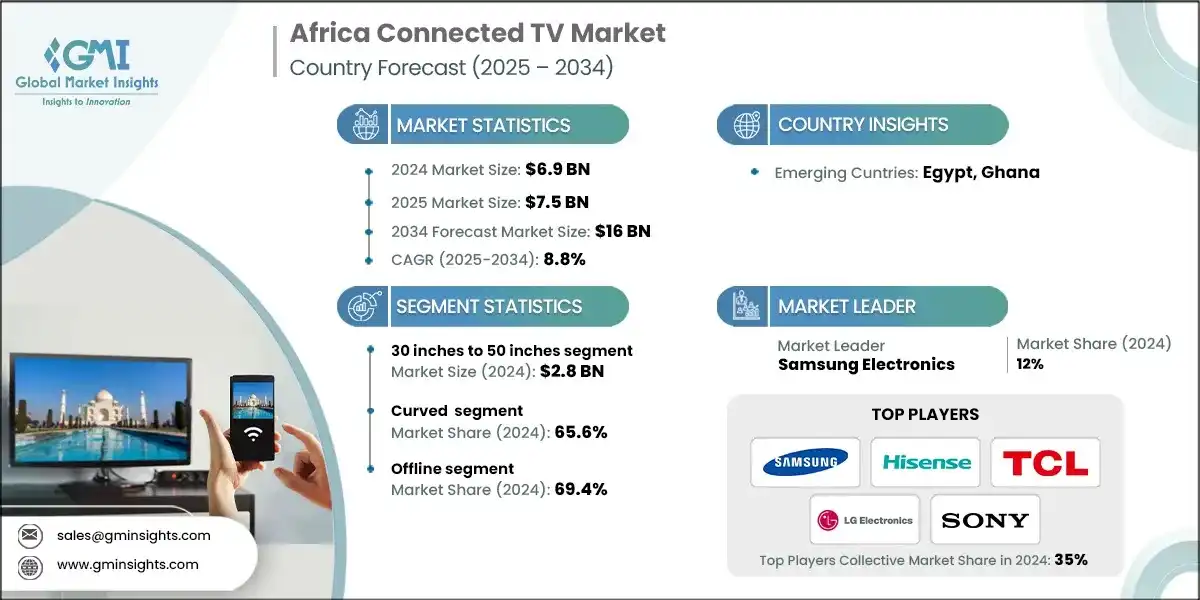
The Africa connected TV market was estimated at USD 6.9 billion in 2024. The market is expected to grow from 7.5 billion in 2025 to USD 16 billion in 2034, at a CAGR of 8.8%.
Africa Connected TV Market Key Takeaways
Market Size & Growth
- 2024 Market Size: USD 6.9 Billion
- 2025 Market Size: USD 7.5 Billion
- 2034 Forecast Market Size: USD 16 Billion
- CAGR (2025–2034): 8.8%
Key Market Drivers
- Rapid internet and mobile connectivity expansion.
- Surging urbanization and rising middle-class incomes.
- Technological enhancements and smart features.
Challenges
- Limited broadband availability in some regions.
- High data costs and inconsistent power infrastructure.
Opportunity
- Ad-funded streaming and FAST models.
- Digital advertising shift.
Key Players
- Market Leader: Samsung Electronics led with over 12% market share in 2024.
- Leading Players: Top 5 players in this market include Samsung Electronics, Hisense Group, TCL Technology, LG Electronics, Sony, which collectively held a market share of 35% in 2024.
Get Market Insights & Growth Opportunities
The connected TV market in Africa is being driven by the rapid rise of internet penetration and mobile connectivity. Nigeria and Kenya, for example, have experienced significant increases in broadband access and mobile subscriptions that allow for uninterrupted streaming on smart TVs and OTT platforms. Dropping data prices and the rollout of 4G and 5G networks are boosting this phenomenon and helping to make high-quality video streaming available to urban and semi-urban populations. Overall, the connectivity boom across the continent is laying the groundwork for CTV adoption.
The growth of mobile internet is also facilitating multi-device viewing habits in which consumers utilize their smartphones to discover and control content watching on their smart TVs. Telecom operators are critical of this next wave of growth, as they offer bundled data plans in conjunction with the services of streaming platforms, creating less friction for consumers to enter space. As Indian connectivity rises, so do marketers and content creators' opportunities for new audience and ways to reach them via targeting and localized streaming platforms, contributing to the broader growth of the connected TV ecosystem.
Urbanization in Africa is changing how consumers behave while increasing their appetite for connected entertainment solutions. As more consumers live in urban environments, more households have a safe, stable, and reliable electricity and internet infrastructure, creating the right conditions for connected TV adoption. Urban life, in addition to creating consumption of a different size and scale, also appears to usher in more demand for on-demand content and a more tailored viewing experience the things connected TVs do well.
In addition, the continent's rising middle class is driving purchasing power for high-performance home entertainment systems. With rising disposable income, consumers, across the middle and lower classes, are replacing traditional TVs with smart TV features including 4K resolution, voice control, and built-in streaming services. This demographic shift increases hardware sales, while additionally increasing the potential number of subscribers to OTT (over-the-top) services; overall, making urban centers the epicenters of CTV (Connected Television) growth in Africa.
To get key market trends
Africa Connected TV Market Trends
The Africa Connected TV sector is experiencing a disruptive change instigated by digital consumption patterns, evolving consumer preferences, and continued technological transformation. The growing use of the internet, increased urbanization, and affordable smart devices are driving the consumer demand for streaming services and interactive TV experiences to new levels that are facilitating advertisers to move towards digital platforms along with local content full-open partners and telecom operators have changed the competitive environment in the sector.
- The transition from conventional pay-TVs to over-the-top (OTT) streaming services may be the most pivotal trend within Africa’s connected TV ecosystem. Individuals are moving towards platforms such as Netflix, Showmax and YouTube in search of convenience, cheaper alternatives, and greater access to both global and local content. This shift is happening as a result of improved internet access, as individuals begin to prefer on-demand viewing over linear consumption.
- With Africa's price-sensitive consumer base, free ad-supported streaming TV (FAST) and hybrid subscription models continue to gain ground. These models allow consumers to access premium content, while freeing up ad inventory for advertisers on connected TV platforms to execute their target marketing campaigns. This model works well for consumers that have limited disposable income for entertainment. FAST models also imposing platforms to quickly scale due to the amount of aggregated audience.
- Culturally relevant content resonates well with African audiences and has given rise to demand for local-language programming and region-specific shows. The growth of streaming platforms alongside smart TV manufacturers is leading to increasing investments into African stories, music and sports programming, to outpace the world's (non-Africa) competitors. The move towards localized programming increases viewer engagement AND builds brand loyalty.
- These technologies enhance the user experience by optimizing the discovery of content for the user, making recommendations that are individualized and seamless. Through A.I. algorithms, smart TVs analyze user viewing patterns before tailoring their recommendations, while voice control functionality makes navigation easier for those users without confidence in using complex interfaces.
Africa Connected TV Market Analysis
Learn more about the key segments shaping this market
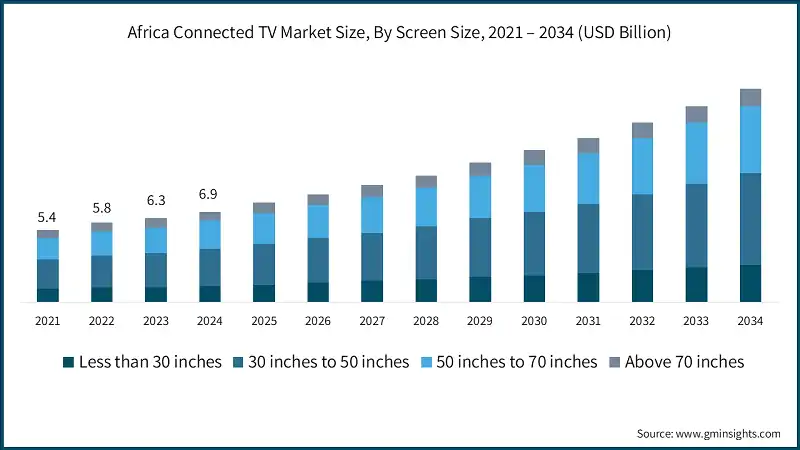
Based on screen size, the Africa connected TV market is divided into less than 30 inches, 30 inches to 50 inches, 50 inches to 70 inches, and above 70 inches. In 2024, 30 inches to 50 inches held the major market share, generating a revenue of USD 2.8 billion.
- The screen size category of 30 inches to 50 inches is easily one of the leading top segments of the connected TV market in Africa. This is largely due to their pricing that strikes a balance of affordability and functions. These TVs serve more middle-income households and urban consumers interested in smart features, but not an elevated price point that comes with a large screen. Living in an apartment or significantly smaller living areas when housing quicker urbanization trends is common in an African context, and the compact size can accentuate the whole experience both visually and spatial distance from other displays in the environment.
- Consumers are focusing on smart features that include streaming apps built into the television, internet connectivity, and a compatible platform such as Android TV or a proprietary OS. Most models in the segment have a Full HD or values of entry-level 4K resolution and provide a worthy experience for daily viewing. Energy efficiency and durability are important selling points as well in regions where power may have issues fluctuating.
- The Africa connected TV growth is driven by expanding middle-class incomes, increased internet penetration, and affordable financing options provided by retailers and e-commerce. Brands such as Hisense, LG, Samsung, and TCL remain the leaders in this category by continuing to offer feature-laden models at low prices. Beyond the TV they purchase, telecom operators have started bundling data with subscription bundles with the TV which has made them even more attractive to consumers and a viable portal for connected entertainment in Africa.
Learn more about the key segments shaping this market
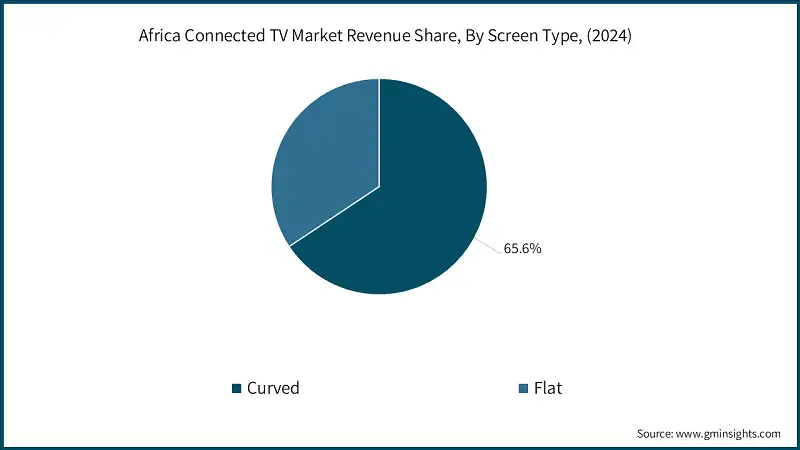
Based on screen type, the Africa connected TV market is segmented into curved and flat. In 2024, curved held a major market share, accounting for 65.6% of the market in 2024.
- Curved screen televisions have found a market in Africa's connected TV space by providing a 3D experience that provides a more immersive visual experience, naturally curved like the human eye. This design provides a viable depth perception while reducing distortion at the edges of the screen. This appeal has proven lucrative for consumers targeting a value-added home entertainment experience. Although not as ubiquitous as flat screens given their price point, their penetration is starting to ramp up in the urban and affluent tech-savvy households.
- Consumers view curved screens as a premium feature that is connected to modern technology and high-class aesthetics. Typically, these televisions are designated for large living rooms or a designated media space, where design, form, and visual experience matter. Gamers and movie fans enjoy the immersive impact of their content becoming more panoramic; however, these effects are most appreciated with larger size and ideal viewing angles, limiting their overall space and audience.
- Urbanization across Africa is accelerating, resulting in compact markets with improved infrastructure and rising purchasing power. Households are upgrading to modern lifestyles in growing urban areas, which includes owning smart TVs with streaming and interactive features. Driven by a growing middle class with increasing discretionary income, the demand for mid-range and premium connected TVs is also growing. These demographic shifts are also encouraging content players to localize their content and develop flexible price points to ensure connected TV is an entertainment option in urban African households.
Based on distribution channel, the Africa connected TV market is segmented into offline and online. The offline segment held the largest share accounting for 69.4% of the market.
- Offline distribution continues to play a prominent and indispensable role in the contact lens market of Southeast Asia, as customers cherish the examination of the lenses while relying on the opinion and input from trained professionals performing the eye examination. Optical shops, clinics and hospital-based points of sale offer demonstrable superior customer service and are better able to provide customers with an in-stock product. This helps foster relationships by building trust and confidence. This additional value is even more pronounced among first-time users of lenses who rely on the optometrist for advice and input regarding proper fitness and care.
- The offline route is still the prevailing path in South Africa, due to the trust that is generated by optical retail providers. Customers maintain preference for the in-store experience with an optometrist who conducts their eye exam, comfortable filling a prescription that was obtained during an exam and choosing lenses with professional guidance. The ability to try on and fit the customer in the product in-store gives the customer confidence that the store selection is suited to their face shape, lens type, fit, personal style, and personal taste in color. Chain and independent optometrists are important for retaining brand recognition and engendering long-term relationships with customers.
Looking for region specific data?
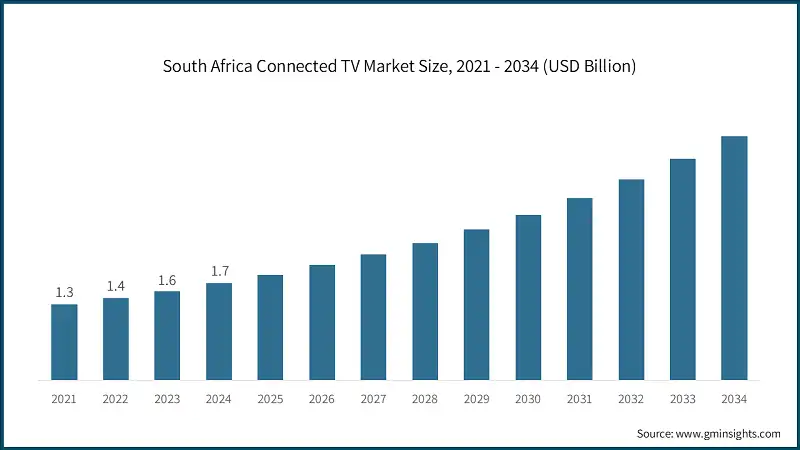
In 2024, South Africa dominated the Africa connected TV market, accounting for around 27% and generating around USD 1.7 billion revenue in the same year.
- There is a notable growth in demand for contact lenses in South Africa as consumers become more aware of their eye health and alternatives for vision correction. Increased screen time from electronic devices has resulted in greater incidences of eyestrain and refractive errors, leading consumers to seek out more comfortable options than traditional eyeglasses. Additionally, contact lenses are being embraced as a lifestyle option more than even before, providing comfort and visual aesthetic for image conscious consumers, and professionals who do not want to wear spectacles.
- The market landscape in South Africa is transitioning with strong growth prospects in both retail and e-commerce channels. While optical stores are still the primary distribution channel, e-commerce is on the rise because of convenience, competitiveness in the pricing of products, and the sheer number of products available. Transformation is more commonly seen in urban areas such as Johannesburg, Cape Town and Durban, where tech-savvy consumers appreciate quick access and delivery to their homes. Social media, along with influencers, continues to drive consumer purchase behavior, especially in the younger demographic.
- South Africa is the most progressed and substantial connected TV market in Africa, benefiting from good broadband infrastructure, high urbanism, and a diversified technology-driven consumer. South Africa has a mature retail ecosystem and e-commerce penetration which allows smart TVs to be purchased at retail and online. Many streaming platforms, such as Netflix, Showmax, and Amazon Prime Video, have strong penetration, all aided through bundled data plans, along with subscription plans offered alongside national and local telecom operators.
Africa Connected TV Market Share
Samsung Electronics is leading with a 12% market share. Samsung Electronics, Hisense Group, TCL Technology, LG Electronics, and Sony hold 35%, indicating moderately consolidated market concentration.
These prominent players are proactively involved in strategic endeavors, such as mergers & acquisitions, facility expansions & collaborations, to expand their product portfolios, extend their reach to a broad customer base, and strengthen their market position.
Samsung maintains its status as the market leader with its broad selection of smart TVs utilizing greatly advanced technologies, including QLED, Neo QLED, and OLED. Strong key brand equity, distribution network of retail suppliers and integration of available streaming platforms contribute to the selection of Samsung among the premium and mid-range end-purchasers. Samsung's juggernaut presence and marginal arbiter position continues due to aggressive marketing and partnerships with local distributors to maintain the level of availability across the major markets.
Hisense has positioned itself as a leading player in Africa by providing budget-friendly smart televisions equipped with attractive features such as high-definition 4K resolution and either the VIDAA operating system or Android TV. The range appeals to consumers with a focus on price, while also offering quality standards. It is a popular choice in South Africa, as well as in other urban markets. The introduction of the combination of low price and innovation has enabled Hisense to capture a considerable amount of market share in the mid-range segment.
Africa Connected TV Market Companies
Major players operating in the Africa connected TV industry are:
- Alcon Vision
- Amazon
- Apple
- Hisense Group
- LG Electronics
- Panasonic
- Philips
- Samsung Electronics
- Sharp
- Skyworth Group
- Sony
- TCL Technology
- Xiaomi
- Haier Group
- Vestel
Sony is known as a high-end premium brand in Africa’s connected TV market, with top-of-the-line Bravia models powered by OLED and better picture technology. Although Sony's market share is not as large as mass market brands, it reaches a high-income consumer who values a differentiation of superior picture quality and design. Sony has a brand commitment to innovation and great viewing experiences, along with recognition for providing a premium product in the home entertainment luxury market.
Google is an important player in Africa's connected TV ecosystem through its Android TV platform, which supports a variety of smart TV brands including TCL, Hisense and Skyworth. Google operates connected TV apps via Google Play, voice control through Google Assistant, and seamless access to other streaming services on Smart TVs. Overall, it makes connected TVs more operable across the continent. Its role is more related to the platform than the hardware, and so is a major enabler of smart TV growth.
Africa Connected TV Market Report Attributes
| Key Takeaway | Details |
|---|---|
| Market Size & Growth | |
| Base Year | 2024 |
| Market Size in 2024 | USD 6.9 Billion |
| Market Size in 2025 | USD 7.5 Billion |
| Forecast Period 2025 – 2034 CAGR | 8.8% |
| Market Size in 2034 | USD 16 Billion |
| Key Market Trends | |
| Drivers | Impact |
| Rapid internet and mobile connectivity expansion | Facilitating seamless streaming and increasing affection for smart TVs and OTT services significantly strengthens the core services that underpin the technology-based early stage of home entertainment. |
| Surging urbanization and rising middle-class incomes | Enhances consumer demand for connected TVs, particularly in urban households interested in contemporary home entertainment. |
| Technological enhancements and smart features | Advancements enhance user experience with AI personalization, voice control of televisions, and high-resolution displays, increasing interest in connected TVs. |
| Pitfalls & Challenges | Impact |
| Limited broadband availability in some regions | Limits market penetration in rural markets, resulting in overall slower adoption of connected TV services. |
| High data costs and inconsistent power infrastructure | Limits the affordability and reliability of streaming, hindering engagement and growth potential. |
| Opportunities: | Impact |
| Ad-funded streaming and FAST models | Provides low-cost access to premium content and broadens exposure among price-sensitive consumers, expanding platform growth. |
| Digital advertising shift | Establishes new sources of revenue by promoting targeted ads on connected TVs, reaching brands and marketplaces and enabling monetization. |
| Market Leaders (2024) | |
| Market Leaders |
12% market share |
| Top Players |
Collective market share in 2024 is 35% |
| Competitive Edge |
|
| Regional Insights | |
| Emerging countries | Egypt, Ghana |
| Future outlook |
|
What are the growth opportunities in this market?
Africa Connected TV Market News
- In November 2025, Apple launched a new Apple TV 4K model with the new A17 Pro chip, next-generation Wi-Fi 7, and the ability for smart home connectivity. Furthermore, rumors indicate that the new Apple TV 4K model will contain a built-in FaceTime camera for even more interactive and connected entertainment experiences at home.
- In September 2025, Amazon unveiled its new Fire TV line, which included 50, 55, 65, 75-inch models of the new Omni QLED Series. The new television models will have new Alexa+ voice control for better convenience, new processors for better performance, and better visual quality for a better viewing experience.
- In September 2025, Acer Africa first introduced a new 4K UHD Google TV Box powered by Android TV. The product boasts cutting-edge specifications like AI upscaling for clarity, Dolby Vision for improved color and contrast, and WiFi 6 for improved speed and reliability, all aimed at providing the ultimate connected entertainment experience in the region.
- In September 2025, Samsung Electronics launched its biggest flagship television in East Africa with a 100-inch Neo QLED AI TV in Kenya. This event was a remarkable achievement for the brand as it incorporated new AI-integrated features, exceptional picture quality, and smart functionalities to provide an immersive experience for high-end consumers in the region.
- In July 2025, In July 2025, LG South Africa officially announced the launch of its largest TV, the 100-inch AI-enabled QNED86 4K Smart TV. The device also features LG's new QNED evo technology which enhances picture performance. In addition, it uses the latest version of webOS25, which introduces advancements in smart functionality and seamless interaction for an improved home entertainment experience.
The Africa connected TV market research report includes in-depth coverage of the industry with estimates & forecasts in terms of revenue (USD Billion) and volume (Billion Units) from 2021 to 2034, for the following segments:
Market, By Screen Size
- Less than 30 inches
- 30 inches to 50 inches
- 50 inches to 70 inches
- Above 70 inches
Market, By Technology
- LED
- OLED
- Others
Market, By Screen Type
- Curved
- Flat
Market, By Resolution
- 8K
- 4K
- 1080p
- Others
Market, By End Use
- Residential
- Commercial
Market, By Distribution Channel
- Offline
- Specialty stores
- Supermarkets & hypermarkets
- Others
- Online
- E-commerce
- Brand websites
The above information is provided for the following regions and countries:
- Africa
- South Africa
- Nigeria
- Kenya
- Egypt
- Ghana
Frequently Asked Question(FAQ) :
What is the market size of the Africa connected TV market in 2024?
The market size was USD 6.9 billion in 2024, with a CAGR of 8.8% expected through 2034, driven by increasing internet penetration, urbanization, and the affordability of smart devices.
What is the projected value of the Africa connected TV market by 2034?
The market is expected to reach USD 16 billion by 2034, fueled by the shift to OTT platforms, adoption of free ad-supported streaming TV (FAST), and hybrid subscription models.
What is the projected size of the Africa connected TV market in 2025?
The market is expected to reach USD 7.5 billion in 2025.
How much revenue did the 30 to 50 inches screen size segment generate?
The 30 to 50 inches screen size segment generated USD 2.8 billion in 2024, holding the largest market share.
What was the market share of curved screens in 2024?
Curved screens accounted for 65.6% of the market share in 2024.
Which distribution channel led the Africa connected TV market in 2024?
The offline distribution channel dominated the market, holding 69.4% of the market share in 2024.
Which country leads the Africa connected TV market?
South Africa led the market in 2024, accounting for 27% of the market share and generating approximately USD 1.7 billion in revenue.
What are the upcoming trends in the Africa connected TV industry?
Key trends include the transition from traditional pay-TV to OTT platforms, the rise of free ad-supported streaming TV (FAST) and hybrid subscription models, and the growing preference for on-demand viewing driven by improved internet access.
Who are the key players in the Africa connected TV market?
Key players include Alcon Vision, Amazon, Apple, Google, Hisense Group, LG Electronics, Panasonic, Philips, Samsung Electronics, Sharp, Skyworth Group, Sony, TCL Technology, and Xiaomi.
Africa Connected TV Market Scope
Related Reports