Summary
Table of Content

U.S. Specialty Medical Chairs Market
Get a free sample of this report
Form submitted successfully!
Error submitting form. Please try again.
Thank you!
Your inquiry has been received. Our team will reach out to you with the required details via email. To ensure that you don't miss their response, kindly remember to check your spam folder as well!
Request Sectional Data
Thank you!
Your inquiry has been received. Our team will reach out to you with the required details via email. To ensure that you don't miss their response, kindly remember to check your spam folder as well!
Form submitted successfully!
Error submitting form. Please try again.
U.S. Specialty Medical Chairs Market Size
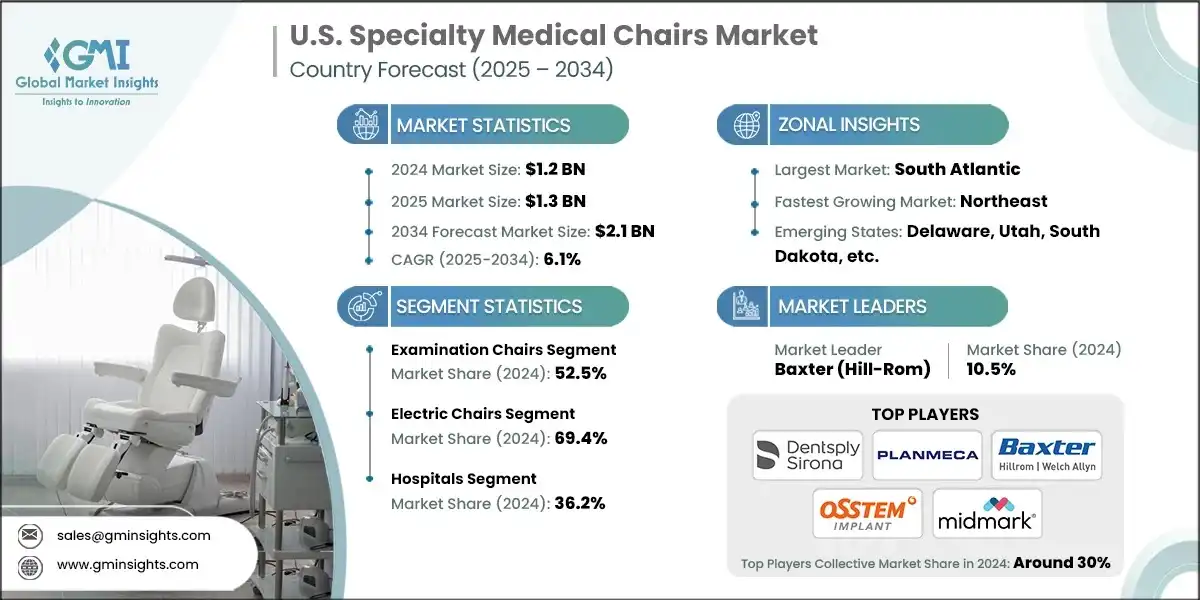
The U.S. specialty medical chairs market was valued at USD 1.2 billion in 2024. The market is expected to reach from USD 1.3 billion in 2025 to USD 2.1 billion in 2034, growing at a CAGR of 6.1% during the forecast period, according to the latest report published by Global Market Insights Inc. The market for specialty medical chairs is being influenced by various factors that reflect the changing healthcare demands as well as innovation throughout the country.
U.S. Specialty Medical Chairs Market Key Takeaways
Market Size & Growth
- 2024 Market Size: USD 1.2 Billion
- 2025 Market Size: USD 1.3 Billion
- 2034 Forecast Market Size: USD 2.1 Billion
- CAGR (2025–2034): 6.1%
Key Market Drivers
- Increasing number of specialty clinics, blood banks, and urgent care centers.
- Technological advancements and demand for powered chairs.
- Growing geriatric population and need for rehab procedures.
- Rising ambulatory surgical procedures.
Challenges
- High cost of specialized equipment.
Opportunity
- Expansion of outpatient and home healthcare.
- Medical tourism growth.
Key Players
- Market Leader: Baxter (Hill-Rom) led with over 10.5% market share in 2024.
- Leading Players: Top 5 players in this market include DENTSPLY SIRONA, Planmeca, Baxter (Hill-Rom), OSSTEM IMPLANT, midmark, which collectively held a market share of 30% in 2024.
Get Market Insights & Growth Opportunities
Specialty chairs in healthcare are advanced medical devices designed to enhance patient care while maximizing clinical effectiveness. They are used across multiple applications, including dental, ophthalmic, mammography, dermatology, rehabilitation, and dialysis services. These chairs feature ergonomic designs and advanced functionalities that improve outcomes for both patients and clinicians.
The specialty chairs market is driven by innovations in design, automation, and integration with digital health technologies, enabling precise patient positioning, improved accessibility, and more efficient care delivery. Leading companies in the U.S. market, such as DENTSPLY SIRONA Inc., Planmeca, Baxter (Hill-Rom), OSSTEM IMPLANT, and Midmark, maintain a competitive edge through continuous product innovation, global expansion, and enhanced customer service. Their investments in R&D, ergonomic design, and regulatory compliance help clinicians meet evolving responsibilities in hospitals, clinics, and specialty care settings, ultimately improving patient care standards and operational efficiency.
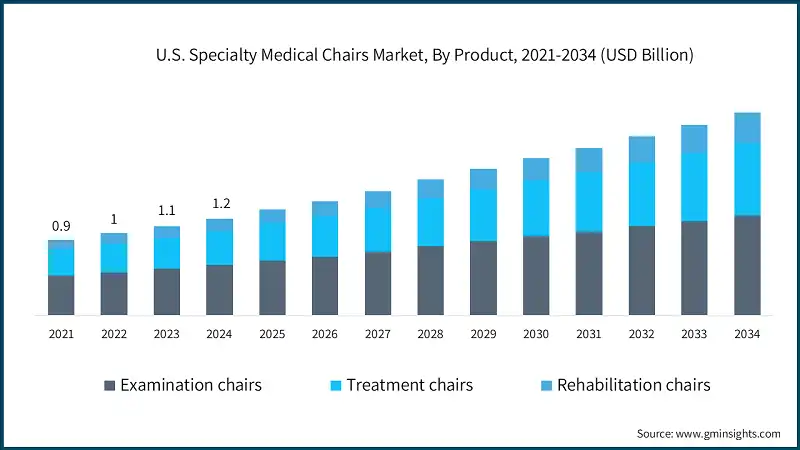
The market has grown from USD 0.9 billion in 2021 to USD 1.1 billion in 2023. The specialty medical chairs market is being driven primarily by increasing demand for patient-centered healthcare environments, rising prevalence of chronic diseases, and growing aging populations in the country. An increasing number of patients in need of long-term care, dialysis, rehabilitation, dental, and ophthalmic procedures is accelerating the demand for ergonomic, comfortable, and innovative technology-assisted medical chairs. Hospitals and ambulatory surgical centers are prioritizing equipment that increases comfort for patients, increases access to care, and decreases clinician fatigue, promoting widespread use. Similarly, ongoing innovations in automation, powered mobility, and smart sensors are enabling manufacturers to produce chairs that have adjustable configurations, remote control access, and digital integration for improved workflow efficiency.
Medical tourism is shaping the U.S. specialty medical chairs market as healthcare providers invest in upgrading facilities to better accommodate international patients. With a growing number of travelers seeking advanced outpatient care in the U.S., clinics are increasingly procuring comfortable, ergonomic, and multi-purpose medical chairs that enhance both procedural efficiency and patient comfort. This trend is driving innovation in chairs design and generating additional demand in surgical, dental, and diagnostic centers, particularly in the U.S. cities that attract high volumes of medical tourists.
Specialty medical chairs refer to a category of seating solutions designed and engineered to meet specific healthcare needs and address various medical conditions. These chairs are characterized by their specialized features, ergonomic designs, and functionalities that cater to the unique requirements of individuals dealing with specific health challenges or undergoing medical treatments.
To get key market trends
U.S. Specialty Medical Chairs Market Trends
The increase in specialty clinics, blood banks, and urgent care centers creates a demand for furniture intended to maximize patient comfort, safety, and efficiency throughout treatment. Modern healthcare infrastructure has recorded significant growth in the last few years.
- In 2023 the Urgent Care Association issued a report stating there are now more than 14,000 urgent care centers in the U.S. The centers are growing at a rate of around 7% annually. The surge in patient volume has generated a need for specialty chairs to facilitate phlebotomy, dialysis, and examination.
- In addition, the blood bank facility is similarly growing and is ramping up operations for transfusion needs. The American Red Cross recognized this need while responding to resource shortages in blood donation centers and blood donation mobile units post-2022. The Red Cross, on average, collects over 12,500 blood donations daily and almost 3,000 platelet donations daily to meet patient needs.
- These facilities feature ergonomic, adjustable, and durable specialty medical chairs designed to accommodate a variety of patient needs, enhance procedural efficiency, and support high cleanliness standards.
- The growth of urgent care centers reflects rising demand for fast, accessible, and affordable care outside traditional hospitals, particularly in a post-pandemic world, driving increased demand for portable, easy-to-clean specialty medical chairs.
U.S. Specialty Medical Chairs Market Analysis
Learn more about the key segments shaping this market
Based on the product, the U.S. specialty medical chairs market is segmented into examination chairs, treatment chairs, and rehabilitation chairs. The examination chairs segment is further segmented into, OB/GYN, dialysis, ophthalmic, dermatology, blood drawing, mammography, and other examination chairs.
The examination chairs segment has asserted its dominance in the market by securing a market share of 52.5% in 2024, owing to the rising number of specialty clinics and diagnostic centers that the increases demand for versatile, ergonomically designed examination chairs. The segment is expected to reach USD 1.1 billion by 2034, growing at a CAGR of 5.5% during the forecast period.
On the other hand, the treatment chairs segment is expected to grow with a CAGR of 6.3%. The growth of this segment can be attributed to the growing ambulatory surgical procedures and outpatient care adoption that drive the need for adjustable, patient-friendly treatment chairs.
- The dental examination chairs segment was valued at USD 239.7 million in 2024 and is expected to reach USD 413.3 million by 2034.
- The primary growth drivers of the dental segment are the surging demand for preventative oral health, routine exams, and community dental programs. With increased public awareness about oral hygiene and the early identification of oral health problems, clinics, mobile services, and school-based programs are now investing in purpose-built examination chairs that have minimal basic positioning and comfort for the patient and infection control capabilities without the complexities associated with treatment chairs.
- Mobile dental services, in addition to community health programs, are driving the demand for affordable portable examination chairs capable of accommodating preventative care, routine cleanings, and diagnostic assessments.
- Furthermore, increased reimbursement and insurance support for preventative dental services are driving the use of specialized chairs designed for the promotion of consistent patient flow and effective delivery of preventative care.
- The OB/GYN chairs segment was valued at USD 73.7 million in 2024 and is expected to reach USD 121.5 million by 2034.
- The increasing utilization of women's health services and growing focus on preventive gynecological services are driving the demand for OB/GYN chairs. Growing awareness of women's health issues and even higher participation in routine screenings (Pap smears, colposcopy, and minor gynecological procedures) drive the adoption of specialized exam chairs that provide comfort, privacy, and clinical efficiency.
- Further, reimbursement frameworks such as Medicare coverage and HCPCS coding in some areas also create an incentive for hospitals and clinics to purchase quality gynecological chairs.
- The dialysis chairs segment was valued at USD 66.9 million in 2024 and is expected to reach USD 132 million by 2034.
- The dialysis chairs segment within examination chairs is experiencing robust growth, driven by multiple clinical and market factors. The rising prevalence of chronic kidney disease (CKD) and end-stage renal disease (ESRD) among aging populations is a primary driver, leading to increased demand for hemodialysis and peritoneal dialysis treatments in the country.
Based on type, the U.S. specialty medical chairs market is classified into electric chairs and manual chairs. The electric chairs segment dominated the market with a revenue share of 69.4% in 2024 and is expected to reach USD 1.5 billion within the forecast period.
- The growth of electric chairs within the specialty medical chairs sector is owing to an increasing demand for advanced, patient-centered solutions in healthcare environments. Electric chairs offer powered positioning, height adjustment, and recline features that enhance patient comfort, safety, and the effectiveness of clinical interventions.
- They are especially valuable in high-use settings, such as hospitals, specialty clinics, surgical centers, and rehabilitation facilities, where frequent repositioning of patients and long lengths of procedures are performed.
- The manual chairs segment accounted for a share of 30.6% in 2024 and is expected to reach USD 605.8 million by 2034.
- Moreover, the demand for manual chairs is primarily driven by the need for cost-effective, reliable, and easy-to-maintain options in healthcare facilities, specifically in developing markets, rural areas, and resource-limited environments.
- Manual chairs provide the crucial function of patient positioning by incorporating mechanical systems such as hydraulic, pneumatic, or gas-spring powered adjustments without electricity, making them well-suited for use in mobile healthcare units, for emergency responders, and as a backup option for facilities when power is not available.
Learn more about the key segments shaping this market
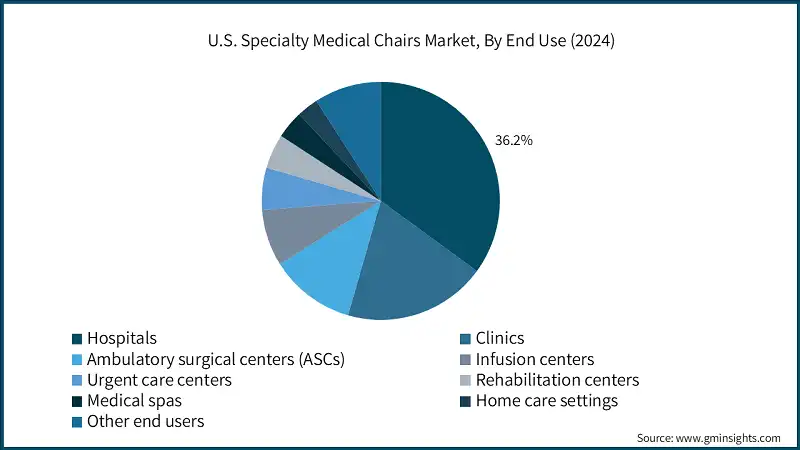
Based on end use, the U.S. specialty medical chairs market is classified into hospitals, clinics, ambulatory surgical centers (ASCs), infusion centers, urgent care centers, rehabilitation centers, medical spas, home care settings, and other end users. The hospitals segment dominated the market with a revenue share of 36.2% in 2024 and is expected to reach USD 741.5 million by the end of the forecast period.
- The three largest segments account for over 67.4% of the total market value. The hospitals segment is the largest and most strategically important category in the market, characterized by high-volume buying, multi-department needs, and complicated clinical processes.
- Hospitals are expanding their facilities and consolidating systems, which is driving the need for durable, versatile chairs that can support a wide range of clinical applications. These include emergency care, surgeries, intensive care, and specialized departments like cardiology, oncology, and neurology.
- Additionally, patient safety initiatives are playing a significant role in shaping demand. Hospitals are increasingly seeking chairs that reduce clinical risks, support infection control measures, and comply with stringent regulatory and quality standards.
- The clinics segment was valued at USD 240.1 million in 2024 and is expected to reach USD 436.2 million by 2034.
- The clinics segment represents a rapidly growing driver of the U.S. specialty medical chairs market, fueled by the expansion of outpatient care and ambulatory services. Increasing patient volumes in primary care, specialty clinics, and multi-specialty group practices are creating strong demand for chairs that balance functionality, cost-effectiveness, and patient comfort.
- The ambulatory surgical centers (ASCs) segment was valued at USD 120.6 million in 2024 and is expected to reach USD 237.2 million by 2034.
- Ambulatory surgical centers (ASCs) are emerging as a significant growth area, driven by the ongoing shift of surgical procedures from hospitals to more cost-effective outpatient settings. Patients increasingly prefer ASCs for their convenience, shorter recovery times, and minimally invasive procedures. This trend is boosting the demand for advanced specialty chairs that cater to these facilities specific needs.
Looking for region specific data?
South Atlantic Specialty Medical Chairs Market
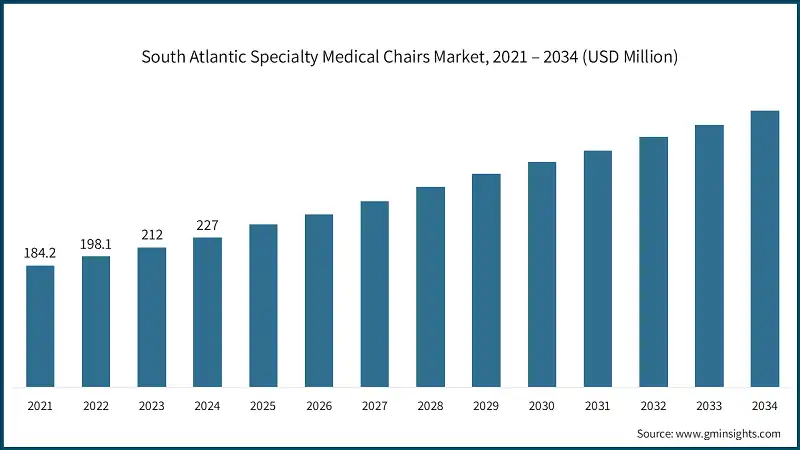
South Atlantic zone held the leading share of 19.6% in the U.S. specialty medical chairs market in 2024.
- The rising incidence of chronic diseases, including diabetes, cardiovascular diseases, and arthritis, is increasing the necessity for long-term care options for patients, thus creating a greater demand for multi-functional and ergonomically designed medical chairs.
- In addition, the increase in healthcare expenses in the U.S., including hospital spending, which saw an unprecedented spike in 2023, is indicative of increasing investments in care and patient-centered facilities and services, as seen with the demand for medical chairs within outpatient and ambulatory surgical centers, which now complete the majority of surgeries in the U.S.
- Specialty medical chairs include surgical chairs, phlebotomy chairs, and infusion chairs. The increased demand for medical chairs aligns with the healthcare industry's emphasis on clinic efficacies and patient-centered care.
- Further, medical advancements will also play an increasing role in the market-changing landscape. Features such as motorized adjustments, antimicrobial upholstery, and sensor-based connectivity for posture and vital monitoring are increasingly contributing to medical chairs demand.
Northeast Specialty Medical Chairs Market
The Northeast specialty medical chairs market is anticipated to grow at the highest CAGR of 6.9% during the analysis timeframe.
- The Northeast specialty medical chairs market is primarily driven by increased demand for patient-centered care and greater efficiency in healthcare services in hospitals, specialty clinics, and ambulatory surgical centers. The increasing incidence of chronic disease, growing aging demographic, and greater demand for rehabilitation, dialysis, dental procedures, and ophthalmic procedures have influenced demand for ergonomically formulated chairs with advanced technology.
- Additionally, physicians and healthcare practitioners are increasingly adopting powered and automated chairs that feature configurable designs, integrated computers, and increased safety in order to allow for increased patient comfort and ease of clinical workflow.
- Also, the increased number of ambulatory surgical cases and outpatient procedures are increasing demand for easy-to-clean, multifunctional, mobile chairs that can be used in multiple clinical settings.
- Further, leading manufacturers and distributors in the U.S. are focused on continuous innovation, research and development (R&D), and strategic partnerships to provide advanced, durable, and custom specialty medical chairs to increase market share and adoption by hospitals, urgent care, and rehabilitation centers.
East North Central Specialty Medical Chairs Market
East North Central specialty medical chairs market accounted for USD 189.5 million in 2024 and is anticipated to show lucrative growth over the forecast period.
- The expansion of outpatient and home healthcare services, coupled with government initiatives to enhance healthcare accessibility, is contributing to higher product adoption rates.
- The growing prevalence of chronic diseases, lifestyle-related disorders, and an aging population necessitate rehabilitation and treatment solutions tailored for patient comfort and clinical efficiency.
- Further, increasing adoption of technologically advanced solutions, including powered, adjustable, and digitally integrated chairs, supports workflow efficiency and enhances patient comfort, further fueling market growth.
U.S. Specialty Medical Chairs Market Share
In the market, the leading manufacturers are focusing on innovation, ergonomic features, and technological innovations to improve their positions in the market. Demand for patient-centered care, increased outpatient procedures, and growth in specialty clinics in dental, ophthalmic, dialysis, and rehabilitation are motivating investment in advanced adjustable multi-functional chairs. These advancements improve patient comfort, healthcare professionals's efficiency, and clinical outcomes. The integration of digital health solutions, as well as powered chair systems, is improving workflows in higher demand/workloads in non-healthcare as well as home care settings.
Prominent players in the market include DENTSPLY SIRONA, Planmeca, Baxter (Hill-Rom), OSSTEM IMPLANT, and Midmark, among others. These companies maintain their leadership through diverse product portfolios, strong regional distribution networks, and continuous advancements in examination, treatment, and rehabilitation chairs. Their market dominance is further supported by strategic partnerships with hospitals, specialty clinics, and outpatient centers to ensure wider accessibility and adoption.
Smaller and niche players are also gaining momentum by offering portable, cost-effective, and patient-friendly solutions. Competitive differentiation increasingly hinges on ergonomic innovation, modular designs, and digital integration. As the market evolves, both established and emerging players are expected to focus on innovation, strategic collaborations, and regional expansion to capture a larger share of the market.
U.S. Specialty Medical Chairs Market Companies
A few of the prominent players operating in the U.S. specialty medical chairs industry include:
- ActiveAid
- A-dec
- ATMOSMedizinTechnik
- Baxter
- Champion Healthcare Solutions
- CLINTON INDUSTRIES
- DENTALEZ
- Dentsply Sirona
- FRESENIUS MEDICAL CARE
- Hill Laboratories
- Lemi MD
- MARCO
- Midmark
- OSSTEM
- PLANMECA
- TOPCON
Baxter (Hill-Rom) leads the U.S. specialty medical chairs market with a share of 10.5% in 2024. Baxter leverages Hill-Rom’s legacy in smart beds and connected care by integrating digital health technologies, focusing on remote monitoring and ergonomic patient support to drive innovation and expand market share.
DENTSPLY SIRONA’s USP lies in its innovative dental chair designs, seamless integration with digital dentistry solutions, ergonomic and patient-centric features, distribution network, and commitment to continuous R&D, delivering advanced, reliable, and efficient solutions for diverse dental and specialty care settings.
U.S. Specialty Medical Chairs Market Report Attributes
| Key Takeaway | Details |
|---|---|
| Market Size & Growth | |
| Base Year | 2024 |
| Market Size in 2024 | USD 1.2 Billion |
| Market Size in 2025 | USD 1.3 Billion |
| Forecast Period 2025 - 2034 CAGR | 6.1% |
| Market Size in 2034 | USD 2.1 Billion |
| Key Market Trends | |
| Drivers | Impact |
| Increasing number of specialty clinics, blood banks, and urgent care centers | Rising establishment of specialized healthcare facilities boosts demand for advanced medical chairs that enhance patient comfort, safety, and procedural efficiency. |
| Technological advancements and demand for powered chairs | Integration of automation, smart controls, and ergonomic designs enhances usability, positioning precision, and workflow efficiency, driving adoption across clinical and diagnostic settings. |
| Growing geriatric population and need for rehab procedures | Aging populations with chronic and mobility-related conditions increase demand for rehabilitation and treatment chairs supporting comfort, safety, and long-term therapeutic care. |
| Rising ambulatory surgical procedures | Shift toward outpatient and day-care surgeries fuels the need for adjustable, easy-to-clean specialty chairs suitable for efficient patient positioning and quick procedural turnaround. |
| Pitfalls & Challenges | Impact |
| High cost of specialized equipment | Expensive advanced chairs limit adoption among small clinics and resources with limited budgets, restraining market penetration and replacement cycles. |
| Opportunities: | Impact |
| Expansion of outpatient and home healthcare | Growing preference for cost-effective, home-based, and outpatient care settings accelerates demand for portable, multi-functional, and user-friendly medical chairs. |
| Medical tourism growth | Rising international patient inflow encourages healthcare providers to upgrade infrastructure with modern specialty chairs to enhance comfort, hygiene, and treatment quality. |
| Market Leaders (2024) | |
| Market Leaders |
10.5% |
| Top Players |
Collective market share in 2024 is 30% |
| Competitive Edge |
|
| Regional Insights | |
| Largest Market | South Atlantic |
| Fastest Growing Market | Northeast |
| Emerging Country | |
| Future Outlook |
|
What are the growth opportunities in this market?
U.S. Specialty Medical Chairs Industry News:
- In September 2024, DENTALEZ unveiled the Forest 6400 Dental Chairs, a premium operatory solution designed to meet the evolving needs of modern dental practices. The chair features advanced ergonomic support for sit/stand dentistry, CareGlide wheelchair accessibility, and Aeras Intel smart technology for enhanced operatory integration. This launch strengthened DENTALEZ’s position as a forward-thinking innovator, helping the company expand its footprint in high-performance, patient-centered dental environments.
- In February 2024, Champion Healthcare Solutions announced the launch of a unique premium antimicrobial fabric across its lineup of luxury medical chairs. This innovative upholstery is designed to enhance infection control in clinical environments while maintaining a soft, comfortable feel for patients. This product launch helped the company to generate enhanced revenue.
- In June 2023, A-dec launched its digitally connected delivery systems, the A-dec 500 Pro and A-dec 300 Pro platforms, marking a significant advancement in smart operatory technology. These platforms integrate seamlessly with A-dec’s dental chairs, enhancing clinical workflows through real-time data connectivity, customizable settings, and improved ergonomic control, thereby strengthening the company’s product portfolio and expanding its customer base in the premium dental operatory segment.
The U.S. specialty medical chairs market research report includes an in-depth coverage of the industry with estimates and forecast in terms of revenue in USD Million from 2021 – 2034 for the following segments:
Market, By Product
- Examination chairs
- Dental
- OB/GYN
- Dialysis
- Ophthalmic
- Dermatology
- Blood drawing
- Mammography
- Other examination chairs
- Treatment chairs
- Dental
- Ophthalmic
- ENT
- Dermatology
- Other treatment chairs
- Rehabilitation chairs
- Geriatric chairs
- Pediatric chairs
- Bariatric chairs
- Other rehabilitation chairs
Market, By Type
- Electric chairs
- Manual chairs
Market, By End Use
- Hospitals
- Clinics
- Ambulatory surgical centers (ASCs)
- Infusion centers
- Urgent care centers
- Rehabilitation centers
- Medical spas
- Home care settings
- Other end use
The above information is provided for the following zones and states:
- East North Central
- Illinois
- Indiana
- Michigan
- Ohio
- Wisconsin
- West South Central
- Arkansas
- Louisiana
- Oklahoma
- Texas
- South Atlantic
- Delaware
- Florida
- Georgia
- Maryland
- North Carolina
- South Carolina
- Virginia
- West Virginia
- Washington, D.C.
- Northeast
- Connecticut
- Maine
- Massachusetts
- New Hampshire
- Rhode Island
- Vermont
- New Jersey
- New York
- Pennsylvania
- East South Central
- Alabama
- Kentucky
- Mississippi
- Tennessee
- West North Central
- Iowa
- Kansas
- Minnesota
- Missouri
- Nebraska
- North Dakota
- South Dakota
- Pacific Central
- Alaska
- California
- Hawaii
- Oregon
- Washington
- Mountain States
- Arizona
- Colorado
- Utah
- Nevada
- New Mexico
- Idaho
- Montana
Frequently Asked Question(FAQ) :
What was the market size of the U.S. specialty medical chairs in 2024?
The market size was valued at USD 1.2 billion in 2024, with a CAGR of 6.1% expected through 2034, driven by increasing healthcare demands and innovations in medical furniture.
What is the projected value of the U.S. specialty medical chairs market by 2034?
The market is expected to reach USD 2.1 billion by 2034, fueled by the expansion of specialty clinics, blood banks, and urgent care centers.
What is the projected size of the U.S. specialty medical chairs market in 2025?
The market is expected to reach USD 1.3 billion in 2025.
What was the revenue share of the electric chairs segment in 2024?
The electric chairs segment dominated the market with a revenue share of 69.4% in 2024 and is projected to reach USD 1.5 billion during the forecast period.
What was the valuation of the hospitals segment in 2024?
The hospitals segment held a 36.2% revenue share in 2024, generating USD 741.5 million by the end of the forecast period.
Which region led the U.S. specialty medical chairs market in 2024?
The South Atlantic zone led the market with a 19.6% share in 2024.
Which region is expected to grow at the highest CAGR during the forecast period?
The Northeast specialty medical chairs market is anticipated to grow at the highest CAGR of 6.9% during the analysis timeframe.
Who are the key players in the U.S. specialty medical chairs market?
Key players include ActiveAid, A-dec, ATMOSMedizinTechnik, Baxter, Champion Healthcare Solutions, CLINTON INDUSTRIES, DENTALEZ, Dentsply Sirona, and FRESENIUS MEDICAL CARE.
U.S. Specialty Medical Chairs Market Scope
Related Reports