Summary
Table of Content

Smart Implants Market
Get a free sample of this report
Form submitted successfully!
Error submitting form. Please try again.
Thank you!
Your inquiry has been received. Our team will reach out to you with the required details via email. To ensure that you don't miss their response, kindly remember to check your spam folder as well!
Request Sectional Data
Thank you!
Your inquiry has been received. Our team will reach out to you with the required details via email. To ensure that you don't miss their response, kindly remember to check your spam folder as well!
Form submitted successfully!
Error submitting form. Please try again.
Smart Implants Market Size
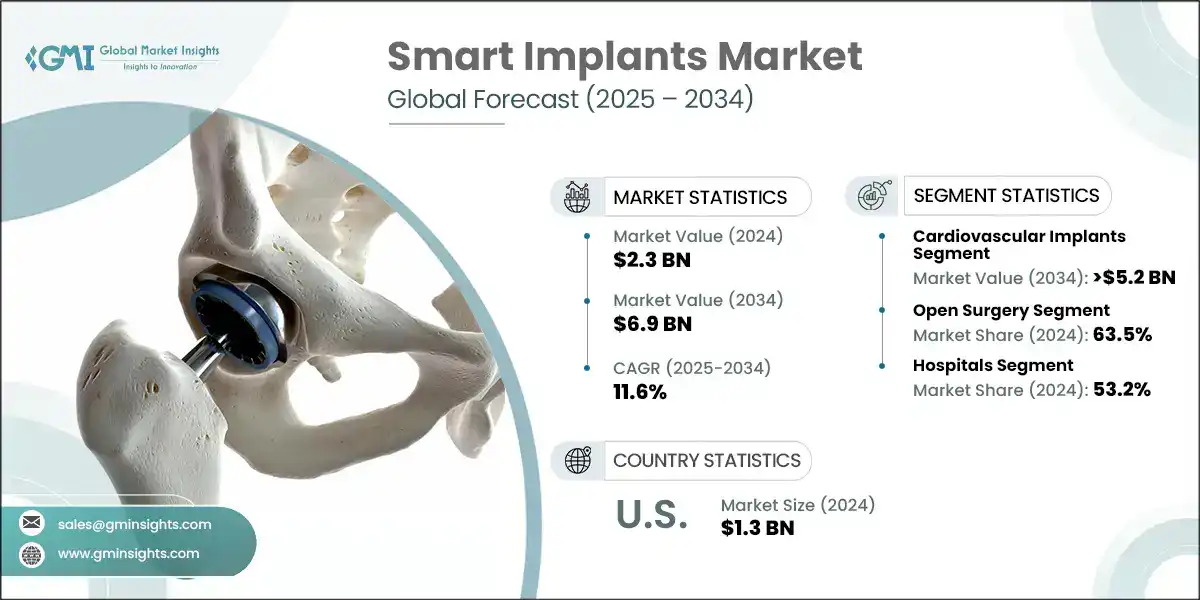
The global smart implants market was estimated at USD 2.3 billion in 2024. The market is expected to grow from USD 2.6 billion in 2025 to USD 6.9 billion in 2034, growing at a CAGR of 11.6%. This high growth is primarily attributed to factors such as rise in the number of cardiac diseases, technological advancements in smart implants, and demand for real-time health monitoring devices among other contributing factors.
Smart Implants Market Key Takeaways
Market Size & Growth
- 2024 Market Size: USD 2.3 Billion
- 2034 Forecast Market Size: USD 6.9 Billion
- CAGR (2025–2034): 11.6%
Key Market Drivers
- Surging demand for real-time health monitoring.
- Growing incidence of cardiovascular disorders.
- Rise in number of accidents and sport injuries.
- Technological advancements in smart implants.
Challenges
- Stringent regulatory framework.
- High cost of implants.
Opportunity
- Rising preference for minimally invasive surgery.
- Growing focus towards development of energy-harvesting and battery-less implants.
Key Players
- Market Leader: Medtronic led with over 30.4% market share in 2024.
- Leading Players: Top 5 players in this market include Medtronic, Abbott, Zimmer Biomet, which collectively held a market share of 75% in 2024.
Get Market Insights & Growth Opportunities
Smart implants are medical devices that use advanced technology to not only treat various health conditions but also help detect and diagnose them. These devices are designed to work seamlessly with the body, providing real-time data that benefits both patients and their healthcare providers. Leading market players include Medtronic, Abbott, Boston Scientific, and Zimmer Biomet among other players. The limitations of traditional treatment methods, combined with the rising prevalence of neurological diseases and the growing availability of personalized care options, are expected to drive the demand for neurostimulation devices and implants during the forecast period.
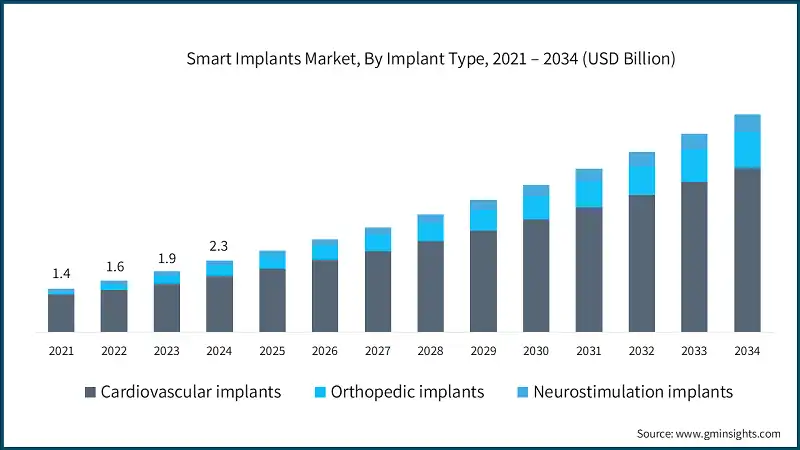
The market experienced strong growth, increasing from USD 1.4 billion in 2021 to USD 1.9 billion in 2023, with a CAGR of 11.6% over the analysis period. The growth was driven by growing incidence of cardiovascular disorders, rise in patients suffering from neurology disorders, and increased demand for smart implants in developed countries. For instance, according to the data reported in a published document by European Commission, more than 165 million Europeans are suffering from some kind of brain related disorder. Thus, to provide proper care and long-term treatment to this population group, the EU commission supports various innovative initiatives and framework to develop better diagnosis and monitoring devices offering comprehensive treatment to the patient.
Additionally, high patient population suffering from various cardiovascular diseases is supporting the industry growth. The growing aging population acts as a catalyst in fueling the target population numbers. For instance, as per the data reported by Nora Eccles Harrison Cardiovascular Research and Training Institute (CVRTI) in 2024, both men and women over the age of 50 years are at considerably higher risk of some kind of heart disease. The report also highlighted that in 2023, around 0.7 million people or around 25% of the total number of deaths in the U.S. were related to heart disorders. Thus, such high patient population is expected to spur the demand for existing and novel smart cardiac implants in the U.S.
Further, rise in research and development spending for the development of novel smart implants for different conditions, coupled with increasing disposable income of households in developed countries, and consistent growth in number of orthopedic surgical procedures is projected to fuel the product demand over the analysis period. For example, according to the information published on India Science, Technology and Innovation portal, Thapar Institute of Engineering & Technology, Punjab, India is working on a research project to develop of smart implants for monitoring of bone fracture healing. The project has received a funding of around USD 31.1 thousand and the completion timeline is 2026. Such developments are anticipated to propel the market growth over the analysis period.
Smart implants are medical devices that are implanted in the body to treat various conditions. They use advanced technology to treat health conditions while also monitoring signs of concern thereby constantly sharing important health information with the patient as well as healthcare provider.
To get key market trends
Smart Implants Market Trends
Increasing focus on the development of battery-less smart implants, growing collaboration between industry players and preference for minimally-invasive surgical procedures are among the key trends shaping the market growth positively.
- The consistent research in developing novel and advanced smart implants capable of providing real-time health monitoring updates to the patient and provider is witnessing healthy demand from patients suffering for different conditions. This trend is assisting the providers to keep a close eye on ongoing changes and concerned data inputs from patient's implantable device.
- For example, according to a published article, researchers from the University of Pennsylvania School of Dental Medicine have developed a smart dental implant that is free from wear and tear, and it does not need batteries to recharge the device. With the use of highly-advanced materials, the developed implant is capable of generating its own electricity through movements in the mouth such as chewing and brushing to support the tissue-rejuvenating light. Thus, development of such novel implants may further promote other industry stakeholders, thereby fueling the market growth.
- Additionally, the growing preference and adoption of minimally-invasive surgical techniques for implantation is supporting the product demand. This approach reduced the hospital stay, is cost-effective in nature, and offers faster recovery process. Hence, the aforementioned developments are expected to spur the market trajectory in an upward direction over the forecast period.
Smart Implants Market Analysis
Learn more about the key segments shaping this market
The market was valued at USD 1.4 billion in 2021. The market size reached USD 1.9 billion in 2023, from USD 1.6 billion in 2022.
Based on implant type, the smart implants market is segmented into cardiovascular implants, orthopedic implants and neurostimulation implants. The cardiovascular implants segment accounted for 78.1% of the market in 2024 as there are a range of cardiac implants available for different therapeutic indications and are witnessing robust growth during the analysis period.
The segment is expected to exceed USD 5.2 billion by 2034, growing at a CAGR of 11.2% during the forecast period. Whereas the neurostimulation implants category is expected to grow with the highest CAGR of 13.9% over the forecast timeline. This growth is driven by the increasing patient population suffering from neurological disorders, growing focus of industry players on development of advanced devices and solutions offering long-term care to the patient among others.
- High patient population suffering from different cardiovascular diseases is a key factor propelling the demand for smart cardiac implants such as pacing systems and insertable cardiac monitors. For instance, as per the data reported by Centers for Disease Control and Prevention (CDC), more than 805 thousand people in the U.S. reports a heart attack, out of them around 200 thousand have already witnessed it previously.
- For example, in June 2023, BIOTRONIK announced the first implantation of BIOMONITOR IV implantable cardiac monitor (ICM) in a healthcare facility located in New York, U.S. This implant is equipped and integrated with artificial intelligence capabilities to reduce the false positive detections by 86%. Such advanced devices are expected to record robust adoption throughout the forecast timeframe to reduce the number of deaths associated with cardiac conditions.
- On the other hand, orthopedic implants segment makes up about 15.3% of the market. Rise in number of trauma cases, ageing population, and favorable reimbursement schemes are anticipated to push segmental growth over the forecast timeline.
- Further, neurostimulation implants represent 6.6% of the market. Availability of high target patient population, growing collaboration between industry players for the development of advanced smart implants are among the key pointers spurring segmental progression.
Based on surgery, the smart implants market is segmented into open surgery and minimally invasive surgery. The open surgery segment accounted for the highest market share of 63.5% in 2024 owing to high demand for cardiovascular and orthopedic procedure that includes total knee replacement, coupled with supportive reimbursement policies and growing aging population.
- Open surgery continues to play a vital role in complex, high-risk cases where surgeons need better visibility and access to anatomical structures, especially during trauma and complicated cardiovascular procedures.
- For orthopedic and neurological conditions, open surgery gives surgeons better precision and control, particularly when modern technology or laparoscopic expertise is not available.
- Various countries in the world still rely on open surgery as their primary surgical approach due to limited access to minimally invasive equipment or trained professionals.
- Currently, minimally invasive surgery makes up 36.5% of smart implants surgical procedures in 2024. Patients and providers increasingly prefer this approach because it offers several benefits such as less post-operative pain, shorter time in the hospital, quicker recovery, and fewer risks of infection.
- Further, as hospitals adopt smart implants and robotic systems, surgical precision has improved significantly. This technological progress has made minimally invasive techniques more appealing to both patients and healthcare providers across different medical specialties.
Learn more about the key segments shaping this market
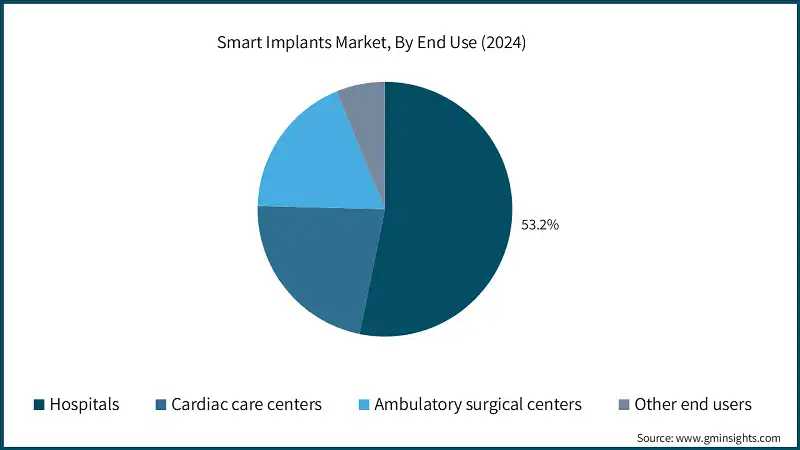
Based on end use, the smart implants market is segmented into hospitals, cardiac care centers, ambulatory surgical centers and other end users. The hospitals segment accounted for the highest market share of 53.2% in 2024 owing to the rising incidence of chronic disorders, availability of cost-effective treatments and supportive reimbursement schemes.
- Hospitals are witnessing a rise in demand for smart implants as they help doctors monitor patients better after surgery, reduce the number of patients returning to hospitals, and improve treatment results.
- In addition, as hospitals move towards providing care based on patient outcomes, they are increasingly using these smart implantable devices, which helps expand the market.
- The cardiac care centers segment accounted for the second largest share of around 22.2% in 2024 and is expected to grow robustly over the projected timeframe. This growth is supported by an increase in the number of patients visiting these centers, access to advanced diagnostic and imaging equipment coupled with a rise in the number of cardiac conditions.
- Whereas the ambulatory surgical centers segment is anticipated to record fastest growth with a CAGR of 12.1% over the analysis period. The segmental growth is driven by factors including the availability of a wide range of treatment procedures, providing convenient outpatient support, specialization in minimally invasive surgeries, and supportive reimbursement plans among others.
Looking for region specific data?
North America dominated the global smart implants market with the leading market share of 60.6% in 2024.
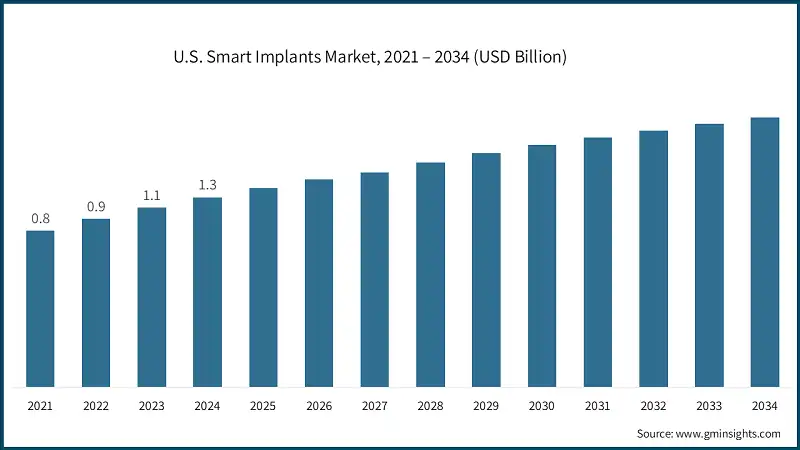
- The U.S. market was valued at USD 0.8 billion and USD 0.9 billion in 2021 and 2022, respectively. The market size reached USD 1.3 billion in 2024, growing from USD 1.1 billion in 2023 and is anticipated to grow at a CAGR of 11.5% between 2025 and 2034.
- Availability of well-established healthcare infrastructure, significant rise in research and development spending by market participants for development of advanced and novel implants, and presence of leading market players is expected to fuel market growth.
- Rise in the footfall of patients suffering from cardiac or neurological conditions is contributing to increased product demand. Patients also prefer same day surgeries from outpatient settings and ASCs in the U.S.
- For example, according to a published article, more surgical procedures in the U.S. are moving to ASCs or non-hospital locations. This shift is reflected in the steady 4% annual growth of the ambulatory surgical centers industry for the 10 year period from 2017 to 2027.
The Europe smart implants market accounted for USD 498.6 million in 2024 and is anticipated to show healthy growth over the forecast period.
- As healthcare needs evolve, medical facilities in the region are increasingly moving toward outpatient services, driven by practical considerations and improved efficiency. Patients benefit from such settings through lower costs, quicker appointment scheduling, and reduced risk of infections compared to traditional hospitals.
- Countries such as Netherlands, UK, and Germany among other regional nations holds a key position in healthcare innovation and continues to attract significant investment from leading global and regional industry players, research associations and other entities for developing state of the art medical implants and devices in the region.
- Moreover, variables such as preference for AI integrated devices with real-time health monitoring capabilities, rise in number of surgical procedures and rise in cases of falls among aged patients are projected to fuel the product demand.
The Asia Pacific smart implants market is anticipated to grow at the highest CAGR of 12.1% during the analysis timeframe.
- Increase in number of people suffering from knee diseases, the ageing population, and a growing middle class that expects better healthcare facilities and services among other factors are driving growth in the region.
- In addition, growing focus on countries including India, China, and other key countries is estimated to support industry growth. The presence of significant patient population in need of total knee replacements coupled with rising investments in healthcare infrastructure is projected to further boost the product demand.
- Similar developments in other regional countries owing to increased healthcare spending and setting-up of multi-specialty surgical centers is anticipated to push the regional growth throughout the forecast period.
The Latin America smart implants market is experiencing robust growth over the analysis timeframe.
- Latin America is experiencing a steady rise in the demand for smart implants, primarily because of increased healthcare investments, a growing elderly population, and an increase in number of people living with chronic conditions such as heart diseases and osteoarthritis.
- Countries such as Brazil, Mexico, and Argentina are making advanced surgical procedures more accessible, which helps more patients receive smart orthopedic, cardiac, and neuro implants.
- In urban areas, hospitals and private healthcare facilities are taking the lead in using implants with sensors to better monitor and care for their patients. Further, more people across the region are also becoming aware of and requesting surgeries that are minimally invasive and use advanced technology.
Smart Implants Market Share
Leading companies such as Medtronic, Abbott, and Zimmer Biomet together hold around 75% of the market share in the consolidated global market. Major players are adopting key strategies, including joint ventures with other industry players, integration of AI-based algorithm and tools in the product line and increased spending on research and development.
Major companies in the market are strengthening their positions by focusing on innovation, digital integration, and strategic partnerships. Medtronic, for instance, puts significant emphasis on smart neuromodulation and cardiac monitoring devices while investing in remote patient management and AI-enabled platforms. The company continues to grow its portfolio through research and development activities and by acquiring companies that develop intelligent, connected implants.
Similarly, Boston Scientific focuses on developing smart neurostimulators and cardiac implants that patients can control through wireless technology and mobile applications. The company continues to grow by introducing digital health solutions and minimally invasive technologies. Further, other companies in the market are implementing strategies that target specific medical conditions while building their presence in emerging markets.
Smart Implants Market Companies
Few of the prominent players operating in the smart implants industry include:
- Abbott
- Biotronik
- Boston Scientific
- DirectSync Surgical
- Intelligent Implants
- Medtronic
- NeuroPace
- Zimmer Biomet
- Abbott
Abbott is dedicated to advancing connected cardiac and neuromodulation devices, with a strong focus on real-time remote monitoring. The company is investing in AI-powered platforms and cloud-based ecosystems to make a meaningful difference in patient outcomes. At the same time, Abbott is expanding its global presence by leveraging strong regulatory and reimbursement strategies.
- Zimmer Biomet
Zimmer Biomet is focusing on further improving and expanding its smart orthopedic implants, such as the Persona IQ knee. The company is committed to using data-driven orthopedics, digital health platforms, and integrated care models to help improve patient outcomes and reduce complications after surgery.
- Biotronik
Biotronik is focused on delivering advanced solutions in cardiac rhythm management and neurostimulation, incorporating smart telemonitoring capabilities in the devices. The company collaborates with physicians, invests in biocompatible technologies, and develops remote diagnostic tools to drive innovation. With a strong presence in Europe, Biotronik prioritizes the long-term reliability of its devices to meet patient needs effectively.
Smart Implants Market Report Attributes
| Key Takeaway | Details |
|---|---|
| Market Size & Growth | |
| Base Year | 2024 |
| Market Size in 2024 | USD 2.3 Billion |
| Forecast Period 2025 – 2034 CAGR | 11.6% |
| Market Size in 2034 | USD 6.9 Billion |
| Key Market Trends | |
| Drivers | Impact |
| Surging demand for real-time health monitoring | Connected orthopedic and cardiac implants with remote monitoring features are transforming patient care. |
| Growing incidence of cardiovascular disorders | Smart cardiac devices, such as implantable cardiac monitors (ICMs) and pacemakers, are becoming increasingly popular. |
| Rise in number of accidents and sport injuries | Sensor-enabled orthopedic implants are gaining traction, especially for trauma and joint repair cases. |
| Technological advancements in smart implants | The progress is paving the way for smaller, more advanced sensors to be integrated into implants used in orthopedic and neuro applications. |
| Pitfalls & Challenges | Impact |
| Stringent regulatory framework | Slows down the time-to-market and increases compliance burden for device makers. |
| High cost of implants | Adoption in low- and middle-income countries remains limited, and their use is often restricted to critical cases. |
| Opportunities: | Impact |
| Rising preference for minimally invasive surgery | Smart implants are expected to become more common, offering patients quicker recovery times, continuous monitoring, and greater precision during surgeries. |
| Growing focus towards development of energy-harvesting and battery-less implants | Such innovations may redefine how implants work, improving their longevity and reliability while reducing the need for replacements or recharging, particularly in long-term cardiac and orthopedic treatments. |
| Market Leaders (2024) | |
| Market Leaders |
30.4% market share in 2024 |
| Top Players |
Collective market share in 2024 is 75% |
| Competitive Edge |
|
| Regional Insights | |
| Largest Market | North America |
| Fastest Growing Market | Asia Pacific |
| Emerging Countries | China, India, Brazil, and Mexico |
| Future outlook |
|
What are the growth opportunities in this market?
Smart Implants Industry News:
- In September 2024, Boston Scientific announced that it has received FDA approval to expand its current-generation Ingevity+ pacing leads. This development enables the company to offer advanced equipment and high-class experience to physicians engaged in different treatment procedures.
- In February 2024, Exactech signed a partnership with Statera Medical to design the world's first smart reverse shoulder implant. The co-developed product will allow the company to have an edge in such a niche category, thereby improving its industry position.
- In August 2021, Zimmer Biomet and Canary Medical announced that they have received FDA De Novo classification and authorization to market the tibial extension for Persona IQ, the world's first and only smart knee cleared by the FDA for total knee replacement surgery. After implantation, Persona IQ records and wirelessly transmits wide range of gait data to patient's personal base station installed at home. This development enabled both companies to improve their brand image and industry positioning.
The smart implants market research report includes an in-depth coverage of the industry with estimates and forecast in terms of revenue in USD Million from 2021 - 2034 for the following segments:
Market, By Implant Type
- Cardiovascular implants
- Orthopedic implants
- Neurostimulation implants
Market, By Surgery
- Open surgery
- Minimally invasive surgery
Market, By End Use
- Hospitals
- Cardiac care centers
- Ambulatory surgical centers
- Other end use
The above information is provided for the following regions and countries:
- North America
- U.S.
- Canada
- Europe
- Germany
- UK
- France
- Spain
- Italy
- Netherlands
- Asia Pacific
- China
- Japan
- India
- Australia
- South Korea
- Latin America
- Brazil
- Mexico
- Argentina
- Middle East and Africa
- Saudi Arabia
- South Africa
- UAE
Frequently Asked Question(FAQ) :
What is the market size of the smart implants market in 2024?
The market size was USD 2.3 billion in 2024, with a CAGR of 11.6% expected through 2034, driven by the rising prevalence of cardiac diseases, technological advancements, and demand for real-time health monitoring devices.
What is the projected value of the smart implants market by 2034?
The market is expected to reach USD 6.9 billion by 2034, fueled by innovations in implant technology and increasing adoption of minimally-invasive procedures.
What is the projected size of the smart implants market in 2025?
The smart implants market is expected to reach USD 2.6 billion in 2025.
What was the market share of the open surgery segment in 2024?
The open surgery segment accounted for 63.5% of the market in 2024
What was the market share of the hospitals segment?
The hospitals segment held the largest market share of 53.2% in 2024.
Which region leads the smart implants market?
Europe led the market with a valuation of USD 498.6 million in 2024 and is anticipated to exhibit healthy growth during the forecast period.
What are the upcoming trends in the smart implants market?
Key trends include the development of battery-less smart implants, growing collaborations among industry players, and a preference for minimally-invasive surgical procedures.
Who are the key players in the smart implants market?
Key players include Abbott, Biotronik, Boston Scientific, DirectSync Surgical, Intelligent Implants, Medtronic, and NeuroPace.
Smart Implants Market Scope
Related Reports