Summary
Table of Content

Protein Hydrolysates for Inflammatory Bowel Disease Market
Get a free sample of this report
Form submitted successfully!
Error submitting form. Please try again.
Thank you!
Your inquiry has been received. Our team will reach out to you with the required details via email. To ensure that you don't miss their response, kindly remember to check your spam folder as well!
Request Sectional Data
Thank you!
Your inquiry has been received. Our team will reach out to you with the required details via email. To ensure that you don't miss their response, kindly remember to check your spam folder as well!
Form submitted successfully!
Error submitting form. Please try again.
Protein Hydrolysates for Inflammatory Bowel Disease Market Size
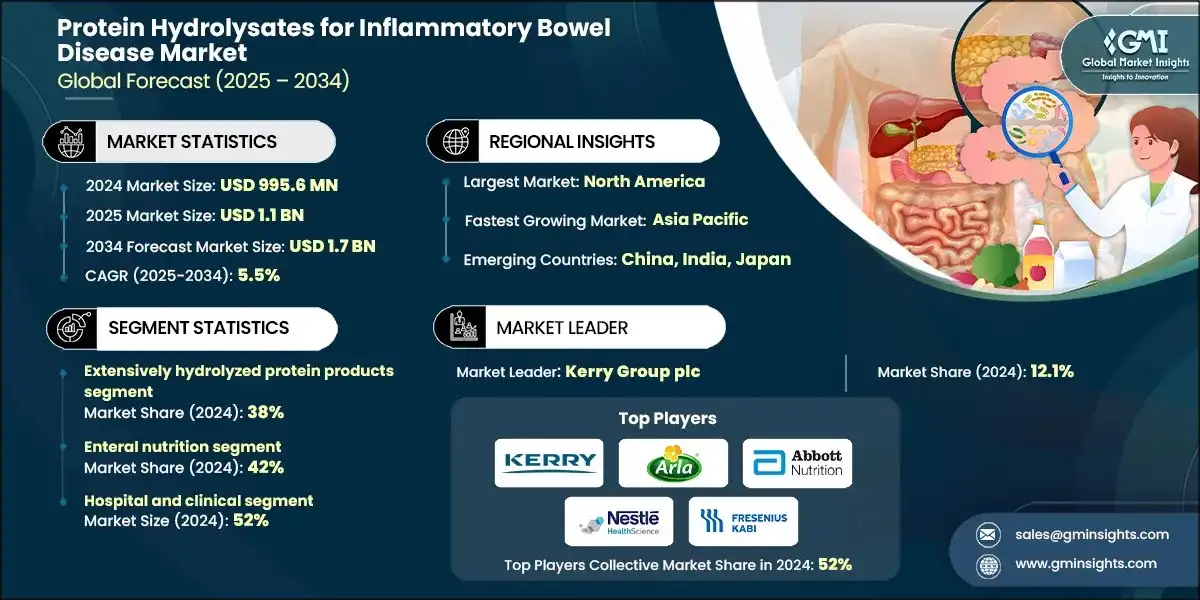
The global protein hydrolysates for inflammatory bowel disease market size was estimated at USD 995.6 million in 2024. The market is anticipated to grow from USD 1.1 billion in 2025 to USD 1.7 billion in 2034, at a CAGR of 5.5% according to latest report published by Global Market Insights Inc.
Protein Hydrolysates for Inflammatory Bowel Disease Market Key Takeaways
Market Size & Growth
- 2024 Market Size: USD 995.6 Million
- 2025 Market Size: USD 1.1 Billion
- 2034 Forecast Market Size: USD 1.7 Billion
- CAGR (2025–2034): 5.5%
Regional Dominance
- Largest Market: North America
- Fastest Growing Region: Asia Pacific
Key Market Drivers
- Rising prevalence of Inflammatory Bowel Disease globally.
- Increasing awareness of the benefits of hydrolyzed proteins.
- Technological innovations in protein processing.
Challenges
- High costs associated with hydrolyzed protein production.
Opportunity
- Growing demand for targeted, nutraceutical solutions that improve patient outcomes.
Key Players
- Market Leader: Kerry Group plc led with over 12.1% market share in 2024.
- Leading Players: Top 5 players in this market include Kerry Group plc, Arla Foods Ingredients, Abbott Nutrition, Nestlé Health Science, Fresenius Kabi, which collectively held a market share of 52% in 2024.
Get Market Insights & Growth Opportunities
- Determined mainly by the increasing IBD patients globally, the size of the market will continue expanding in the future. The inflammatory bowel disease cases increased by 47.4% from 1990 to 2019 globally, with the U.S. alone housing 2.4-3.1 million IBD patients, hence, it represents a big patient base that would need specialized nutritional interventions. According to the U.S. economy, the annual financial burden of IBD was estimated to be around USD 8.5 billion in 2018, thus stressing the important need for cost-effective therapeutic solutions, which protein hydrolysates are poised to provide.
- Clinical validation continues to strengthen market foundations alongside recent research demonstrating strong therapeutic benefits. A Phase 1 clinical study confirmed preliminary safety and anti-inflammatory effects with soluble protein hydrolysate medical food in children with ulcerative colitis, and the 8-week treatment (0.5 g/kg/day) with whey protein hydrolysates improved intestinal permeability, resulting in significant clinical evidence aligned toward market growth projections.
- The market is therefore regionally segmented according to different patterns in IBD prevalence, with the developed markets having penetrated more deeply, owing to their healthcare infrastructure and their diagnostic capabilities. Increasing markets, for example in Asia Pacific, are gaining rapidly from these developments, and East Asia is currently showing the steepest upward trend in IBD incidence.
To get key market trends
Protein Hydrolysates for Inflammatory Bowel Disease Market Trends
- Plant-Based Protein Hydrolysate Adoption- As more people adopt veganism and vegetarianism around the world, it can be observed that plant-based protein hydrolysate adoption is a highly significant and increasing market trend. Clinical studies show that these plant-derived hydrolysates have immense therapeutic potential, as has been proven in case of quinoa protein hydrolysate in the reduction of IBD clinical symptoms as well as that of colon shortening and inflammatory factors in DSS-induced colitis mouse models. Younger IBD patients who follow the different dietary philosophies of plant-based nutritional interventions are accentuating this trend.
- Personalized Nutrition and Targeted Formulations- Personalized Nutrition is, therefore, becoming a growing area of research and a shift towards an individualized approach in IBD management. Most clinicians have accepted that IBD patients differ in response to various protein hydrolysates for IBD, depending on the level and extent of the disease, as well as their genotype and microbiome profiles. This is anticipated to give rise to specialized formulations targeting selective subtypes of IBD, to which highly hydrolyzed protein products have been reported to exhibit better effectiveness in highly ill patients who require maximum digestibility.
- Semi-elemental diets with hydrolyzed whey in the range of 9.3 to 27.9 g/day for 12 weeks have improved nutritional status and lower disease activity among adult patients with active Crohn's disease. The trend continues to age-specific formulations as pediatric IBD patients would require completely different hydrolysate compositions compared to adults. This has been proven true through specialized clinical trials for pediatric ulcerative colitis.
- Manufacturing Technology Advancements- Changes in manufacturing technologies are causing revolutionary improvements in the entire protein hydrolysates production process, in terms of therapeutic efficacy and commercial viability. Modern enzymatic hydrolysis combines fermentation and high-pressure processing to enhance the digestibility and bioavailability of proteins while at the same time producing bioactive peptides boasting specific therapeutic properties. This would permit the production of hydrolysates with controlled molecular weight distributions and thus optimized absorption rates, but with minimized potential allergenic reactions.
Protein Hydrolysates for Inflammatory Bowel Disease Market Analysis
Learn more about the key segments shaping this market
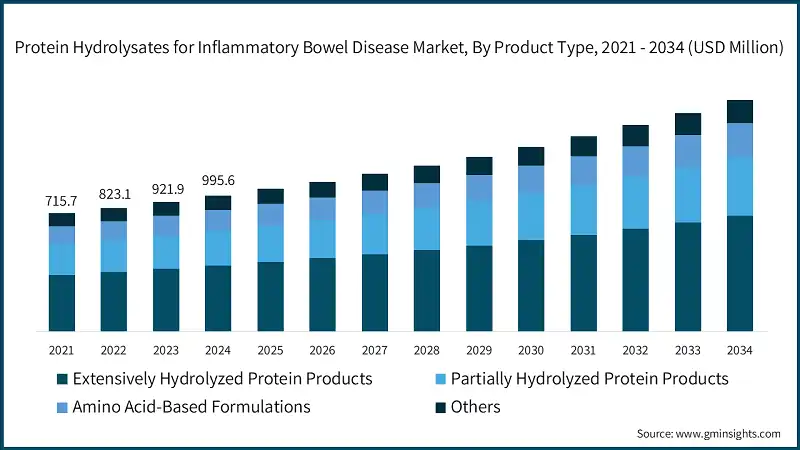
The protein hydrolysates for inflammatory bowel disease market division is uniquely segmented along product type, where in extensively hydrolyzed protein products account for the largest market share, 38% in 2024, because of their superior therapeutic efficacy in severe IBD cases. They have the greatest growth potential in this segment, marking the trend of increasing clinical acceptance for patients requiring maximum protein digestibility and minimal antigenic potential. The products are enzymatically digested into both peptides and amino acids that are anticipated to induce reduced activation of the immune system while providing essential nutrients for intestinal healing and maintenance.
Partially hydrolyzed protein products account for 32% of the market share in 2024 appeal largely to patients with moderate IBD symptoms that would tolerate larger peptide fragments. Thus, clinical studies indicate that partially hydrolyzed proteins preserve some bioactive peptide structures that impart, at least, additional therapeutic effects beyond basic nutrition, including ACE inhibition and antioxidant properties. The moderate growth reflects maturity in this market segment, where established products compete with the more efficacious extensively hydrolyzed alternatives.
In the year 2024, amino acid-based formulations constitute 22% of the protein hydrolysates for inflammatory bowel disease market share, an extremely niche segment catering to patients with severe protein intolerance or patients with extensive intestinal damage. The formulations provide free amino acids at specific ratios specially optimized for the management of IBD patients to leave no chance for any inflammatory response due to protein. Steady growth is driven by continuous demand for products from gastroenterologists treating complex IBD cases who need elemental nutrition support.
Learn more about the key segments shaping this market
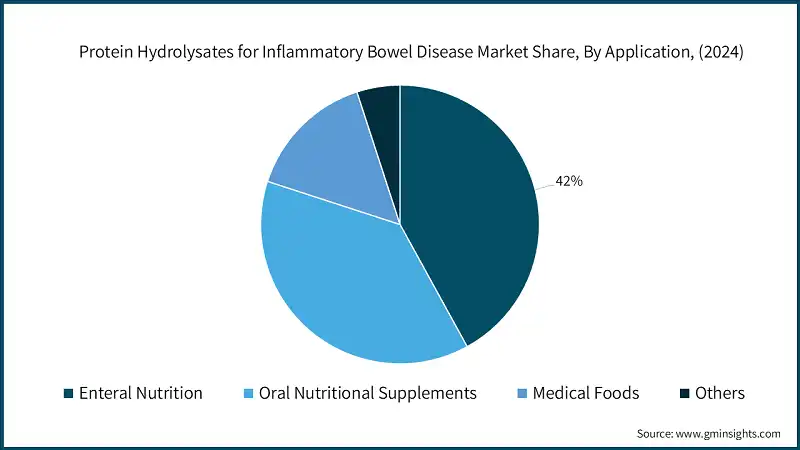
Segmentation of applications demonstrates that enteral nutrition constitutes for the largest segment that comprises 42% market share in 2024. Applications for enteral nutrition are basically directed towards hospitalized patients with inflammatory bowel disease who need tube feeding or are on an exceptionally liquid diet during severe exacerbation periods. The efficacy of enteral nutrition has been evidenced by clinical research, wherein treatments of chronic enteropathy non-responsive to conventional treatments by extensively hydrolyzed diets have yielded an impressive 91 % success cure rate.
Oral nutritional supplements represent the fastest-growing application segment, with a market share of 38% in 2024, encouraged by the growing demand by patients for user-friendly solutions to manage IBD at home. Moreover, this segment has seen increased product palatability as well as patient compliance based on formulations designed for daily consumption to keep nutritional status and activity of the disease at low levels. Its rapid development reflects the growing outpatient service provision of and empowerment of patients in self-management strategies for the control of IBD.
Medical foods make up 15% of the protein hydrolysates for inflammatory bowel disease market share in 2024. This is specific to patients with specific metabolic requirements related to IBD, for whom physician-managed nutritional interventions are required. This category also includes formulations that are specialized for pediatric IBD cases, as is evident from ongoing clinical trials for pediatric ulcerative colitis.
With respect to end user segment hospital and clinical settings is the biggest segment, with a 52% market share in 2024, reflecting established patterns of institutional purchasing and standardized treatment protocols. These products are occasionally administered in hospitalized patients and other clinical procedures for extensive protein hydrolysis products with acute IBD management. This moderate growth indicates saturation in markets underdeveloped healthcare systems, with growth largely dependent on further construction of hospital infrastructures in emerging markets.
Home healthcare is the most active end-user segment and accounts for 38% of the protein hydrolysates for inflammatory bowel disease market share in 2024. This is due to the increasing trend of patients preferring home-based treatment options and the shift in their healthcare systems toward outpatient management of the disease. One of the contributing factors to the increase in this segment is the improvement of formulations of products used for prolonged home use, in addition to enhanced patient education programs. This high growth rate reflects the increased realization of the role of protein hydrolysates in maintaining remission in IBD and reducing hospitalizations.
Looking for region specific data?
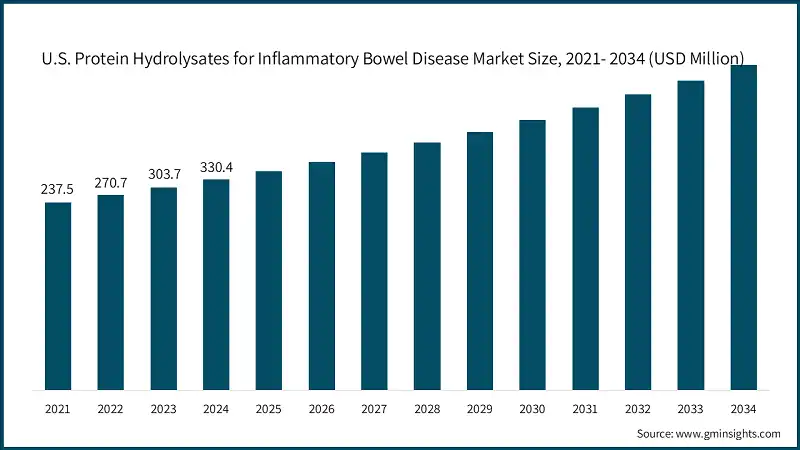
The U.S. protein hydrolysates for inflammatory bowel disease market reached USD 330.4 million in 2024 and estimated to grow to almost USD 540.7 million by 2034. North America is currently ahead of all other continents with a 42% market share in 2024 due to the high prevalence of IBD globally, with approximately 0.72% of affected population, and the good healthcare infrastructure facilitating adoption of products in the region. This region has well-developed clinical research programs, regulatory frameworks favoring medical nutrition products, and wide insurance coverage of IBD treatment options. Some of the major clinical trials conducted in North America, including research at Stanford University pertaining to pediatric ulcerative colitis, show that the North American markets continue to innovate and develop.
Europe is holding the second-largest position with a 33% market share in 2024 fueled by its powerful health care systems, established gastroenterology practices, and heightened awareness for IBD in the European population. Harmonization of the regulatory standards within the region provides an advantage to conduct product development and access the market cross-border. Clinical research conducted in Europe has contributed to the generation of evidence and protocols for the treatment.
Asia Pacific shows high potential growth due to the rapidly rising incidence of IBD present in the newly industrialized countries. East Asia presents the greatest potential growth intersecting directly with the presence of high IBD incidence. China standing with 911,405 cases of IBD represents a major emerging market, followed by India and Japan with reasonable opportunities for further market developments. In this region, healthcare infrastructure is, however, being developed, and healthcare spending is on the rise, including awareness of specialized treatments for IBD.
Latin America and the MEA add up to small but guzzling market. These will witness accelerated growth as the regions develop their healthcare systems and improve IBD diagnostics. Brazil and the GCC countries are leading the very development of the regional market through investments in healthcare infrastructure and increased gastroenterology specialization.
Protein Hydrolysates for Inflammatory Bowel Disease Market Share
The market for protein hydrolysates in the case of inflammatory bowel disease has moderately concentrated competitiveness. In 2024, the top 5 players, Kerry Group plc, Arla Foods Ingredients, Abbott Nutrition, Nestlé Health Science, and Fresenius Kabi held 52% of the market share. Which signifies a reasonably good level of competition for well-established leaders versus those willing to enter the market. Kerry Group plc has the largest share of the market at 12.1% in 2024, with its well-established experience in manufacturing protein ingredients and advancing many products across different regions in the world towards the aid of IBD patients.
Kerry is one of the main players in the market in terms of protein hydrolysate formulations, stemming from a portfolio of technologies regarding protein hydrolysates that covers advanced enzymatic hydrolysis capabilities and specialized medical nutrition formulations. Its approach to clinical nutrition has enabled the company to create targeted IBD formulations that meet specified therapeutic requirements and still retain commercial viability.
Arla Foods Ingredients commands a significant part of the marketplace with its portfolio of dairy protein hydrolysates mainly focused on whey protein hydrolysates have shown clinical efficacy for IBD management. The company benefits from its vertical integration in dairy processing and established relationships with clinical nutrition manufacturers. An important area of development for Arla is optimizing the protein hydrolysis processes to maximize bioavailability and therapeutic properties towards gastrointestinal applications.
Abbott Nutrition has joined the vast experience in clinical nutrition and its international distribution to provide services to IBD patients who can now be reached through modern healthcare channels. Therefore, very well makes it feasible for its stable monetary condition in the market. With that understanding of medical nutrition requirement as well as global compliance with regulatory needs, Abbott will undoubtedly provide an outstanding position in the marketplace.
Protein Hydrolysates for Inflammatory Bowel Disease Market Companies
Major players operating in the protein hydrolysates for inflammatory bowel disease industry:
- Kerry Group plc
- Arla Foods Ingredients
- Abbott Nutrition
- Nestlé Health Science
- Fresenius Kabi
- Nutricia
- Reckitt
- Ajinomoto
- DSM Nutritional Products
- Kerry Group plc
- The Kerry Group plc offers broad protein hydrolysate capabilities over dairy, plant, and marine protein sources. Its capital investments in the areas of enzymatic hydrolysis technologies and bioactive peptide research would promote targeted IBD formulations with better therapeutic outcomes. The global presence of Kerry in manufacturing ensures uniformity in supply chain management and regulatory compliance in different international markets, while its technical expertise supports customized development of formulations in specific IBD patient populations.
- The Kerry Group plc offers broad protein hydrolysate capabilities over dairy, plant, and marine protein sources. Its capital investments in the areas of enzymatic hydrolysis technologies and bioactive peptide research would promote targeted IBD formulations with better therapeutic outcomes. The global presence of Kerry in manufacturing ensures uniformity in supply chain management and regulatory compliance in different international markets, while its technical expertise supports customized development of formulations in specific IBD patient populations.
- Arla Foods Ingredients
- The Arla Foods Ingredients company makes use of its leadership in the dairy industry to create specialized whey protein hydrolysates with clinically proven efficacy in IBD management. The research within the company proves that whey protein hydrolysates at therapeutic doses can improve intestinal permeability as well as decrease indices of inflammation in patients with Crohn's disease. The vertical integration from dairy farming all the way through protein processing allows Arla to ensure quality control and cost-effective capabilities on a large-scale production of IBD nutrition applications.
- The Arla Foods Ingredients company makes use of its leadership in the dairy industry to create specialized whey protein hydrolysates with clinically proven efficacy in IBD management. The research within the company proves that whey protein hydrolysates at therapeutic doses can improve intestinal permeability as well as decrease indices of inflammation in patients with Crohn's disease. The vertical integration from dairy farming all the way through protein processing allows Arla to ensure quality control and cost-effective capabilities on a large-scale production of IBD nutrition applications.
- Abbott
- High clinical nutrition expertise combined with established healthcare distribution networks put Abbott Nutrition in a strong position to support IBD patients in hospitals, clinics, and home healthcare settings. Within the product development division, evidence-based formulations are the focus, supported by clinical research and by healthcare professional education programs. Abbott's global regulatory capabilities will ease market access for specialized IBD nutrition products whilst secure compliance on medical nutrition regulation.
- High clinical nutrition expertise combined with established healthcare distribution networks put Abbott Nutrition in a strong position to support IBD patients in hospitals, clinics, and home healthcare settings. Within the product development division, evidence-based formulations are the focus, supported by clinical research and by healthcare professional education programs. Abbott's global regulatory capabilities will ease market access for specialized IBD nutrition products whilst secure compliance on medical nutrition regulation.
- Nestlé Health Science
- Nestlé Health Science applies its broad platform of health care nutrition to creating new protein hydrolysate solutions aimed at the management of IBD. Current investment in R&D by Nestlé is focused on personalized nutrition approaches and integration with digital health to procure positive patient outcomes. Supported by an internationally respected brand and distribution capability, Nestlé aims to enter the markets with nutrition products for IBD across both developed and emerging markets.
- Nestlé Health Science applies its broad platform of health care nutrition to creating new protein hydrolysate solutions aimed at the management of IBD. Current investment in R&D by Nestlé is focused on personalized nutrition approaches and integration with digital health to procure positive patient outcomes. Supported by an internationally respected brand and distribution capability, Nestlé aims to enter the markets with nutrition products for IBD across both developed and emerging markets.
- Fresenius Kabi
- Fresenius Kabi invests its resources into clinical nutrition applications through its medical device and pharmaceutical distribution, focusing mainly on the market segments of hospitals and clinics. The relationship of Fresenius Kabi with the market is essentially through already existing relationships with gastroenterologists and clinical nutritionists who prescribe protein hydrolysate therapies for patients suffering from IBD.
- Fresenius Kabi invests its resources into clinical nutrition applications through its medical device and pharmaceutical distribution, focusing mainly on the market segments of hospitals and clinics. The relationship of Fresenius Kabi with the market is essentially through already existing relationships with gastroenterologists and clinical nutritionists who prescribe protein hydrolysate therapies for patients suffering from IBD.
Protein Hydrolysates for Inflammatory Bowel Disease Market Report Attributes
| Key Takeaway | Details |
|---|---|
| Market Size & Growth | |
| Base Year | 2024 |
| Market Size in 2024 | USD 995.6 Million |
| Market Size in 2025 | USD 1.1 Billion |
| Forecast Period 2025 – 2034 CAGR | 5.5% |
| Market Size in 2034 | USD 1.7 Billion |
| Key Market Trends | |
| Drivers | Impact |
| Rising prevalence of Inflammatory Bowel Disease globally | Increasing prevalence of Inflammatory Bowel Disease (IBD) worldwide, leading to higher demand for nutritional therapies. |
| Increasing awareness of the benefits of hydrolyzed proteins | Growing awareness among consumers and healthcare providers about the benefits of protein hydrolysates, such as enhanced digestibility and reduced allergenicity. |
| Technological innovations in protein processing | Advancements in hydrolysis technology enabling the production of more effective and specialized protein products, expanding market opportunities. |
| Pitfalls & Challenges | Impact |
| High costs associated with hydrolyzed protein production | High production costs, including raw materials and processing expenses, pose a significant barrier to market expansion. |
| Opportunities: | Impact |
| Growing demand for targeted, nutraceutical solutions that improve patient outcomes | The growing demand for targeted, nutraceutical solutions aimed at improving patient outcomes presents significant market potential. |
| Market Leaders (2024) | |
| Market Leaders |
12.1% market share |
| Top Players |
Collective market share is 52% in 2024 |
| Competitive Edge |
|
| Regional Insights | |
| Largest Market | North America |
| Fastest growing market | Asia Pacific |
| Emerging country | China, India, Japan |
| Future outlook |
|
What are the growth opportunities in this market?
Protein Hydrolysates for Inflammatory Bowel Disease Industry News
- In November 2024, Arla Foods Ingredients launched new medical nutrition ingredient that combines high protein content with the best taste to promote patient compliance and, hence, clinical outcomes. The newly developed ingredients will help meet the nutritional needs of patients having specific dietary requirements, particularly medical conditions. This confirms Arla's commitment to promoting medical nutrition solutions based on taste and functionality.
- In April 2023, Merck and Prometheus Biosciences entered a strategic collaboration and the acquisition of Prometheus by Merck to develop and commercialize the investigational drug PRA023 for inflammatory bowel disease. The acquisition aims to secure Merck's place in the IBD treatment market with promising biological therapies. This partnership is an indication of continued innovation and expansion of treatment options for chronic inflammatory diseases.
- In September 2021, Azurrx Biopharma announced the purchase of First Wave Bio and its proprietary formulations of niclosamide for the multi-billion dollar inflammatory bowel disease (IBD) indications. The intention is to move forward the innovative oral pharmacotherapies for patients with IBD, leveraging First Wave's proprietary delivery technology to this end. This strategic acquisition would strengthen Azurrx's pipeline and commitment to address the unmet needs in IBD treatment.
The protein hydrolysates for inflammatory bowel disease market research report includes in-depth coverage of the industry, with estimates & forecast in terms of revenue (USD Billion) and volume (Kilo Tons) from 2021 to 2034, for the following segments:
Market, By Product Type
- Extensively hydrolyzed protein products
- Partially hydrolyzed protein products
- Amino acid-based formulations
- Others
Market, By Source Material
- Dairy-derived hydrolysates
- Whey protein hydrolysates
- Casein hydrolysates
- Alpha-lactalbumin concentrates
- Others
- Plant-based hydrolysates
- Rice protein hydrolysates
- Pea protein hydrolysates
- Soy protein hydrolysates
- Others
- Marine-derived hydrolysates
- Others
Market, By Application
- Enteral nutrition
- Oral nutritional supplements
- Medical foods
- Others
Market, By End Use
- Hospitals & clinical settings
- Home healthcare
- Specialized nutrition centers
- Others
The above information is provided for the following regions and countries:
- North America
- U.S.
- Canada
- Europe
- UK
- Germany
- France
- Italy
- Spain
- Rest of Europe
- Asia Pacific
- China
- India
- Japan
- South Korea
- Australia
- Rest of Asia Pacific
- Latin America
- Brazil
- Mexico
- Argentina
- Rest of Latin America
- Middle East & Africa
- UAE
- Saudi Arabia
- South Africa
- Rest of Middle East & Africa
Frequently Asked Question(FAQ) :
What was the market size of protein hydrolysates for inflammatory bowel disease in 2024?
The market size was USD 995.6 million in 2024, with a CAGR of 5.5% expected through 2034. The rising prevalence of inflammatory bowel disease globally is driving market growth.
What is the projected value of the protein hydrolysates for inflammatory bowel disease market by 2034?
The market is projected to reach USD 1.7 billion by 2034, driven by increasing demand for cost-effective therapeutic solutions and advancements in manufacturing technologies.
What is the expected size of the protein hydrolysates for inflammatory bowel disease industry in 2025?
The market size is projected to reach USD 1.1 billion in 2025.
What was the market share of extensively hydrolyzed protein products in 2024?
Extensively hydrolyzed protein products accounted for the largest market share of 38% in 2024, owing to their superior therapeutic efficacy in severe IBD cases.
What was the valuation of the enteral nutrition segment in 2024?
The enteral nutrition segment held the largest share, comprising 42% of the market in 2024, led by its application in hospitalized IBD patients requiring tube feeding or liquid diets during acute exacerbations.
What is the growth outlook for the U.S. protein hydrolysates for inflammatory bowel disease sector?
The U.S. market was valued at USD 330.4 million in 2024 and is projected to grow to nearly USD 540.7 million by 2034.
What are the upcoming trends in the protein hydrolysates for inflammatory bowel disease market?
Trends include the rise of plant-based hydrolysates, improved production technologies, personalized and age-targeted formulations, and growing adoption of semi-elemental diets for Crohn’s disease and pediatric ulcerative colitis.
Who are the key players in the protein hydrolysates for inflammatory bowel disease industry?
Key players include Kerry Group plc, Arla Foods Ingredients, Abbott Nutrition, Nestlé Health Science, Fresenius Kabi, Nutricia, Reckitt, Ajinomoto, and DSM Nutritional Products.
Protein Hydrolysates for Inflammatory Bowel Disease Market Scope
Related Reports