Summary
Table of Content

Peptide Therapeutics Market
Get a free sample of this report
Form submitted successfully!
Error submitting form. Please try again.
Thank you!
Your inquiry has been received. Our team will reach out to you with the required details via email. To ensure that you don't miss their response, kindly remember to check your spam folder as well!
Request Sectional Data
Thank you!
Your inquiry has been received. Our team will reach out to you with the required details via email. To ensure that you don't miss their response, kindly remember to check your spam folder as well!
Form submitted successfully!
Error submitting form. Please try again.
Peptide Therapeutics Market Size
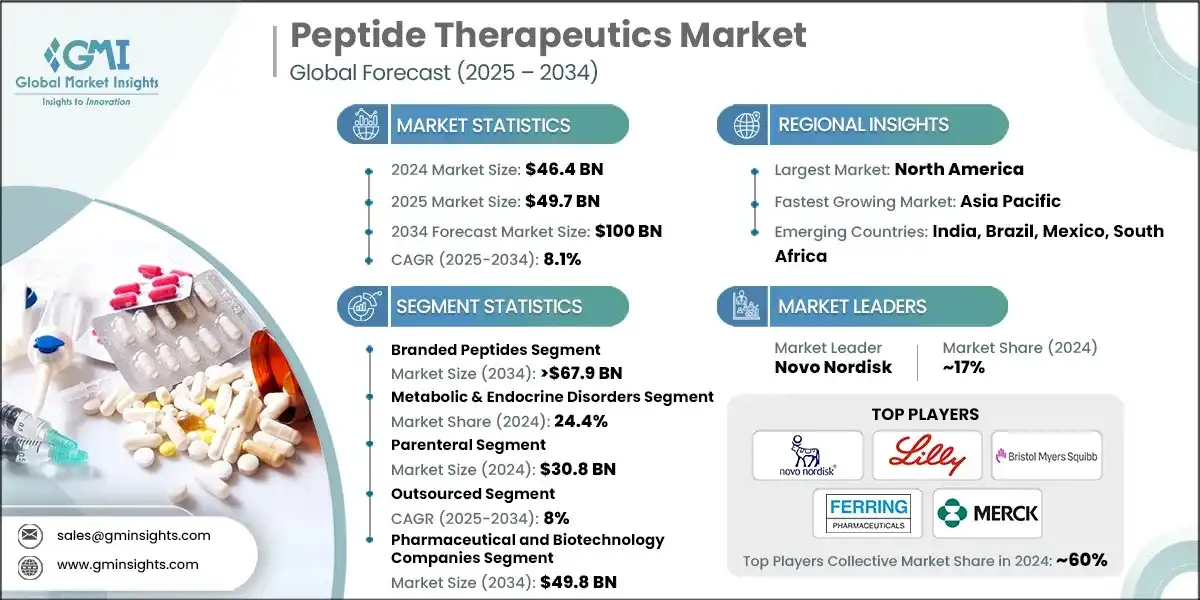
The global peptide therapeutics market was estimated at USD 46.4 billion in 2024. The market is expected to grow from USD 49.7 billion in 2025 to USD 100 billion in 2034, at a CAGR of 8.1%, according to the latest report published by Global Market Insights Inc.
Peptide Therapeutics Market Key Takeaways
Market Size & Growth
- 2024 Market Size: USD 46.4 Billion
- 2025 Market Size: USD 49.7 Billion
- 2034 Forecast Market Size: USD 100 Billion
- CAGR (2025–2034): 8.1%
Key Market Drivers
- Increasing prevalence of cancer.
- Rising incidences of metabolic & endocrine disorders.
- Increasing investments in research and development of novel drugs.
- Technological advancement in peptide therapeutics.
Challenges
- Stringent regulatory requirements for drug approval.
- High cost for drug development.
Opportunity
- Innovation in peptide-drug conjugates and radiolabelled peptides.
- Expansion of oral and long-acting peptide formulations.
Key Players
- Market Leader: Novo Nordisk led with over 17% market share in 2024.
- Leading Players: Top 5 players in this market include Novo Nordisk, Eli Lilly, Bristol-Myers Squibb, Ferring Pharmaceuticals, Merck & Co., which collectively held a market share of 60% in 2024.
Get Market Insights & Growth Opportunities
The growing prevalence of chronic and lifestyle-related diseases such as diabetes, cancer, and obesity is a key driver of the market. According to the National Institutes of Health (NIH), over 32% of global deaths are linked to chronic conditions, underscoring the urgent need for innovative and effective treatment options like peptide-based therapies.
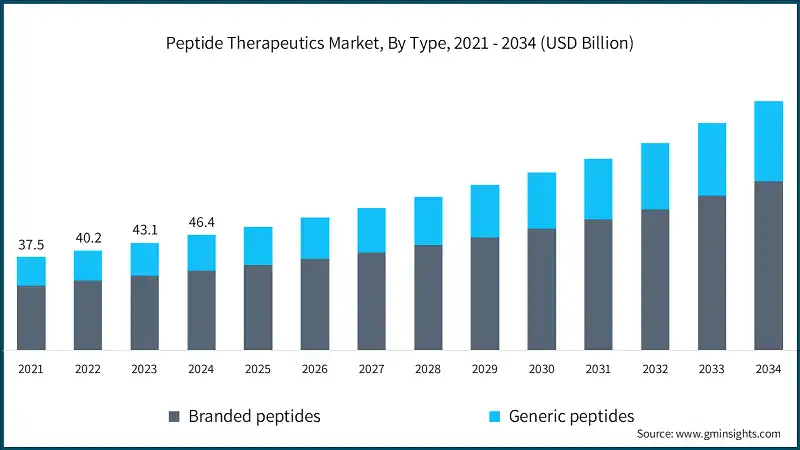
Peptides are increasingly favored as a therapeutic class due to their high specificity, low toxicity, and ability to mimic natural biological processes. These attributes make them suitable for treating a wide range of diseases. Between 2021 and 2023, the global peptide therapeutics market grew from USD 37.5 billion to USD 43.1 billion, reflecting a robust CAGR during this period.
The peptide therapeutics are known as the short chains of amino acids that act on specific molecular targets, offering advantages such as decreased side effects and efficient efficacy. These therapies are widely used in the treatment of metabolic and endocrine disorders, cancer, cardiovascular diseases, gastrointestinal conditions, infectious diseases, and rare genetic disorders.
Leading companies in the peptide therapeutics market include Novo Nordisk, Eli Lilly, Bristol-Myers Squibb, Ferring Pharmaceuticals, and Merck & Co. These players are actively expanding their peptide portfolios through in-house research and development, strategic collaborations, and licensing agreements. Some peptide drugs such as Semaglutide, liraglutide, Tirzepatide, and alectinib have demonstrated strong clinical outcomes in diabetes, obesity, and cancer treatment.
Further, the increasing integration of electronic health record (EHR), AI-powered clinical decision tools, and real-world evidence platforms is transforming how peptide therapies are developed, prescribed, and monitored. Government initiatives and public-private partnerships aimed at expanding access to molecular diagnostics, rare disease treatments, and personalized care further supporting market expansion.
Additionally, with the rising demand for precision medicine and biologically inspired therapies, peptide therapeutics are positioned to play a pivotal role in the future of global healthcare. Their ability to offer safe, effective, and targeted treatment options across a broad range of diseases makes them an increasingly attractive solution in modern medical practice.
To get key market trends
Peptide Therapeutics Market Trends
- The market is undergoing a strategic transformation, driven by macro-level shifts in chronic disease management and micro-level innovations in drug design and delivery technologies.
- Glucagon-like peptide-1 (GLP-1) receptor agonists are witnessing widespread adoption due to their dual benefits in glycaemic control and weight management. Their expanding indications in cardiovascular risk reduction and metabolic syndrome further reinforce their market potential.
- Oral peptide formulations are gaining traction due to their potential to enhance patient adherence and convenience. This progress is supported by innovations in absorption enhancers and protective delivery technologies that improve bioavailability and therapeutic efficacy.
- Artificial intelligence (AI) and machine learning (ML) are increasingly being integrated into peptide discovery platforms. These technologies accelerate sequence optimization, target identification, and preclinical modelling, thereby reducing development timelines and improving success rates.
- Hybrid synthesis technologies that combine solid-phase and liquid-phase methods are improving scalability and purity, enhancing the commercial viability of complex and long-chain peptides.
- Radiolabelled peptides are gaining traction in both diagnostic imaging and targeted radiotherapy, particularly in oncology. Their dual functionality enables precise treatment delivery and improved monitoring of therapeutic outcomes.
- Microbiome-modulating peptides are being explored as a novel therapeutic approach for inflammatory and metabolic disorders. These peptides target microbial balance and immune regulation, offering promising potential in personalized medicine.
- Digital health tools are increasingly being used to support adherence to peptide therapies, enabling remote monitoring, side effect tracking, and virtual consultations particularly beneficial in chronic care settings.
- The growing focus on rare diseases is expanding the peptide development pipeline. Regulatory incentives and high unmet medical needs are driving innovation in orphan indications such as congenital obesity and endocrine disorders.
- Lastly, the increasing trend of partnerships between pharmaceutical and biotechnology companies and contract development and manufacturing organizations (CDMOs) are becoming essential for scaling peptide production. These collaborations provide biopharmaceutical companies access to advanced synthesis technologies and help accelerate time-to-market.
Peptide Therapeutics Market Analysis
Learn more about the key segments shaping this market
Based on type, the peptide therapeutics market is categorized into branded peptides and generic peptides. The branded peptides segment accounted for 69.2% of the market in 2024 which is stimulated due to the high efficacy, specificity, and innovation associated with branded peptide drugs. The segment is expected to exceed USD 67.9 billion by 2034, growing at a CAGR of 7.9% during the forecast period.
- Branded peptide therapeutics are primarily developed for complex diseases such as cancer, metabolic disorders, rare endocrine conditions, and other indications where targeted action and minimal off-target effects are critical.
- This segment benefits from strong research and development efforts, substantial investments, regulatory exclusivity, and premium pricing factors that collectively reinforce its market leadership. For example, in April 2025, Novo Nordisk invested USD 1 billion in Brazil to establish a GLP-1 production network.
- Furthermore, branded peptides are supported by advanced synthesis technologies like solid-phase peptide synthesis and PEGylation, which enhance pharmacokinetics and reduce immunogenicity, further driving market growth.
- On the other hand, the generic peptide segment is gaining traction due to the expiration of patents on several blockbuster peptide drugs and the rising demand for cost-effective therapies. Although it held a smaller share of the market in 2024, it is projected to grow steadily at a CAGR of 8.5% from 2025 to 2034.
Based on application, the peptide therapeutics market is segmented into metabolic & endocrine disorders, cancer, cardiovascular disorders, gastrointestinal disorders, central nervous system disorders, respiratory disorders, pain management, and other applications. The metabolic & endocrine disorders segment dominated the market in 2024 with a market share of 24.4% driven due to the widespread use of peptide drugs in treating type 2 diabetes, obesity, and growth hormone deficiencies.
- Peptides such as GLP-1 receptor agonists (e.g., Semaglutide) and insulin analogs have become foundational therapies in the management of metabolic conditions.
- The rising global prevalence of diabetes and obesity, coupled with the increasing adoption of personalized medicine, has significantly boosted demand for peptide-based interventions. According to the World Health Organization (WHO), over 830 million people worldwide were affected by these conditions in 2022.
- This segment is further supported by robust research and development pipelines and the integration of digital health tools for chronic disease management. Leading companies such as Novo Nordisk, Eli Lilly, and Sanofi continue to drive innovation, introducing next-generation peptides with improved efficacy, extended half-life, and enhanced patient adherence.
- The cancer segment is currently the fastest-growing application area in the peptide therapeutics market. This growth is driven by the increasing use of peptide-drug conjugates, tumor-targeting peptides, and immune-modulating peptides. Peptides offer high specificity and low toxicity, making them particularly suitable for treating solid tumors and hematological malignancies.
- The cardiovascular disorders segment is also gaining momentum, with peptide-based drugs being developed to target conditions such as hypertension, heart failure, and atherosclerosis.
Based on route of administration, the peptide therapeutics market is segmented into parenteral, oral and other route of administration. The parenteral segment dominated the market in 2024 with USD 30.8 billion market size, stimulated due to the poor stability and low bioavailability of peptides in the gastrointestinal tract.
- Parenteral delivery via intravenous, subcutaneous, or intramuscular injection remains the preferred route for peptide therapeutics. It ensures rapid systemic absorption, precise dosing, and high therapeutic efficacy, particularly for critical conditions such as cancer, metabolic disorders, and rare endocrine diseases.
- According to the National Institutes of Health (NIH), the parenteral route is the most preferred method for administering protein and peptide drugs. Despite being associated with discomfort and certain risks, as noted by ScienceDirect, it continues to dominate due to its effectiveness in delivering biologics.
- The parenteral segment benefits from ongoing technological advancements in formulation and delivery systems. These innovations have significantly enhanced the pharmacokinetics and patient compliance of injectable peptides.
- Additionally, the oral route is emerging as the fastest-growing segment, driven by patient preference for non-invasive therapies especially for chronic conditions requiring long-term treatment. Breakthroughs such as permeation enhancers, enteric coatings, and nanoparticle-based delivery systems are helping overcome traditional barriers to oral peptide absorption and stability.
Based on manufacturer type, the peptide therapeutics market is segmented into in-house and outsourced. The outsourced segment dominated the market in 2024 with a growing CAGR of 8%, the segment domination is stimulated due to the complexity, cost, and scalability challenges associated with in-house peptide production.
- The outsourced segment dominates the peptide therapeutics market due to the complexity and high costs associated with peptide production. The intricate nature of peptide synthesis often requires specialized infrastructure and expertise, prompting many pharmaceutical companies to rely on contract development and manufacturing organizations (CDMOs).
- CDMOs play a critical role across the entire development lifecycle from early-stage research to commercial-scale manufacturing helping accelerate timelines and reduce internal resource burdens.
- The growing use of biologics and personalized medicine has further elevated the importance of outsourcing, especially for peptides that demand high purity, complex modifications, or conjugation with other molecules. Outsourced partners also provide essential services such as analytical testing, fill-finish operations, and regulatory documentation, making them integral to the peptide supply chain.
- Moreover, the in-house is typically preferred by companies with proprietary technologies or a strategic need for tight control over intellectual property and process customization. It allows for integration with early-stage research and development and rapid iteration during drug discovery.
Based on synthesis technology, the peptide therapeutics market is segmented into liquid phase peptide synthesis (LPPS), solid phase peptide synthesis (SPPS) and hybrid technology. The solid phase peptide synthesis (SPPS) segment dominated the market in 2024 with a market share of 52.1%, the segment domination is due to its ability to efficiently produce long and complex peptide chains with high purity and yield.
- Solid Phase Peptide Synthesis (SPPS) is the leading technology in the peptide therapeutics market. It enables the sequential assembly of amino acids on an insoluble resin, allowing for efficient washing and removal of excess reagents after each step. SPPS is widely adopted due to its compatibility with automation, high yield, and ability to produce long and complex peptide chains with high purity.
- The technology also supports advanced modifications that enhance peptide stability and bioavailability. SPPS is critical for synthesizing peptides with post-translational modifications and is extensively used in high-throughput production for drug discovery and development. Its scalability and precision make it the preferred method for clinical and commercial peptide drug manufacturing.
- Hybrid synthesis technology is the fastest-growing segment in the peptide therapeutics market. It combines elements of both solid-phase and liquid-phase methods to optimize peptide production, making it especially valuable for synthesizing long or structurally complex peptides that require both the scalability of SPPS and the purity control of LPPS.
- Liquid phase peptide synthesis (LPPS), a classical method where peptides are assembled in solution, it is typically used for short peptides or when exceptionally high purity is required.
Learn more about the key segments shaping this market
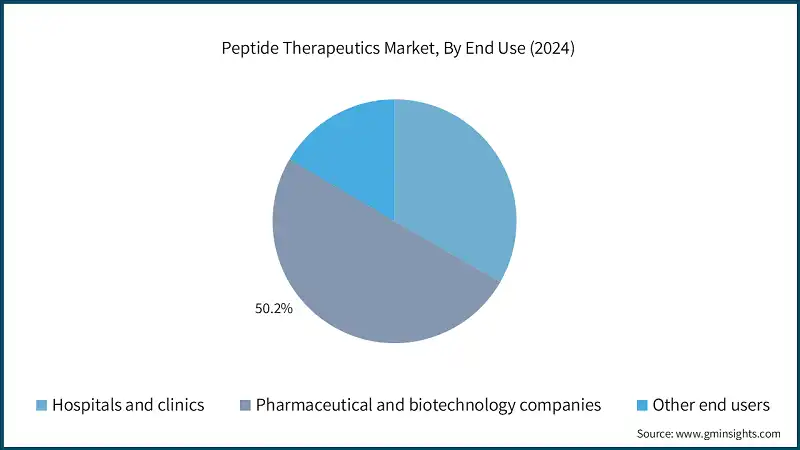
Based on end use, the peptide therapeutics market is categorized into hospitals and clinics, pharmaceutical and biotechnology companies and other end users. The pharmaceutical and biotechnology companies segment is anticipated to reach USD 49.8 billion by 2034, growing with a significant CAGR of 8% during the analysis period, escalated due to the central role in drug discovery, development, and commercialization.
- The pharmaceutical and biotechnology companies represent the largest end user segment in the peptide therapeutics market. These organizations are the primary drivers of peptide drug development, from discovery through clinical trials to commercialization.
- Leading pharmaceutical and biotech companies are driving innovation in peptide-based therapies, particularly targeting metabolic disorders, cancer, and rare diseases. Their focus on precision medicine and biologics has led to significant investments in advanced synthesis technologies and formulation strategies to enhance peptide stability, delivery, and efficacy.
- These firms also benefit from strategic collaborations with academic institutions, CDMOs, and digital health platforms, enabling faster development cycles and expanding therapeutic applications.
- Hospitals and clinics serve as key end users by administering peptide therapeutics across a wide range of indications. These healthcare settings are especially critical for delivering injectable peptides used in oncology, endocrinology, and infectious diseases.
Looking for region specific data?
North America Peptide Therapeutics Market
The North America market dominated the market with a market share of 42.1% in 2024. The market is being propelled by the region’s robust biopharmaceutical infrastructure, early regulatory approvals, and substantial investments in research and development by leading companies.
- The market is further supported by the rising prevalence of cancer, metabolic disorders, and rare diseases, along with increasing demand for targeted and low-toxicity therapies. According to Cancer Atlas, more than 2.1 million new cancer cases and numerous related deaths occur annually in the region.
- Innovative peptide therapies are surging across the region, particularly in countries such the U.S. and Canada, driven by the development of branded and novel formulations.
- The region also leads in clinical trials activity and FDA approvals, reflecting a favorable regulatory environment that supports rapid innovation and commercialization.
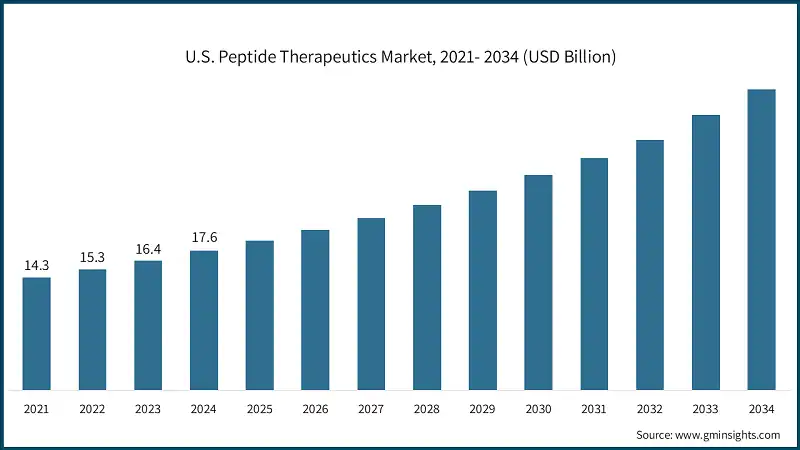
The U.S. peptide therapeutics market was valued at USD 14.3 billion and USD 15.3 billion in 2021 and 2022, respectively. The market size reached USD 17.6 billion in 2024, growing from USD 16.4 billion in 2023.
- The rising incidence of metabolic disorders such as type 2 diabetes and obesity is significantly increasing demand for peptide-based therapies. GLP-1 receptor agonists are among the most prescribed drugs in the country, reflecting clinical success and broad adoption.
- Injectable formulations continue to dominate the market due to their established efficacy and bioavailability. However, oral peptide drugs are gaining momentum, supported by innovations in absorption technologies and patient preference for non-invasive options.
- The increasing shift toward digital and specialty pharmacy distribution is reshaping how peptide therapies are accessed and managed.
Europe Peptide Therapeutics Market
Europe market accounted for USD 12.4 billion in 2024 and is anticipated to show lucrative growth over the forecast period.
- European countries such as Germany and France are experiencing a steady rise in chronic conditions like diabetes and obesity, increasing the number of patients eligible for peptide-based therapies particularly GLP-1 receptor agonists and long-acting analogs. According to the World Health Organization (WHO), over 74 million adults in the region are living with diabetes.
- Countries including the UK, Italy, and Spain are strengthening national healthcare programs by improving access to high-cost peptide therapeutics. These efforts are supported by reimbursement reforms and public-private partnerships aimed at expanding treatment availability.
Germany peptide therapeutics market is anticipated to witness considerable growth over the analysis period.
- Germany’s healthcare system is actively integrating peptide-based therapies into national formularies, supported by favorable reimbursement policies and a structured health technology assessment framework that rewards innovation and clinical value.
- The presence of academic research hubs and translational centers is fueling the development of personalized peptide immunotherapies and peptide vaccines, particularly in oncology and infectious diseases.
- Germany’s market also benefits from its leadership in clinical trials, with a high volume of peptide-based studies conducted across university hospitals and private research institutions.
Asia Pacific Peptide Therapeutics Market
The Asia Pacific market is anticipated to grow at the highest CAGR of 8.4% during the analysis timeframe.
- The Asia-Pacific region is experiencing rapid growth in peptide therapeutics, driven by expanding healthcare access particularly in rural and semi-urban areas where chronic disease management is becoming a national priority.
- Countries such as China, India, Japan, and South Korea are ramping up investments in local peptide manufacturing and research infrastructure. These efforts are reducing dependency on imports and strengthening regional supply chains, positioning the region as a rising hub for peptide innovation and production.
China peptide therapeutics market is predicted to grow significantly over the forecast period.
- The country is emerging as a global hub for peptide and oligonucleotide CDMO services, with various domestic firms upgrading their capabilities that support both local and international biotech pipelines.
- Moreover, regulatory bodies under the NMPA are reducing the approval timelines for innovative peptide drugs and solutions, which encourages more faster commercialization and higher foreign investment.
- The rise of digital health platforms, telehealth along with AI-powered diagnostics is stimulating the utilization of personalized peptide therapies, especially in applications including oncology and rare diseases.
Latin America Peptide Therapeutics Market
Brazil is experiencing significant growth in the Latin America market due to the increasing demand for innovative peptide therapeutics.
- The change in focus towards infectious disease management and antimicrobial resistance in the country is gaining momentum, stimulating research and development in peptide antibiotics as next-generation alternatives to conventional drugs.
- Local biotech firms and academic institutions in the Asia-Pacific region are actively exploring peptide-based nanomaterials for targeted drug delivery and improved bioavailability, particularly in oncology and inflammatory diseases.
- Brazil’s public healthcare system is gradually integrating peptide-based therapies into national formularies. This progress is supported by government-backed innovation programs and strategic partnerships with regional manufacturers, aimed at expanding access and affordability.
Middle East and Africa Peptide Therapeutics Market
Saudi Arabia market is poised to witness substantial growth in Middle East and Africa market during the forecast period.
- The market in the country is expanding rapidly, driven by the expansion in alignment with Vision 2030, which emphasizes healthcare innovation, local pharmaceutical manufacturing, and the adoption of advanced biologics, including peptide-based therapies.
- Rising awareness of personalized medicine and increased demand for specialty care are stimulating the adoption of targeted peptide treatments across tertiary hospitals and specialized clinics.
Peptide Therapeutics Market Share
Leading companies such as Novo Nordisk, Eli Lilly, Amgen, Bristol-Myers Squibb (BMS), and Ferring Pharmaceuticals collectively hold an approximately 60% share of the global market. These players maintain dominance through robust product pipelines, strategic investments in peptide innovation, global manufacturing capabilities, and leadership in chronic disease and oncology care.
Novo Nordisk leads with a comprehensive GLP-1 portfolio including Ozempic, Rybelsus, and Wegovy, offering strong coverage across diabetes, obesity, and cardiovascular risk management. Eli Lilly strengthens its position with Mounjaro and Zepbound, leveraging dual agonist innovation and expanding its footprint in metabolic and endocrine care.
Amgen competes with peptide-based biologics such as Tezspire and Blincyto, focusing on oncology and respiratory indications with advanced delivery platforms. Bristol-Myers Squibb drives growth through its peptide-drug conjugate pipeline and immuno-oncology collaborations, targeting resistant cancers and rare tumor types. Ferring Pharmaceuticals contributes with specialized reproductive and endocrine peptide therapies such as Menopur, supported by deep expertise in peptide manufacturing and niche therapeutic focus.
Emerging and niche players such as PeptiDream, PolyPeptide Group, Repligen, Rhythm Pharmaceuticals, and Zydus Lifesciences are gaining traction through innovation in synthesis technologies, rare disease applications, and regional expansion strategies. These companies support market growth by offering CDMO services, advancing personalized peptide therapies, and addressing unmet needs in underserved populations. Their contributions are vital in expanding therapeutic diversity, improving access, and accelerating the evolution of peptide therapeutics into a precision-driven, globally scalable treatment domain.
Peptide Therapeutics Market Companies
Few prominent players operating in the peptide therapeutics industry includes:
- Amgen
- Ascendis Pharma
- AstraZeneca
- Bristol-Myers Squibb
- Eli Lilly and Company
- Ferring Pharmaceuticals
- Merck & Co.
- Novo Nordisk
- PeptiDream
- PolyPeptide Group
- Repligen Corporation
- Rhythm Pharmaceuticals
- Sanofi
- X-GEN Pharmaceuticals
- Zydus Lifesciences
- Novo Nordisk
Novo Nordisk leads the peptide therapeutics market with an estimated market share of 17%, stimulated by its dominant GLP-1 portfolio including Ozempic, Rybelsus, Wegovy, and Victoza. As a global leader in metabolic care, the company combines deep clinical expertise with innovation in long-acting peptide analogs and oral peptide delivery. Its strong global presence, investment in obesity and diabetes pipelines, and leadership in peptide manufacturing reinforce its position at the forefront of the market.
Eli Lilly holds a significant share of the market with its breakthrough peptide-based therapies such as Mounjaro and Zepbound, which are reshaping treatment paradigms in diabetes and obesity. The company’s focus on dual agonist innovation, combined with its strategic expansion into obesity care and digital health integration, strengthens its competitive edge. Lilly’s robust R&D pipeline and global commercialization capabilities continue to drive its growth in the peptide space.
Bristol-Myers Squibb maintains a strong position in the peptide therapeutics market through its peptide-based biologics. The company leverages its biologics expertise to develop next-generation peptide therapies, including peptide-drug conjugates and immune-targeting agents. The company’s strategic collaborations and focus on oncology and immunology innovation support its continued relevance in the evolving peptide landscape.
Peptide Therapeutics Market Report Attributes
| Key Takeaway | Details |
|---|---|
| Market Size & Growth | |
| Base Year | 2024 |
| Market Size in 2024 | USD 46.4 Billion |
| Market Size in 2025 | USD 49.7 Billion |
| Forecast Period 2025 - 2034 CAGR | 8.1% |
| Market Size in 2034 | USD 100 Billion |
| Key Market Trends | |
| Drivers | Impact |
| Increasing prevalence of cancer | Rising global cancer incidence is fuelling demand for targeted peptide-based therapies that offer high specificity and reduced toxicity. |
| Rising incidences of metabolic & endocrine disorders | The growing burden of diabetes, obesity, and hormonal disorders is expanding the therapeutic need for GLP-1 and other peptide analogs. |
| Increasing investments in research and development of novel drugs | Pharmaceutical and biotech companies are accelerating peptide drug discovery through advanced synthesis platforms and AI-driven design. |
| Technological advancement in peptide therapeutics | Innovations in synthesis technologies, drug delivery systems, and peptide-drug conjugates are enhancing efficacy, stability, and patient compliance. |
| Pitfalls & Challenges | Impact |
| Stringent regulatory requirements for drug approval | Complex clinical validation and regulatory scrutiny can delay market entry and increase development timelines for peptide-based drugs. |
| High cost for drug development | Peptide synthesis, formulation, and scale-up remain capital-intensive, posing barriers for smaller firms and limiting affordability in some regions. |
| Opportunities: | Impact |
| Innovation in peptide-drug conjugates and radiolabelled peptides | The development of targeted peptide-drug conjugates and radiotherapeutics is opening new avenues for precision treatment with reduced systemic toxicity. |
| Expansion of oral and long-acting peptide formulations | Advancement in drug delivery technologies are enabling the shift from injectable to oral and extended-release peptides, improving patient adherence and convenience. |
| Market Leaders (2024) | |
| Market Leaders |
~17% market share |
| Top Players |
Collective market share in 2024 is ~60% |
| Competitive Edge |
|
| Regional Insights | |
| Largest Market | North America |
| Fastest Growing Market | Asia Pacific |
| Emerging Country | India, Brazil, Mexico, South Africa |
| Future Outlook |
|
What are the growth opportunities in this market?
Peptide Therapeutics Industry News
- In October 2025, Kazia Therapeutics partnered with QIMR Berghofer to develop NDL2, a first-in-class bicyclic peptide degrader targeting resistant PD-L1 forms. This added a novel peptide immunotherapy to Kazia’s oncology pipeline.
- In September 2025, Pfizer acquired Metsera, gaining access to peptide-based GLP-1 and amylin analogs including MET-097i and MET-233i. This expanded Pfizer’s peptide therapeutics pipeline in metabolic diseases.
- In August 2025, BioMed X and Novo Nordisk launched a collaboration to develop oral formulation technologies for peptide drugs, focusing on prolonged retention in the gut to improve absorption and bioavailability. This advanced Novo Nordisk’s capabilities in oral peptide drug delivery.
- In March 2025, Roche collaborated with Zealand Pharma to co-develop petrelintide, a long-acting amylin analog peptide. This strengthened Roche’s peptide-based obesity and metabolic disease portfolio.
- In July 2024, AstraZeneca acquired Amolyt Pharma, adding eneboparatide, a Phase III therapeutic peptide for hypoparathyroidism. This enhanced AstraZeneca’s peptide-based rare endocrine disease portfolio.
The peptide therapeutics market research report includes in-depth coverage of the industry with estimates and forecast in terms of revenue in USD Million from 2021 - 2034 for the following segments:
Market, By Type
- Branded peptides
- Generic peptides
Market, By Application
- Metabolic & endocrine disorders
- Cancer
- Cardiovascular disorders
- Gastrointestinal disorders
- Central nervous system disorders
- Respiratory disorders
- Pain management
- Other applications
Market, By Route of Administration
- Parenteral
- Oral
- Other route of administration
Market, By Manufacturer Type
- In-house
- Outsourced
Market, By Synthesis Technology
- Liquid phase peptide synthesis (LPPS)
- Solid phase peptide synthesis (SPPS)
- Hybrid technology
Market, By End Use
- Hospitals and clinics
- Pharmaceutical and biotechnology companies
- Other end use
The above information is provided for the following regions and countries:
- North America
- U.S.
- Canada
- Europe
- Germany
- UK
- France
- Italy
- Spain
- Netherlands
- Asia Pacific
- China
- Japan
- India
- Australia
- South Korea
- Latin America
- Brazil
- Mexico
- Argentina
- Middle East and Africa
- South Africa
- Saudi Arabia
- UAE
Frequently Asked Question(FAQ) :
What was the market size of the peptide therapeutics in 2024?
The market size was USD 46.4 billion in 2024, with a CAGR of 8.1% projected through 2034, driven by advancements in drug design, delivery technologies, and increasing adoption of peptide-based treatments.
What is the projected value of the peptide therapeutics market by 2034?
The market is expected to reach USD 100 billion by 2034, supported by innovations in oral peptide formulations, expanding indications for GLP-1 receptor agonists, and rising demand for effective chronic disease management solutions.
What is the projected size of the peptide therapeutics market in 2025?
The market is expected to reach USD 49.7 billion in 2025.
What was the market share of branded peptides in 2024?
Branded peptides held a 69.2% market share in 2024, driven by their high efficacy, specificity, and innovation. This segment is projected to exceed USD 67.9 billion by 2034, growing at a CAGR of 7.9% during the forecast period.
Which application segment dominated the peptide therapeutics market in 2024?
The metabolic & endocrine disorders segment dominated the market in 2024 with a 24.4% share, attributed to the widespread use of peptide drugs in treating type 2 diabetes, obesity, and growth hormone deficiencies.
What was the valuation of the parenteral route of administration segment in 2024?
The parenteral segment led the market in 2024 with a valuation of USD 30.8 billion, driven by the poor stability and low bioavailability of peptides in the gastrointestinal tract.
Which region dominated the peptide therapeutics market in 2024?
North America held a 42.1% market share in 2024, supported by its robust biopharmaceutical infrastructure, early regulatory approvals, and significant R&D investments by leading companies.
What are the key trends in the peptide therapeutics industry?
Key trends include the growing adoption of GLP-1 receptor agonists for glycaemic control and weight management, advancements in oral peptide formulations to improve patient adherence, and innovations in absorption enhancers and delivery technologies to enhance bioavailability and therapeutic efficacy.
Who are the key players in the peptide therapeutics market?
Key players include Amgen, Ascendis Pharma, AstraZeneca, Bristol-Myers Squibb, Eli Lilly and Company, Ferring Pharmaceuticals, Merck & Co., Novo Nordisk, PeptiDream, PolyPeptide Group, Repligen Corporation, and Rhythm Pharmaceuticals.
Peptide Therapeutics Market Scope
Related Reports