Summary
Table of Content

Leadless Pacemakers Market
Get a free sample of this report
Form submitted successfully!
Error submitting form. Please try again.
Thank you!
Your inquiry has been received. Our team will reach out to you with the required details via email. To ensure that you don't miss their response, kindly remember to check your spam folder as well!
Request Sectional Data
Thank you!
Your inquiry has been received. Our team will reach out to you with the required details via email. To ensure that you don't miss their response, kindly remember to check your spam folder as well!
Form submitted successfully!
Error submitting form. Please try again.
Leadless Pacemakers Market Size
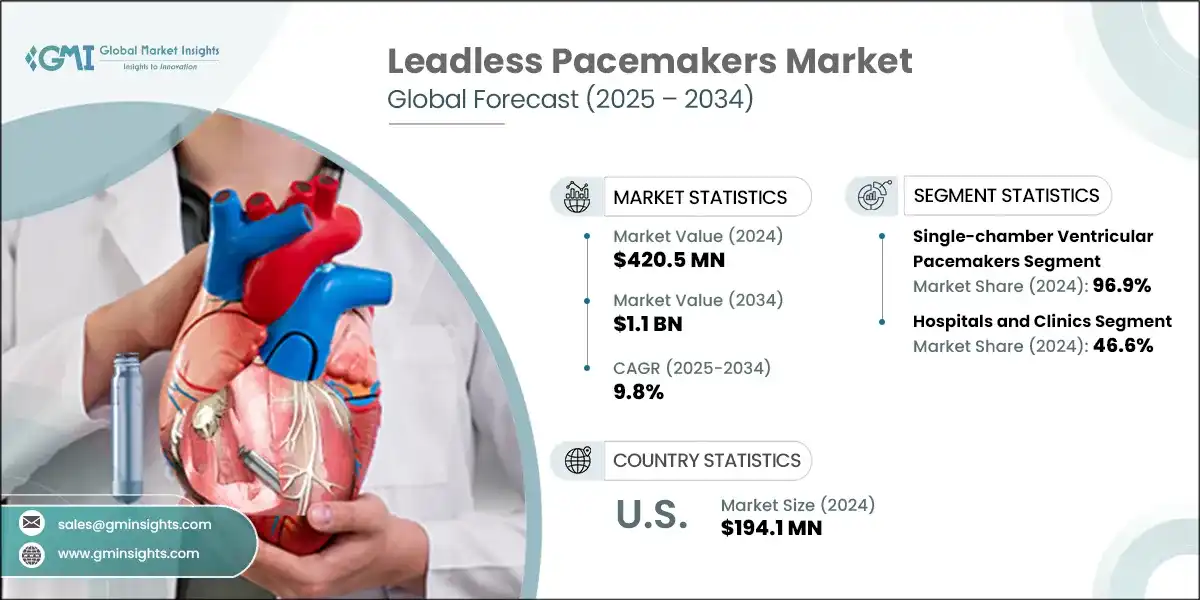
According to a recent study by Global Market Insights Inc., the global leadless pacemakers market was valued at USD 420.5 million in 2024. The market is expected to reach from USD 473.1 million in 2025 to USD 1.1 billion in 2034, growing at a CAGR of 9.8% during the forecast period. This high growth is attributed to the rising number of cardiac cases, supportive reimbursement policies, and a growing shift toward minimally invasive procedures.
Leadless Pacemakers Market Key Takeaways
Market Size & Growth
- 2024 Market Size: USD 420.5 Million
- 2034 Forecast Market Size: USD 1.1 Billion
- CAGR (2025–2034): 9.8%
Regional Dominance
- Largest Market: North America
- Fastest Growing Region: Asia Pacific
Key Market Drivers
- Increasing prevalence of cardiac disorders.
- Technological advancements.
- Favorable reimbursement policies.
- Growing preference for minimally invasive procedures.
Challenges
- High cost of leadless pacemakers.
Opportunity
- Integration with wearable tech for remote monitoring.
- Penetration into emerging markets with an improving healthcare infrastructure.
Key Players
- Market Leader: Medtronic led with over 62.9% market share in 2024.
- Leading Players: Top 5 players in this market include Abbott, Medtronic, which collectively held a market share of 100% in 2024.
Get Market Insights & Growth Opportunities
Leadless pacemakers are advanced cardiac care devices implanted directly into the heart to regulate rhythm with enhanced precision, safety, and reliability, eliminating the need for traditional leads. The key players in the market are Medtronic and Abbott.
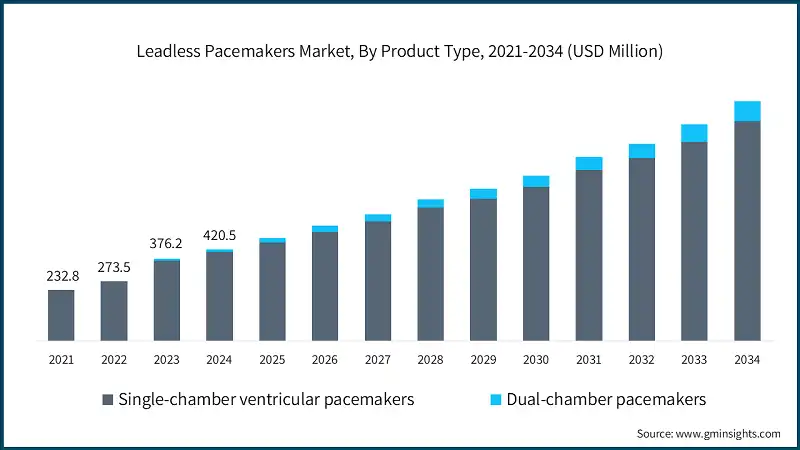
The market has increased from USD 232.8 million in 2021 and reached USD 376.2 million in 2023. This expansion was driven by several transformative trends. This momentum has been fueled by a shift in clinical preferences toward minimally invasive cardiac procedures, which offer fewer complications and quicker recovery times. These advanced devices, which eliminate the need for leads, have become increasingly popular for their simplicity and reliability. At the same time, advancements in technology, like longer battery life, smarter device communication, and catheter-based delivery systems, have made these devices more efficient and accessible to a broader range of patients and healthcare providers.
Arrhythmias, particularly atrial fibrillation, are becoming more common due to aging populations, sedentary lifestyles, and associated comorbidities like hypertension and diabetes. For instance, as per the Centers for Disease Control and Prevention (CDC), 12.1 million people in the U.S. are affected by atrial fibrillation annually. These conditions necessitate effective cardiac rhythm management, driving the adoption of leadless pacemakers, which offer reliable performance without the complications associated with leads.
Additionally, increased awareness and improved diagnostic capabilities have led to earlier detection of cardiac disorders. With early intervention, patients are more likely to benefit from advanced technologies like leadless pacemakers, which provide efficient and long-term cardiac rhythm management.
Leadless pacemakers are advanced, miniaturized cardiac devices implanted directly into the heart to regulate abnormal heart rhythms. These devices are less invasive, reducing complications associated with leads and pockets, such as infections or lead dislodgement.
To get key market trends
Leadless Pacemakers Market Trends
Technological advancements have been instrumental in driving the growth of the market, transforming the way cardiac rhythm disorders are managed. These innovations address the limitations of traditional pacemakers while enhancing device functionality, safety, and patient convenience.
- The innovation of ultra-compact leadless pacemakers has transformed cardiac care. According to the American Heart Association, these devices are 93% smaller than traditional pacemakers. These miniaturized cardiac rhythm management devices are implanted directly into the heart, eliminating the need for surgical pockets or leads.
- Additionally, modern leadless pacemakers incorporate energy-efficient technologies that extend battery life to 10-15 years. According to a 2022 study in the Journal of Cardiac Electrophysiology, these devices show a 65% longer battery life compared to traditional pacemakers. This reduces the need for frequent device replacements, improving patient outcomes and reducing healthcare costs. Enhanced battery performance and reliability make these devices more attractive to both physicians and patients.
Leadless Pacemakers Market Analysis
Learn more about the key segments shaping this market
The global market was valued at USD 232.8 million in 2021. The market size reached USD 376.2 million in 2023, from USD 273.5 million in 2022.
Based on the product type, the leadless pacemakers market is segmented into single-chamber ventricular pacemakers and dual-chamber pacemakers. The single-chamber ventricular pacemakers segment has asserted its dominance in the market, securing a significant market share of 96.9% in 2024, driven by factors such as their cost-effectiveness, ease of implantation, and clinical adoption for patients with bradycardia.
The segment is expected to exceed USD 1 billion by 2034, growing at a CAGR of 9.3% during the forecast period. On the other hand, the dual-chamber pacemakers segment is expected to grow with a CAGR of 16.7%. The growth of this segment can be attributed to the increasing preference for advanced pacing technologies that offer improved synchronization between the atria and ventricles, leading to better cardiac output and patient outcomes.
- The adoption of single-chamber pacemakers continues to grow, supported by their proven reliability and ease of implantation. Clinicians often prefer these devices for patients with isolated ventricular pacing needs due to their minimally invasive nature and reduced risk of complications associated with traditional lead-based systems.
- These pacemakers are specifically designed to address bradycardia, a common condition characterized by a slow heart rate. These devices provide essential ventricular pacing, ensuring adequate cardiac output, making them the first choice for patients with isolated ventricular pacing needs.
- Additionally, compared to dual-chamber or advanced multi-chamber pacemakers, single-chamber devices are more affordable, making them accessible to a broader patient demographic. Their cost-effectiveness is particularly significant in regions with limited healthcare resources, driving widespread adoption.
Learn more about the key segments shaping this market
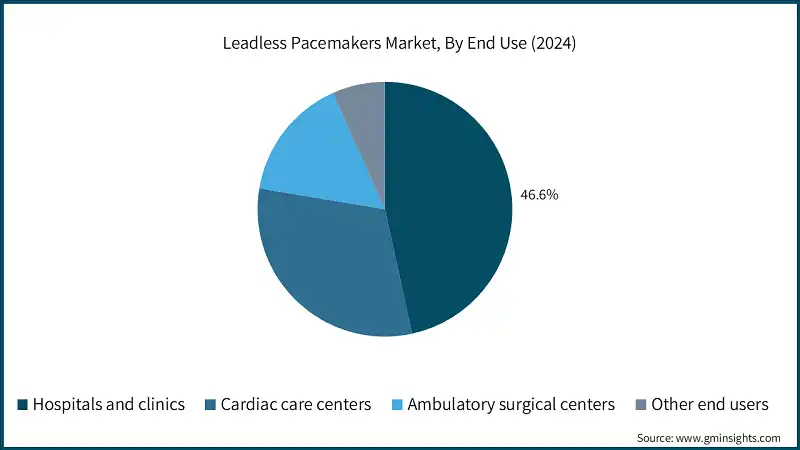
Based on the end use, the leadless pacemakers market is segmented into hospitals and clinics, cardiac care centers, ambulatory surgical centers, and other end users. The hospitals and clinics segment accounted for the highest market share of 46.6% in 2024, owing to their well-established infrastructure, availability of skilled healthcare professionals, and access to advanced diagnostic and therapeutic equipment.
- Hospitals and clinics serve as the primary centers for diagnosing and treating cardiac conditions such as arrhythmias and bradycardia. Their centralized nature ensures patients have access to the advanced diagnostic tools and expertise required for implanting leadless pacemakers, making them the top choice for this procedure.
- Hospitals and clinics invest heavily in cutting-edge infrastructure, including catheterization labs and imaging systems, essential for the safe implantation of leadless pacemakers. This advanced infrastructure supports complex cardiac procedures and enhances patient confidence in these facilities.
- The cardiac care centers segment has captured the second position in the end use segment and is expected to grow at a CAGR of 10.5% during the forecast period. This growth is driven by the increasing number of specialized cardiac facilities, the rising prevalence of cardiovascular diseases, and the growing demand for focused and efficient cardiac care.
- The ambulatory surgical centers segment held a market share of 15.7% in 2024, due to the increasing demand for minimally invasive procedures, shorter recovery times, and cost-effective treatment options.
- Other end users of leadless pacemakers, including long-term care facilities and research institutions, collectively contributed to a share of 6.7% in the leadless pacemakers market in 2024. These facilities are increasingly adopting leadless pacemakers due to their minimally invasive nature, reduced risk of infection, and suitability for elderly or high-risk patients.
Looking for region specific data?
North America dominated the global leadless pacemakers market with the highest market share of 49% in 2024.
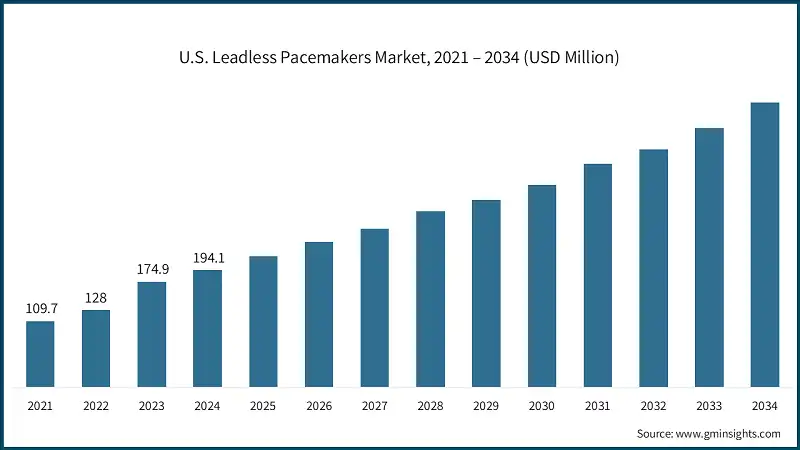
- The U.S. market was valued at USD 109.7 million and USD 128 million in 2021 and 2022, respectively. In 2024, the market size grew to USD 194.1 million from USD 174.9 million in 2023.
- North America prominently leads the leadless pacemakers market, primarily due to the strong performance of the U.S. The region captures a significant share of the market owing to its advanced healthcare infrastructure, high adoption of innovative technologies, and a robust network of healthcare providers.
- The presence of leading medical device companies and extensive clinical trials for advanced pacemaker systems has propelled market growth.
- Additionally, the high prevalence of bradycardia and other arrhythmias, coupled with favorable reimbursement policies, ensures steady adoption of leadless pacemakers.
- The U.S. healthcare system’s focus on patient-centric and minimally invasive solutions further drives market expansion.
Europe leadless pacemakers market accounted for USD 114 million in 2024.
- The region’s manufacturers and healthcare providers are increasingly adopting advanced technologies such as dual-chamber leadless pacemakers, AI-powered diagnostic tools, and implant-to-implant communication systems.
- In Europe, the German market is characterized by a strong focus on healthcare technology and innovative arrhythmia management solutions, resulting in a significant market share within the region.
- Moreover, other factors contributing to Germany's leadership include its advanced healthcare system, substantial healthcare spending, and a collaborative approach toward research and innovation in medical technology.
The Asia Pacific leadless pacemakers market is anticipated to grow at the highest CAGR of 11.9% during the analysis timeframe.
- The Asia Pacific region is rapidly growing in the market, fueled by rising healthcare expenditures and an increasing volume of minimally invasive surgical treatments.
- Japan, in particular, is spearheading this growth due to its large and aging population, which significantly raises the demand for surgical interventions related to cardiac care.
- The Japanese market benefits from substantial investments in healthcare infrastructure and the integration of advanced technologies.
- Furthermore, government initiatives aimed at enhancing healthcare quality and patient outcomes play a pivotal role in promoting advanced pacemakers across the region.
Latin America leadless pacemakers market is anticipated to record robust growth throughout the forecast period.
- Economic growth in several Latin American countries has led to higher disposable incomes and increased healthcare expenditure. As individuals and governments allocate more resources to healthcare, there is a greater demand for advanced medical procedures, including cardiac surgeries, and consequently, an increased need for effective leadless pacemakers.
- The Brazilian government’s proactive approach to approving innovative medical devices and integrating them into the healthcare system has accelerated the adoption of leadless pacemakers.
- Additionally, Brazil’s focus on improving the quality of life for elderly patients aligns with the benefits offered by minimally invasive leadless pacemaker solutions.
Middle East and Africa leadless pacemakers market is anticipated to record significant growth throughout the forecast period.
- South Africa emerges as a key player within MEA, driven by rising demand for advanced and innovative healthcare technologies. The country boasts a high rate of adoption of innovative medical technologies, including leadless pacemakers, facilitated by government initiatives and favorable healthcare funding.
- Growing patient awareness about the benefits of minimally invasive procedures and the increasing prevalence of cardiac disorders also contribute to South Africa’s notable market share.
Leadless Pacemakers Market Share
Leading companies like Medtronic and Abbott together hold 100% of the market share in the market, which remains a duopoly. These companies maintain their leadership through continuous innovation, robust clinical research, and strategic investments in next-generation pacing technologies.
Medtronic continues to strengthen its leadership in the leadless pacemakers market by integrating advanced technologies with a surgeon-centric approach. Its Micra platform exemplifies innovation in miniaturization and AV synchrony, while the company’s broader strategy includes combining robotics, real-time imaging, and data analytics to enhance procedural precision. Medtronic also invests heavily in global training programs and clinical education, ensuring widespread adoption and safe implementation of its devices.
Similarly, Abbott is redefining the leadless pacemakers landscape with its AVEIR DR system, the first dual-chamber leadless pacemaker offering synchronized atrial and ventricular pacing. Abbott’s modular platform supports future upgrades, allowing for adaptability in evolving cardiac therapies. Further, other companies in the market are in the development phase, focusing on next-generation leadless pacemakers that enhance patient outcomes, device durability, and procedural efficiency.
Leadless Pacemakers Market Companies
A few of the prominent players operating in the leadless pacemakers industry include:
- Abbott
- Medtronic
- Abbott
Abbott has rapidly gained prominence in the leadless pacemakers market with its AVEIR DR Dual Chamber Leadless Pacemaker System. This device offers synchronized pacing between the atrium and ventricle. The system’s advanced communication technology enables real-time coordination between implants, enhancing therapeutic precision and patient outcomes.
- Medtronic
Medtronic stands out in the leadless pacemakers with the Micra Transcatheter Pacing System. Its deep clinical expertise and extensive global presence have enabled it to build a strong foundation of trust among healthcare providers. The Micra series is celebrated for its miniaturized design, long battery life, and advanced features such as AV synchrony, making it suitable for a wide range of patients.
Leadless Pacemakers Market Report Attributes
| Key Takeaway | Details |
|---|---|
| Market Size & Growth | |
| Base Year | 2024 |
| Market Size in 2024 | USD 420.5 Million |
| Forecast Period 2025 – 2034 CAGR | 9.8% |
| Market Size in 2034 | USD 1.1 Billion |
| Key Market Trends | |
| Drivers | Impact |
| Increasing prevalence of cardiac disorders | Boosts demand for advanced pacing solutions like leadless pacemakers. |
| Technological advancements | Enhances device functionality, safety, and patient outcomes |
| Favorable reimbursement policies | Encourages wider adoption by reducing financial barriers for patients and providers. |
| Growing preference for minimally invasive procedures | Drives the shift toward compact, lead-free cardiac devices. |
| Pitfalls & Challenges | Impact |
| High cost of leadless pacemakers | Limits accessibility, especially in low-income regions and healthcare systems. |
| Opportunities: | Impact |
| Integration with wearable tech for remote monitoring | Enables continuous patient tracking and proactive care. |
| Penetration into emerging markets with an improving healthcare infrastructure | Expands market reach and addresses unmet clinical needs. |
| Market Leaders (2024) | |
| Market Leaders |
62.9% market share in 2024 |
| Top Players |
Collective market share in 2024 is 100% |
| Competitive Edge |
|
| Regional Insights | |
| Largest Market | North America |
| Fastest Growing Market | Asia Pacific |
| Emerging Countries | Japan, China, India, Brazil, South Africa |
| Future outlook |
|
What are the growth opportunities in this market?
Leadless Pacemakers Industry News:
- In July 2023, Abbott received FDA approval for the AVEIR dual chamber (DR) leadless pacemaker system, marking a significant advancement in the leadless pacemaker market. The AVEIR DR system utilizes advanced communication technology, enabling synchronized cardiac pacing between two leadless pacemakers implanted in the right atrium and right ventricle. This product launch helped the company acquire an enhanced customer base and generate increased business revenue.
The leadless pacemakers market research report includes an in-depth coverage of the industry with estimates and forecast in terms of revenue in USD Million and from 2021 - 2034 for the following segments:
Market, By Product Type
- Single-chamber ventricular pacemakers
- Dual-chamber pacemakers
Market, By End Use
- Hospitals and clinics
- Cardiac care centers
- Ambulatory surgical centers
- Other end use
The above information is provided for the following regions and countries:
- North America
- U.S.
- Canada
- Europe
- Germany
- UK
- France
- Italy
- Spain
- Netherlands
- Asia Pacific
- China
- Japan
- India
- Australia
- South Korea
- Latin America
- Brazil
- Mexico
- Argentina
- Middle East and Africa
- South Africa
- Saudi Arabia
- UAE
Frequently Asked Question(FAQ) :
What is the market size of the leadless pacemakers in 2024?
The market size was USD 420.5 million in 2024, with a CAGR of 9.8% expected through 2034 driven by the rising prevalence of cardiac disorders, supportive reimbursement policies, and the growing shift toward minimally invasive procedures.
What is the projected value of the leadless pacemakers market by 2034?
The market is expected to reach USD 1.1 billion by 2034, driven by technological advancements, integration with wearable tech, and expansion into emerging markets.
What is the projected size of the leadless pacemakers industry in 2025?
The market is expected to reach USD 473.1 million in 2025.
How much revenue did the single-chamber ventricular pacemakers segment generate?
Single-chamber ventricular pacemakers held 96.9% market share in 2024 and are expected to exceed USD 1 billion by 2034.
What was the valuation of the hospitals and clinics segment?
Hospitals and clinics accounted for 46.6% of the market share in 2024, driven by advanced infrastructure and skilled healthcare professionals.
Which region leads the leadless pacemakers market?
North America held 49% share in 2024, led by advanced healthcare infrastructure, high adoption of innovative technologies, and favorable reimbursement policies.
What are the upcoming trends in the leadless pacemakers industry?
Key trends include device miniaturization, longer battery life, AI-powered diagnostics, real-time remote monitoring, and integration with electronic health records.
Who are the key players in the leadless pacemakers market?
Key players include Medtronic and Abbott, together holding 100% of the market share.
Leadless Pacemakers Market Scope
Related Reports