Summary
Table of Content

Germany Epilepsy Treatment Drugs Market
Get a free sample of this report
Thank you!
Your inquiry has been received. Our team will reach out to you with the required details via email. To ensure that you don't miss their response, kindly remember to check your spam folder as well!
Form submitted successfully!
Error submitting form. Please try again.
Request Sectional Data
Thank you!
Your inquiry has been received. Our team will reach out to you with the required details via email. To ensure that you don't miss their response, kindly remember to check your spam folder as well!
Form submitted successfully!
Error submitting form. Please try again.
Germany Epilepsy Treatment Drugs Market Size
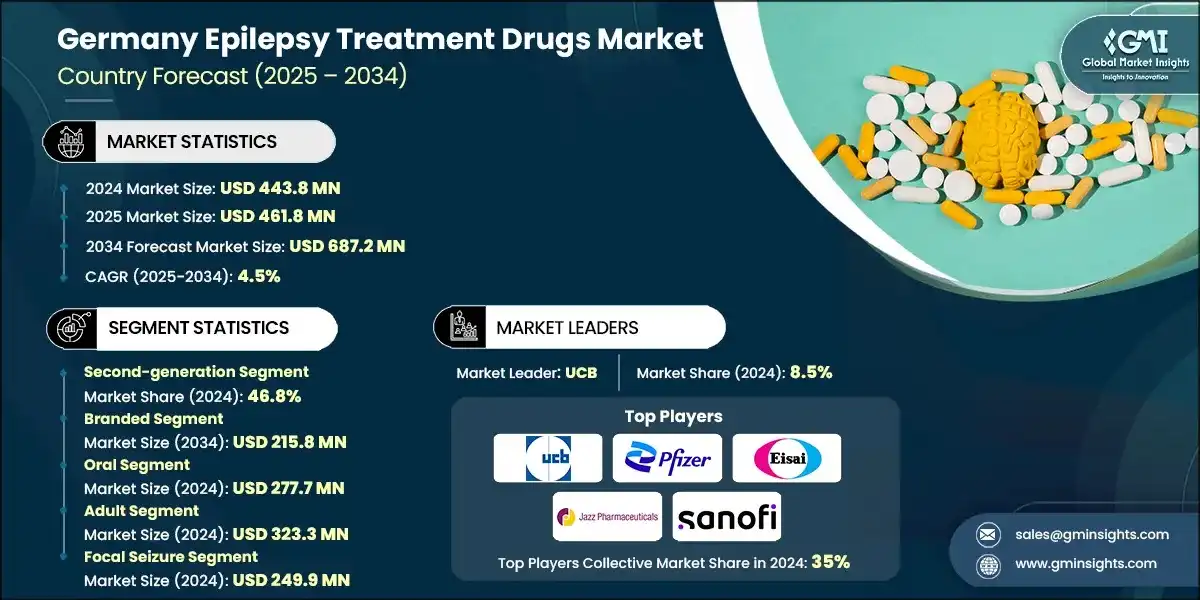
The Germany epilepsy treatment drugs market was valued at USD 443.8 million in 2024 and is projected to grow from USD 461.8 million in 2025 to USD 687.2 million by 2034, expanding at a CAGR of 4.5%, according to the latest report published by Global Market Insights Inc.
To get key market trends
The growth of the market is accelerated by several key factors, including rising prevalence of epilepsy in Germany, increasing investments in research and development activities, rising demand for novel treatment for epilepsy, and increasing geriatric population base in Germany. Major companies in the industry include UCB, Pfizer, Eisai, Jazz Pharmaceuticals, and Sanofi.
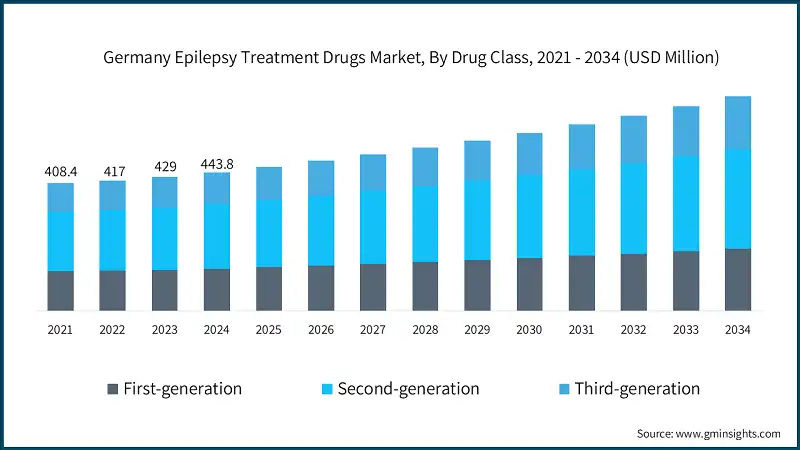
The market increased from USD 408.4 million in 2021 to USD 429 million in 2023. The increasing prevalence of epilepsy is a key factor driving the growth of the Germany epilepsy treatment drugs market, as more individuals are diagnosed with the neurological disorder, the demand for effective and accessible medication increases. Epilepsy is characterized by recurrent seizures, which often require lifelong management through anti-epileptic drugs.
For instance, in Germany, epilepsy affects approximately 0.5% to 1% of the population, and about 5% to 7% of individuals experience at least one seizure during their lifetime, according to Universitätsklinikum Erlangen's Epilepsy Centre. This highlights the widespread nature of the condition and the growing need for effective treatment options within the country. Therefore, the rising prevalence of epilepsy in the country accelerates the growth of the epilepsy treatment drugs market.
Moreover, the increasing incidence of neurological diseases and disorders associated with aging contributes to the growth of the epilepsy treatment drugs market in Germany. With advancing age, the risk of developing epilepsy increases due to age-related neurological diseases such as stroke, brain tumours, and Alzheimer's disease. An aging population creates an increased demand for safer and more individualized treatment medications for epilepsy.
Germany Epilepsy Treatment Drugs Market Report Attributes
| Key Takeaway | Details |
|---|---|
| Market Size & Growth | |
| Base Year | 2024 |
| Market Size in 2024 | USD 443.8 Million |
| Market Size in 2025 | USD 461.8 Million |
| Forecast Period 2025 – 2034 CAGR | 4.5% |
| Market Size in 2034 | USD 687.2 Million |
| Key Market Trends | |
| Drivers | Impact |
| Rising prevalence of epilepsy in Germany | Expands patient pool, driving demand for antiepileptic drugs and therapies, and encourages healthcare infrastructure improvements |
| Increasing investments in research and development activities | Accelerates innovation in drug formulations and delivery methods and leads to introduction of advanced therapies and personalized medicine. |
| Rising demand for novel treatment for epilepsy | Boosts adoption of next-generation drugs and non-invasive treatments and creates competitive advantage for companies with innovative pipelines. |
| Growing geriatric population in Germany | Higher incidence of epilepsy among elderly increases market size and drives need for safer drugs with fewer side effects for older patients |
| Pitfalls & Challenges | Impact |
| Adverse effects associated with the antiepileptic drugs | Limits patient compliance and long-term therapy adherence and increases demand for alternative treatments and monitoring solutions |
| Patent expiration | Intensifies generic competition, reducing revenue for branded drugs, and pressures companies to innovate and diversify product portfolios. |
| Opportunities: | Impact |
| Digital health and tele-epilepsy integration | Enhances remote monitoring and patient engagement and improves access to care, especially in rural or underserved areas. |
| Market Leaders (2024) | |
| Market Leaders |
8.5% market share |
| Top Players |
Collective market share in 2024 is 35% |
| Competitive Edge |
|
What are the growth opportunities in this market?
For instance, according to the study published in the European Journal of Epilepsy, it reveals that one-third to half of epilepsy patients in Germany are aged 65 or older, underscoring the significant burden of epilepsy among the elderly population. Therefore, the growing elderly demographic not only increases the prevalence of epilepsy but also amplifies the need for age-appropriate treatment solutions, making it a crucial catalyst for the market expansion in the country.
Epilepsy treatment drugs also known as anti-seizure or anticonvulsant medications are pharmaceutical agents used to control and prevent seizures in individuals diagnosed with epilepsy. These drugs work by stabilizing electrical activity in the brain, limiting the spread of abnormal signals that cause seizures. They are considered the first line and most common form of treatment for epilepsy.
Germany Epilepsy Treatment Drugs Market Trends
- Awareness about epilepsy in the country is growing, and advancements in diagnostic tools are helping identify and treat patients earlier. Advocacy groups, healthcare institutions, and global organizations, such as the World Health Organization (WHO), are working to educate people about epilepsy symptoms, dispel myths, and reduce the stigma associated with the condition. These efforts are encouraging more individuals in the country, where underdiagnosis has been a significant issue, to seek timely medical care.
- At the same time, technology is making it easier for clinicians to diagnose epilepsy more accurately and at earlier stages. Tools such as neuroimaging, electroencephalography (EEG), epilepsy monitoring device, which is estimated to reach USD 1.04 billion by 2034, and genetic testing are enhancing diagnostic precision and accuracy. For instance, video EEG monitoring and ambulatory EEG are becoming more common, helping detect seizure activity that might be missed during routine tests.
- Additionally, newborn screening programs and genomic panels for pediatric epilepsies are playing a crucial role in identifying syndromic and genetic forms of epilepsy early. This enables the timely initiation of targeted therapies, providing patients with a better chance of effective treatment.
- Thus, as awareness of epilepsy and technological advancements in diagnostic devices increase, the rate of diagnosis across the country is also rising, fostering the adoption of epilepsy treatment drugs.
Germany Epilepsy Treatment Drugs Market Analysis
Learn more about the key segments shaping this market
The Germany epilepsy treatment drugs market was valued at USD 408.4 million in 2021. The market size reached USD 429 million in 2023, from USD 417 million in 2022. Based on drug class, the market is segmented into first-generation, second-generation, and third generation. The second-generation segment dominated the market with the largest revenue share of 46.8% in 2024 and is expected to grow at a CAGR of 4.4% over the forecast period.
- The rise of patient-centered care is driving the development of second-generation anti-epileptic drugs that emphasize a person's quality of life as a significant factor, in addition to seizure control. Second-generation anti-epileptic drugs reduce cognitive and behavioral adverse effects, making them a more appropriate class of drugs for a broader population.
- Second-generation anti-epileptic drugs are increasingly being used in combination therapy, enhancing the ability to manage overall treatment. In particular, their ability to integrate into combination therapy strategies offers flexibility in treatment plans.
- Additionally, second-generation drugs include various advanced delivery systems, such as extended-release forms, which facilitate a decrease in the dosing and frequency of the medication, ultimately reducing the side effects associated with the medication.
- Moreover, their ability to be used for a variety of neurological disorders contributes considerable value to clinical practice and commercial endpoints, thereby fostering the segment’s growth in the country.
Based on type, the Germany epilepsy treatment drugs market is bifurcated into branded and generics. The branded segment held a revenue of USD 135.2 million in 2024 and is expected to reach USD 215.8 million by 2034.
- Branded antiepileptic drugs (AEDs) have changed the way epilepsy is treated by introducing innovative approaches, improving effectiveness, and helping patients achieve better outcomes.
- Some of the key branded medications include Vimpat (lacosamide), Fycompa (perampanel), Briviact (brivaracetam), and Epidiolex (cannabidiol). These drugs are designed to address various seizure types and epilepsy syndromes, especially in cases where other treatments haven’t worked. They stand out for their targeted mechanisms and user-friendly pharmacokinetic profiles, which help lower the risk of side effects and drug interactions.
- Branded antiepileptic drugs (AEDs) continue to play a vital role in managing epilepsy because of their reliable effectiveness, strict quality standards, and availability in different formulations to meet patient needs.
- However, these branded treatments often come with higher costs compared to generic options, which can make them harder to access, especially in low- and middle-income regions.
Based on route of administration, the Germany epilepsy treatment drugs market is segmented into oral, nasal, injectable, and rectal. The oral segment dominated the market with the largest revenue of USD 277.7 million in 2024 and is expected to grow at a CAGR of 4.7% over the forecast period.
- The oral segment plays a key role in the epilepsy treatment drugs market, due to its convenience, ease of use, and the wide availability of antiepileptic drugs (AEDs) in forms such as tablets, capsules, and liquids. This route of administration is especially popular for managing epilepsy over the long term, as it often requires daily medication for several years.
- Oral AEDs are a go-to choice for many patients and doctors because they are easy to take, cost-effective, and provide consistent results. This segment includes both immediate-release and extended-release options, making it easier to customize treatment plans based on the patient’s specific needs, such as their seizure type, age, and metabolism.
- For instance, Vimpat, an anti-epileptic drug of UCB, has made a significant impact in Germany and across Europe by helping treat partial-onset and generalized tonic-clonic seizures. Available as an oral tablet, oral solution, and intravenous option, Vimpat offers flexible dosing that makes it easier for patients to stick to their treatment plans.
- Thus, with these benefits and growing patient preference, the oral segment is expected to continue its upward growth trend.
Based on age group, the Germany epilepsy treatment drugs market is bifurcated into pediatric and adult. The adult segment dominated the market with the revenue of USD 323.3 million in 2024 and is expected to grow at a CAGR of 4.4% over the forecast period.
- The adult segment constitutes a substantial portion of the market, as the condition often persists beyond childhood and may also present newly in adulthood due to factors such as trauma, stroke, infections, tumors, or neurodegenerative diseases.
- For instance, as per the 2021 data published in the National Library of Medicine, among 53,883 adult patients with stroke in Germany, 6,054 (11.24%) had at least one seizure claim, and 2,130 (35.18%) patients had a seizure claim during index hospitalization, indicative of acute symptomatic seizures. Thus, as the prevalence of seizures increases among patients with stroke, so does the demand for effective epilepsy treatment drugs.
- Additionally, adults often require lifelong treatment, especially those with drug-resistant epilepsy. This leads to sustained demand for anti-epileptic drugs that offer better tolerability and fewer interactions.
- Therefore, the adult segment continues to dominate the epilepsy treatment drug market in Germany due to its high prevalence, especially among adults, and the complex nature of treatment needs.
Based on seizure type, the Germany epilepsy treatment drugs market is segmented into focal seizure, generalized seizure, and combined seizure. The focal seizure segment dominated the market with a revenue of USD 249.9 million in 2024 and is expected to grow at a CAGR of 4.5% over the forecast period.
- The focal seizure segment holds a substantial share of the epilepsy treatment drugs market, as focal seizures are the most common seizure type among individuals with epilepsy. These seizures originate in a specific area of the brain and can either remain localized or spread to other regions, often progressing into bilateral tonic-clonic seizures.
- The growth of this segment is primarily attributed to the rising prevalence of focal seizures in the country. For instance, a study published in the National Library of Medicine found that the prevalence of focal epilepsy was approximately 0.7% among the German population.
- Moreover, advancements in diagnostic imaging, including high-resolution MRI and electroencephalography (EEG), aiding in more accurate localization of seizure foci, thereby supporting tailored pharmacological strategies. In addition, increased awareness and access to screening are driving earlier diagnoses, leading to timely treatment initiation.
- Thus, as the prevalence and diagnostic rate of focal seizures increase, so does the demand for effective drug treatments, propelling the segment's growth.
Learn more about the key segments shaping this market
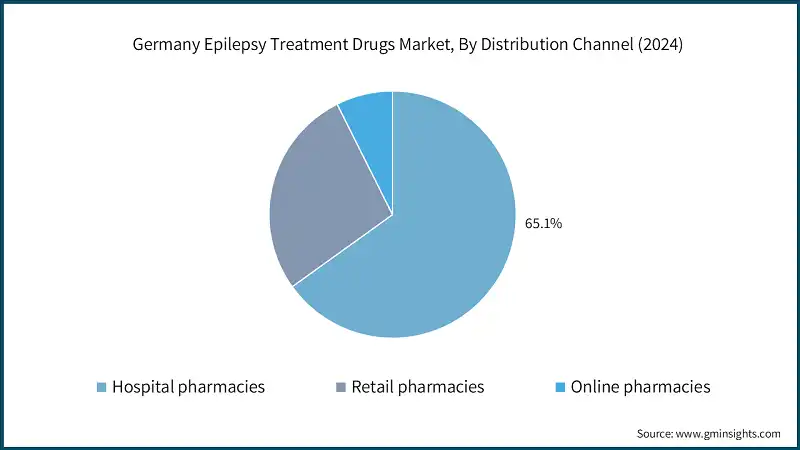
Based on distribution channel, the Germany epilepsy treatment drugs market is segmented into hospital pharmacies, retail pharmacies, and online pharmacies. The retail pharmacies segment held market revenue of USD 122.1 million in 2024 and is expected to grow at a CAGR of 4.8% over the forecast period.
- Retail pharmacies represent a significant component of the Germany epilepsy treatment drugs market due to their accessibility, extensive geographical presence, and convenience in managing chronic diseases.
- Retail outlets act as a primary distribution channel for both branded and generic antiepileptic drugs (AEDs), particularly for patients with stable epilepsy who require long-term maintenance therapy.
- Most first and second-generation AEDs, such as phenytoin, valproic acid, lamotrigine, and levetiracetam are readily available through retail channels, supporting patient adherence and ensuring timely refills.
- Thus, retail pharmacies play a critical role in the epilepsy drug supply chain by bridging specialist-prescribed therapies with everyday needs, especially for individuals on long-term monotherapy or stable polytherapy regimens.
Germany Epilepsy Treatment Drugs Market Share
- In Germany’s epilepsy treatment drugs market, leading pharmaceutical companies such as UCB, Pfizer, Eisai, Jazz Pharmaceuticals, and Sanofi are strengthening their presence through diverse product portfolios, robust regulatory compliance, and continuous innovation. Collectively, these top five players account for about 35% of the market share. Their growth is further fueled by strategic collaborations with research organizations, healthcare providers, and global distributors, enabling broader access to advanced treatment options.
- New entrants in the Germany epilepsy treatment drugs market are prioritizing innovation, focusing on underserved patient segments, and obtaining approvals for novel therapies. These emerging players are introducing advanced formulations designed to address gaps in existing treatments, particularly for drug-resistant epilepsy and rare seizure types.
- Both established and new firms are actively developing branded and generic anti-epileptic drugs to cater to diverse patient needs across age groups and seizure categories. By emphasizing improved formulations, faster regulatory clearances, and user-friendly delivery systems, they continue to reshape the competitive landscape of epilepsy treatment.
Germany Epilepsy Treatment Drugs Market Companies
Few of the prominent players operating in the Germany epilepsy treatment drugs industry include:
- Bausch Health Companies
- Dr. Reddy’s Laboratories
- Eisai
- Jazz Pharmaceuticals
- Lupin Pharmaceuticals
- Neurelis
- Novartis
- Pfizer
- Sanofi
- Sun Pharmaceutical Industries
- UCB
- Dr. Reddy’s Laboratories Dr. Reddy’s Laboratories, through its German subsidiary Betapharm Arzneimittel GmbH, plays a vital role in providing high-quality generic medicines for epilepsy treatment.
- Jazz Pharmaceuticals Jazz Pharmaceuticals is a global biopharmaceutical company recognized for its innovative approach to treating complex neurological disorders, including epilepsy.
- Novartis is pharmaceutical company known for its commitment to advancing healthcare through innovation and research. In Germany, Novartis contributes meaningfully to the treatment of neurological disorders, including epilepsy, by supporting access to high-quality therapies and promoting awareness around rare and complex conditions.
Germany Epilepsy Treatment Drugs Industry News:
- In August 2025, Jazz Pharmaceuticals and Saniona have entered into a global licensing agreement granting Jazz exclusive worldwide rights to develop SAN2355, a highly differentiated, subtype-selective Kv7.2/Kv7.3 activator currently in preclinical development for epilepsy and other potential indications. Designed to overcome the limitations of non-selective Kv7-targeting compounds, SAN2355 represents a significant advancement in treatment innovation. Under the agreement, Jazz will lead and finance all further development, regulatory submissions, and global commercialization efforts. This initiative is expected to provide Jazz with a strong competitive advantage in the epilepsy treatment market.
The Germany epilepsy treatment drugs market research report includes an in-depth coverage of the industry with estimates and forecast in terms of revenue in USD Million and from 2021 – 2034 for the following segments:
Market, By Drug Class
- First-generation
- Second-generation
- Third-generation
Market, By Type
- Branded
- Generics
Market, By Route of Administration
- Oral
- Nasal
- Injectable
- Rectal
Market, By Age Group
- Pediatric
- Adult
Market, By Seizure Type
- Focal seizure
- Generalized seizure
- Combined seizure
Market, By Distribution Channel
- Hospital pharmacies
- Retail pharmacies
- Online pharmacies
Frequently Asked Question(FAQ) :
What are the key trends in the Germany epilepsy treatment drugs industry?
Key trends include growing awareness about epilepsy, advancements in diagnostic tools such as neuroimaging and EEG, and the increasing adoption of genetic testing and monitoring devices for precise and early diagnosis.
Who are the key players in the Germany epilepsy treatment drugs market?
Key players include Bausch Health Companies, Dr. Reddy’s Laboratories, Eisai, Jazz Pharmaceuticals, Lupin Pharmaceuticals, Neurelis, Novartis, Pfizer, and Sanofi.
Which distribution channel led the Germany epilepsy treatment drugs market?
The retail pharmacies segment led the market with revenues of USD 122.1 million in 2024 and is projected to grow at a CAGR of 4.8% over the forecast period.
Which route of administration dominated the Germany epilepsy treatment drugs market?
The oral route dominated the market with a revenue of USD 277.7 million in 2024 and is expected to grow at a CAGR of 4.7% during the forecast period.
What was the market size of the Germany epilepsy treatment drugs market in 2024?
The market size was USD 443.8 million in 2024, with a CAGR of 4.5% expected through 2034, driven by the rising prevalence of epilepsy, increasing R&D investments, demand for novel treatments, and a growing geriatric population in Germany.
What was the market size of the Germany epilepsy treatment drugs market in 2025?
The market is projected to reach USD 461.8 million in 2025.
What was the valuation of the branded drugs segment?
The branded drugs segment held a revenue of USD 135.2 million in 2024 and is projected to reach USD 215.8 million by 2034.
What is the projected value of the Germany epilepsy treatment drugs market by 2034?
The market is expected to reach USD 687.2 million by 2034, supported by advancements in diagnostic tools, increased awareness, and technological innovations in epilepsy treatment.
Germany Epilepsy Treatment Drugs Market Scope
Related Reports