Summary
Table of Content

Cardiovascular Devices Market
Get a free sample of this report
Form submitted successfully!
Error submitting form. Please try again.
Thank you!
Your inquiry has been received. Our team will reach out to you with the required details via email. To ensure that you don't miss their response, kindly remember to check your spam folder as well!
Request Sectional Data
Thank you!
Your inquiry has been received. Our team will reach out to you with the required details via email. To ensure that you don't miss their response, kindly remember to check your spam folder as well!
Form submitted successfully!
Error submitting form. Please try again.
Cardiovascular Devices Market Size
This substantial growth is driven by an increasing number of patients suffering from cardiovascular diseases, an expanding geriatric population, rising government initiatives, technological advancements in cardiovascular devices, and rising demand for minimally invasive procedures.
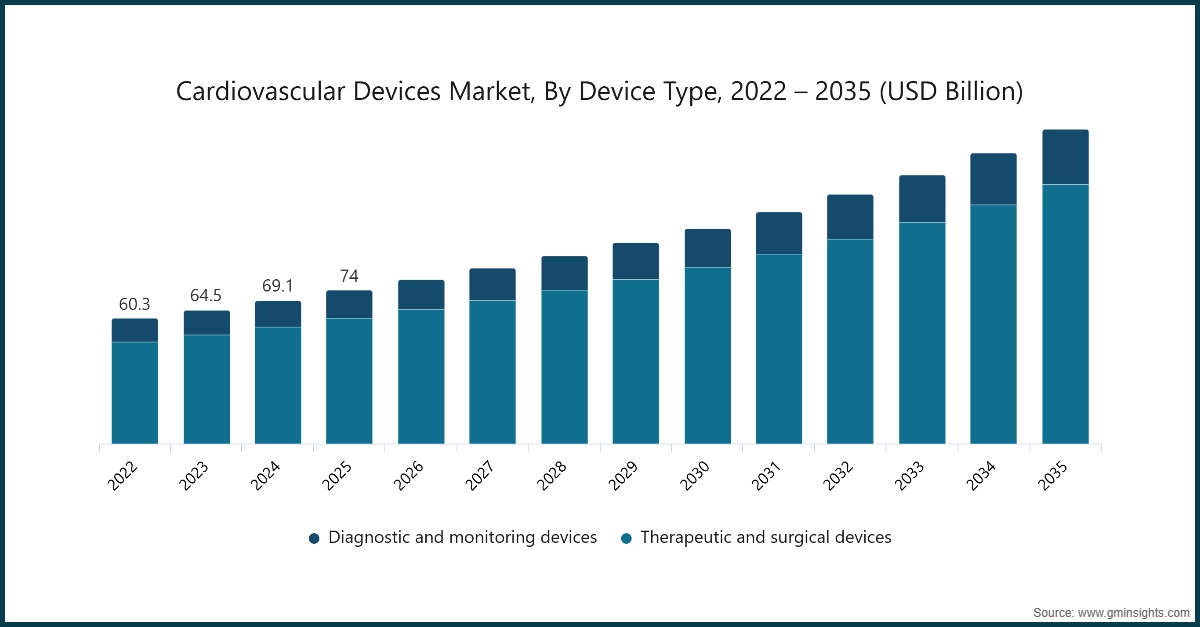
The market increased from USD 64.5 billion in 2023 to USD 69.1 billion in 2024. The increasing global burden of cardiovascular diseases (CVDs) is a significant catalyst driving the growth of the cardiovascular devices market. According to the World Health Organization, an estimated 19.8 million people died from CVDs in 2022, accounting for approximately 32% of all global deaths, with 85% of these fatalities caused by heart attacks and strokes. This alarming prevalence reflects the growing impact of sedentary lifestyles, rising obesity rates, unhealthy dietary patterns, tobacco use, and harmful alcohol consumption. As populations age and chronic disease risk factors become more widespread, healthcare systems face increasing demand for early diagnosis, continuous monitoring, and advanced treatment options. This trend is accelerating the adoption of minimally invasive cardiovascular devices, next-generation stents, implantable cardiac devices, wearable heart monitors, and AI-assisted diagnostic tools. Additionally, rising awareness of preventive cardiac care and expanding access to healthcare in emerging economies are further boosting device utilization. Collectively, the escalating global CVD burden and the urgent need for effective diagnostic and therapeutic solutions position this trend as a critical driver of sustained growth in the market.
Cardiovascular Devices Market Key Takeaways
Market Size & Growth
- 2025 Market Size: USD 74 Billion
- 2026 Market Size: USD 79 Billion
- 2035 Forecast Market Size: USD 152 Billion
- CAGR (2026–2035): 7.5%
Regional Dominance
- Largest Market: North America
- Fastest Growing Region: Asia Pacific
Key Market Drivers
- Increasing number of patients suffering from cardiovascular diseases.
- Expanding geriatric population.
- Rising government initiatives.
- Technological advancements in cardiovascular devices.
- Rising demand for minimally invasive procedures.
Challenges
- High risk associated with cardiac procedures.
- Stringent regulatory scenario.
Opportunity
- Increasing applications of AI in cardiovascular diseases.
Key Players
- Market Leader: Medtronic led with over 25% market share in 2025.
- Leading Players: Top 5 players in this market include Medtronic, Abbott Laboratories, Boston Scientific, Johnson & Johnson MedTech, Terumo, which collectively held a market share of 45% in 2025.
Get Market Insights & Growth Opportunities
Additionally, the rapid growth of the global geriatric population is a major driver of the cardiovascular devices market. According to the World Health Organization, by 2030, 1 in 6 people worldwide will be aged 60 years or over, with the population in this age group rising from 1 billion in 2020 to 1.4 billion. By 2050, the number of people aged 60 and above will double to 2.1 billion, while the population aged 80 years or older is projected to triple to 426 million. As cardiovascular disease risk increases sharply with age, this demographic shift significantly boosts demand for diagnostic, monitoring, and therapeutic cardiovascular devices, supporting strong market expansion.
Cardiovascular devices are medical instruments, tools, and implantable or external systems designed to monitor, support, or restore the normal functioning of the heart and blood vessels. These devices help detect abnormalities, maintain circulation, regulate heart rhythm, improve blood flow, or assist in the diagnosis and long-term management of cardiovascular conditions.
The global cardiovascular devices market was valued at USD 74 billion in 2025 and is projected to grow from USD 79 billion in 2026 to USD 152 billion by 2035, expanding at a CAGR of 7.5%, according to the latest report published by Global Market Insights Inc.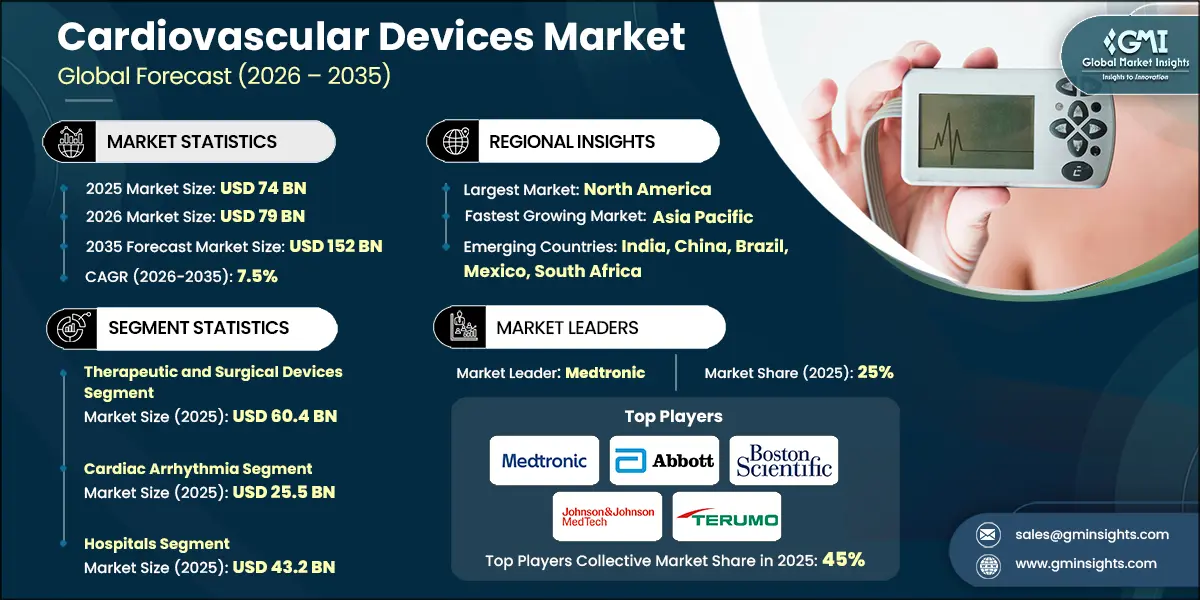
To get key market trends
Cardiovascular Devices Market Trends
- Technological advancements are one of the drivers of growth in the global cardiovascular devices industy. Innovations in device design, materials, miniaturization, and digital integration have significantly improved the accuracy, safety, and clinical usability of cardiovascular solutions. Breakthroughs such as next-generation stents, advanced electrophysiology systems, and enhanced imaging tools enable earlier diagnosis and more effective treatment of cardiovascular diseases. These improvements not only enhance patient outcomes but also increase physician adoption, thereby expanding market penetration.
- The shift toward minimally invasive and image-guided procedures is further accelerating technological progress. Devices such as transcatheter heart valves, steerable catheters, and robotic-assisted systems reduce surgical trauma, shorten hospital stays, and lower overall treatment costs.
- As hospitals and cardiology centers increasingly prioritize minimally invasive interventions, manufacturers are investing heavily in R&D to introduce products with superior precision and navigational capabilities. These advancements create a strong competitive environment and stimulate faster market expansion.
- Digital health integration is another major technological catalyst. The incorporation of artificial intelligence (AI), machine learning (ML), and remote monitoring technologies into cardiovascular devices such as smart pacemakers, wearable heart monitors, and cloud-connected diagnostics enables continuous data collection and personalized care. These technologies allow clinicians to detect arrhythmias and cardiovascular events earlier, reducing readmission and mortality rates.
- As regulatory bodies increasingly support innovation through fast-track approvals, technologically advanced cardiovascular devices are achieving quicker market entry, further propelling overall market expansion.
Cardiovascular Devices Market Analysis
Learn more about the key segments shaping this market
Based on device type, the market is segmented into diagnostic and monitoring devices, and therapeutic and surgical devices. The therapeutic and surgical devices segment held revenue of USD 60.4 billion in 2025.
- The therapeutic and surgical devices segment includes a broad suite of life-sustaining cardiovascular tools such as catheters, coronary intervention devices, cardiac rhythm management devices, structural heart devices, and cardiac surgery tools. These devices directly restore or replace essential cardiac function, positioning them at the core of interventional cardiology and cardiac surgery.
- Therapeutic and surgical devices dominate the market because they offer definitive treatment solutions, often required urgently in life-threatening heart conditions. Continuous innovation, such as minimally invasive catheters, next-generation stents, durable heart valves, and smaller, smarter cardiac rhythm devices, enhances procedural success, reduces hospital stays, and expands eligibility for high-risk patients.
- For instance, in the U.S. alone, about 3 million people currently live with a pacemaker, and around 200,000 new pacemakers are implanted each year for patients suffering from bradycardia or abnormal heart rhythms. This sustained, high-volume implantation rate demonstrates the essential role of therapeutic and surgical cardiac devices in ongoing patient management and underscores why this segment commands the largest share of the market.
- Therefore, the therapeutic and surgical devices segment maintains a dominant position in the market because it delivers indispensable, life-saving interventions that address the most critical cardiac conditions.
Based on application, the market is segmented into coronary artery disease, cardiac arrhythmia, heart failure, and other applications. The cardiac arrhythmia segment dominated the market with the largest revenue of USD 25.5 billion in 2025.
- Cardiac arrhythmia accounts for a major share of the cardiovascular devices market because of its high global prevalence and the increasing number of patients requiring continuous monitoring and intervention. Irregular heart rhythms such as atrial fibrillation, tachycardia, and bradycardia are becoming more common as aging populations rise, and lifestyle-related risk factors such as obesity, hypertension, and diabetes increase worldwide. This creates sustained demand for diagnostic and therapeutic solutions.
- Advancements in arrhythmia-related technologies further reinforce the strong market position of the cardiac arrhythmia segment. Innovations such as AI-enabled ECG interpretation, advanced catheter ablation systems, and remote monitoring platforms allow clinicians to diagnose arrhythmias earlier and manage them more effectively. Hospitals and cardiology centers increasingly prefer these technologies because they reduce procedure time, improve treatment accuracy, and support personalized care. These benefits drive higher adoption, pushing arrhythmia-related devices ahead of other cardiovascular device categories.
- The clinical severity and widespread impact of arrhythmias also contribute significantly to their leading market share. According to the American Heart Association (AHA), in 2021, cardiovascular diseases including arrhythmias such as tachycardia were responsible for about 19.41 million deaths globally, making cardiovascular disease the leading cause of death worldwide. Such substantial mortality levels highlight the urgent need for timely diagnosis and intervention, motivating healthcare systems to invest heavily in arrhythmia detection and management technologies.
Learn more about the key segments shaping this market
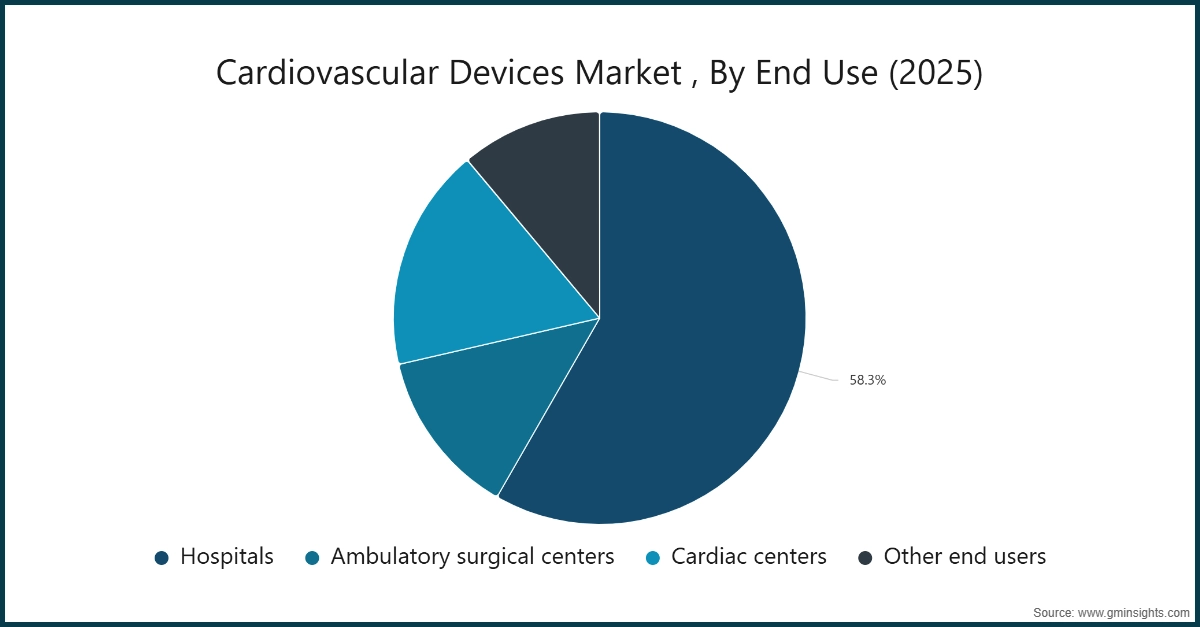
Based on end use, the cardiovascular devices market is segmented into hospitals, ambulatory surgical centers, cardiac centers, and other end users. The hospitals segment accounted for USD 43.2 billion with a revenue share of 58.3% in 2025.
- Hospitals represent a major end-user segment in the market due to their advanced infrastructure, availability of multidisciplinary cardiology teams, and ability to manage both routine and complex cardiovascular conditions. They play a critical role in diagnostic procedures, interventional cardiology, cardiac surgeries, and the administration of device-based therapies such as stents, pacemakers, and cardiac monitoring systems. Hospitals offer comprehensive cardiovascular care under one roof, integrating emergency response, acute care, and long-term disease management.
- Additionally, hospitals play an essential role in the early detection and prevention of cardiovascular diseases by offering structured diagnostic pathways, including echocardiography, cardiac stress tests, angiography, and advanced imaging modalities such as CT angiography and cardiac MRI. These capabilities enable timely identification of risk factors and early-stage cardiac abnormalities, supporting preventive cardiology strategies. Through integrated outpatient clinics, cardiac rehabilitation units, and multidisciplinary heart teams, hospitals ensure continuity of care from initial diagnosis to follow-up management, thereby enhancing treatment outcomes and reducing hospital readmissions.
- Hospitals also support public health initiatives and clinical research by serving as major centers for cardiovascular screening programs and clinical studies involving new cardiac devices. Their integration with electronic health record (EHR) systems and adherence to cardiology guidelines ensures accurate treatment tracking, continuous patient monitoring, and improved outcomes across diverse patient populations.
Looking for region specific data?
North America Cardiovascular Devices Market
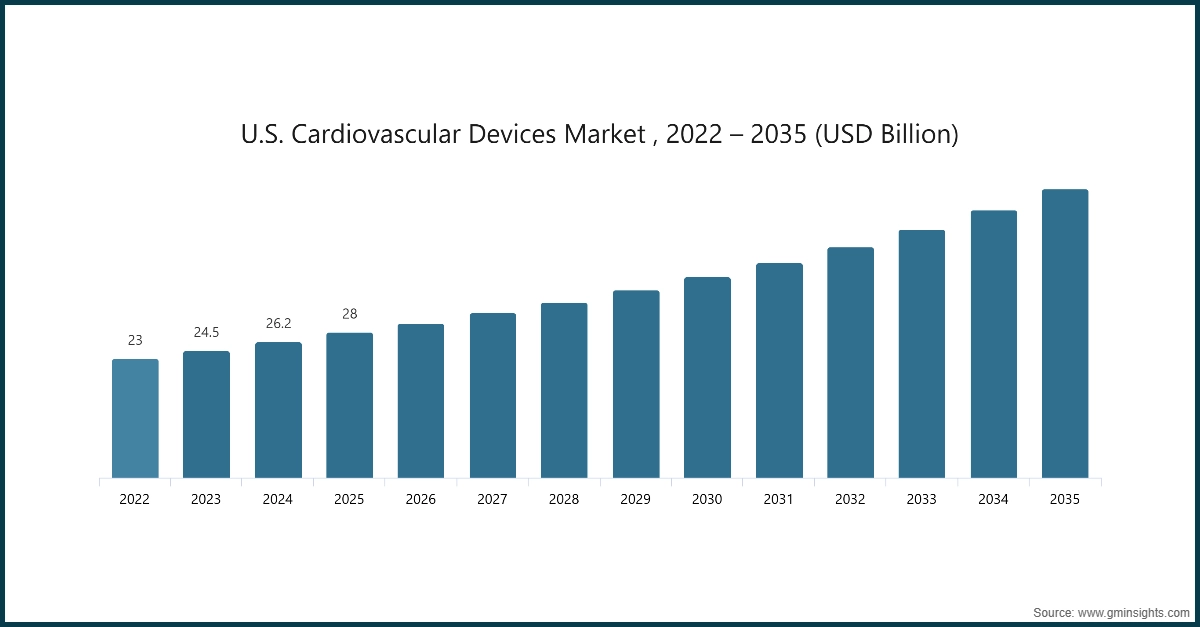
The North America region accounted for 41.8% of the global cardiovascular devices industry share in 2025, driven by the rising burden of cardiovascular diseases.
- North America continues to witness a high burden of cardiovascular diseases (CVDs), driven by sedentary lifestyles, obesity, and hypertension. This rising patient pool increases the demand for advanced diagnostic and therapeutic cardiovascular devices.
- With a growing prevalence of heart attacks, arrhythmias, and heart failure, hospitals and specialty centers are investing more in minimally invasive cardiac devices. This trend supports strong market demand for stents, pacemakers, defibrillators, and cardiac monitoring systems.
- The increasing rate of CVD-related hospitalizations also encourages faster adoption of technologically advanced devices. Continuous innovation in interventional cardiology equipment further aligns with the region's escalating disease burden.
- The U.S. cardiovascular devices market remains one of the largest globally due to the high burden of cardiovascular diseases and the strong clinical focus on early diagnosis and intervention. A combination of aging demographics, widespread lifestyle‑related risk factors, and increasing incidence of hypertension, obesity, and diabetes continues to elevate demand for advanced cardiovascular care. As a result, hospitals and ambulatory centers are consistently investing in diagnostic systems, interventional devices, and monitoring technologies to manage the growing patient load.
- Technological innovation further strengthens the market, as manufacturers introduce increasingly sophisticated solutions such as minimally invasive cardiac devices, AI‑enabled diagnostic tools, smart implantable, and remote monitoring platforms. These innovations support improved patient outcomes, reduce procedure time, and enhance long‑term disease management, making them highly attractive to U.S. health systems.
- The scale and severity of cardiovascular disease in the U.S. significantly reinforce demand for these technologies. According to the CDC, heart disease remains the leading cause of death across every racial and ethnic group and in both men and women. One person dies from cardiovascular disease in the U.S. every 34 seconds, and there were 919,032 deaths from cardiovascular diseases in 2023, accounting for 1 in every 3 deaths. This substantial public health burden pushes healthcare providers to prioritize early detection and continuous management, thereby supporting strong and sustained uptake of cardiovascular devices across the country.
Europe Cardiovascular Devices Market
Europe market accounted for USD 21.1 billion in 2025 and is anticipated to show lucrative growth over the forecast period.
- Europe’s rapidly aging population significantly contributes to rising cardiovascular disease incidence. Older adults typically experience higher rates of heart failure, arrhythmias, and coronary artery disease, driving device utilization.
- For instance, according to Eurostat, in 2025, the EU population was estimated at 450.6 million people, and more than one-fifth (22.0%) of it was aged 65 years and over.
- The geriatric demographic increasingly requires implants such as pacemakers, valve replacement devices, and cardiac monitors. As a result, hospitals and clinics across Europe are expanding their cardiovascular care infrastructure, stimulating the market growth.
Germany market is projected to experience steady growth between 2026 and 2035.
- Technological advancements in cardiovascular devices are a key force propelling the growth of Germany’s cardiovascular devices market.
- Continuous innovation in minimally invasive cardiac interventions, AI-enabled diagnostic systems, remote cardiac monitoring solutions, and next-generation implantable devices has significantly improved the accuracy and efficiency of cardiovascular care across the country.
- Germany’s strong medical technology ecosystem, supported by advanced R&D capabilities, high healthcare spending, and rapid adoption of digital health tools, accelerates the introduction of cutting-edge solutions such as smart pacemakers, electrophysiology mapping systems, and image-guided interventional devices.
- These innovations enable earlier diagnosis, reduce procedure complexity, and enhance long-term patient outcomes, driving widespread clinical adoption and strengthening the overall market for cardiovascular technologies.
Asia Pacific Cardiovascular Devices Market
The Asia Pacific region is projected to show a lucrative growth of about 8.4% during the forecast period.
- The region is witnessing rapid growth due to the rising prevalence of cardiovascular diseases.
- For example, according to the NIH, cardiovascular mortality is projected to increase by 91.2% from 2025 to 2050, indicating that there is an immediate need for new cardiac monitoring solutions.
- Therefore, as the prevalence of cardiovascular diseases increases in the region, so does the requirement for cardiovascular devices, positively contributing to the growth of the market.
Japan cardiovascular devices market is poised to witness lucrative growth through 2035.
- Japan’s market continues to grow steadily, supported by the rising number of individuals affected by cardiovascular conditions and the country’s rapidly aging population.
- For instance, according to the World Economic Forum, more than 1 in 10 people in Japan are now aged 80 years or older, making Japan the nation with the world’s oldest demographic structure.
- Collaboration between academic institutions, government bodies, and private-sector companies is significantly enhancing the development of cardiovascular devices. These partnerships are accelerating innovation in mobile monitoring systems, telemetry solutions, and AI-driven technologies designed for advanced cardiovascular detection and management.
Latin America Cardiovascular Devices Market
Brazil is experiencing significant growth in the cardiovascular devices.
- The expansion of the cardiovascular devices market in the country is strongly linked to rapid technological progress and the launch of advanced solutions for cardiac monitoring, alongside the rising burden of cardiovascular disease across the population.
- Noncommunicable diseases (NCDs) remain a major public health challenge, accounting for 72% of all deaths in Brazil. Cardiovascular diseases (CVDs) represent the primary cause of mortality, making up nearly one-third of all NCD-related deaths.
- Together, these factors highlight a strong and sustained need for advanced cardiovascular solutions in Brazil, reinforcing continuous market expansion as healthcare providers prioritize earlier detection, improved monitoring, and more effective long-term management of cardiovascular conditions.
Middle East and Africa Cardiovascular Devices Market
The cardiovascular devices industry in Saudi Arabia is significantly driven by the rising number of individuals affected by cardiovascular diseases (CVDs).
- Saudi Arabia has seen a notable increase in risk factors such as obesity, diabetes, hypertension, and sedentary lifestyles, conditions that elevate the likelihood of developing heart‑related complications. As these chronic diseases continue to grow in prevalence, healthcare providers are investing more heavily in advanced cardiovascular diagnostic and treatment technologies to manage the expanding patient population.
- Saudi Arabia’s demographic trends also play an important role, as a growing middle‑aged and elderly population is more susceptible to heart disease and requires long‑term cardiac care. This shift has accelerated demand for a wide range of cardiovascular devices, including monitoring systems, interventional solutions, and implantable devices. Hospitals and specialty cardiac centers are expanding capacity and adopting advanced equipment to improve early detection and intervention.
Cardiovascular Devices Market Share
- The top players in the cardiovascular devices industry include Medtronic, Abbott Laboratories, Boston Scientific, Johnson & Johnson MedTech, and Terumo, which together accounted for an estimated 45% of the global market in 2025.
- Leading companies in the cardiovascular devices industry are increasingly focusing on advanced technologies and optimized device engineering to enhance clinical performance and diagnostic accuracy. Manufacturers are integrating innovations such as AI‑enabled cardiac imaging, real‑time hemodynamic monitoring, robotic‑assisted intervention systems, and next‑generation implantable cardiac devices. These advancements improve treatment precision, reduce procedural risks, and support continuous monitoring for conditions like arrhythmias, heart failure, and coronary artery disease. The emphasis on smarter, more connected devices is accelerating early diagnosis and expanding the adoption of high‑performance cardiovascular solutions.
- Market participants are also strengthening collaborations with hospitals, cardiology centers, medical universities, and national health programs to advance cardiovascular research and expand device deployment. Such partnerships enable the introduction of state‑of‑the‑art interventional tools, support joint development of disease‑specific diagnostic protocols, and improve integration of digital technologies within cardiac care pathways. These alliances are particularly impactful in regions experiencing rapid cardiac care modernization, including the Middle East, Asia‑Pacific, and Latin America, where investments in advanced cardiovascular infrastructure and specialized training programs are increasing.
- With rising clinical complexity and evolving regulatory expectations, cardiovascular device manufacturers are intensifying adherence to global standards for safety, reliability, and performance. Companies are focusing on rigorous device validation, durability testing, biocompatibility assessments, and real‑world performance studies to meet guidelines set by regulatory bodies such as the U.S. FDA, European MDR, and Saudi Food and Drug Authority (SFDA). Investments in standardized manufacturing, certified testing facilities, and robust quality‑management systems are ensuring that cardiovascular technologies achieve compliance and are ready for large‑scale clinical deployment.
- Emerging regional manufacturers are developing cost‑effective cardiovascular solutions and scalable production models to meet the needs of value‑driven healthcare markets. These companies are building capabilities in essential device categories such as cardiac monitoring systems, stents, catheters, and diagnostic imaging accessories. Their affordable yet reliable offerings enable broader access to cardiovascular care across therapeutic areas including coronary artery disease, arrhythmias, structural heart disease, and heart failure. As demand for accessible and high‑quality cardiac solutions continues to rise, these providers are becoming increasingly influential in shaping the regional market landscape.
Cardiovascular Devices Market Companies
Few of the prominent players operating in the cardiovascular devices industry include:
- Abbott Laboratories
- AngioDynamics
- Biotronik
- Boston Scientific
- Johnson & Johnson MedTech
- Koninklijke Philips
- Medtronic
- Meril Life Sciences
- MicroPort Scientific
- Olympus
- Penumbra
- Relisys Medical Devices
- Sahajanand Medical Technologies
- Terumo
- Translumina Therapeutics
- Boston Scientific
Boston Scientific enhances its competitive edge in the cardiovascular devices market through innovation in interventional cardiology, electrophysiology, and structural heart solutions. With strong capabilities in drug-eluting stents, cardiac ablation, and imaging-guided procedures, the company delivers consistent performance across high-growth segments. Boston Scientific’s focus on high-quality technologies and global collaboration strengthens its role as a major contributor to advancing minimally invasive cardiovascular therapies.
Terumo strengthens its presence in the cardiovascular devices market through a diverse portfolio of interventional cardiology tools, including guidewires, catheters, and access devices. Its strong global share and sustained innovation reflect deep procedural expertise and reliability across coronary and peripheral interventions. Terumo’s commitment to precision engineering, operational consistency, and clinician-aligned product development supports improved outcomes in catheter-based cardiovascular therapies.
Koninklijke Philips strengthens its role in the cardiovascular devices market through advanced imaging, diagnostics, and interventional solutions used across catheterization labs and cardiology centers. The company’s strong presence in global cardiology technology rankings reflects its continued investment in high-precision imaging, workflow optimization, and clinician-focused platforms that support minimally invasive cardiovascular procedures. Philips’ commitment to integrated cardiac care and reliable device-software ecosystems reinforces its value among healthcare providers seeking efficient and data-driven cardiovascular solutions.
Cardiovascular Devices Market Report Attributes
| Key Takeaway | Details |
|---|---|
| Market Size & Growth | |
| Base Year | 2025 |
| Market Size in 2025 | USD 74 Billion |
| Market Size in 2026 | USD 79 Billion |
| Forecast Period 2026-2035 CAGR | 7.5% |
| Market Size in 2035 | USD 152 Billion |
| Key Market Trends | |
| Drivers | Impact |
| Increasing number of patients suffering from cardiovascular diseases | Drives higher demand for diagnostic, monitoring, and interventional cardiovascular devices as disease prevalence expands. |
| Expanding geriatric population | Boosts market growth because aging individuals face greater cardiovascular risk and require continuous cardiac care and interventions |
| Rising government initiatives | Accelerates adoption of advanced cardiovascular technologies through improved funding, screening programs, and healthcare infrastructure support |
| Technological advancements in cardiovascular devices | Stimulates market expansion by enabling more accurate diagnostics, improved treatment outcomes, and enhanced patient monitoring. |
| Rising demand for minimally invasive procedures | Increases uptake of advanced cardiovascular devices as patients and clinicians prefer safer, faster recovery treatment options. |
| Pitfalls & Challenges | Impact |
| High risk associated with cardiac procedures | Limits patient acceptance and increases clinical caution, slowing adoption of certain cardiovascular devices. |
| Stringent regulatory scenario | Delays product approvals and raises compliance costs, creating barriers for market entry and new device launches. |
| Opportunities: | Impact |
| Increasing applications of AI in cardiovascular diseases | The increasing use of AI in cardiovascular diseases is boosting market growth by enabling faster, more accurate diagnosis and treatment. |
| Market Leaders (2025) | |
| Market Leader |
25% Market Share |
| Top Players |
Collective market share of 5 companies is 45% |
| Competitive Edge |
|
| Regional Insights | |
| Largest Market | North America |
| Fastest growing market | Asia Pacific |
| Emerging countries | India, China, Brazil, Mexico, South Africa |
| Future outlook |
|
What are the growth opportunities in this market?
Cardiovascular Devices Industry News:
- In November 2024, Johnson & Johnson MedTech received FDA approval for its VARIPULSE Pulsed Field Ablation (PFA) Platform, designed for the treatment of drug-refractory paroxysmal atrial fibrillation (AFib). This significant development is based on promising results from the admIRE clinical trial, which demonstrated a remarkable 100% acute procedural success rate among participants.
The cardiovascular devices market research report includes an in-depth coverage of the industry with estimates and forecast in terms of revenue in USD Million and from 2022 – 2035 for the following segments:
Market, By Device Type
- Diagnostic and monitoring devices
- Electrocardiogram systems
- Holter and event monitors
- Remote cardiac monitoring devices
- Cardiac diagnostic ultrasound
- Other diagnostic and monitoring devices
- Therapeutic and surgical devices
- Catheters
- Electrophysiology ablation catheters
- Electrophysiology diagnostic and mapping catheters
- Interventional catheters
- Coronary intervention devices
- Drug eluting stents
- Bare metal stents
- Bioresorbable scaffolds
- PTCA balloons
- Atherectomy devices
- Guidewires
- Embolic protection devices
- Other coronary intervention devices
- Cardiac rhythm management (CRM) devices
- Pacemakers
- Implantable cardioverter defibrillators
- Cardiac resynchronization therapy devices
- Implantable loop recorders
- Other cardiac rhythm management devices
- Structural heart devices
- LAA closure devices
- Heart valves
- Cardiac surgery devices
- Coronary artery bypass graft (CABG) surgical tools
- Other cardiac surgical devices
- Ventricular assist devices
- Catheters
Market, By Application
- Coronary artery disease
- Cardiac arrhythmia
- Heart failure
- Other applications
Market, By End Use
- Hospitals
- Ambulatory surgical centers
- Cardiac centers
- Other end users
The above information is provided for the following regions and countries:
- North America
- U.S.
- Canada
- Europe
- Germany
- UK
- France
- Italy
- Spain
- Netherlands
- Asia Pacific
- China
- India
- Japan
- Australia
- South Korea
- Latin America
- Brazil
- Mexico
- Argentina
- Middle East and Africa
- Saudi Arabia
- South Africa
- UAE
Frequently Asked Question(FAQ) :
What is the market size of the cardiovascular devices in 2025?
The market size was USD 74 billion in 2025, with a CAGR of 7.5% expected through 2035, driven by rising cardiovascular disease prevalence, and increasing demand for minimally invasive procedures.
What is the projected value of the cardiovascular devices industry by 2035?
The cardiovascular devices market is expected to reach USD 152 billion by 2035, fueled by technological advancements, AI integration, and growing global disease burden.
What is the cardiovascular devices industry size projected for 2026?
The market is projected to reach USD 79 billion in 2026.
How much revenue did the therapeutic and surgical devices segment generate in 2025?
The therapeutic and surgical devices segment generated USD 60.4 billion in 2025, due to high demand for life-saving interventions such as stents, and cardiac rhythm management devices.
What was the revenue contribution of the cardiac arrhythmia application segment in 2025?
The cardiac arrhythmia segment held the largest application share with USD 25.5 billion in 2025, supported by rising arrhythmia prevalence, and advanced catheter ablation systems.
What share of the market did hospitals hold in 2025?
Hospitals accounted for USD 43.2 billion with a 58.3% revenue share in 2025, owing to their advanced infrastructure, and ability to manage complex cardiovascular conditions.
Which region leads the cardiovascular devices market, and what is its share?
North America led the market with a 41.8% share in 2025, driven by a high burden of cardiovascular diseases, aging demographics, and rapid adoption of advanced cardiac technologies.
What are the key trends shaping the cardiovascular devices market?
Key trends include integration of AI and machine learning in diagnostics, growing adoption of minimally invasive procedures, remote cardiac monitoring platforms, and expansion of digital health ecosystems.
Who are the leading players in the cardiovascular devices market?
The top players include Medtronic, Abbott Laboratories, Boston Scientific, Johnson & Johnson MedTech, Terumo, Olympus, and Penumbra.
Cardiovascular Devices Market Scope
Related Reports