Summary
Table of Content

Blood and Blood Components Market
Get a free sample of this report
Form submitted successfully!
Error submitting form. Please try again.
Thank you!
Your inquiry has been received. Our team will reach out to you with the required details via email. To ensure that you don't miss their response, kindly remember to check your spam folder as well!
Request Sectional Data
Thank you!
Your inquiry has been received. Our team will reach out to you with the required details via email. To ensure that you don't miss their response, kindly remember to check your spam folder as well!
Form submitted successfully!
Error submitting form. Please try again.
Blood and Blood Components Market Size
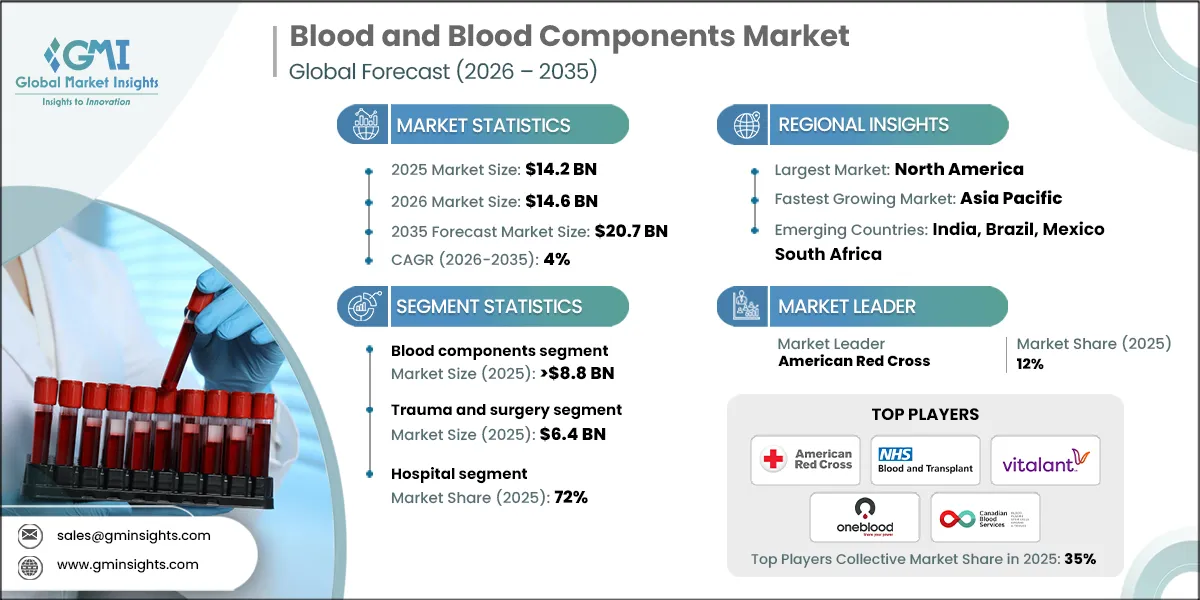
The global blood and blood components market was valued at USD 14.2 billion in 2025 and is projected to grow from USD 14.6 billion in 2026 to USD 20.7 billion by 2035, expanding at a CAGR of 4%, according to the latest report published by Global Market Insights Inc. This substantial growth is driven by numerous factors such as increasing volume of surgeries globally, rising number of people suffering from chronic conditions including cancer, growing popularity of plasma therapy to treat various sport injuries, cosmetic as well as orthopedic procedures, and several blood donation campaigns undertaken by various blood organizations.
To get key market trends
The blood and blood components plays a critical role in supporting life-saving medical procedures by ensuring the availability of red blood cells, plasma, and platelets for transfusion therapies. It serves diverse applications such as trauma care, surgeries, cancer treatment, and management of blood disorders like anemia and hemophilia. The blood and blood components market complies with the highest safety and regulatory standards to guarantee that these products are of high quality. The market also creates new technologies for the collection, processing and storage of blood and blood component products, to satisfy the emerging global healthcare needs. Major Companies in the blood and blood components industry include American Red Cross, NHS Blood and Transplant, Vitalant, OneBlood and Canada Blood Services.
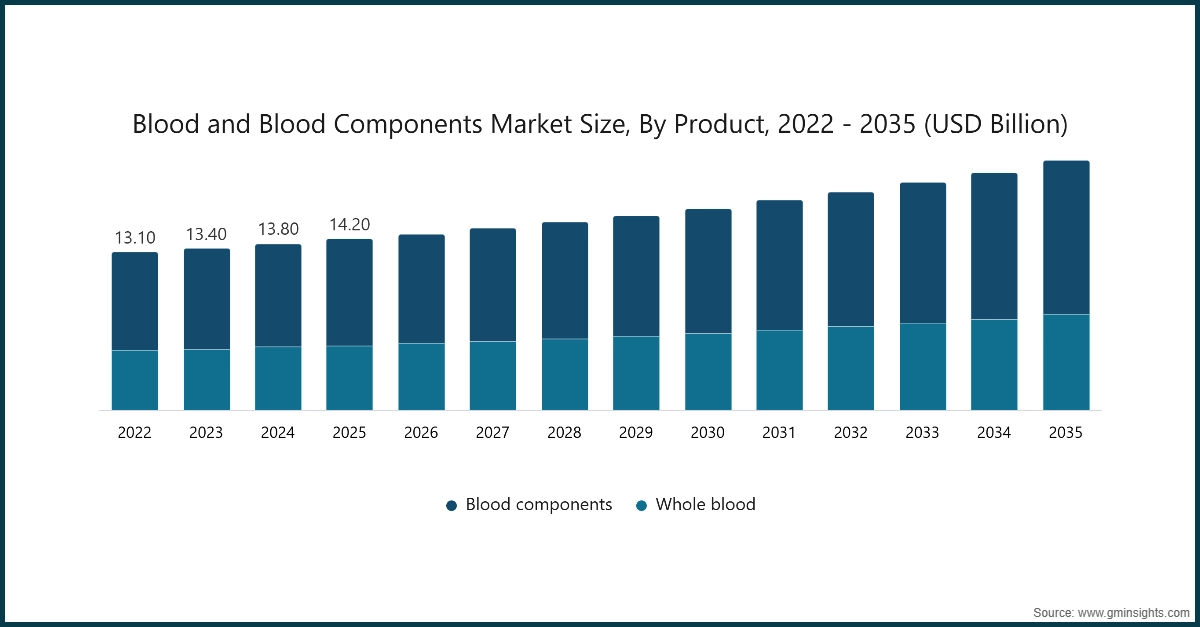
The market grew from USD 13.1 billion in 2022 to USD 13.8 billion in 2024. The blood and blood components market is experiencing significant growth due to the rising number of surgical procedures worldwide. Surgical interventions often require transfusion of red blood cells, plasma, and platelets to manage blood loss and maintain patient stability during and after operations. According to the World Health Organization (WHO), annually, over 300 million surgical procedures are performed globally, addressing conditions such as trauma, maternal health complications, noncommunicable diseases, and cancer. This immense surgical volume underscores the critical need for reliable blood supply chains and advanced component processing technologies to meet growing healthcare demands. Additionally, hospitals and surgical centers are investing in efficient blood banking systems, pathogen reduction technologies, and inventory management solutions to ensure timely availability of safe blood products. The growing number of surgical procedures worldwide continues to drive steady demand for blood and blood components, making this trend a key factor in the overall expansion of the global market.
Additionally, the rising number of people suffering from chronic conditions, particularly cancer, is a major growth driver for the blood and blood components market. Blood cancers, including leukemia, are especially transfusion-intensive because they directly affect bone marrow function. Patients with leukemia frequently require multiple units of red blood cells and platelets throughout their treatment cycles to manage complications and maintain adequate blood counts. According to the World Health Organization (WHO), approximately 487,294 new cases of leukemia were reported globally in 2022, making it the 13th most common cancer worldwide. This high incidence, combined with the transfusion dependency of blood cancer patients, underscores the critical role of blood components in oncology care.
Blood and blood components are crucial for modern healthcare. They help treat patients during surgeries, trauma, cancer therapy, and blood disorders. Whole blood is divided into components like red blood cells, which deliver oxygen, plasma, which helps with clotting and provides protein support, and platelets, which prevent bleeding. These components are vital for sustaining life and aiding recovery in complicated medical situations. Safe collection, processing, and storage under strict regulatory standards guarantee quality and effectiveness. Ongoing improvements in blood processing and increasing global demand make these components essential for both emergency and elective care around the world.
Blood and Blood Components Market Report Attributes
| Key Takeaway | Details |
|---|---|
| Market Size & Growth | |
| Base Year | 2025 |
| Market Size in 2025 | USD 14.2 Billion |
| Market Size in 2026 | USD 14.6 Billion |
| Forecast Period 2025-2035 CAGR | 4% |
| Market Size in 2035 | USD 20.7 Billion |
| Key Market Trends | |
| Drivers | Impact |
| Increasing volume of surgeries globally | Drives higher demand for blood components to manage perioperative blood loss and ensure patient safety during complex procedures. |
| Rising number of people suffering from chronic conditions including cancer | Fuels the need for frequent transfusions and specialized blood products to support chemotherapy and hematologic treatments. |
| Growing popularity of plasma therapy to treat various sport injuries, cosmetic as well as orthopedic procedures | Accelerates adoption of platelet-rich plasma (PRP) and plasma-derived components, expanding therapeutic applications beyond traditional transfusion. |
| Several blood donation campaigns undertaken by various blood organizations | Enhances availability of blood components, stabilizing supply chains and meeting rising clinical demand across regions. |
| Pitfalls & Challenges | Impact |
| Short shelf life of blood components | Creates logistical challenges for inventory management and increases wastage, impacting cost efficiency for healthcare providers. |
| Transfusion transmitted infection (TTI) related to donated blood | Necessitates stringent screening and pathogen reduction technologies, adding complexity and cost to blood processing operations. |
| Opportunities: | Impact |
| Growth in personalized and targeted therapies | Promotes development of specialized blood products and tailored transfusion protocols to improve patient outcomes. |
| Integration of digital solutions | Enables advanced donor management, inventory tracking, and predictive analytics to optimize blood supply and reduce shortages. |
| Market Leaders (2025) | |
| Market Leader |
12% Market share |
| Top Players |
Collective market share is 35% in 2025 |
| Competitive Edge |
|
| Regional Insights | |
| Largest Market | North America |
| Fastest growing market | Asia Pacific |
| Emerging countries | India, Brazil, Mexico, South Africa |
| Future outlook |
|
What are the growth opportunities in this market?
Blood and Blood Components Market Trends
The increasing adoption of plasma therapy has emerged as a pivotal driver for the blood and blood components industry, revolutionizing treatment approaches for sports injuries, cosmetic enhancements, and orthopedic procedures. Plasma therapy leverages platelet-rich plasma (PRP) and other plasma fractions to accelerate tissue repair, reduce inflammation, and enhance healing outcomes. Its application in sports medicine for ligament and tendon injuries, as well as in aesthetic procedures for skin rejuvenation, has significantly expanded the demand for high-quality plasma components. For instance, Regen Labs offers RegenPRP, a standardized, leucocyte-reduced platelet-rich plasma system that uses a closed, automated centrifugation process to concentrate platelets and growth factors while minimizing red blood cells and granulocytes. The product is widely utilized in orthopedics, sports medicine, dermatology, and cosmetic procedures to accelerate tissue repair, reduce inflammation, and enhance healing outcomes.
The introduction of standardized PRP preparation systems and automated centrifugation systems create a consistent concentration of platelets and growth factors. They are major factors driving the growth of this sector by reducing the variance between patients and increasing clinical efficacy, thus making the use of plasma therapy a dependable treatment within many different therapeutic areas. Digital platforms and artificial intelligence-based analytics have greatly increased the ability of plasma therapy to provide personalized treatment plans through predictive modeling of patients' outcomes. This union of biotechnological and data-science technologies is leading to advancements in precision medicine, thus positioning plasma therapy as an integral aspect of advanced orthopedics and cosmetics. Collectively, these developments are reshaping the market, driving innovation in collection, processing, and application technologies to meet the growing clinical demand for plasma-based therapies.
Blood and Blood Components Market Analysis
Learn more about the key segments shaping this market
By product, the market is segmented into whole blood and blood components. The blood components segment is further segmented into red blood cells, platelets, plasma, and white blood cells. Blood components segment accounted for over USD 8.8 billion market revenue in 2025.
- The blood components segment includes red blood cells (RBCs), platelets, plasma, and white blood cells, each performing distinct therapeutic functions. RBCs play a critical role in managing anemia, a condition characterized by reduced hemoglobin levels and impaired oxygen delivery.
- Anemia continues to be a major global health challenge, significantly influencing the demand for blood components, particularly RBCs. According to WHO 2025 Statistics, approximately 40% of children aged 6–59 months, 37% of pregnant women, and 30% of women aged 15–49 years are affected by anemia worldwide. Furthermore, in 2019, anemia accounted for 50 million deaths due to disability, with primary causes including dietary iron deficiency, thalassemia, and sickle cell trait. This high prevalence underscores the critical need for blood transfusions in vulnerable populations, especially in regions with limited access to preventive care and iron supplementation.
- To meet the escalating demand for blood components, healthcare providers and blood banks are prioritizing innovations in collection, processing, and storage. Advanced additive solutions for RBC preservation, automated platelet collection systems, and next-generation plasma fractionation technologies are improving product quality and safety.
- The increasing prevalence of anemia and the continuous advancement of blood collection and storage technology have created a significant demand for reliable transfusion products, thus creating growth opportunities for the blood and blood components markets.
Based on application, the market is segmented into trauma and surgery, blood disorders, cancer treatment, and other applications. The trauma and surgery segment dominated the market with the largest revenue of USD 6.4 billion in 2025 and is expected to grow at a lucrative CAGR of 4% over the forecast period.
- Trauma and surgical interventions represent one of the most critical applications for blood and blood components. Severe injuries and complex surgical procedures often lead to significant blood loss, necessitating immediate transfusion of red blood cells (RBCs), plasma, and platelets to restore hemodynamic stability and prevent organ failure.
- Hemorrhage remains a leading cause of mortality in trauma and surgical settings. According to the National Institutes of Health (NIH, 2023), over 80% of deaths in the operating room within 24 hours of trauma result from hemorrhage and coagulopathy. Furthermore, hemorrhage is estimated to account for more than 60,000 deaths annually in the U.S. and 1.5 million deaths worldwide. These alarming figures underscore the indispensable role of blood components in trauma management and perioperative care, driving consistent demand across healthcare systems.
- The rising incidence of trauma-related hemorrhage and the critical need for rapid transfusion solutions highlight the essential role of blood components in emergency and surgical care, thereby propelling market growth.
Learn more about the key segments shaping this market
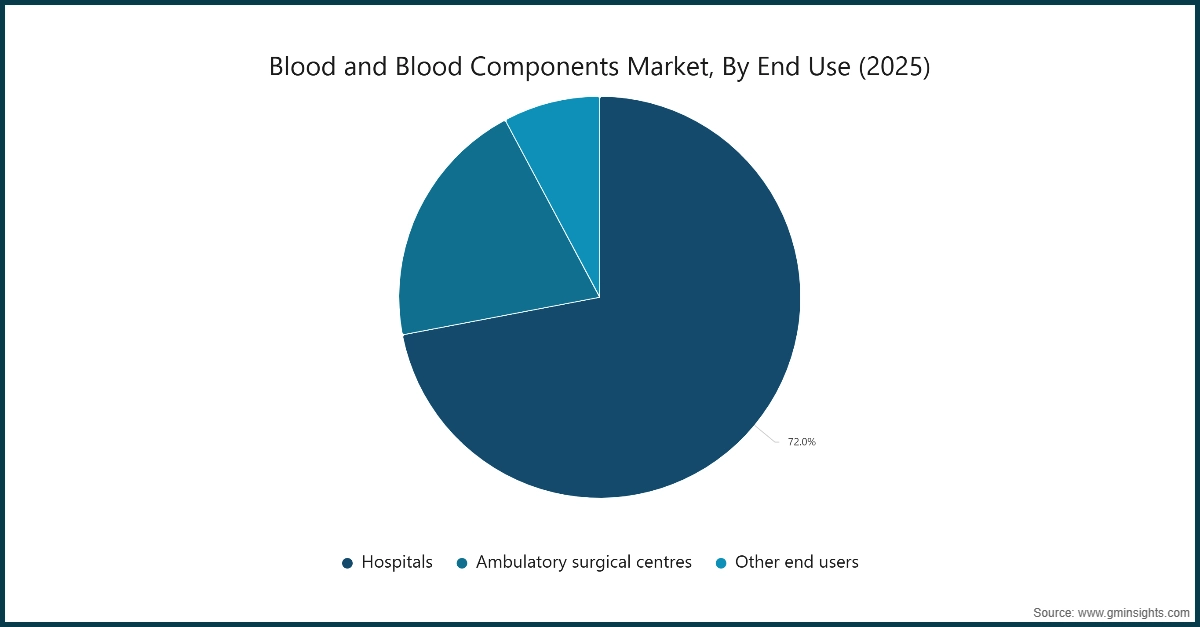
Based on end use, the blood and blood components market is divided into hospitals, ambulatory surgical centres and other end users. The hospital segment accounted for around 72% market share in 2025.
- Hospitals represent the largest end user segment in the blood and blood components industry, accounting for a significant share of transfusion procedures. These facilities require a continuous supply of red blood cells, plasma, and platelets to manage trauma cases, surgical interventions, cancer treatments, and chronic conditions.
- Rising incidences of trauma, cardiovascular surgeries, and organ transplants further amplify this need. Hospitals also serve as primary centers for maternal care and pediatric treatments, where anemia and obstetric hemorrhage are prevalent, reinforcing their dependence on robust blood supply chains.
- Modern hospitals are increasingly adopting advanced blood management systems, including automated cross-matching, inventory tracking, and pathogen reduction technologies.
- Continuous investment in transfusion technologies and inventory management is essential to meet growing demand and improve treatment outcomes in hospitals, thereby increasing market growth.
North America Blood and Blood Components Market
Looking for region specific data?
North America dominated the global blood and blood components industry with a market share of 39.8% in 2025.
- North America dominates the market, supported by advanced healthcare infrastructure, high surgical volumes, and strong donor programs. North America drives the global demand with extensive utilization of blood products in trauma care, surgeries, cancer treatments, and chronic disease management.
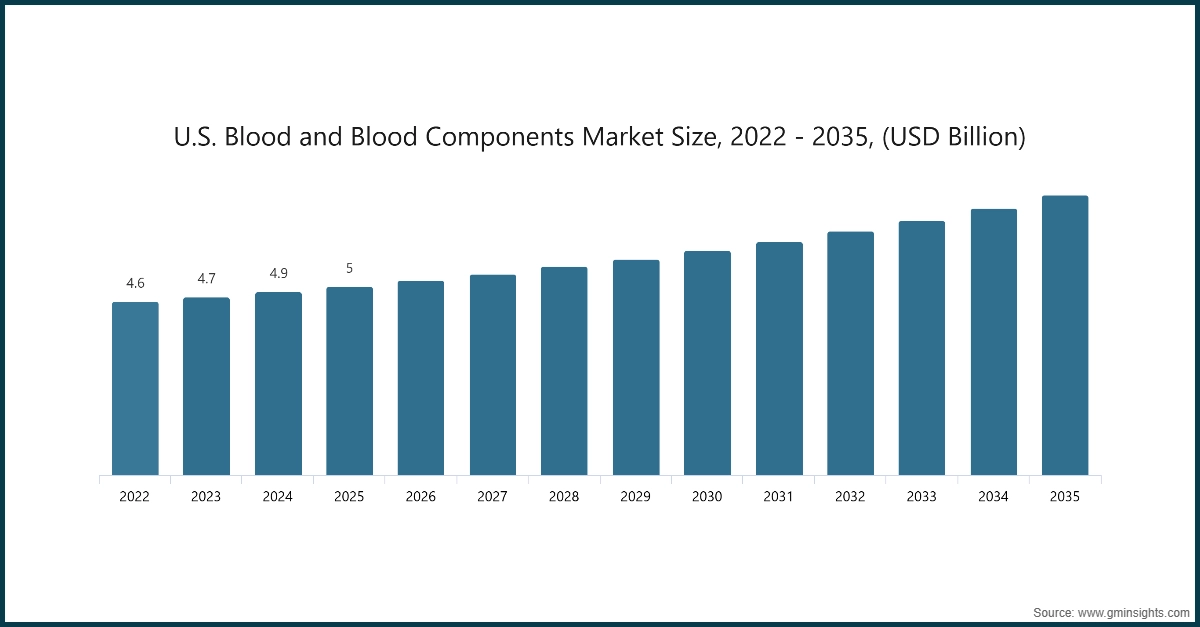
The U.S. blood and blood components market was valued at USD 4.6 billion and USD 4.7 billion in 2022 and 2023, respectively. The market size reached USD 5 billion in 2025, growing from USD 4.9 billion in 2024
- According to the American Red Cross, every two seconds someone in the U.S. needs blood or platelets, and approximately 29,000 units of red blood cells are required daily. This translates into nearly 16 million blood components transfused annually, highlighting the critical role of blood banks and transfusion services in sustaining patient care.
- The prevalence of hematologic disorders such as sickle cell disease further amplifies demand for blood components. In the U.S., sickle cell disease affects 90,000 to 100,000 individuals, with about 1,000 infants born with the condition each year. These patients often require lifelong transfusion support, reinforcing the importance of reliable blood supply chains and advanced transfusion technologies. Continuous investment in pathogen reduction systems, inventory management, and emergency awareness will remain essential to meet growing clinical needs and strengthen North America’s leadership in this market.
Europe Blood and Blood Components Market
Europe market accounted for USD 3.9 billion in 2025 and is anticipated to show lucrative growth over the forecast period.
- In Europe, the demand for blood components is significantly influenced by cancer-related transfusion needs, particularly for patients with leukemia. According to GLOBOCAN 2022, Europe reported approximately 107,748 new leukemia cases, accounting for 22.1% of the global incidence, with 63,839 deaths in the region in the same year. Leukemia patients frequently require transfusions of red blood cells and platelets to counteract chemotherapy-induced cytopenias, underscoring the critical dependency on consistent blood supply chains within European healthcare systems.
- Additionally, the prevalence of rare bleeding disorders, such as hemophilia, further drives regional demand. The European Haemophilia Consortium (EHC) represents around 120,000 individuals living with hemophilia and other rare coagulation disorders in Europe. Many patients with moderate to severe hemophilia rely on regular plasma or factor-concentrate transfusions to manage bleeds and prevent joint damage. These chronic transfusion requirements underscore the essential role of robust plasma collection, fractionation, and blood bank operations across the region.
Germany blood and blood components market is projected to experience steady growth between 2026 and 2035.
- The Germany market is witnessing steady growth, primarily driven by strong donation infrastructure and rising clinical demand for transfusions. According to the Thalassaemia International Federation 2024, Germany had 2,502,257 volunteer donors (2.97% of the population) and issued 4,907,144 blood units annually, including 4,023,585 RBC units, ensuring a robust supply chain to support trauma care, surgical procedures, and chronic conditions such as thalassaemia and cancer.
- This strong demand, coupled with government-backed initiatives for blood safety and digital inventory management, underscores the market’s growth trajectory. Continuous investment in automation and quality assurance systems positions Germany as a leading contributor to Europe’s market.
Asia Pacific Blood and Blood Components Market
The Asia Pacific region is projected to be valued at USD 3.3 billion in 2025.
- The Asia-Pacific region represents a significant growth opportunity in the blood and blood components industry, driven by a large population base, rising surgical procedures, and increasing prevalence of chronic conditions such as cancer and cardiovascular diseases. The region faces a persistent demand for blood transfusions, particularly in countries with high rates of trauma, obstetric complications, and hematological disorders.
- Anemia prevalence remains a critical factor influencing transfusion needs across Asia-Pacific. According to WHO estimates (2019), 32.9% of women aged 15–49 in the region were anemic, with Southern Asia bearing the highest burden at 48.2%, underscoring a severe public health challenge. This high prevalence, coupled with nutritional deficiencies and maternal health issues, drives sustained demand for red blood cell components. Governments and healthcare organizations are increasingly focusing on awareness campaigns and donor programs to address shortages, while investments in advanced blood screening and storage technologies aim to improve safety and availability across the region.
Japan blood and blood components market is poised to witness lucrative growth between 2026 – 2035.
- Japan’s market is highly structured and supported by advanced healthcare infrastructure and stringent regulatory standards. The country’s aging population and high prevalence of chronic conditions such as cancer and cardiac disorders drive consistent demand for blood products. Surgical procedures, hematological disorders, and oncology treatments further amplify this need.
- Leukemia significantly contributes to transfusion requirements in Japan. According to the National Cancer Center Japan Annual Report 2024, approximately 12,500 new leukemia cases were recorded in 2024 across all subtypes, including AML, CML, and ATLL, underscoring the critical role of blood components in cancer care. Treatment protocols for leukemia often involve intensive chemotherapy and stem cell transplantation, necessitating frequent transfusions of red blood cells and platelets to manage cytopenias. This growing oncology burden, combined with an aging demographic, reinforces the importance of robust blood supply chains and advanced storage technologies to ensure timely availability of safe blood products across Japan.
Latin America Blood and Blood Components Market
- Brazil represents one of the largest blood and blood component market in Latin America, supported by an extensive public healthcare system and growing private sector participation. Rising surgical volumes, trauma cases, and oncology treatments are key drivers of demand. Recent government initiatives focus on strengthening voluntary donation programs and implementing advanced screening technologies to ensure safety and availability.
- Anemia continues to exert a significant impact on transfusion requirements in Brazil. According to Hematology, Transfusion and Cell Therapy, anemia had a prevalence of 16.1% among women aged 15–49 in 2019, reflecting a persistent nutritional and health burden. Additionally, hospitalization records from 2019–2020 show 21,523 admissions for iron deficiency anemia, emphasizing the clinical demand for red blood cell components. These figures underscore the need for targeted interventions, such as nutritional programs and enhanced donor engagement, to address shortages and meet the growing transfusion demands associated with chronic diseases and maternal health, thereby driving market growth.
Middle East and Africa Blood and Blood Components Market
The blood and blood components industry in Saudi Arabia is expected to experience significant and promising growth from 2026 to 2035.
- Saudi Arabia’s market is experiencing steady growth, supported by advancements in healthcare infrastructure and strong government initiatives. The country has invested in modern blood banking systems, improved screening technologies, and digital platforms to streamline donor engagement and inventory management.
- The market growth is fueled by increasing prevalence of chronic diseases, cancer treatments, and complex surgical procedures that require reliable blood supply. Awareness campaigns and mobile donation programs have improved donor participation, while technological upgrades such as automated testing and storage solutions ensure better quality and availability. These developments collectively position Saudi Arabia as a rapidly evolving market with strong potential for future expansion.
Blood and Blood Components Market Share
- The top players in the blood and blood components industry include American Red Cross, NHS Blood and Transplant, Vitalant, OneBlood, and Canada Blood Services, collectively accounting for a 35% of global market share.
- These organizations dominate through extensive donor networks, advanced blood collection and processing technologies, and robust distribution systems that ensure timely availability for hospitals and healthcare facilities.
- Leading players are enhancing operational efficiency by adopting digital platforms for donor engagement, implementing AI-driven inventory management, and expanding mobile blood collection units to improve accessibility and reduce shortages.
- Geographic expansion and partnerships with healthcare providers and government agencies remain key strategies, particularly in emerging regions where demand for blood components is rising due to chronic diseases and surgical procedures.
- Collaborations enable these organizations to co-develop advanced screening technologies, integrate real-time tracking systems, and strengthen compliance with international safety standards. By combining technological innovation, regional penetration, and community-focused initiatives, these players are positioned for sustained growth in the global market.
Blood and Blood Components Market Companies
Few of the prominent players operating in the blood and blood components industry include:
- American Red Cross
- America's Blood Centers
- Associazione Volontari Italiani del Sangue (AVIS)
- Bloodworks Northwest
- Canada Blood Services
- Carter BloodCare
- ImpactLife
- Indian Red Cross Society
- NHS Blood and Transplant (NHSBT)
- Northern Ireland Blood Transfusion Service
- OneBlood
- Scottish National Blood Transfusion Service (NHS National Services Scotland)
- Versiti
- Vitalant
- Welsh blood service
The American Red Cross Blood Services is the largest single provider of blood and blood products in the U.S., collecting approximately 6.5 million units of blood annually and supplying around 40% of the national blood demand. Its extensive network spans some 2,600 hospitals and transfusion centers daily, ensuring that a blood-related emergency does not go unmet. Utilizing initiatives like RapidPass and the dedicated Blood Donor App, donors can schedule appointments, complete pre-screening, and receive real-time updates about their donation's impact. Red Cross laboratories are pioneers in blood component research, including freezing red cells, automated grouping, and pathogen testing. Their hemovigilance program monitors donor and patient reactions, enhancing safety and quality standards nationwide.
NHS Blood and Transplant (NHSBT)
NHSBT is England’s national blood, plasma, and platelet donation service, also managing organ, stem cell, and tissue transplantation across the UK. The organization oversees the donation, storage, and transfusion of blood components, actively supporting hospitals with up-to-date therapies and specialist services. Its Component Development Laboratory drives innovation, extending shelf life of blood products (e.g., cryoprecipitate), testing irradiation alternatives, and optimizing blood safety. NHSBT has also pioneered pre-hospital whole blood trials for trauma and universal plasma R&D. With robust partnerships in research and regulatory engagement, NHSBT maintains high safety and efficiency standards.
Vitalant operates approximately 115 fixed donation centers and service to around 900 hospitals in the U.S., supporting a critical portion of the national blood supply. It collects whole blood, platelets, and plasma through both fixed centers and mobile drives. Donors benefit from a streamlined digital experience with the Vitalant app and online portal managing appointments, accessing health data, and viewing donation history. Its comprehensive testing ensures safety, with screening for blood group, infectious diseases, antibodies, cholesterol, ferritin, and more. Through the Vitalant Research Institute, the organization contributes significantly to advancements in transfusion medicine.
Blood and Blood Components Industry News
- In January 2025, OneBlood achieved a significant milestone by becoming the first U.S. blood center to receive full FDA approval for providing licensed high-titer convalescent plasma (CCP) specifically for immunocompromised COVID-19 patients. This approval marked a critical advancement in therapeutic care, enabling hospitals and clinicians to access a regulated and effective plasma treatment option for vulnerable populations. By securing FDA approval, OneBlood strengthened its leadership position in the blood services sector and set a benchmark for quality and compliance in plasma-based therapies.
The blood and blood components market research report includes an in-depth coverage of the industry with estimates and forecast in terms of revenue in USD Million and from 2022 – 2035 for the following segments:
Market, By Product
- Whole blood
- Blood components
- Red blood cells
- Platelets
- Plasma
- White blood cells
Market, By Application
- Trauma and Surgery
- Blood disorders
- Anaemia
- Bleeding disorders
- Hemophilia
- Von willebrand disease
- Other blood disorders
- Cancer treatment
- Other applications
Market, By End Use
- Hospitals
- Ambulatory surgical centers
- Other end use
The above information is provided for the following regions and countries:
North America
- U.S.
- Canada
Europe
- Germany
- UK
- France
- Italy
- Spain
- Netherlands
Asia Pacific
- China
- India
- Japan
- Australia
- South Korea
Latin America
- Brazil
- Mexico
- Argentina
Middle East and Africa
- Saudi Arabia
- South Africa
- UAE
Frequently Asked Question(FAQ) :
Which region leads the blood and blood components market?
North America led the global blood and blood components industry with a 39.8% share in 2025. The region's leadership is driven by advanced healthcare infrastructure, high surgical volumes, and robust blood donation programs.
What are the upcoming trends in the blood and blood components industry?
Key trends include the increasing adoption of plasma therapy, advancements in automated blood processing technologies, and the integration of AI-driven analytics for personalized transfusion solutions. Innovations in pathogen reduction and digital inventory management are also shaping the market.
What is the growth outlook for the hospital segment from 2025 to 2034?
The hospital segment, which held a 72% market share in 2025, is expected to grow steadily through 2034. The segment's dominance is supported by investments in blood banking systems, pathogen reduction technologies, and efficient inventory management solutions.
What was the valuation of the trauma and surgery segment in 2025?
The trauma and surgery segment dominated the market with a revenue of USD 6.4 billion in 2025. Its growth is attributed to the increasing number of surgical procedures requiring blood transfusions globally.
What is the blood and blood components market size in 2025?
The market size for blood and blood components is valued at USD 14.2 billion in 2025. Growth is driven by increasing surgical volumes, rising chronic disease prevalence, and advancements in plasma therapy applications.
How much revenue did the blood components segment generate in 2025?
The blood components segment accounted for over USD 8.8 billion in revenue in 2025, driven by the high demand for red blood cells, plasma, and platelets in managing anemia, trauma, and chronic conditions.
What is the projected value of the blood and blood components market by 2035?
The market size for blood and blood components is expected to reach USD 20.7 billion by 2035, growing at a CAGR of 4%. This growth is fueled by increasing demand for transfusion therapies, innovations in blood processing, and rising awareness of blood donation campaigns.
What is the market size of the blood and blood components industry in 2026?
The market size for blood and blood components is projected to reach USD 14.6 billion in 2026, reflecting steady growth supported by global healthcare demands and technological advancements.
Who are the key players in the blood and blood components market?
Key players include American Red Cross, NHS Blood and Transplant, Vitalant, OneBlood, Canada Blood Services, Bloodworks Northwest, and Versiti. These companies focus on enhancing blood collection, processing, and storage technologies to meet global healthcare demands.
Blood and Blood Components Market Scope
Related Reports