Summary
Table of Content

Animal Feed Probiotics Market
Get a free sample of this report
Form submitted successfully!
Error submitting form. Please try again.
Thank you!
Your inquiry has been received. Our team will reach out to you with the required details via email. To ensure that you don't miss their response, kindly remember to check your spam folder as well!
Request Sectional Data
Thank you!
Your inquiry has been received. Our team will reach out to you with the required details via email. To ensure that you don't miss their response, kindly remember to check your spam folder as well!
Form submitted successfully!
Error submitting form. Please try again.
Animal Feed Probiotics Market Size
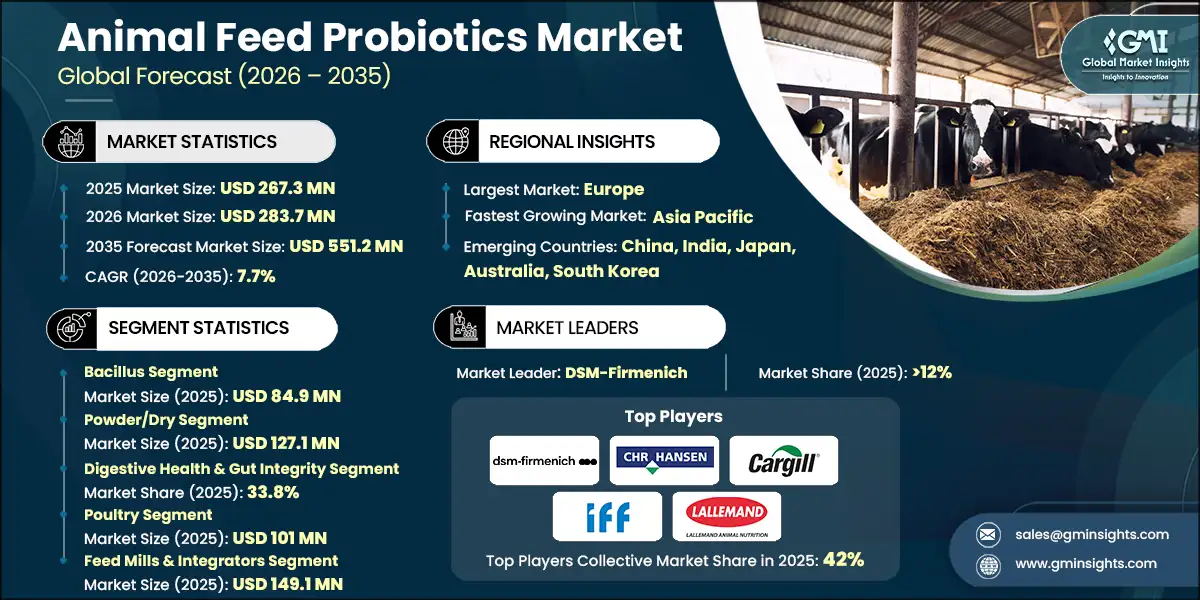
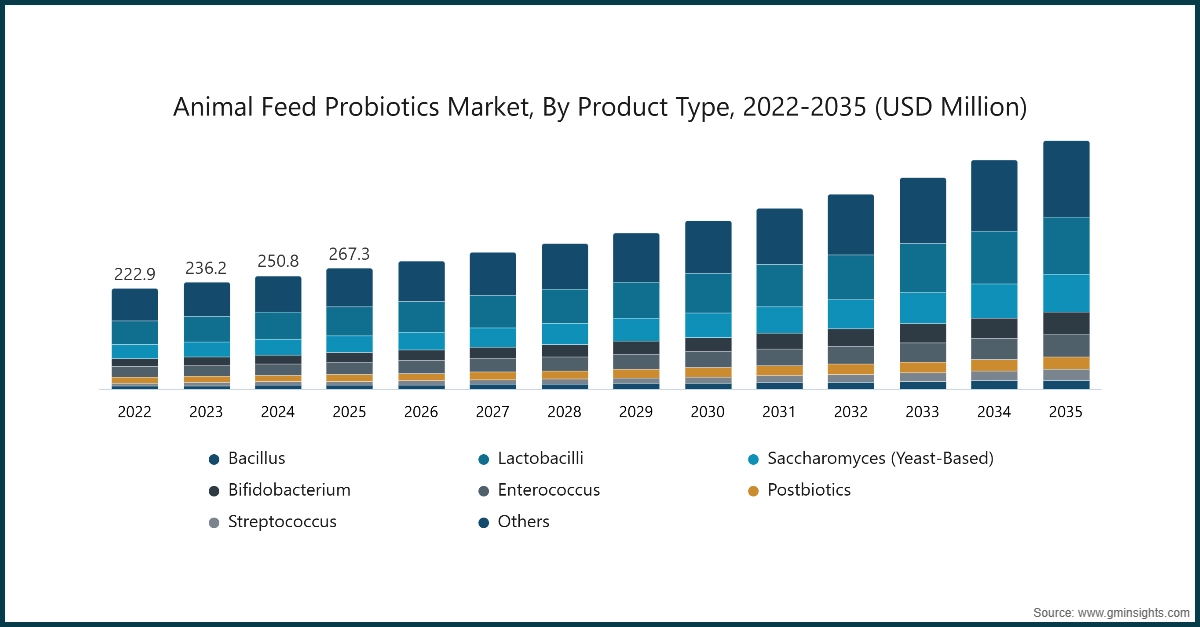
The global animal feed probiotics market was valued at USD 267.3 million in 2025. The market is expected to grow from USD 283.7 million in 2026 to USD 551.2 million in 2035, at a CAGR of 7.7% according to latest report published by Global Market Insights Inc.
Animal Feed Probiotics Market Key Takeaways
Market Size & Growth
- 2025 Market Size: USD 267.3 Million
- 2026 Market Size: USD 283.7 Million
- 2035 Forecast Market Size: USD 551.2 Million
- CAGR (2026–2035): 7.7%
Regional Dominance
- Largest Market: Europe
- Fastest Growing Region: Asia Pacific
Key Market Drivers
- Science‑backed performance gains.
- Stewardship and trade requirements.
- Precision farming & stability tech.
Challenges
- Strain variability & dosing.
- Regulatory complexity.
Opportunity
- Methane and nutrient management.
- Aquaculture and pet nutrition.
Key Players
- Market Leader: DSM-Firmenich led with over 12% market share in 2025.
- Leading Players: Top 5 players in this market include DSM-Firmenich, Chr. Hansen (Novonesis), Cargill Animal Nutrition, IFF, Lallemand Animal Nutrition, which collectively held a market share of 42% in 2025.
Get Market Insights & Growth Opportunities
- The market is gaining significance due to regulatory changes regarding antibiotic-free production. These restrictions on medically important veterinary medicines in feed and water have led to the adoption of biosecurity measures, vaccination, and nutrition improvements by the industry, with a few complementary deletions on the microbiome aspect; that is, the incorporation of probiotics in terms of microbiome-enhancing solutions. The amount of feed produced worldwide is enormous; hence even a little uptake of these additives will illustrate a huge increase in growth.
- Mainstream acceptance has been driven largely by performance benefits. Probiotics shown to increase health, productivity, and efficiency of costs in a consistent manner through trials for various livestock categories. The outcome of such benefits would be better growth rates, lower disease incidence, and improved product quality, placing probiotics firmly in prevention-first strategies in contemporary animal health management.
- Sustainability is another component of its value addition. Probiotics lead to reduced emissions, improved nutrient utilization, environmental impacts that pass some conditions of climate goals and retailer sourcing standards. As precision-feeding technologies grow and better data on efficacy are being generated, this market is well poised for continual growth, extending the upside provided by regulatory frameworks and rising demand for food globally.
To get key market trends
Animal Feed Probiotics Market Trends
- Regulatory changes redefine the market, and global antimicrobial control policies have hurried the shift to an antibiotic-free production system. Most areas, which include the U.S., Europe, and China, are currently putting into place new systems that favor microbiome-friendly additives, placing probiotics at the center of the place as a compliance tool and export-grade supply chain. Hence, any firm that possesses regulatory knowledge and has well-documented strain dossiers will be well-placed to capture the pie in this new scenario.
- Innovation in formulation opens up the next wave of growth in the industry. Multistrain probiotics, synbiotics, and postbiotics, because of their capacity to give stable performance while overcoming viability problems, are getting popularized by many customers. These products improve immunomodulation, pathogen control, and gut barrier function, with high encapsulation technology ensuring stability through feed processing. Intellectual property around formulation and delivery is already shaping up to be a key differentiator beyond brand packaging.
- Sustainability and technology integration are creating future opportunities. The environmental performance of probiotics is improving, resulting in controlled emissions and lower nutrient waste while allowing for the enhancement of productivity in animals. All these will come with precision livestock farming, smart delivery, and microencapsulation to achieve competitive improvement as well as cost-effective supplementation. A rising number of partnership ventures between feed suppliers and tech providers are quickly emerging as one of the strongest competition advantages and solid moats for capability leaders.
Animal Feed Probiotics Market Analysis
Learn more about the key segments shaping this market
Based on product type, the market is segmented into bacillus, lactobacilli, saccharomyces (yeast-based), bifidobacterium, enterococcus, postbiotics, streptococcus and others. Bacillus holds the largest market value of USD 84.9 million in 2025.
- In particular, the main applications of Bacillus-based probiotics require the ability to withstand heat and to form spores, rendering such probiotics relevant to the manufacturing of pelleted feed and their storage under difficult circumstances. They are considered to promote gut health under stress and produce enzymes, thus serving as a basic tool in poultry and aquaculture programs.
- Lactobacilli strains were preferred for their strong ability to produce lactic acid and support gut barrier integrity and were, therefore, utilized through swine and poultry diets during early-life stages and transition periods. Bifidobacterium fortifies this by rendering the microbial balance in the sensitive gut environment, notably in young animals. Yeasts-based probiotics Saccharomyces present added benefits to rumen function and fiber digestion, and are, therefore, essential in ruminant nutrition. Their advantage is extended to the stabilization of gut pH and optimized feed utilization under high producing conditions.
Based on form, the animal feed probiotics market is segmented into powder/dry, microencapsulated, liquid/soluble, granules, others. Powder/dry held the largest market value of USD 127.1 million in 2025.
- Powder and dry formulations are still very widely accepted because of easy mixing with compound feeds and cost-effectiveness. They are preferred at mass feed-milling establishments where uniform distribution with stability is a very important consideration in storage.
- Microencapsulated probiotics remain the premium solution for protecting the sensitive strains through pelleting and during gastric transit. These formulations guarantee controlled release and enhanced survivability, thus providing an opportunity for highly performing programs and precision feeding systems. Liquid or soluble forms are gaining momentum in situations that require rapid uptake and flexibility of dosing, i.e., water-based delivery in poultry or aquaculture.
Based on function, the animal feed probiotics market is segmented into digestive health & gut integrity, immune support & modulation, growth promotion & feed efficiency, pathogen control & competitive exclusion, stress management, others. Digestive health & gut integrity segment holds the market with an approximate market share of 33.8% in 2025.
- Maintaining and promoting gut health and digestive integrity continue as the basis of probiotic application, as they assure the optimal absorption of nutrients and maintenance of a balanced microbiome. These solutions become essential in the early life and the feed changeover periods where gut resilience determines performance.
- Maintaining and promoting gut health and digestive integrity continue as the basis of probiotic application, as they assure the optimal absorption of nutrients and maintenance of a balanced microbiome. These solutions become essential in the early life and the feed changeover periods where gut resilience determines performance.
- Promoting growth and efficiency in feed utilization drives adoption of probiotics in high-output systems due to their ability to improve the enzymatic activity and feed conversion. This usage is quite consistent with producers' very basic desires to optimize costs and productivity.
Based on livestock, the animal feed probiotics market is segmented into poultry, swine, cattle (ruminant), aquaculture, pet food, equine and others. Poultry segment holds the highest market value of USD 101 million in 2025.
- Poultry requires probiotic-altering gut health and pathogen infection control in high-density production systems. This resilience is proposed regarding feed transition and stress periods and is expected to ensure optimal growth coupled with egg quality. Swine probiotic applications need products that resiliently face early-life challenges such as post-weaning stress and digestive instability. Formulations target improvement in gut integrity, control of post-weaning disorders, and support of immune modulation for sustainable performance.
- Ruminal function and fiber digestion benefits from probiotics designed for cattle (ruminants). This will lead to improvement in feed efficiency and better composition in milk. These solutions further enhance rumen pH stability and hence prevention of metabolic disorders in high-dairy operations.
Based on distribution channel, the animal feed probiotics market is segmented into feed mills & integrators, veterinary distributors, direct sales (manufacturer to farm), online/e-commerce, others. Feed mills & integrators holds the highest market value of USD 149.1 million in 2025.
- The Feed Mills and Integrators remain one of the strongholds for probiotic distribution, where bulk blending assures homogenous inclusion into the compound feeds. These channels demand proven stability during pelleting and storage as well as inclusion in complex feed formulations.
- Veterinary distributors focus on particular health solutions, often applying to either critical life stages or disease prevention programs, making their role to provide technical assistance and compliance and thus become important allied partners for merchandising of premium probiotic products to antibiotic-free systems.
- Direct sales from manufacturers to farms serve producers seeking customization and fast deliveries. This channel works mainly through customizations, technical advisory, and near-farm level integration with management practices.
Learn more about the key segments shaping this market
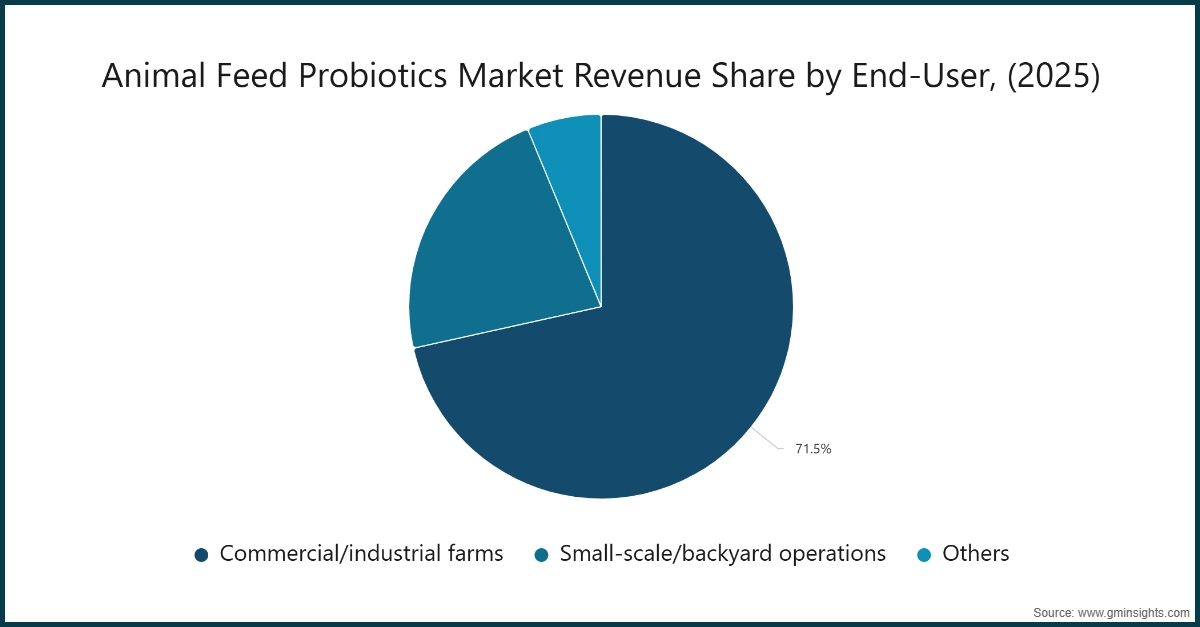
Based on end-user, the animal feed probiotics market is segmented into commercial/industrial farms, small-scale/backyard operations, others. Commercial/industrial farms hold the highest market value of USD 191.2 million in 2025.
- Commercial and industrial farms form the core demand area, where probiotics are integrated into large feeding programs to assure uniform performance, render disease prevention, and, thereby, comply with antibiotic-free production standards. Such operations will rely more on proven formulations that can measure feed efficiency and animal health.
- For small-scale and backyard operations, the focus is on practical solutions that are simple and cheap to use. The probiotic products in this sector often place a premium on versatility and simple administration while supporting animal care in situations hampered by low levels of technical infrastructure.
Looking for region specific data?
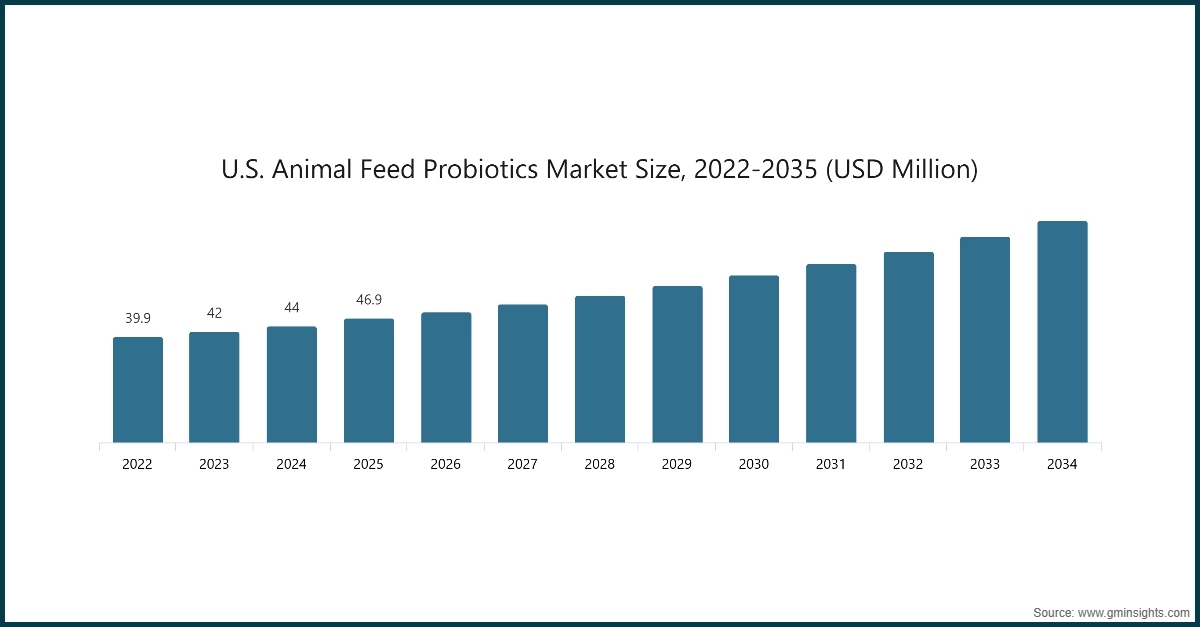
North America Market is expected to experience significant and promising growth from USD 54.2 million in 2025 to USD 104.7 million in 2035. The U.S animal feed probiotics market accounted for USD 46.9 million in 2025.
- North America, the advanced region for livestock production systems, strong regulatory structures, and a consuming drive towards antibiotic-free feeding systems, has turned into a strategic growth region for animal feed probiotics. North American leadership in precision nutrition and sustainability development has created an abundant opportunity for innovations in probiotic formulations and delivery technologies.
- U.S. stands as the most important trendsetter in North America, with favorable movements steadily moving toward promotional early prevention of health problems and producing cleaner feed solutions. Alongside modern infrastructure put in place for large-scale farming and partner networks.
Europe animal feed probiotics market result in promising growth with revenue of USD 81 million in 2025 to USD 159.8 million in 2035.
- Owing to stringent animal health regulations and strong sustainability mandates, Europe is consolidating its status as a strategic hub for animal feed probiotics. The focus on antibiotic-free production and lifecycle efficiency in the region is rapidly shaping the prevalence of state-of-the-art next-generation probiotic solutions, which harmonize with the tenets of environmental and welfare standards. Germany is major influencing factor in Europe with its capacity for precision livestock farming and coherent compliance. It utilizes cutting-edge approaches to the introduction of microbiome-friendly additives into feed programs.
The animal feed probiotics market in Asia Pacific is expected to experience increasing growth from USD 93.1 million in 2025 to USD 203.9 million in 2035.
- The incredible growth especially coming from the developing regions of Asia-Pacific, manifested through incoming livestock production systems, growing demands for sustainable farming practices, and strong research focus on antibiotic-free feed solutions. China is the key market in Asia-Pacific with its large farms and policy initiatives for food safety and compliance with environmental issues. It also sees itself as an innovator and leader in developing innovative feed additives and microbiome-friendly solutions for poultry, swine, and aquaculture in the region.
Latin America is expected to experience significant and increasing growth from USD 23.4 million to USD 44.1 million in 2035.
- Animal feed probiotics most likely to have good business harvesting in Latin America due to the possibilities of livestock production modernization with an approach on sustainability-oriented initiatives. Regulatory skyline and the increasing acceptance towards antibiotic-free feeding in the region shall pave the way for advanced probiotic applications to improve livestock and environmental performance. Brazil is the forerunner among these new ideas, for which the agricultural sector provides a very robust support base throughout Latin America.
Middle East & Africa animal feed probiotics market is expected to experience significant and promising growth from USD 15.6 million in 2025 to USD 38.6 million in 2035.
- Middle and Eastern Africa is becoming a possible region for animal feed probiotics with economic diversification, modernization of agricultural systems, and sustainability-driven policies in work. The emphasis on food security and antibiotic-free production is, in turn, providing a strong underpinning for high-grade probiotics that meet global standards for animal health and environmental compliance. Saudi Arabia is turning out to be one of the major growth engines of the region. The pace of adoption of innovative feed technologies is accelerating, as the industrial transformation plan and investments into modern farming practices turn Saudi Arabia.
Animal Feed Probiotics Market Share
Animal feed probiotics industries are moderately consolidated with players like DSM-Firmenich, Chr. Hansen (Novonesis), Cargill Animal Nutrition, IFF and Lallemand Animal Nutrition holding 42% market share and like DSM-Firmenich being the market leader holding the market share of 12% in 2025.
- The company develops specialized probiotics which scientists have verified as effective for enhancing livestock digestion and immunity and growth. Ongoing research work enables the creation of animal-specific products which maintain their effectiveness and safety as well as their suitable design for different animal species.
- Farmers face different difficulties which companies need to understand before they provide technical support and feeding guidance and flexible solutions which help improve herd health while increasing farm profitability. The company builds strong farmer relationships which lead to customer loyalty and brand trust.
- Probiotics remain usable through efficient production methods which enable heat and acid-resistant formulas to maintain their quality. The company achieves cost-effective manufacturing, which enables them to offer competitive product pricing while maintaining product quality. This method ensures farmers will receive consistent advantages from every product batch.
- The company uses natural and antibiotic-free and sustainable product advantages to develop strong market branding which delivers clear messaging to consumers. The company builds credibility through marketing campaigns and educational outreach and demonstrations which attract farmers who are searching for safe and high-performance feed solutions.
- The organization provides funding for skilled researchers and veterinarians and technical teams to enable ongoing work on new projects and solutions to practical problems. The company builds farmer partnerships through knowledge-sharing workshops and webinars and advisory services while establishing itself as a thought leader in animal nutrition.
Animal Feed Probiotics Market Companies
Major players operating in the animal feed probiotics industry include:
- DSM-Firmenich
- Chr. Hansen (Novonesis)
- Cargill Animal Nutrition
- IFF
- Lallemand Animal Nutrition
- Alltech
- Kemin Industries
- Evonik Industries
- Novus International
- Lesaffre Group
- Angel Yeast
- Biomin
- Nutreco
- MicroSynbiotiX
- DSM-Firmenich mainly functions with the large package of activities capable of cutting through areas such as nutrition, health, and bioscience. They also offer solutions for animal nutrition, human health applications, and sustainable feed additives.
- Chr. Hansen, now part of Novonesis for having merged with Novozymes, is dealing with microbial and enzyme-based solutions. In the animal component, Hansen has probiotics and silage inoculants focusing on improving feed quality and integrity of the gut for enhanced performance in many livestock species.
- Cargill Animal Nutrition provides a consistent portfolio of feed and additive solutions for livestock, aquaculture, and pets, including probiotics, postbiotics as well as phytogenic additives directed towards improving animal health and feed conversion efficiency.
- IFF provide their science-based solutions into animal nutrition through the Danisco Animal Nutrition division. It is a business focusing specifically on enzymes, probiotics, and specialty additives that support gut health, nutrient utilization, and antibiotic-free production systems.
- Lallemand Animal Nutrition is developing such solutions including live yeasts, bacteria, and postbiotics, which would lead them to microbial-based approaches. Rumen function, gut health, and feed efficiency are covered with several technologies designed particularly for practical application and consistent performance across ruminants, monogastrics, and aquaculture.
Animal Feed Probiotics Industry News
- In January 2025, EFSA updated guidance tightened AMR screening and genome‑level assessments for probiotic feed additives, raising dossier rigor for EU approvals.
- In November 2024, USDA NIFA announced USD 15M for research into alternatives to antimicrobials in livestock, prioritizing probiotics, synbiotics, phages, and immune‑modulating compounds.
- In October 2024, IFIF issued technical guidance on specialty ingredients for environmental mitigation, highlighting probiotics for methane and nutrient management gains.
These animal feed probiotics market research report includes in-depth coverage of the industry, with estimates & forecasts in terms of revenue (USD Million) and volume (Kilo Tons) from 2022 to 2035, for the following segments:
Market, by Product Type
- Bacillus
- Lactobacilli
- Saccharomyces (Yeast-Based)
- Bifidobacterium
- Enterococcus
- Postbiotics
- Streptococcus
- Others
Market, by Form
- Powder/Dry
- Microencapsulated
- Liquid/Soluble
- Granules
- Others
Market, by Function
- Digestive health & gut integrity
- Immune support & modulation
- Growth promotion & feed efficiency
- Pathogen control & competitive exclusion
- Stress management
- Others
Market, by Livestock
- Poultry
- Broilers
- Layers
- Breeders
- Others
- Swine
- Piglets (pre-weaning & post-weaning)
- Growers
- Finishers
- Others
- Cattle (ruminants)
- Dairy cattle
- Beef cattle
- Aquaculture
- Salmon
- Trout
- Shrimp
- Carp
- Others
- Pet food
- Dogs
- Cats
- Equine
- Others
Market, by Distribution Channel
- Feed mills & integrators
- Veterinary distributors
- Direct sales (manufacturer to farm)
- Online/e-commerce
- Others
Market, by End-User
- Commercial/industrial farms
- Small-scale/backyard operations
- Others
The above information is provided for the following regions and countries:
- North America
- U.S.
- Canada
- Europe
- Germany
- UK
- France
- Spain
- Italy
- Rest of Europe
- Asia Pacific
- China
- India
- Japan
- Australia
- South Korea
- Rest of Asia Pacific
- Latin America
- Brazil
- Mexico
- Argentina
- Rest of Latin America
- Middle East and Africa
- Saudi Arabia
- South Africa
- UAE
- Rest of Middle East and Africa
Frequently Asked Question(FAQ) :
What was the market size of the animal feed probiotics in 2025?
The market size was USD 267.3 million in 2025, with a CAGR of 7.7% expected through 2035. Regulatory changes promoting antibiotic-free production and the adoption of microbiome-enhancing solutions are driving market growth.
What is the projected value of the animal feed probiotics market by 2035?
The market is poised to reach USD 551.2 million by 2035, driven by increased adoption of probiotics, innovation in formulations, and sustainability-focused solutions.
What is the expected size of the animal feed probiotics industry in 2026?
The market size is projected to reach USD 283.7 million in 2026.
How much revenue did the Bacillus segment generate in 2025?
The Bacillus segment generated approximately USD 84.9 million in 2025, led by its heat resistance, spore-forming ability, and relevance in pelleted feed production.
What was the valuation of the powder/dry formulation segment in 2025?
The powder/dry formulation segment accounted for USD 127.1 million in 2025, owing to its cost-effectiveness and ease of mixing with compound feeds.
What is the growth outlook for the North American animal feed probiotics sector?
The North American market is expected to grow significantly, from USD 54.2 million in 2025 to USD 104.7 million by 2035.
What are the upcoming trends in the animal feed probiotics market?
Trends include innovations in multistrain probiotics, synbiotics, and postbiotics, sustainability-focused solutions, precision livestock farming, smart delivery systems, and microencapsulation technologies.
Who are the key players in the animal feed probiotics industry?
Key players include DSM-Firmenich, Chr. Hansen (Novonesis), Cargill Animal Nutrition, IFF, Lallemand Animal Nutrition, Alltech, Kemin Industries, Evonik Industries, Novus International, Lesaffre Group, Angel Yeast, and Biomin.
Animal Feed Probiotics Market Scope
Related Reports