Pet Cancer Therapeutics Market Size & Share 2026-2035
Report ID: GMI2017
|
Published Date: March 2026
|
Report Format: PDF/Excel/Dashboard/Platform
Download Free PDF
Explore our licensing options:
Pet Cancer Therapeutics Market Size
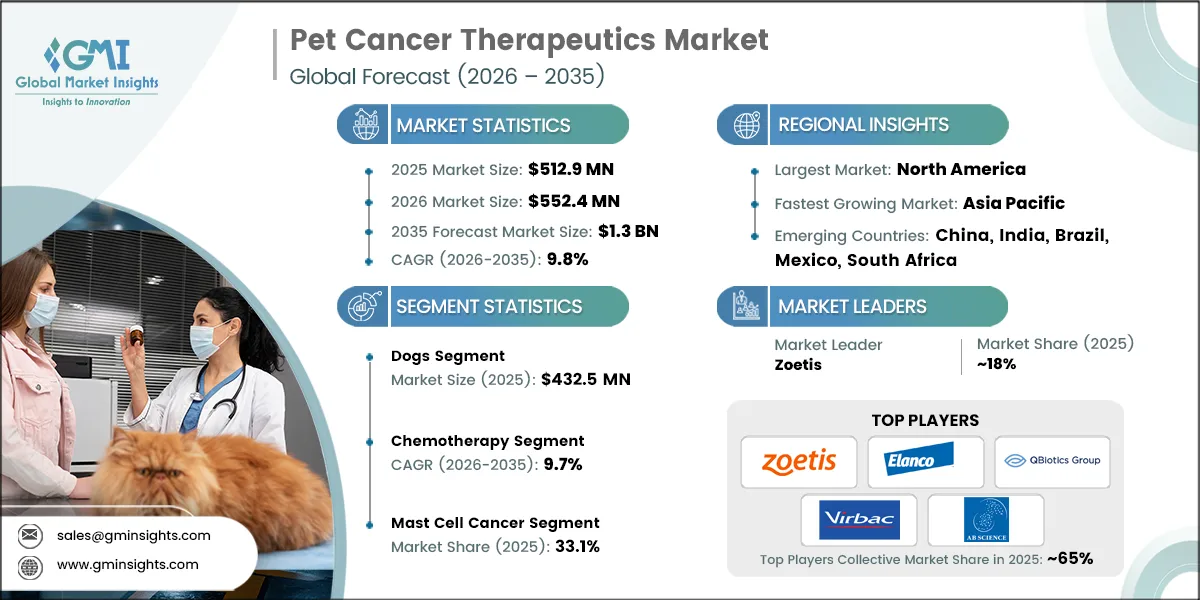
The global pet cancer therapeutics market was valued at USD 512.9 million in 2025. The market is expected to grow from USD 552.4 million in 2026 to USD 1.3 billion in 2035, at a CAGR of 9.8% during the forecast period, according to the latest report published by Global Market Insights Inc.
The market is experiencing significant growth driven by the growing trend of pet humanization, with owners increasingly investing in comprehensive healthcare for their pets. According to the American Pet Products Association (APPA) National Pet Owners Survey, 94 million U.S. households have a pet. The survey highlighted significant spending on pet healthcare, with projection of pet industry expenditures with a spend of USD 157 billion. This underscored the increasing prioritization of pet health and wellness in the U.S., reflecting pet owner's concern to regular and advanced veterinary care.
In addition, enhanced diagnostic capabilities and advanced treatment options, including targeted therapies and immunotherapies, have expanded access to effective cancer care. Additionally, an ageing pet population has led to higher cancer incidence rates, further propelling demand for veterinary oncology solutions. This shift in consumer behaviour, coupled with innovations in veterinary medicine, is driving the market's growth as pet owners seek high-quality, life-extending treatments for their animals.
Pet cancer therapeutics refer to a range of treatments developed to diagnose, manage, and treat cancers in animals, particularly in dogs, cats and other pets. This therapeutic includes chemotherapy, targeted therapies, immunotherapies, and other combination therapies aimed at reducing tumour size, alleviating symptoms, and prolonging pet health.
Key players in the pet cancer therapeutics market include Zoetis, Elanco Animal Health, Boehringer Ingelheim, Virbac, VetDC, Karyopharm Therapeutics, and AB Science. These companies continue to drive innovation through expanding portfolios of targeted therapies, immunotherapies, chemotherapy agents, and precision oncology solutions for companion animals. Their efforts are reinforced by advancements in veterinary diagnostics, genetic profiling, and the development of personalized treatment regimens, alongside ongoing research and development initiatives aimed at improving efficacy and minimizing adverse effects. In addition, strategic collaborations between veterinary oncology centers, biotechnology companies, and research institutions further strengthen therapeutic pipelines and accelerate the availability of next‑generation cancer treatments for dogs and cats.
Between 2022 and 2024, the pet cancer therapeutics market experienced consistent and robust growth, supported by rising cancer incidence among companion animals, increased pet ownership, and growing willingness among pet owners to invest in advanced veterinary oncology care. The global market expanded from approximately USD 412.6 million in 2022 to an estimated USD 477.1 million in 2024, driven by wider adoption of immunotherapies, targeted therapies, and combination treatment regimens, as well as enhanced early‑diagnosis capabilities in veterinary clinics. This growth was further bolstered by technological advancements in precision oncology, expanding access to specialized veterinary oncology services, and increasing emphasis on improving the quality of life and survival outcomes for aging pet populations worldwide.
Pet Cancer Therapeutics Market Trends
Advancements in veterinary oncology are driving market growth by introducing innovative and targeted treatments that improve outcomes in pet cancer care. Developments such as precision therapies, advanced diagnostics, and immunotherapy offer more effective and less invasive options, leading to improved survival rates for pets with cancer. This progress is significantly contributing to the overall expansion of the market.
For instance, in October 2024, Calviri, a biotech firm specializing in cancer vaccines for dogs and humans, has initiated a clinical trial for its investigational immunotherapy vaccine in canines with early-stage hemangiosarcoma (HSA). The Scout Out Canine Hemangiosarcoma (SOCH) study aimed to assess whether the "pre-made" vaccine, combined with standard treatments like surgery and chemotherapy, can extend the lifespan of dogs with stage 1 or 2 HSA by stimulating the immune system to target cancer cells. This trial launch aimed to lead to significant advancements in canine cancer care.
Moreover, factors such as high treatment costs, regulatory hurdles, a shortage of specialized veterinary professionals, and limited awareness in developing regions are expected to hinder the market's growth.
Growing integration of AI‑enabled treatment planning: Artificial intelligence is increasingly being used to predict tumor behavior, optimize drug selection, and personalize therapeutic protocols, improving accuracy in veterinary oncology decision‑making.
Moreover, expansion of minimally invasive treatment modalities: Techniques such as image‑guided ablation, targeted radiotherapy, and localized drug‑delivery systems are gaining traction for offering effective tumor control with reduced recovery time.
Rising availability of companion diagnostics for pets: Molecular assays, biomarker panels, and genomic profiling tools are becoming more common, enabling earlier detection and more precise matching of therapies to individual tumor types.
Also, increasing collaboration between human and veterinary oncology research: Cross‑disciplinary research initiatives are accelerating the development of novel therapeutics, allowing veterinary oncology to benefit from advancements originally pioneered in human cancer medicine.
Pet Cancer Therapeutics Market Analysis
Based on species, the market is segmented into dogs, cats and other species. The dogs segment dominated the market and was valued at USD 432.5 million in 2025.
The prominence of the dog segment is attributed to the higher incidence of cancer in dogs compared to other pets.
As companion animals, dogs are more frequently diagnosed with cancers such as lymphoma, osteosarcoma, and mammary tumors, leading to an increased demand for therapeutic treatments.
For instance, according to the Veterinary Cancer Society, cancer is the leading cause of death in 47% of dogs, particularly those over the age of ten. This statistic highlights the growing prevalence of cancer in older dogs, underscoring the increasing demand for cancer treatments. This growing need, especially in the aging dog population, is expected to significantly boost the market share.
Furthermore, the growing awareness among pet owners about cancer in dogs, along with the availability of specialized therapies, significantly contributes to the dominance of the dog segment in this market.
Based on the therapy, the global pet cancer therapeutics market is segmented into chemotherapy, immunotherapy, targeted therapy, and combination therapy. The chemotherapy segment is expected to grow at a 9.7% CAGR over the analysis period.
Chemotherapy effectively targets and kills cancer cells or inhibits their growth, making it a standard modality for various cancers, including lymphoma and mast cell tumors.
As reported in several studies, the effectiveness of chemotherapy is highlighted by its ability to achieve remission in over 80% of cases, particularly for conditions like lymphoma, which are prevalent in dogs.
As the market continues to grow, driven by increasing pet ownership and awareness of animal health, chemotherapy remains a cornerstone in veterinary oncology, providing vital treatment options for affected pets.
On the other hand, the immunotherapy segment expanding the fastest due to rising adoption of advanced immune‑modulating treatments and increasing availability of innovative biologics that offer more precise, less invasive, and highly effective cancer management options for companion animals.
Based on the route of administration, the global pet cancer therapeutics market is segmented into oral and injectable. The injectable segment dominated the market in 2025 and is anticipated to reach USD 835.4 million by 2035.
The preference for injections stems from their effectiveness in delivering cancer treatments directly into the bloodstream or at the tumor site.
Injectable therapies, such as chemotherapy agents and immunotherapies, provide rapid absorption and targeted effects, making them particularly effective for treating a range of cancers in pets.
These treatments are favored for their precision and superior management of side effects.
With ongoing advancements in injectable formulations, the demand for injectable cancer therapeutics in veterinary care is anticipated to remain robust, further propelling the growth and dominance of this segment in the market.
Based on cancer type, the global pet cancer therapeutics market is segmented into lymphoma, mast cell cancer, melanoma, mammary and squamous cell cancer, and other cancer types. The mast cell cancer segment accounted for the highest market share of 33.1% in 2025.
The prominence of the mast cell cancer segment is attributed to the high prevalence of mast cell tumors in dogs, particularly in certain breeds like Boxers, Bulldogs, and Retrievers.
Mast cell tumors are among the most common skin cancers in pets, and their aggressive nature often necessitates immediate and specialized treatment.
For instance, according to the Morris Animal Foundation, mast cell tumors account for 16% to 21% of all skin tumors in pets. These tumors can vary in appearance and behavior, ranging from slow-growing, isolated masses to ulcerated, itchy, and diffuse lesions.
Their prevalence, along with the potential for malignancy and complications, has contributed to the dominance of the mast cell cancer segment in the pet cancer therapeutics industry.
Likewise, lymphoma emerging as the leading segment due to its high prevalence in dogs and increasing availability of targeted and immunotherapeutic treatment options that significantly enhance clinical management and survival outcomes.
North America Pet Cancer Therapeutics Market
The North America pet cancer therapeutics industry dominated the global animal healthcare market with a market share of 78.4% in 2025.
North America leads the global market, stimulated by high pet ownership, widespread use of targeted therapies, immunotherapies, and growing clinical adoption of intratumoral drugs.
The region benefits from early adoption of genomic‑based diagnostics, AI‑enabled cytology tools, and advanced imaging systems that enhance early cancer detection and guide personalized treatment choices.
Demand is further stimulated by the high prevalence of cancer in dogs and cats, elevated pet healthcare expenditure, and strong emphasis on early‑stage intervention and premium therapeutic options.
In 2025, the U.S. held a significant position in the North American pet cancer therapeutics market and projected to dominate throughout the forecast period with a CAGR of 9.5%.
The U.S. prominence was driven by its advanced veterinary healthcare infrastructure, high pet ownership rates, and increasing awareness of cancer treatments for pets.
The country invests heavily in veterinary oncology, benefiting from cutting-edge technologies, research, and a broad array of treatment options, including chemotherapy, immunotherapy, and targeted therapies.
Furthermore, the rising incidence of pet cancers, particularly among aging pets, further fuels demand for these therapeutics.
Additionally, the presence of leading veterinary pharmaceutical companies and animal health clinics further solidified the market growth.
Europe Pet Cancer Therapeutics Market
Europe market accounted for USD 85.4 million in 2025 and is anticipated to show lucrative growth over the forecast period.
The region maintains strong momentum due to high pet ownership, expanded access to veterinary oncology centers, and widespread availability of EMA‑approved therapies. According to European pet food industry, about 90 million households in the EU own a pet, which as almost 46% of the total households present in the region, with around 110 million cats and 90 million dogs amongst them.
Advanced biologics adoption, rising awareness of early cancer symptoms, and strong collaboration between veterinary hospitals and research institutes continue to stimulate demand.
The pet cancer therapeutics market in Germany is estimated to grow at significant growth rate over the next few years.
Germany's growth in the pet cancer therapeutics industry is driven by factors such as increasing awareness of pet health, advancements in veterinary oncology, and a rising demand for specialized cancer treatments.
For instance, according to Der Deutsche Heimtiermarkt in 2021, 47% of German households owned pets, with 34.7 million dogs, cats, small animals, and birds. The growing pet ownership has led to heightened awareness of pet health, resulting in increased spending on veterinary care and cancer therapeutics.
As cancer is a leading cause of death in pets, this trend is expected to boost demand for cancer diagnostics and treatments, with ongoing research further supporting market growth in Germany.
Asia Pacific Pet Cancer Therapeutics Market
The Asia Pacific market is anticipated to grow at the highest CAGR of 10.9% during the analysis timeframe.
The regional growth is stimulated by rapid improvements in veterinary infrastructure, expansion of pet care, and increasing adoption of diagnostics and preventive vaccines.
Moreover, in countries such as China, India, Japan, Australia there’s a rapid expansion in precision veterinary oncology, supported by AI‑enabled imaging, tele‑oncology networks, and improved access to specialized veterinary oncology centers.
China held the prominent position in the Asia Pacific pet cancer therapeutics market during the analysis period.
China’s growth was driven by the increasing incidence of pet cancer, elevated awareness among pet owners and veterinarians regarding effective treatments, and advancements in veterinary medicine.
The country's robust biotechnology sector and supportive government policies further enhance its attractiveness for therapeutic manufacturing in veterinary oncology.
In addition, as domestic companies innovate and produce affordable cancer treatments, China is also positioned as a key exporter of veterinary therapeutics, contributing to its influence in the animal healthcare.
Latin American Pet Cancer Therapeutics Market
Brazil pet cancer therapeutics industry is anticipated to witness high growth over the analysis timeframe in Latin America.
Increasing pet ownership, coupled with rising awareness of cancer treatment options, is driving demand for advanced veterinary care in the country.
In addition, the growing recognition of the specialized oncology treatments for pets, such as chemotherapy, immunotherapy, and targeted therapies, is contributing to the market’s expansion.
Additionally, Brazil's expanding veterinary healthcare infrastructure, along with the availability of more effective cancer therapeutics, is likely to enhance access to these treatments.
Therefore, the aforementioned factors witnessed the Brazil’s prominence in the Latin America market.
Middle East and Africa Pet Cancer Therapeutics Market
Saudi Arabia is anticipated to grow in the Middle East and African pet cancer therapeutics industry.
Saudi Arabia's increasing pet ownership, particularly among affluent urban populations, is driving demand for advanced veterinary care.
As awareness of pet health and cancer treatment options rises, more pet owners are seeking specialized cancer therapies such as chemotherapy and immunotherapy.
Additionally, Saudi Arabia's expanding veterinary healthcare infrastructure, along with investments in research and development, are improving access to cutting-edge treatments.
These developments position Saudi Arabia as a key market in the region for pet cancer therapeutics over the forecast period.
Pet Cancer Therapeutics Market Share
The global pet cancer therapeutics industry is shaped by a moderately consolidated yet highly competitive landscape, with a select group of leading companies collectively accounting for approximately 65% of global revenues, supported by their strong oncology portfolios, regulatory‑approved therapeutics, and expanding diagnostics capabilities. These companies Zoetis, Elanco Animal Health, QBiotics, Virbac, and AB Science dominate the approved cancer therapeutics segment through leadership in targeted drugs, intratumoral therapies, precision immunotherapies, and region‑specific biological treatments.
Strategic expansion in manufacturing, clinical development, and technology partnerships continues to define competitive dynamics. Zoetis, for example, reinforces its position through Palladia, the first FDA‑approved small‑molecule cancer therapeutic for dogs, alongside advanced diagnostic innovations that strengthen its precision oncology ecosystem. Elanco Animal Health, supported by its fully FDA‑approved lymphoma therapy Tanovea, is advancing portfolio depth through oncology‑focused research and development and targeted acquisitions that bolster its presence in companion‑animal therapeutics.
Across the competitive landscape, leading companies are accelerating development pipelines focused on immunotherapies, small‑molecule inhibitors, personalized cancer vaccines, and AI‑supported diagnostic platforms, driven by rising cancer incidence in companion animals and increased willingness of pet owners to invest in advanced oncology care. The continued integration of genetic profiling, digital diagnostics, and targeted biologics is expected to reshape market trajectories over the coming years as oncology becomes one of the fastest‑expanding segments in companion‑animal therapeutics.
Pet Cancer Therapeutics Market Companies
Few of the prominent players operating in the pet cancer therapeutics industry include:
AB Science
Akston Biosciences
Boehringer Ingelheim
CureLab Oncology
Dechra Pharmaceuticals
Elanco Animal Health
ELIAS Animal Health
Immuvera
Karyopharm Therapeutic
NovaVive
Qbiotics
VetDC
Virbac
Vivesto
Zoetis
Zoetis
Zoetis holds a leading position in the pet cancer therapeutics market, anchored by Palladia the first FDA‑approved canine cancer therapy which strengthens its presence in veterinary oncology through targeted small‑molecule innovation. The company continues to expand its influence with advancements in diagnostic technologies, including AI‑enabled cytology tools that enhance early cancer detection and clinical decision‑making, reinforcing Zoetis commitment to integrated oncology care.
Elanco Animal Health
Elanco maintains a strong competitive standing with Tanovea, the first fully FDA‑approved treatment for canine lymphoma, positioning the company at the forefront of evidence‑based veterinary oncology. Its strategic focus on expanding its oncology portfolio and strengthening R&D capabilities supports long‑term market leadership, while acquisitions and expanded access programs accelerate adoption of advanced cancer therapeutics across companion‑animal care.
QBiotics
QBiotics plays a pivotal role in shaping the pet oncology landscape through Stelfonta, the FDA‑approved intratumoral therapy that introduced a minimally invasive and highly targeted approach for treating canine mast cell tumors. Continued global expansion through commercial partnerships particularly with Virbac along with ongoing research into novel tumor‑targeting molecules, reinforces QBiotics position as an innovation‑driven biotechnology leader in veterinary cancer treatment.
Pet Cancer Therapeutics Industry News
In August 2024, FidoCure, the flagship brand of One Health Company, received a patent from the US Patent and Trademark Office (USPTO) for an innovative targeted therapy and biomarker aimed at treating canine cancer. This novel treatment approach utilizes mutation profiling to more effectively manage bladder cancer in dogs. This advancement is expected to address the spurring demand for targeted treatments and precision medicine in veterinary oncology continues to rise.
In July 2024, ELIAS Animal Health launched a new study to evaluate its adoptive T cell therapy, the ELIAS Cancer Immunotherapy (ECI). The study aimed to explore the combination of ECI with a novel adjuvant as a limb-sparing treatment for large-breed dogs diagnosed with appendicular osteosarcoma. This research marked a significant step toward advancing personalized cancer care in pets and is expected to contribute to the growing demand for novel therapies in the pet careindustry.
The pet cancer therapeutics market research report includes in-depth coverage of the industry with estimates and forecast in terms of revenue in USD Million from 2022 – 2035 for the following segments:
Market, By Species
Dogs
Cats
Other species
Market, By Therapy
Chemotherapy
Immunotherapy
Targeted therapy
Combination therapy
Market, By Route of Administration
Oral
Injectable
Market, By Cancer Type
Lymphoma
Mast cell cancer
Melanoma
Mammary and squamous cell cancer
Other cancer types
The above information is provided for the following regions and countries:
North America
U.S.
Canada
Europe
Germany
UK
France
Spain
Italy
Netherlands
Asia Pacific
China
Japan
India
Australia
South Korea
Latin America
Brazil
Mexico
Argentina
Middle East and Africa
South Africa
Saudi Arabia
UAE
Authors: Monali Tayade, Jignesh Rawal
Pet Cancer Therapeutics Market Scope
Pet Cancer Therapeutics Market Size
Pet Cancer Therapeutics Market Trends
Pet Cancer Therapeutics Market Analysis
Pet Cancer Therapeutics Market Share
Report Content
Chapter 1 Methodology and Scope
1.1 Market scope and definition
1.2 Research approach
1.3 Quality commitments
1.3.1 GMI AI policy and data integrity commitment
1.3.1.1 Source consistency protocol
1.4 Research trail and confidence scoring
1.4.1 Research trail components
1.4.2 Scoring components
1.5 Data collection
1.5.1 Partial list of primary sources
1.6 Data mining sources
1.6.1 Paid sources
1.6.1.1 Sources, by region
1.7 Base estimates and calculations
1.7.1 Revenue share analysis
1.7.2 Base year calculation
1.8 Forecast model
1.9 Research transparency addendum
1.9.1 Source attribution framework
1.9.2 Quality assurance metrics
1.9.3 Our commitment to trust
Chapter 2 Executive Summary
2.1 Industry 360° synopsis
2.2 Key market trends
2.2.1 Regional trends
2.2.2 Species trends
2.2.3 Therapy trends
2.2.4 Route of administration trends
2.2.5 Cancer type trends
2.3 CXO perspectives: Strategic imperatives
Chapter 3 Industry Insights
3.1 Industry ecosystem analysis
3.2 Industry impact forces
3.2.1 Growth drivers
3.2.1.1 Increased pet humanization
3.2.1.2 Rising cancer incidence in pets
3.2.1.3 Advancements in veterinary oncology diagnosis and treatment
3.2.1.4 Growing awareness and diagnostic capabilities
3.2.2 Industry pitfalls and challenges
3.2.2.1 High treatment costs
3.2.2.2 Side effects and animal tolerance
3.2.3 Market opportunities
3.2.3.1 Development of personalized cancer vaccines for pets
3.2.3.2 Expansion of AI-powered diagnostic and treatment platforms
3.3 Growth potential analysis
3.4 Regulatory landscape
3.4.1 North America
3.4.2 Europe
3.4.3 Asia Pacific
3.5 Technology landscape
3.5.1 Current technological trends
3.5.2 Emerging technologies (Driven by primary research)
3.6 Pipeline analysis (Driven by primary research)
3.7 Investment and funding landscape in pet care (Driven by primary research)
3.8 Pet population, by country
3.9 Pet insurance coverage and reimbursement landscape (Driven by primary research)
3.10 Impact of AI and generative AI on the market (Driven by primary research)
3.11 Future market trends (Driven by primary research)
3.12 Porter’s analysis
3.13 PESTEL analysis
Chapter 4 Competitive Landscape, 2025
4.1 Introduction
4.2 Company market share analysis
4.3 Company matrix analysis
4.4 Competitive analysis of major market players
4.5 Competitive positioning matrix
4.6 Key developments
4.6.1 Merger and acquisition
4.6.2 Partnership and collaboration
4.6.3 New product launches
4.6.4 Expansion plans
Chapter 5 Market Estimates and Forecast, By Species, 2022 – 2035 ($ Mn)
5.1 Key trends
5.2 Dogs
5.3 Cats
5.4 Other species
Chapter 6 Market Estimates and Forecast, By Therapy, 2022 – 2035 ($ Mn)
6.1 Key trends
6.2 Chemotherapy
6.3 Immunotherapy
6.4 Targeted therapy
6.5 Combination therapy
Chapter 7 Market Estimates and Forecast, By Route of Administration, 2022 – 2035 ($ Mn)
7.1 Key trends
7.2 Oral
7.3 Injectable
Chapter 8 Market Estimates and Forecast, By Cancer Type, 2022 – 2035 ($ Mn)
8.1 Key trends
8.2 Lymphoma
8.3 Mast cell cancer
8.4 Melanoma
8.5 Mammary and squamous cell cancer
8.6 Other cancer types
Chapter 9 Market Estimates and Forecast, By Region, 2022 – 2035 ($ Mn)
9.1 Key trends
9.2 North America
9.2.1 U.S.
9.2.2 Canada
9.3 Europe
9.3.1 Germany
9.3.2 UK
9.3.3 France
9.3.4 Spain
9.3.5 Italy
9.3.6 Netherlands
9.4 Asia Pacific
9.4.1 China
9.4.2 Japan
9.4.3 India
9.4.4 Australia
9.4.5 South Korea
9.5 Latin America
9.5.1 Brazil
9.5.2 Mexico
9.5.3 Argentina
9.6 Middle East and Africa
9.6.1 South Africa
9.6.2 Saudi Arabia
9.6.3 UAE
Chapter 10 Company Profiles
Don't see your key competitors?
The companies listed in this report are a curated selection - not the full competitive universe.
Our market revenue calculations use a bottom-up methodology that accounts for all players across all regions - including manufacturers, distributors, and specialists not individually profiled. The profiles section spotlights strategically significant players; it does not define the scope of our market sizing.
Your competitive landscape may also include
Regional or domestic-only leaders not in the global top tier
Distributors and channel partners who control market access
Emerging disruptors, startups, or adjacent-industry entrants
Niche players focused on a specific application or end-use
Free customization - up to 20% of report value
Need specific data? Request customization and get the insights tailored to your exact requirements.
For inquiries regarding discounts, bulk purchases, or customization requests, please contact us at[email protected]
Share Content
Add Citations
Monali Tayade. 2026, March. Pet Cancer Therapeutics Market – By Species, By Therapy, By Route of Administration, By Cancer Type – Global Forecast, 2026 to 2035 (Report ID: GMI2017). Global Market Insights Inc. Retrieved September 17, 2026, from https://www.gminsights.com/toc/details/pet-cancer-therapeutics-market
Pet Cancer Therapeutics Market
Get a free sample of this report
Get a free sample of this report Pet Cancer Therapeutics Market
Is your requirement urgent? Please give us your business email for a speedy delivery!



Pet Cancer Therapeutics Market Size
The global pet cancer therapeutics market was valued at USD 512.9 million in 2025. The market is expected to grow from USD 552.4 million in 2026 to USD 1.3 billion in 2035, at a CAGR of 9.8% during the forecast period, according to the latest report published by Global Market Insights Inc.
The market is experiencing significant growth driven by the growing trend of pet humanization, with owners increasingly investing in comprehensive healthcare for their pets. According to the American Pet Products Association (APPA) National Pet Owners Survey, 94 million U.S. households have a pet. The survey highlighted significant spending on pet healthcare, with projection of pet industry expenditures with a spend of USD 157 billion. This underscored the increasing prioritization of pet health and wellness in the U.S., reflecting pet owner's concern to regular and advanced veterinary care.
In addition, enhanced diagnostic capabilities and advanced treatment options, including targeted therapies and immunotherapies, have expanded access to effective cancer care. Additionally, an ageing pet population has led to higher cancer incidence rates, further propelling demand for veterinary oncology solutions. This shift in consumer behaviour, coupled with innovations in veterinary medicine, is driving the market's growth as pet owners seek high-quality, life-extending treatments for their animals.
Pet cancer therapeutics refer to a range of treatments developed to diagnose, manage, and treat cancers in animals, particularly in dogs, cats and other pets. This therapeutic includes chemotherapy, targeted therapies, immunotherapies, and other combination therapies aimed at reducing tumour size, alleviating symptoms, and prolonging pet health.
Key players in the pet cancer therapeutics market include Zoetis, Elanco Animal Health, Boehringer Ingelheim, Virbac, VetDC, Karyopharm Therapeutics, and AB Science. These companies continue to drive innovation through expanding portfolios of targeted therapies, immunotherapies, chemotherapy agents, and precision oncology solutions for companion animals. Their efforts are reinforced by advancements in veterinary diagnostics, genetic profiling, and the development of personalized treatment regimens, alongside ongoing research and development initiatives aimed at improving efficacy and minimizing adverse effects. In addition, strategic collaborations between veterinary oncology centers, biotechnology companies, and research institutions further strengthen therapeutic pipelines and accelerate the availability of next‑generation cancer treatments for dogs and cats.
Between 2022 and 2024, the pet cancer therapeutics market experienced consistent and robust growth, supported by rising cancer incidence among companion animals, increased pet ownership, and growing willingness among pet owners to invest in advanced veterinary oncology care. The global market expanded from approximately USD 412.6 million in 2022 to an estimated USD 477.1 million in 2024, driven by wider adoption of immunotherapies, targeted therapies, and combination treatment regimens, as well as enhanced early‑diagnosis capabilities in veterinary clinics. This growth was further bolstered by technological advancements in precision oncology, expanding access to specialized veterinary oncology services, and increasing emphasis on improving the quality of life and survival outcomes for aging pet populations worldwide.
Pet Cancer Therapeutics Market Trends
Advancements in veterinary oncology are driving market growth by introducing innovative and targeted treatments that improve outcomes in pet cancer care. Developments such as precision therapies, advanced diagnostics, and immunotherapy offer more effective and less invasive options, leading to improved survival rates for pets with cancer. This progress is significantly contributing to the overall expansion of the market.
Pet Cancer Therapeutics Market Analysis
Based on the therapy, the global pet cancer therapeutics market is segmented into chemotherapy, immunotherapy, targeted therapy, and combination therapy. The chemotherapy segment is expected to grow at a 9.7% CAGR over the analysis period.
Based on the route of administration, the global pet cancer therapeutics market is segmented into oral and injectable. The injectable segment dominated the market in 2025 and is anticipated to reach USD 835.4 million by 2035.
Based on cancer type, the global pet cancer therapeutics market is segmented into lymphoma, mast cell cancer, melanoma, mammary and squamous cell cancer, and other cancer types. The mast cell cancer segment accounted for the highest market share of 33.1% in 2025.
North America Pet Cancer Therapeutics Market
The North America pet cancer therapeutics industry dominated the global animal healthcare market with a market share of 78.4% in 2025.
In 2025, the U.S. held a significant position in the North American pet cancer therapeutics market and projected to dominate throughout the forecast period with a CAGR of 9.5%.
Europe Pet Cancer Therapeutics Market
Europe market accounted for USD 85.4 million in 2025 and is anticipated to show lucrative growth over the forecast period.
The pet cancer therapeutics market in Germany is estimated to grow at significant growth rate over the next few years.
Asia Pacific Pet Cancer Therapeutics Market
The Asia Pacific market is anticipated to grow at the highest CAGR of 10.9% during the analysis timeframe.
China held the prominent position in the Asia Pacific pet cancer therapeutics market during the analysis period.
Latin American Pet Cancer Therapeutics Market
Brazil pet cancer therapeutics industry is anticipated to witness high growth over the analysis timeframe in Latin America.
Middle East and Africa Pet Cancer Therapeutics Market
Saudi Arabia is anticipated to grow in the Middle East and African pet cancer therapeutics industry.
Pet Cancer Therapeutics Market Share
The global pet cancer therapeutics industry is shaped by a moderately consolidated yet highly competitive landscape, with a select group of leading companies collectively accounting for approximately 65% of global revenues, supported by their strong oncology portfolios, regulatory‑approved therapeutics, and expanding diagnostics capabilities. These companies Zoetis, Elanco Animal Health, QBiotics, Virbac, and AB Science dominate the approved cancer therapeutics segment through leadership in targeted drugs, intratumoral therapies, precision immunotherapies, and region‑specific biological treatments.
Strategic expansion in manufacturing, clinical development, and technology partnerships continues to define competitive dynamics. Zoetis, for example, reinforces its position through Palladia, the first FDA‑approved small‑molecule cancer therapeutic for dogs, alongside advanced diagnostic innovations that strengthen its precision oncology ecosystem. Elanco Animal Health, supported by its fully FDA‑approved lymphoma therapy Tanovea, is advancing portfolio depth through oncology‑focused research and development and targeted acquisitions that bolster its presence in companion‑animal therapeutics.
Across the competitive landscape, leading companies are accelerating development pipelines focused on immunotherapies, small‑molecule inhibitors, personalized cancer vaccines, and AI‑supported diagnostic platforms, driven by rising cancer incidence in companion animals and increased willingness of pet owners to invest in advanced oncology care. The continued integration of genetic profiling, digital diagnostics, and targeted biologics is expected to reshape market trajectories over the coming years as oncology becomes one of the fastest‑expanding segments in companion‑animal therapeutics.
Pet Cancer Therapeutics Market Companies
Few of the prominent players operating in the pet cancer therapeutics industry include:
Zoetis holds a leading position in the pet cancer therapeutics market, anchored by Palladia the first FDA‑approved canine cancer therapy which strengthens its presence in veterinary oncology through targeted small‑molecule innovation. The company continues to expand its influence with advancements in diagnostic technologies, including AI‑enabled cytology tools that enhance early cancer detection and clinical decision‑making, reinforcing Zoetis commitment to integrated oncology care.
Elanco maintains a strong competitive standing with Tanovea, the first fully FDA‑approved treatment for canine lymphoma, positioning the company at the forefront of evidence‑based veterinary oncology. Its strategic focus on expanding its oncology portfolio and strengthening R&D capabilities supports long‑term market leadership, while acquisitions and expanded access programs accelerate adoption of advanced cancer therapeutics across companion‑animal care.
QBiotics plays a pivotal role in shaping the pet oncology landscape through Stelfonta, the FDA‑approved intratumoral therapy that introduced a minimally invasive and highly targeted approach for treating canine mast cell tumors. Continued global expansion through commercial partnerships particularly with Virbac along with ongoing research into novel tumor‑targeting molecules, reinforces QBiotics position as an innovation‑driven biotechnology leader in veterinary cancer treatment.
Pet Cancer Therapeutics Industry News
The pet cancer therapeutics market research report includes in-depth coverage of the industry with estimates and forecast in terms of revenue in USD Million from 2022 – 2035 for the following segments:
Market, By Species
Market, By Therapy
Market, By Route of Administration
Market, By Cancer Type
The above information is provided for the following regions and countries: