Summary
Table of Content

Vascular Graft Market
Get a free sample of this report
Form submitted successfully!
Error submitting form. Please try again.
Thank you!
Your inquiry has been received. Our team will reach out to you with the required details via email. To ensure that you don't miss their response, kindly remember to check your spam folder as well!
Request Sectional Data
Thank you!
Your inquiry has been received. Our team will reach out to you with the required details via email. To ensure that you don't miss their response, kindly remember to check your spam folder as well!
Form submitted successfully!
Error submitting form. Please try again.
Vascular Graft Market Size
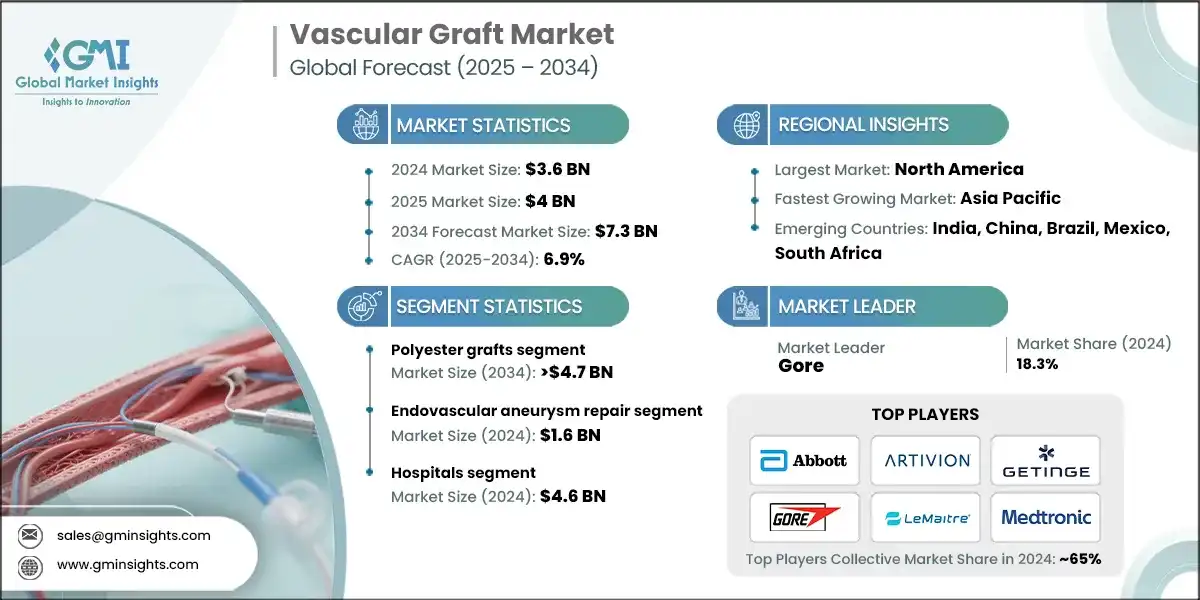
The global vascular graft market was valued at USD 3.6 billion in 2024. The market is expected to reach from USD 4 billion in 2025 to USD 7.3 billion in 2034, growing at a CAGR of 6.9% during the forecast period, according to the latest report published by Global Market Insights Inc. The high market growth is attributed to the increasing prevalence of cardiovascular diseases, technological advancements, rising incidence of end-stage renal disease (ESRD), and an increase in surgical procedures, among other contributing factors.
Vascular Graft Market Key Takeaways
Market Size & Growth
- 2024 Market Size: USD 3.6 Billion
- 2025 Market Size: USD 4 Billion
- 2034 Forecast Market Size: USD 7.3 Billion
- CAGR (2025–2034): 6.9%
Regional Dominance
- Largest Market: North America
- Fastest Growing Region: Asia Pacific
Key Market Drivers
- Increasing number chronic diseases worldwide.
- Growing number of end-stage renal disorders in developing economies.
- Technological advancements in developed countries.
- Rise in organ transplantation.
Challenges
- Lack of skilled personnel in developing countries.
- Risk of graft infection and thrombosis.
Opportunity
- Development of bioresorbable and hybrid grafts.
- Rising adoption of 3D printing in graft development.
Key Players
- Market Leader: Gore led with over 18.3% market share in 2024.
- Leading Players: Top 5 players in this market include Abbott, Artivion, Getinge, Gore, LeMaitre, Medtronic, which collectively held a market share of 65% in 2024.
Get Market Insights & Growth Opportunities
Vascular graft is a medical device whose function is to substitute, fix, or reroute the damaged or infected blood vessels so that the blood flow becomes normal again. It can be made from synthetic materials, biological tissues, or a combination of both. These grafts are commonly used in procedures for cardiovascular diseases, aneurysms, and hemodialysis access.
Leading players in the vascular graft market include Abbott, Artivion, Getinge, Gore, LeMaitre, and Medtronic. These companies maintain their competitive edge through continuous raw material innovation, global market presence, and significant investments in research and development.
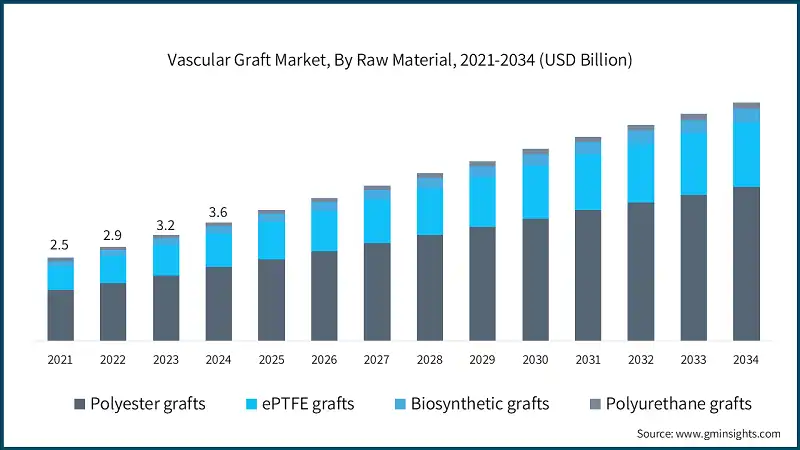
The market has increased from USD 2.5 billion in 2021 and reached USD 3.2 billion in 2023, with the historic growth rate of 13.2%. The market growth was driven by the rising prevalence of cardiovascular and peripheral vascular diseases, increasing adoption of minimally invasive surgical procedures, and continuous advancements in graft materials and design technologies.
Moreover, the global incidence of coronary artery disease, peripheral artery disease, and aneurysms is increasing significantly. For instance, according to the World Health Organization (WHO) 2022 data, cardiovascular diseases account for 32% of global deaths, with 17.9 million deaths recorded annually. The American Heart Association reported that in 2023, approximately 20.1 million adults in the U.S. had coronary artery disease. The prevalence of atherosclerosis and lifestyle conditions, such as obesity and diabetes, creates additional demand for vascular grafts.
In addition, the International Diabetes Federation estimates that 537 million adults were living with diabetes in 2021, projected to reach 643 million by 2030. This trend is prominent in the aging populations across North America, Europe, and several Asian regions, with the United Nations reporting that individuals aged 65 and above will comprise 16.7% of the global population by 2024.
Furthermore, innovations such as bioengineered grafts, heparin-bonded ePTFE grafts, and hybrid (synthetic-biological) materials enhance compatibility and reduce thrombosis risks. These developments improve long-term patency and surgical outcomes, driving higher acceptance among vascular surgeons.
To get key market trends
Vascular Graft Market Trends
The vascular graft industry is growing considerably with the shift towards minimally invasive and endovascular procedures, increasing use of biodegradable and tissue-engineered grafts, integration of drug-eluting and coated grafts, and rising adoption in emerging markets, among other factors collectively driving industry growth.
- The use of endovascular aneurysm repair (EVAR) and other minimally invasive procedures is becoming more popular, and patients and doctors alike prefer these methods to traditional open surgeries. The trend has led to a significant reduction in recovery time for patients and their time spent in the hospital, and thus a higher demand for grafts that are compatible with minimally invasive surgeries. Manufacturers are working on creating delivery systems that are suitable for catheter-based deliveries for grafts.
- Tissue-engineered and bioresorbable grafts are gaining traction due to improved biocompatibility and reduced risk of infection or thrombosis. These grafts support natural vessel regeneration and are especially popular in paediatric and high-risk patients. Research in regenerative medicine is driving further innovation in this area.
- Moreover, advances in 3D printing and imaging technologies are enabling patient-specific vascular grafts. These custom-designed grafts improve fit and compatibility, reducing complications. The trend reflects a broader shift toward personalized medicine in cardiovascular interventions, thereby sustaining market growth.
Vascular Graft Market Analysis
Learn more about the key segments shaping this market
Based on the raw material, the vascular graft market is segmented into polyester grafts, ePTFE grafts, biosynthetic grafts, and polyurethane grafts. The polyester grafts segment has asserted its dominance in the market by securing a significant market share of 62.3% in 2024 owing to their high durability, excellent biocompatibility, and proven long-term patency in vascular repair and bypass procedures. The segment is expected to exceed USD 4.7 billion by 2034, growing at a CAGR of 7.3% during the forecast period.
On the other hand, the ePTFE grafts segment is expected to grow with a CAGR of 6.4%. The growth of this segment is driven by its superior biocompatibility, low thrombogenicity, and increasing adoption in minimally invasive and complex vascular procedures.
- The polyester grafts segment continues to dominate the market. Polyester grafts have been the material of choice in vascular surgeries for a very long time, especially in aortic and peripheral bypass surgeries. Owing to their good performance over the years and on several occasions, which have made their reliability has been well established, making them a top pick by surgeons in their practice. This long history is what brings about doctor trust and the rates of usage.
- Polyester grafts offer excellent tensile strength and resistance to dilation, making them suitable for high-pressure vessels like the aorta. Their durability ensures long-term patency, reducing the likelihood of reoperations. This mechanical reliability drives their continued use in major vascular interventions.
- The ePTFE grafts segment held a revenue of USD 1 billion in 2024, with projections indicating a steady expansion at 6.4% CAGR from 2025 to 2034. The segmental growth is driven by their excellent biocompatibility and resistance to thrombosis, making them ideal for complex vascular surgeries. Additionally, their flexibility and long-term patency encourage higher adoption in both peripheral and cardiovascular procedures.
- The biosynthetic grafts segment held a revenue of USD 233.4 million in 2024, with projections indicating a steady expansion at 5.7% CAGR from 2025 to 2034. Biosynthetic grafts are propelled by their ability to promote tissue integration and reduce the risk of infection compared to fully synthetic options. Growing demand for advanced, biologically compatible grafts in high-risk patients further supports market growth.
- The polyurethane grafts segment accounted for significant revenue in 2024, with projections indicating a steady expansion at 5.3% CAGR from 2025 to 2034. These grafts are favored for their elasticity and compliance, closely mimicking natural blood vessels, which improves hemodynamic performance. Their durability and resistance to kinking or aneurysm formation drive adoption in specialized vascular procedures.
Based on application, the vascular graft market is segmented into endovascular aneurysm repair, hemodialysis access, and peripheral vascular repair. The endovascular aneurysm repair segment is further bifurcated into abdominal aortic aneurysm repair and thoracic aortic aneurysm repair. The endovascular aneurysm repair segment dominated the market in 2024, accounting for USD 1.6 billion and is anticipated to grow at a CAGR of 7.7% during the forecast period.
- EVAR is a less invasive alternative to open aneurysm repair, involving small incisions and catheter-based delivery of grafts. As a result, patient recovery time, hospital stays, and postoperative complications are all reduced, making it increasingly preferred by both surgeons and patients.
- The rising incidence of abdominal and thoracic aortic aneurysms, particularly among elderly populations, drives demand for EVAR procedures. Early diagnosis and intervention needs have expanded the patient pool eligible for minimally invasive repair.
- The hemodialysis access segment accounted for significant revenue in 2024 and is anticipated to grow at a CAGR of 6.3% over the forecast period. The growing prevalence of end-stage renal disease (ESRD) and the increasing number of patients requiring long-term hemodialysis are driving demand for vascular grafts. Improved graft designs that enhance patency and reduce infection risk further support market growth in this segment.
- The peripheral vascular repair segment accounted for significant revenue in 2024 and is anticipated to grow at a CAGR of 5.9% over the forecast period. Rising incidence of peripheral artery disease (PAD) and trauma-related vascular injuries is increasing the need for graft-based interventions. Advances in minimally invasive surgical techniques and improved graft materials are further boosting adoption in this segment.
Learn more about the key segments shaping this market
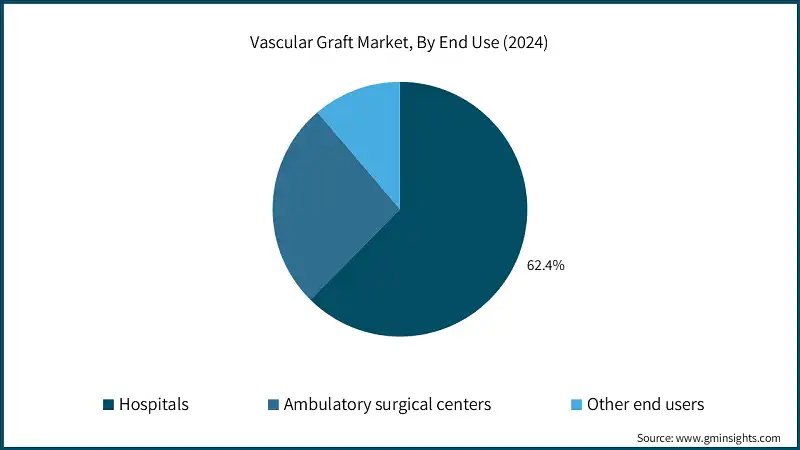
Based on end use, the vascular graft market is classified into hospitals, ambulatory surgical centers, and other end users. The hospitals segment dominated the market with a revenue share of 62.4% in 2024 and is expected to reach USD 4.6 billion within the forecast period.
- Hospitals perform the majority of vascular procedures, including bypass surgeries, aneurysm repairs, and peripheral artery interventions. The increasing prevalence of cardiovascular diseases drives higher procedural volumes, creating sustained demand for vascular grafts in hospital settings.
- Hospitals are equipped with catheterization labs, operating theaters, and imaging facilities necessary for complex vascular procedures. This infrastructure enables the use of both open and endovascular graft technologies, facilitating adoption of advanced grafts.
- The ambulatory surgical centers segment held revenue of USD 954.6 million in 2024, with projections indicating steady expansion at a CAGR of 7.7% from 2025 to 2034. The rising preference for outpatient procedures and minimally invasive vascular surgeries is boosting the adoption of vascular grafts in ASCs. Cost efficiency, faster patient turnover, and improved post-operative care in these centers further drive market growth.
Looking for region specific data?
North America Vascular Graft Market
North America dominated the market with the highest market share of 32.2% in 2024.
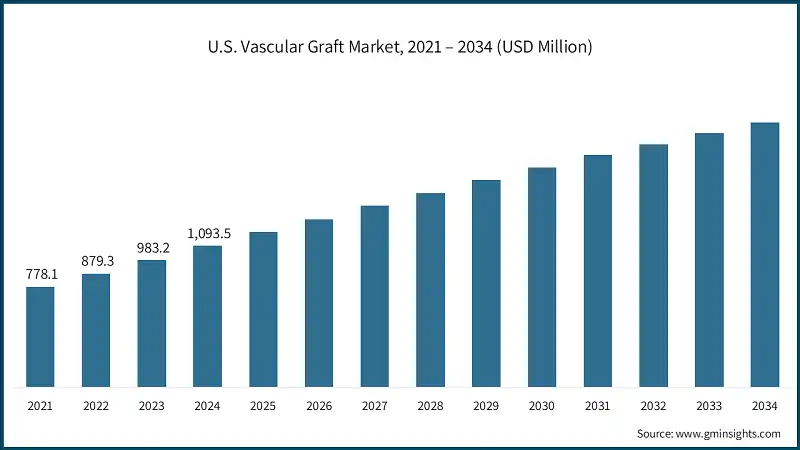
- The U.S. market was valued at USD 778.1 million and USD 879.3 million in 2021 and 2022, respectively. The market size reached USD 1.1 billion in 2024, growing from USD 983.2 million in 2023, and is anticipated to grow at a CAGR of 6.1% between 2025 to 2034.
- North America experiences a high prevalence of coronary artery disease, peripheral artery disease, and aortic aneurysms. For instance, the CDC stated that in 2021, there were about 20.1 million adult cases of coronary artery disease in the U.S. Meanwhile, the American Heart Association reported in 2022 that there were 6.5 million Americans aged 40 and above suffering from peripheral artery disease.
- The region's population faces serious health challenges, with obesity rates reaching 41.9% in 2023, smoking prevalence at 11.5% in 2022, and diabetes affecting 37.3 million Americans as of 2023, according to the CDC. These conditions increase vascular complications and the need for vascular graft surgeries.
- Moreover, the region boasts well-established hospitals, catheterization labs, and vascular surgery centers. Access to state-of-the-art surgical equipment and specialized personnel supports both open and endovascular procedures, boosting graft adoption.
Europe Vascular Graft Market
Europe market accounted for USD 1 billion in 2024 and is anticipated to show lucrative growth over the forecast period.
- Several European countries implement cardiovascular disease prevention and treatment programs, such as public screening for aneurysms and PAD. Government support for early diagnosis and intervention increases procedural volumes. This directly boosts the adoption of vascular grafts, especially in public hospitals and specialized clinics.
- Further, there is a strong network of clinical research centers and tertiary care hospitals in Europe, which are involved in trials of new vascular grafts. The collaboration among hospitals, universities, and manufacturers facilitates the quick uptake of innovative graft technologies. Hospitals give preference to those products that have been proven to be clinically effective; hence, the demand for advanced synthetic, hybrid, and tissue-engineered grafts is increasing.
Asia Pacific Vascular Graft Market
The Asia Pacific market is anticipated to grow at the highest CAGR of 7.7% during the analysis timeframe.
- The Asia-Pacific region is experiencing a steep increase in cardiovascular diseases, such as coronary artery disease, peripheral artery disease, and aortic aneurysms. Among the contributory factors are urbanization, sedentary lifestyles, increasing obesity rates, and the prevalence of diabetes and hypertension, which have been on the rise. The escalation of the disease burden mainly drives the demand for vascular grafts for both elective and emergency interventions.
- Governments in countries like China, India, Japan, and South Korea are heavily investing in healthcare infrastructure, including modern hospitals, catheterization labs, and specialized cardiovascular centers. Enhanced hospital capacities allow for more complex vascular procedures, increasing the adoption of advanced grafts in both urban and semi-urban areas.
Latin America Vascular Graft Market
The Latin America market is experiencing robust growth over the analysis timeframe.
- The rise of cardiovascular diseases and peripheral artery disorders across the region is the main factor driving the growth of the Latin American market. Increased healthcare awareness and the expansion of healthcare infrastructure are two factors that have positively affected access to advanced vascular interventions.
- Governments are investing in healthcare modernization, including funding for surgical procedures and dialysis programs, which supports market growth. The growing geriatric population further fuels demand for vascular grafts due to age-related vascular complications.
- Moreover, the growing adoption of minimally invasive surgeries and the development of graft technologies are key factors improving procedural outcomes. New medical device distributors and collaborations with international companies are making the region more accessible for the introduction and use of high-quality vascular grafts.
Middle East & Africa Vascular Graft Market
The Middle East & Africa (MEA) market is experiencing robust growth over the analysis timeframe.
- The regional growth is driven by rising incidences of cardiovascular and peripheral vascular diseases, particularly in urban populations. Increasing government initiatives and investments in advanced healthcare infrastructure are enhancing the availability of vascular interventions.
- Growing awareness of chronic conditions and preventive healthcare is encouraging patients to seek timely surgical solutions. Expansion of private healthcare facilities and specialty hospitals is facilitating access to high-quality vascular grafts.
- The adoption of advanced surgical techniques, including minimally invasive procedures, is improving clinical outcomes and graft success rates. Additionally, partnerships between local distributors and global medical device companies are accelerating the introduction of innovative graft technologies across the region.
Vascular Graft Market Share
The market is competitive and moderately consolidated, with leading global players focusing on innovation, product portfolio expansion, and strategic collaborations to strengthen their market presence.
Companies are investing in R&D to develop advanced graft materials, including bioresorbable, hybrid, and 3D-printed grafts, aimed at improving long-term patency and reducing complications. Key players include Abbott, Artivion, Getinge, Gore, LeMaitre, and Medtronic, collectively accounting for 65% of the total market share.
Market participants are also leveraging mergers, acquisitions, and regional partnerships to expand their footprint in emerging markets such as Asia-Pacific, Latin America, and MEA. The competition is further intensified by the growing adoption of minimally invasive procedures, leading manufacturers to differentiate through product innovation, regulatory approvals, and clinician support programs.
Mid-sized and niche companies are entering the market with specialized grafts for dialysis access or complex vascular surgeries, adding further dynamics to the competitive landscape.
Vascular Graft Market Companies
Few of the prominent players operating in the vascular graft industry include:
- Abbott
- Artivion
- B. Braun
- BD (Becton, Dickinson & Company)
- Cook Medical
- Cordis
- Endologix
- Getinge
- Gore
- LeMaitre
- Medtronic
- Merit Medical Systems
- MicroPort
- Terumo
- Vascular Graft Solutions
- Gore
Gore, leading the vascular graft market with an 18.3% share in 2024, is renowned for its high-quality ePTFE grafts with long-term patency and low thrombogenicity. Continuous innovation in graft materials and minimally invasive solutions strengthens its clinical reputation and market leadership.
Abbott offers a broad portfolio of vascular grafts and cardiovascular devices with proven clinical outcomes. Its strong global distribution network and comprehensive clinician support programs enhance adoption and trust among healthcare providers.
Medtronic leverages advanced R&D capabilities to provide innovative synthetic and hybrid grafts for complex vascular procedures. Its integrated solutions and strong global presence facilitate widespread adoption in hospitals and speciality centers.
Vascular Graft Market Report Attributes
| Key Takeaway | Details |
|---|---|
| Market Size & Growth | |
| Base Year | 2024 |
| Market Size in 2024 | USD 3.6 Billion |
| Market Size in 2025 | USD 4 Billion |
| Forecast Period 2025 - 2034 CAGR | 6.9% |
| Market Size in 2034 | USD 7.3 Billion |
| Key Market Trends | |
| Drivers | Impact |
| Increasing number chronic diseases worldwide | The rising prevalence of cardiovascular and peripheral vascular diseases is driving higher demand for vascular grafts globally. This is directly contributing to market revenue growth. |
| Growing number of end-stage renal disorders in developing economies | Expanding hemodialysis populations are increasing the need for arteriovenous grafts, particularly in emerging regions. This is creating significant growth opportunities in these markets. |
| Technological advancements in developed countries | Innovations in synthetic, bioengineered, and hybrid grafts are improving clinical outcomes and adoption rates. This strengthens the market position of advanced graft manufacturers. |
| Rise in organ transplantation | Increasing organ transplant procedures require complex vascular repairs, boosting demand for specialized grafts. This is positively influencing market expansion in high-income regions. |
| Pitfalls & Challenges | Impact |
| Lack of skilled personnel in developing countries | Limited availability of trained vascular surgeons restricts procedural adoption, slowing market growth in these regions. It poses a barrier to realizing the full market potential. |
| Risk of graft infection and thrombosis | Complications associated with graft use reduce long-term success rates and adoption by healthcare providers. This risk can negatively impact overall market growth and clinician confidence. |
| Opportunities: | Impact |
| Development of bioresorbable and hybrid grafts | These next-generation grafts are expected to improve long-term patency and reduce complications, driving higher adoption rates. This innovation will expand the market by attracting both clinicians and patients seeking safer, more effective solutions. |
| Rising adoption of 3D printing in graft development | 3D printing enables patient-specific, anatomically precise grafts, enhancing surgical outcomes and customization. This technology is likely to open new revenue streams and accelerate market growth in personalized vascular interventions. |
| Market Leaders (2024) | |
| Market Leaders |
18.3% market share |
| Top Players |
Collective market share in 2024 is ~65% |
| Competitive Edge |
|
| Regional Insights | |
| Largest market | North America |
| Fastest growing market | Asia Pacific |
| Emerging countries | India, China, Brazil, Mexico, South Africa |
| Future outlook |
|
What are the growth opportunities in this market?
Vascular Graft Industry News:
- In August 2025, Aquedeon Medical Inc. announced that the FDA had approved the expansion of its IDE clinical trial for the Duett Vascular Graft System, designed for aortic arch aneurysm and dissection repairs. This approval validates the company’s innovative technology in the vascular graft market and supports potential growth and adoption in complex aortic repair procedures.
- In August 2024, Terumo Corporation announced the launch of TREO stent-graft system for endovascular aneurysm repair (EVAR), designed for infrarenal abdominal aortic aneurysms with both suprarenal and infrarenal active fixation. This innovation strengthens Terumo's competitive position in the market, allowing it to capitalize on growing demand for advanced, minimally invasive solutions and expand its market share.
- In January 2024, W. L. Gore & Associates has received FDA approval for its lower-profile GORE VBX Stent Graft, an enhancement to its proven device for treating complex vascular diseases. This approval introduces the longest balloon-expandable stent and the most 6 Fr-compatible configurations available. It strengthens Gore’s competitive position and is expected to drive growth and increased sales in the vascular sector.
The vascular graft market research report includes an in-depth coverage of the industry with estimates and forecast in terms of revenue in USD Million from 2021 – 2034 for the following segments:
Market, By Raw Material
- Polyester grafts
- ePTFE grafts
- Biosynthetic grafts
- Polyurethane grafts
Market, By Application
- Endovascular aneurysm repair
- Abdominal aortic aneurysm repair
- Thoracic aortic aneurysm repair
- Hemodialysis access
- Peripheral vascular repair
Market, By End Use
- Hospitals
- Ambulatory surgical centers
- Other end use
The above information is provided for the following regions and countries:
- North America
- U.S.
- Canada
- Europe
- Germany
- UK
- France
- Spain
- Italy
- Netherlands
- Asia Pacific
- China
- Japan
- India
- Australia
- South Korea
- Latin America
- Brazil
- Mexico
- Argentina
- Middle East and Africa
- South Africa
- Saudi Arabia
- UAE
Frequently Asked Question(FAQ) :
What is the market size of the vascular graft in 2024?
The market size was USD 3.6 billion in 2024, with a CAGR of 6.9% expected through 2034, driven by advancements in minimally invasive procedures, increasing adoption of tissue-engineered grafts, and rising demand in emerging markets.
What is the projected value of the vascular graft market by 2034?
The market is expected to reach USD 7.3 billion by 2034, fueled by innovations in drug-eluting grafts, bioresorbable materials, and growing applications in vascular repair and bypass procedures.
What is the projected size of the vascular graft market in 2025?
The vascular graft market is expected to reach USD 4 billion in 2025.
How much revenue did the polyester grafts segment generate?
The polyester grafts segment leading the market with a 62.3% share due to its durability, biocompatibility, and long-term patency.
What was the valuation of the hospitals segment?
The hospitals segment held a 62.4% market share in 2024.
Which region leads the vascular graft market?
North America led the market with a 32.2% share in 2024. The region's dominance is attributed to advanced healthcare infrastructure and high adoption of innovative vascular graft technologies.
What are the upcoming trends in the vascular graft industry?
Key trends include the growing preference for minimally invasive procedures, increasing use of tissue-engineered and bioresorbable grafts, advancements in catheter-based delivery systems, and rising adoption in emerging markets.
Who are the key players in the vascular graft market?
Key players include Abbott, Artivion, B. Braun, BD (Becton, Dickinson & Company), Cook Medical, Cordis, Endologix, Getinge, Gore, LeMaitre, and Medtronic.
Vascular Graft Market Scope
Related Reports