Summary
Table of Content

U.S. Cerebral Palsy Treatment Market
Get a free sample of this report
Form submitted successfully!
Error submitting form. Please try again.
Thank you!
Your inquiry has been received. Our team will reach out to you with the required details via email. To ensure that you don't miss their response, kindly remember to check your spam folder as well!
Request Sectional Data
Thank you!
Your inquiry has been received. Our team will reach out to you with the required details via email. To ensure that you don't miss their response, kindly remember to check your spam folder as well!
Form submitted successfully!
Error submitting form. Please try again.
U.S. Cerebral Palsy Treatment Market Size
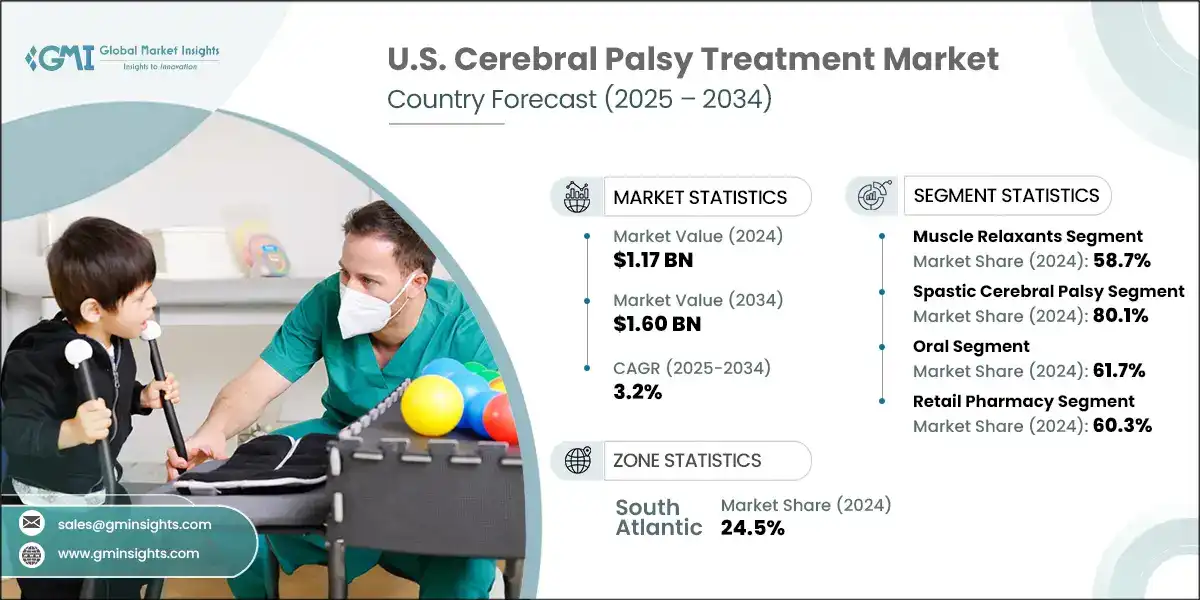
The U.S. cerebral palsy treatment market was valued at USD 1.17 billion in 2024 and is projected to grow from USD 1.20 billion in 2025 to USD 1.60 billion by 2034, registering a CAGR of 3.2%, according to Global Market Insights Inc.
U.S. Cerebral Palsy Treatment Market Key Takeaways
Market Size & Growth
- 2024 Market Size: USD 1.17 Billion
- 2034 Forecast Market Size: USD 1.60 Billion
- CAGR (2025–2034): 3.2%
Regional Dominance
- Largest Market: South Atlantic
- Fastest Growing Country: Mountain States
Key Market Drivers
- Rising prevalence of cerebral palsy.
- Advancements in drug formulations.
- Increased awareness and early diagnosis.
- Surging investments in research and development activities.
Challenges
- Adverse effects associated with drugs.
Opportunity
- Development of targeted therapies.
- Strategic partnerships between pharma companies and pediatric hospitals.
Key Players
- Market Leader: AbbVie led with over 14.6% market share in 2024.
- Leading Players: Top 5 players in this market include AbbVie, Teva, VIATRIS, IPSEN, Merz Pharmaceuticals, which collectively held a market share of 50% in 2024.
Get Market Insights & Growth Opportunities
This high growth is attributed to several factors including rising prevalence of cerebral palsy in the country, advancements in drug formulations, a favorable reimbursement landscape, surging investments in research and development activities, and growing awareness to focus on early diagnosis of the indication.
Cerebral palsy (CP) treatment includes a range of medical, surgical, therapeutic, and supportive interventions that help improve movement, manage daily challenges, and enhance the quality of life for people living with CP. Major players in the industry include AbbVie, IPSEN, Merz Pharmaceuticals, Teva Pharmaceuticals, UCB, and VIATRIS. Healthcare professionals now prefer botulinum toxin injections and newer muscle relaxants to help patients manage muscle stiffness, moving away from older systemic treatments toward more targeted approaches that focus on specific muscle groups.
The market is experiencing growth due to several key factors, including the consistently high number of people affected by cerebral palsy, better drug therapies and injection treatments, well-established rehabilitation and support systems, and helpful insurance coverage policies. The Centers for Disease Control and Prevention (CDC) reported in 2023 that cerebral palsy affects about 1 in 345 children in the U.S., making it the most common movement disorder in children. According to Cerebral Palsy Guidance in 2022, around 1 million children and adults in the U.S. are living with the condition's symptoms.
People with cerebral palsy now have better treatment options thanks to improvements in oral medications, muscle relaxants, and botulinum toxin injections. In the U.S., strong research programs and numerous new treatments awaiting FDA approval are helping improve patient outcomes and quality of life.
People can better access cerebral palsy treatments through support from private insurance, Medicaid, and Medicare, which help pay for medications, therapy sessions, and helpful devices. In 2023, Medicaid helped about 83 million Americans, while Medicare supported over 65 million people. The Children's Health Insurance Program (CHIP) provided coverage for 7.1 million children in 2022, including treatments for cerebral palsy as part of its basic health benefits.
Treatment for cerebral palsy (CP) involves a combination of medical procedures, surgeries, therapies, and support services designed to improve movement, manage symptoms, and enhance daily life. Patients may receive physical, occupational, and speech therapy; take medications to reduce muscle stiffness; undergo orthopedic surgery; and use assistive devices. Each treatment plan is individualized to promote independence and improve abilities, although CP itself cannot be cured.
To get key market trends
U.S. Cerebral Palsy Treatment Market Trends
The market experiences dynamic transformation driven by key industry trends. Advancements in drug formulations, development of targeted therapies and strategic partnerships between pharma companies and hospitals are among the key trends shaping the market growth positively.
- The CP treatment plan is witnessing a shift through growing demand for tailored therapies, specifically designed as per the patient's requirements. A groundbreaking JAMA Pediatrics study by Phoenix Children's researchers (Dr. Michael Kruer, Dr. Sara Lewis) looked at 1,841 CP patients who received genetic testing. The study found that 502 patients (27%) carried disease-causing genetic variants, and remarkably, about one in four of these patients received immediate changes in their treatment plans based on their genetic findings.
- These results show that treatments based on genetic information may help many children with CP. The Cerebral Palsy Alliance Research Foundation is also supporting U.S. genetic research efforts to develop treatments that target such specific genetic patterns.
- Moreover, at the NIH, physical therapy researchers are using EEG-based brain connectivity measurements to better understand how children respond to treatments. By measuring brain activity patterns during movement in the U.S. children with CP, doctors can more quickly adjust and improve treatment plans.
- Furthermore, the collaboration between pharmaceutical companies and different healthcare settings, especially children's hospitals, is opening new possibilities for treatment. These teams bring together medical expertise, scientific research, and practical resources to develop better targeted treatments. For example, the Children's Hospital of Philadelphia (CHOP) is working with Pfizer's Centers for Therapeutic Innovation to improve research for children, conduct clinical trials, and study new treatments for childhood neurological conditions, including CP.
U.S. Cerebral Palsy Treatment Market Analysis
Learn more about the key segments shaping this market
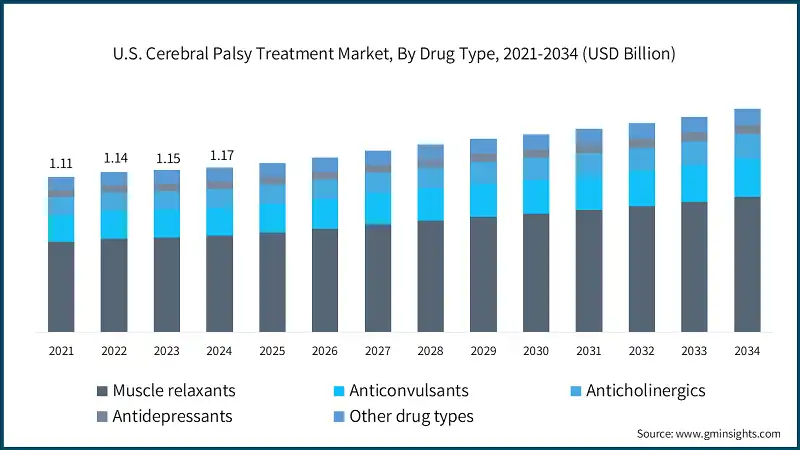
In 2021, the market was valued at USD 1.11 billion. The following year, it saw a slight increase to USD 1.14 billion, and by 2023 it reached USD 1.15 billion. The growing awareness levels coupled with a focus on early diagnosis and therapeutic intervention are anticipated to spur the industry’s growth.
Based on the drug type, the U.S. cerebral palsy treatment market is segmented into muscle relaxants, anticonvulsants, anticholinergics, antidepressants, and other drug types. The muscle relaxants segment accounted for 58.7% of the market in 2024, as they have the ability to manage excessive muscle tone. Physicians commonly prescribe muscle relaxants such as baclofen, tizanidine, and diazepam. The segment is expected to exceed USD 963.1 million by 2034, growing at a CAGR of 3.5% during the forecast period.
- Doctors administer muscle relaxants before orthopedic or neurosurgical procedures to help patients with muscle stiffness and prevent complications after surgery. These medications play a vital role in rehabilitation programs by helping patients recover more effectively. Medical professionals have increased their prescription of these medications by 12% from 2021 to 2023.
- In addition, patients can get muscle relaxants from hospital pharmacies for immediate care, local pharmacies for ongoing treatment, and specialized providers for advanced treatments like baclofen pumps. This wide availability helps ensure both children and adults with cerebral palsy can access the treatment they need.
- The anticonvulsants segment accounted for a market share of 17.2% in 2024 and is poised to witness substantial growth over the next coming years. The U.S. market gives doctors access to a wide range of anticonvulsants, including levetiracetam, valproate, and lamotrigine. This allows them to create personalized treatment plans that consider each patient's specific seizure type, age, and other health conditions. Having these options helps doctors provide more effective treatments and better results for their patients.
- Furthermore, anticholinergic medications play an essential role in treating cerebral palsy in the U.S. These treatments have proven effective in managing symptoms, come in various forms suitable for children, and are increasingly covered by insurance plans. Patients can easily access these medications through both hospitals and local pharmacies.
Based on the disease type, the U.S. cerebral palsy treatment market is segmented into spastic cerebral palsy, dyskinetic cerebral palsy, ataxic cerebral palsy, and mixed cerebral palsy. The spastic cerebral palsy segment accounted for the highest market share of 80.1% in 2024 due to the growing prominence of spastic cerebral palsy owing to advancements in orthopedic and neurosurgical interventions, increased availability of pediatric rehabilitation programs, and the rising use of wearable and sensor-based mobility aids, among other contributing factors.
- Spastic cerebral palsy affects 70-80% of all people with CP in the U.S., representing the most common form of the condition. Due to this high number of patients, there is a significant need for pharmacological interventions, physical therapy, orthopedic care, and assistive devices. The large number of people requiring treatment maintains a substantial portion of the overall market.
- Healthcare providers increasingly use treatment procedures such as selective dorsal rhizotomy (SDR) and tendon-lengthening surgeries to help patients manage severe spasticity. The combination of surgical procedures and drug therapy offers patients a better experience and improved mobility outcomes, thus contributing to comprehensive treatment solutions across the country.
- Additionally, the mixed cerebral palsy segment is anticipated to grow at a CAGR of 3.8% during the forecast period. Patients with mixed cerebral palsy experience varying degrees of muscle stiffness, involuntary movements, and coordination difficulties. To manage these complex symptoms, treatment approaches often rely on pharmacological interventions such as oral medications, muscle relaxants, and botulinum toxin injections, supplemented by therapies or surgical procedures when necessary. The rising preference for drug-based personalized care plans, tailored to individual symptom profiles, is expected to drive segmental growth in the coming years.
Based on route of administration, the U.S. cerebral palsy treatment market is segmented into oral and injectables. The oral segment accounted for the highest market share of 61.7% in 2024 due to the improved drug dosages and advantages offered by this category, such as non-invasive and less complicated than alternative routes.
- People with cerebral palsy rely on various oral medications to manage their condition. These include antispasmodics like baclofen to help with muscle stiffness, pain relief medications, and antiepileptic drugs for those who experience seizures. According to the Cerebral Palsy North Registry Study, more than 80% of people with cerebral palsy experience muscle stiffness, which is why medications like baclofen are so important in their daily lives. Nutritional supplements are also vital, helping patients maintain the calories and nutrients they need to stay healthy.
- Oral medications remain the most common treatment choice because they are cost-effective. Many insurance plans offer good coverage for these medications, and the availability of generic versions makes them more affordable for families who are managing the costs of cerebral palsy care.
- Injectable treatments are becoming more important and are expected to grow to USD 625.2 million by 2034. These medications, which can be given into muscles or under the skin, are particularly helpful for people whose symptoms don't improve enough with oral medications. Injections deliver medicine directly into the body, working more quickly when immediate relief is needed or during emergencies.
Learn more about the key segments shaping this market
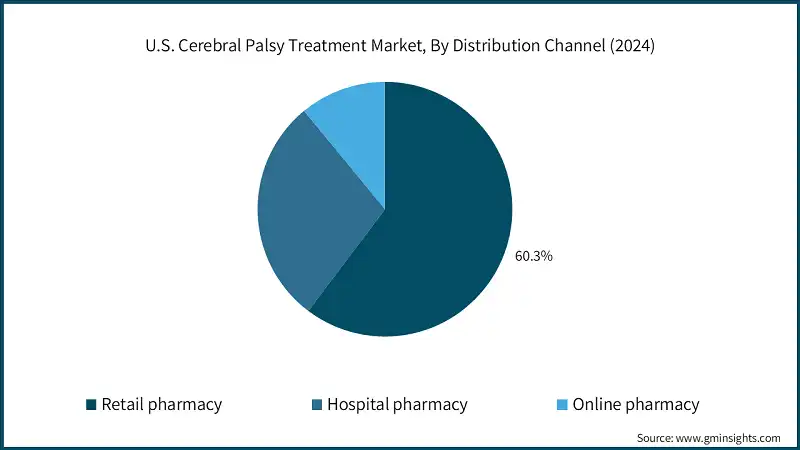
Based on the distribution channel, the U.S. cerebral palsy treatment market is segmented into retail pharmacy, hospital pharmacy, and online pharmacy. The retail pharmacy segment accounted for the highest market share of 60.3% in 2024, as the pharmacists can provide rapid refill services, collaborate on medication therapy management, and communicate directly with prescribing physicians to resolve any drug-related issues.
- Retail pharmacists work closely with patients and families, offering personalized counseling and education about medication usage, side effects, and ways to stay on track with prescriptions. This hands-on support makes it easier for caregivers to manage multiple medications for their loved ones with cerebral palsy. Local pharmacies also help families through medication synchronization and adherence programs, which lead to better health outcomes and improved care.
- In addition, working together with doctors and other healthcare providers, retail pharmacies create a seamless care experience through quick refill services, medication therapy management (MTM), and open communication with physicians about medication concerns. A recent 2023 Wolters Kluwer Pharmacy Next survey shows that pharmacists have earned the trust of 79% of Americans as care providers, and 58% would turn to their local pharmacy for non-emergency services, showing how much people rely on pharmacists for ongoing health support and preventive care.
- Further, the online pharmacy segment accounted for a considerable market share in 2024 and is projected to record the fastest growth during the forecast period. These digital pharmacies help families managing cerebral palsy save money through competitive prices, regular discounts, and affordable generic medication options. Families can easily compare prices between different online pharmacies, making it simpler to find the most affordable options for their needs.
Looking for region specific data?
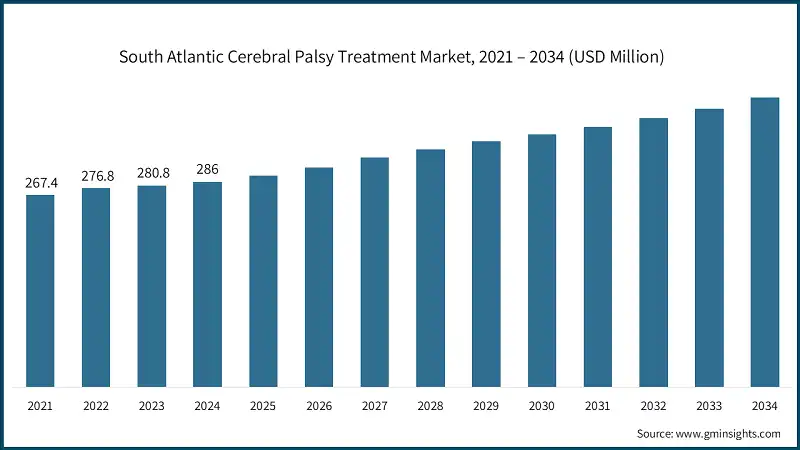
South Atlantic zone dominated the U.S. cerebral palsy treatment market with the leading market share of 24.5% in 2024.
- The strong network of advocacy organizations and community support groups in the South Atlantic region plays a vital role in strengthening the cerebral palsy treatment market. These organizations work tirelessly to raise awareness, educate communities, and support research initiatives that improve our understanding and management of cerebral palsy.
- Patients and their families benefit from easy access to essential resources and information, helping them make well-informed decisions about their treatment options. These support networks create an environment where individuals with cerebral palsy and their families feel empowered to seek timely and effective healthcare interventions.
- The treatment approach includes comprehensive care for related conditions, such as epilepsy and orthopedic challenges, which are common among cerebral palsy patients. In the region, pediatric neurologists, physiatrists, and rehabilitation specialists work together to provide complete care, which has led to better treatment outcomes for patients.
Pacific Central cerebral palsy treatment market accounted for USD 230.3 million in 2024.
- The Pacific region's market continues to grow through its strong foundation in clinical research and drug development. Local pharmaceutical companies and academic institutions actively work on developing new treatments, including gene therapy, stem cell therapy, and specialized injections using umbilical cord blood mononuclear cells. These innovative treatments show encouraging results in helping children with cerebral palsy improve their motor function. Both government and private organizations invest heavily in research across the region.
- According to the National Survey of Children's Health (NSCH), about 0.3% of children in the U.S. live with cerebral palsy, which means around 189,910 children across the country need care and support. States like California, Oregon, and Washington have many of these children due to their large young populations. To help these families, the Pacific region ensures therapy and assistive technologies are readily available.
- The region also makes healthcare more accessible through supportive policies and insurance coverage, helping families access early intervention services and long-term care. Well-established programs focus on early diagnosis and community-based rehabilitation, making life easier for children with cerebral palsy and their families while improving health outcomes.
The Northeast cerebral palsy treatment market is anticipated to witness notable growth over the analysis timeframe.
- The region is experiencing growth due to enhanced research and development in institutions, growing awareness of cerebral palsy, and significant investments in healthcare infrastructure. Local pharmaceutical companies and biotech firms are developing new medications that help improve treatment options for people living with cerebral palsy.
- Healthcare providers in the region have made significant progress in early diagnosis and intervention strategies, especially for children. The Autism and Developmental Disabilities Monitoring (ADDM) Network reports that 58.9% of children with cerebral palsy can walk independently, while 33.3% have limited or no walking ability, and 7.8% use mobility aids. These numbers show how important it is to provide early and ongoing therapeutic support, which is propelling the regional growth.
- The region's strong performance also comes from public health programs that focus on early diagnosis and comprehensive care. Programs like universal neonatal screening and community outreach have helped identify more cases early, allowing healthcare providers to begin treatment when it matters most. This careful approach has helped the region to be a key participant in both patient care and market presence.
U.S. Cerebral Palsy Treatment Market Share
Leading industry players such as AbbVie Inc, VIATRIS, Teva, IPSEN, Merz Pharmaceuticals and UCB hold between 55% to 60% of the market share in the moderately consolidated market. These companies maintain their leading position by combining strong product lines, business collaborations, legal clearances, and ongoing innovation
Companies are taking active steps to stay competitive by developing new drugs, creating targeted treatments, and expanding into new regions. The market now strongly focuses on personalized medicine and better drug delivery methods to help control symptoms and improve how patients feel in their daily lives.|
Healthcare providers are increasingly using treatment approaches that combine medications with other therapies. Focused and continuous efforts of researchers to develop novel medications for the treatment of epilepsy and other health issues are anticipated to fuel the industry growth throughout the projected timeline.
Further, increased investment in research and development, partnerships with universities and research hospitals, and better ways to distribute and pay for medications are helping bring new treatments to patients who need them in the market.
U.S. Cerebral Palsy Treatment Market Companies
Few of the prominent players operating in the U.S. cerebral palsy treatment industry include:
- AbbVie
- Amneal
- CHEPLAPHARM
- Dr. Reddy’s
- GSK
- IPSEN
- Merz Pharmaceuticals
- Novartis
- Roche
- Teva
- UCB
- VIATRIS
- AbbVie
AbbVie, operating through its subsidiary Allergan, plays a vital role in treating cerebral palsy patients, especially in managing spasticity. The company strengthens its position by improving its products and achieving important regulatory approvals. For instance, in July 2021, the FDA expanded BOTOX's approved uses to treat eight more muscles for upper limb spasticity in adults, covering areas such as the elbow, forearm, hand, and thumb. This development made BOTOX more versatile in treatment options and also introduced ultrasound guidance for precise muscle targeting, highlighting the company's focus on delivering improved medical care.
- Ipsen
Ipsen plays a vital role in helping patients with cerebral palsy in the U.S. through its treatment Dysport (abobotulinumtoxinA). This injectable muscle relaxant helps reduce muscle stiffness and manages movement difficulties in both children and adults with cerebral palsy. The company focuses on developing advanced treatments using neurotoxins that help patients in their movement, feel more comfortable, and improve their daily routine. By bringing together brain specialists and treatment researchers, Ipsen creates solutions that help people manage the challenges of spastic cerebral palsy.
- UCB
UCB plays a vital role in the U.S. cerebral palsy treatment market by offering a comprehensive anticonvulsant portfolio that helps patients manage epilepsy and seizure disorders commonly associated with cerebral palsy. Through close partnerships and collaborations with healthcare providers and patient advocacy groups, the company actively supports education programs, early intervention strategies, and improved treatment access. These patient-focused initiatives have established UCB as a trusted partner in enhancing the quality of care for people living with cerebral palsy in the country.
U.S. Cerebral Palsy Treatment Market Report Attributes
| Key Takeaway | Details |
|---|---|
| Market Size & Growth | |
| Base Year | 2024 |
| Market Size in 2024 | USD 1.17 Billion |
| Forecast Period 2025 – 2034 CAGR | 3.2% |
| Market Size in 2034 | USD 1.60 Billion |
| Key Market Trends | |
| Drivers | Impact |
| Rising prevalence of cerebral palsy | Increasing diagnosis rates are fueling steady market growth and demand for diverse treatment options. |
| Advancements in drug formulations | Innovations like stem cell therapy and AI-driven rehabilitation are enhancing treatment efficacy and patient independence. |
| Increased awareness and early diagnosis | Early detection tools are improving neuroplasticity outcomes and enabling timely interventions before 6 months of age. |
| Surging investments in research and development activities | Active clinical pipelines and funding initiatives are accelerating the development of novel therapies and diagnostics. |
| Pitfalls & Challenges | Impact |
| Adverse effects associated with drugs | Potent medications often require careful monitoring due to risks like developmental delays, tolerance issues, and side effects in children. |
| Opportunities: | Impact |
| Development of targeted therapies | Emerging approaches like gene therapy, stem cells, and robotic-assisted rehab promise personalized care and improved long-term outcomes. |
| Strategic partnerships between pharma companies and pediatric hospitals | Collaborations are driving innovation in pediatric drug development, enhancing access to specialized treatments, and improving care quality. |
| Market Leaders (2024) | |
| Market Leaders |
14.6% Market share |
| Top Players |
Collective market share in 2024 is 50% |
| Competitive Edge |
|
| Regional Insights | |
| Largest Market | South Atlantic |
| Fastest Growing Market | Mountain States |
| Emerging States | Arizona, North Dakota, Minnesota, Utah, etc. |
| Future outlook |
|
What are the growth opportunities in this market?
U.S. Cerebral Palsy Treatment Industry News:
- In July 2025, CHEPLAPHARM, in collaboration with South Korea’s Boryung, announced a partnership to manufacture Zyprexa tablets for distribution across up to 46 countries, including key markets in Europe and North America. This strategic collaboration is anticipated to ensure CHEPLAPHARM a reliable, high-quality supply chain for Zyprexa, supporting the company’s expansion into 46 regulated markets.
- In January 2022, Amneal Pharmaceuticals, Inc. entered into a definitive agreement with Saol Therapeutics, a private specialty pharmaceutical company, to acquire its Baclofen franchise, including Lioresal and LYVISPAH. This acquisition expanded Amneal’s institutional and specialty neurology portfolio while reinforcing its commercial infrastructure in preparation for its entry into the biosimilar institutional market.
- In July 2021, Allergan, an AbbVie company, announced that the U.S. Food and Drug Administration (FDA) approved a label expansion for BOTOX, adding eight new muscles for the treatment of upper limb spasticity in adults. The updated label also incorporates the use of ultrasound as a muscle localization technique in adult spasticity management.
The U.S. cerebral palsy treatment market research report includes an in-depth coverage of the industry with estimates and forecast in terms of revenue in USD Million from 2021 – 2034 for the following segments:
Market, By Drug Type
- Muscle relaxants
- Anticonvulsants
- Anticholinergics
- Antidepressants
- Other drug types
Market, By Disease Type
- Spastic cerebral palsy
- Hemiplegia
- Diplegia
- Quadriplegia
- Dyskinetic cerebral palsy
- Ataxic cerebral palsy
- Mixed cerebral palsy
Market, By Route of Administration
- Oral
- Injectable
Market, By Distribution Channel
- Retail pharmacy
- Hospital pharmacy
- Online pharmacy
The above information is provided for the following zones and states:
- East North Central
- Illinois
- Indiana
- Michigan
- Ohio
- Wisconsin
- West South Central
- Arkansas
- Louisiana
- Oklahoma
- Texas
- South Atlantic
- Delaware
- Florida
- Georgia
- Maryland
- North Carolina
- South Carolina
- Virginia
- West Virginia
- Washington, D.C.
- Northeast
- Connecticut
- Maine
- Massachusetts
- New Hampshire
- Rhode Island
- Vermont
- New Jersey
- New York
- Pennsylvania
- East South Central
- Alabama
- Kentucky
- Mississippi
- Tennessee
- West North Central
- Iowa
- Kansas
- Minnesota
- Missouri
- Nebraska
- North Dakota
- South Dakota
- Pacific Central
- Alaska
- California
- Hawaii
- Oregon
- Washington
- Mountain States
- Arizona
- Colorado
- Utah
- Nevada
- New Mexico
- Idaho
- Montana
- Wyoming
Frequently Asked Question(FAQ) :
What was the market size of the U.S. cerebral palsy treatment in 2024?
The market size was valued at USD 1.17 billion in 2024, with a CAGR of 3.2% projected through 2034.
What is the projected value of the U.S. cerebral palsy treatment market by 2034?
The market is expected to reach USD 1.60 billion by 2034, fueled by innovations in treatment approaches and increasing demand for tailored therapies.
What was the market share of the muscle relaxants segment in 2024?
The muscle relaxants segment accounted for 58.7% of the market in 2024, driven by their effectiveness in managing excessive muscle tone.
What was the market share of the spastic cerebral palsy segment in 2024?
The spastic cerebral palsy segment held the largest market share of 80.1% in 2024, supported by advancements in orthopedic and neurosurgical interventions, pediatric rehabilitation programs, and wearable mobility aids.
What was the valuation of the oral route of administration segment in 2024?
The oral segment accounted for the highest market share of 61.7% in 2024, attributed to its non-invasive nature and improved drug dosages.
Which region dominated the U.S. cerebral palsy treatment market in 2024?
The South Atlantic zone led the market with a 24.5% share in 2024.
What are the key trends shaping the U.S. cerebral palsy treatment market?
Key trends include advancements in drug formulations, the development of targeted therapies, and strategic collaborations between pharmaceutical companies and hospitals.
Who are the key players in the U.S. cerebral palsy treatment market?
Prominent players include AbbVie, Amneal, CHEPLAPHARM, Dr. Reddy’s, GSK, IPSEN, Merz Pharmaceuticals, Novartis, Roche, Teva, UCB, and VIATRIS.
U.S. Cerebral Palsy Treatment Market Scope
Related Reports