Summary
Table of Content

U.S. Advanced Wound Care Market
Get a free sample of this report
Form submitted successfully!
Error submitting form. Please try again.
Thank you!
Your inquiry has been received. Our team will reach out to you with the required details via email. To ensure that you don't miss their response, kindly remember to check your spam folder as well!
Request Sectional Data
Thank you!
Your inquiry has been received. Our team will reach out to you with the required details via email. To ensure that you don't miss their response, kindly remember to check your spam folder as well!
Form submitted successfully!
Error submitting form. Please try again.
U.S. Advanced Wound Care Market Size
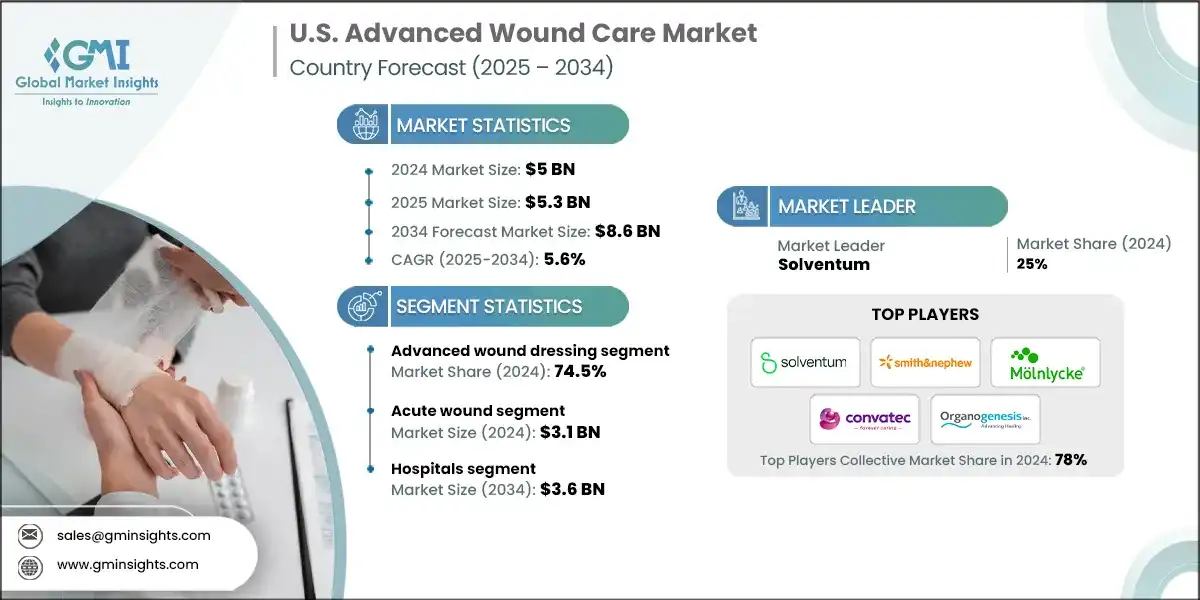
The U.S. advanced wound care market was valued at USD 5 billion in 2024 and is projected to grow from USD 5.3 billion in 2025 to USD 8.6 billion by 2034, expanding at a CAGR of 5.6%, according to the latest report published by Global Market Insights Inc. This steady growth is stimulated by various factors such as increasing number of surgical procedures across U.S., increasing incidence of chronic wounds, technological advancement in advanced wound care.
U.S. Advanced Wound Care Market Key Takeaways
Market Size & Growth
- 2024 Market Size: USD 5 Billion
- 2025 Market Size: USD 5.3 Billion
- 2034 Forecast Market Size: USD 8.6 Billion
- CAGR (2025–2034): 5.6%
Key Market Drivers
- Increasing number of surgical procedures across U.S..
- Increasing incidence of chronic wounds.
- Technological advancement in advanced wound care.
Challenges
- Heterogeneous regulatory pathways slow approvals.
- High cost of advanced wound-care products.
Opportunity
- Customized and patient-specific solutions.
Key Players
- Market Leader: Solventum led with over 25% market share in 2024.
- Leading Players: Top 5 players in this market include Solventum, Smith & Nephew, Molnlycke Health Care, ConvaTec Group, Organogenesis, which collectively held a market share of 78% in 2024.
Get Market Insights & Growth Opportunities
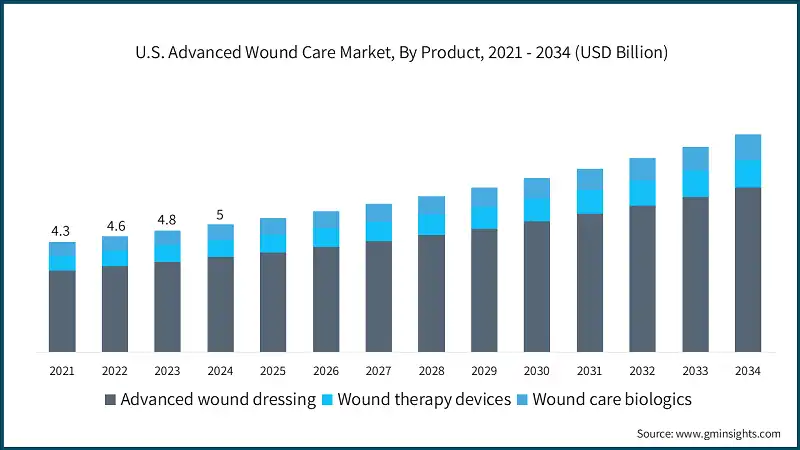
The market grew from USD 4.3 billion in 2021 to USD 4.8 billion in 2023, primarily due to increasing number of surgical procedures performed annually in the U.S. is a major driver for the growth of the advanced wound care market. For instance according to CDC, 51.4 million surgeries were conducted across various specialties. Among these, orthopedic surgeries such as total knee replacements (719,000) and total hip replacements (332,000) represented a significant portion. These procedures involve large incisions and deep tissue disruption, making patients highly susceptible to surgical site infections (SSIs), delayed healing, and complications that require specialized wound care.
Advanced wound care products such as negative pressure wound therapy (NPWT) systems, antimicrobial dressings, and bioengineered skin substitutes play a critical role in accelerating healing, reducing infection risks, and improving patient outcomes. As the number of surgeries performed in the U.S. continues to increase, the need for advanced wound care solutions is also increasing.
The rising prevalence of chronic wounds in the U.S. is a major factor driving the growth of the advanced wound care market. Chronic wounds such as diabetic foot ulcers, pressure injuries, and venous leg ulcers require long-term, specialized care and are often resistant to conventional healing methods. As the population ages and chronic diseases become more widespread, the number of patients suffering from non-healing wounds continues to grow, increasing the demand for innovative wound care solutions. For instance according to NIH, chronic wounds are a silent epidemic in the U.S., affecting one in six Medicare beneficiaries, which amounts to approximately 10.5 million people.
The economic impact is substantial, with Medicare spending an estimated USD 22.5 billion annually on wound care. Notably, while outpatient wound care costs dropped from USD 10.5 billion in 2014 to USD 2.5 billion in 2019, physician office costs rose to USD 4.1 billion, indicating a shift in care delivery from hospitals to outpatient and clinic-based settings. As chronic wounds become more prevalent and complex, the need for advanced wound care products continues to rise. This shift in care settings highlights the importance of portable, effective, and easy-to-administer wound care technologies that can be used outside traditional hospital environments.
The advanced wound care market includes specialized products and technologies used to treat complex, chronic, and acute wounds. It covers advanced dressings like foam, hydrocolloid, and collagen therapy devices such as negative pressure systems and oxygen equipment; and biologics including skin substitutes and topical agents. These solutions are applied in conditions like diabetic ulcers, surgical wounds, and burns, and are used across hospitals, clinics, and home care settings to improve healing outcomes and reduce complications.
To get key market trends
U.S. Advanced Wound Care Market Trends
- The market is undergoing a major transformation, driven by technological innovation and evolving clinical needs. Healthcare providers across hospitals, specialty clinics, and home care settings are increasingly relying on advanced wound care solutions to manage both chronic and acute wounds. Conditions such as diabetic ulcers, pressure injuries, surgical wounds, and burns are becoming more prevalent, requiring more effective and personalized treatment approaches.
- Advanced wound care products ranging from specialized dressings to therapy devices and biologics are being designed to improve healing outcomes and reduce complications. These solutions support moisture balance, infection control, and tissue regeneration, helping clinicians address complex wounds more efficiently. The growing demand for patient-friendly and cost-effective treatments is also encouraging the development of products suitable for outpatient and home-based care.
- In response to rising chronic conditions like diabetes and vascular diseases, wound care technologies are being tailored to meet long-term treatment needs. Devices that assist in wound healing, reduce pressure, and enhance oxygenation are becoming more common in both clinical and home environments. This shift reflects a broader trend toward decentralized care, where advanced wound management is accessible beyond traditional hospital settings.
- As surgical procedures increase and chronic wounds become more complex, the U.S. market continues to expand. The focus on improving patient outcomes, reducing healing time, and lowering healthcare costs is driving innovation across all product categories.
U.S. Advanced Wound Care Market Analysis
Learn more about the key segments shaping this market
In 2021, the market was valued at USD 4.3 billion. The following year, it saw a slight increase to USD 4.6 billion, the market further climbed to USD 4.8 billion in 2023.
Based on product, the U.S. advanced wound care market is divided into advanced wound dressing, wound therapy devices, wound care biologics. The advanced wound dressing segment held a significant market share of 74.5% in 2024.
- Advanced wound dressings are specialized medical solutions designed to support faster and more effective healing of complex wounds. Unlike basic bandages, these dressings use innovative materials that help maintain optimal moisture levels, manage wound fluids, and protect against infection, making them suitable for both chronic and acute wound care.
- Their proven effectiveness in treating conditions like diabetic ulcers, pressure injuries, and surgical wounds has led to growing demand in clinical practice. By improving healing rates, reducing infection risks, and enhancing patient comfort, these dressings are becoming a preferred choice among healthcare providers across the U.S.
- These products are widely used in hospitals, specialty clinics, and increasingly in home care environments. Their versatility allows them to be applied across a range of wound types, including burns, traumatic injuries, and chronic ulcers, making them essential tools in modern wound management strategies.
- For instance, approximately 18.6 million people worldwide are affected by diabetic foot ulcers each year, including 1.6 million individuals in the U.S., according to NIH. These ulcers precede 80% of lower extremity amputations among people diagnosed with diabetes and are associated with a significantly increased risk of mortality. This high prevalence and severity underscore the urgent need for advanced wound care interventions that can promote healing, reduce infection risk, and prevent limb loss.
Based on application, the U.S. advanced wound care market is segmented into chronic wounds and acute wounds. The acute wound was worth USD 3.1 billion in 2024.
- In the U.S., the advanced wound care market for acute wounds is seeing strong growth, supported by rising surgical volumes, trauma cases, and burn injuries. Acute wounds such as surgical incisions, burns, and traumatic injuries typically heal within a predictable timeframe when managed properly. Unlike chronic wounds, they generally follow a normal healing process but still require specialized care to prevent complications.
- To ensure rapid recovery and minimize infection risks, acute wounds are treated using advanced wound care solutions across hospitals and emergency care settings. As the number of surgeries and trauma-related admissions increases, healthcare providers are turning to more effective dressings, therapy devices, and biologics to improve patient outcomes and reduce healing time.
- For instance, American association of trauma surgery, in the U.S., injuries result in over 150,000 deaths and more than 3 million non-fatal cases annually. This high volume of trauma-related incidents places a significant burden on the healthcare system and highlights the need for effective wound care solutions, especially in cases involving surgical or external injuries that accompany traumatic events.
- This highlights the critical role of advanced wound care in treating acute injuries. With growing demand across clinical settings, the U.S. market continues to expand as providers seek faster, safer, and more personalized solutions to manage acute wounds and improve recovery rates.
Learn more about the key segments shaping this market
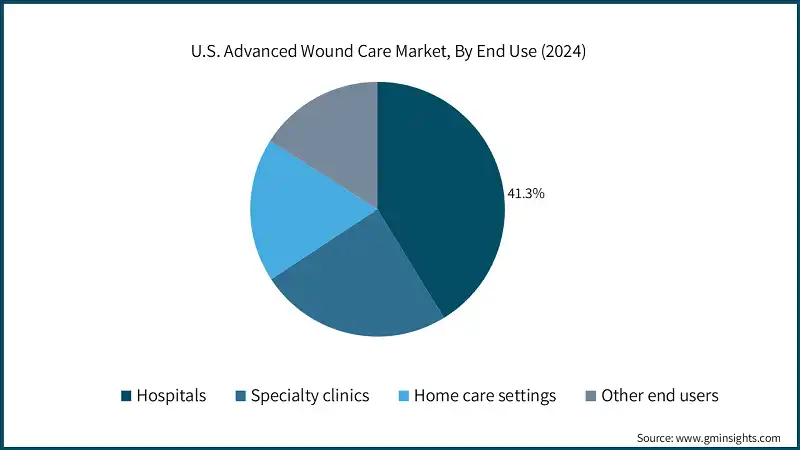
Based on end use, the U.S. advanced wound care market is categorized into hospitals, specialty clinics, home care setting and other end users. Among these, hospitals segment dominated the market in 2024, accounting for 41.3% of the total market share. This dominance is projected to continue, with the segment expected to reach USD 3.6 billion by 2034.
- Hospitals serve as primary centers for managing a wide scale of wounds ranging from acute surgical injuries to chronic conditions like diabetic ulcers and pressure sores. From surgical incisions to diabetic foot ulcers and pressure injuries, hospitals manage high patient volumes and complex cases, driving consistent demand for advanced wound care solutions across departments.
- Wound care in hospitals span emergency rooms, operating suites, burn units, and intensive care settings. These facilities require reliable and effective products to support post-operative healing, prevent complications, and manage chronic wounds. The need for efficient wound management protocols contributes to the steady adoption of advanced technologies in clinical workflows.
- Hospitals also prioritize infection control and regulatory compliance, which accelerates the use of sterile and clinically validated wound care products. As care standards rise, advanced therapies are increasingly integrated into treatment plans to reduce healing time, minimize hospital stays, and improve patient outcomes.
- With ongoing modernization of healthcare infrastructure and rising incidence of chronic wounds, hospitals are expected to maintain their dominant position in the market. Their central role in delivering specialized care ensures continued investment in innovative wound management solutions.
U.S. Advanced Wound Care Market Share
- The market is shaped by a combination of leading multinational firms and specialized regional players, creating a dynamic and competitive environment. Solventum holds the largest market share, followed by Smith & Nephew, Mölnlycke Health Care, ConvaTec Group, and Organogenesis. These top 5 players are contributing 78% of market share. Their portfolios span advanced dressings, wound therapy devices, and biologics, widely adopted across hospitals, specialty clinics, and home care settings to address both chronic and acute wound care needs.
- Emerging companies are gaining momentum by focusing on innovative, patient-centric wound care solutions that align with the growing demand for home-based and outpatient treatment. These firms often collaborate with healthcare providers, digital platforms, and research institutions to enhance product usability, improve clinical outcomes, and build trust among end users.
- To strengthen their market position, leading and emerging players alike pursue strategic partnerships, licensing agreements, and acquisitions. These moves enable them to integrate complementary technologies, expand their product offers, and remain competitive in a rapidly evolving healthcare landscape.
- As the burden of chronic wounds increases and surgical volumes rise, the market is expected to grow steadily. The strategic actions of key players, combined with innovation and shifting care models, will continue to shape the future of wound management across the country.
U.S. Advanced Wound Care Market Companies
Few of the prominent players operating in the U.S. advanced wound care industry include:
- Solventum
- Accel-Heal Technologies
- B. Braun
- Cardinal Health
- Coloplast
- ConvaTec Group
- DeRoyal Industries, Inc.
- HARTMANN International
- Hollister Incorporated
- Integra LifeSciences Corporation
- Lohmann & Rauscher
- Medela AG
- Medline Industries
- Mölnlycke Health Care
- Organogenesis
- Sky Medical Technology
- Smith and Nephew
- Talley Group Ltd
- Vomaris Innovations
- WoundEL Health Care
- ConvaTec
ConvaTec provides advanced wound care solutions including antimicrobial dressings, foam therapies, and biologics designed for difficult-to-treat wounds. Its proprietary technologies focus on accelerating healing and enhancing patient well-being, supported by a commitment to innovation and coordinated care models.
Organogenesis specializes in biologically based wound care, offering skin grafts and placental-derived treatments rooted in regenerative medicine. The company aims to convert chronic wounds into healing states, leveraging strong clinical data and reimbursement frameworks to support widespread use.
HARTMANN International delivers a broad portfolio of wound care products targeting exudate control and prevention of infection. Its strategy includes active healing for chronic wounds, complemented by compression therapy and professional training, positioning the brand as a cost-effective and clinically trusted partner.
U.S. Advanced Wound Care Market Report Attributes
x | Key Takeaway | Details |
|---|---|
| Market Size & Growth | |
| Base Year | 2024 |
| Market Size in 2024 | USD 5 Billion |
| Market Size in 2025 | USD 5.3 Billion |
| Forecast Period 2025 - 2034 CAGR | 5.6% |
| Market Size in 2034 | USD 8.6 Billion |
| Key Market Trends | |
| Drivers | Impact |
| Increasing number of surgical procedures across U.S. | Drives higher demand for advanced wound care products to support post-operative healing. |
| Increasing incidence of chronic wounds | Expands the patient pool requiring long-term wound management solutions. |
| Technological advancement in advanced wound care | Enhances treatment efficacy and accelerates healing, boosting adoption rates. |
| Pitfalls & Challenges | Impact |
| Heterogeneous regulatory pathways slow approvals | Delays market entry and increases time-to-commercialization for new products. |
| High cost of advanced wound-care products | Limits accessibility and adoption, especially in cost-sensitive healthcare settings. |
| Opportunities: | Impact |
| Customized and patient-specific solutions | Enable more effective and personalized wound care, improving patient outcomes and satisfaction. |
| Market Leaders (2024) | |
| Market Leaders |
25% market share |
| Top Players |
Collective market share in 2024 is 78% |
| Competitive Edge |
|
| Future outlook |
|
| Regional Insights | |
What are the growth opportunities in this market?
U.S. Advanced Wound Care Industry News:
- In March 2022, ConvaTec Group Plc finalized its acquisition of Triad Life Sciences Inc., marking a strategic expansion into the fast-growing wound biologics segment. This move significantly enhances ConvaTec’s advanced wound care capabilities in the U.S. and led to the creation of a dedicated division—ConvaTec Advanced Tissue Technologies. The acquisition positions the company to better address complex, hard-to-heal wounds and strengthens its presence in the regenerative medicine space.
The U.S. advanced wound care market research report includes in-depth coverage of the industry with estimates and forecast in terms of revenue in USD Million and from 2021 - 2034 for the following segments:
Market, By Product
- Advanced wound dressing
- Foam dressings
- Hydrocolloid dressings
- Film dressings
- Alginate dressings
- Hydrogel dressings
- Collagen dressings
- Other advanced dressings
- Wound therapy devices
- Negative pressure wound therapy
- Oxygen and hyperbaric oxygen equipment
- Electric stimulation devices
- Pressure relief devices
- Other wound therapy devices
- Wound care biologics
- Skin Substitutes
- Biological
- Allograft
- Xenograft
- Other biologicals
- Synthetic
- Biological
- Topical Agents
- Skin Substitutes
Market, By Application
- Chronic
- Diabetic ulcer
- Pressure ulcer
- Venous leg ulcer
- Other chronic applications
- Acute
- Surgical Wounds
- Traumatic wounds
- Burns
Market, By End Use
- Hospitals
- Specialty clinics
- Home care settings
- Other end use
Frequently Asked Question(FAQ) :
What was the market size of the U.S. advanced wound care market in 2024?
The market size was USD 5 billion in 2024, with a CAGR of 5.6% projected through 2034, driven by an increasing number of surgical procedures, rising incidence of chronic wounds, and technological advancements in wound care.
What is the projected value of the U.S. advanced wound care market by 2034?
The market is expected to reach USD 8.6 billion by 2034, supported by the growing demand for patient-friendly and cost-effective treatments, as well as advancements in wound care products.
What is the projected size of the U.S. advanced wound care market in 2025?
The market is expected to grow to USD 5.3 billion in 2025.
What was the market share of the advanced wound dressing segment in 2024?
The advanced wound dressing segment held a significant market share of 74.5% in 2024.
What was the valuation of the acute wound application segment in 2024?
The acute wound segment was valued at USD 3.1 billion in 2024.
Which end-use segment dominated the U.S. advanced wound care market in 2024?
The hospital segment dominated the market in 2024, accounting for 41.3% of the total market share. This segment is projected to reach USD 3.6 billion by 2034.
What are the key trends in the U.S. advanced wound care industry?
Key trends include the adoption of advanced wound care solutions for chronic and acute wounds, development of products supporting moisture balance and tissue regeneration, and increasing demand for outpatient and home-based care solutions.
Who are the key players in the U.S. advanced wound care market?
Prominent players include Solventum, Accel-Heal Technologies, B. Braun, Cardinal Health, Coloplast, ConvaTec Group, DeRoyal Industries, Inc., HARTMANN International, Hollister Incorporated, Integra LifeSciences Corporation, and Lohmann & Rauscher.
U.S. Advanced Wound Care Market Scope
Related Reports