Summary
Table of Content

Thyroid Support Supplements Market
Get a free sample of this report
Form submitted successfully!
Error submitting form. Please try again.
Thank you!
Your inquiry has been received. Our team will reach out to you with the required details via email. To ensure that you don't miss their response, kindly remember to check your spam folder as well!
Request Sectional Data
Thank you!
Your inquiry has been received. Our team will reach out to you with the required details via email. To ensure that you don't miss their response, kindly remember to check your spam folder as well!
Form submitted successfully!
Error submitting form. Please try again.
Thyroid Support Supplements Market Size
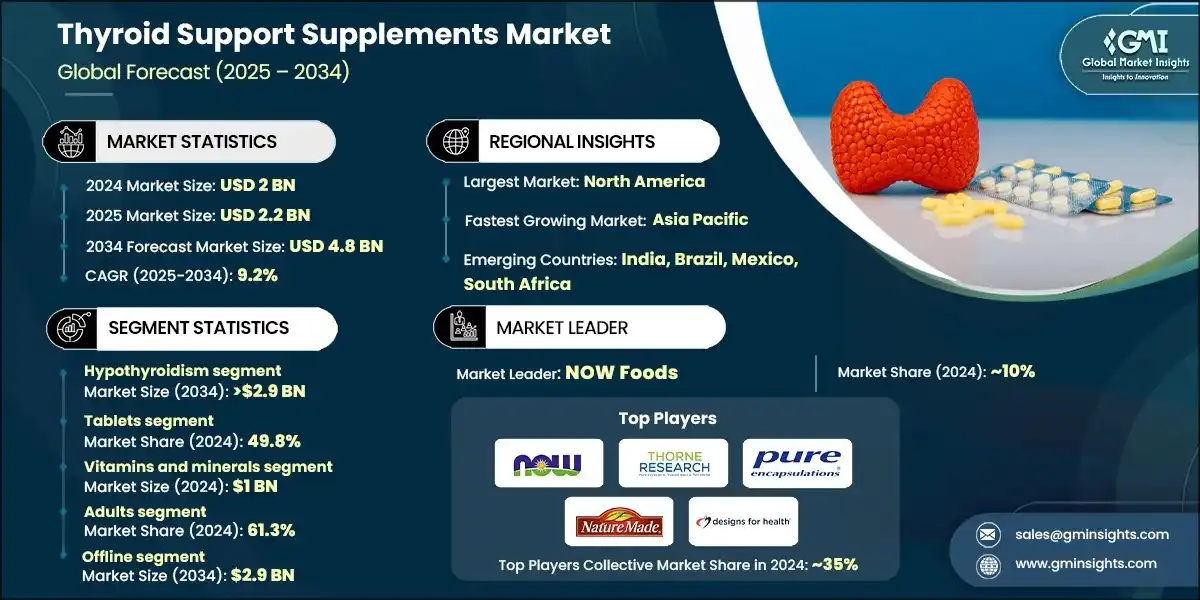
The global thyroid support supplements market was estimated at USD 2 billion in 2024. The market is expected to grow from USD 2.2 billion in 2025 to USD 4.8 billion in 2034, at a CAGR of 9.2%, according to the latest report published by Global Market Insights Inc.
Thyroid Support Supplements Market Key Takeaways
Market Size & Growth
- 2024 Market Size: USD 2 Billion
- 2025 Market Size: USD 2.2 Billion
- 2034 Forecast Market Size: USD 4.8 Billion
- CAGR (2025–2034): 9.2%
Regional Dominance
- Largest Market: North America
- Fastest Growing Region: Asia Pacific
Key Market Drivers
- Increasing prevalence of thyroid disorders.
- Lifestyle and dietary imbalances.
- Advancements in supplement formulations.
- Growing awareness and preventive health focus.
Challenges
- Lack of clinical validation for some products.
- Regulatory and quality concerns.
Opportunity
- Innovation in personalized nutrition and AI-driven wellness.
- Expansion of plant-based and clean-label formulations.
Key Players
- Market Leader: NOW Foods led with over 10% market share in 2024.
- Leading Players: Top 5 players in this market include NOW Foods, Thorne Research, Pure Encapsulations, Nature Made, Designs for Health, which collectively held a market share of 35% in 2024.
Get Market Insights & Growth Opportunities
This growth is primarily stimulated due to the rising prevalence of thyroid disorders that affect millions of people globally that escalates the demand for nutritional and herbal thyroid support solutions. According to the American Thyroid Association, approximately 20 million Americans have some form of thyroid disease, of which about 60% of the patients are unaware of their condition.
Moreover, globally, iodine deficiency remains a leading cause of thyroid dysfunction. According to NIH, approximately 2 billion people suffer of iodine deficiency globally. Additionally, changing dietary habits, stress, and hormonal imbalances further contribute to thyroid health issues, escalating demand for innovative formulations combining adaptogenic herbs and, vitamins, minerals supplements.
Additionally, the increasing adoption of clean-label supplements and plant-based formulations is changing consumer preferences. Rising cases of iodine deficiency and autoimmune thyroid conditions such as Hashimoto’s disease further escalates the need for targeted nutritional support. Moreover, advancements in supplement technology, including sustained-release excipients capsules and synergistic blends, are improving absorption and compliance.
The thyroid support supplements market is defined as the segment of the nutraceutical industry focused on maintaining optimal thyroid function through dietary supplementation. It includes a wide range of products such as iodine-based solutions, herbal adaptogens like ashwagandha, specialty amino acids such as tyrosine, and comprehensive multivitamin blends. These supplements aim to support hormone synthesis, regulate metabolism, and improve energy levels.
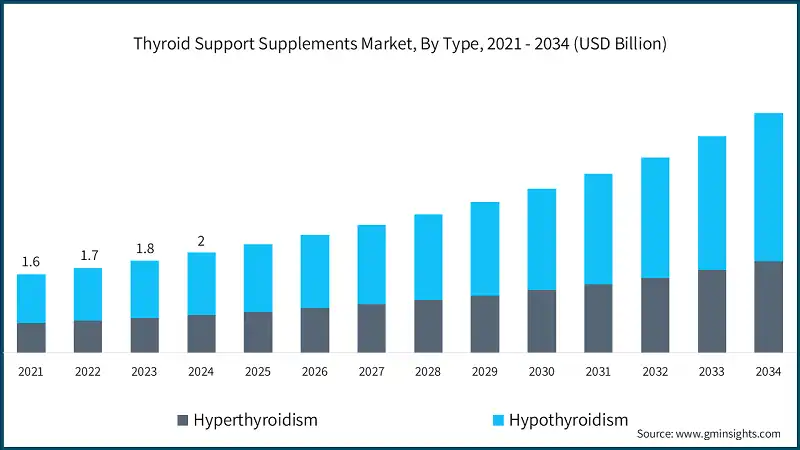
The global thyroid support supplements market has witnessed consistent growth, rising from USD 1.6 billion in 2021 to USD 1.8 billion in 2023, escalated by increasing awareness of thyroid health and the popularity of preventive wellness solutions. The demand for preservative-free, non-GMO, and vegan formulations is reshaping the product landscape, improving consumer trust and compliance. The rise of e-commerce and tele-nutrition platforms has further enhanced accessibility and consumer engagement.
Also, the global health authorities regulate these supplements to ensure safety and quality. They are available in various dosage forms including capsules, tablets, liquids, and powders, allowing flexible administration based on consumer needs.
Key players such as NOW Foods, Thorne Research, Pure Encapsulations, Nature Made, and Gaia Herbs lead the market with robust product portfolios and strong research and development pipelines. These companies drive innovation, expand retail and online presence, and raise awareness, positioning thyroid support supplements as a rapidly growing segment in the global nutraceutical landscape.
To get key market trends
Thyroid Support Supplements Market Trends
- A major trend shaping the market is the consumer shift toward natural, multi-nutrient formulations that promote hormonal balance, energy, and overall wellness. These supplements often combine essential micronutrients such as iodine, selenium, and L-tyrosine with adaptogenic herbs and amino acids, offering a holistic approach to thyroid health. This evolution reflects growing consumer awareness of thyroid-related fatigue, weight management challenges, and the desire for non-pharmaceutical interventions.
- Moreover, the integration of AI-powered nutrition apps and personalized supplement platforms is accelerating the development of customized thyroid health plans. These platforms leverage individual biomarkers, genetic data, and lifestyle inputs to recommend targeted blends, enhancing efficacy and consumer engagement. This aligns with the broader healthcare trend toward precision nutrition and individualized wellness strategies.
- Further, the rising costs of clinical thyroid treatments and prescription medications are prompting a shift toward over the counter (OTC) supplements and tele-nutrition services. Consumers are increasingly opting for affordable, accessible solutions that offer convenience without compromising on quality. This trend is particularly pronounced in regions with limited endocrinology access or high insurance barriers.
- Innovation is also being driven by growing interest in adaptogenic herbs e.g., ashwagandha along with amino acid-based formulations that support stress response and metabolic function.
- Additionally, the emergence of synergistic formulations combining iodine, selenium, and L-tyrosine is helping brands deliver comprehensive thyroid support. These combinations are backed by clinical research and are increasingly favoured for the role in optimizing thyroid hormone production and conversion, especially in subclinical hypothyroidism cases.
- As awareness of thyroid-related fatigue and metabolic dysfunction grows, consumers are exploring supplements that support energy balance, thermogenesis, and weight regulation. This is creating opportunities for functional blends that combine thyroid support with metabolism-enhancing ingredients such as B vitamins, zinc, and magnesium.
- The development of personalized supplement packs and subscription models is expanding options for continuous thyroid care. These models improve user retention and engagement by offering convenience, refill reminders, and tailored dosing schedules based on evolving health data.
- Furthermore, the increasing demand for functional blends with probiotics and adaptogens is fostering innovation in holistic thyroid health solutions. These blends aim to support gut-thyroid axis interactions, reduce stress-induced hormonal imbalances, and improve immune modulation in autoimmune thyroid conditions.
Thyroid Support Supplements Market Analysis
Learn more about the key segments shaping this market
Based on type, the market is categorized into hyperthyroidism and hypothyroidism. The hypothyroidism segment accounted for 62.1% of the market in 2024 which is stimulated by the rising prevalence of underactive thyroid conditions globally, especially among women and aging populations. The segment is expected to exceed USD 2.9 billion by 2034, growing at a CAGR of 9.1% during the forecast period.
- The increasing case of hypothyroidism globally primarily stimulates the market growth. According to European Journal of Cardiovascular Medicine, hypothyroidism prevalence ranges from 2 - 5% globally, with women holding the majority of cases.
- Moreover, the hypothyroidism segment dominates the market due to its broad consumer intake, also increasing awareness of thyroid-related fatigue, weight gain, and mood disorders, and the growing demand for natural, non-prescription alternatives to synthetic hormone therapy.
- Additionally, various supplements focusing on hypothyroidism typically include iodine, selenium, L-tyrosine, zinc, and adaptogenic herbs, which support thyroid hormone production, conversion, and immune modulation.
- Additionally, the segment benefits from the expansion of personalized supplement packs, clean-label formulations, and subscription models that cater to long-term thyroid care. The rise of digital health platforms and tele-nutrition services has also contributed to increased consumer engagement and accessibility, reinforcing the segment’s growth trajectory.
- In contrast, the hyperthyroidism segment held a smaller share of the market in 2024, primarily due to the lower prevalence of overactive thyroid conditions and the limited scope of supplementation in managing such disorders. Supplements in this category focus on calming thyroid activity and supporting immune balance, often incorporating ingredients such as lemon balm, bugleweed, and L-carnitine, which may help mitigate symptoms such as anxiety, palpitations, and weight loss.
Based on product type, the thyroid support supplements market is segmented into tablets, capsules, liquids and other product types. The tablets segment dominated the market in 2024 with a market share of 49.8% stimulated due to its widespread consumer acceptance, ease of dosing, and cost-effectiveness.
- The tablets are favoured for stability, longer shelf life, and compatibility with clean-label and sustained-release formulations, making them a preferred choice for both retail and practitioner-distributed thyroid supplements.
- Moreover, the dominance of tablets is further supported by availability across mass-market brands and e-commerce platforms, offering consumers a wide range of options for managing hypothyroidism, Hashimoto’s thyroiditis, and general thyroid wellness. Their compact packaging and standardized dosing also contribute to high adherence rates, especially in long-term thyroid care regimens.
- The tablet format continues to dominate due to its manufacturing efficiency, cost-effectiveness, and formulation stability, making it ideal for mass production and distribution. Tablets allow for precise nutrient dosing and are compatible with advanced technologies such as sustained-release coatings and multi-layered formulations, which enhance absorption and reduce dosing frequency.
- On the other hand, the capsule segment is anticipated to witness notable growth, with a projected CAGR of 9.6% over the forecast period. Capsules are increasingly preferred for their superior bioavailability, ease of swallowing, and ability to encapsulate sensitive ingredients without the use of binders or fillers.
Based on ingredient, the thyroid support supplements market is segmented into vitamins and minerals, herbal extracts, amino acids and other ingredients. The vitamins and minerals segment dominated the market in 2024 with USD 1 billion market size, stimulated by its foundational role in thyroid hormone synthesis, and metabolic regulation.
- The vitamins and minerals such as iodine, selenium, zinc, iron, and B-complex vitamins are widely incorporated across both general wellness and targeted hypothyroidism formulations, supported by strong clinical validation and consumer familiarity.
- Moreover, the segment’s growth is further reinforced by its compatibility with clean-label standards and advanced delivery formats, including sustained-release tablets and bioavailable capsules. As thyroid-related fatigue, weight gain, and cognitive symptoms remain top concerns among consumers, vitamins and minerals continue to serve as the core therapeutic base in most thyroid support products.
- Additionally, their scalability in manufacturing and broad distribution across offline and online channels make them a strategic focus for both mass-market and premium supplement brands.
- In contrast, herbal extracts, is emerging as a high-potential category, driven by increasing consumer interest in adaptogenic and anti-inflammatory botanicals that support thyroid and adrenal function.
Based on age group, the thyroid support supplements market is segmented into pediatric, adults and geriatric. The adults segment dominated the market in 2024 with a market share of 61.3%, the segment domination is driven by the growing prevalence of hypothyroidism and hashimoto’s thyroiditis among adults.
- The growing prevalence of thyroid cases among adults, especially in women, who represent the highest-risk demographic for autoimmune thyroid conditions. According to NIH, thyroid cases vary from 1 to 10% and may rise in selected age group. Also, according to a study by BMC Endocrine Disorders, 27.4% presented thyroid nodules with a prevalence of 60% in women, stimulating the importance of supplements.
- Moreover, rising awareness of fatigue for thyroid-related, along with hormonal imbalances has led to increased use of OTC thyroid supplements as part of broader wellness routines.
- Additionally, adult consumers are more likely to engage with personalized nutrition platforms, clean-label products, and subscription-based supplement models, further fueling segment growth.
- The adult segment also benefits from the convergence of lifestyle-driven health concerns and digital health engagement, with many consumers seeking non-prescription alternatives to manage subclinical symptoms.
- Whereas the geriatric age group also gaining momentum as aging populations face increased risk of thyroid dysfunction due to metabolic slowdown, nutrient malabsorption, and polypharmacy interactions. Older adults often experience compounded symptoms such as fatigue, cognitive decline, and cardiovascular strain, prompting demand for gentle, bioavailable thyroid support formulations.
Learn more about the key segments shaping this market
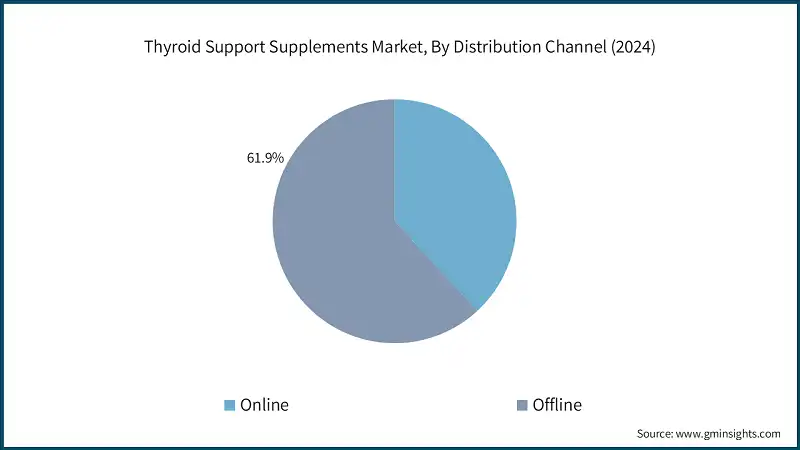
Based on distribution channel, the thyroid support supplements market is categorized into online and offline. The offline segment is anticipated to reach USD 2.9 billion by 2034, growing with a significant CAGR of 9% during the analysis period, escalated due to the increasing requirement of immediate care and the presence of advanced therapeutic services available in the offline settings. The offline segment is further bifurcated into pharmacies and drug stores, supermarkets/ hypermarkets and other offline stores.
- The offline channels benefit from in-person pharmacist recommendations, immediate product availability, and established brand visibility, particularly for mass-market and practitioner-grade thyroid supplements.
- Moreover, offline retail continues to grow due to its accessibility in urban and semi-urban areas, and the presence of large retail chains offering bundled wellness products.
- The segment also benefits from promotional campaigns, shelf placement strategies, and consumer trust in regulated retail environments. As thyroid awareness grows, offline stores remain a key channel for first-time buyers and older demographics who prefer physical shopping experiences.
- On the other hand, the online segment is witnessing rapid growth, stimulated by the expansion of e-commerce platforms, direct-to-consumer brands, and personalized supplement services.
Looking for region specific data?
North America Thyroid Support Supplements Market
The North America market dominated the market with a market share of 43.5% in 2024. The market is stimulated due to the rising cases of hypothyroidism and iodine deficiency in the region, which is supported by strong healthcare infrastructure and growing awareness of preventive nutrition for thyroid health.
- High prevalence of thyroid disorders in the region, where countries such as the U.S., and Canada, contribute significantly to regional growth, drives market demand.
- Additionally, growing adoption of personalized nutrition approaches, that includes genomic profiling and AI-driven supplement recommendations, is enhancing precision care and improving long-term health outcomes.
- Moreover, the market further escalated due to public health initiatives and increasing demand for both OTC thyroid supplements and tele-nutrition, offering convenience and affordability which further improves patient compliance.
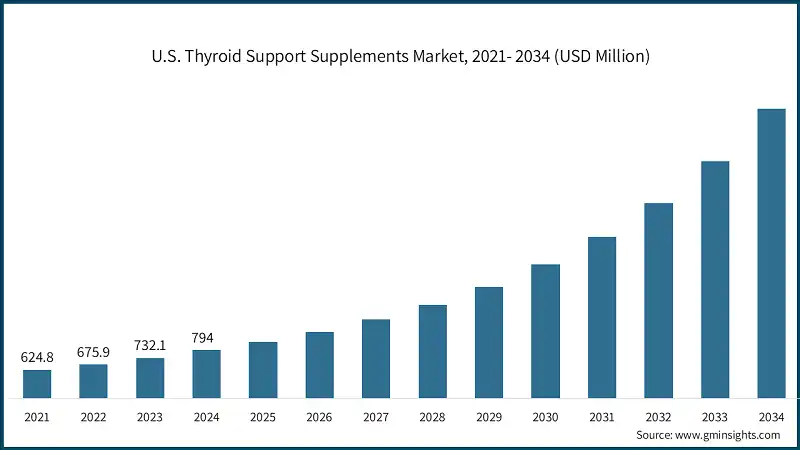
The U.S. thyroid support supplements market was valued at USD 624.8 million and USD 675.9 million in 2021 and 2022, respectively. The market size reached USD 794.0 million in 2024, growing from USD 732.1 million in 2023.
- The U.S. experiences a high number of thyroid disorder cases such as cancer, stimulating market demand. According to the American Thyroid Association, approximately 20 million Americans have some form of thyroid disease, also NIH mentions, more than 20.6% for females and 16.5% for males respectively suffer from thyroid cancer.
- Moreover, women are five to eight times more likely than men to develop thyroid disorders as mentioned by the American Thyroid Association, making them the largest consumer demographic for thyroid supplements.
- Additionally, rising awareness of preventive health and clean-label nutrition is encouraging more consumers to adopt thyroid support supplements, especially among adults aged 30 to 55, who represent the largest wellness-focused segment.
Europe Thyroid Support Supplements Market
Europe market accounted for USD 513.2 million in 2024 and is anticipated to show lucrative growth over the forecast period.
- The European countries such as Germany, France, and the UK are experiencing rising cases of hypothyroidism and iodine deficiency, increases the number of consumers seeking nutritional support. According to The Journal of Clinical Endocrinology and Metabolism, Research Gate, the prevalence of hypothyroidism in Europe was 8.8% with 13.3% in women and 4.2% in men.
- Countries such as Italy and Spain are strengthening public health initiatives and improving access to premium supplements through pharmacies and e-commerce platforms.
Germany thyroid support supplements market is anticipated to witness considerable growth over the analysis period.
- The country faces a high burden of iodine deficiency, which remains a leading cause of thyroid dysfunction, According to Endocrine Connections, prevalence rate estimated at 30% among adults suffers from mild to moderate iodine deficiency.
- Additionally, increased public awareness and improved access to preventive health solutions are allowing more consumers to adopt iodine-based and multi-nutrient thyroid supplements.
- Moreover, the presence of leading nutraceutical and wellness brands, along with strong pharmacy networks, escalates innovation in formulations and personalized supplement packs.
Asia Pacific Thyroid Support Supplements Market
The Asia Pacific market is anticipated to grow at the highest CAGR of 9.6% during the analysis timeframe.
- The region includes key markets such as Japan, South Korea, and Australia, where rising cases of hyperthyroidism are stimulating demand for advanced nutritional solutions. According to Economist Impact, the most common form hypothyroidism affects an estimated 11% of adults, compared with 2-4% of adults elsewhere.
- Additionally, improving healthcare infrastructure and increasing disposable income levels enhance access to premium supplements and telehealth services.
- Countries such as India and China are witnessing rapid adoption of herbal and plant-based thyroid formulations, supported by traditional medicine practices and growing e-commerce penetration.
China thyroid support supplements market is predicted to grow significantly over the forecast period.
- The country experiences high urbanization and lifestyle changes, including increased stress and dietary imbalances, are contributing to rising thyroid disorders, and escalating demand for nutritional support solutions.
- Moreover, the market in the country is steadily growing due to increased healthcare spending awareness among older and adults, also rising awareness of thyroid health, and a shift toward premium supplements for managing hypothyroidism and hyperthyroidism.
- Additionally, the integration of digital health platforms along with AI-powered nutrition app solutions is changing thyroid care in China, with personalized supplement recommendations and improving consumer engagement being primarily focused.
Latin America Thyroid Support Supplements Market
Brazil is experiencing significant growth in the Latin America market due to increasing demand for preventive health solutions for thyroid care.
- The country’s high tropical climate and unhealthy dietary patterns contribute to iodine deficiency and thyroid dysfunction, escalating demand for supplements that support hormonal balance.
- According to NIH, thyroid disorders affect up to 8% of adults in Brazil, advancing the use of iodine-based and herbal formulations.
- Additionally, Brazil’s universal healthcare system and growing private wellness sector enhance access to thyroid supplements, with pharmacies and e-commerce platforms driving adoption.
Middle East and Africa Thyroid Support Supplements Market
Saudi Arabia market is poised to witness substantial growth in Middle East and Africa market during the forecast period.
- The market is expanding rapidly, driven by increased lifestyle-related thyroid issues and high prevalence of autoimmune conditions, particularly among women.
- Expansion of nutrition clinics and wellness centers in major cities, combined with rising interest in preventive care and personalized supplement plans, is boosting adoption of advanced thyroid support solutions.
Thyroid Support Supplements Market Share
The market is moderately fragmented, with a mix of established nutraceutical brands and emerging wellness companies shaping the competitive dynamics. Leading players such as NOW Foods, Thorne Research, Pure Encapsulations, Nature Made, and Designs for Health collectively account for approximately 35% of the global market share, maintaining dominance through diversified product portfolios, strong brand equity, and strategic investments in clean-label, multi-nutrient formulations.
These top-tier companies continue to invest in research and development, focusing on clinically supported blends that combine essential nutrients like iodine, selenium, and L-tyrosine with adaptogenic herbs and amino acids. Their emphasis on regulatory compliance, third-party certifications (e.g., NSF, GMP), and practitioner-backed formulations reinforces consumer trust and expands reach across both retail and professional healthcare channels.
The market also witnesses strategic collaborations, acquisitions, and digital health integrations, aimed at enhancing personalization, expanding distribution networks, and accelerating innovation in thyroid wellness. These partnerships are instrumental in launching AI-powered supplement platforms, subscription models, and tele-nutrition services that cater to evolving consumer preferences for convenience and customization.
In parallel, emerging and niche players are gaining traction by targeting underserved segments and introducing novel delivery formats such as sustained-release capsules, liquid drops, and vegan blends. These companies are driving innovation in herbal formulations, personalized supplement packs, and region-specific strategies, contributing to market diversification and accessibility.
Thyroid Support Supplements Market Companies
Few prominent players operating in the thyroid support supplements industry includes:
- 1 Body
- Designs for Health
- Douglas Laboratories
- Dr. Jolene Brighten
- Dr. Westin Childs
- Integrative Therapeutics
- LES Labs
- MaryRuth Organics
- Metabolic Nutrition
- Native Remedies
- Nature Made
- NOW Foods
- Nutrisage
- Pure Encapsulations
- Solaray
- Strong Nature
- Thorne Research
- ThyrAid
- VitaStrength
- Wellness Resources
- NOW Foods
NOW Foods leads the thyroid support supplements market with a share of approximately 10%, offering a robust portfolio including Thyroid Energy, which combines iodine, selenium, and adaptogenic herbs for comprehensive thyroid health. As a global nutraceutical leader, NOW Foods leverages strong retail presence, clean-label formulations, and affordability to maintain dominance in preventive wellness. Its commitment to quality certifications and wide distribution network reinforces its leadership in the segment.
Thorne Research maintains a strong position in the thyroid segment through its flagship product Thyrocsin, delivering clinical-grade formulations that integrate iodine, L-tyrosine, and herbal extracts for optimal thyroid function. The company’s practitioner-focused approach, investment in scientific validation, and emphasis on personalized nutrition strengthen its relevance in functional medicine and premium supplement categories.
Pure Encapsulations competes with Thyroid Support Complex, offering hypoallergenic, science-backed formulations featuring essential minerals and amino acids to support hormone synthesis. The brand’s reputation for clean, professional-grade supplements and strong presence in healthcare practitioner channels positions it as a trusted leader in thyroid health solutions.
Thyroid Support Supplements Market Report Attributes
| Key Takeaway | Details |
|---|---|
| Market Size & Growth | |
| Base Year | 2024 |
| Market Size in 2024 | USD 2 Billion |
| Market Size in 2025 | USD 2.2 Billion |
| Forecast Period 2025 – 2034 CAGR | 9.2% |
| Market Size in 2034 | USD 4.8 Billion |
| Key Market Trends | |
| Drivers | Impact |
| Increasing prevalence of thyroid disorders | Rising global incidence of hypothyroidism and iodine deficiency is driving demand for nutritional and herbal thyroid support solutions. |
| Lifestyle and dietary imbalances | Stress, poor diet, and environmental factors contribute to thyroid dysfunction, expanding the consumer base for supplements. |
| Advancements in supplement formulations | Development of synergistic blends with minerals, vitamins, and adaptogenic herbs is improving absorption and compliance. |
| Growing awareness and preventive health focus | Increased education on thyroid health and rise of e-commerce platforms are enhancing accessibility and adoption of supplements. |
| Pitfalls & Challenges | Impact |
| Lack of clinical validation for some products | Limited scientific evidence for certain formulations may affect consumer trust and long-term adherence. |
| Regulatory and quality concerns | Variability in supplement standards across regions can restrict market penetration and raise compliance costs. |
| Opportunities: | Impact |
| Innovation in personalized nutrition and AI-driven wellness | Integration of genomic testing and AI-powered supplement recommendations offers future precision in thyroid care. |
| Expansion of plant-based and clean-label formulations | Rising demand for vegan, non-GMO, and preservative-free products creates opportunities for premium positioning. |
| Market Leaders (2024) | |
| Market Leaders |
10% market share |
| Top Players |
Collective market share in 2024 is 35% |
| Competitive Edge |
|
| Regional Insights | |
| Largest Market | North America |
| Fastest growing market | Asia Pacific |
| Emerging countries | India, Brazil, Mexico, South Africa |
| Future outlook |
|
What are the growth opportunities in this market?
Thyroid Support Supplements Market Industry News
- In September 2025, Inna Topiler, a clinical nutritionist and thyroid expert, launched ThyroLove, a targeted thyroid support supplement designed for individuals with Hashimoto’s thyroiditis and hypothyroidism. The formulation includes bioavailable nutrients aimed at supporting thyroid function and calming autoimmune inflammation.
The thyroid support supplements market research report includes in-depth coverage of the industry with estimates and forecast in terms of revenue in USD Million from 2021 - 2034 for the following segments:
Market, By Type
- Hyperthyroidism
- Hypothyroidism
Market, By Product Type
- Tablets
- Capsules
- Liquids
- Other product types
Market, By Ingredients
- Vitamins and minerals
- Herbal extracts
- Amino acids
- Other ingredients
Market, By Age Group
- Pediatric
- Adults
- Geriatric
Market, By Distribution Channel
- Online
- Offline
- Pharmacies and drug stores
- Supermarkets/ hypermarkets
- Other offline stores
The above information is provided for the following regions and countries:
- North America
- U.S.
- Canada
- Europe
- Germany
- UK
- France
- Italy
- Spain
- Netherlands
- Asia Pacific
- China
- Japan
- India
- Australia
- South Korea
- Latin America
- Brazil
- Mexico
- Argentina
- Middle East and Africa
- South Africa
- Saudi Arabia
- UAE
Frequently Asked Question(FAQ) :
What is the market size of the thyroid support supplements market in 2024?
The market size was USD 2 billion in 2024, with a CAGR of 9.2% expected through 2034, driven by increasing consumer awareness of thyroid health and demand for non-pharmaceutical interventions.
What is the projected value of the thyroid support supplements market by 2034?
The market is expected to reach USD 4.8 billion by 2034, fueled by advancements in personalized nutrition platforms, rising healthcare costs, and growing interest in adaptogenic herbs and amino acid-based formulations.
What is the projected size of the thyroid support supplements market in 2025?
The market is expected to reach USD 2.2 billion in 2025.
What was the market share of the hypothyroidism segment in 2024?
The hypothyroidism segment accounted for 62.1% of the market in 2024, driven by the global prevalence of underactive thyroid conditions, particularly among women and aging populations.
What was the valuation of the tablets segment in 2024?
The tablets segment held a 49.8% market share in 2024, driven by its widespread consumer acceptance, ease of dosing, and cost-effectiveness.
Which ingredient segment dominated the thyroid support supplements market in 2024?
The vitamins and minerals segment dominated the market in 2024 with a valuation of USD 1 billion, owing to its critical role in thyroid hormone synthesis and metabolic regulation.
Which region leads the thyroid support supplements industry?
North America led the market with a 43.5% share in 2024, supported by high consumer awareness, advanced healthcare infrastructure, and increasing adoption of OTC supplements.
What are the upcoming trends in the thyroid support supplements market?
Key trends include the shift towards natural, multi-nutrient formulations, the integration of AI-powered personalized nutrition platforms, rising adoption of OTC supplements, and growing interest in adaptogenic herbs like ashwagandha and amino acid-based formulations for stress and metabolic support.
Who are the key players in the thyroid support supplements market?
Key players include 1 Body, Designs for Health, Douglas Laboratories, Dr. Jolene Brighten, Dr. Westin Childs, Integrative Therapeutics, LES Labs, MaryRuth Organics, Metabolic Nutrition, Native Remedies, Nature Made, and NOW Foods.
Thyroid Support Supplements Market Scope
Related Reports