Summary
Table of Content

Sustainable Pet Products Market
Get a free sample of this report
Form submitted successfully!
Error submitting form. Please try again.
Thank you!
Your inquiry has been received. Our team will reach out to you with the required details via email. To ensure that you don't miss their response, kindly remember to check your spam folder as well!
Request Sectional Data
Thank you!
Your inquiry has been received. Our team will reach out to you with the required details via email. To ensure that you don't miss their response, kindly remember to check your spam folder as well!
Form submitted successfully!
Error submitting form. Please try again.
Sustainable Pet Products Market Size
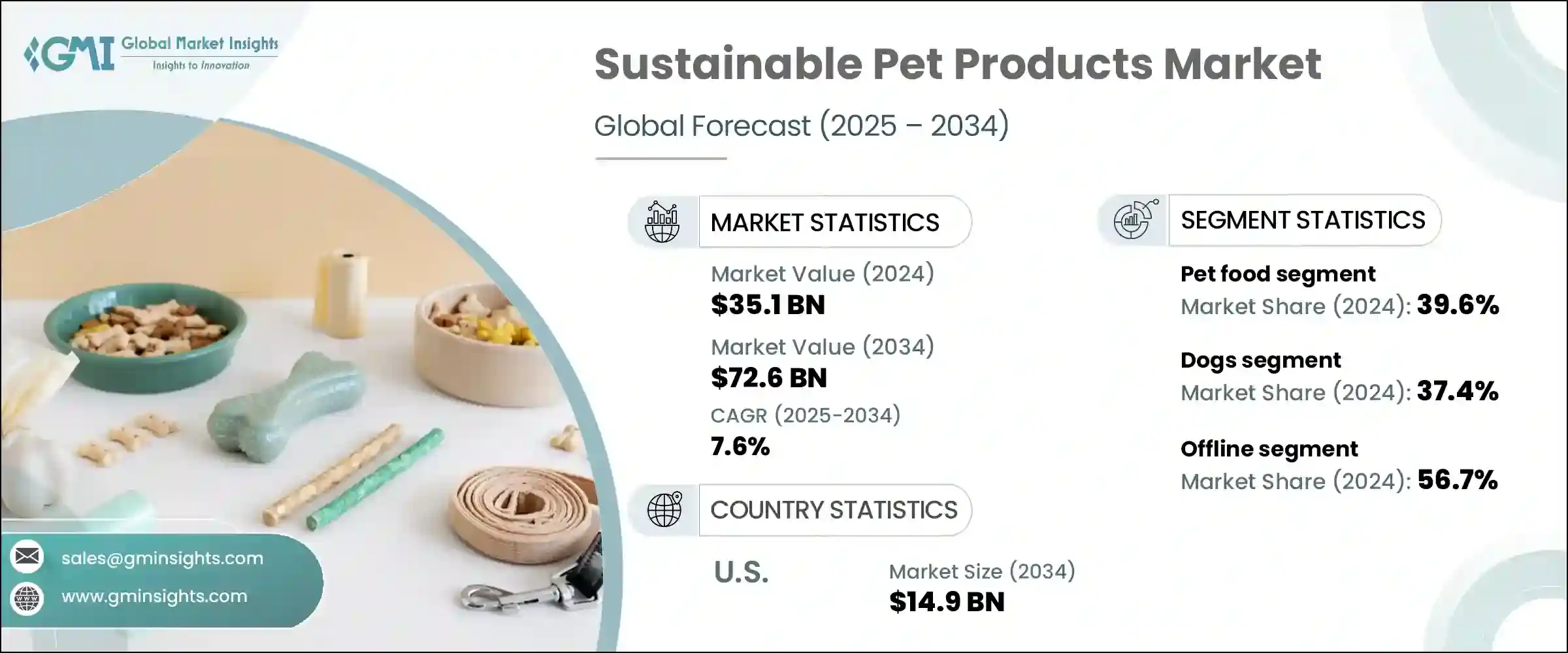
The global sustainable pet products market size was valued at USD 35.1 billion in 2024 and is projected to grow at a CAGR of 7.6% between 2025 and 2034. The market for sustainable pet products is rapidly expanding due to shifting consumer perceptions, greater expenditure devoted to pets, and growing concern for the environment. One of the greatest challenges remains the ongoing pet humanization, wherein pets are perceived to be members of a family.
Sustainable Pet Products Market Key Takeaways
Market Size & Growth
- 2024 Market Size: USD 35.1 Billion
- 2034 Forecast Market Size: USD 72.6 Billion
- CAGR (2025–2034): 7.6%
Key Market Drivers
- Growing trend of pet humanization.
- Higher consumer spending on pet care.
- Consumer Demand for Ethical Practices.
- Economic Opportunities in the Circular Economy.
Challenges
- Seasonality in pet products demand.
- Lack of awareness & low spending in developing and under-developed regions.
- High pet care cost.
Get Market Insights & Growth Opportunities
This change has led to an increased demand for premium and ethically crafted goods that are often manufactured to the same standards as those meant for humans. Pet owners are now adopting a lifestyle that drives purchase decisions, for example, these pet parents buy biodegradable waste bags, plastic free grooming aids, sustainably sourced pet food, and recyclable bags or boxes for their pet's medicines.
At the same time, sustained increases in consumer spending on pet care also drives demand for eco-friendly alternatives. With an increase in disposable incomes, more households are now shifting their spending towards wellness of pets, which indicates a strong inclination to spend on environmentally friendly and health-focused pet products. This trend has spurred innovations in materials, formulations, and packaging among both new and established businesses trying to meet these expectations.
The ethical practice of a brand is an increasingly important aspect of driving demand in the market. Customers are more concerned than ever about the sourcing, working conditions, and even the carbon emissions related to animal testing and pet products. Firms that practice transparency, fair trade, and cruelty-free policies are trusted and have loyal customers, which helps them do well in a competitive market.
Moreover, the market is molded by new emerging economic opportunities related to the circular economy. Companies are adopting a greener design approach that reduces waste by reusing and recycling materials like refillable containers and upcycled pet toys. These appealing practices have earned the attention of many environmentally friendly customers, bolstered competitive standing, and saved costs.
To get key market trends
Sustainable Pet Products Market Trends
- The market for eco-friendly pet products is rapidly expanding due to shifting consumer perceptions, greater expenditure devoted to pets, and growing concern for the environment. One of the greatest challenges remains the ongoing pet humanization trend, wherein pets are perceived to be members of a family. This change has led to an increased demand for premium and ethically crafted goods that are often manufactured to the same standards as those meant for humans.
- At the same time, sustained increases in consumer spending on pet care also drives demand for eco-friendly alternatives. With an increase in disposable incomes, more households are now shifting their spending towards wellness of pets, which indicates a strong inclination to spend on environmentally friendly and health-focused pet products. This trend has spurred innovations in materials, formulations, and packaging among both new and established businesses trying to meet these expectations.
- The ethical practice of a brand is an increasingly important aspect of driving demand in the market. Customers are more concerned than ever about the sourcing, working conditions, and even the carbon emissions related to animal testing and pet products. Firms that practice transparency, fair trade, and cruelty-free policies are trusted and have loyal customers, which helps them do well in a competitive market.
- Moreover, the market is molded by new emerging economic opportunities related to the circular economy. Companies are adopting a greener design approach that reduces waste by reusing and recycling materials like refillable containers and upcycled pet toys. These appealing practices have earned the attention of many environmentally friendly customers, bolstered competitive standing, and saved costs.
- According to Statista, in the United States, around half of respondents said they owned a dog. Americans were most likely to own a dog, followed by a cat contribute to 36%, a fish 7%, a reptile 4 % and a bird 4%.
Sustainable Pet Products Market Analysis
Learn more about the key segments shaping this market
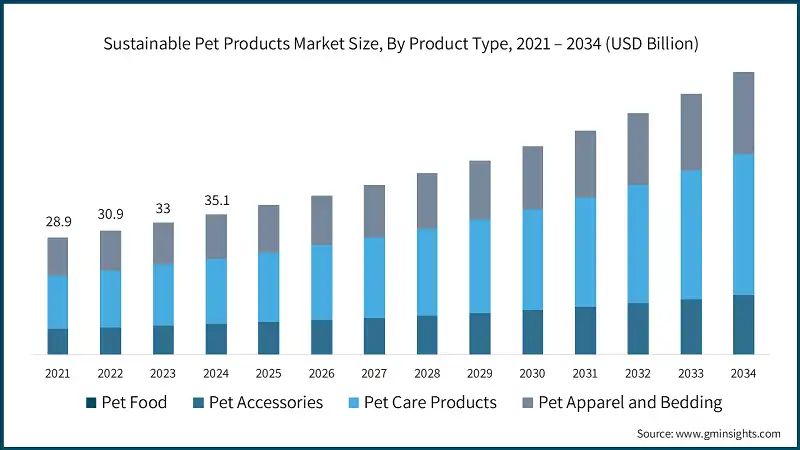
Based on the product type, the market is divided into pet food, pet accessories, pet care products and pet apparel & bedding. In 2024, pet food dominated the market accounting for around 39.6% share and expected to grow at a CAGR of over 8% during the forecast period.
- This dominance of pet food is primarily due to the humanization of pets, especially when pet owners regard their pets as ‘part of the family’ and take special care of their health. In turn, consumers are increasingly purchasing pet food products that are high quality, organic, and sustainably sourced, supporting nutritional needs while minimizing environmental impacts.
- The growing consideration of the ecological implications of traditional meat-based pet food has increased the demand for alternative protein sources like insect-based, plant-based, or lab grown. These formulations are appealing to environmentally conscious consumers as they reduce resource use and greenhouse gas emissions. Moreover, modern pet owners are grateful to these brands who practice clean labeling, transparency in ingredient sourcing, eco-friendly packaging, and sustainability.
- Pet food segment is reinforced by innovations in pet nutrition, like functional products that aid in digestion, skin health, and weight management. The consumer willingness to pay for premium and ethically sourced pet food boosts the segment's performance. With increased disposable income and greater focus on pet wellness, the sustainable pet food market is poised for rapid growth in the coming years.
- For instance, according to Statista, the pet food volume is expected to amount to 62.84bn kg by 2030 and the Pet Food market is expected to show a volume growth of 3.2% in 2026.
Learn more about the key segments shaping this market
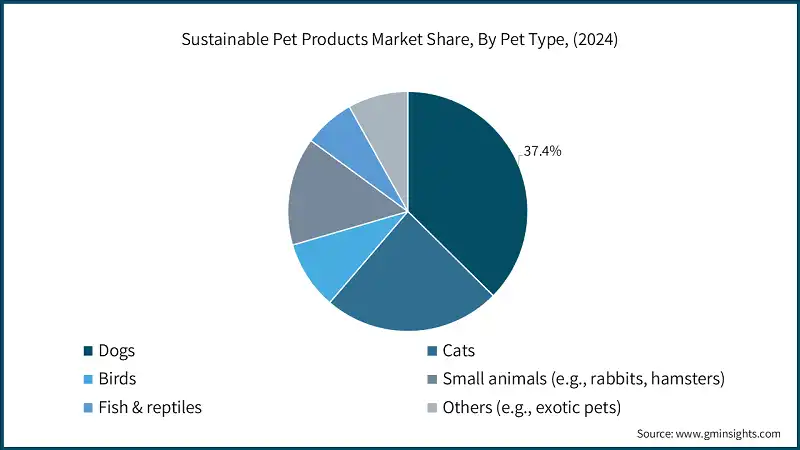
Based on pet type, the sustainable pet products market is segmented into Dogs, Cats, Birds, Small animals (e.g., rabbits, hamsters), Fish & reptiles and Others (e.g., exotic pets). In 2024, dogs segment dominates the market with 37.4% market share and the segment is expected to grow at a CAGR of over 8.2% from 2025 to 2034.
- The large population of pet dogs in conjunction with the strong emotional relationship between dogs and their owners is a key factor for this dominance. Compared to other types of pets, dog owners spend more on pet care, including food, grooming, toys, health-related products, and even non-essential items. Hence, there is a drastically improving supply of premium and sustainable products designed exclusively for dogs.
- The increase in the dog pet population is directly correlated to the rising trend of pet humanization. This demographic is using eco-conscious materials like vegetarian ingredients for dog food, biodegradable waste bags, and plant-derived lotions, alongside accessories designed from recycled or sustainable textiles. Socially, dogs are increasingly regarded as family members by people living in urban areas, which compels owners to spend money on eco-conscious products that improve their pets’ health.
- In addition, functional foods, customizable adornments, and health tracking smart collars are examples of innovations in the dog care segment which increase spending. This segment, along with accompanying dog products, is likely to sustain its growth and maintain a leading position due to increasing concern over environmental sustainability and the availability of eco-friendly alternatives.
- According to Statista, the share of pet types owned in households in the United States as of January 2025 which states that around 66 percent of millennial respondents stated that they owned a dog.
Based on a distribution channel, the sustainable pet products market is segmented into online and offline. In 2024, the offline segment dominates the market with 56.7% market share and the segment is expected to grow at a CAGR of over 7% from 2025 to 2034.
- The trust and convenience of evaluating the quality and fit of a product around pets is a huge contributing factor to domination of offline purchasing. Prospective buyers seem to enjoy visiting pet specialty shops, supermarkets, and even clinics not only for a checkup with their pets but also to see physical products, talk to the staff, and compare products from various brands.
- Convenience as well as need to access goods immediately make necessary purchases like food and health care essentials available offline. Many pet retailers tend to enhance the customer purchase journey by implementing personalized pet product recommendations, automated grooming stations, and even hands-on product demonstrations. Physical stores have additional specific features like advertisements, loyalty schemes, and bundled offers that entice more clients further down the line.
- Even though ecommerce systems (like online shopping) tend to increase in sales, traditional shopping still dominates due to established preference and engagement rate.
Looking for region specific data?
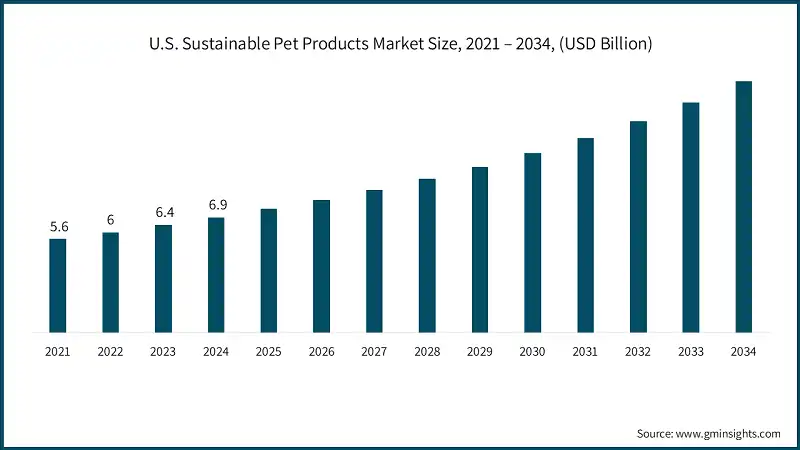
In 2024, U.S. in North America dominated the sustainable pet products market with around 60.2% market share and project the estimated revenue of USD 14.9 billion by 2034.
- The high rate of pet ownership in the United States, along with strong consumer demand for environmental responsibility, the pet product market has enormous growth potential, giving rise to greater awareness of sustainable products. The increasing notion of pets as family members has created an increase in spending on premium as well as sustainable pet care services. Used and supported by existing robust retail infrastructure and e-commerce, the distribution of eco-friendly pet foods, toys, and accessories can be put in the hands of pet parents.
- Companies and start-ups in the United States have provided consumers with plant-based pet foods, biodegradable pet waste bags, and sustainable packaging to integrate sustainability into a variety of consumer goods. Certainly, there is trust created by legal certifications that require investigations in how value and advertising mechanisms are established, leading to transparency that makes consumers more confident. The existing competitors in the market have created penetration through consistent R&D investment and marketing consistent on brand loyalty across the categories. Furthermore, social media and influenced culture throughout the country has put sustainable pet ownership on the forefront, showing consumers what sustainable pet ownership can look like, which results in modifying consumer behavior.
In Europe, the UK’s sustainable pet products market is expected to experience significant and promising growth from 2025 to 2034.
- The dominance of UK sustainable pet products industry in Europe due to an ecological awareness, high levels of pet ownership, and embracing sustainability in a wide range of product categories; further strengthened by the rise of local suppliers offering organic, cruelty free, and totally biodegradable products (e.g. natural pet food, compostable cat litter, and sustainable toys.
- Economic environmental laws and the UK's green business policies have contributed to the expanding market for sustainable pet products. Furthermore, the UK is equipped with a solid framework around e-commerce and digital penetration, which has enabled smaller, eco-minded, pet-related start-ups to appear and coexist with existing suppliers.
- The strong pet welfare climate in the UK, promoted by veterinarians and non-profits, supports responsible ownership practices and sustainable care practices. Influencer driven propaganda and active media involvement on climate change also intervene in consumer behavior. Overall, these coordinated behaviors put the UK forward as the trailblazer and leader in Europe's sustainable pet products.
- For instance, according to Germany Pet Industry, Germany has the European Union’s largest pet industry market, generating approximately USD 6.81 billion in revenue in 2023, and the industry is expected to grow to USD 8.4 billion by 2029. Additionally, as of 2023, 45 percent of German households have a pet and 14 percent of households have two pets or more. This totals approximately 34.3 million pets.
In APAC, Japan sustainable pet products market is expected to experience significant and promising growth from 2025 to 2034.
- In Japan unique technological capability, pet ownership trends, and cultural focus on cleanliness and quality, Japan is the leader in the sustainable pet products industry in the Asia-Pacific (APAC) region. The Japanese government has also made significant effort to promote a sustainable society, and responsible consumption has increased companies' investment with eco-friendly materials and processes.
- Furthermore, Japanese local brands are rapidly incorporating biodegradable, recyclable, and chemical-free materials in pet toys, hygiene products and other accessories. Additionally, the spreading awareness around climate change and animal welfare in Japan was touched on in prior sections and the media is working with the public to encourage behavioral change.
In MEA, the sustainable pet products market in UAE is expected to experience significant and promising growth from 2025 to 2034.
- The UAE is establishing itself as the leader in fostering sustainable pet products within the Middle East and Africa (MEA) given its larger commitment to environmental sustainability, its high-income consumer, and its rapid urbanization. There has been a steady increase in pet ownership in the UAE in recent years, especially amongst expatriates and younger professionals, resulting in quite the demand for higher-end, environmentally friendly pet products.
- The UAE, having established an advanced retail network with luxury pet boutiques and online shopping options, allows for easy access to sustainable products, such as organic pet food, biodegradable litter, or recyclable packaging. With high disposable income levels amongst its consumers, a government committed sustainability initiatives, and modernized retail networks, the UAE is increasing its influence within the sustainable pet products space in the MEA region.
Sustainable Pet Products Market Share
- The top 5 companies in the market are Purina, Petco, Freshpet, Spectrum Brands and Petcurean. These companies contribute large market share in the market.
- Purina is a major player in sustainable pet nutrition, investing in eco-friendly packaging, renewable energy, and responsibly sourced ingredients. Its Beyond and Pro Plan lines emphasize natural ingredients and sustainability. Purina has pledged to make 100% of its packaging recyclable or reusable by 2025 and supports regenerative agriculture in its supply chain.
- Petco promotes sustainability through its Whole Health initiative, which includes environmental responsibility. It offers a wide range of sustainable pet products including compostable waste bags, organic foods, and eco-friendly toys. Petco also collaborates with brands that use recycled and biodegradable materials and has eliminated artificial ingredients from its in-house food lines.
- Freshpet specializes in refrigerated, natural pet food using high-quality, locally sourced ingredients. The company is committed to sustainability through 100% wind-powered operations, recyclable packaging initiatives, and a zero-food-waste manufacturing process. Freshpet emphasizes transparency and minimal processing in its supply chain.
- Spectrum Brands integrates sustainability in its pet division by focusing on durable and long-lasting products to reduce waste. Through brands like FURminator and Nature’s Miracle, it promotes eco-friendly grooming tools and cleaning solutions. The company also works to reduce emissions, packaging waste, and water usage across its operations.
- Petcurean is a Canadian premium pet food company that strongly prioritizes sustainability. It uses locally sourced ingredients, recyclable packaging, and operates with low carbon footprint principles. Its GO! and NOW FRESH product lines often include responsibly sourced meat, wild-caught fish, and plant-based options. The company is also a Certified B Corporation, underlining its environmental and social responsibility.
Sustainable Pet Products Market Companies
Major players operating in the sustainable pet products industry are:
- Beco Pets
- ColgatePalmolive
- Freshpet
- Green Pet Shop
- Hurtta
- Jiminy's
- Kurgo
- Pawz
- Petco
- Petcurean
- Purina
- RC Pet Products
- Ruffwear
- Spectrum Brands
- West Paw
Leading companies in the market include Beco Pets, Colgate-Palmolive, Freshpet, Green Pet Shop, Purina, and Spectrum Brands. These companies implement similar strategies to reduce their environmental impacts while meeting the growing demand for sustainable pet care.
One common objective of all these brands appears to be the use of natural, organic, and responsibly manufactured ingredients in pet food and treats, and biodegradable or recycled materials in toys, accessories, and grooming supplies. Many brands are transitioning to recyclable or compostable packaging and minimizing the use of plastic as much as possible. Many of these companies strive to manufacture locally, minimize waste wherever possible, and take the highest ethical positions on ingredients. These business processes can help minimize carbon footprint, which in turn will help reduce their contributions to climate change.
Companies are leaning into durability to maximize the number of uses between replacements and file waste. Transparency, sustainability certification or labeling (ex. certified organic), and consumer education marketing campaigns are typical for building customer trust and encouraging responsible pet ownership. Collectively, these trends show sustainable practitioners are serious about reforming the industry for purpose.
Sustainable Pet Products Market Report Attributes
| Key Takeaway | Details |
|---|---|
| Market Size & Growth | |
| Base Year | 2024 |
| Market Size in 2024 | USD 35.1 Billion |
| Forecast Period 2025 – 2034 CAGR | 7.6% |
| Market Size in 2034 | USD 72.6 Billion |
| Key Market Trends | |
| Growth Drivers |
|
| Pitfalls & Challenges |
|
What are the growth opportunities in this market?
Sustainable Pet Products Industry News
- On May 30, 2025, Green Pet launched a new Disney collection. It features its eco-friendly, self-cooling Cool Pet Pads which feature beloved characters such as Mickey and Minnie Mouse. They allow pet owners to keep their pets cool using technology that does not use electricity or water. Green Pet plans to broaden the collection to also include Disney-themed collars and leashes created from recycled materials. In discussing the importance of sustainability, CEO Larry Wright said Green Pet wants to make pets and their owners happy with sustainable products.
- On March 24, 2024, Freshpet announced its partnership with the Human Animal Bond Research Institute (HABRI) by announcing research about the relationship between pet and caregiver health. The primary objective of the partnership is to show how the strong bonds pet owners have with their pets enhance their wellbeing, which can promote better pet nutrition. Steven Feldman President of HABRI stated both organizations had a joint mission to improve joint health outcomes for people and pets.
- On February 18, 2025, Colgate-Palmolive announced it will acquire Prime100, a leading fresh pet food brand in Australia, to expand its Hill’s Pet Nutrition portfolio. The acquisition strengthens Colgate’s presence in the growing fresh pet food market with Prime100’s veterinarian-endorsed products. The deal is expected to close in Q2 2025 pending regulatory approval, will be financed with cash and debt and is not expected to impact 2025 earnings significantly.
- In August 2022, Beco was awarded its B Corp certification, which shows their focus in operating a business in a sustainable and ethical manner. Beco, known for its natural pet foods and treats based on plant and insect proteins, also sales dog toys and pet accessories made from recycled and renewable materials. Beco is Climate Neutral Certified and supplies products to more than 40 countries with a strong presence in the UK and Europe. Founder George Bramble stated it was a significant milestone for Beco and for the welfare of pets in our care and the planet.
The sustainable pet products market research report includes in-depth coverage of the industry with estimates & forecasts in terms of revenue ($ Bn) and volume (Units) from 2021 to 2034, for the following segments:
Market, by Product Type
- Pet food
- Pet accessories
- Pet care products
- Pet apparel and bedding
Market, by Pet Type
- Dogs
- Cats
- Birds
- Small animals (e.g., rabbits, hamsters)
- Fish & reptiles
- Others (e.g., exotic pets)
Market, by Price
- Low
- Medium
- High
Market, by Distribution Channel
- Online retail
- E-commerce platforms
- Brand-owned websites
- Offline retail
- Pet specialty stores
- Supermarkets and hypermarkets
- Veterinary clinics
- Eco/organic stores
The above information is provided for the following regions and countries:
- North America
- U.S.
- Canada
- Europe
- Germany
- UK
- France
- Italy
- Spain
- Asia Pacific
- China
- India
- Japan
- South Korea
- Australia
- Latin America
- Brazil
- Mexico
- MEA
- South Africa
- Saudi Arabia
- UAE
Frequently Asked Question(FAQ) :
How big is the sustainable pet products market?
The global market size for sustainable pet products was valued at USD 35.1 billion in 2024 and is projected to grow at a CAGR of 7.6% between 2025 and 2034.
What is the market share of pet food in the sustainable pet products industry?
Pet food dominated the market in 2024, accounting for 39.6% of the total share and is expected to grow at a CAGR of over 8% during the forecast period.
How much is the U.S. sustainable pet products industry worth?
The U.S. led the North America market with a 60.2% share in 2024 and is projected to generate USD 14.9 billion in revenue by 2034.
Who are some of the prominent players in the sustainable pet products market?
Key players in the sector include Beco Pets, Colgate Palmolive, Freshpet, Green Pet Shop, Hurtta, Jiminy's, Kurgo, Pawz, Petco, Petcurean, Purina, RC Pet Products, Ruffwear, Spectrum Brands, and West Paw.
Sustainable Pet Products Market Scope
Related Reports