Summary
Table of Content

Soft Robotics for Medical Applications Market
Get a free sample of this report
Form submitted successfully!
Error submitting form. Please try again.
Thank you!
Your inquiry has been received. Our team will reach out to you with the required details via email. To ensure that you don't miss their response, kindly remember to check your spam folder as well!
Request Sectional Data
Thank you!
Your inquiry has been received. Our team will reach out to you with the required details via email. To ensure that you don't miss their response, kindly remember to check your spam folder as well!
Form submitted successfully!
Error submitting form. Please try again.
Soft Robotics for Medical Applications Market Size
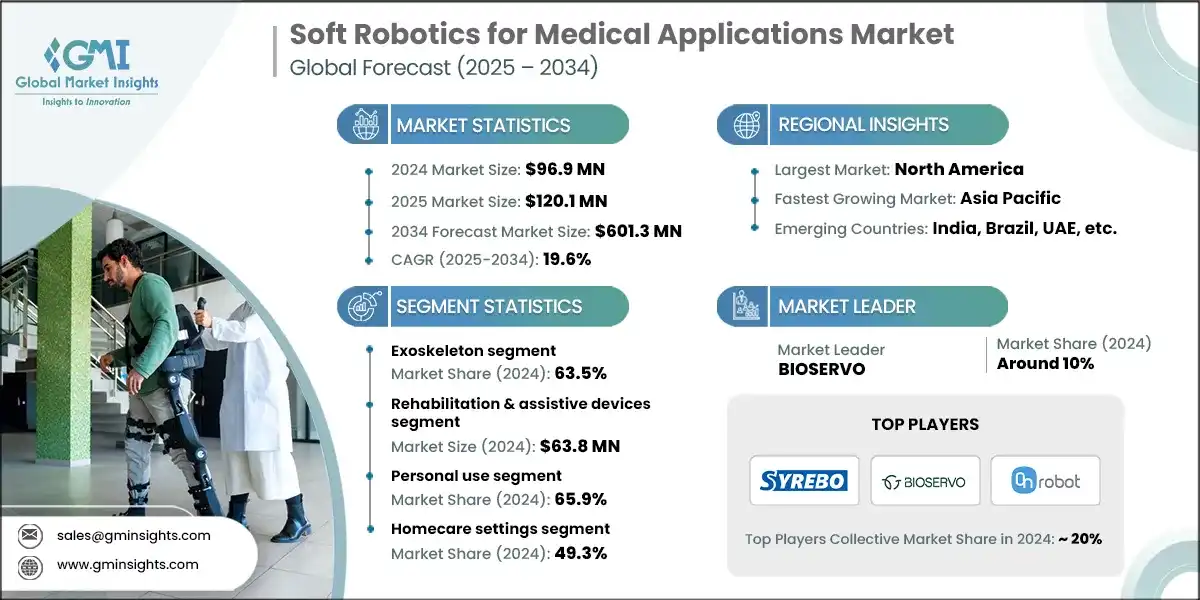
The global soft robotics for medical applications market was estimated at USD 96.9 million in 2024. The market is expected to grow from USD 120.1 million in 2025 to USD 601.3 million in 2034, at a CAGR of 19.6% during the forecast period, according to the latest report published by Global Market Insights Inc.
Soft Robotics for Medical Applications Market Key Takeaways
Market Size & Growth
- 2024 Market Size: USD 96.9 Million
- 2025 Market Size: USD 120.1 Million
- 2034 Forecast Market Size: USD 601.3 Million
- CAGR (2025–2034): 19.6%
Regional Dominance
- Largest Market: North America
- Fastest Growing Region: Asia Pacific
Key Market Drivers
- Growing incidences of musculoskeletal disorders.
- Advancements in soft materials and sensor technologies.
- Growing adoption of wearable medical devices.
- Rising demand for rehabilitation therapies.
Challenges
- High device cost.
- Regulatory hurdles and safety compliance issues.
Opportunity
- Use in drug delivery and internal diagnostics.
- Custom prosthetics and assistive devices for rare conditions.
Key Players
- Market Leader: BIOSERVO led with over 10% market share in 2024.
- Leading Players: Top 5 players in this market include SYREBO, BIOSERVO, OnRobot, which collectively held a market share of 20% in 2024.
Get Market Insights & Growth Opportunities
The market is driven by rising demand for rehabilitation therapies, growing adoption of wearable medical devices, increasing incidences of musculoskeletal disorders, and advancements in soft materials and sensor technologies, among other factors.
Government initiatives supporting robotic healthcare innovation, integration of AI and machine learning in robotic systems, and AI-powered adaptive robotic systems are among the key variables fueling the market growth. SYREBO, BIOSERVO, HUNIC, OnRobot, and somnox are among the leading players operating in the market. These players mainly focus on product innovation, use of novel materials, geographical expansion including distribution channels, enhanced integration capabilities, and improved operational efficiency.
The market reached USD 71.8 million in 2023 from USD 30.8 million in 2021. Musculoskeletal conditions such as arthritis, spinal trauma, and effects after stroke are on the rise globally, partially related to an aging population and sedentary lifestyles. For instance, as reported by the National Spinal Cord Injury Association, over 450,000 people in the U.S. have a spinal cord injury (SCI). These conditions can lead to decreased mobility and may require extended rehabilitation. Soft robotic devices, including exosuits and assistive gloves, provide light and adaptable support, mimicking natural movement, which makes them suitable for rehabilitation and everyday use. The devices can provide targeted movement and muscle stimulation to help patients restore strength and coordination. As healthcare systems look for non-invasive and lower cost options, soft robotics are increasingly being used to manage chronic musculoskeletal conditions.
Additionally, recent advancements in soft materials, such as elastomers, hydrogels, and shape-memory polymers, are making it possible to develop flexible, biocompatible robots. The use of soft materials may allow devices to adhere to the human body and therefore increase comfort and safety. Coupled with advanced sensors, soft robots can now detect muscle activity, joint angles, and pressure in real-time and thereby improve therapy response and customization. These trends expand the capabilities of soft robots to become more effective therapeutic tools, operative tools, wearable devices, and implantable devices.
Moreover, wearable medical devices are on the rise for continuous health monitoring and remote treatment. Soft robotics bolsters this trend by providing more comfortable and adaptable wearables that facilitate movement, rehabilitation, and even sleep management. Home devices, such as soft exosuits and robotic gloves, are being developed to assist with recovery from injuries or neurological conditions. The integration of wearable medical devices with mobile applications and cloud-based platforms allows for real-time data tracking and customized user feedback. As patients and providers seek greater autonomy and convenience, wearable soft robotics are becoming a staple in modern healthcare.
Soft robotics for medical applications is an area of study that is gaining significant advancements in the design and deployment of robots made from flexible, compliant material often inspired by biological systems in the health care and biomedical fields. Unlike traditional rigid robots, soft robots can safely handle delicate human tissue, adapt to complex anatomical structures, and offer enhanced comfort and safety.
To get key market trends
Soft Robotics for Medical Applications Market Trends
The shift toward home care and remote therapy, advances in material science and 3D printing, the integration of AI and smart sensors, and soft robotic simulators for medical training are among the key trends shaping the market growth in an upward trajectory.
- Healthcare systems are shifting from the traditional, hospital-based care model to decentralized and home-based care models. Soft robotic devices, in particular wearable rehabilitation systems, allow for remote patient monitoring and rehabilitation therapy, enabling a better care delivery model for the patient from the comfort of his own home. This development is especially important in regions with a high aging population and several rural health issues within the healthcare system, as soft robotics has the potential to offer home-based care.
- Additionally, the combination of soft robotics with artificial intelligence (AI) and sensor-related technologies is resulting in notable developments in the medical field. Smart exosuits and assistive robotic devices are able to adapt formally and in real-time to the movements exhibited by a patient or a user, providing customized rehabilitation therapy for each individual.
- In addition, AI algorithms are able to improve diagnoses, forecast recovery trajectories, and optimize robotic actions, leading to data- and evidence-driven treatment pathways that may lead to better efficiencies and effectiveness.
- Further, recent advancements in softer, biocompatible materials and additive manufacturing have enabled the development of custom robotic components that mimic the biological tissue of the human body. This development is expected to promote usability by creating components that are more comfortable, safer, and functional, thereby facilitating widespread adoption of soft robotics in devices related to surgical tools, assistive technology, prosthetics, and wearable technology.
Soft Robotics for Medical Applications Market Analysis

Learn more about the key segments shaping this market
The market was valued at USD 30.8 million and USD 48.6 million in 2021 and 2022 respectively. It grew to USD 71.8 million in 2023. Increasing healthcare automation, rising demand for minimally invasive surgeries, and integration with telemedicine platforms are among the key variables contributing to industry growth.
Based on product type, the global soft robotics for medical applications market is segmented into exoskeleton and soft grippers. The exoskeleton segment accounted for a leading share of 63.5% in 2024. Increase in the number of patients with physical disabilities coupled with increasing trauma cases globally are supporting the segmental growth. The segment is expected to exceed USD 388 million by 2034, growing at a CAGR of 19.8% during the forecast period.
- Soft robotic exoskeletons are wearable devices developed to aid or improve human motion ability, especially among patients with limited mobility recovering from stroke, spinal cord injury, or age-related illness.
- The systems leverage flexible actuators and sensors to imitate natural human muscle movement to facilitate walking, standing, or performing rehabilitation exercises. Their lightweight and flexible nature makes them suitable for clinical care, in-home health care, and out-of-home rehabilitation.
- Additionally, increased need for individualized therapy post-operatively is driving growth in this area. Combining soft robotic exoskeletons with artificial intelligence and biofeedback systems is further improving the effectiveness of engagement across health care settings.
- The soft grippers segment was valued at USD 35.4 million in 2024. Soft grippers are flexible robotic components designed to pick and gently manipulate objects, making them well-suited for use in delicate applications such as handling tissues or medical instrumentation. In the healthcare domain, soft grippers are prevalent in automation in a laboratory environment or even in a device for a patient with limited hand function. The essential aspect of a soft gripper is that the biomimetic design enables safe interaction with human anatomy while an object is being manipulated, minimizing the risk of injury and discomfort.
- Further, as material science and sensor integration continue to evolve, the capabilities of soft grippers are increasingly being enhanced, and their adaptability brings benefits to clinical medical and industrial medical applications.
Based on category, the global soft robotics for medical applications market is segmented into rehabilitation & assistive devices and pick & place. The rehabilitation & assistive devices segment accounted for a leading share and was valued at USD 63.8 million in 2024.
- This type of device consists of soft robotic systems that are being worn as suits, gloves, and limb supports that can promote recovery and mobility, especially amongst patients with neurological and musculoskeletal conditions.
- These devices rely on flexible actuators and sensors that replicate natural movement, allowing for personalized therapy for stroke survivors, elderly individuals, and patients with spinal injuries. They are well-suited for use in both clinical and home care settings.
- Additionally, integrating them with AI and remote monitoring platforms creates additional opportunities for use in long-term therapy and post-operative care.
- The pick & place segment was valued at USD 33.1 million in 2024. In pick & place applications, soft robotics concentrates on the delicate manipulation of medical instruments, laboratory samples, and even biological tissues. Soft robotics relies upon soft grippers and adaptable mechanisms to accomplish measured and safe movements in environments occurring in surgical suites, diagnostic laboratories, and pharmaceutical manufacturing.
- Further, soft robotics is good at adapting to irregular forms and is safe for delicate manipulations. It is witnessing significant growth, partly due to the increased automation of healthcare work processes and the need for sterile operation and touch sensitivity. Furthermore, advancements in material science and control algorithms are improving their effectiveness and are stimulating their adoption in clinical and industrial applications.
Based on application, the global soft robotics for medical applications market is segmented into personal use and industrial use. The personal use segment accounted for a leading share of 65.9% in 2024.
- Soft robotics for personal use encompasses wearable and assistive devices that are intended for home care, rehab, and wellness contexts. Examples include devices such as soft exosuits and robotic gloves, as well as sleeping aids that help individuals recover from injury, manage chronic conditions, or improve mobility.
- Personal-use devices are attractive because they are comfortable and are considered easy to use without clinical supervision. As healthcare opts for a decentralized model, these personal-use devices are increasingly viable solutions for remote therapy or continuous monitoring of movement. For example, when combined with mobile apps and artificial intelligence, individualized feedback can be developed, and the user can assess their progress over time, consumption issues, and overall physical well-being.
- The industrial use segment accounted for a significant share of 34.1% in 2024. Soft robotics finds applications in the industrial domain and in medical care situations where precision and delicacy are important. For instance, soft robotics can be deployed in lab sample handling, the assembly of medical devices, and pick-and-place purposes.
- Soft grippers accompanied by adaptive robotic arms represent a segment of soft robotic devices where safe and careful interaction with fragile materials and sterile fields is paramount. Systems that incorporate soft robotics can add efficiency to medical and testing processes and reduce human error within pharmaceutical manufacturing, medical diagnostics technology, and surgical robotics systems.
- Further, the requirement for hygienic, contact-sensitive solutions is driving development in soft robotics, particularly in laboratories and cleanrooms where using a rigid robot's capabilities may cause potential dangers to their cleaning processes.
Learn more about the key segments shaping this market
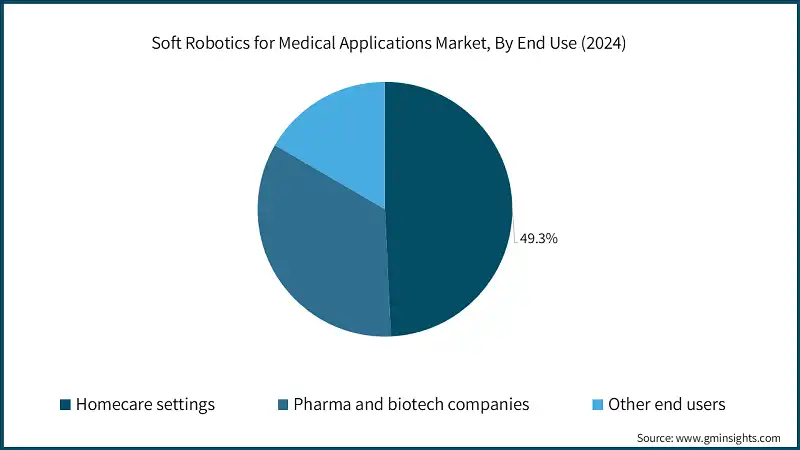
Based on end use, the soft robotics for medical applications market is segmented into homecare settings, pharma and biotech companies, and other end users. The homecare settings segment accounted for the majority market share of 49.3% in 2024 as it offers patients a comfortable and affordable treatment option.
- The use of soft robotics in homecare environments is disrupting patient rehabilitation and daily support. Technologies, such as soft exosuits, robotic gloves, and sleep monitoring systems, are developed for user-friendliness, comfort, and remote monitoring and assessment. These technologies allow patients to receive rehabilitation in their homes, leading to fewer hospital visits and better rehabilitation outcomes.
- Advanced communication-enabled artificial intelligence compatible with mobile applications enables caregivers, family, and clinicians to monitor changes in learning and development and adjust treatment plans remotely.
- In addition, soft robotics provides a non-intrusive and individualized method to improve independence and general quality of life for patients.
- The pharmaceutical and biotech companies segment was valued at USD 33.1 million in 2024. Pharmaceutical and biotech firms primarily utilize soft robotics to automate laboratory activities, handle drug distribution, and enable precision manufacturing. Soft grippers and adaptive robotic systems allow for gentle manipulation of vulnerable samples, sterile packaging, and high-throughput screening. These systems minimize contamination risk while increasing operational efficiency in clean room environments.
- In addition, soft robotics can support the development of wearable drug delivery systems and implantable devices. As pharma companies leverage smart manufacturing and personalized medicine, soft robotics is expected to act as an enabler of innovation, especially in complex biomedical workflows that seek to ensure safety and scalability.

Looking for region specific data?
North America Soft Robotics for Medical Applications Market
North America market accounted for leading share of 52.6% in 2024 in market and is anticipated to show robust growth over the forecast period.
- North America is the dominant region in the soft robotics for medical applications market, owing majorly to its developed healthcare system, research and development capabilities, and early adoption of robotic technology. The high market growth is also attributed to a significant percentage of the regional population suffering from chronic diseases and an aging population, which increases the use of rehabilitation and assistive devices.
- Additionally, the U.S. and Canada are funding the development of technologically advanced, minimally invasive surgical tools as well as wearable robotic exosuits for home rehabilitation. Hospitals are introducing soft robotic systems to aid in post-operative recovery and promote patient mobility.
- Further, the region also witnesses a high level of collaboration amongst universities, startups, and hospitals, resulting in innovation in soft materials and a growing interest in artificial intelligence (AI)-powered robotic systems.
- Along with the aforementioned pointers and a particular focus on surgical robotics and homecare rehabilitation, the region is likely to maintain its lead in the sector throughout the forecast period.
The U.S. soft robotics for medical applications market was valued at USD 15.4 million and USD 24.1 million in 2021 and 2022, respectively. In 2024 the market size was valued at USD 47.9 million from USD 35.6 million in 2023. The growing target population for rehabilitation products due to musculoskeletal and trauma cases in the country is projected to fuel the market growth.
- The U.S. is the largest and most developed market for soft robotics in the healthcare sector due to favorable government policies, significant R&D spending through different programs and initiatives, and other factors.
- The country is among the frontrunners in developing soft-robotic exoskeletons, surgical tools, and robotic rehabilitation devices. Top institutions such as MIT, Harvard, and Stanford are engaged in innovative use cases, often partnering with startups and hospitals to deliver commercially viable soft robotic devices.
- In addition, the U.S. market benefits from strong Federal Drug Administration (FDA) guidance with its pathway for robotic medical devices, promoting faster engagement in clinical settings. The primary early adopters for soft-robotic wearables for mobility include veterans' hospitals and rehabilitation service providers, alongside the growth in home care demand from the aging population. For example, the Veterans Health Administration serves old U.S. veterans with varying complexity in around 1,380 facilities, including 170 VA health settings.
- Further, strong private and public funding opportunities and an established startup ecosystem enable the continuous development of soft robotics in healthcare. Various companies prefer to start their pilot projects in the U.S. before scaling the product to broader market opportunities.
Europe Soft Robotics for Medical Applications Market
Europe accounted for a substantial share in the market and was valued at USD 26.4 million in 2024.
- Europe is a major innovation-oriented market for soft robotics in healthcare applications, with established public healthcare systems, academic research, and regulatory harmonization within the EU member states in place to take development to the next stage. Various key companies and research organizations are working in the field of rehabilitation robotics, assistive devices, and surgical instruments in the region. Major regional countries are at the forefront in terms of clinical adoption and product development.
- In addition, European healthcare settings are witnessing increased adoption of soft robotics technologies into their delivery model in post-op care, elderly care, and physical rehabilitation. They also benefit from the support of pan-European funding programs and collaborative research and development initiatives that provide incentives for cross-border innovations.
- Additionally, there is a growing focus on sustainability and biocompatibility in the design of these devices for the healthcare market as part of broader healthcare and environmental priorities in Europe. The increasing preference for medical systems that are minimally or non-invasive and patient-centered is expected to drive the regional growth.
- Further, the region has also witnessed increased interest in the adoption of homecare-related robotic solutions, especially in countries such as Germany, the UK, etc., with decentralized healthcare system structures.
Germany held significant share of the European soft robotics for medical applications market, showcasing strong growth potential.
- Germany is a leading contributor to the European market due to its high R&D investment capabilities, specialization in engineering and industrial research, advanced healthcare system, and focus on developing novel rehabilitation technology.
- Germany is home to many research facilities and companies involved in the development of soft exosuits, robotic prosthetics, and assistive devices. Local healthcare facilities and rehabilitation centers are early adopters of robotic therapy systems for different aspects such as stroke rehabilitation and mobility assistance.
- The federal government has fostered innovation by providing funding for public and private partnerships and stimulating partnerships between academic facilities and industry leaders. Germany also has a highly skilled workforce with strong manufacturing capabilities, allowing soft robotic component manufacturers to remain on par with other regional peers. The approval process and infrastructure to conduct clinical trials also help to expedite the introduction of products and technologies to the market.
- Further, as the adoption of AI and sensor technology incorporated into soft robotic systems for personalized therapy grows, the country is expected to remain a key market for wearable and therapeutic soft robotics to address care for the growing elderly population and the demand for homecare solutions.
Asia Pacific Soft Robotics for Medical Applications Market
The Asia Pacific market accounted for the notable share in the market and was valued at USD 14.8 million in 2024.
- The Asia Pacific is emerging as the fastest-growing region in the market for soft robotics in healthcare applications owing to rapid modernization of the healthcare market, growing frequency of investments in medical technology, and aging population in the region. Countries such as China, Japan, South Korea, and Australia are leading in medical technology innovation and implementation, supported and incentivized by local governments to fund and support rehabilitation and assistive technologies.
- In addition, the region has an increasing demand for wearable exosuits, soft robotic gloves, and minimally invasive surgical tools. Many startups and universities in the region are developing affordable soft robotic medical devices specifically designed to respond to regional health-care needs, including rehabilitation for stroke victims and elderly care.
- Further, China, Japan, and South Korea have adopted a particularly focused approach to expand production and distribution of their devices in the global market.
China soft robotics for medical applications market is estimated to grow with a robust CAGR in the Asia Pacific market.
- China is focusing on establishing itself as a leader in the regional market for soft robotics for medical applications, spurred by government support, a vast aging population, and a growing demand for rehabilitation devices in the country.
- Additionally, companies such as SYREBO and SRT play a key role in developing soft robotic gloves and exosuits, capitalizing on affordability and scalability for hospitals and home care.
- Moreover, the healthcare system in China is witnessing a digital transformation that entails more widespread usage of AI-powered rehabilitation platforms and remote therapy. Chinese universities and tech development centers are involved in soft materials, sensors, and brain-computer interfaces to improve outcomes of robotic therapy.
- Further, regulatory agencies are streamlining medical robotics and aim to achieve faster approval processes for commercialization.
Latin America Soft Robotics for Medical Applications Market
Brazil leads the Latin American market, exhibiting remarkable growth during the analysis period.
- Brazil is an emerging market for soft robotics in medical applications, with growing interest in rehabilitation technologies and assistive devices. The country records a high incidence of stroke and mobility-related conditions, which is driving demand for affordable and scalable robotic solutions. Public hospitals and private clinics are beginning to adopt soft robotic gloves and exosuits for post-injury and post-surgical recovery.
- In addition, local startups and universities are exploring soft material innovations and sensor integration, often in collaboration with international partners.
- Moreover, government initiatives aimed at digital health and telemedicine are creating pathways for soft robotics to reach underserved areas. As awareness and investment surge, Brazil is expected to become a key regional hub for soft robotic rehabilitation and homecare technologies.
Middle East and Africa Soft Robotics for Medical Applications Market
Saudi Arabia market to experience substantial growth in the Middle East and Africa market in 2024.
- Driven by the Vision 2030 initiative, which prioritizes innovation in healthcare and digitalization, the Kingdom of Saudi Arabia is experiencing moderate growth in the market for medical applications of soft robotics. The country is investing in advanced rehabilitation technologies to manage its elderly population with increasing chronic disease prevalence, such as stroke and diabetes. Hospitals and rehabilitation facilities have started to examine soft robotic exosuits and assistive devices for mobility support and post-operative rehabilitation.
- Growing partnerships with international technology companies and universities to facilitate global introductions of soft robotic offerings to the local market, the local government is advancing telemedicine and home care, which allows for opportunities in soft robotic wearables to provide therapy and monitoring remotely.
- Further, with increasing interest and funding opportunities for medical innovations, the country is expected to emerge as a key regional player for medical innovations in the rehabilitation and assistive robotics space.
Soft Robotics for Medical Applications Market Share
The competitive landscape of the market is a combination of established players, start-ups, and emerging players developing products within the niche segment of robotic rehabilitation devices, assistive technologies, and healthcare automation. SYREBO, BIOSERVO, HUNIC, OnRobot and somnox are among the key players operating in the market.
For example, BIOSERVO is a key player in wearables in the form of soft exoskeletons. The company focuses on rehabilitation and ergonomics for enhanced grips in the products. Similarly, SYREBO (Shanghai SiYi) has a global presence with a substantial focus on the Asia Pacific region for their pneumatic hand rehabilitation gloves. SYREBO also places an emphasis on affordability and home care use.
Additionally, OnRobot primarily operates in the industrial space but offers modular soft grippers for handling medical devices and lab automatization, linking healthcare and manufacturing. Somnox brings soft robotics to mental wellness with a sleep companion robot, thus positioning behavioral health into the expansion list of medical applications.
The market is highly innovative, as companies use AI, sensor fusion, and biomimicry to develop unique products and services. Strategic collaborations and partnerships, regulatory approvals, and global distribution networks are also important parameters in achieving differential competitive advantage. As demand for less invasive, patient-friendly solutions increases, companies that focus on personalization, affordability, and clinical validation are anticipated to gain further stronghold in the industry.
Soft Robotics for Medical Applications Market Companies
A few of the prominent players operating in the global soft robotics for medical applications industry include:
- BIOSERVO
- HUNIC
- MyoSwiss
- OnRobot
- Roceso Technologies
- SYREBO
- SIFSOF
- somnox
- SRT
- BIOSERVO
BIOSERVO held the leading market share in the industry with around 10% in 2024. BIOSERVO focuses on wearable soft exoskeletons such as Carbonhand and Ironhand to enhance grip strength and motor function. Their strategy combines intuitive motion-sensing technology with ergonomic design, targeting rehabilitation, elderly care, and industrial support.
- SYREBO
SYREBO focuses on neurorehabilitation through affordable soft robotic gloves and exoskeletons. Their strategy integrates brain-computer interfaces, EMG sensors, and pneumatic actuation for personalized therapy.
- OnRobot
OnRobot leverages modular soft grippers and collaborative robotic tools to support medical device handling and lab automation. Their strategy centers on plug-and-play solutions that integrate easily with existing robotic arms, enabling precision and safety in sensitive environments.
Soft Robotics for Medical Applications Market Report Attributes
| Key Takeaway | Details |
|---|---|
| Market Size & Growth | |
| Base Year | 2024 |
| Market Size in 2024 | USD 96.9 Million |
| Market Size in 2025 | USD 120.1 Million |
| Forecast Period 2025 - 2034 CAGR | 19.6% |
| Market Size in 2034 | USD 601.3 Million |
| Key Market Trends | |
| Drivers | Impact |
| Growing incidences of musculoskeletal disorders | This is increasing demand for soft robotic rehabilitation tools, especially wearable exosuits and assistive devices, in hospitals and homecare settings. |
| Advancements in soft materials and sensor technologies | These innovations are enabling safer, more adaptive devices that improve patient comfort and expand the range of medical applications. |
| Growing adoption of wearable medical devices | Wearable soft robotics are becoming more common in homecare and remote therapy, improving accessibility and patient engagement. |
| Rising demand for rehabilitation therapies | Healthcare providers are integrating soft robotics into therapy programs to enhance recovery outcomes and reduce manual workload. |
| Pitfalls & Challenges | Impact |
| High device cost | Expensive development and manufacturing processes limit accessibility, especially in low-resource healthcare systems. |
| Regulatory hurdles and safety compliance issues | Complex approval processes delay market entry and increase time-to-market for innovative soft robotic solutions. |
| Opportunities: | Impact |
| Use in drug delivery and internal diagnostics | Soft robots will enable precise, minimally invasive delivery systems and internal monitoring tools, improving treatment accuracy. |
| Custom prosthetics and assistive devices for rare conditions | Personalized soft robotic solutions will address niche medical needs, enhancing mobility and independence for underserved patient groups. |
| Market Leaders (2024) | |
| Market Leaders |
Around 10% |
| Top Players |
Collective market share in 2024 is ~ 20% |
| Competitive Edge |
|
| Regional Insights | |
| Largest Market | North America |
| Fastest growing Market | Asia Pacific |
| Emerging countries | India, Brazil, UAE, etc. |
| Future outlook |
|
What are the growth opportunities in this market?
Soft Robotics for Medical Applications Industry News:
- In October 2025, SRT (Soft Robot Tech), announced the launch of SRT NVG-A30 Soft Gripper Module. It combines compact design, robust performance, and broad adaptability to deliver more flexible, reliable handling across various industries. This product launch is expected to improve company's product reach and brand image.
- In September 2025, Somnox, a sleep technology company, announced a strategic partnership with Zovio to make its products accessible to hospitals, mental health institutions, and healthcare organizations. This will enhance companies sales prospect and geographical reach.
- In November 2022, Siyi Intelligence launched its new-gen SYREBO soft robotic hand rehabilitation glove at MEDICA 2022. The newly launched HRC12 comes with upgraded training modes (e.g., fine motor training, stretching mode, pinch training etc.) and more practical training programs, thereby helping home recovery for stroke survivors.
The global soft robotics for medical applications market research report includes an in-depth coverage of the industry with estimates and forecasts in terms of revenue in (USD Million) from 2021 - 2034 for the following segments:
Market, By Product Type
- Exoskeleton
- Soft grippers
Market, By Category
- Rehabilitation & assistive devices
- Pick & place
Market, By Application
- Personal use
- Industrial use
Market, By End Use
- Homecare settings
- Pharma and biotech companies
- Other end use
The above information is provided for the following regions and countries:
- North America
- U.S.
- Canada
- Europe
- Germany
- UK
- France
- Spain
- Italy
- Netherlands
- Asia Pacific
- China
- Japan
- India
- Australia
- South Korea
- Latin America
- Brazil
- Mexico
- Argentina
- MEA
- South Africa
- Saudi Arabia
- UAE
Frequently Asked Question(FAQ) :
What is the market size of the soft robotics for medical applications in 2024?
The market size was USD 96.9 million in 2024, with a CAGR of 19.6% expected through 2034, driven by advancements in material science, 3D printing, and the integration of AI and smart sensors.
What is the projected value of the soft robotics for medical applications market by 2034?
The market is expected to reach USD 601.3 million by 2034, fueled by the shift toward home care, remote therapy, and the adoption of soft robotic simulators for medical training.
What is the projected size of the soft robotics for medical applications market in 2025?
The market is expected to reach USD 120.1 million in 2025.
How much revenue did the exoskeleton segment generate?
The exoskeleton segment leading the market with a 63.5% share in 2024.
What was the valuation of the rehabilitation & assistive devices segment?
The rehabilitation & assistive devices segment was valued at USD 63.8 million in 2024, dominating the category segment.
Which region leads the soft robotics for medical applications market?
North America held a 52.6% share in 2024, driven by advanced healthcare infrastructure and increasing adoption of homecare solutions.
What are the upcoming trends in the soft robotics for medical applications industry?
Key trends include the shift toward decentralized healthcare, advancements in material science and 3D printing, integration of AI and smart sensors, and the use of soft robotic simulators for medical training.
Who are the key players in the soft robotics for medical applications market?
Key players include BIOSERVO, HUNIC, MyoSwiss, OnRobot, Roceso Technologies, SYREBO, SIFSOF, and somnox.
Soft Robotics for Medical Applications Market Scope
Related Reports