Summary
Table of Content

Sinusitis Drugs Market
Get a free sample of this report
Form submitted successfully!
Error submitting form. Please try again.
Thank you!
Your inquiry has been received. Our team will reach out to you with the required details via email. To ensure that you don't miss their response, kindly remember to check your spam folder as well!
Request Sectional Data
Thank you!
Your inquiry has been received. Our team will reach out to you with the required details via email. To ensure that you don't miss their response, kindly remember to check your spam folder as well!
Form submitted successfully!
Error submitting form. Please try again.
Sinusitis Drugs Market Size
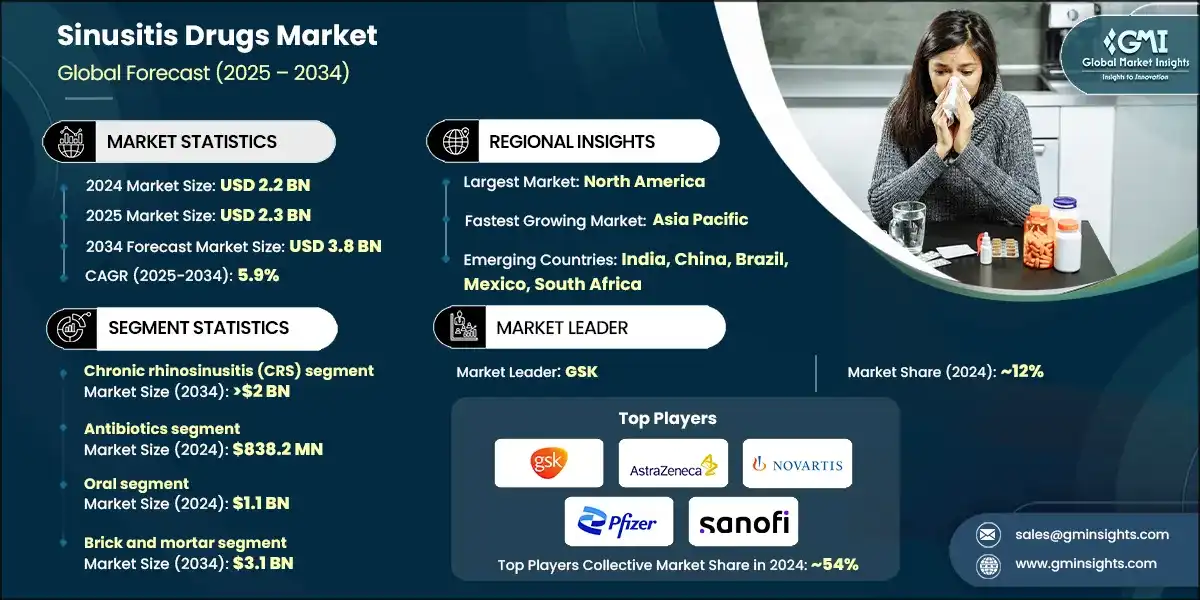
The global sinusitis drugs market was valued at USD 2.2 billion in 2024. The market is expected to reach from USD 2.3 billion in 2025 to USD 3.8 billion in 2034, growing at a CAGR of 5.9% during the forecast period, according to the latest report published by Global Market Insights Inc. The high market growth is attributed to the increasing prevalence of acute & chronic sinusitis, growing adoption of OTC decongestants & antihistamines, advancements in targeted nasal drug delivery, and rise in allergy-related sinus disorders, among other contributing factors.
Sinusitis Drugs Market Key Takeaways
Market Size & Growth
- 2024 Market Size: USD 2.2 Billion
- 2025 Market Size: USD 2.3 Billion
- 2034 Forecast Market Size: USD 3.8 Billion
- CAGR (2025–2034): 5.9%
Regional Dominance
- Largest Market: North America
- Fastest Growing Region: Asia Pacific
Key Market Drivers
- Rising prevalence of acute and chronic sinusitis.
- Increasing demand for intranasal corticosteroids.
- Growing use of antibiotics for bacterial sinusitis.
- Adoption of biologics for chronic rhinosinusitis with nasal polyps.
Challenges
- Overuse and resistance to antibiotics.
- Limited efficacy of certain drug classes in chronic cases.
Opportunity
- Expansion of biologics and targeted therapies.
- Rising demand for OTC symptomatic relief products.
Key Players
- Market Leader: GSK led with over 12% market share in 2024.
- Leading Players: Top 5 players in this market include GSK, AstraZeneca, NOVARTIS, Pfizer, Sanofi, which collectively held a market share of 54% in 2024.
Get Market Insights & Growth Opportunities
Sinusitis drugs are medical treatments that aim to alleviate the swelling, infection, and blockage of the sinus cavities. They work to lessen the signs of the disease such as congestion, pain, pressure, and nasal discharge. Such drugs are provided in the form of antibiotics, corticosteroids, antihistamines, decongestants, and other supportive therapies that are directed to the restoration of normal sinus function.
Leading players in the sinusitis drugs market include GSK, AstraZeneca, NOVARTIS, Pfizer, and Sanofi. These companies maintain their competitive edge through continuous product innovation, global market presence, and significant investments in research and development.
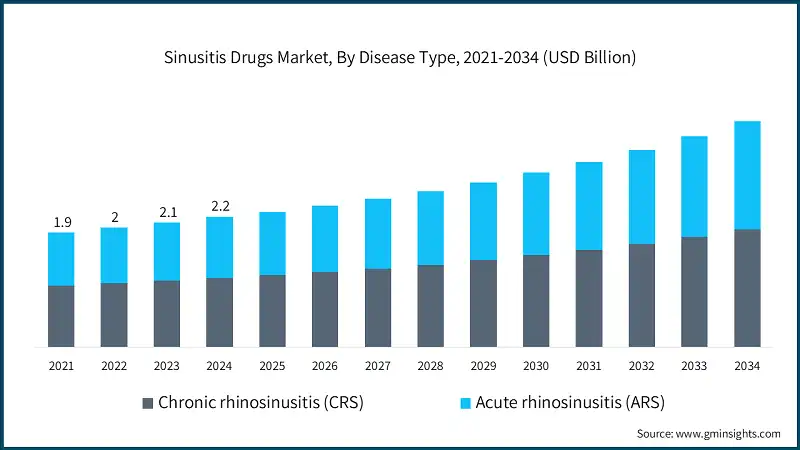
The market has increased from USD 1.9 billion in 2021 and reached USD 2.1 billion in 2023, with the historic growth rate of 4.2%. The market growth was driven by rising sinus infection prevalence, increasing pollution-related respiratory issues, improved access to ENT care, and the growing adoption of advanced corticosteroids and combination therapies.
Moreover, the increasing incidence of sinus infections due to pollution, allergens, respiratory infections, and lifestyle changes is driving demand for sinusitis medications. Chronic sinusitis cases are particularly rising in urban and industrial regions. For instance, according to 2024 data from the World Health Organization (WHO), the combined effects of ambient and household air pollution are linked to 6.7 million premature deaths annually, contributing significantly to respiratory conditions, including sinusitis.
Additionally, the Centers for Disease Control and Prevention (CDC) reported that approximately 28.9 million adults in the U.S. were diagnosed with sinusitis in 2022. This sustained disease burden is expanding both prescription and OTC drug usage, resulting in consistently high treatment demand across all age groups.
Furthermore, innovations in nasal sprays, corticosteroid formulations, and improved mucoadhesive delivery systems are enhancing treatment effectiveness. These technologies enable faster relief, reduced systemic side effects, and improved patient compliance. Pharma manufacturers are investing in device-drug combinations for precision dosing. Such advancements support premium pricing and adoption of new product launches.
To get key market trends
Sinusitis Drugs Market Trends
The market is growing considerably with the shift toward non-antibiotic & symptom-focused therapies, surging popularity of intranasal corticosteroids, increasing use of biologics for chronic rhinosinusitis with nasal polyps, and expansion of combination therapy approaches, among other factors collectively driving industry growth.
- Intranasal corticosteroids are becoming the first-line therapy for many sinusitis patients due to their strong efficacy and safety profile. New formulations with enhanced bioavailability, faster onset, and fewer side effects are entering the market. Patient acceptance is growing because they offer non-invasive, long-term symptom control. This segment continues to expand in both prescription and OTC channels.
- Biologics such as dupilumab are gaining traction for severe chronic sinusitis cases, especially those associated with nasal polyps. These targeted therapies reduce inflammation at the molecular level and improve quality of life who are difficult-to-treat. Although costly, their strong clinical success is prompting more approvals and R&D initiatives. This trend is redefining treatment pathways for chronic sinusitis.
- Moreover, telemedicine consultations and symptom-tracking apps are becoming common for sinus-related conditions. Patients can now receive rapid diagnosis and e-prescriptions without clinic visits. Companies are also integrating digital adherence tools with nasal sprays and drug delivery devices. This digital integration enhances treatment monitoring and supports personalized care, thereby sustaining market growth.
Sinusitis Drugs Market Analysis
Learn more about the key segments shaping this market
Based on the disease type, the sinusitis drugs market is segmented into chronic rhinosinusitis (CRS) and acute rhinosinusitis (ARS). The chronic rhinosinusitis (CRS) segment has asserted its dominance in the market by securing a significant market share of 53.2% in 2024 owing to its high and persistent disease burden, frequent relapses requiring long-term therapy and strong adoption of intranasal corticosteroids & biologics for sustained symptom management. The segment is expected to exceed USD 2 billion by 2034, growing at a CAGR of 5.7% during the forecast period.
On the other hand, the acute rhinosinusitis (ARS) segment is expected to grow with a CAGR of 6.1%. The growth of this segment is driven by rising incidence of viral and bacterial sinus infections, increasing use of short-course antibiotics and decongestants, and higher patient preference for rapid symptom-relief treatments in acute episodes.
- The chronic rhinosinusitis (CRS) segment continues to dominate the market. The number of patients with long-term sinus inflammation is increasing due to pollution, respiratory infections, and lifestyle changes. CRS is a condition that affects millions of people globally and usually lasts for several months or years, thus creating a constant demand for medications. Owing to its chronic nature, the disease leads to repeated cycles of treatment and increased drug consumption. Such a prolonged disease burden is a major factor behind the significant growth of the market.
- CRS requires ongoing management rather than short-term treatment, increasing demand for corticosteroids, antihistamines, and saline solutions. Patients frequently rely on maintenance therapies to prevent flare-ups. This consistent usage supports steady sales for both prescription and OTC drugs. Pharma companies are expanding chronic care offerings to meet this long-term demand.
- The acute rhinosinusitis (ARS) segment held a revenue of USD 1 billion in 2024, with projections indicating a steady expansion at 6.1% CAGR from 2025 to 2034. Increasing exposure to seasonal allergens and respiratory pathogens is raising ARS incidence, boosting demand for fast-acting symptomatic treatments. Additionally, improved access to primary care and widespread availability of OTC relief products are further accelerating segment growth.
Based on drug class, the sinusitis drugs market is segmented into antibiotics, corticosteroids, antihistamines, analgesics, and other drug classes. The antibiotics segment dominated the market in 2024, accounting for USD 838.2 million and is anticipated to grow at a CAGR of 5.7% during the forecast period.
- A large proportion of acute sinusitis cases turn into bacterial infections and thus require antibiotic therapy. Physicians still administer antibiotics to patients with moderate to severe conditions, in which symptoms last more than 10 days or worsen. This clinical dependence makes the demand very consistent. The steady load of acute bacterial sinusitis is the main reason for the high volume of prescriptions all over the world.
- Further, recurrent sinusitis episodes often require antibiotic intervention to prevent complications such as otitis media, bronchitis, or orbital cellulitis. Patients with poor immunity or coexisting respiratory conditions also rely heavily on antibiotic treatment. These complex or relapsing cases generate repeated treatment cycles. This recurring need contributes significantly to antibiotic market growth.
- The corticosteroids segment accounted for significant revenue in 2024 and is anticipated to grow at a CAGR of 6.5% over the forecast period. The growth of the segment is driven by growing preference for corticosteroids that stems from their strong anti-inflammatory efficacy, which helps reduce mucosal swelling and restore sinus drainage more effectively than many conventional therapies. Additionally, advancements in intranasal formulations with improved safety and localized delivery are driving wider adoption across both acute and chronic cases.
- The antihistamines segment held a revenue of USD 376.7 million in 2024, with projections indicating a steady expansion at 6% CAGR from 2025 to 2034. Rising allergy-induced sinusitis cases are increasing the reliance on antihistamines, as they effectively reduce nasal irritation and histamine-driven symptoms. Moreover, the availability of non-sedating, fast-acting OTC formulations is boosting their adoption for quick and convenient symptomatic relief.
- The analgesics segment accounted for significant revenue in 2024 and is anticipated to grow at a CAGR of 5.4% over the forecast period. The growing patient demand for rapid relief from sinus-related facial pain, headaches, and pressure is driving the frequent use of analgesics in both acute and chronic cases. In addition, their broad OTC availability and affordability make them a widely preferred first-line symptom-management option.
Based on route of administration, the sinusitis drugs market is segmented into oral, nasal spray, topical, and parenteral. The oral segment dominated the market in 2024, accounting for USD 1.1 billion and is anticipated to grow at a CAGR of 5.5% during the forecast period.
- Oral tablets and capsules are widely preferred because they are easy to administer and require no special technique, unlike nasal sprays. Patients find oral therapy more convenient for daily routines and travel. This convenience boosts adherence, especially for antibiotics, antihistamines, and corticosteroids. As a result, oral formulations see consistently strong demand across all age groups.
- In addition, most systemic antibiotics prescribed for acute and recurrent sinusitis are available in oral form. Physicians prefer oral antibiotics because they provide effective systemic action against bacterial infections. This entrenched clinical practice drives high prescription volumes globally. The dominance of oral antibiotics significantly strengthens the oral drug segment in sinusitis care.
- The nasal spray segment accounted for significant revenue in 2024 and is anticipated to grow at a CAGR of 6.6% over the forecast period. Increasing preference for localized and fast-acting symptom relief is boosting the demand for nasal sprays, as they effectively reduce congestion and improve airflow within minutes. Furthermore, the availability of steroid, saline, and decongestant spray variants enhances patient choice and supports wider adoption across all severity levels.
- The topical segment held a revenue of USD 298.3 million in 2024, with projections indicating a steady expansion at 6% CAGR from 2025 to 2034. Rising focus on targeted drug delivery is increasing the use of topical sinus treatments, as they offer localized relief with minimal systemic side effects. Additionally, the growing adoption of medicated rinses and irrigations for chronic cases is expanding their role in long-term sinus care.
- The parenteral segment accounted for significant revenue in 2024 and is anticipated to grow at a CAGR of 5.1% over the forecast period. Growing use of parenteral therapies is driven by their necessity in severe or complicated sinus infections that require rapid and high-bioavailability treatment. Additionally, increasing hospital admissions for refractory or immunocompromised cases is supporting steady demand for injectable antibiotic and corticosteroid options.
Learn more about the key segments shaping this market
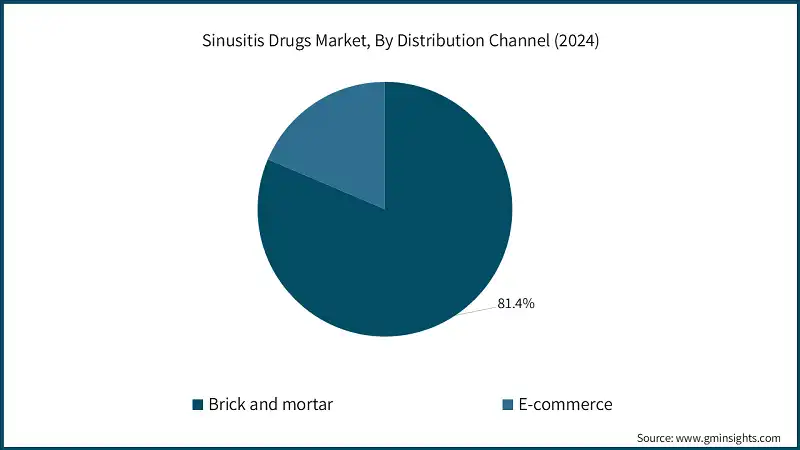
Based on distribution channel, the sinusitis drugs market is classified into brick and mortar and e-commerce. The brick and mortar segment dominated the market with a revenue share of 81.4% in 2024 and is expected to reach USD 3.1 billion within the forecast period.
- Brick-and-mortar drug stores remain the most reliable and trustworthy source for sinusitis medications, particularly antibiotics and prescription corticosteroids. Patients opt for in-person purchasing to get a product immediately and also for professional guidance. Pharmacists are usually involved in OTC selection, dosing, and symptom management. This trust factor is the main reason for consistently high footfall and sales in these outlets.
- Large pharmacy chains are expanding aggressively, improving drug accessibility in high-population regions. These outlets offer extended hours, in-store consultations, and loyalty programs. Their growing presence strengthens the retail channel for both chronic and acute sinusitis treatments. Expansion directly correlates with increased medication distribution.
- The e-commerce segment held a revenue of USD 409.2 million in 2024, with projections indicating a steady expansion at 6.3% CAGR from 2025 to 2034. Rising consumer preference for convenient, doorstep access to OTC sinusitis medications is accelerating the growth of e-commerce channels. Additionally, competitive online pricing and wider product availability are boosting digital sales across both urban and semi-urban regions.
Looking for region specific data?
North America Sinusitis Drugs Market
North America dominated the market with the highest market share of 41% in 2024.
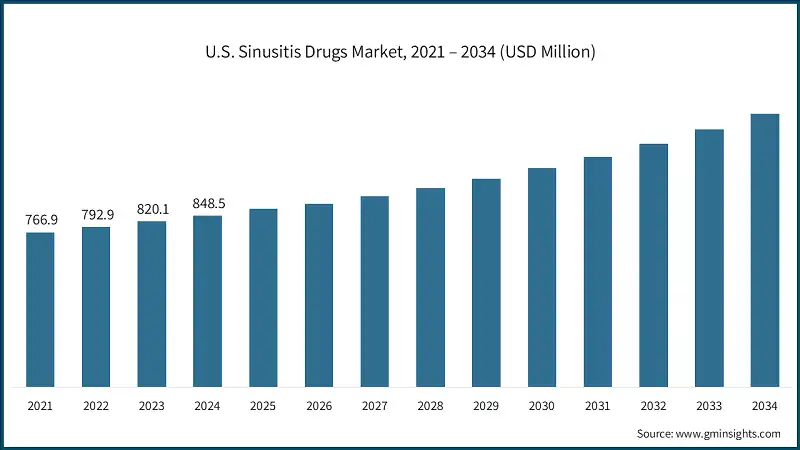
- The U.S. sinusitis drugs market was valued at USD 766.9 million and USD 792.9 million in 2021 and 2022, respectively. The market size reached USD 848.5 million in 2024, growing from USD 820.1 million in 2023, and is anticipated to grow at a CAGR of 4.8% between 2025 to 2034.
- North America is a major contributor to the global incidences of sinusitis caused by pollution, allergens, indoor air contaminants, and viral respiratory infections. Millions of adults have acute or chronic sinusitis each year, resulting in a continuous demand for medications. The increasing burden of allergic rhinitis is also a major factor in the aggravation of sinus problems. The high prevalence of disease over time has been the main driver of drug consumption.
- The region benefits from well-developed healthcare systems, frequent physician consultations, and easy access to ENT specialists. Patients receive timely diagnosis and prescriptions, which accelerates drug uptake. Retail pharmacies, urgent care centres, and hospital pharmacies maintain robust inventories. This advanced infrastructure enables high consumption of both OTC and prescription sinusitis drugs.
Europe Sinusitis Drugs Market
Europe market accounted for USD 580.2 million in 2024 and is anticipated to show lucrative growth over the forecast period.
- European healthcare systems strictly follow standardized treatment pathways defined by bodies such as EPOS (European Position Paper on Rhinosinusitis). These guidelines encourage appropriate diagnosis and structured therapy for both acute and chronic sinusitis. Such clinical discipline leads to consistent prescriptions for corticosteroids, antibiotics, and antihistamines. The adherence to standardized protocols supports stable market growth.
- Additionally, many European countries provide reimbursement or partial coverage for sinusitis drugs under national health insurance. This financial support reduces out-of-pocket expenditure for patients, increasing compliance with prescribed therapies. Public healthcare also ensures widespread access to ENT specialists and diagnostic services. Overall, the reimbursement advantage drives steady consumption.
Asia Pacific Sinusitis Drugs Market
The Asia Pacific market is anticipated to grow at the highest CAGR of 6.9% during the analysis timeframe.
- Asia Pacific has been witnessing rapid urbanization, which in turn has led to the rise of overcrowded cities, construction dust, and more exposure to airborne irritants. All these factors escalate the cases of acute and chronic sinusitis. Migrating populations, on the other hand, also confront new environmental triggers that make their sinus symptoms worse. This increasing urban burden has become a strong driver of demand for sinusitis medications.
- Moreover, the region experiences diverse climatic conditions, from tropical humidity to extreme pollution that trigger allergy-induced sinusitis. Rising pollen intensity, mold exposure during monsoon, and dust storms contribute to recurrent sinus symptoms. These drives increased use of antihistamines, corticosteroid sprays, and combination therapies. Allergy-linked sinusitis remains a major growth engine in APAC.
Latin America Sinusitis Drugs Market
The Latin America market is experiencing robust growth over the analysis timeframe.
- Latin America’s market is driven by rising environmental triggers such as pollution, biomass smoke exposure, and poor indoor air quality that frequently aggravate sinus inflammation. Increasing urban overcrowding contributes to higher transmission of respiratory infections, which often evolve into sinusitis and require medication.
- Growth in private healthcare facilities and pharmacy chains is expanding access to both prescription and OTC sinusitis treatments. Additionally, pharmaceutical outreach and awareness campaigns are improving recognition of sinus symptoms, driving more patients toward early treatment and consistent drug use.
Middle East & Africa Sinusitis Drugs Market
The Middle East & Africa (MEA) market is experiencing robust growth over the analysis timeframe.
- The regional growth is driven by high exposure to dust, sandstorms, and arid climatic conditions that frequently trigger sinus irritation and chronic inflammation. Increasing prevalence of allergic rhinitis due to rapid urban development and rising pollution levels further boosts the need for antihistamines and nasal corticosteroids.
- Expansion of healthcare infrastructure, especially in GCC countries, is improving access to ENT consultations and prescription medications. Additionally, growing awareness of sinus health and increased availability of affordable generics in African markets are contributing to steady regional demand.
Sinusitis Drugs Market Share
The market is characterized by the dominance of global pharmaceutical companies with strong respiratory portfolios and extensive distribution networks. These players focus on expanding their product lines through intranasal corticosteroids, advanced anti-inflammatory agents, and combination therapies that enhance treatment efficacy. Continuous investment in clinical research, improved formulations, and patient-friendly delivery systems further strengthens their positioning in both prescription and OTC segments.
Competition is also intensifying as companies introduce biologics and targeted therapies for chronic and severe sinusitis, shifting the market toward higher-value treatments. OTC manufacturers and regional players contribute to a fragmented lower-tier landscape, especially in decongestants, antihistamines, and analgesics.
Key players include GSK, AstraZeneca, Novartis, Pfizer, and Sanofi, collectively accounting for ~54% of the total market share.
Sinusitis Drugs Market Companies
A few of the prominent players operating in the sinusitis drugs industry include:
- GSK
- AdvaCare Pharma
- Amneal Pharmaceuticals
- APOTEX
- AstraZeneca
- Aurobindo Pharma
- Cipla
- Fresenius Kabi
- Glenmark Pharmaceuticals
- Hikma Pharmaceuticals
- HSG (Bayer)
- NOVARTIS
- Pfizer
- Sanofi
- Viatris
- GSK
It has an extensive respiratory care portfolio and strong presence in intranasal corticosteroid therapies, supported by decades of clinical expertise. Its wide global distribution and trusted brand recognition enable deep penetration across both prescription and OTC sinusitis segments.
AstraZeneca stands out through its leadership in inflammatory and respiratory biologics, which positions it strongly in advanced chronic sinusitis management. Its strong R&D capabilities and continuous pipeline innovation provide a competitive advantage in developing next-generation targeted therapies.
Its robust anti-inflammatory and immunology portfolio, which supports effective treatment options for complex sinusitis cases. Its strategic focus on high-value therapeutics and global commercialization strength enhances its impact in both emerging and developed markets.
Sinusitis Drugs Market Report Attributes
| Key Takeaway | Details |
|---|---|
| Market Size & Growth | |
| Base Year | 2024 |
| Market Size in 2024 | USD 2.2 Billion |
| Market Size in 2025 | USD 2.3 Billion |
| Forecast Period 2025 - 2034 CAGR | 5.9% |
| Market Size in 2034 | USD 3.8 Billion |
| Key Market Trends | |
| Drivers | Impact |
| Rising prevalence of acute and chronic sinusitis | This is boosting overall prescription and OTC drug utilization, directly increasing market demand across primary care and ENT settings. |
| Increasing demand for intranasal corticosteroids | Their high clinical efficacy and safety profile are driving strong uptake, particularly for long-term management of chronic sinusitis. |
| Growing use of antibiotics for bacterial sinusitis | Continued reliance on antibiotics for acute bacterial episodes is sustaining market revenue, especially in high-incidence regions. |
| Adoption of biologics for chronic rhinosinusitis with nasal polyps | Premium-priced biologics like dupilumab are expanding the advanced treatment segment, enhancing market value despite smaller patient pools. |
| Pitfalls & Challenges | Impact |
| Overuse and resistance to antibiotics | Rising antimicrobial resistance is limiting antibiotic prescribing and encouraging more conservative use, slightly restraining market expansion. |
| Limited efficacy of certain drug classes in chronic cases | Suboptimal outcomes from antihistamines and decongestants in persistent sinusitis reduce long-term reliance on these drugs, moderating segment growth. |
| Opportunities: | Impact |
| Expansion of biologics and targeted therapies | Increasing R&D investment and broader clinical adoption of biologics will significantly uplift the premium segment, driving strong long-term revenue growth in chronic and refractory sinusitis treatment. |
| Rising demand for OTC symptomatic relief products | Growing self-medication trends and wider retail/e-commerce availability will accelerate the OTC segment’s expansion, boosting overall market penetration across diverse age groups. |
| Market Leaders (2024) | |
| Market Leaders |
~12% |
| Top Players |
Collective market share in 2024 is ~54% |
| Competitive Edge |
|
| Regional Insights | |
| Largest Market | North America |
| Fastest growing market | Asia Pacific |
| Emerging countries | India, China, Brazil, Mexico, South Africa |
| Future outlook |
|
What are the growth opportunities in this market?
Sinusitis Drugs Industry News:
- In October 2025, AstraZeneca and Amgen’s Tezspire (tezepelumab) was approved in the U.S. as an add-on maintenance treatment for adults and adolescents aged 12 years and older with inadequately controlled chronic rhinosinusitis with nasal polyps (CRSwNP). It became the first biologic targeting thymic stromal lymphopoietin (TSLP) to receive approval for this indication. This approval is expected to strengthen the market by expanding advanced therapy options, driving uptake of premium biologics, and positioning Tezspire as a key treatment for severe and refractory CRSwNP cases.
- In January 2025, GSK plc announced that the China NMPA had approved Nucala (mepolizumab) as an add-on therapy with intranasal corticosteroids for adults with inadequately controlled CRSwNP. This approval expanded access to advanced biologic therapy in China. It supported market growth by increasing biologics adoption and strengthening GSK’s position in severe sinusitis treatment.
The sinusitis drugs market research report includes an in-depth coverage of the industry with estimates and forecast in terms of revenue in USD Million from 2021 – 2034 for the following segments:
Market, By Disease Type
- Chronic rhinosinusitis (CRS)
- Acute rhinosinusitis (ARS)
Market, By Drug Class
- Antibiotics
- Corticosteroids
- Antihistamines
- Analgesics
- Other drug classes
Market, By Route of Administration
- Oral
- Nasal spray
- Topical
- Parenteral
Market, By Distribution Channel
- Brick and mortar
- E-commerce
The above information is provided for the following regions and countries:
- North America
- U.S.
- Canada
- Europe
- Germany
- UK
- France
- Spain
- Italy
- Netherlands
- Asia Pacific
- China
- Japan
- India
- Australia
- South Korea
- Latin America
- Brazil
- Mexico
- Argentina
- Middle East and Africa
- South Africa
- Saudi Arabia
- UAE
Frequently Asked Question(FAQ) :
What is the market size of the sinusitis drugs market in 2024?
The market size was USD 2.2 billion in 2024, with a CAGR of 5.9% expected through 2034, driven by the rising prevalence of sinusitis, advancements in nasal drug delivery, and increased adoption of OTC decongestants and antihistamines.
What is the projected value of the sinusitis drugs market by 2034?
The market is expected to reach USD 3.8 billion by 2034, fueled by the growing use of biologics, expansion of combination therapies, and increasing demand for non-antibiotic treatments.
What is the projected size of the sinusitis drugs market in 2025?
The market is expected to reach USD 2.3 billion in 2025.
How much revenue did the antibiotics segment generate?
The antibiotics segment generated USD 838.2 million in 2024, leading the market with a significant share and is anticipated to grow at a CAGR of 5.7% during the forecast period.
What was the valuation of the oral route of administration segment?
The oral route of administration segment held a dominant position, generating USD 1.1 billion in 2024, and is projected to grow at a CAGR of 5.5% during the forecast period.
Which region leads the sinusitis drugs market?
North America led the market with a 41% share, generating the highest revenue in 2024. The region's dominance is attributed to strong healthcare infrastructure and high adoption of advanced therapies.
What are the upcoming trends in the sinusitis drugs industry?
Key trends include the rising adoption of intranasal corticosteroids, increasing use of biologics for chronic rhinosinusitis with nasal polyps, and the development of combination therapies for enhanced treatment outcomes.
Who are the key players in the sinusitis drugs market?
Key players include GSK, AdvaCare Pharma, Amneal Pharmaceuticals, APOTEX, AstraZeneca, Aurobindo Pharma, Cipla, Fresenius Kabi, Glenmark Pharmaceuticals, Hikma Pharmaceuticals, HSG (Bayer), and NOVARTIS.
Sinusitis Drugs Market Scope
Related Reports