Summary
Table of Content

Single-Cell Protein Hydrolysates Market
Get a free sample of this report
Form submitted successfully!
Error submitting form. Please try again.
Thank you!
Your inquiry has been received. Our team will reach out to you with the required details via email. To ensure that you don't miss their response, kindly remember to check your spam folder as well!
Request Sectional Data
Thank you!
Your inquiry has been received. Our team will reach out to you with the required details via email. To ensure that you don't miss their response, kindly remember to check your spam folder as well!
Form submitted successfully!
Error submitting form. Please try again.
Single-Cell Protein Hydrolysates Market Size
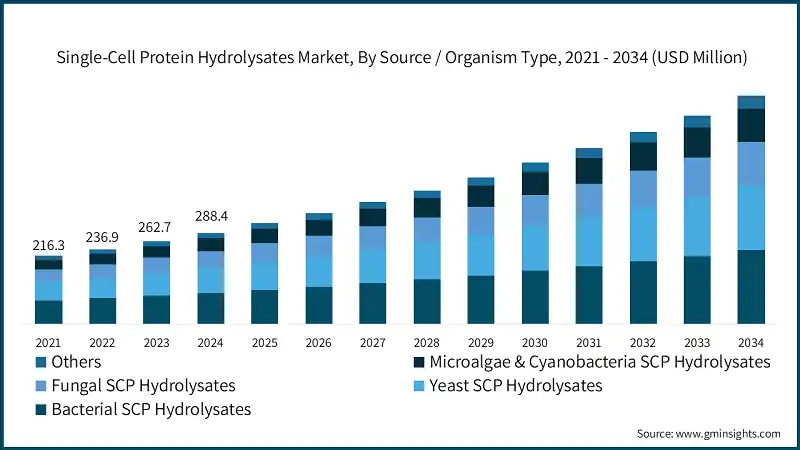
The global single-cell protein hydrolysates market size was valued at USD 288.4 million in 2024. The market is expected to grow from USD 319.3 million in 2025 to USD 721 million in 2034, at a CAGR of 9.5% according to latest report published by Global Market Insights Inc.
Single-Cell Protein Hydrolysates Market Key Takeaways
Market Size & Growth
- 2024 Market Size: USD 288.4 Million
- 2025 Market Size: USD 319.3 Million
- 2034 Forecast Market Size: USD 721 Million
- CAGR (2025–2034): 9.5%
Key Market Drivers
- Rising demand for sustainable proteins.
- Expansion in aquafeed applications.
- Circular production using waste biomass.
Challenges
- Complex downstream processing costs.
- Regulatory approvals for novel ingredients.
Opportunity
- CO₂ fermentation and power-to-protein tech.
- Growth in sports and clinical nutrition.
Key Players
- Market Leader: Calysta led with over 18.5% market share in 2024.
- Leading Players: Top 5 players in this market include Calysta, Unibio, Solar Foods, Corbion, DSM-Firmenich, which collectively held a market share of 65% in 2024.
Get Market Insights & Growth Opportunities
- Single Cell Proteins (SCP) Hydrolysates market is one of the key categories in the molecular industry to emerge the attention of the sustainable protein economy. The hydrolysates' functions, digestibility, amino acid bioavailability, and functionality make them useful and derived from bacteria, yeast, fungi and microalgae. They possess a low carbon footprint and their production comes from waste or gas-based feedstocks. These are all the reasons why they are being widely used in Animal feed, Human feeding and Nutraceutical supplements.
- The demand for proteins across the globe has risen and due to climate and resource constraints, hydrolysate SCPs are vital in the market especially in aquafeed, clinical nutrition and circular bioeconomy models. They are no longer a niche innovation.
- SCP hydrolysates have their benefits and one of them is their efficiency with circular economy models due to their SCP being derived with the use of industrial off-gases, food waste and/or lignocellulosic biomass. This solves land scarcity and mitigates the emissions and food insecurity challenges around the globe.
- Regulatory and consumer responses, while still at a distance, are increasingly more positive. To the hydrolysates of SCP, there exist GRAS approvals in some regions (e.g., US, while EU is still pending novel foods status), but the market still lacks comprehensive regulations. Greater downstream processing, nucleic acid removal, and standardization of products are solving previous safety issues.

To get key market trends
Single-Cell Protein Hydrolysates Market Trends
- Emergence of SCP in Aquafeed Applications: The aquaculture industry is replacing fishmeal with hydrolyzed single-cell proteins due to their sustainability and digestibility. Methanotroph proteins, like Calysta FeedKind, are being used in salmon and shrimp farming where they can supply with their ocean-pollution free, protein-rich feed. The need for sustainable aquafeeds and the demand for low-footprint alternatives drives the use of such proteins in aquaculture.
- Transition Toward Circular Biomanufacturing: Trends in sustainability have made SCP, derived from waste gases, biogases. Solar Foods, for example, uses CO2 and hydrogen to create Solein, a protein with virtually no environmental impact. The EU bioeconomy and climate goals are also being pursued by Albion and Deep Branch, who are turning used wooden biomass, off-gases, and captured CO2 into other valuable microbial biomass.
- Usage in Protein-Rich Beverages: SCP Hydrolysates serve, until now, only in animal feeding stuff, but are also used in humans as meal replacements, clinical nutrition, and as castor oil protein for easy digestion, targeting the elderly or post-exercise recovery. For example, in protein-rich beverages, yeast hydrolysates serve as umami-rich, flavor enhancer, and protein powders, particularly in the plant-based food sector.
- Innovation in Hydrolysis and Functional Peptides: Certain health-affecting bioactivities (e.g. antioxidant, antihypertensive, and anti-inflammatory) can be obtained from gaining specialized peptide profiles. Advancement from both enzymatic and physical hydrolysis is helping to gain and unlock specialized peptide profiles. Targeting and customizing hydrolysates has drawn the attention of DSM-Firmenich and Novozymes. This has drawn attention to the pharmaceutical-grade SCP peptides, focusing on functional food applications, sports nutrition, and on-immunity boosters.
Single-Cell Protein Hydrolysates Market Analysis
Learn more about the key segments shaping this market
Based on source / organism type, the single-cell protein hydrolysates market is segmented into Bacterial SCP hydrolysates, yeast SCP hydrolysates, fungal SCP hydrolysates, microalgae & cyanobacteria SCP hydrolysates, and others. Bacterial SCP hydrolysates dominated the market with an approximate market share of 34% in 2024 and is expected to grow with a CAGR of 8.9% by 2034.
- Hydrolysates from bacteria and yeast are driving and shaping markets because of the hydrolysate’s rapid capacity for biomass growth and overall market scalability and versatility when combined with gas (methane or CO2) substrates. Also, the fortified aquafeeds are low-cost and improve gut health. Moreover, yeast hydrolysates, particularly from the species Saccharomyces cerevisiae, are being marketed for their nutritional value and are gaining popularity for use as foods for pets and culinary flavorings.
- In human food applications, hydrolysates from fungi and microalgae are also increasing because of their delicious natural umami flavor, potential use in forms containing no allergens, and the presence of antioxidants. The strain Fusarium, is well-accepted in the market for use in meat analogs, while hydrolysates of the microalgae Chlorella and Spirulina are being marketed because of their use in protein supplementation and other health food products (nutraceuticals). Commercial interest across all types of substrates is driven by the increased ability to create bioactive peptides, particularly in the clinical, sports, and medical nutrition fields.
Based on production substrate / feedstock, the single-cell protein hydrolysates market is segmented into gas-based substrates, carbohydrate-based substrates, lignocellulosic biomass & agricultural waste, animal & industrial byproducts, and others. Gas-based substrates held the largest market share of 27.3% in 2024 and are expected to grow at a CAGR of 9.5% during 2025-2034.
- Methane, CO2, and hydrogen - these gas substrates are low cost with minimal land use making the markets based on their use attractive. Solar Foods and Deep Branch are leading the market in power-to-protein technologies, converting gas and other industrial emissions to low-cost SCP and providing a realistic, circular protein solution with a near-zero carbon footprint.
- Concurrently, the carbohydrate-rich residue and lignocellulosic biomass are gaining popularity as cost-efficient and recycled feedstocks. Molasses and starch hydrolysates, alongside food industry wastes such as whey and brewery byproducts, are twofold – waste-reducing and functional protein sourcing for feed and food. The take-up of fish waste, manure and spent liquor for single-cell protein (SCP) cultivations indicates increasing momentum in the models of industrial symbiosis and sustainable biorefinery.
Learn more about the key segments shaping this market
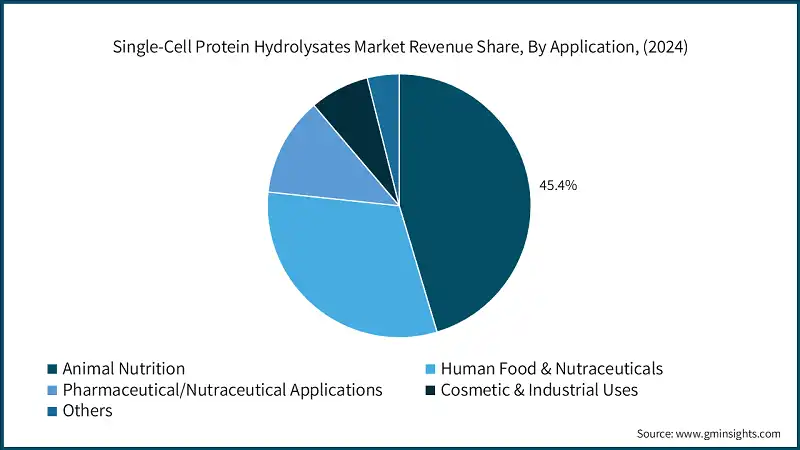
Based on application, the single-cell protein hydrolysates market is segmented into animal nutrition, human food & nutraceuticals, pharmaceutical/nutraceutical applications, cosmetic & industrial uses, and others. Animal nutrition segment dominated the market with an approximate market share of 45.4% in 2024 and is expected to grow with the CAGR of 9.3% by 2034.
- Consumption in animal nutrition leads, with aquafeed driving the demand due to the high digestibility and water stability of SCP. Disrupting the fishmeal market, companies such as KnipBio and Calysta are providing microbial proteins made for specific salmon, tilapia and shrimp classes. For gut health and palatability, pet food manufacturers are adding yeast and bacterial hydrolysates; livestock integrators are using SCP to reduce feed costs and provide antibiotic alternatives.
- SCP hydrolysates in human nutrition are rapidly penetrating the market for protein powders, meal replacements and functional snacks. Their hypoallergenic and digestible nature make them ideally suited for clinical and sports nutrition. The nutraceutical market focuses on the bioactive peptides for immunity and metabolic health. Other industrial sectors, such as cosmetics, culture media and bioplastics, are also emerging, subsidized by the clean label and Upcycled ingredients from bio fermentation.
Looking for region specific data?
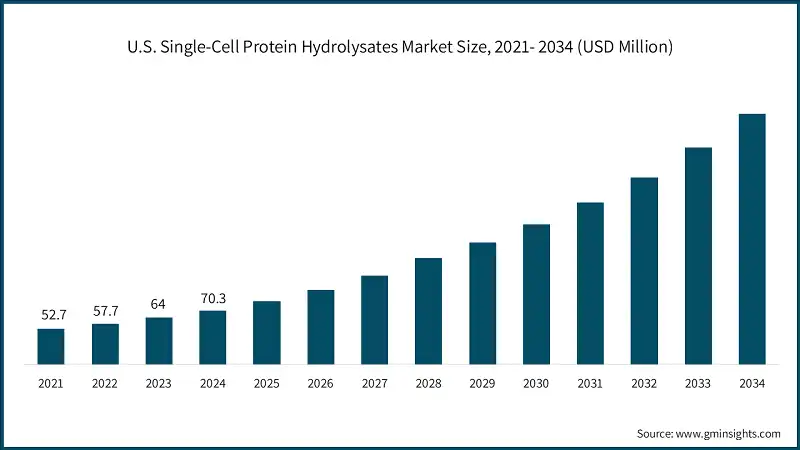
North America dominated the single-cell protein hydrolysates market in value from USD 83.8 million in 2024 to USD 211 million in 2034, mainly driven by robust aquafeed demand and industrial-scale biotech fermentation. The U.S. market was valued at USD 70.3 million in 2024 and is expected to grow at a 9.5% CAGR from 2025 to 2034.
- North America's leadership is rooted in established fermentation infrastructure, supportive regulatory frameworks, and early adoption of methane- and gas-based SCP technologies, particularly for aquaculture, pet nutrition, and advanced nutraceutical applications.
The United States drives SCP scale-up and innovation across feed and nutrition sectors.
- With companies like Calysta and KnipBio operating in the region, the U.S. is actively expanding sustainable SCP hydrolysate production using natural gas and industrial byproducts.
Europe single-cell protein hydrolysates market is set to grow from USD 74.6 million in 2024 to USD 182.8 million in 2034, mainly driven by circular bioeconomy priorities, food waste valorization, and mycoprotein expansion. Germany’s market was valued at USD 13.2 million in 2024 and is expected to grow at a 9.1% CAGR from 2025–2034.
- Europe benefits from strong regulatory and research ecosystems aiming to replace meat, soy, and fishmeal with low-impact proteins. Fermented fungal and yeast hydrolysates are rising in use in both food and feed applications.
Germany propagates in R&D and microbial fermentation for sustainable SCP production.
- Backed by EU Green Deal funding, Germany is developing SCP from wood residues and spent grain—applying it across food formulations, feed, and clinical nutrition processes.
Asia Pacific lead in growth, expanding from USD 95.6 million in 2024 to USD 242.6 million in 2034, mainly driven by aquaculture expansion and regional protein self-sufficiency goals. China’s single-cell protein hydrolysates market was valued at USD 42.9 million in 2024.
- Asia Pacific commands major SCP demand from aquafeed, with countries investing in gas-fed and algae-based platforms. Nations like China, India, and Vietnam are reducing soy dependency by turning to microbial protein production.
China invests heavily in biomanufacturing and large-scale SCP deployment.
- China is scaling CO2- and methane-based SCP technologies to support protein security, with strong state-driven support for industrial biotechnology targeting both food and feed sectors.
Latin America single-cell protein hydrolysates market is expected to grow from USD 19.9 million in 2024 to USD 47.7 million in 2034, mainly driven by aquafeed demand, biomass availability, and cost-driven SCP deployment. Brazil’s market was valued at USD 6.2 million in 2024 and is forecasted to grow at an 8.9% CAGR from 2025–2034.
- Latin American growth comes from regional feed demand and valorization of sugarcane, cassava, and fruit waste into SCP hydrolysates. Pilot operations are expanding in Brazil and Colombia for poultry and shrimp nutrition.
Brazil focuses on SCP from agro-industrial residues for feed solutions.
- Brazil is tapping into cassava, soy whey, and bagasse to produce SCP hydrolysates, offering affordable, sustainable options for aqua and livestock feed manufacturers across the region.
MEA region will grow from USD 14.5 million in 2024 to USD 37 million in 2034, mainly driven by protein self-reliance efforts and food-tech investments. Saudi Arabia’s single-cell protein hydrolysates market was valued at USD 4.8 million in 2024.
- MEA is fostering microbial protein integration in national food security strategies, focusing on biogas- and wastewater-fed SCP for aquaculture and halal pet industries using local feedstocks and proprietary fermentation platforms.
Saudi Arabia aims to reduce protein imports through biotech-based fermentation.
- Under Vision 2030, Saudi Arabia supports SCP production projects that turn waste gases into feed-grade proteins, building a regional hub for bio-secure and economical alternatives.
Single-Cell Protein Hydrolysates Market Share
The Single-Cell Protein Hydrolysates is moderately consolidated, with 5 major companies had a cumulative of 65% market share in 2024. Dominating the market is Calysta, the first in commercializing methane-based protein, followed by Unibio, Solar Foods, Corbion, and DSM-Firmenich. Targeting the Animal Feed, Human Nutrition, and Biopharma sectors, all these firms employ different, innovative feedstock such as methane, CO2, or fungi, while the rest have competitors in focused or regional niches.
- Calysta: Calysta has 18.5% market share in 2024, leading the pack with its FeedKind protein platform that uses Methyl coccus capsulates and natural gas fermentation. The industrial player actively occupies a scaled operational facility in Asia and has further extended into other applications such as aquafeed and pet food. Adisseo, as recently reported, has been confirmed as a collaborating partner with Calysta in a facility-scale operational endeavor.
- Unibio: Unibio had a market share of 15% in 2024 and is a player with the most focus on the U-Loop fermentation process, that employs natural gas to produce UniProtein. This product is marketed as a sustainable and economically competitive alternative to fishmeal. Their licensing deals in the middle east have substantially increased their global interests in the technology and bio-secure SCP hydrolysates market.
- Solar Foods: With 12% market share in 2024, Solar Foods aims to commercialize its Solein, a CO2 and hydrogen-based SCP, which has been approved by the EU as a Novel Food Product. The firm is pivoting to the commercial food-grade hydrolysates market, where its climate-neutral protein offers novel applications. Solar Foods is already collaborating with ESA and other major food companies, further demonstrating novel, zero carbon ambitions.
- Corbion: Corbion had a market share of 10.5% in 2024 & is a pioneer of Fusarium venenatum mycoprotein products. With the interest in sustainable protein alternatives growing & Corbion’s established retail presence, Corbion is now expanding into ingredient level SCP hydrolysates for functional & nutraceutical foods in the UK, Europe, & Asia.
- DSM-Firmenich: With 9% of the market share in 2024, DSM-Firmenich merges with biotechnology & enzymology to develop SCP hydrolysates from diverse microbes. The company is diversifying the application of peptides in sports nutrition, immune system health, & as bio stimulants in foods. The recent merger with Firmenich enhances its formulation capacity & abilities in the expanding market of functional foods.
Single-Cell Protein Hydrolysates Market Companies
Major players operating in the single-cell protein hydrolysates industry include:
- Calysta
- Unibio
- Solar Foods
- KnipBio
- Quorn Foods
- Arbiom
- Corbion
- DSM-Firmenich
- Novozymes (Now part of Novonesis)
- Angel Yeast
- Lesaffre
- Alltech
- Nutreco
- AlgaeCytes
Single-Cell Protein Hydrolysates Market Report Attributes
| Key Takeaway | Details |
|---|---|
| Market Size & Growth | |
| Base Year | 2024 |
| Market Size in 2024 | USD 288.4 Million |
| Market Size in 2025 | USD 319.3 Million |
| Forecast Period 2025 - 2034 CAGR | 9.5% |
| Market Size in 2034 | USD 721 Million |
| Key Market Trends | |
| Drivers | Impact |
| Rising demand for sustainable proteins | High positive impact |
| Expansion in aquafeed applications | Strong industry acceptance |
| Circular production using waste biomass | Boosts eco-efficiency appeal |
| Pitfalls & Challenges | Impact |
| Complex downstream processing costs | Limits commercial scalability |
| Regulatory approvals for novel ingredients | Delays market penetration |
| Opportunities: | Impact |
| CO₂ fermentation and power-to-protein tech | Enables carbon-negative growth |
| Growth in sports and clinical nutrition | Unlocks high-value protein use |
| Market Leaders (2024) | |
| Market Leaders |
18.5% |
| Top Players |
Collective Market Share of 65% in 2024 |
| Competitive Edge |
|
| Regional Insights | |
| Largest Market | Asia Pacific |
| Fastest Growing Market | Latin America |
| Emerging Country | Brazil, Japan, China |
| Future Outlook |
|
What are the growth opportunities in this market?
Single-Cell Protein Hydrolysates Industry News
- In July 2024, Solar Foods finalized EU Novel Food approval for its Solein CO2-based microbial protein, enabling commercial launch across Europe. The approval allows scaling of food-grade SCP hydrolysates produced from gas fermentation under fully carbon-neutral, industrial conditions.
- In March 2024, Calysta entered a strategic alliance with Adisseo to expand production of its FeedKind SCP in China. The agreement focuses on methane-based protein hydrolysates for aquaculture, particularly targeting high-performance fish and shrimp feed sectors.
- In October 2023, Unibio signed a licensing agreement with a Saudi consortium to deploy its U-Loop gas fermentation technology. The deal facilitates SCP hydrolysate production from methane for animal feed, supporting MEA bioeconomy and regional food security goals.
This single-cell protein hydrolysates market research report includes in-depth coverage of the industry, with estimates & forecasts in terms of revenue (USD Million) and volume (Kilo Tons) from 2025 to 2034, for the following segments:
Market, By Source / Organism Type
- Bacterial SCP Hydrolysates
- Methanotrophs (e.g., Methylococcus capsulatus)
- Hydrogen-Oxidizing Bacteria (e.g., Cupriavidus necator)
- Autotrophic Bacteria (e.g., Clostridium autoethanogenum)
- Other Bacteria (Bacillus, Lactobacillus, Purple Non-Sulfur)
- Yeast SCP Hydrolysates
- Conventional Yeasts (Saccharomyces cerevisiae, Candida utilis)
- Methylotrophic Yeasts (Pichia pastoris, Yarrowia lipolytica)
- Other Yeasts (Kluyveromyces, Rhodotorula)
- Fungal SCP Hydrolysates
- Filamentous Fungi (Fusarium, Aspergillus, Rhizopus)
- Other Fungi (Neurospora, Trichoderma)
- Microalgae & Cyanobacteria SCP Hydrolysates
- Cyanobacteria (Spirulina species)
- Green Microalgae (Chlorella, Scenedesmus)
- Other Microalgae (Nannochloropsis, Euglena)
- Others
Market, By Production Substrate / Feedstock
- Gas-Based Substrates
- Methane, Methanol, CO2, H2
- Industrial off-gas, Biogas
- Carbohydrate-Based Substrates
- Molasses, Glucose, Starch Hydrolysates
- Food Processing Waste (whey, peels, brewery waste)
- Lignocellulosic Biomass & Agricultural Waste
- Straw, Bagasse, Wood Residues
- Spent Sulphite Liquor
- Animal & Industrial Byproducts
- Fish/Poultry Waste, Manure
- Crude Glycerol, Municipal Wastewater
- Others
Market, By Application
- Animal Nutrition
- Aquafeed (fish, shrimp)
- Livestock Feed (poultry, swine, ruminants)
- Pet Food (dogs, cats)
- Human Food & Nutraceuticals
- Protein Supplements (sports, clinical, elderly)
- Functional Foods (beverages, bars, snacks)
- Meat & Dairy Alternatives
- Pharmaceutical/Nutraceutical Applications
- Bioactive Peptides (antioxidant, antihypertensive)
- Immune & Metabolic Health
- Cosmetic & Industrial Uses
- Skin & Hair Care Bioactives
- Bioplastic Fermentation, Culture Media
- Others
The above information is provided for the following regions and countries:
- North America
- U.S.
- Canada
- Europe
- Germany
- UK
- France
- Spain
- Italy
- Rest of Europe
- Asia Pacific
- China
- India
- Japan
- Australia
- South Korea
- Rest of Asia Pacific
- Latin America
- Brazil
- Mexico
- Argentina
- Rest of Latin America
- Middle East and Africa
- Saudi Arabia
- South Africa
- UAE
- Rest of Middle East and Africa
Frequently Asked Question(FAQ) :
What is the market size of the single-cell protein hydrolysates in 2024?
The market size was valued at USD 288.4 million in 2024, with a CAGR of 9.5% expected through 2034. The market is driven by increasing demand for sustainable protein sources and advancements in biomanufacturing technologies.
What is the projected value of the single-cell protein hydrolysates market by 2034?
The market is poised to reach USD 721 million by 2034, fueled by its applications in animal feed, human nutrition, and nutraceutical supplements.
What is the expected size of the single-cell protein hydrolysates industry in 2025?
The market size is projected to reach USD 319.3 million in 2025.
What was the market share of bacterial SCP hydrolysates in 2024?
Bacterial SCP hydrolysates held approximately 34% of the market share in 2024 and are expected to grow at a CAGR of 8.9% till 2034.
What was the valuation of gas-based substrates in 2024?
Gas-based substrates accounted for the largest market share of 27.3% in 2024 and is set to expand at a CAGR of 9.5% during 2025 to 2034.
What is the growth outlook for the animal nutrition segment from 2025 to 2034?
The animal nutrition segment, which dominated the market with a 45.4% share in 2024, is anticipated to showcase around 9.3% CAGR till 2034.
Which region leads the single-cell protein hydrolysates sector?
North America leads the market, with its value increasing from USD 83.8 million in 2024 to an expected USD 211 million by 2034. This growth is led by robust aquafeed demand and industrial-scale biotech fermentation.
What are the upcoming trends in the single-cell protein hydrolysates market?
Trends include SCP adoption in aquafeeds, circular biomanufacturing using waste gases, expansion into protein-rich beverages, and hydrolysis innovations for functional peptides supporting immunity and sports nutrition.
Who are the key players in the single-cell protein hydrolysates industry?
Key players include Calysta, Unibio, Solar Foods, KnipBio, Quorn Foods, Arbiom, Corbion, DSM-Firmenich, Novozymes (now part of Novonesis), Angel Yeast, Lesaffre, Alltech, Nutreco, and AlgaeCytes.
Single-Cell Protein Hydrolysates Market Scope
Related Reports