Summary
Table of Content

North America Advanced Wound Care Market
Get a free sample of this report
Form submitted successfully!
Error submitting form. Please try again.
Thank you!
Your inquiry has been received. Our team will reach out to you with the required details via email. To ensure that you don't miss their response, kindly remember to check your spam folder as well!
Request Sectional Data
Thank you!
Your inquiry has been received. Our team will reach out to you with the required details via email. To ensure that you don't miss their response, kindly remember to check your spam folder as well!
Form submitted successfully!
Error submitting form. Please try again.
North America Advanced Wound Care Market Size
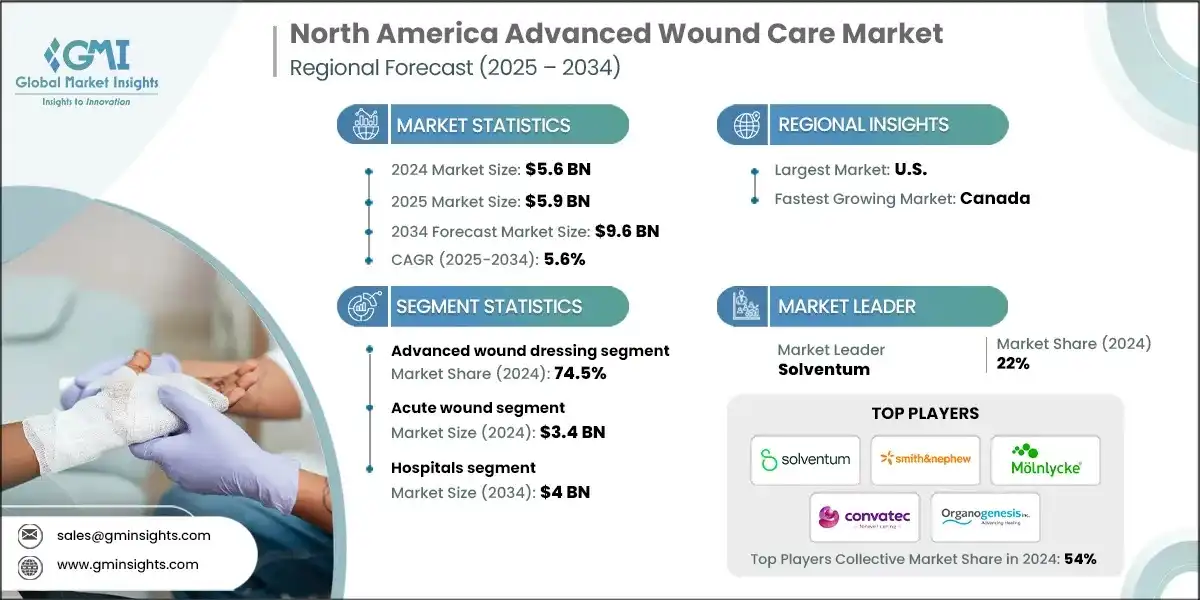
The North America advanced wound care market size was valued at USD 5.6 billion in 2024. The market is expected to grow from USD 5.9 billion in 2025 to USD 9.6 billion in 2034, at a CAGR of 5.6% during the forecast period, according to the latest report published by Global Market Insights Inc.
North America Advanced Wound Care Market Key Takeaways
Market Size & Growth
- 2024 Market Size: USD 5.6 Billion
- 2025 Market Size: USD 5.9 Billion
- 2034 Forecast Market Size: USD 9.6 Billion
- CAGR (2025–2034): 5.6%
Regional Dominance
- Largest Market: U.S.
- Fastest Growing Country: Canada
Key Market Drivers
- Increasing number of surgical procedures.
- Growing aging population.
- Rising prevalence of diabetes.
- Growing technological advancements in wound care products.
Challenges
- High cost of advanced therapies.
- Shortage of skilled professionals.
Opportunity
- Integration of digital wound monitoring.
- Expansion of home healthcare and outpatient services.
Key Players
- Market Leader: Solventum led with over 22% market share in 2024.
- Leading Players: Top 5 players in this market include Solventum, Smith & Nephew, Mölnlycke Health Care, ConvaTec Group, Organogenesis, which collectively held a market share of 54% in 2024.
Get Market Insights & Growth Opportunities
The market is growing strongly due to the increasing number of surgical procedures, growing aging population, rising prevalence of diabetes and growing technological advancements in wound care products.
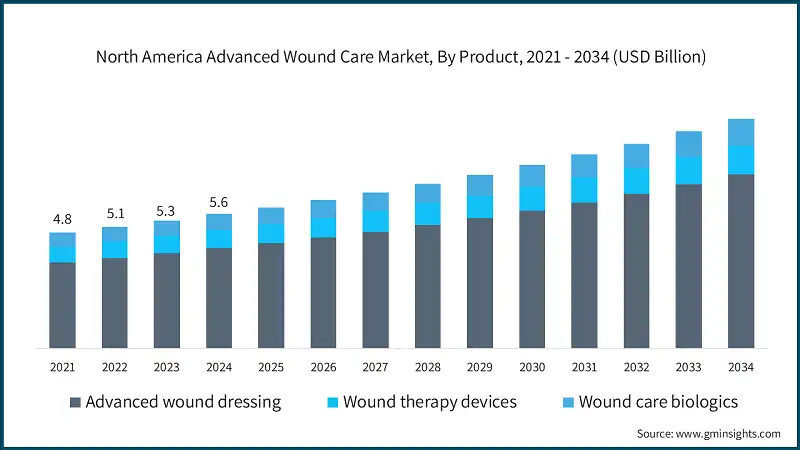
North America advanced wound care market is growing aggressively, increasing from USD 4.8 billion in 2021 to USD 5.3 billion in 2023. The increasing prevalence of diabetes across North America is emerging as a significant driver for the market. Diabetes is a chronic condition that often leads to complications such as diabetic foot ulcers, infections, and delayed wound healing. These complications necessitate advanced wound care solutions, including dressings, negative pressure wound therapy, and bioengineered skin substitutes.
As the diabetic population grows, so does the demand for specialized wound care products and services, encouraging healthcare providers and manufacturers to innovate and expand their offerings. In the U.S. alone, approximately 38.4 million people of all ages or 11.6% of the population have diabetes, with 38.1 million adults aged 18 years or older representing 14.7% of all U.S. adults affected.
Alarmingly, 8.7 million adults meet laboratory criteria for diabetes but are undiagnosed, accounting for 3.4% of all U.S. adults and 22.8% of adults with diabetes. This large and growing diabetic population contributes directly to the rising incidence of chronic wounds, especially foot ulcers and infections, which require continuous and often intensive wound care management. As awareness and diagnosis improve, the demand for effective wound care solutions is expected to surge, further fueling market growth.
The rising volume of surgical procedures across is a major growth driver for the North America wound care market. As healthcare systems advance and access to surgical interventions improves, the need for effective wound management solutions intensifies. Surgical procedures whether elective, emergency, or cosmetic result in wounds that require specialized care to prevent infection, accelerate healing, and minimize complications. In the U.S. alone, annually, more than 790,000 total knee replacements and 450,000 hip replacements are conducted, reflecting the aging population’s growing demand for orthopaedic care.
Additionally, the U.S. leads globally in aesthetic surgeries, with over 7.4 million procedures performed in 2022. This surge in surgical activity spanning trauma cases, joint replacements, and cosmetic enhancements has significantly boosted the demand for advanced wound care products. Moreover, the shift toward minimally invasive surgeries has created a need for wound care solutions that support faster recovery and reduce scarring. From post-operative dressings to bioactive therapies, wound care products are essential for healing outcomes. This upward trend in surgical procedures underscores the critical role of innovative wound care technologies in modern healthcare.
Advanced wound care involves specialized products and techniques designed to treat complex, chronic, or slow-healing wounds. Unlike basic dressings, it incorporates technologies such as moisture-balancing materials, bioengineered skin substitutes, and smart monitoring tools. These solutions aim to speed up recovery, lower infection risks, and enhance patient outcomes in conditions like diabetic foot ulcers, pressure sores, and post-surgical wounds.
To get key market trends
North America Advanced Wound Care Market Trends
- The North America advanced wound care industry is undergoing a transformative shift, fueled by rapid technological innovations across product categories such as advanced dressings, wound therapy devices, and biologics. These developments are enhancing clinical outcomes, improving patient comfort, and expanding the range of treatable wound types, from chronic ulcers to acute surgical and traumatic wounds.
- Advanced wound dressings have evolved significantly, with innovations in foam, hydrocolloid, film, alginate, hydrogel, and collagen-based products. These dressings now incorporate features like moisture balance, antimicrobial properties, and enhanced adhesion, tailored to specific wound types. Smart dressings equipped with sensors are emerging, capable of monitoring wound temperature, moisture levels, and infection indicators in real time enabling timely interventions and reducing healing time.
- Additionally, technologies such as Negative Pressure Wound Therapy (NPWT) systems, hyperbaric oxygen chambers, and electric stimulation devices are gaining traction. These devices accelerate tissue regeneration, reduce edema, and improve oxygenation in chronic wounds. Pressure relief systems are also being adopted widely in home care and hospital settings to prevent pressure ulcers, especially among immobile patients.
- Moreover, the integration of novel biomaterials in wound care products has played a pivotal role in improving treatment outcomes. Innovations such as bioactive dressings, which release therapeutic agents to promote tissue regeneration and prevent infections, have gained prominence.
- These advancements are being rapidly adopted across hospitals, specialty clinics, and home care settings, driven by the need for personalized, efficient, and cost-effective wound management. As chronic conditions like diabetes and vascular diseases rise, and surgical procedures become more common, the demand for technologically advanced wound care solutions will continue to grow solidifying North America’s position as a leading market in this space.
North America Advanced Wound Care Market Analysis
Learn more about the key segments shaping this market
In 2021, the North America advanced wound care market was valued at USD 4.8 billion. The following year, it saw a slight increase to USD 5.1 billion, and by 2022, the market further climbed to USD 5.3 billion in 2023.
Based on product, the market is divided into advanced wound dressing, wound therapy devices, wound care biologics. The advanced wound dressing segment held a significant market share of 74.5% in 2024.
- Advanced wound dressings are specialized medical products designed to promote faster and more effective healing of wounds. Unlike traditional gauze or bandages, these dressings are made from innovative materials such as foam, hydrocolloid, alginate, hydrogel, and collagen. They help maintain a moist wound environment, manage exudate, and protect against infection.
- The effectiveness of advanced wound dressings in treating chronic and acute wounds has significantly increased their demand. Their ability to reduce healing time, lower infection risk, and improve patient comfort makes them a preferred choice in clinical settings. As healthcare providers seek better outcomes, the adoption of these products is driving steady growth in the North America wound care market.
- Advanced wound dressings are widely used in hospitals, specialty clinics, and increasingly in home care settings. They are applied in treating diabetic ulcers, pressure ulcers, venous leg ulcers, surgical wounds, burns, and traumatic injuries. Their versatility across both chronic and acute wound applications makes them essential in modern wound management.
- For instance, according to the National Institutes of Health (NIH), an estimated 2.5 million hospitalizations in the U.S. are attributed to pressure ulcers. This highlights the significant burden of chronic wounds on the healthcare system and underscores the urgent need for effective wound care solutions. The high incidence of pressure ulcers directly contributes to the growing demand for advanced wound dressings and therapy devices, especially in hospital and long-term care settings.
Based on application, the North America advanced wound care market is segmented into chronic wounds and acute wounds. The acute wound was worth USD 3.4 billion in 2024.
- Acute wounds are injuries that occur suddenly and typically heal within a predictable timeframe when properly managed. These include surgical incisions, traumatic injuries, and burns. Unlike chronic wounds, acute wounds usually progress through the normal stages of healing without complications.
- The treatment of acute wounds requires specialized wound care products and technologies to ensure rapid healing and prevent infection. As the number of surgeries, accidents, and burn cases rises, the demand for advanced wound dressings, therapy devices, and biologics increases driving growth in the wound care market across hospitals and emergency care settings.
- For instance, according to the Healthcare Cost and Utilization Project (HCUP) National Inpatient Sample (NIS), the U.S. records approximately 29,165 burn-related hospital admissions annually, representing 88.5 admissions per million lives. Of these, 15,280 cases (52.4%) involve minor injuries not requiring surgery, with a low inpatient mortality rate of 0.36%, while 1,290 cases (4.4%) involve extensive burns requiring surgery and prolonged ventilation, showing a significantly higher mortality rate of 17.8%. Additionally, 9,340 admissions (32%) involve deep burns requiring surgery without prolonged ventilation, with a mortality rate of 2.6%.
- These cases demand intensive wound care, highlighting the critical role of advanced products in managing acute wounds and improving patient outcomes stimulating market growth.
Learn more about the key segments shaping this market
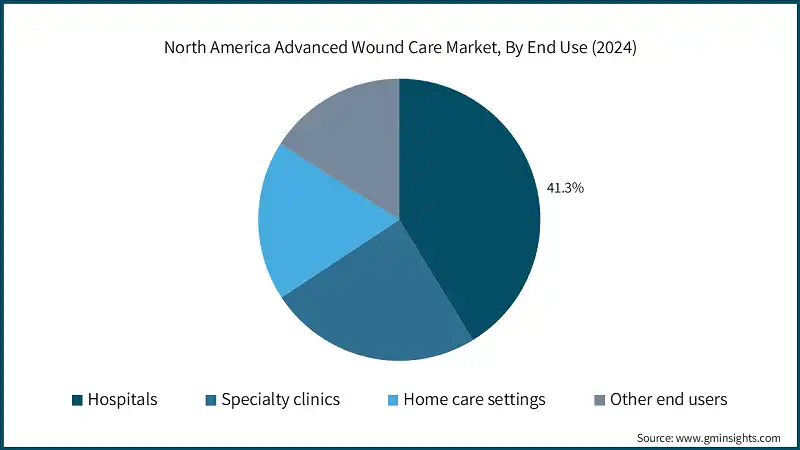
Based on end use, the North America advanced wound care market is categorized into hospitals, specialty clinics, home care setting and other end users. Among these, hospitals segment dominated the market in 2024, accounting for 41.3% of the total market share. This dominance is projected to continue, with the segment expected to reach USD 4 billion by 2034.
- Hospitals serve as primary centers for managing a wide spectrum of wounds ranging from acute surgical injuries to chronic conditions like diabetic ulcers and pressure sores. Their high patient turnover and complex care requirements drive consistent demand for advanced wound care products, including foam dressings, hydrocolloids, NPWT systems, and biologics.
- Wound care in hospitals spans multiple departments such as emergency rooms, operating theaters, burn units, and ICUs, where both acute and chronic wounds are treated. Post-operative wound management, pressure ulcer prevention, and diabetic foot ulcer care are among the most common applications.
- Hospitals also emphasize infection control and regulatory compliance, which accelerates the adoption of sterile, antimicrobial, and closed system wound care technologies. Devices like negative pressure wound therapy (NPWT) and bioengineered skin substitutes are increasingly used in tertiary care centers to reduce healing time and hospital stays, improving both clinical outcomes and operational efficiency.
- As healthcare infrastructure modernizes and the burden of chronic wounds continues to rise, hospitals will remain the dominant in shaping the advanced wound care landscape.
Looking for region specific data?
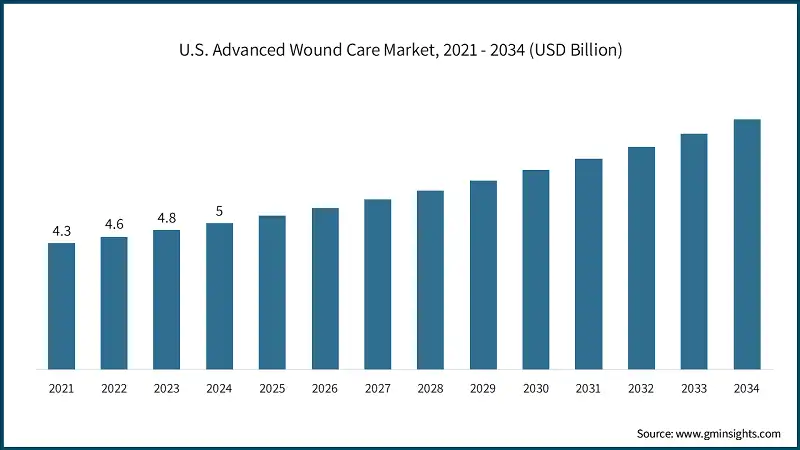
U.S. advanced wound care market accounted for USD 5 billion in 2024 and is anticipated to show significant growth over the forecast period.
- The increasing incidence of diabetic foot ulcers caused by diabetes is a major factor propelling the growth of the U.S. advanced wound care market. These ulcers are complex, slow-healing wounds that often require specialized treatment involving advanced dressings, biologics, and wound therapy devices. As healthcare providers seek more effective solutions to manage these chronic wounds and prevent complications, the demand for innovative wound care products continues to rise especially in hospitals, specialty clinics, and home care settings.
- For instance, approximately 18.6 million people worldwide are affected by diabetic foot ulcers each year, including 1.6 million individuals in the United States, according to NIH. These ulcers precede 80% of lower extremity amputations among people diagnosed with diabetes and are associated with a significantly increased risk of mortality. This high prevalence and severity underscore the urgent need for advanced wound care interventions that can promote healing, reduce infection risk, and prevent limb loss.
- The critical need for effective management of diabetic foot ulcers is driving innovation, clinical adoption, and investment in next generation wound care technologies across the healthcare ecosystem.
Canada advanced wound care market accounted for USD 547.6 million in 2024 and is anticipated to show lucrative growth over the forecast period.
- The increasing prevalence of diabetic foot ulcers (DFUs) in Canada is a major factor accelerating the growth of the Canada advanced wound care market. DFUs are among the most severe and costly complications of diabetes, often requiring specialized wound care products such as bioactive dressings, skin substitutes, and negative pressure wound therapy devices. As healthcare providers aim to reduce limb loss and improve healing outcomes, the demand for advanced wound care solutions continues to rise across hospitals, specialty clinics, and home care settings.
- For instance, according to NIH up to 25% of the nearly 4 million Canadians living with diabetes will develop a diabetic foot ulcer in their lifetime, with an associated 20% risk of limb loss. DFUs are not only a leading cause of lower-extremity amputations but also contribute significantly to increased mortality and healthcare costs.
- As diabetes rates continue to rise, the Canada advanced wound care market is experiencing growth. The high prevalence and severity of diabetic foot ulcers highlight the importance of innovative wound care technologies in improving patient outcomes and reducing the economic burden on the healthcare system.
North America Advanced Wound Care Market Share
The North American advanced wound care industry is shaped by a mix of global leaders and regionally focused innovators, creating a moderately consolidated yet highly dynamic competitive environment. Key players such as Solventum (formerly 3M Health Care), Smith & Nephew, Mölnlycke Health Care, ConvaTec Group, and Organogenesis dominate the landscape, contributing 54% of market share. These companies offer a comprehensive portfolio of advanced wound dressings, therapy devices, and regenerative biologics, and maintain strong market positions through strategic initiatives including product innovation, clinical partnerships, and geographic expansion across North America. Their continued investment in digital wound monitoring, home healthcare solutions, and bioengineered therapies is driving market growth and improving patient outcomes.
To strengthen their foothold, leading firms are investing in research and development, acquiring specialized wound care startups, and forming alliances with healthcare providers and procurement networks. The focus is on developing next generation wound care solutions such as antimicrobial dressings, bioengineered skin substitutes, and negative pressure wound therapy systems that cater to both chronic and acute wound applications. Additionally, companies are enhancing product usability and integration with digital platforms to support remote monitoring and home-based care.
The market is also witnessing a surge in technological advancement, with innovations like smart dressings, 3D-printed wound care products, and biologically active materials gaining traction. These developments are driven by the rising prevalence of diabetes, pressure injuries, and surgical wounds, which demand more effective and personalized treatment options.
Overall, the North America advanced wound care market is evolving rapidly, with competition intensifying as both established and emerging players strive to meet the growing demand for efficient, cost-effective, and patient-centric wound management solutions. This dynamic landscape is expected to foster continued innovation and expansion across hospitals, specialty clinics, and home care settings.
North America Advanced Wound Care Market Companies
Prominent players operating in the North America advanced wound care industry are as mentioned below:
- Solventum
- B. Braun
- Cardinal Health
- Coloplast
- ConvaTec Group
- DeRoyal Industries, Inc.
- HARTMANN International
- Hollister Incorporated
- Integra LifeSciences Corporation
- Lohmann & Rauscher
- Medline Industries
- Mölnlycke Health Care
- Organogenesis
- Smith and Nephew
- Talley Group Ltd
- Vomaris Innovations
- ConvaTec
ConvaTec delivers advanced wound care through antimicrobial dressings, foam-based solutions, and biologics tailored for hard-to-heal wounds. Its proprietary technologies aim to shorten healing times and improve quality of life, supported by a strategy focused on innovation and integrated care pathways.
Organogenesis leads to biologically derived wound care, offering skin substitutes and placental-based therapies that apply regenerative medicine principles. The company focuses on transforming chronic wounds into healing states, backed by strong clinical evidence and reimbursement support to drive adoption.
HARTMANN International offers a wide range of advanced wound care solutions focused on managing exudate and preventing infections. Its approach includes active healing concepts for chronic wounds, supported by compression therapy and clinician education. By combining clinical effectiveness with cost-efficiency, HARTMANN positions itself as a reliable partner in comprehensive wound management.
North America Advanced Wound Care Market Report Attributes
| Key Takeaway | Details |
|---|---|
| Market Size & Growth | |
| Base Year | 2024 |
| Market Size in 2024 | USD 5.6 Billion |
| Market Size in 2025 | USD 5.9 Billion |
| Forecast Period 2025 - 2034 CAGR | 5.6% |
| Market Size in 2034 | USD 9.6 Billion |
| Key Market Trends | |
| Drivers | Impact |
| Increasing number of surgical procedures | Drives demand for post-operative wound care products and infection control. |
| Growing aging population | Increases prevalence of chronic wounds, boosting need for advanced therapies. |
| Rising prevalence of diabetes | Fuels demand for specialized wound care for diabetic foot ulcers and related complications. |
| Growing technological advancements in wound care products | Enhances healing outcomes and expands market adoption through innovation. |
| Pitfalls & Challenges | Impact |
| High cost of advanced therapies | High price points limit adoption of advanced wound-care products across cost-sensitive healthcare settings and underserved regions. |
| Shortage of skilled professionals | Insufficient specialized wound-care clinicians constrain effective deployment of advanced technologies and extend treatment timelines. |
| Opportunities: | Impact |
| Integration of digital wound monitoring | Improves treatment accuracy and enables remote care through real-time data. |
| Expansion of home healthcare and outpatient services | Increase demand for portable and user-friendly wound care solutions. |
| Market Leaders (2024) | |
| Market Leaders |
22% market share |
| Top Players |
Collective market share in 2024 is 54% |
| Competitive Edge |
|
| Regional Insights | |
| Largest market | U.S. |
| Fastest growing market | Canada |
| Future outlook |
|
What are the growth opportunities in this market?
North America Advanced Wound Care Industry News
- In July 2023, Coloplast announced its agreement to acquire Kerecis, a fast-growing company specializing in biologics for wound care, for up to USD 1.3 billion. The deal included an upfront cash payment of USD 1.2 billion, marking a strategic expansion into the tissue regeneration segment. This acquisition reflects Coloplast’s commitment to sustainable innovation and its ambition to become a global leader in biologically derived wound care solutions.
- In March 2022, Convatec Group Plc completed the acquisition of Triad Life Sciences Inc, marking its strategic entry into the rapidly growing wound biologics segment. The acquisition strengthens Convatec’s Advanced Wound Care business in the U.S. and introduces a new division, Convatec Advanced Tissue Technologies. This move positions Convatec to address hard-to-heal wounds more effectively and expand its footprint in regenerative medicine.
The North America advanced wound care market research report includes in-depth coverage of the industry with estimates and forecasts in terms of revenue in USD Million from 2021 - 2034 for the following segments:
Market, By Product
- Advanced wound dressing
- Foam dressings
- Hydrocolloid dressings
- Film dressings
- Alginate dressings
- Hydrogel dressings
- Collagen dressings
- Other advanced dressings
- Wound therapy devices
- Negative pressure wound therapy
- Oxygen and hyperbaric oxygen equipment
- Electric stimulation devices
- Pressure relief devices
- Other wound therapy devices
- Wound care biologics
- Skin Substitutes
- Biological
- Allograft
- Xenograft
- Other biologicals
- Synthetic
- Biological
- Topical Agents
- Skin Substitutes
Market, By Application
- Chronic
- Diabetic ulcer
- Pressure ulcer
- Venous legs ulcer
- Other chronic applications
- Acute
- Surgical Wounds
- Traumatic wounds
- Burns
Market, By End Use
- Hospitals
- Specialty clinics
- Home care settings
- Other end use
The above information is provided for the following countries:
- U.S.
- Canada
Frequently Asked Question(FAQ) :
What is the market size of the North America advanced wound care in 2024?
The market size was valued at USD 5.6 billion in 2024, growing at a CAGR of 5.6% till 2034, driven by an increasing number of surgical procedures, a growing aging population, rising diabetes prevalence, and advancements in wound care technologies.
What is the projected value of the North America advanced wound care market by 2034?
The market is poised to reach USD 9.6 billion by 2034, fueled by technological innovations and rising demand for personalized wound care solutions.
What is the expected size of the North America advanced wound care industry in 2025?
The market size is expected to reach USD 5.9 billion in 2025.
What was the market share of the advanced wound dressing segment in 2024?
The advanced wound dressing segment held a significant market share of 74.5% in 2024, led by the adoption of innovative materials like foam, hydrocolloid, alginate, hydrogel, and collagen.
What was the valuation of the acute wound segment in 2024?
The acute wound segment was valued at USD 3.4 billion in 2024, encompassing injuries such as surgical incisions, burns, and traumatic wounds.
What was the market share of the hospitals segment in 2024?
The hospitals segment dominated the market with a 41.3% share in 2024 and is anticipated to reach USD 4 billion by 2034.
What was the valuation of the U.S. advanced wound care sector?
The U.S. market size was USD 5 billion in 2024, propelled by the increasing prevalence of diabetic foot ulcers and the demand for specialized wound care solutions.
What are the key trends in the North America advanced wound care market?
Key trends include smart dressings with real-time monitoring, increasing use of NPWT systems and hyperbaric oxygen therapy, adoption of bioactive and novel biomaterials, and growing demand for cost-effective, personalized wound care solutions.
Who are the key players in the North America advanced wound care industry?
Key players include Solventum, B. Braun, Cardinal Health, Coloplast, ConvaTec Group, DeRoyal Industries, Inc., HARTMANN International, Hollister Incorporated, Integra LifeSciences Corporation, and Lohmann & Rauscher.
North America Advanced Wound Care Market Scope
Related Reports