Summary
Table of Content

Microbiome Modulators Market
Get a free sample of this report
Form submitted successfully!
Error submitting form. Please try again.
Thank you!
Your inquiry has been received. Our team will reach out to you with the required details via email. To ensure that you don't miss their response, kindly remember to check your spam folder as well!
Request Sectional Data
Thank you!
Your inquiry has been received. Our team will reach out to you with the required details via email. To ensure that you don't miss their response, kindly remember to check your spam folder as well!
Form submitted successfully!
Error submitting form. Please try again.
Microbiome Modulators Market Size
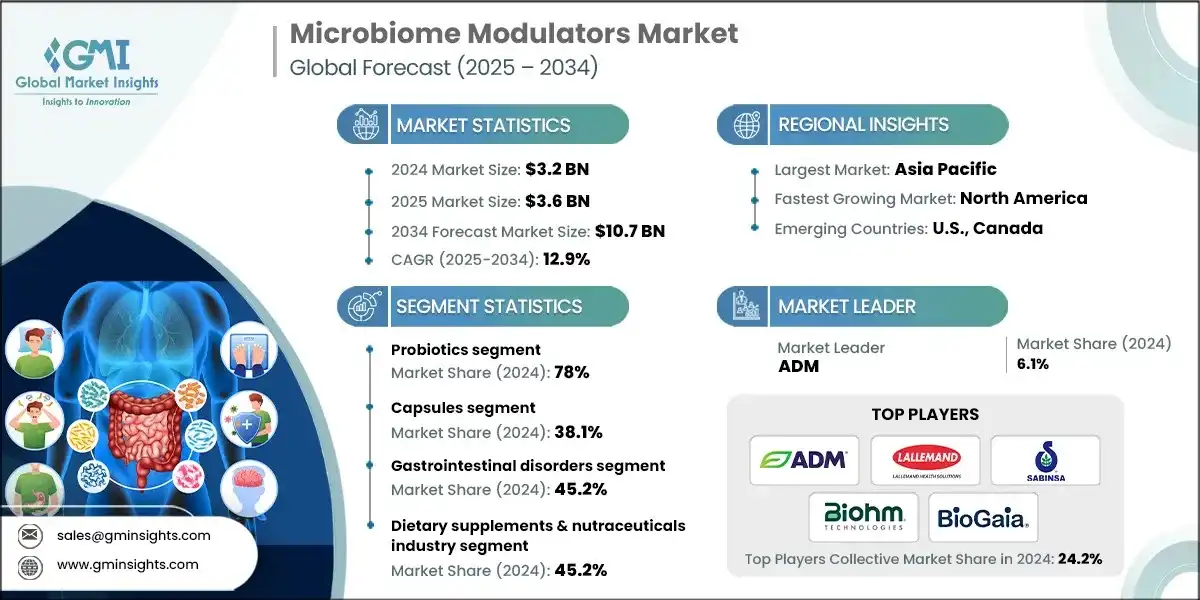
The global microbiome modulators market was valued at USD 3.2 billion in 2024. The market is expected to grow from USD 3.6 billion in 2025 to USD 10.7 billion in 2034, at a CAGR of 12.9% according to latest report published by Global Market Insights Inc.
Microbiome Modulators Market Key Takeaways
Market Size & Growth
- 2024 Market Size: USD 3.2 Billion
- 2025 Market Size: USD 3.6 Billion
- 2034 Forecast Market Size: USD 10.7 Billion
- CAGR (2025–2034): 12.9%
Regional Dominance
- Largest Market: Asia Pacific
- Fastest Growing Region: North America
Key Market Drivers
- Increasing prevalence of chronic diseases.
- Technological advancements in microbiome analysis.
- Rising consumer focus on gut health.
Challenges
- Lack of standardization and regulatory uncertainty.
- Variability in microbiome composition among individuals.
Opportunity
- Increasing adoption of precision medicine.
- Rising investment in R&D and strategic collaborations.
Key Players
- Market Leader: ADM led with over 6.1% market share in 2024.
- Leading Players: Top 5 players in this market include ADM, Lallemand Health Solutions, Sabinsa Corporation, Biohm Technologies, BioGaia, which collectively held a market share of 24.2% in 2024.
Get Market Insights & Growth Opportunities
- The microbiome modulators market is expanding, due to the widely acclaimed importance of microbiomes in conserving overall health. Microbiome modulators include products like probiotics, prebiotics, synbiotics, and postbiotics that act in modifying the composition and activities of microbial groups inside the body. The intended function of microbiome modulators is to restore microbial balance when disturbed by poor dietary habits, stress, infections, and the use of antibiotics, thus optimizing bodily functions supportive of immune health and prevention of various diseases.
- The health benefits of microbiome modulators vary extensively, targeting mostly digestive health by alleviating symptoms associated with irritable bowel syndrome (IBS) and diarrhea. They also enhance immune responses, reduce inflammation, and are implicated in the promotion of metabolic health with beneficial effects on obesity, diabetes, and other chronic diseases.
- The incorporation of these modulators into products targets digestive health support, immune stimulation, and chronic disease management. Increased interest in personalized nutrition and preventive healthcare keeps research and development alive in this market. As the scientific understanding of microbiome modulators grows and consumer preferences shift towards natural health solutions the market is destined to continue its growth trajectory and increase diversification.
To get key market trends
Microbiome Modulators Market Trends
- Research and development in the field of microbiome modulators is expected to see considerable growth owing to the major trends supportive of this industry. Topmost of these trends include technological advancements in genomic sequencing, booming bioinformatics, and metabolomics, which have enabled a deeper understanding and characterization of the human microbiome. These technologies will create a spectrum of possibilities like improved proof of effectiveness of microbiome-based therapies tailored to specific diseases or patients. Simultaneously, innovation will abound in probiotics, prebiotics, and synbiotics, making these products more effective, diverse, and suitable for both clinical and consumer markets.
- Regulatory frameworks are evolving with respect to microbiome products, so the governments and health authorities are working to establish clear guidelines with respect to product approval, safety, and efficacy of microbiome products, which will be a key factor to build credibility for the market and increase consumer trust in such products. Inadequate standardized regulations are a challenge and an opportunity for players in the industry as they can help shape future policies through collaborative and scientific validation.
- The focus is on product innovation, wherein companies invest in driving research in the development of novel microbiome modulators, that include live biotherapeutic products and next-generation probiotics, specifically targeting certain health issues including gut health, immune modulation, and metabolic disorders. Product diversification will be further fueled by the introduction of microbiome research into personalized medicine and functional foods.
Microbiome Modulators Market Analysis
Learn more about the key segments shaping this market
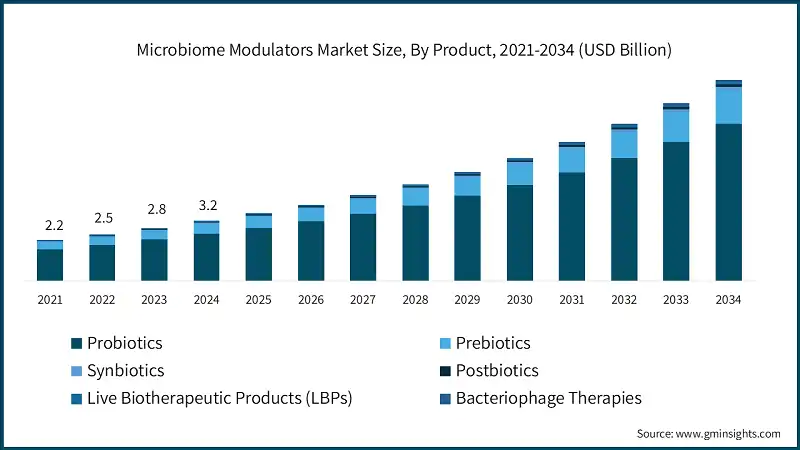
Based on product, the market is segmented into probiotics, prebiotics, synbiotics, postbiotics, live biotherapeutic products (LBPS), and bacteriophage therapies. Probiotics dominated the market with an approximate market share of 78% in 2024 and is expected to grow with a CAGR of 12.9% by 2034.
- Probiotics, which are among the most established segments, are continuously innovating with new strains and formulations for digestive health, immune support, and other health benefits. The inclination of consumers toward natural and preventive health care is driving the demand for probiotics through dietary supplements, functional foods, and beverages.
- Prebiotics and synbiotics are also gaining favor for their selective stimulation of the proliferation of beneficial gut bacteria. The improvements in fermentation technologies as well as in sourcing for ingredients that should appear in the new formulations greatly favor the establishment of enhanced prebiotic formulations.
- Postbiotics are intramolecular products which are defined to contain bioactive compounds that are produced by microbes. These bioactive components are developed through advances towards technology in fermentation and extraction processes. These live biotherapeutic products are now gaining regulatory approval as novel therapeutics for different health conditions, inflammatory bowel disease and infections among them.
Learn more about the key segments shaping this market
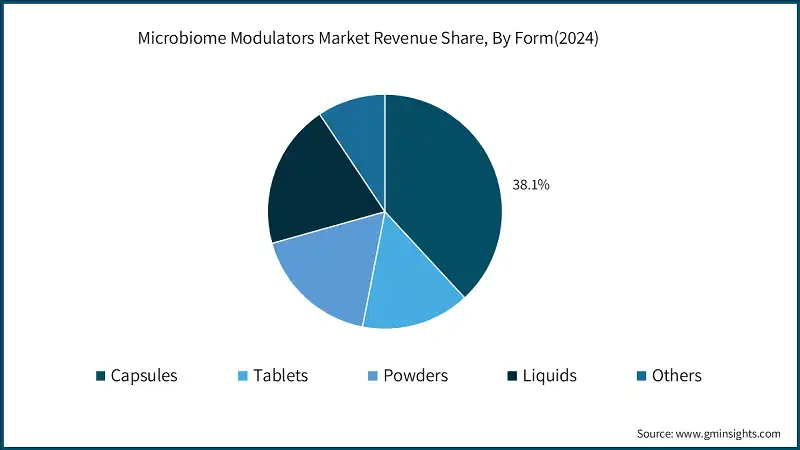
Based on form, the microbiome modulators market is segmented into capsules, tablets, powders, liquids, and others. Capsules held the largest market share of 38.1% in 2024 and is expected to grow at a CAGR of 13% during 2025 to 2034.
- Capsules are among the most prevalent delivery formats. They are preferred because of their convenience and ease of swallowing, in addition to acting as protective shells for sensitive probiotic strains against environmental factors. This form favors probiotic demand since it has excellent stability and targeted delivery, thus making it suitable for dietary supplements as well as pharmaceutical applications.
- Powders are increasingly popular because they are easy to mix with a variety of foods and beverages. They are preferred by most customers, desirous of customizing doses or those who find capsules inconvenient. Exciting advancements in the powder formulations are witnessing the development of better formulations that incorporate enhancements in stability, flavor, and bioavailability, further increasing their desirable use in consumer and clinical situations.
- Liquids are a growing sub-segment among products for infants, children, and patients suffering a hard time swallowing. This is because liquid microbiome products allow absorption within short periods and can be blended with other functional ingredients. The high consumer convenience and rapid onset of action typical of such forms are great factors increasing the adoption of such products in the market.
Based on application, the market is segmented into infectious diseases, gastrointestinal disorders, immune system disorders, cancer therapy, metabolic diseases, and dermatological conditions. Gastrointestinal disorders segment dominated the market with an approximate market share of 45.2% in 2024 and is expected to grow with the CAGR of 13.1% by 2034.
- The microbiome modulators market focuses more on infectious diseases, where targeted bacteriophage therapies and probiotic interventions are being studied to kill antibiotic-resistant bacteria and recurrent infections. Increased concerns against the overuse of antibiotics as well as precise microbiome-friendly treatment alternatives drive that trend.
- Gastrointestinal disorders still comprise the largest as well as the most established segment in the microbiome modulators market. Consumers and healthcare providers increasingly know the importance of probiotics, prebiotics, and synbiotics in the management of IBS, IBD, and diarrheal symptoms.
- Immune system disorders are being increasingly highlighted because of the potential use of microbiome modulation in promoting immune health and controlling autoimmunity. Immunotherapy boom alongside the comprehension of the role microbiome plays in modulating the immune responses has contributed to spur research and growth in products in the field.
- In cancer therapy, the microbiome is recognized as a key player in shaping the treatment regimen outcome. Microbiome modulators are now being designed as complementary therapies to improve response rates following immunotherapy or chemotherapy.
Based on end user industry, the market is segmented into pharmaceutical & biotechnology, dietary supplements & nutraceuticals, food & beverage, animal feed & nutrition, and others. Dietary supplements & nutraceuticals industry segment dominated the market with an approximate market share of 45.2% in 2024 and is expected to grow with a CAGR of 13% by 2034.
- The pharmaceutical and biotechnology segment is a significant driving force for the microbiome modulators market, with extensive research and development work being carried out for adopting novel therapies for several health disorders. Substantial funding is being pumped into this segment for developing specific probiotic strains, postbiotics, and microbiome-based drugs for clinical use.
- The dietary supplements and nutraceuticals segment is, and will continue to be, the largest within the microbiome market. New market trends include strain-specific formulations, stability improvements, and plant-based aspects to meet consumer needs. Increased awareness of gut health impacting overall wellness drives the launch of new products and increases market penetration.
- Functional foods and beverages with ingredients that are microbiome-friendly are becoming popular in the food and beverage industry. Fermented foods such as yogurt, kefir, and kombucha continue to dominate, while the latest innovations include microbiome-enhanced snacks, beverages, and dairy products.
- Animal feed and nutrition are growing rapidly due to the recognition of the importance of microbiomes in animal health and productivity. Probiotics, prebiotics, and synbiotics are added to livestock and pet foods for promoting better digestion, immunity, and well-being. This is a result of increasing demand for antibiotic-free animal products and an interest in sustainable and health-oriented practices in animal husbandry.
Looking for region specific data?
The North America microbiome modulators industry is growing rapidly at the global level with a market share of 30.2% in 2024.
- As North America crawls toward an increasing microbiome modulators market development, it enjoys the opportunity of a fast-growing phase buoyed by increasing awareness regarding gut health and its relation to wellness. Consumers seem to be actively seeking probiotic and prebiotic-related products such that demand is rising across dietary supplements, functional foods, and beverages.
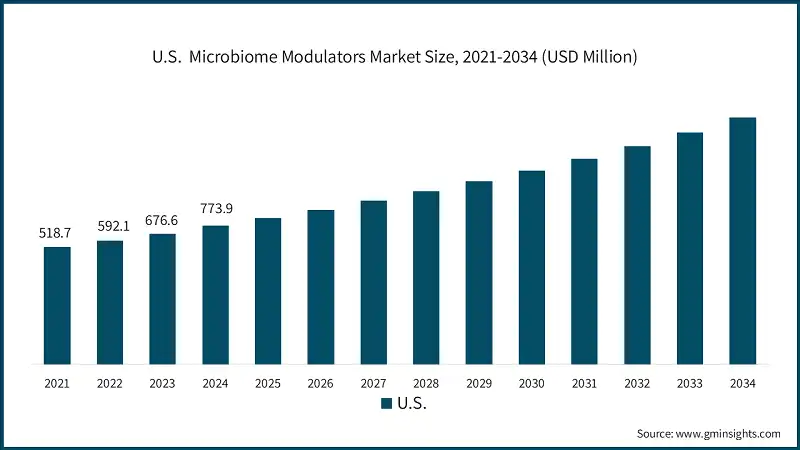
U.S. dominates the North America microbiome modulators market by USD 773.9 million in 2024, showcasing strong growth potential.
- The U.S. market is built heavily by innovations with a growing consumer health culture. Preventive health and natural therapies are propping the adoption of supplements and functional foods based on the microbiome. An increase in research grants and favorable regulations gives support to clinical studies and product approvals.
Europe microbiome modulators market leads the industry with revenue of USD 632.6 million in 2024 and is anticipated to show lucrative growth over the forecast period.
- European market for microbiome modulators is testimony to steady growth propelled by increasing consumer awareness about gut health and preventive healthcare. In the account of overall wellness, Europeans are using probiotics, prebiotics, and synbiotics in dietary supplements, functional foods, and beverages.
Germany dominates the European market, showcasing strong growth potential.
- In Germany, the market reflects a mixture of scientific innovation and consumer-driven demand for natural health products. The focus on health, wellness, and sustainability in the country is driving the popularity of probiotic foods, supplements, and functional beverage.
The Asia Pacific microbiome modulators market is anticipated to grow at a CAGR of 13.1% during the analysis timeframe.
- Asia-Pacific market for microbiome modulators is currently driven by consumer health awareness and the increasing prevalence of lifestyle-related diseases. Those consumers in Japan, South Korea, and others lead consorting with probiotics and prebiotics as support for gut health and overall wellness. The growing middle class and increasing disposable income in the region add to the mounting demand for dietary supplements and functional foods.
China microbiome modulators market is estimated to grow with a significant CAGR in the Asia Pacific region.
- With rising healthcare spending, a very large consumer base, and growing awareness of the benefits of gut health, China's market for microbiome modulators is emerging rapidly. There is research and innovation in the field of biotech, stressing the need in government policy, which drives the production of microbiome-related products and therapies. Consumer interests in natural and functional health solutions are due to increasing incidences of digestive disorders, obesity and autoimmune diseases.
Latin America microbiome modulators accounted for 10.1% market share in 2024 and is anticipated to show steady growth over the forecast period.
- Latin America microbiome modulators market, increasing awareness of gut health and associated benefits like probiotics and prebiotics are some of the key drivers behind this growth. Consumers in this region are becoming more conscious about health and are increasingly searching for natural and functional food products to create a greater sense of wellbeing. Some of the factors that are expected to contribute to an increase in consumption of dietary supplements, functional beverages, and probiotic food products are the rising disposable incomes, urbanization, and an emerging middle class.
Brazil leads the Latin American microbiome modulators market, exhibiting remarkable growth during the analysis period.
- The market for microbiome modulators in Brazil is booming due to health-aware consumers focusing on gut health. Among dietary supplements, yogurt, and functional foods, demand for probiotic and prebiotic products is rising in the country. The growing awareness of the health of microbiomes, urbanization, and changes to eating habits are also driving market growth. The Brazilian government and local companies are investing in R&D of innovative microbiome-based solutions adapted to regional predilection.
Middle East & Africa microbiome modulators accounted for 4.8% market share in 2024 and is anticipated to show lucrative growth over the forecast period.
- The Middle East and Africa microbiome modulators market is gradually gaining momentum with increasing health and wellness awareness and focus on preventive healthcare. Urbanization, higher disposable incomes, and changing lifestyles in many countries in the region drive demand for these products. With the increasing incidence of diseases related to digestion and lifestyle, consumers are now seeking natural and health-promoting alternatives.
Saudi Arabia microbiome modulators industry to experience substantial growth in the Middle East and Africa microbiome modulators market in 2024.
- The market in Saudi Arabia, an important country in the Middle East & Africa, is, therefore, growing with high momentum. The focus on public health improvement among the general population and increased awareness regarding gut health and immunity are the driving factors of demand for probiotics, prebiotics, and functional foods. Government programs that are steering the population toward wellness, the exportation of health supplements, and rising clinical trials and systems to establish efficacy of all these products, will further enhance growth.
Microbiome modulators Market Share, 2024
The top 5 companies in microbiome modulators industry include ADM, Lallemand Health Solutions, Sabinsa Corporation, BioGaia, Biohm Technologies. These are prominent companies operating in their respective regions covering approximately 24.2% of the market share in 2024. These companies hold strong positions due to their extensive experience in market. Their diverse product portfolios, backed by robust production capabilities and distribution networks, enable them to meet the rising demand across various regions.
- ADM is a global leader in agricultural processing and ingredients, and the probiotics and dietary supplemental markets enjoy a significant presence in its operations. ADM possesses an extensive supply chain, research, and fermentation technology competency for developing some of the best probiotic ingredients and functional solutions to modulate the microbiome.
- Lallemand is well-recognized for its clinical research emphasis and scientific affirmation, Lallemand invests a vast amount of money in R&D for the creation of probiotic strains that act positively on the human microbiome.
- Sabinsa Corporation is acknowledged for its pioneering work with herbal extracts, dietary supplements, and probiotics focusing on natural ingredients and scientifically validated orientation. With a distribution network present within various regional markets, and global based research cooperation, Sabinsa stands tall, remaining competitive in the fast-evolving microbiome market catering to pharmaceuticals market.
- BioGaia Group focuses on probiotics, targeting pediatric and adult digestive health. BioGaia's emphasis on scientific validation, regulatory compliance and consumer confidence enables it to extend its presence into burgeoning markets here and there globally.
- Biohm Technologies operates in the microbiome therapeutics space, focusing on personalized solutions. The company makes use of advanced techniques to identify microbiome, bioinformatics, and fermentation technology in creating targeted probiotic formulation.
Microbiome Modulators Market Companies
Major players operating in the microbiome modulators industry include:
- AB-Biotics, SA
- ADM
- BioGaia
- Biohm Technologies
- DSM-Firmenich
- Ferring
- Lallemand Health Solutions
- Modulate Biosystems
- Ritual
- Sabinsa Corporation
- Second Genome, Inc.
- TCI Co., Ltd.
- 4D Pharma Plc
Microbiome Modulators Market Report Attributes
| Key Takeaway | Details |
|---|---|
| Market Size & Growth | |
| Base Year | 2024 |
| Market Size in 2024 | USD 3.2 Billion |
| Market Size in 2025 | USD 3.6 Billion |
| Forecast Period 2025 – 2034 CAGR | 12.9% |
| Market Size in 2034 | USD 10.7 Billion |
| Key Market Trends | |
| Drivers | Impact |
| Increasing prevalence of chronic diseases | The rising incidence of conditions such as inflammatory bowel disease, obesity, and diabetes is fueling demand for microbiome-based therapies that can restore microbial balance and improve health outcomes. |
| Technological advancements in microbiome analysis | Improvements in sequencing technologies and bioinformatics tools have made microbiome profiling more accessible and affordable, facilitating the development of targeted modulators and expanding the market. |
| Rising consumer focus on gut health | A growing awareness about the importance of gut health in overall wellness has led to increased adoption of probiotics, prebiotics, and other microbiome modulators as preventive health measures. |
| Pitfalls & Challenges | Impact |
| Lack of standardization and regulatory uncertainty | The absence of standardized protocols and unclear regulatory pathways for microbiome-based products pose challenges for market players in terms of product approval and commercialization. |
| Variability in microbiome composition among individuals | The highly individualized nature of the human microbiome makes it difficult to develop universally effective products, limiting broad-market applicability and posing a challenge for consistent efficacy. |
| Opportunities: | Impact |
| Increasing adoption of precision medicine | The market is witnessing a shift towards personalized microbiome therapies tailored to individual genetic and microbiota profiles. This trend is driven by advancements in genomics and bioinformatics, enabling more targeted and effective treatments. |
| Rising investment in R&D and strategic collaborations | Major pharmaceutical companies and biotech firms are investing heavily in research and forming strategic alliances to develop innovative microbiome-based products. This collaborative approach accelerates product development and diversifies the market offerings. |
| Market Leaders (2024) | |
| Market Leaders |
6.1% |
| Top Players |
Collective Market Share of 24.2% in 2024 |
| Competitive Edge |
|
| Regional Insights | |
| Largest Market | Asia Pacific |
| Fastest growing market | North America |
| Emerging countries | U.S., Canada |
| Future outlook |
|
What are the growth opportunities in this market?
Microbiome Modulators Industry News
- In November 2024, AstraZeneca invested USD 3.5 billion in expanding its research and manufacturing footprint in the U.S. This manufacturing facility will focus on developing advancements in microbiome therapies, expanding the company’s portfolio.
- In October 2024, ADM announced a partnership with Biohm Technologies to introduce Vivifem, a data-driven, targeted microbiome formulation specifically designed for women's health. The formulation combined prebiotics, probiotics, and postbiotics to support women's healthy aging goals. This partnership enhanced ADM's portfolio in personalized health and nutrition solutions.
- In March 2024, Biohm Technologies, a leading innovator and patent holder of microbiome-based products and ingredients, announced a partnership with Virginia Tech aimed at further enhancing its pioneering Symbiont platform through the application of artificial intelligence (A.I.). This collaboration is expected to accelerate the development of advanced microbiome solutions, enabling Biohm Technologies to leverage A.I. to improve product efficacy and drive innovation in microbiome space.
This microbiome modulators market research report includes in-depth coverage of the industry, with estimates & forecasts in terms of revenue (USD Million) and volume (Kilo Tons) from 2025 to 2034, for the following segments:
Market, By Product
- Probiotics
- Prebiotics
- Synbiotics
- Postbiotics
- Live biotherapeutic products (LBPs)
- Bacteriophage therapies
Market, By Form
- Capsules
- Tablets
- Powders
- Liquids
- Others
Market, By Application
- Infectious diseases
- Gastrointestinal disorders
- Immune system disorders
- Cancer therapy
- Metabolic diseases
- Dermatological conditions
Market, By End Use Industry
- Pharmaceutical & biotechnology
- Dietary supplements & nutraceuticals
- Food & beverage
- Animal feed & nutrition
- Others
The above information is provided for the following regions and countries:
- North America
- U.S.
- Canada
- Europe
- Germany
- UK
- France
- Spain
- Italy
- Rest of Europe
- Asia Pacific
- China
- India
- Japan
- Australia
- South Korea
- Rest of Asia Pacific
- Latin America
- Brazil
- Mexico
- Argentina
- Rest of Latin America
- Middle East and Africa
- Saudi Arabia
- South Africa
- UAE
- Rest of Middle East and Africa
Frequently Asked Question(FAQ) :
What is the market size of the microbiome modulators market in 2024?
The market size was USD 3.2 billion in 2024, with a CAGR of 12.9% expected through 2034, driven by advancements in genomic sequencing, bioinformatics, and metabolomics.
What is the projected value of the microbiome modulators market by 2034?
The market is expected to reach USD 10.7 billion by 2034, fueled by innovation in probiotics, prebiotics, and synbiotics, along with evolving regulatory frameworks.
What is the projected size of the microbiome modulators market in 2025?
The market is expected to reach USD 3.6 billion in 2025.
How much revenue did the probiotics segment generate?
The probiotics segment generated approximately 78% of the market share in 2024 and is projected to grow at a CAGR of 12.9% by 2034.
What was the valuation of the capsules segment?
The capsules segment held 38.1% of the market share and generated the largest revenue in 2024, with a CAGR of 13% expected from 2025 to 2034.
Which region leads the microbiome modulators market?
North America led the market with a 30.2% share in 2024, driven by strong research and development activities and a robust healthcare infrastructure.
What are the upcoming trends in the microbiome modulators industry?
Key trends include advancements in genomic sequencing, bioinformatics, and metabolomics, as well as innovation in probiotics, prebiotics, and synbiotics. Additionally, evolving regulatory frameworks are expected to shape the market.
Who are the key players in the microbiome modulators market?
Key players include AB-Biotics, SA, ADM, BioGaia, Biohm Technologies, DSM-Firmenich, Ferring, Lallemand Health Solutions, Modulate Biosystems, Ritual, Sabinsa Corporation, and Second Genome, Inc.
Microbiome Modulators Market Scope
Related Reports