Summary
Table of Content

Liver Cancer Drugs Market
Get a free sample of this report
Form submitted successfully!
Error submitting form. Please try again.
Thank you!
Your inquiry has been received. Our team will reach out to you with the required details via email. To ensure that you don't miss their response, kindly remember to check your spam folder as well!
Request Sectional Data
Thank you!
Your inquiry has been received. Our team will reach out to you with the required details via email. To ensure that you don't miss their response, kindly remember to check your spam folder as well!
Form submitted successfully!
Error submitting form. Please try again.
Liver Cancer Drugs Market Size
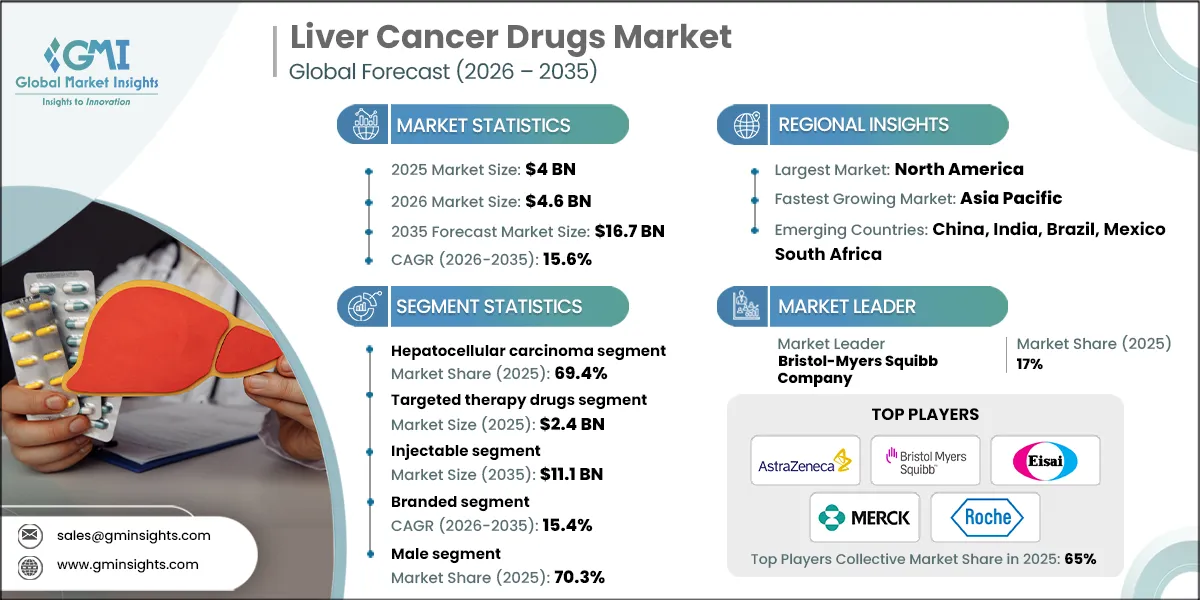
The global liver cancer drugs market was valued at USD 4 billion in 2025. The market is expected to grow from USD 4.6 billion in 2026 to USD 16.7 billion in 2035, growing at a CAGR of 15.6% during the forecast period, according to the latest report published by Global Market Insights Inc. The market growth is primarily stimulated by the rising global incidence of hepatocellular carcinoma and other primary liver malignancies, alongside increasing mortality rates associated with late-stage diagnosis. For instance, as per the National Institute of Health (NIH), hepatocellular carcinoma (HCC) is now the fifth most common cause of cancer worldwide. The second leading cause of cancer death after lung cancer in men is HCC. Such a high prevalence of this disease and associated high mortality increases the demand for treatment options.
Liver Cancer Drugs Market Key Takeaways
Market Size & Growth
- 2025 Market Size: USD 4 Billion
- 2026 Market Size: USD 4.6 Billion
- 2035 Forecast Market Size: USD 16.7 Billion
- CAGR (2026–2035): 15.6%
Regional Dominance
- Largest Market: North America
- Fastest Growing Region: Asia Pacific
Key Market Drivers
- Rising global incidence of liver cancer.
- Shift toward targeted and immuno-oncology therapies.
- Expanding geriatric population.
- Rising healthcare expenditure and oncology focus.
Challenges
- High treatment costs and reimbursement constraints.
- Late diagnosis limiting treatment eligibility.
Opportunity
- Next generation combination and personalized therapies.
- Growth potential in emerging, high-burden regions.
Key Players
- Market Leader: Bristol-Myers Squibb Company led with over 17% market share in 2025.
- Leading Players: Top 5 players in this market include AstraZeneca, Bristol-Myers Squibb Company, Eisai, Merck & Co., F. Hoffmann-La Roche, which collectively held a market share of 65% in 2025.
Get Market Insights & Growth Opportunities
In addition, according to the Nature journal, Hepatitis D virus (HDV) is estimated to affect 20-40 million people globally. It is associated with a more severe course of liver disease, further escalating the market demand. Also, the NIH reports that the rate of new cases of liver and intrahepatic bile duct cancer was 9.4 per 100,000 men and women per year, with hundreds of thousands of new cases diagnosed annually, stimulating demand for effective pharmacological interventions.
The liver cancer drugs market refers to the global industry dedicated to the development, manufacturing, and commercialization of pharmaceutical therapies used for the treatment and management of liver malignancies, particularly hepatocellular carcinoma and cholangiocarcinoma. These therapies aim to extend patient survival, slow disease progression, and enhance quality of life through innovative drug classes such as targeted therapies, immunotherapy drugs, biologics, and chemotherapy agents. Given the limited curative options for advanced-stage liver cancer, the market is heavily supported by oncology-focused research pipelines, expedited regulatory pathways, and reimbursement mechanisms that encourage innovation and patient access.
Key players driving market growth include Bayer, AstraZeneca, Bristol Myers Squibb, F. Hoffmann-La Roche, Eisai, Merck & Co., and Pfizer, which continue to invest heavily in research and development, strategic partnerships, and global commercialization efforts. These companies play a crucial role in driving innovation, expanding treatment options, improving access to advanced therapies, and addressing the substantial unmet medical needs associated with liver cancer worldwide.
Between 2022 and 2024, the liver cancer drugs market experienced notable growth, driven by increasing disease awareness, higher diagnosis rates, and the introduction of novel immuno-oncology combinations. During this period, the global market was valued at approximately USD 2.6 billion in 2022 and increased to around USD 3.5 billion by 2024. This growth was largely attributed to the expanding use of immune checkpoint inhibitors, favorable outcomes from combination therapies, and increasing approvals of first- and second-line systemic treatments for advanced liver cancer. Furthermore, enhanced clinical trial activity and growing investments in oncology research and development supported continuous market momentum.
To get key market trends
Liver Cancer Drugs Market Trends
- A major trend in the liver cancer drug market is the increasing transition from conventional chemotherapy towards targeted therapies and immuno-oncology treatments. Traditional cytotoxic regimens, which offered limited survival benefits and significant toxicity, are being progressively replaced by molecularly targeted agents and immune checkpoint inhibitors that directly interfere with tumor signaling pathways and immune evasion mechanisms.
- Additionally, there is a rapidly growing emphasis on precision medicine and biomarker driven treatment strategies. Advances in genomic profiling and molecular diagnostics have enabled the identification of actionable mutations and pathway alterations, allowing therapies to be tailored to specific tumor characteristics. This personalized approach is particularly impactful in hepatocellular carcinoma (HCC), where tumor heterogeneity significantly influences therapeutic response.
- A high prevalence of chronic liver diseases, including hepatitis B, hepatitis C, alcohol-related liver disease, and non-alcoholic fatty liver disease, continues to escalate liver cancer risk globally. The growing burden of these underlying conditions, particularly in the Asia-Pacific and emerging economies, has intensified the need for advanced treatment options.
- Favorable regulatory support and approval pathways are also playing a crucial role in advancing innovation and commercialization. Regulatory agencies such as the FDA and EMA have increasingly granted priority review, breakthrough therapy designation, and accelerated approvals for liver cancer drugs addressing high unmet clinical needs. These mechanisms shorten development timelines and incentivize pharmaceutical companies to invest in novel therapeutic modalities, thereby accelerating patient access to innovative treatments.
Liver Cancer Drugs Market Analysis
Learn more about the key segments shaping this market
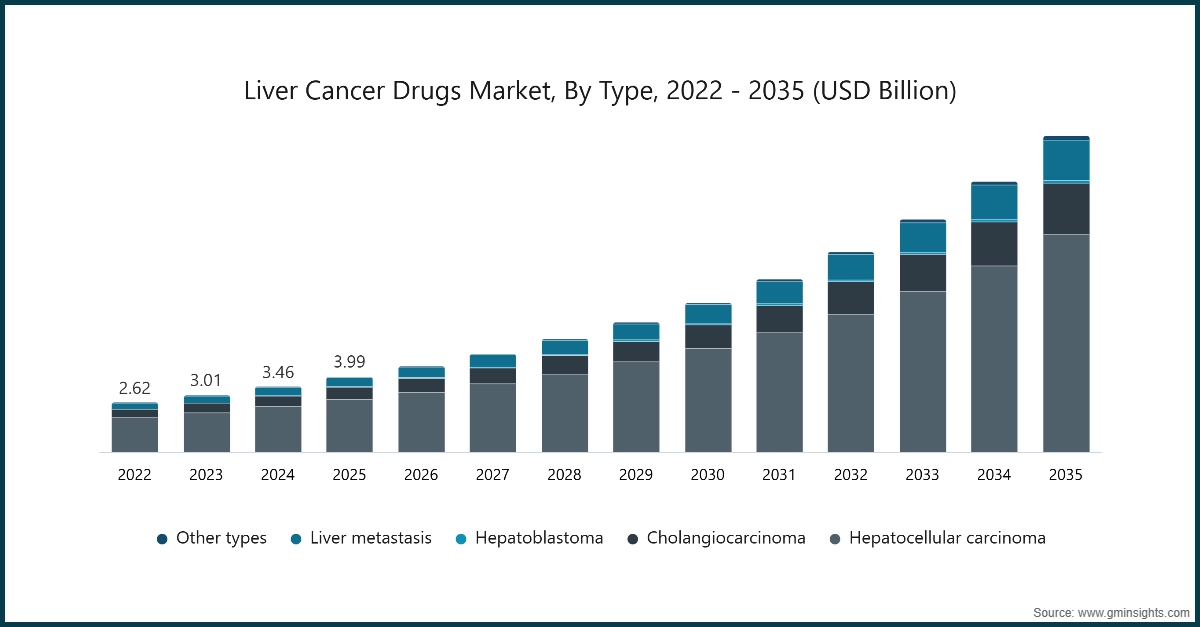
The global liver cancer drugs industry was valued at USD 2.6 billion and USD 3 billion in 2022 and 2023, respectively. The market size reached USD 4 billion in 2025, growing from USD 3.5 billion in 2024.
Based on the type, the global liver cancer drugs market is segmented into hepatocellular carcinoma, cholangiocarcinoma, hepatoblastoma, liver metastasis, and other types. The hepatocellular carcinoma segment has asserted its dominance in the market by securing a significant market share of 69.4% in 2025 and is anticipated to grow at a CAGR of 15.5% over the forecast years.
- Hepatocellular carcinoma is the most common form of primary liver cancer and accounts for more than three-quarters of the world's liver cancer cases each year.
- HCC is a major global health concern, with an estimated 1 million new cases projected in 2025, increasingly linked to ALD and MASLD.
- Moreover, the segment’s dominance is stimulated by continuous innovation in treatment approaches, including the widespread adoption of immunotherapy, targeted therapies, and combination regimens.
- Additionally, the high prevalence of underlying risk factors such as chronic hepatitis B and C infections, alcohol-related liver disease, and metabolic dysfunction-associated steatohepatitis (MASH) continues to fuel the incidence of HCC, further driving demand for effective treatment options.
- On the other hand, the liver metastasis segment is expected to witness robust growth, growing at a CAGR of 16.1% over the forecast period.
- The high growth is stimulated by the increasing incidence of secondary liver tumors originating from primary cancers such as colorectal, breast, lung, and pancreatic cancer.
Based on the drug class, the global liver cancer drugs market is classified into chemotherapeutic agents, targeted therapy drugs, and immunotherapy drugs. The targeted therapy drugs segment accounted for the highest market revenue of USD 2.4 billion in 2025 and is projected to grow at a CAGR of 15.7% during the analysis period. The immunotherapy drugs segment, on the other hand, held the second-largest market share owing to the increasing adoption of immune checkpoint inhibitors, expanding clinical trial pipelines, and rising approvals of novel immuno-oncology agents for hepatocellular carcinoma (HCC).
- The dominance of targeted therapies is stimulated by their ability to selectively inhibit tumor specific signaling pathways, resulting in improved efficacy and reduced systemic toxicity compared to conventional chemotherapy.
- Moreover, widely prescribed agents such as multikinase inhibitors and anti-angiogenic drugs have become foundational in the treatment of unresectable and advanced hepatocellular carcinoma, supporting strong and sustained adoption.
- Additionally, the segment benefits from longer treatment durations, availability of favorable oral formulations, and established clinical evidence across first- and second-line settings.
Based on the route of administration, the global liver cancer drugs market is classified into oral and injectable. The injectable segment accounted for the highest market revenue of USD 2.7 billion in 2025 and is projected to reach USD 11.1 billion by 2035.
- Injectable drugs hold a dominant share due to their prevalent use in advanced liver cancer treatment, particularly for immunotherapies and biologics that require intravenous administration in hospitals or specialized oncology settings.
- Moreover, these therapies are widely adopted in first-line and combination regimens, supported by strong clinical efficacy and standardized treatment protocols.
- Physician preference for controlled dosing and close patient monitoring further reinforces the dominance of injectable liver cancer drugs.
- On the other hand, the oral segment is expected to grow at a CAGR of 15.8%, stimulated by increasing utilization of oral targeted therapies, new pipeline products, improved patient compliance, and the convenience of at-home administration.
Based on the medication type, the global liver cancer drugs market is classified into generic and branded. The branded segment is projected to grow at a CAGR of 15.4% between 2026 and 2035.
- The branded drugs hold a dominant share due to the strong presence of patented immunotherapies and targeted therapies, which form the backbone of current liver cancer treatment regimens.
- In addition, premium pricing, favorable reimbursement in developed markets, and continued label expansions further reinforce the leading position of branded liver cancer drugs.
- On the other hand, the generic segment is anticipated to witness strong growth, stimulated by patent expirations of key targeted therapies, increasing cost pressures on healthcare systems, and expanding adoption of these drugs in emerging markets.
Based on the gender, the global market is classified into male and female. The male segment dominated market share of 70.3% in 2025.
- The male segment dominates the liver cancer drugs market primarily due to the higher incidence of liver cancer among men, which is closely linked to alcohol consumption and metabolic liver disorders.
- According to World Population Review, in many countries, men tend to drink to drink at least 3 times more alcohol than women, leading to liver diseases and cancer, stimulating the market demand.
- In contrast, the female segment is projected to grow at a considerable rate, supported by improving disease awareness, increasing screening and early diagnosis, and evolving lifestyle-related risk factors among women.
Learn more about the key segments shaping this market
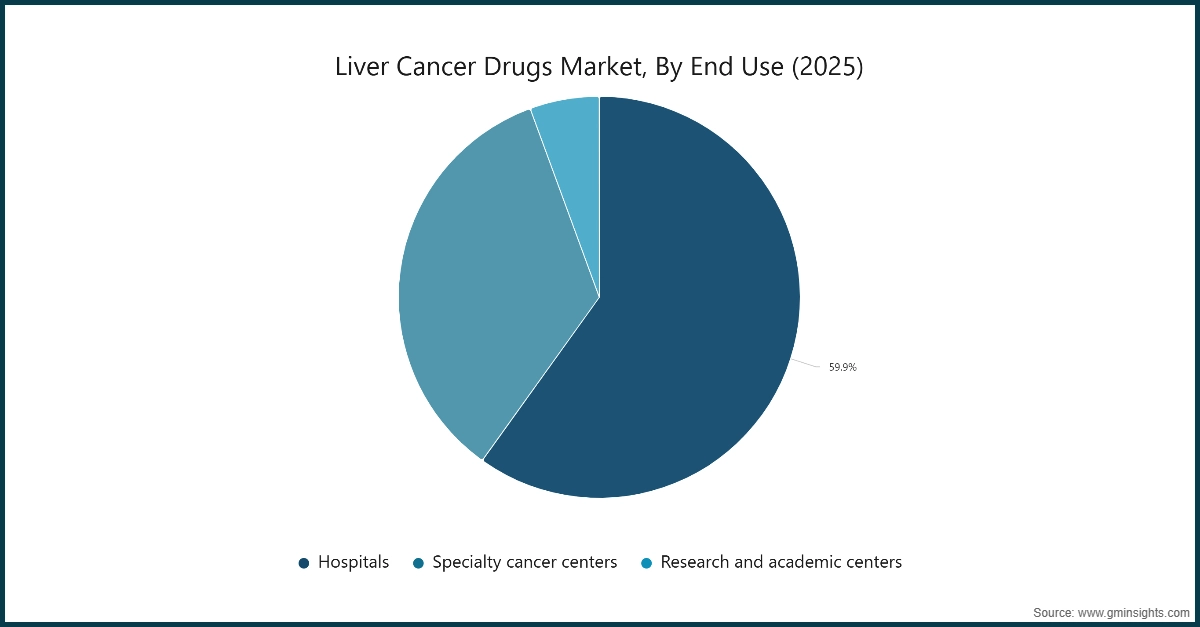
Based on the end use, the global liver cancer drugs market is classified into hospitals, specialty cancer centers, and research and academic centers. The hospitals segment held a market share of 59.9% in 2025 and is projected to grow at a CAGR of 15.4% during the analysis period.
The hospitals segment is stimulated by the high reliance on hospital based oncology care for diagnosis, treatment initiation, and patient monitoring.Liver cancer therapies, particularly injectable immunotherapies, biologics, and combination regimens, are primarily administered in hospital settings due to the need for specialized infrastructure, controlled dosing, and close clinical supervision.The growing number of cancer specialty hospitals, expansion of oncology departments, and rising adoption of first-line cancer immunotherapy combinations continue to reinforce the leading position of hospitals in the liver cancer drugs landscape.
Looking for region specific data?
North America Liver Cancer Drugs Market
The North America liver cancer drugs industry dominated with a revenue share of 41.1% in 2025.
- The region benefits from strong regulatory support for drug approvals in oncology, along with high penetration of targeted therapies and immuno-oncology agents, and widespread availability of precision diagnostics.
- Moreover, robust clinical trial ecosystems and early adoption of combination regimens, with investments in oncology research and development, further strengthen regional market dominance.
- Additionally, the rising cases of hepatocellular carcinoma (HCC) in the region, with favorable reimbursement frameworks, and increasing improvement in survival rates through early diagnosis further support sustained market demand.
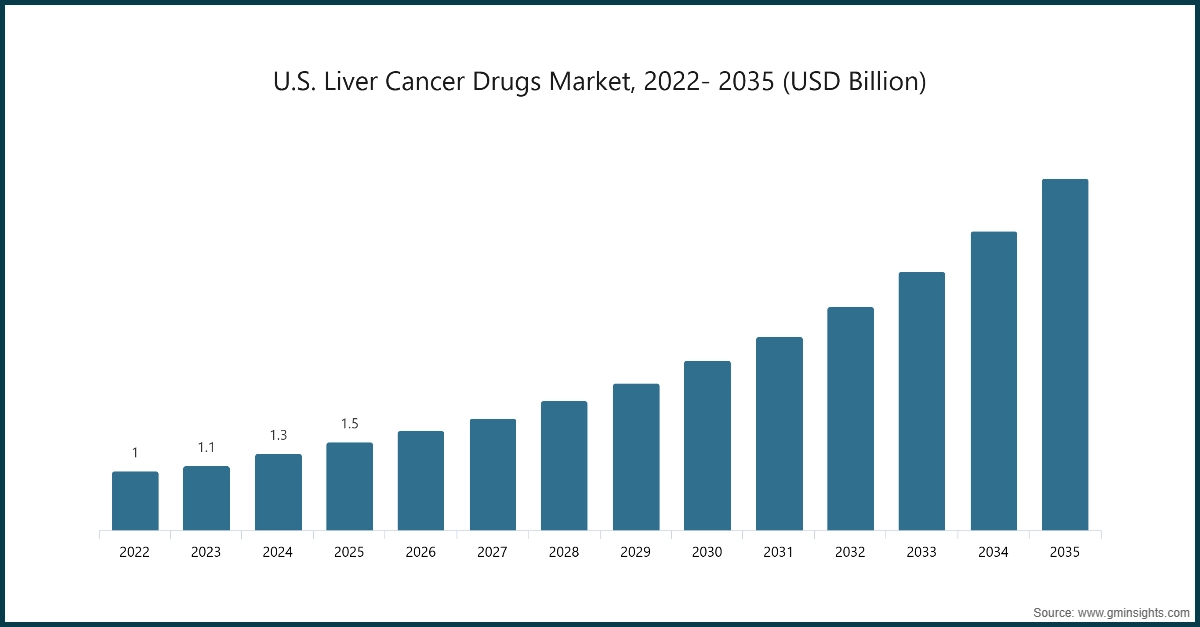
The U.S. liver cancer drugs market was valued at USD 1 billion and USD 1.1 billion in 2022 and 2023, respectively. The market size reached USD 1.5 billion in 2025, growing from USD 1.3 billion in 2024.
- The market is stimulated by a high volume of FDA approvals for immune checkpoint inhibitors, targeted therapies, and combination treatment regimens for liver cancer.
- Moreover, the increasing prevalence of risk factors such as chronic hepatitis, fatty liver disease, and cirrhosis is stimulating long-term treatment demand.
- According to the Hepatitis Foundation, in the U.S., about 2.4 million people are living with chronic hepatitis. Similarly, as per the Cleveland Clinic, more than 26,000 deaths are attributed to cirrhosis, collectively reinforcing the growing need for effective treatment options.
Europe Liver Cancer Drugs Market
Europe liver cancer drugs industry accounted for USD 1.1 billion in 2025 and is anticipated to show lucrative growth over the forecast period.
- Factors such as the increasing liver cancer incidence, early access to innovative oncology drugs, and structured orphan and oncology drug pathways in countries such as Germany, UK, France and Spain play a major role in driving regional market growth.
- For instance, as per the Joint Research Centre (JRC), liver cancer is the 6th leading cause of cancer-related deaths in the EU, highlighting the urgent need for targeted interventions.
- In addition, strong collaboration between academic institutions, pharmaceutical players, and regulatory agencies is accelerating clinical development and patient access to advanced therapies, further boosting market growth.
Germany dominates the Europe liver cancer drugs market, showcasing strong growth potential.
- The country benefits from advanced oncology treatment centers, early integration of innovative biologics, and high healthcare spending.
- According to Deutsche Krebsgesellschaft, there are more than 2,000 certified cancer centers in the country, which stimulate the market demand for proper patient care in liver cancer treatment.
- Further, a strong clinical research environment and well-established patient registries support rapid adoption of new treatment modalities.
- Additionally, the presence of major pharmaceutical and biotech companies keeps Germany positioned as a key innovation and commercialization hub in the region.
Asia Pacific Liver Cancer Drugs Market
The Asia Pacific market for liver cancer drugs is anticipated to grow at the highest CAGR of 16% during the analysis timeframe.
- Market expansion is stimulated by a high disease burden, improving diagnostic rates, and rapidly developing oncology infrastructure across the region.
- Asia accounts for about 70-80% of liver cancer cases worldwide. As per the Cancer Atlas, in 2020, there were about 609,596 new cases of liver cancer in Asia, accounting for about 72.5% of the total incidence of liver cancer in the world.
- Further, as per a study published by Pfizer, three-fourths of new worldwide liver cancer cases in males and two-thirds in females occur in fifteen Asian countries. Such a high disease burden increases the demand and adoption of various liver cancer treatments in the region.
- Moreover, growing awareness of liver cancer, expanding access to specialty care, and increased use of systemic therapies are reshaping treatment patterns.
China liver cancer drugs market is estimated to grow with a significant CAGR in the Asia Pacific market.
- The growth of the country is supported by a large patient population, along with increasing early detection rates.
- According to ScienceDirect, China itself holds about 45.3% of the world's liver cancer cases and 47.1% of liver cancer deaths, stimulating the market demand.
- Moreover, rapid adoption of targeted therapies and immunotherapies is being stimulated by domestic innovation and partnerships with global pharmaceutical companies.
Latin American Liver Cancer Drugs Market
Brazil leads the Latin American liver cancer drugs industry, exhibiting remarkable growth during the analysis period.
- The increasing availability of branded drugs, biosimilars, and biologics is enhancing patient access to systemic liver cancer treatments.
- In parallel, the expansion of specialized oncology centers and improved access to advanced therapies through both public and private healthcare systems are driving treatment adoption.
- Moreover, rising participation in global clinical trials is enabling earlier access to innovative liver cancer therapies, further supporting market growth.
Middle East and Africa Liver Cancer Drugs Market
Saudi Arabia liver cancer drugs industryis expected to experience substantial growth in the Middle East and Africa region in 2025.
- Saudi Arabia’s market expansion is stimulating by increasing prevalence of liver diseases, rising investments in healthcare infrastructure, and government-led rare disease programs under Vision 2030.
- Significant investments under national healthcare transformation programs are improving access to advanced oncology drugs.
Liver Cancer Drugs Market Share
The global liver cancer drugs industry is moderately consolidated, characterized by the strong presence of large multinational pharmaceutical companies as well as emerging specialized oncology players and biotechnology firms. Leading companies such as AstraZeneca, Bristol-Myers Squibb Company, Eisai, Merck & Co., F. Hoffmann-La Roche collectively account for approximately 65% of the global liver cancer drugs industry, supported by their established oncology portfolios and strong commercial reach across major markets.
These key players are continuously investing in research and development to expand their liver cancer pipelines, with particular focus on immunotherapies, targeted therapies, and combination regimens aimed at improving survival outcomes and expanding treatment indications. The market also witnesses strategic collaborations, licensing agreements, mergers, and acquisitions, which are increasingly used to accelerate clinical development, enhance product differentiation, and strengthen geographic presence.
In parallel, emerging biotech companies and niche oncology players contribute to the market by advancing novel mechanisms of action, precision medicine approaches, and next-generation biologics for liver cancer treatment. This competitive and innovation driven environment supports continued pipeline expansion, therapeutic diversification, and long-term growth of the global liver cancer drugs industry.
Liver Cancer Drugs Market Companies
Prominent players operating in the liver cancer drugs industry are as mentioned below:
- AbbVie
- Amgen
- AstraZeneca
- Bayer
- Bristol-Myers Squibb Company
- Eisai
- Exelixis
- F. Hoffmann-La Roche
- Glenmark Pharmaceuticals
- Johnson & Johnson
- Merck & Co.
- Regeneron Pharmaceuticals
- Sanofi
- Servier Pharmaceuticals
- Taiho Pharmaceutical
Bristol-Myers Squibb is a leading player in the liver cancer drugs market through its Opdivo (nivolumab) and Yervoy (ipilimumab) immunotherapy combination, which is approved for first-line treatment of advanced hepatocellular carcinoma. Its strategic focus on combination regimens and lifecycle management across tumor types supports continued uptake, positioning BMS as a key innovator and competitor in the liver cancer treatment landscape.
F. Hoffmann-La Roche plays a critical role in the liver cancer drugs market, holding a dominant position driven by its Tecentriq (atezolizumab) and Avastin (bevacizumab) combination, which is established as a first-line standard of care for unresectable or metastatic hepatocellular carcinoma. The company’s competitive strength lies in its deep expertise in biologics and immuno-oncology, strong clinical evidence supporting combination therapies, and a well-developed global commercialization and market access infrastructure.
Liver Cancer Drugs Market Report Attributes
| Key Takeaway | Details |
|---|---|
| Market Size & Growth | |
| Base Year | 2025 |
| Market Size in 2025 | USD 4 Billion |
| Market Size in 2026 | USD 4.6 Billion |
| Forecast Period 2026-2035 CAGR | 15.6% |
| Market Size in 2035 | USD 16.7 Billion |
| Key Market Trends | |
| Drivers | Impact |
| Rising global incidence of liver cancer | The growing prevalence of chronic hepatitis B and C, alcohol related liver disease, and NAFLD is increasing the burden of hepatocellular carcinoma (HCC) |
| Shift toward targeted and immuno-oncology therapies | Increased adoption of targeted agents and immune checkpoint inhibitors is reshaping liver cancer treatment |
| Expanding geriatric population | Aging populations, particularly in the Asia Pacific and Western regions, are contributing to higher liver cancer incidence, as cancer risk rises with age |
| Rising healthcare expenditure and oncology focus | Greater public and private investment in oncology infrastructure, reimbursement policies, and cancer drug access programs is positively influencing market growth |
| Pitfalls & Challenges | Impact |
| High treatment costs and reimbursement constraints | The high cost of advanced therapies, especially biologics and immunotherapies, limits affordability and patient access |
| Late diagnosis limiting treatment eligibility | Liver cancer is frequently diagnosed at advanced stages due to limited early symptoms, reducing the number of patients taking treatment |
| Opportunities: | Impact |
| Next generation combination and personalized therapies | Advancements in combination treatments, biomarker-based patient selection, and precision oncology are expected to enhance treatment outcomes |
| Growth potential in emerging, high-burden regions | Improved screening, expanding insurance coverage, and better oncology infrastructure in the Asia Pacific, Latin America, and the Middle East will provide new growth opportunities |
| Market Leaders (2025) | |
| Market Leader |
17% market share |
| Top Players |
Collective market share is 65% in 2025 |
| Competitive Edge |
|
| Regional Insights | |
| Largest Market | North America |
| Fastest growing market | Asia Pacific |
| Emerging countries | China, India, Brazil, Mexico, South Africa |
| Future outlook |
|
What are the growth opportunities in this market?
Liver Cancer Drugs Industry News
- In December 2025, Mirum Pharmaceuticals entered into a definitive agreement to acquire Bluejay Therapeutics, gaining global rights to brelovitug, a Phase 3 monoclonal antibody for chronic hepatitis delta virus (HDV). The acquisition expanded Mirum’s late-stage rare liver disease pipeline and broadened its future regulatory readout potential.
- In May 2025, GSK agreed to acquire efimosfermin alfa from Boston Pharmaceuticals for USD 1.2 billion upfront, with up to USD 800 million in milestone payments, adding a Phase III-ready therapy for steatotic liver disease (SLD). The deal strengthened GSK’s hepatology pipeline and positioned the company for potential leadership in SLD therapies.
- In February 2024, Gilead Sciences announced an agreement to acquire CymaBay Therapeutics, adding seladelpar, a Phase 3 asset for primary biliary cholangitis (PBC), to its liver disease portfolio. The acquisition enhanced Gilead’s long-term liver disease strategy and expanded its presence in rare cholestatic disorders.
The liver cancer drugs market research report includes in-depth coverage of the industry with estimates and forecast in terms of revenue in USD Million from 2022 – 2035 for the following segments:
Market, By Type
- Hepatocellular carcinoma
- Cholangiocarcinoma
- Hepatoblastoma
- Liver metastasis
- Other types
Market, By Drug Class
- Chemotherapeutic agents
- Targeted therapy drugs
- Immunotherapy drugs
Market, By Route of Administration
- Oral
- Injectable
Market, By Medication Type
- Generic
- Branded
Market, By Gender
- Male
- Female
Market, By End Use
- Hospitals
- Specialty cancer centers
- Research and academic centers
The above information is provided for the following regions and countries:
- North America
- U.S.
- Canada
- Europe
- Germany
- UK
- France
- Italy
- Spain
- Netherlands
- Asia Pacific
- China
- Japan
- India
- Australia
- South Korea
- Latin America
- Brazil
- Mexico
- Argentina
- Middle East and Africa
- South Africa
- Saudi Arabia
- UAE
Frequently Asked Question(FAQ) :
What is the market size of the liver cancer drugs in 2025?
The market size was USD 4 billion in 2025, with a CAGR of 15.6% expected through 2035 driven by rising global incidence of hepatocellular carcinoma, shift toward targeted and immuno-oncology therapies, and expanding geriatric population.
What is the projected value of the liver cancer drugs market by 2035?
The liver cancer drugs market is expected to reach USD 16.7 billion by 2035, propelled by advances in combination therapies, precision medicine, and improved screening infrastructure in emerging markets.
What is the current liver cancer drugs market size in 2026?
The market size is projected to reach USD 4.6 billion in 2026.
How much revenue did the targeted therapy drugs segment generate in 2025?
Targeted therapy drugs generated USD 2.4 billion in 2025, leading the market due to their ability to selectively inhibit tumor-specific signaling pathways with improved efficacy.
What was the market share of the hepatocellular carcinoma segment in 2025?
The hepatocellular carcinoma segment held 69.4% market share in 2025, as it is the most common form of primary liver cancer accounting for over three-quarters of global liver cancer cases.
What is the growth outlook for the Asia Pacific liver cancer drugs market from 2026 to 2035?
Asia Pacific market is projected to grow at the highest CAGR of 16% till 2035, driven by high disease burden (70-80% of global liver cancer cases), improving diagnostic rates, and rapidly developing oncology infrastructure.
Which region leads the liver cancer drugs market?
North America held 41.1% share in 2025. Strong regulatory support, high penetration of targeted therapies and immuno-oncology agents, and robust clinical trial ecosystems fuel the region's dominance.
What are the upcoming trends in the liver cancer drugs market?
Key trends include transition from chemotherapy to targeted therapies and immunotherapies, increasing emphasis on precision medicine and biomarker-driven treatment strategies, and growing adoption of combination regimens with immune checkpoint inhibitors.
Who are the key players in the liver cancer drugs market?
Key players include AstraZeneca, Bristol-Myers Squibb Company, Eisai, Merck & Co., F. Hoffmann-La Roche, AbbVie, Amgen, Bayer, Exelixis, Glenmark Pharmaceuticals, Johnson & Johnson, Regeneron Pharmaceuticals, Sanofi, Servier Pharmaceuticals, and Taiho Pharmaceutical.
Liver Cancer Drugs Market Scope
Related Reports