Summary
Table of Content

Latin America Veterinary Rapid Tests Market
Get a free sample of this report
Form submitted successfully!
Error submitting form. Please try again.
Thank you!
Your inquiry has been received. Our team will reach out to you with the required details via email. To ensure that you don't miss their response, kindly remember to check your spam folder as well!
Request Sectional Data
Thank you!
Your inquiry has been received. Our team will reach out to you with the required details via email. To ensure that you don't miss their response, kindly remember to check your spam folder as well!
Form submitted successfully!
Error submitting form. Please try again.
Latin America Veterinary Rapid Tests Market Size
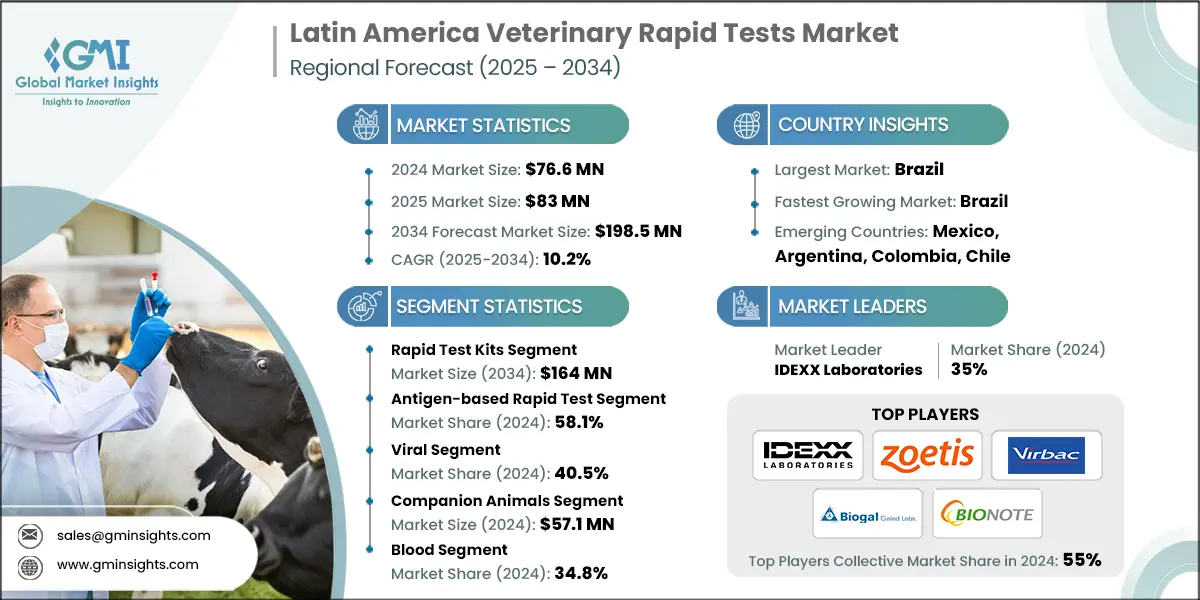
The Latin America veterinary rapid tests market was estimated at USD 76.6 million in 2024. The market is expected to grow from USD 83 million in 2025 to USD 198.5 million in 2034, growing at a CAGR of 10.2%, according to the latest report published by Global Market Insights Inc.
Latin America Veterinary Rapid Tests Market Key Takeaways
Market Size & Growth
- 2024 Market Size: USD 76.6 Million
- 2034 Forecast Market Size: USD 198.5 Million
- CAGR (2025–2034): 10.2%
Regional Dominance
- Largest Market: Brazil
- Fastest Growing Country: Brazil
Key Market Drivers
- Growing number of companion animal population.
- Increasing prevalence of zoonotic diseases.
- Rising demand for rapid test diagnosis over other tests.
- Advancements in veterinary rapid testing technologies.
Challenges
- Limited infrastructure for veterinary diagnosis.
- Lack of awareness of veterinary health in underdeveloped countries.
- Increasing cost of animal healthcare.
Opportunity
- Expansion of livestock farming and zoonotic disease monitoring.
- Growth of veterinary clinics and point-of-care diagnostics.
Key Players
- Market Leader: IDEXX Laboratories led with over 35% market share in 2024.
- Leading Players: Top 5 players in this market include IDEXX Laboratories, Zoetis, Virbac, Biogal, BioNote, which collectively held a market share of 55% in 2024.
Get Market Insights & Growth Opportunities
High adoption of pets such as dogs and cats for companionship and increasing willingness of pet owners to spend on the health and well-being of their pets are driving the market growth. In 2022, there were an estimated 187 million pets in Latin America, representing 17% growth from 160 million in 2017. With a cattle herd of almost 360 million, Latin America accounts for 24% of global cattle production. This high volume of animals increases demand for various animal healthcare products and veterinary services, including rapid testing solutions, thereby boosting market growth.
Veterinary rapid tests are diagnostic tools used to rapidly identify diseases, pathogens, or health status in animals, with results provided within minutes without specialized lab equipment. The kits employ immunochromatographic methods for detecting antigens or antibodies in blood, serum, feces, or saliva and are most appropriate for field application and point-of-care diagnosis. Major players include IDEXX Laboratories, Zoetis, Virbac, Biogal, and BioNote, holding over 55% of the market. IDEXX and Zoetis dominate companion animal testing, while Biogal and BioNote have a strong presence in livestock and poultry testing. Their competitive advantage is wide distribution networks, species-specific test offerings, and brand recognition among veterinarians and livestock producers in Brazil, Mexico, and Argentina.
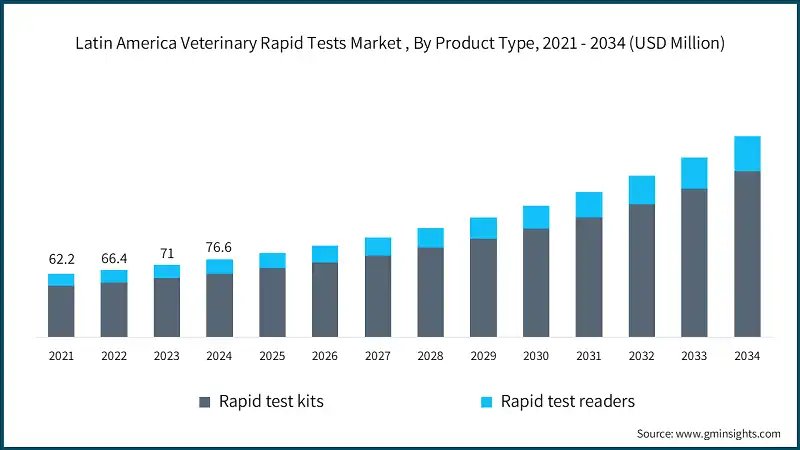
The Latin America veterinary rapid tests market grew from USD 62.2 million in 2021 to USD 71 million in 2023. A key trend was increasing adoption of rapid testing in day-to-day veterinary practice, particularly among small- and mid-scale clinics wanting faster diagnostic results without central labs. Growth of the livestock industry and food safety issues compelled producers in Mexico and Brazil to implement on-site testing solutions, especially for zoonotic diseases. There was increased utilization of digital technology and mobile veterinary platforms to augment test result monitoring and disease reporting, as part of a trend toward data-informed animal health management. These advances, paired with increasing public-private funding for veterinary infrastructure, extended the reach of rapid diagnostics to varied animal sectors.
Government policies focusing on animal health and disease management are driving public and private investments, propelling market growth. Partnerships between veterinary practices and reference laboratories, along with network expansions by major corporations, are increasing availability of diagnostic services in emerging markets. Rising adoption of pet insurance is easing the financial constraints of diagnostic testing for pet owners. These elements are reinforcing vigorous growth in the Latin America veterinary rapid tests market.
Veterinary rapid tests help identify, detect, and monitor diseases or health conditions in animals. These tests utilize blood, plasma, serum, urine, or fecal analysis to detect antigens or antibodies, facilitating rapid detection of infectious diseases.
To get key market trends
Latin America Veterinary Rapid Tests Market Trends
- A major trend shaping the Latin America rapid tests market is growing adoption of rapid tests for livestock disease surveillance. In countries such as Brazil and Argentina, where poultry and cattle rearing are significant economic drivers, farm operators and veterinarians increasingly adopt rapid tests for early identification of infectious diseases like brucellosis, foot-and-mouth disease, and leptospirosis.
- These tests provide instant on-site results in rural areas where laboratory access is restricted, preventing outbreaks and reducing economic disruption.
- Another significant trend is increasing demand for swift diagnostics in companion animal clinics in urban cities. Pet owners are more inclined to spend on veterinary point-of-care diagnostics that provide rapid results during routine visits. Fast tests for diseases such as canine parvovirus, feline leukemia, and heartworm become standard components in small animal clinics, enabling faster clinical decisions and improving care quality.
- Additionally, increasing use of multiplex and combination test kits is shaping market dynamics. These technologies detect several pathogens from a single sample, enhancing diagnostic efficacy with reduced time and resources. Multiplex kits minimize animal stress since repeated sampling is less required and are finding uses in disease surveillance programs and outbreak investigations.
- Increasing participation of multinational and regional diagnostic firms is another significant development. Market leaders such as IDEXX Laboratories, Zoetis, BioNote, and Biogal are expanding in Latin America by offering localized products, collaborating with distributors, and investing in country-specific disease solutions. These organizations are introducing more rapid test kits and enhancing supply chain availability, lowering costs and increasing diagnostic accessibility.
- Lastly, integration of digital technologies with veterinary rapid tests is gaining momentum. Handheld diagnostic readers and mobile platforms are being utilized to read, document, and transmit test results in real time. This development facilitates systematic disease surveillance and boosts collaboration among field veterinarians and regulatory agencies. Long term, integrating rapid tests with electronic reporting should enhance traceability, aid epidemiological studies, and improve animal health management in Latin America, benefiting overall market growth.
Latin America Veterinary Rapid Tests Market Analysis
Learn more about the key segments shaping this market
The market was valued at USD 62.2 million in 2021. The market size reached USD 71 million in 2023, from USD 66.4 million in 2022.
Based on the product type, the Latin America veterinary rapid tests market is segmented into rapid test kits and rapid test readers. The rapid test kits segment holds the largest market share of 81.6% in 2024, due to their widespread usage in pet diagnostics. The segment is expected to reach USD 164 million by 2034, growing at a CAGR of 10.3% during the forecast period. On the other hand, the rapid test readers segment was valued at USD 14.1 million in 2024.
Their adoption is being driven by the region's increasing focus on diagnostic accuracy, data traceability, and the digitization of veterinary services. Rapid test readers deliver standardized, objective results, eliminating inconsistencies that may arise from human error or environmental variables. This is especially valuable in high-throughput clinics, referral hospitals, and government veterinary labs, where result consistency is essential.
- The rapid test kits segment holds considerable market share owing to its wide usage in the veterinary field and recurring revenue model.
- These products are regularly used in diagnostic analyses and procedures, which raises their frequent demand in veterinary hospitals and clinics.
- Hence, the high consumption rate of kits is responsible for their large market share.
- Additionally, rapid test kits have emerged as the preferred diagnostic method among livestock breeders and veterinarians because of their convenience, ease of use, speed, and capacity to work without advanced equipment.
- Moreover, firms such as IDEXX, Zoetis, BioNote, and others have launched a broad range of species-specific rapid test kits tailored to the disease profiles of Latin American markets.
Based on the test type, the Latin America veterinary rapid tests market is segmented into antigen-based rapid test, antibody-based rapid test, and mixed tests. The antigen-based rapid test segment accounted for the highest market share of 58.1% in 2024.
- Antigen-based tests command a considerable market share in the veterinary rapid tests market as they can directly detect disease-causing agents in animals.
- Their utility in the quick detection of ongoing infection is important for immediate treatment and disease management.
- On the other hand, the antibody-based rapid test segment is anticipated to grow at a CAGR of 9.5% over the forecast period.
- Antibody tests command a sizeable market share among veterinary rapid tests because of their crucial function in detecting animals that have previously been exposed to particular pathogens.
Based on the application, the Latin America veterinary rapid tests market is segmented into viral, bacterial, parasitic, allergies, and other applications. The viral segment accounted for the highest market share of 40.5% in 2024 and is anticipated to grow at a CAGR of 10% over the forecast period.
- Latin America has a large number of cattle and a growing poultry and swine population, and thus the region continues to experience recurring outbreaks of viral diseases like foot-and-mouth disease (FMD), avian influenza, and porcine reproductive and respiratory syndrome (PRRS).
- Additionally, with the growing companion animal population, viral diseases such as canine parvovirus, distemper, and feline leukemia virus are common in pets that need early detection to guarantee timely treatment.
- The parasitic segment held the second largest market share of 28.9% in 2024, primarily because of the high incidence rate of parasitic infections among livestock and companion animals throughout the region.
Based on animal type, the Latin America veterinary rapid tests market is segmented into companion animals and livestock animals. The companion animals segment accounted for the highest market share in 2024, with a revenue of USD 57.1 million. Further, the livestock animals’ segment is anticipated to witness rapid growth at a CAGR of 10.6% between 2025 – 2034, driven by high adoption of rapid testing in cattle, swine, and poultry due to the region’s large livestock population, growing government initiatives to enhance productivity, and rising food safety concerns.
- The substantial growth in the companion animals’ segment is attributed to the rising adoption of pets such as dogs, cats, birds, and horses.
- For example, according to Statista, in 2022 there were an estimated 187 million pets in Latin America. In 2019, Brazil was Latin America's largest pet market and among the biggest globally.
- The sheer number of companion animals, along with increased spending, is expected to propel segment growth.
- Moreover, the increasing focus of manufacturers on developing and launching innovative animal healthcare solutions to meet rising demand from pet owners is set to further drive growth.
Based on the sample type, the Latin America veterinary rapid tests market is segmented into blood, plasma, serum, feces, urine, and other sample types. The blood segment accounted for the highest market share of 34.8% in 2024.
- Blood is a standard biological sample utilized in the identification of different conditions such as infectious diseases, metabolic disorders, and organ dysfunctions. Veterinarians highly depend on blood-based rapid tests due to their reliability, accuracy, and capability to provide results in real-time. This has created a consistent demand for blood-based rapid test kits.
- Additionally, the growing availability of multiparametric blood test panels capable of screening for multiple diseases at the same time has further increased adoption of these tests.
- The feces segment is witnessing substantial growth in the Latin America veterinary rapid tests market, fueled mainly by the increasing demand for quick and precise diagnosis of gastrointestinal diseases in animals. Fecal testing is also critical to detect parasitic, bacterial, and viral infections afflicting companion and farm animals. Since gastrointestinal disorders continue to be a primary reason for animal visits throughout the region, demand for rapid test kits based on fecal samples has grown.
- Furthermore, urine-based rapid tests hold a considerable market share in the Latin America veterinary rapid tests market because of their pivotal role in the diagnosis of various health issues. The non-invasive nature of urine sampling, combined with its diagnostic potential, makes it a sample type of choice for veterinarians in both companion and livestock segments of animals in the region.
Learn more about the key segments shaping this market
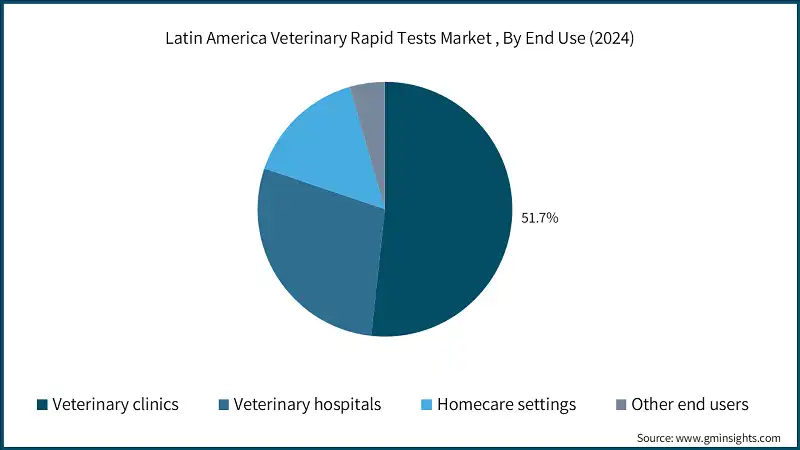
Based on the end use, the Latin America veterinary rapid tests market is segmented into veterinary clinics, veterinary hospitals, homecare settings, and other end users. The veterinary clinics segment accounted for the highest market share of 51.7% in 2024.
- The veterinary clinics segment commands a strong market position in the market because of the pivotal role of clinics in providing routine and emergency animal healthcare.
- Clinics are frequently the initial source of contact for pet owners and livestock handlers who seek diagnostic procedures. Rapid testing is advantageous for clinics due to the ease and speed of testing, which allows them to handle a greater number of cases efficiently.
- Additionally, increasing numbers of veterinary clinics in the region and high adoption of point-of-care technologies are further supporting segmental growth.
Looking for region specific data?
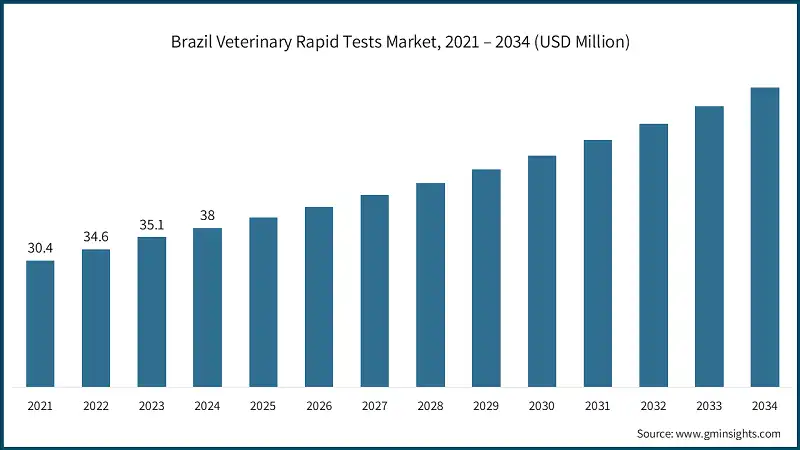
Brazil dominated the Latin America veterinary rapid tests market with the highest market share of 49.6% in 2024.
- Brazil holds a leading position in the market, driven by its substantial livestock industry, increasing pet ownership, and advancements in veterinary diagnostics.
- Brazil has the third-largest pet population in the world, with 160 million pets, of which 60 million are dogs, 30 million cats, and 32 million pet-owning households.
- The country is also home to a large livestock population, with Brazil being the third-largest cattle producer and second-largest beef exporter in the world.
- Such high animal volume, coupled with strong growth in veterinary expenditure, is anticipated to foster market growth.
Mexico holds the second-largest market share in the Latin America veterinary rapid tests market, driven by its strong livestock industry and growing companion animal market.
- Being a major producer of cattle, poultry, and swine, the country focuses heavily on animal health management to ensure productivity and export requirements.
- The country's regulatory environment and support from public health authorities have also played a role in increasing the uptake of rapid testing solutions.
- State-sponsored programs for the control of conditions like bovine tuberculosis and avian flu have created consistent demand for speedy and reliable diagnostic kits.
Argentina is seeing considerable growth in the Latin America veterinary rapid tests market, fueled primarily by its large livestock industry and growing emphasis on disease control.
- As a leading exporter of beef, the country places tremendous priority on the health and productivity of its cattle herds.
- Government initiatives and national programs for enhanced surveillance of animal diseases are further driving market growth.
- Disease eradication programs like foot-and-mouth disease and brucellosis have further increased the application of rapid testing technologies.
Latin America Veterinary Rapid Tests Market Share
Competition in the veterinary rapid tests industry is characterized by the presence of dominant global players alongside several regional and local market players. The top 5 players, such as IDEXX Laboratories, Zoetis, Virbac, Biogal, and BioNote, account for approximately 55% of the regional market owing to their extensive product offerings, wide reach, and continuous investments in advanced diagnostic technologies.
These key players are focusing on developing next-generation rapid tests with improved sensitivity and specificity, tailored to regional animal health needs. Innovations in multiplex testing, digital integration, and point-of-care formats are driving diagnostic efficiency and clinical decision-making. Additionally, collaborations with research institutions and licensing novel biomarkers are accelerating progress. Increased investment in R&D and efforts to expand access across underserved regions highlight the market’s shift toward inclusive, preventive veterinary care.
Latin America Veterinary Rapid Tests Market Companies
Few of the prominent players operating in the Latin America veterinary rapid tests industry include:
- AdvaCare Pharma
- Agrolabo S.p.A.
- Antech Diagnostics (Mars Petcare)
- Biogal
- BioNote
- Biopanda Reagents
- Fassisi
- IDEXX Laboratories
- MEGACOR Diagnostik
- Virbac
- Woodley Equipment Company
- Zoetis
- IDEXX Laboratories
IDEXX Laboratories holds a leading position with a 35% share in the Latin America veterinary rapid tests market. The company has significantly increased its recurring revenue base through strategic geographic expansion and commercial partnerships, particularly in its companion animal group. Its cumulative research and development investment, supporting breakthroughs in digital cytology and oncology diagnostics. With a durable growth model and commitment to raising standards of care, IDEXX continues to redefine veterinary diagnostics through scalable, data-driven, and globally accessible solutions.
Virbac holds a growing position in the veterinary rapid tests market, driven by its commitment to species-specific diagnostic innovation and global expansion. Virbac strengthened its presence in emerging markets through strategic partnerships and acquisitions, supporting broader access to diagnostic tools. With a focus on accessibility, precision, and clinical relevance, Virbac is advancing veterinary diagnostics worldwide.
Zoetis holds a dominant position in the veterinary rapid tests market, driven by its leadership in point-of-care diagnostics and strategic global expansion. In 2023, Zoetis launched Vetscan Mastigram, an on-farm mastitis test, reinforcing its commitment to accessible diagnostics. The company continues to expand its portfolio with rapid tests targeting both infectious and chronic conditions, including diabetes and reproductive health. Zoetis is actively penetrating emerging markets and rural regions, improving access to veterinary care.
Latin America Veterinary Rapid Tests Market Report Attributes
| Key Takeaway | Details |
|---|---|
| Market Size & Growth | |
| Base Year | 2024 |
| Market Size in 2024 | USD 76.6 Million |
| Forecast Period 2025 - 2034 CAGR | 10.2% |
| Market Size in 2034 | USD 198.5 Million |
| Key Market Trends | |
| Drivers | Impact |
| Growing number of companion animal population | Rising pet ownership drives demand for routine diagnostics in clinics. This expands the customer base and fuels market growth. |
| Increasing prevalence of zoonotic diseases | Frequent zoonotic outbreaks create urgency for fast, field-based diagnostics. Governments and vets prioritize rapid testing, supporting market expansion. |
| Rising demand for rapid test diagnosis over other tests | Veterinarians favor quick, user-friendly tests that bypass lab infrastructure. This accelerates growth, especially in remote and mobile setups. |
| Advancements in veterinary rapid testing technologies | Innovations like multiplex tests and portable readers enhance value. These boost adoption and expand into more clinical and field applications. |
| Pitfalls & Challenges | Impact |
| Limited infrastructure for veterinary diagnosis | Rural regions lack clinics and labs, restricting diagnostic access. This hinders penetration in livestock-dense or underserved areas. |
| Lack of awareness of veterinary health in underdeveloped countries | Poor understanding of preventive care reduces test usage. This slows growth as diagnostics remain underutilized. |
| Increasing cost of animal healthcare | Expensive care discourages regular testing in price-sensitive markets. This limits demand among small farmers and pet owners. |
| Opportunities: | Impact |
| Expansion of livestock farming and zoonotic disease monitoring | Latin Americas growing livestock population creates strong demand for health solutions. Intensive farming increases zoonotic disease risk, driving need for rapid diagnostic tools. |
| Growth of veterinary clinics and point-of-care diagnostics | Small clinics and mobile services are rising in urban areas. These require quick diagnostics for immediate treatment decisions without lab infrastructure. |
| Market Leaders (2024) | |
| Market Leaders |
35% market share. |
| Top Players |
Collective Market Share is 2024 in 55% |
| Competitive Edge |
|
| Regional Insights | |
| Largest Market | Brazil |
| Fastest growing market | Brazil |
| Emerging countries | Mexico, Argentina, Colombia, Chile |
| Future outlook |
|
What are the growth opportunities in this market?
Latin America Veterinary Rapid Tests Industry News:
- In March 2025, Antech launched truRapid FOUR, introducing a fast, simple, and accurate in-house screening tool for canine vector-borne diseases. This lateral flow test detects antibodies to Anaplasma, Ehrlichia, and Lyme C6 (Borrelia burgdorferi), along with heartworm (Dirofilaria immitis) antigen, using whole blood, serum, or plasma streamlining diagnostics for veterinarians and enhancing early disease detection in dogs.
- In June 2024, IDEXX Laboratories announced the launch of the Catalyst Pancreatic Lipase Test, a new diagnostic tool designed to detect pancreatitis in dogs and cats rapidly and accurately. This test provides quantitative results in under 10 minutes at the point-of-care, enabling veterinarians to confidently diagnose or rule out pancreatitis during the patient visit and initiate timely treatment.
The Latin America veterinary rapid tests market research report includes an in-depth coverage of the industry with estimates and forecast in terms of revenue in USD Million and from 2021 – 2034 for the following segments:
Market, By Product Type
- Rapid test kits
- Rapid test readers
Market, By Test Type
- Antigen-based rapid test
- Antibody-based rapid test
- Mixed tests
Market, By Application
- Viral
- Bacterial
- Parasitic
- Allergies
- Other applications
Market, By Animal Type
- Companion Animals
- Dogs
- Cats
- Horses
- Other companion animals
- Livestock Animals
- Cattle
- Swine
- Poultry
- Other livestock animals
Market, By Sample Type
- Blood
- Plasma
- Serum
- Feces
- Urine
- Other sample types
Market, By End Use
- Veterinary clinics
- Veterinary hospitals
- Homecare settings
- Other end use
The above information is provided for the following countries:
- Brazil
- Mexico
- Argentina
- Colombia
- Chile
- Peru
Frequently Asked Question(FAQ) :
What is the market size of the Latin America veterinary rapid tests in 2024?
The market size was USD 76.6 million in 2024, with a CAGR of 10.2% expected through 2034, driven by the growing adoption of rapid tests for livestock disease surveillance and increasing demand for point-of-care diagnostics in companion animal clinics.
What is the projected value of the Latin America veterinary rapid tests market by 2034?
The market is expected to reach USD 198.5 million by 2034, fueled by advancements in rapid diagnostic technologies and rising awareness of animal health management.
What is the projected size of the Latin America veterinary rapid tests market in 2025?
The market is expected to reach USD 83 million in 2025.
What was the valuation of the rapid test readers segment?
The rapid test readers segment was valued at USD 14.1 million in 2024.
Which country leads the Latin America veterinary rapid tests market?
Brazil led the market with a 49.6% share in 2024, driven by its large livestock population and increasing adoption of rapid diagnostic solutions.
What are the upcoming trends in the Latin America veterinary rapid tests market?
Key trends include the growing use of rapid tests for livestock disease surveillance, increasing demand for point-of-care diagnostics in urban companion animal clinics, and advancements in antigen-based rapid test technologies.
Who are the key players in the Latin America veterinary rapid tests market?
Key players include AdvaCare Pharma, Agrolabo S.p.A., Antech Diagnostics (Mars Petcare), Biogal, BioNote, Biopanda Reagents, Fassisi, IDEXX Laboratories, MEGACOR Diagnostik, Virbac, and Woodley Equipment Company.
Latin America Veterinary Rapid Tests Market Scope
Related Reports