Summary
Table of Content

Implantable Drug Delivery Pump Market
Get a free sample of this report
Form submitted successfully!
Error submitting form. Please try again.
Thank you!
Your inquiry has been received. Our team will reach out to you with the required details via email. To ensure that you don't miss their response, kindly remember to check your spam folder as well!
Request Sectional Data
Thank you!
Your inquiry has been received. Our team will reach out to you with the required details via email. To ensure that you don't miss their response, kindly remember to check your spam folder as well!
Form submitted successfully!
Error submitting form. Please try again.
Implantable Drug Delivery Pump Market Size
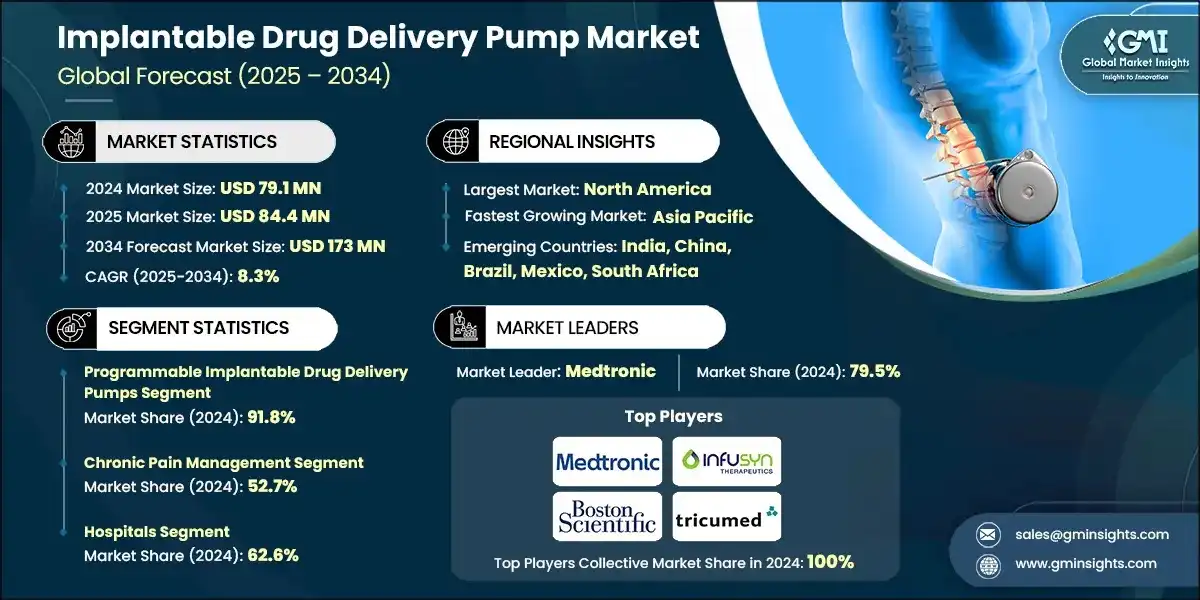
The global implantable drug delivery pump market was valued at USD 79.1 million in 2024. The market is expected to reach from USD 84.4 million in 2025 to USD 173 million in 2034, growing at a CAGR of 8.3% during the forecast period, according to the latest report published by Global Market Insights Inc. Increasing incidence of chronic pain and spasticity disorders drives requirement for advanced, programmable implantable pumps ensuring controlled, sustained drug delivery.
Implantable Drug Delivery Pump Market Key Takeaways
Market Size & Growth
- 2024 Market Size: USD 79.1 Million
- 2025 Market Size: USD 84.4 Million
- 2034 Forecast Market Size: USD 173 Million
- CAGR (2025–2034): 8.3%
Key Market Drivers
- Rising prevalence of chronic pain, spasticity, and cancer.
- Advantages of targeted and controlled drug delivery.
- Technological advancements in pump design.
- Growing preference for minimally invasive therapies.
Challenges
- High device and implantation cost.
- Risk of device malfunction and infection.
Opportunity
- Integration of IoT and remote monitoring.
- Rising demand for personalized medicine.
Key Players
- Market Leader: Medtronic led with over 79.5% market share in 2024.
- Leading Players: Top 5 players in this market include Medtronic, Infusyn Therapeutics, Boston Scientific (Integra Oncology), Tricumed Medizintechnik, which collectively held a market share of 100% in 2024.
Get Market Insights & Growth Opportunities
The market for implantable drug delivery pumps delivers advanced healthcare solutions to hospitals, ambulatory surgical centers, and specialty clinics, aiming to improve patient outcomes, manage chronic pain, spasticity, and other long-term conditions, and enhance operational efficiency. Solutions include programmable and constant-rate implantable pumps that provide sustained, targeted drug delivery, minimizing systemic side effects and improving therapy adherence.
The market is a consolidated in nature and key players such as Medtronic, Infusyn Therapeutics, Boston Scientific (Integra Oncology), and Tricumed Medizintechnik maintain their competitive edge through continuous product innovation, global distribution networks, strategic partnerships, and significant R&D investments, addressing the growing demand for advanced, safe, and efficient drug delivery systems while expanding their presence across international healthcare markets and chronic disease management segments.
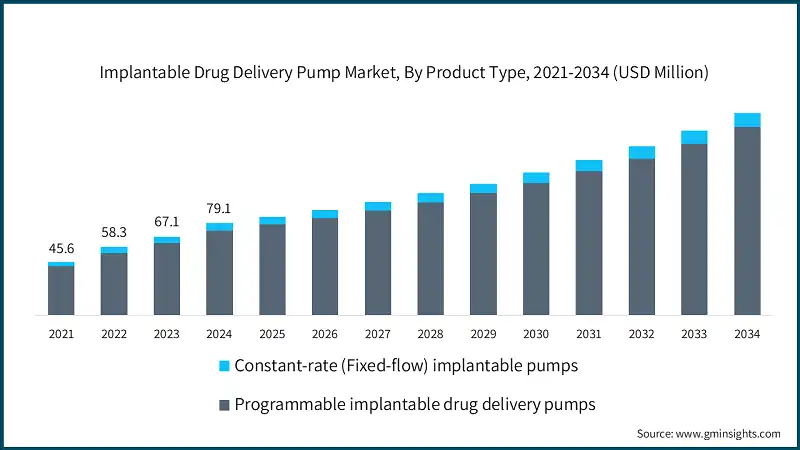
The market has increased from USD 45.6 million in 2021 and reached USD 67.1 million in 2023. The implantable drug delivery pump market is primarily driven by the rising prevalence of chronic pain, spasticity, and neurological disorders, which require long-term, targeted medication administration. These conditions necessitate precise, continuous, and controlled drug delivery, positioning implantable pumps as a preferred solution over conventional oral or systemic therapies. Increasing adoption of programmable pumps allows physicians to tailor drug dosages according to patient-specific needs, improving therapeutic outcomes and minimizing adverse effects, which further fuels market growth.
Technological advancements are also significant drivers. Innovations such as miniaturized pump designs, biocompatible 3D printing materials, wireless telemetry, and remote patient monitoring devices capabilities enhance device functionality, safety, and patient convenience, encouraging broader clinical adoption. Additionally, the expansion of minimally invasive implantation procedures reduces recovery time and procedural risks, making these devices more appealing to both clinicians and patients.
The growing geriatric population, which is more susceptible to chronic conditions like neuropathic pain and spasticity, drives higher demand. Furthermore, increasing awareness among healthcare providers and patients regarding the benefits of targeted drug delivery, combined with favorable healthcare reimbursement policies in developed regions, supports widespread adoption. Finally, ongoing investments by key players in research, development, and global distribution networks strengthen market penetration and innovation, sustaining overall market growth.
An implantable drug delivery pump is a medical device surgically placed inside the body to provide controlled, continuous, or programmable administration of therapeutic drugs directly to targeted sites, such as the spinal fluid or specific tissues, improving treatment efficacy, reducing systemic side effects, and enhancing patient adherence in chronic conditions.
To get key market trends
Implantable Drug Delivery Pump Market Trends
The growing prevalence of chronic pain, spasticity, and cancer is a primary driver for the market. Chronic pain, resulting from conditions such as neuropathic disorders, musculoskeletal injuries, and post-surgical complications, affects millions worldwide, increasing the demand for precise, long-term, and effective therapeutic interventions.
- Similarly, spasticity associated with neurological conditions such as multiple sclerosis, cerebral palsy, or spinal cord injuries necessitates continuous administration of medications like baclofen, which is optimally delivered through implantable pumps. Additionally, the rising incidence of cancer and related pain management needs, particularly in advanced stages, further fuels the requirement for targeted drug delivery systems.
- Technological advancements amplify this demand, as programmable implantable pumps now offer precise dosing, remote monitoring capabilities, and minimally invasive implantation procedures. Miniaturized pump designs, biocompatible materials, and wireless telemetry systems enhance patient comfort, safety, and adherence, making them preferable over conventional oral or systemic therapies.
- The development of smart pumps capable of integrating with digital health platforms also supports personalized treatment regimens, enabling clinicians to adjust therapy based on patient response.
- Macro-economic factors, such as increasing healthcare expenditure, improved insurance coverage, and supportive government policies in developed regions, facilitate wider adoption of these advanced therapies. Concurrently, the growing geriatric population and increasing life expectancy drive demand for long-term, manageable treatment solutions.
- On a micro-economic level, rising patient awareness about chronic disease management, coupled with physician preference for effective and controlled drug delivery, promotes uptake. Hospitals and specialty clinics benefit from improved operational efficiency and patient outcomes, encouraging investment in implantable pump technologies.
- Collectively, these medical, technological, and economic factors underscore the strong growth potential of the market. As the prevalence of chronic pain, spasticity, and cancer continues to rise, demand for advanced, safe, and efficient implantable therapies will accelerate, driving innovation and market expansion globally.
Implantable Drug Delivery Pump Market Analysis
Learn more about the key segments shaping this market
Based on the product type, the market is bifurcated into programmable implantable drug delivery pumps and constant-rate (fixed-flow) implantable pumps. The programmable implantable drug delivery pumps segment has asserted its dominance in the market by securing a significant market share of 91.8% in 2024, driven by advanced dosing flexibility, personalized therapy, and targeted drug delivery drive adoption, improving patient outcomes and expanding usage across chronic conditions. The segment is expected to exceed USD 161.4 million by 2034, growing at a CAGR of 8.5% during the forecast period.
On the other hand, the constant-rate (fixed-flow) implantable pumps segment is expected to grow with a CAGR of 6.1%. The growth of this segment can be attributed to the simple design, reliability, and consistent medication administration make them suitable for oncology and select chronic therapy applications, sustaining steady market demand.
- The programmable implantable drug delivery pumps segment dominates the market due to its ability to provide customizable, precise, and controlled drug administration, addressing chronic conditions such as pain, spasticity, and cancer.
- Programmable pumps allow clinicians to adjust dosages according to patient response, disease progression, and therapy requirements, ensuring optimized treatment outcomes while minimizing adverse effects. This flexibility makes them particularly suitable for long-term management of complex conditions where patient needs vary over time.
- Technological advancements are further boosting the adoption of programmable pumps. Features such as wireless communication, remote monitoring, and real-time dose adjustments enhance patient convenience and enable clinicians to make data-driven decisions. Minimally invasive implantation techniques reduce surgical risks and recovery times, further encouraging clinical preference.
- Macro-economic factors such as rising healthcare expenditure, supportive reimbursement policies, and increasing investment in chronic disease management in developed regions fuel growth. Micro-economic factors, including heightened patient awareness and physician preference for precise, adaptable therapies, drive hospital and specialty clinic adoption.
- The constant-rate (fixed-flow) implantable pumps segment held a revenue of USD 6.4 million in 2024, with projections indicating a steady expansion at 6.1% CAGR from 2025 to 2034.
- The constant-rate (fixed-flow) implantable pumps segment benefits from its simplicity, reliability, and cost-effectiveness in delivering continuous drug therapy, particularly for conditions requiring consistent medication dosing, such as chronic pain and spasticity.
- These pumps are often preferred in clinical settings where predictable, uniform drug delivery is critical, reducing the risk of dosing errors and complications associated with variable flow.
- Technological improvements, including enhanced biocompatible materials, durable pump mechanisms, and refined catheter designs, have improved device safety, longevity, and patient comfort, making fixed-flow pumps more widely acceptable. Minimal maintenance requirements and fewer programming complexities compared to programmable systems contribute to operational efficiency in hospitals and specialty clinics.
Based on application, the implantable drug delivery pump market is classified into chronic pain management, spasticity management, oncology/chemotherapy, and other chronic conditions. The chronic pain management segment dominated the market with a revenue share of 52.7% in 2024 and is expected to reach USD 87.9 million within the forecast period.
- The chronic pain management segment dominates the market due to the rising prevalence of neuropathic, musculoskeletal, and post-surgical pain globally. Patients suffering from chronic pain often require continuous and precise medication, which oral or systemic therapies cannot reliably provide.
- Implantable pumps, particularly programmable intrathecal systems, deliver analgesics like morphine or ziconotide directly to the spinal fluid, ensuring rapid onset, reduced systemic exposure, and enhanced efficacy. Technological advancements such as miniaturized pumps, wireless programming, and biocompatible materials improve patient comfort, adherence, and long-term outcomes.
- The spasticity management segment held a revenue of USD 26.4 million in 2024, with projections indicating a steady expansion at 9% CAGR from 2025 to 2034.
- The spasticity management segment is experiencing strong growth, driven by the rising prevalence of neurological disorders such as multiple sclerosis (MS), cerebral palsy, and spinal cord injuries, which often result in severe muscle stiffness and spasms.
- Implantable drug delivery pumps play a crucial role in managing spasticity by providing continuous intrathecal delivery of medications such as baclofen, enabling precise dosing and minimizing systemic side effects.
- Increasing clinical adoption of intrathecal baclofen therapy (ITB) has demonstrated significant improvement in motor function, comfort, and mobility, enhancing patient quality of life. Advancements in programmable pump technology allow physicians to tailor dosing schedules based on individual patient needs, improving treatment precision and reducing hospital visits.
- The oncology/chemotherapy segment held a revenue of USD 7.4 million in 2024, with projections indicating a steady expansion at 8.4% CAGR from 2025 to 2034.
- The oncology/chemotherapy segment is driven by the increasing global cancer burden and the need for targeted, controlled drug delivery solutions to minimize systemic toxicity.
- Implantable drug delivery pumps are increasingly used to administer chemotherapeutic agents directly to tumor sites, such as hepatic artery infusion pumps for liver cancer treatment. This localized delivery method allows higher drug concentration at the tumor with fewer systemic side effects, enhancing therapeutic efficacy and patient tolerability.
- Growing adoption of personalized and continuous infusion therapies for advanced-stage cancers, especially when systemic chemotherapy becomes less effective or poorly tolerated, is accelerating demand.
Learn more about the key segments shaping this market
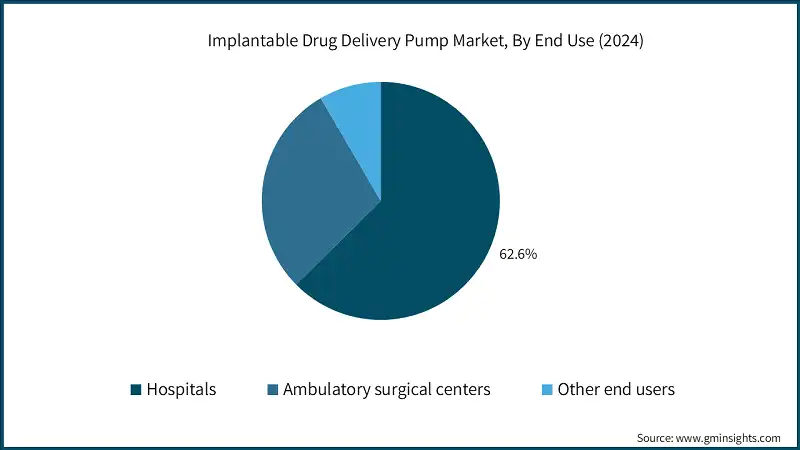
Based on end use, the implantable drug delivery pump market is classified into hospitals, ambulatory surgical centers, and other end users. The hospitals segment dominated the market with a revenue share of 62.6% in 2024 and is expected to reach USD 111.7 million within the forecast period.
- The two largest segments account for over 91.6% of the total market value. The segment dominated primarily due to the increasing number of patients requiring long-term and continuous drug administration for chronic pain, spasticity, and oncology treatments.
- Hospitals are the primary settings for the implantation and management of these devices, as they offer advanced infrastructure, skilled surgical expertise, and multidisciplinary care teams essential for complex drug delivery procedures.
- The growing prevalence of cancer, neurological disorders, and chronic pain has led to a surge in hospital admissions, further fueling demand. Additionally, hospitals benefit from favorable reimbursement structures for inpatient implant procedures and follow-up care.
- The integration of smart and programmable pump technologies in hospital settings enhances precision, reduces dosing errors, and supports remote monitoring. Moreover, rising healthcare expenditure, technological advancements, and the presence of specialized pain management and neurology departments contribute to the dominance of hospitals in this market.
- The ambulatory surgical centers segment held a revenue of USD 22.9 million in 2024, with projections indicating a steady expansion at 7.9% CAGR from 2025 to 2034.
- Ambulatory surgical centers (ASCs) represent a rapidly growing segment in the market, driven by the global shift toward outpatient and cost-efficient healthcare services. These centers provide a less invasive and more affordable alternative to hospital-based implantation procedures, attracting both patients and payers seeking to reduce healthcare costs.
- Technological advancements have enabled miniaturized and programmable pump designs that can be implanted safely in outpatient environments, reducing the need for prolonged hospital stays. ASCs also benefit from faster patient turnaround times, lower infection risks, and enhanced procedural efficiency.
Looking for region specific data?
North America Implantable Drug Delivery Pump Market
North America dominated the market with the highest market share of 61.8% in 2024.
- North America dominated the market, driven by advanced healthcare infrastructure, strong reimbursement frameworks, and early adoption of innovative medical technologies. The region benefits from a high prevalence of chronic diseases such as cancer, diabetes, and chronic pain disorders, which require continuous and precise drug administration.
- Growing demand for targeted drug delivery and minimally invasive therapies has accelerated the adoption of implantable pumps in hospitals and specialty clinics. Furthermore, favorable regulatory pathways by the U.S. FDA and Health Canada encourage product innovation and rapid commercialization of new devices.
- Major companies such as Medtronic, Flowonix, and Tricumed GmbH have a strong presence in the region, supported by robust R&D investments and clinical trials.
- Increasing healthcare spending, supportive insurance coverage for implantable infusion therapies, and rising awareness among clinicians about the benefits of long-term drug infusion systems are further boosting market penetration.
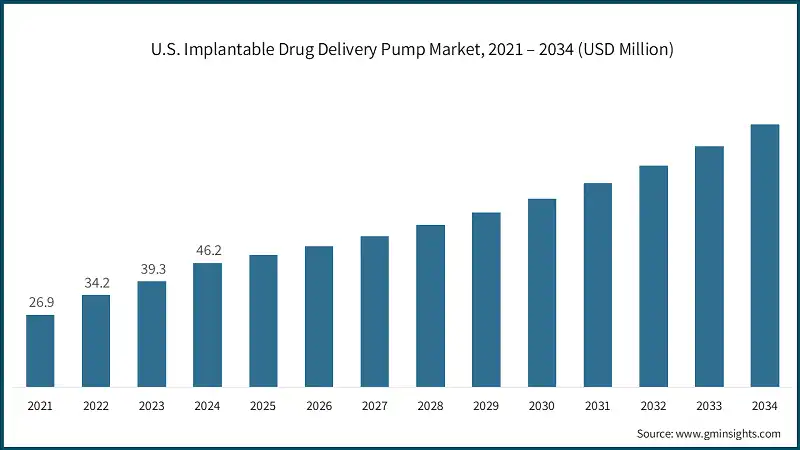
The U.S. implantable drug delivery pump market was valued at USD 26.9 million and USD 34.2 million in 2021 and 2022, respectively. In 2024, the market size grew to USD 46.2 million from USD 39.3 million in 2023.
- The U.S. represents the largest market within North America for implantable drug delivery pumps, primarily driven by its sophisticated healthcare system and high adoption of technologically advanced medical devices. A significant rise in chronic pain cases, cancer incidence, and neurological disorders such as spasticity has heightened the need for long-term and controlled drug infusion systems.
- The strong presence of key players, such as Medtronic, Flowonix Medical, and Tricumed GmbH, supports extensive product availability and continuous innovation. The U.S. FDA’s streamlined approval processes for implantable infusion technologies encourage faster commercialization of novel drug delivery solutions, while government initiatives promoting chronic disease management further drive adoption.
- Reimbursement policies from Medicare and private insurers provide financial support to patients undergoing pump implantation procedures, enhancing accessibility.
- Additionally, the growing trend toward personalized medicine and precision drug delivery fuels demand for implantable systems that offer programmable and targeted dosing.
Europe Implantable Drug Delivery Pump Market
Europe market accounted for USD 16.4 million in 2024 and is anticipated to show lucrative growth over the forecast period.
- The Europe market is poised for lucrative growth due to increasing demand for advanced chronic disease management solutions and the region’s emphasis on improving patient quality of life through precision therapeutics. The growing geriatric population, which is more susceptible to long-term conditions such as cancer, cardiovascular diseases, and multiple sclerosis, is driving the adoption of implantable infusion systems.
- Furthermore, Europe’s strong focus on home-based and ambulatory care solutions is fueling demand for implantable drug delivery technologies that reduce hospital dependency and enhance treatment adherence.
- Supportive initiatives from the European Medicines Agency (EMA) for innovative drug-device combination products and the region’s stringent patient safety standards are encouraging the integration of highly reliable, biocompatible implantable systems. Continuous investments in healthcare digitization, coupled with growing acceptance of personalized drug delivery technologies, are enhancing clinical outcomes.
- Moreover, the increasing adoption of electronic health records (EHRs) and telemonitoring systems facilitates remote management of patients using implanted pumps. Strategic partnerships between academic research institutions and medtech firms in countries such as Germany, France, and the U.K. are further accelerating R&D in programmable and implantable drug delivery pump solutions across the region.
Germany dominates the European implantable drug delivery pump market, showcasing strong growth potential.
- Germany represents one of the most dynamic markets in Europe for implantable drug delivery pumps, driven by its advanced healthcare infrastructure, strong industrial base in medical technology, and government support for digital healthcare innovation.
- The country’s well-established reimbursement framework and emphasis on evidence-based medicine are facilitating the integration of implantable infusion technologies into standard clinical practice, particularly for managing chronic neurological and oncological conditions.
- German hospitals and specialized pain management centers are increasingly adopting these systems for precise intrathecal and subcutaneous drug administration, minimizing systemic side effects.
- The nation’s leadership in engineering and precision manufacturing also fosters the local production of high-quality implantable devices with improved programmability and longevity.
Asia Pacific Implantable Drug Delivery Pump Market
The Asia Pacific market is anticipated to grow at the highest CAGR of 9.4% during the analysis timeframe.
- The region is driven by rapid healthcare modernization, increasing chronic disease prevalence, and expanding access to advanced treatment options. Rising investments in healthcare infrastructure across countries such as China, India, Japan, and South Korea are fostering the adoption of implantable medical technologies.
- Governments in the region are actively promoting medical device innovation and domestic manufacturing through supportive regulatory reforms and funding programs.
- Moreover, the growing geriatric population and increasing burden of conditions such as diabetes, cancer, and neurological disorders are generating significant demand for continuous and targeted drug delivery systems.
- The region also benefits from cost-effective manufacturing capabilities, attracting global players to establish production and R&D centers. Technological advancements in local medtech industries, combined with improving physician expertise and patient awareness, are accelerating clinical adoption.
China implantable drug delivery pump market is estimated to grow with a significant CAGR in the Asia Pacific market.
- China is emerging as a key growth engine within the Asia Pacific market, fueled by robust healthcare reforms, growing domestic innovation, and strong government support for high-end medical devices. The country’s Healthy China 2030 initiative and accelerated medical device registration process have encouraged the development and commercialization of advanced implantable technologies.
- Rising incidences of chronic pain, cancer, and diabetes, combined with increasing patient preference for long-term, low-maintenance drug administration, are driving market demand.
- Local manufacturers are rapidly enhancing their technological capabilities through partnerships with international firms, enabling production of cost-effective and high-performance implantable pumps.
- Expanding hospital infrastructure and the increasing presence of specialized pain management and oncology centers are further propelling adoption. Additionally, the government’s emphasis on
value-based healthcare and digital integration is fostering the use of smart, programmable drug infusion systems.
Rest of World Implantable Drug Delivery Pump Market
Brazil leads the Rest of market, exhibiting remarkable growth during the analysis period.
- Brazil leads the RoW implantable drug delivery pump market, showcasing robust growth driven by improvements in healthcare accessibility, rising public health expenditure, and expanding private healthcare infrastructure. The country’s growing burden of chronic diseases such as diabetes, cancer, and cardiovascular conditions has intensified the need for advanced and sustained drug delivery systems.
- Increasing government focus on modernizing hospitals and integrating medical technologies into tertiary care facilities is fostering the adoption of implantable pumps.
- Additionally, Brazil’s flourishing medical device manufacturing sector, supported by favorable trade and investment policies, has improved the local availability of implantable infusion systems.
- Expanding collaborations between local distributors and global manufacturers are enabling greater penetration of advanced therapies across major urban centers such as São Paulo and Rio de Janeiro. Moreover, the rise of specialized pain management and oncology centers, coupled with growing physician awareness of precision drug administration benefits, is supporting clinical uptake.
Implantable Drug Delivery Pump Market Share
The global market operates as a consolidated market dominated by four major players Medtronic, Infusyn Therapeutics, Boston Scientific (Integra Oncology), and Tricumed Medizintechnik collectively accounting for 100% of the global market share. This concentrated structure drives intense competition focused on technological innovation, therapy precision, and patient safety. These leading companies maintain their dominance through extensive product portfolios covering pain management, spasticity management, oncology, and chronic disease applications, supported by robust distribution networks and global clinical partnerships.
The market’s growth is propelled by increasing incidences of chronic pain, cancer, and neurological disorders requiring continuous, targeted drug infusion. Companies are heavily investing in R&D, biocompatible materials, and programmable micro-pump technologies to enhance dosing accuracy and reduce complications. The integration of digital health solutions, wireless programming, and real-time pump monitoring is further improving treatment adherence and patient outcomes.
Strategic collaborations with hospitals, specialty clinics, and pharmaceutical companies are strengthening supply chain efficiency and enabling the development of drug-device combination therapies. Additionally, growing adoption of home-based infusion systems and the global push toward value-based, minimally invasive care are encouraging innovation in compact and energy-efficient devices.
As competition intensifies within differentiation increasingly hinges on delivering patient-centric, cost-effective, and technologically advanced implantable drug delivery solutions tailored to both clinical and outpatient settings.
Implantable Drug Delivery Pump Market Companies
A few of the prominent players operating in the implantable drug delivery pump industry include:
- Boston Scientific (Integra Oncology)
- Infusyn Therapeutics
- Medtronic
- Tricumed Medizintechnik
- Medtronic
Medtronic leads the implantable drug delivery pump market with a share of 79.5% in 2024. Medtronic’s USP in the market lies in its advanced SynchroMed III system, offering precise programmable infusion for chronic pain and spasticity management. The company’s global reach, clinical reliability, and continuous innovation in micro-infusion and patient monitoring technologies reinforce its leadership and trust among healthcare providers.
Infusyn Therapeutics distinguishes itself through its focus on next-generation implantable infusion systems integrating smart connectivity and adaptive drug dosing technologies. Its emphasis on miniaturized, biocompatible designs and partnerships with pharmaceutical firms for combination therapies positions it as a strong innovator in personalized, long-term drug delivery solutions.
Implantable Drug Delivery Pump Market Report Attributes
| Key Takeaway | Details |
|---|---|
| Market Size & Growth | |
| Base Year | 2024 |
| Market Size in 2024 | USD 79.1 Million |
| Market Size in 2025 | USD 84.4 Million |
| Forecast Period 2025 – 2034 CAGR | 8.3% |
| Market Size in 2034 | USD 173 Million |
| Key Market Trends | |
| Drivers | Impact |
| Rising prevalence of chronic pain, spasticity, and cancer | Increases demand for implantable pumps as physicians seek effective long-term therapies, expanding the market and driving adoption across hospitals and specialty clinics globally. |
| Advantages of targeted and controlled drug delivery | Improves therapeutic outcomes, minimizes systemic side effects, and enhances patient adherence, positioning implantable pumps as a preferred treatment for chronic and complex medical conditions. |
| Technological advancements in pump design | Innovations like programmable dosing, miniaturized systems, and biocompatible materials improve safety, efficiency, and usability, boosting clinician confidence and patient acceptance worldwide. |
| Growing preference for minimally invasive therapies | Encourages adoption of implantable pumps over conventional therapies due to reduced recovery times, lower complication rates, and improved patient convenience and satisfaction. |
| Pitfalls & Challenges | Impact |
| High device and implantation cost | Limits accessibility in price-sensitive regions, slows adoption in developing markets, and may restrict the growth potential of implantable pump solutions globally. |
| Risk of device malfunction and infection | Raises safety concerns and liability risks, potentially reducing physician and patient confidence, and necessitates stringent monitoring and regulatory compliance. |
| Opportunities: | Impact |
| Integration of IoT and remote monitoring | Enables real-time tracking, remote dose adjustments, and predictive maintenance, improving patient management and creating new growth avenues for connected healthcare solutions. |
| Rising demand for personalized medicine | Drives innovation in programmable pumps tailored to individual patient needs, enhancing treatment efficacy and expanding adoption across diverse chronic disease applications. |
| Market Leaders (2024) | |
| Market Leaders |
79.5% |
| Top Players |
Collective market share in 2024 is 100% |
| Competitive Edge |
|
| Regional Insights | |
| Enter metric name | North America |
| Enter metric name | Asia Pacific |
| Enter metric name | India, China, Brazil, Mexico, South Africa |
| Future outlook |
|
What are the growth opportunities in this market?
Implantable Drug Delivery Pump Industry News:
- In November 2024, Boston Scientific announced a definitive agreement to acquire Intera Oncology Inc. a company offering the Intera 3000 hepaticartery infusion pump and floxuridine chemotherapy for liver metastatic colorectal cancer, aiming to broaden Boston Scientific’s interventional oncology infusion portfolio.
- In May 2022, Flowonix Medical formed a strategic U.S. distribution agreement with Miratech Medical, designating Miratech as the sole U.S. distributor for Flowonix’s implantable drug infusion pump line including the Prometra II, thereby strengthening national commercial operations and support infrastructure. The deal empowers Flowonix to refocus on innovation & pharmaceutical partnerships, while Miratech assumes full U.S. responsibility for sales, service and marketing.
- In February 2020, Flowonix Medical, Inc. received U.S. FDA approval for its Prometra II programmable pump system for intrathecal baclofen, expanding its application to treat severe spasticity and offering physicians a novel pressure-driven delivery mechanism with up to 10-year battery life.
The implantable drug delivery pump market research report includes an in-depth coverage of the industry with estimates and forecast in terms of revenue in USD Million from 2021 – 2034 for the following segments:
Market, By Product Type
- Programmable implantable drug delivery pumps
- Constant-rate (Fixed-flow) implantable pumps
Market, By Application
- Chronic pain management
- Spasticity management
- Oncology/Chemotherapy
- Other chronic conditions
Market, By End Use
- Hospitals
- Ambulatory surgical centers
- Other end users
The above information is provided for the following regions and countries:
- North America
- U.S.
- Canada
- Europe
- Germany
- UK
- France
- Spain
- Italy
- Netherlands
- Asia Pacific
- China
- Japan
- India
- Australia
- South Korea
- RoW
Frequently Asked Question(FAQ) :
What is the market size of the implantable drug delivery pump market in 2024?
The market size was USD 79.1 million in 2024, with a CAGR of 8.3% expected through 2034, driven by the increasing prevalence of chronic pain, spasticity disorders, and advancements in programmable pump technologies.
What is the projected value of the implantable drug delivery pump market by 2034?
The market is expected to reach USD 173 million by 2034, fueled by rising demand for targeted drug delivery systems and technological innovations in pump design and functionality.
What is the projected size of the implantable drug delivery pump market in 2025?
The market is expected to reach USD 84.4 million in 2025.
How much revenue did the programmable implantable drug delivery pumps segment generate?
The programmable implantable drug delivery pumps segment capturing a significant 91.8% market share.
What was the valuation of the chronic pain management application segment?
The chronic pain management segment held a 52.7% market share and generated USD 41.7 million in 2024.
Which region leads the implantable drug delivery pump market?
North America dominated the market with a 61.8% share in 2024. The region's dominance is attributed to advanced healthcare infrastructure and high adoption of innovative medical technologies.
What are the upcoming trends in the implantable drug delivery pump industry?
Key trends include the adoption of programmable pumps with remote monitoring capabilities, advancements in biocompatible materials, miniaturized designs, and wireless telemetry systems for enhanced patient comfort and adherence.
Who are the key players in the implantable drug delivery pump market?
Key players include Boston Scientific (Integra Oncology), Infusyn Therapeutics, Medtronic, and Tricumed Medizintechnik.
Implantable Drug Delivery Pump Market Scope
Related Reports