Summary
Table of Content

Implantable Cardiac Monitor Market
Get a free sample of this report
Form submitted successfully!
Error submitting form. Please try again.
Thank you!
Your inquiry has been received. Our team will reach out to you with the required details via email. To ensure that you don't miss their response, kindly remember to check your spam folder as well!
Request Sectional Data
Thank you!
Your inquiry has been received. Our team will reach out to you with the required details via email. To ensure that you don't miss their response, kindly remember to check your spam folder as well!
Form submitted successfully!
Error submitting form. Please try again.
Implantable Cardiac Monitor Market Size
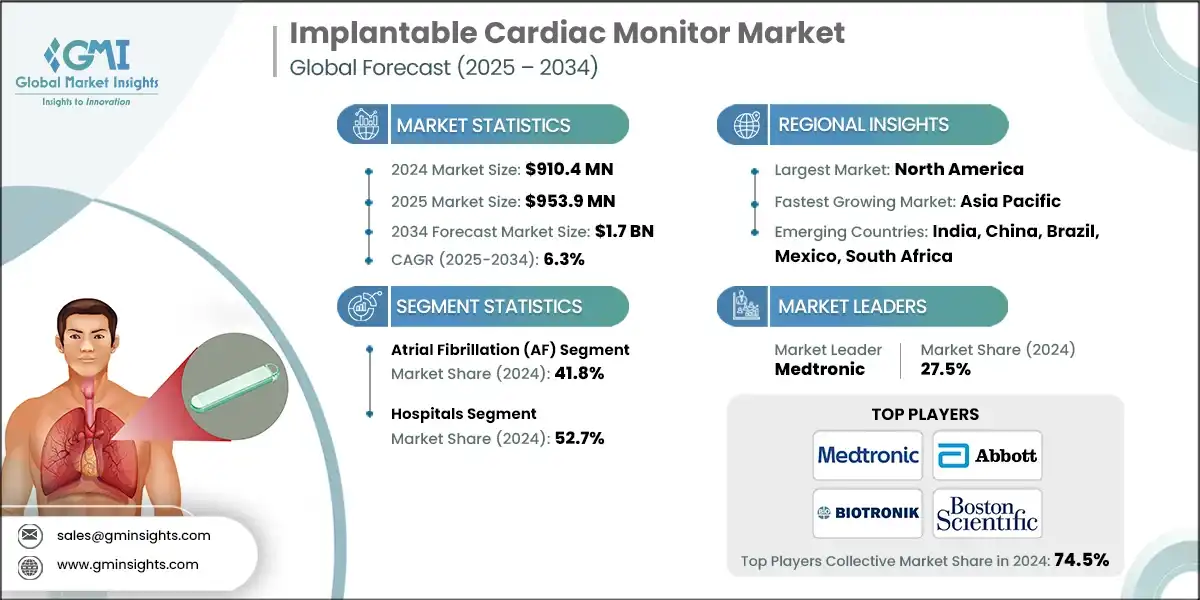
The global implantable cardiac monitor market size was valued at USD 910.4 million in 2024. The market is expected to reach from USD 953.9 million in 2025 to USD 1.7 billion in 2034, growing at a CAGR of 6.3% during the forecast period, according to the latest report published by Global Market Insights Inc.
Implantable Cardiac Monitor Market Key Takeaways
Market Size & Growth
- 2024 Market Size: USD 910.4 Million
- 2025 Market Size: USD 953.9 Million
- 2034 Forecast Market Size: USD 1.7 Billion
- CAGR (2025–2034): 6.3%
Regional Dominance
- Largest Market: North America
- Fastest Growing Region: Asia Pacific
Key Market Drivers
- Rising prevalence of cardiac arrhythmias and atrial fibrillation.
- Advancements in remote monitoring and connectivity technologies.
- Growing geriatric population and associated cardiac risk.
- Favorable reimbursement policies and early diagnosis programs.
Challenges
- High cost of devices and implantation procedures.
- Limited awareness among patients and general practitioners.
Opportunity
- Integration with artificial intelligence and predictive analytics.
- Development of smart, miniaturized, and long-life devices.
Key Players
- Market Leader: Medtronic led with over 27.5% market share in 2024.
- Leading Players: Top 5 players in this market include Medtronic, Abbott, BIOTRONIK, Boston Scientific, which collectively held a market share of 74.5% in 2024.
Get Market Insights & Growth Opportunities
Increasing prevalence of cardiovascular disease, growing geriatric population, need for constant remote cardiac monitoring, and technological advancements in remote patient monitoring are key factors driving the implantable cardiac monitor (ICM) market.
The market for implantable cardiac monitors provides cutting-edge healthcare solutions to hospitals, specialized cardiac facilities, ambulatory surgical centers, and health technology companies with the mission to enhance patient outcomes, facilitate early detection of arrhythmia, and increase operational efficiency. Solutions comprise long-term implantable loop recorders, remote cardiac monitoring systems, and wireless transmission technologies supporting continuous rhythm monitoring, timely diagnosis, and individualized patient management.
Some of the major market players are Medtronic, Abbott, BIOTRONIK, and Boston Scientific. These organizations sustain their competitive advantage by constant product innovation, large global footprint, strategic collaborations, and huge research and development investments to cater to growing cardiovascular healthcare needs and widen their footprint in the market.
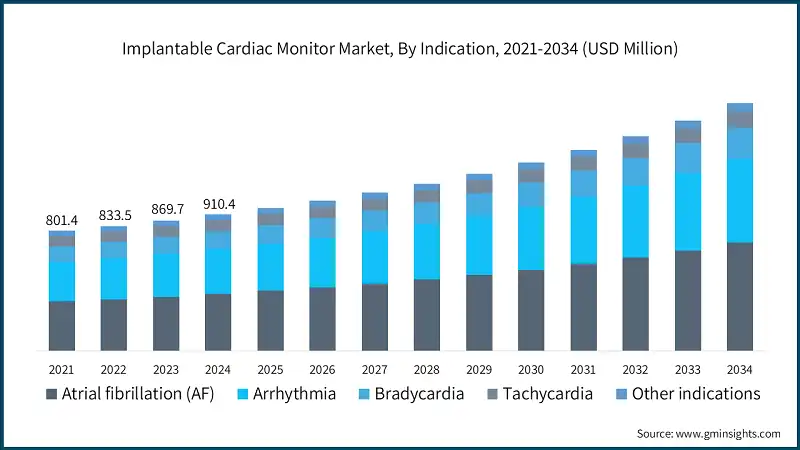
The market has increased from USD 801.4 million in 2021 and reached USD 869.7 million in 2023. The growth of the ICM market is primarily driven by the rising prevalence of cardiovascular diseases, including arrhythmias, atrial fibrillation, and other heart rhythm disorders, which have become increasingly common among aging populations worldwide.
As the global population continues to age, the incidence of chronic cardiovascular conditions rises, increasing the demand for long-term cardiac monitoring solutions that enable timely diagnosis and intervention. The growing awareness among patients and healthcare providers about the benefits of early arrhythmia detection and continuous monitoring has further fueled market adoption.
Technological advancements in ICM devices, such as miniaturized implantable loop recorders, wireless data transmission systems, and remote monitoring capabilities, have significantly improved patient compliance, convenience, and clinical outcomes. Integration of digital health platforms and artificial intelligence for data analysis allows for real-time monitoring, predictive diagnostics, and personalized patient management, enhancing the overall quality of care.
Additionally, the shift toward value-based healthcare and home-based cardiac monitoring solutions supports the adoption of ICMs in ambulatory settings and outpatient facilities. Strategic collaborations, research investments, and innovation by leading market players such as Medtronic, Abbott, BIOTRONIK, Boston Scientific, and AngelMed/Avertix also contribute to market expansion, driving new product launches and broadening the global reach of implantable cardiac monitoring technologies.
An implantable cardiac monitor (ICM) is a small, subcutaneously implanted device that continuously records a patient’s heart rhythm over long periods. It detects and monitors arrhythmias, atrial fibrillation, bradycardia, and other cardiac abnormalities, enabling early diagnosis, timely intervention, and remote patient management for improved cardiovascular outcomes.
To get key market trends
Implantable Cardiac Monitor Market Trends
Increased incidence of cardiac arrhythmias and atrial fibrillation (AF) is a key driver for the ICM market because they are the leading cause of morbidity and mortality globally. Arrhythmias, especially AF, are on the rise in the aged and those with comorbidities like hypertension, diabetes, and heart failure.
- It is this increasing number of patients that has strengthened the demand for real-time cardiac monitoring solutions allowing for early detection, prompt intervention, and prevention of life-threatening complications like stroke and sudden cardiac arrest.
- Technological innovation in ICMs, such as miniaturized implantable loop recorders, wireless communication, and real-time remote monitoring systems, has further accelerated adoption by enhancing patient compliance, comfort, and clinical effectiveness.
- These innovations allow healthcare providers to monitor cardiac rhythms continuously, detect asymptomatic arrhythmias, and adjust treatment plans proactively, thereby enhancing patient outcomes and reducing hospitalization rates.
- From a macroeconomic perspective, increasing healthcare expenditure, supportive reimbursement policies, and growing investment in cardiovascular care infrastructure are boosting the demand for ICMs globally. Rising awareness about preventive healthcare and early diagnosis programs, coupled with government initiatives to address cardiovascular disease burden, are creating a favorable market environment.
- On the microeconomic level, hospitals, specialized cardiac centers, and outpatient facilities are investing in advanced cardiac monitoring solutions to enhance operational efficiency, patient satisfaction, and clinical decision-making.
- Collectively, the convergence of increasing disease prevalence, technological innovation, favorable economic conditions, and strategic collaborations is expected to sustain robust growth in the market over the coming decade.
Implantable Cardiac Monitor Market Analysis
Learn more about the key segments shaping this market
The implantable cardiac monitor market was valued at USD 801.4 million in 2021. The market size reached USD 869.7 million in 2023, from USD 833.5 million in 2022.
Based on the indication, the market is segmented into atrial fibrillation (AF), arrhythmia, bradycardia, tachycardia, and other indications. The atrial fibrillation segment has asserted its dominance in the market by securing a significant market share of 41.8% in 2024, driven by rising AF prevalence, increasing stroke risk, and demand for early detection drive adoption of continuous implantable monitoring devices globally. The segment is expected to exceed USD 725 million by 2034, growing at a CAGR of 6.8% during the forecast period.
On the other hand, the arrhythmia segment is expected to grow with a CAGR of 6.5%. The growth of this segment can be attributed to the high incidence of undiagnosed arrhythmias and need for long-term rhythm monitoring boost market growth for implantable cardiac monitors.
- Atrial fibrillation (AF) is the most prevalent cardiac arrhythmia, particularly affecting older populations and individuals with underlying cardiovascular conditions. The high incidence of AF drives demand for long-term continuous monitoring, as early detection is critical to prevent stroke, heart failure, and other complications.
- Implantable cardiac monitors enable real-time rhythm tracking, detecting asymptomatic or intermittent AF episodes that traditional monitoring might miss. Technological advancements such as miniaturized loop recorders, wireless connectivity, and remote monitoring platforms enhance patient compliance and clinical management.
- Favorable reimbursement policies, growing awareness among healthcare providers, and government-led cardiovascular screening programs further encourage adoption. Additionally, rising prevalence of risk factors such as hypertension, obesity, and diabetes contribute to market growth.
- The arrhythmia segment held a revenue of USD 300.2 million in 2024, with projections indicating a steady expansion at 6.5% CAGR from 2025 to 2034.
- The general arrhythmia segment encompasses multiple irregular heart rhythm disorders beyond AF, including ventricular and supraventricular arrhythmias. Increasing prevalence of these conditions, often undiagnosed due to intermittent or asymptomatic presentations, necessitates continuous cardiac monitoring.
- Implantable cardiac monitors provide accurate long-term detection, supporting timely interventions and improved clinical outcomes. Advancements in wireless data transmission, automated alerts, and remote patient management systems further increase device adoption.
- Macroeconomic factors, such as rising healthcare expenditure and enhanced cardiac care infrastructure, facilitate broader utilization in hospitals and specialized cardiac centers. Microeconomic factors, including patient demand for minimally invasive, reliable, and long-term monitoring solutions, also drive growth.
- Growing physician awareness, coupled with government initiatives targeting cardiovascular disease prevention, reinforces the arrhythmia segment as a key driver within the ICM market, enabling early diagnosis and reducing healthcare burdens.
- The bradycardia segment held a revenue of USD 119.6 million in 2024, with projections indicating a steady expansion at 6% CAGR from 2025 to 2034. Bradycardia, characterized by abnormally slow heart rates, drives the ICM market due to its association with syncope, fatigue, and increased mortality risk in the elderly. Early detection through implantable monitors is critical, especially for patients with intermittent or asymptomatic episodes.
- Technological innovations, such as compact implantable devices with long battery life, continuous data recording, and remote monitoring, improve patient safety and adherence.
- Increasing prevalence among aging populations, particularly those with comorbid cardiovascular diseases, contributes to rising demand. Favorable reimbursement policies and rising awareness among clinicians and patients further accelerate adoption.
Learn more about the key segments shaping this market
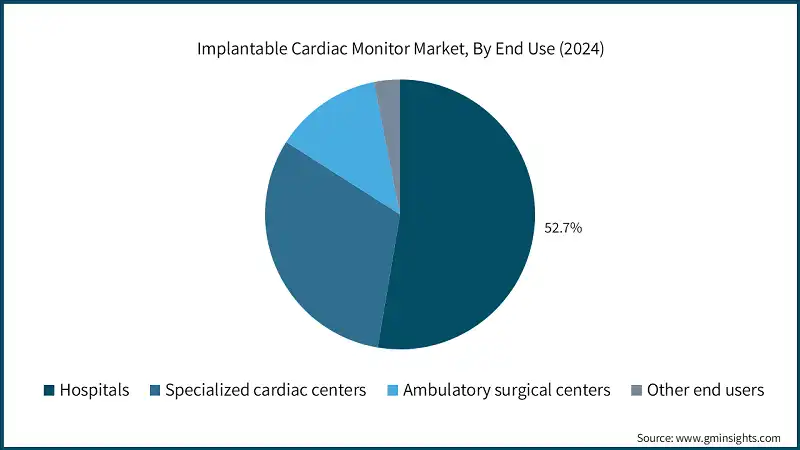
Based on end use, the implantable cardiac monitor market is classified into hospitals, specialized cardiac centers, ambulatory surgical centers, and other end users. The hospitals segment dominated the market with a revenue share of 52.7% in 2024 and is expected to reach USD 903.7 million within the forecast period.
- The two largest segments account for over 84% of the total market value. Hospitals lead the market of ICMs because of their sophisticated infrastructure, separate cardiology departments, and availability of skilled medical practitioners who can conduct implantable procedures.
- The strong incidence of cardiac arrhythmias and atrial fibrillation among inpatients stimulates ongoing monitoring demand. Integrated electronic health records and remote monitoring systems also benefit hospitals, making patient data management efficient.
- Favorable reimbursement policies, early diagnosis programs, and high patient inflow for cardiovascular care further support ICM adoption. The availability of advanced implantable loop recorders, wireless monitoring, and AI-enabled analytics ensures timely arrhythmia detection, reducing hospitalization and emergency interventions.
- The specialized cardiac centers segment held a revenue of USD 285.5 million in 2024, with projections indicating a steady expansion at 6.1% CAGR from 2025 to 2034. Specialized cardiac centers are key drivers for ICM adoption due to their focus on cardiac care, access to cutting-edge monitoring technologies, and ability to handle complex arrhythmia cases.
- Patients with high-risk cardiovascular conditions prefer these centers for precise diagnostics and continuous rhythm monitoring. The availability of dedicated cardiologists, advanced implantable loop recorders, and integrated remote monitoring systems improves early detection and personalized treatment, enhancing clinical outcomes.
- Specialized centers often participate in clinical trials and research, accelerating technological adoption and innovation in ICM devices.
Looking for region specific data?
North America dominated the implantable cardiac monitor market with the highest market share of 35.5% in 2024.
- North America leads the ICM market worldwide due to the high incidence of cardiovascular conditions, such as atrial fibrillation and cardiac arrhythmias, among the elderly population. The region is blessed with developed healthcare infrastructure, extensive coverage of specialty cardiac centers, and a robust network of hospitals with facilities for implantable device procedures.
- Advances toward technologies, such as miniaturized implantable loop recorders, wireless monitoring systems, and AI-based predictive analytics, continue to boost adoption. Reimbursement policies supportive of adoption, encouraging regulatory environments, and initiatives for resourceful early diagnosis foster widespread use of ICMs in both outpatient and inpatient settings.
- Additionally, rising awareness among patients and healthcare providers regarding continuous cardiac monitoring and preventive care contributes to market growth.
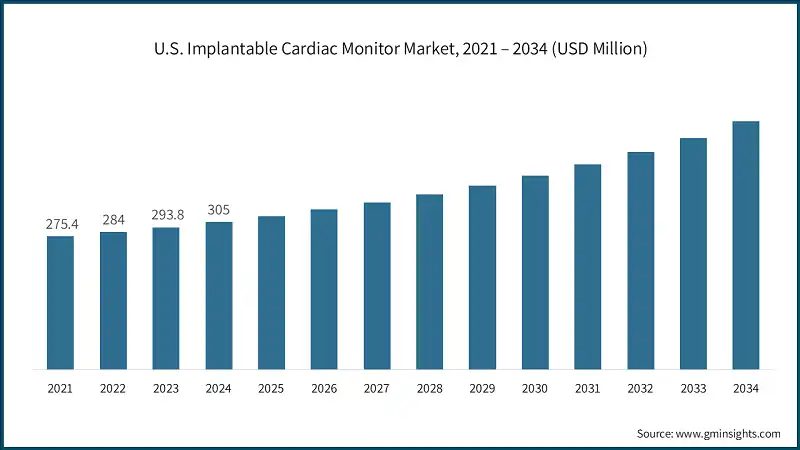
The U.S. implantable cardiac monitor market was valued at USD 275.4 million and USD 284 million in 2021 and 2022, respectively. In 2024, the market size grew to USD 305 million from USD 293.8 million in 2023.
- The U.S. market leads within North America due to a large patient base with high cardiovascular disease prevalence and well-established healthcare infrastructure. Advanced hospitals and specialized cardiac centers provide access to skilled cardiologists and implantable cardiac monitoring technologies.
- Government initiatives, insurance coverage, and reimbursement policies incentivize early arrhythmia detection and continuous monitoring, expanding patient access. Technological advancements such as remote monitoring, wireless data transmission, and AI-supported diagnostic tools enhance clinical outcomes and operational efficiency.
- The U.S. also benefits from high R&D investments, clinical trials, and rapid adoption of innovative ICM devices by key players like Medtronic, Abbott, and Boston Scientific. Growing patient awareness, combined with preventive healthcare trends and a strong private healthcare system, further accelerates market adoption.
Europe implantable cardiac monitor market accounted for USD 250.9 million in 2024 and is anticipated to show lucrative growth over the forecast period.
- The growth in the European market is fueled by increasing incidence of cardiovascular diseases, especially arrhythmias and atrial fibrillation, in geriatric populations. Strong healthcare awareness and established cardiac care networks in the UK, France, and Italy enable extensive use of ICMs.
- Technical advancements like miniaturized implantable loop recorders, wireless data transmission, and remote patient monitoring systems improve clinical outcomes and patient compliance.
- Favorable government policies, reimbursement frameworks, and early detection programs support accessibility and affordability of implantable devices. Increasing investment in cardiovascular research, clinical trials, and partnerships between device manufacturers and healthcare providers also drive innovation and market expansion.
- Moreover, Europe’s strong emphasis on preventive care and value-based healthcare models encourages the adoption of ICMs in hospitals, specialized cardiac centers, and outpatient facilities, making the region one of the most lucrative markets globally.
Germany dominates the European implantable cardiac monitor market, showcasing strong growth potential.
- Germany’s ICM market growth is fueled by high cardiovascular disease prevalence, increasing awareness among patients and clinicians, and a robust healthcare system with advanced cardiac care facilities.
- The country’s well-established reimbursement policies for implantable devices encourage hospitals and cardiac centers to adopt ICMs for early arrhythmia detection and long-term monitoring. Germany also benefits from strong R&D investment by domestic and international medical device manufacturers, driving technological innovation in miniaturized, long-life, and wireless-enabled ICMs.
- The growing geriatric population, coupled with increased incidence of atrial fibrillation and other arrhythmias, expands the patient pool requiring continuous monitoring. Integration of digital health platforms and remote monitoring solutions further improves patient management and clinical outcomes.
- Strategic partnerships between hospitals, cardiac centers, and device providers accelerate adoption, positioning Germany as a key growth market within Europe for implantable cardiac monitoring technologies.
The Asia Pacific implantable cardiac monitor market is anticipated to grow at the highest CAGR of 7.3% during the analysis timeframe.
- The Asia Pacific ICM market will see the highest growth in the world with increasing prevalence of cardiovascular diseases, notably arrhythmias and atrial fibrillation, in aging populations. Growing healthcare awareness, early detection programs, and government policies addressing heart disease management are favoring market uptake.
- Accelerated development of healthcare infrastructure in the form of specialized cardiac centers and hospitals with state-of-the-art monitoring technologies supports ICM implantation and follow-up. Advances in technology like miniaturized implantable loop recorders, wireless communication, and remote monitoring platforms make it easier to ensure patient compliance and allow for early identification of cardiac abnormalities.
- Additionally, rising disposable incomes, favorable reimbursement policies in certain countries, and growing private healthcare investments are boosting accessibility. Strategic collaborations between global device manufacturers and regional healthcare providers further drive market penetration.
China implantable cardiac monitor market is estimated to grow with a significant CAGR in the Asia Pacific market.
- China’s ICM market growth is propelled by a high incidence of cardiovascular diseases, driven by urbanization, lifestyle changes, and a rapidly aging population. Government healthcare initiatives, such as national arrhythmia screening programs and policies promoting early diagnosis and preventive care, are encouraging ICM adoption across hospitals and cardiac centers.
- Technological advancements, including miniaturized implantable monitors and AI-enabled remote monitoring systems, facilitate continuous patient monitoring and timely intervention, improving clinical outcomes.
- Expansion of specialized cardiac centers, increasing investment in healthcare infrastructure, and growing awareness among patients and physicians further support market growth.
- Favorable reimbursement schemes and collaborations with leading global ICM manufacturers such as Medtronic, Abbott, and BIOTRONIK enhance product accessibility.
Brazil leads the Latin American implantable cardiac monitor market, exhibiting remarkable growth during the analysis period.
- Brazil leads the Latin American ICM market due to a combination of high cardiovascular disease prevalence, rising awareness about early diagnosis, and expanding healthcare infrastructure. The country’s aging population and increasing incidence of cardiac arrhythmias and atrial fibrillation are driving demand for continuous cardiac monitoring solutions.
- Technological advancements, including miniaturized implantable loop recorders and remote monitoring systems, have improved accessibility and patient compliance. Strong government initiatives promoting cardiovascular care, along with favorable reimbursement policies for implantable devices, encourage hospitals and specialized cardiac centers to adopt ICM solutions.
- Additionally, partnerships between global manufacturers such as Medtronic, Abbott, and BIOTRONIK and local healthcare providers facilitate technology transfer, training, and device availability.
- Urban centers are witnessing higher adoption due to well-established cardiac care networks, while rising patient awareness through campaigns and preventive programs further accelerates market growth.
Saudi Arabia implantable cardiac monitor market to experience substantial growth in the Middle East and Africa market in 2024.
- Saudi Arabia’s ICM market is driven by increasing prevalence of cardiovascular diseases, lifestyle-related risk factors, and government investment in advanced healthcare infrastructure. The country has a growing geriatric population, leading to a higher incidence of arrhythmias and atrial fibrillation, thereby increasing demand for continuous cardiac monitoring solutions.
- Technological adoption, including remote monitoring systems and wireless implantable loop recorders, enables early detection and efficient patient management, aligning with the nation’s digital health initiatives.
- Favorable reimbursement policies, national preventive healthcare programs, and expansion of specialized cardiac centers further encourage adoption.
- Additionally, increasing awareness among patients and physicians about the benefits of early arrhythmia diagnosis supports long-term market growth.
Implantable Cardiac Monitor Market Share
The implantable cardiac monitor industry is highly competitive, with leading medical device companies focusing on product innovation, advanced technologies, and strategic collaborations to strengthen their market positions. Rising prevalence of cardiac arrhythmias and atrial fibrillation, increasing patient awareness, and growing adoption of continuous cardiac monitoring are driving companies to leverage R&D investments, digital health integration, and remote monitoring systems to improve early detection, therapy effectiveness, and patient outcomes. The global shift toward home-based and value-driven healthcare is also encouraging players to develop cost-effective, patient-centric solutions and expand their presence in emerging markets.
Key players include Medtronic, Abbott, BIOTRONIK, and Boston Scientific collectively accounting for 74.5% of the global market. These companies maintain leadership through extensive implantable device portfolios, strong global distribution networks, and continuous advancements in miniaturized loop recorders, wireless connectivity, and long-term monitoring solutions. Their dominance is reinforced by strategic partnerships with hospitals, specialized cardiac centers, and outpatient facilities to enhance accessibility and adoption.
Smaller and niche players are also gaining traction by focusing on innovative, patient-friendly, and smart implantable monitoring solutions. Competitive differentiation is increasingly defined by the ability to deliver technologically advanced, reliable, and cost-efficient cardiac monitoring solutions tailored to diverse clinical and homecare environments. As the market evolves, competition is expected to intensify, with both established leaders and emerging firms pursuing innovation, digital health integration, and strategic alliances to capture greater market share.
Implantable Cardiac Monitor Market Companies
A few of the prominent players operating in the implantable cardiac monitor industry include:
- Abbott
- AngelMed / Avertix
- BIOTRONIK
- Boston Scientific
- Medtronic
- Vectorious Medical Technologies
- Medtronic
Medtronic leads the implantable cardiac monitor market with a share of 27.5% in 2024. Medtronic leads with its Reveal LINQ ICM, offering ultra-miniaturized design, long battery life, and integrated remote monitoring. Strong global presence, extensive R&D, and strategic collaborations enable superior patient compliance, early arrhythmia detection, and enhanced clinical outcomes, maintaining its dominant position in the ICM market.
Abbott’s Confirm Rx ICM combines patient-friendly smartphone connectivity, real-time wireless monitoring, and advanced data analytics. With continuous innovation, robust R&D investment, and widespread adoption across hospitals and cardiac centers, Abbott delivers reliable, efficient, and personalized arrhythmia detection solutions, ensuring high market competitiveness and patient engagement.
Implantable Cardiac Monitor Market Report Attributes
| Key Takeaway | Details |
|---|---|
| Market Size & Growth | |
| Base Year | 2024 |
| Market Size in 2024 | USD 910.4 Million |
| Market Size in 2025 | USD 953.9 Million |
| Forecast Period 2025 - 2034 CAGR | 6.3% |
| Market Size in 2034 | USD 1.7 Billion |
| Key Market Trends | |
| Drivers | Impact |
| Rising prevalence of cardiac arrhythmias and atrial fibrillation | Increased incidence of arrhythmias drives demand for continuous monitoring, early detection, and timely interventions, significantly expanding the global ICM market. |
| Advancements in remote monitoring and connectivity technologies | Enhanced remote monitoring and wireless connectivity enable real-time cardiac data transmission, improving patient compliance, physician oversight, and accelerating market adoption of ICMs. |
| Growing geriatric population and associated cardiac risk | An aging population with higher cardiovascular disease risk fuels demand for long-term implantable monitoring, supporting consistent growth in the ICM market. |
| Favorable reimbursement policies and early diagnosis programs | Insurance coverage and proactive cardiac screening programs reduce financial barriers, encouraging wider adoption and driving market expansion across hospitals and outpatient settings. |
| Pitfalls & Challenges | Impact |
| High cost of devices and implantation procedures | Expensive devices and surgical implantation limit accessibility, particularly in emerging markets, slowing adoption and restricting growth potential of the ICM market. |
| Limited awareness among patients and general practitioners | Insufficient knowledge about benefits and availability of ICMs leads to underutilization, hindering market penetration and reducing overall adoption rates. |
| Opportunities: | Impact |
| Integration with artificial intelligence and predictive analytics | AI-driven analytics can predict cardiac events, improve personalized patient management, and enhance clinical decision-making, creating substantial growth opportunities for the ICM market. |
| Development of smart, miniaturized, and long-life devices | Innovations in smaller, longer-lasting ICMs increase patient comfort, reduce procedural complexity, and expand market potential across broader demographics and geographies. |
| Market Leaders (2024) | |
| Market Leaders |
27.5% market share |
| Top Players |
Collective market share in 2024 is 74.5% |
| Competitive Edge |
|
| Regional Insights | |
| Largest Market | North America |
| Fastest growing market | Asia Pacific |
| Emerging countries | India, China, Brazil, Mexico, South Africa |
| Future outlook |
|
What are the growth opportunities in this market?
Implantable Cardiac Monitor Industry News
- In October 2023, Boston Scientific launched the next-generation LUX-Dx II+ insertable cardiac monitor, designed for prolonged monitoring of arrhythmias associated with cryptogenic stroke, atrial fibrillation, and syncope, improving detection accuracy and supporting better-informed clinical decision-making.
- In June 2023, BIOTRONIK announced the first implant of its BIOMONITOR IV, integrating SmartECG and AI technology, reducing false positive arrhythmia detections by 86%, enhancing monitoring accuracy, and offering more reliable long-term cardiac rhythm management for patients
- In August 2022, Hydrix Medical received commercialization approval in Singapore for its AI-enabled implantable cardiac device, enhancing diagnostic precision, enabling continuous heart rhythm monitoring, and improving clinical decision-making, representing a significant advancement in implantable cardiac monitoring technologies.
- In July 2021, Medtronic received FDA clearance for two AccuRhythm AI algorithms with the LINQ II ICM, enhancing heart rhythm data accuracy, enabling earlier arrhythmia detection, and supporting clinicians in providing timely, data-driven diagnosis and personalized patient management.
- In July 2020, Medtronic secured FDA clearance and CE marking for the LINQ II ICM, offering improved device longevity, enhanced arrhythmia detection accuracy, and reliable long-term monitoring, representing a major milestone in continuous cardiac rhythm management and patient care.
The implantable cardiac monitor market research report includes an in-depth coverage of the industry with estimates and forecast in terms of revenue in USD Million from 2021 – 2034 for the following segments:
Market, By Indication
- Atrial fibrillation (AF)
- Arrhythmia
- Bradycardia
- Tachycardia
- Other indications
Market, By End Use
- Hospitals
- Specialized cardiac centers
- Ambulatory surgical centers
- Other end use
The above information is provided for the following regions and countries:
- North America
- U.S.
- Canada
- Europe
- Germany
- UK
- France
- Spain
- Italy
- Netherlands
- Asia Pacific
- China
- Japan
- India
- Australia
- South Korea
- Latin America
- Brazil
- Mexico
- Argentina
- Middle East and Africa
- South Africa
- Saudi Arabia
- UAE
Frequently Asked Question(FAQ) :
What was the market size of the implantable cardiac monitor in 2024?
The market size was valued at USD 910.4 million in 2024, with a CAGR of 6.3% expected through 2034. The market growth is driven by the increasing prevalence of cardiovascular diseases, technological advancements, and the growing geriatric population.
What is the projected value of the implantable cardiac monitor market by 2034?
The market is poised to reach USD 1.7 billion by 2034, fueled by rising demand for remote cardiac monitoring, continuous technological innovations, and supportive healthcare policies.
What is the expected size of the implantable cardiac monitor industry in 2025?
The market size is projected to reach USD 953.9 million in 2025.
How much revenue did the atrial fibrillation segment generate in 2024?
The atrial fibrillation segment accounted for 41.8% of the market share in 2024, led by the rising prevalence of AF and demand for early detection.
What was the revenue share of the hospitals segment in 2024?
The hospitals segment dominated the market with a revenue share of 52.7% in 2024 and is expected to reach USD 903.7 million by 2034.
Which region leads the implantable cardiac monitor sector?
North America led the market with a 35.5% share in 2024. The region's dominance is attributed to a high prevalence of cardiovascular conditions, advanced healthcare infrastructure.
What are the upcoming trends in the implantable cardiac monitor market?
Miniaturized implantable loop recorders, wireless connectivity, real-time remote monitoring, rising healthcare spending, supportive reimbursement, and government-led early diagnosis and preventive healthcare initiatives.
Who are the key players in the implantable cardiac monitor industry?
Key players include Abbott, AngelMed / Avertix, BIOTRONIK, Boston Scientific, Medtronic, and Vectorious Medical Technologies.
Implantable Cardiac Monitor Market Scope
Related Reports