Summary
Table of Content

Immunomodulatory Protein Hydrolysates Market
Get a free sample of this report
Form submitted successfully!
Error submitting form. Please try again.
Thank you!
Your inquiry has been received. Our team will reach out to you with the required details via email. To ensure that you don't miss their response, kindly remember to check your spam folder as well!
Request Sectional Data
Thank you!
Your inquiry has been received. Our team will reach out to you with the required details via email. To ensure that you don't miss their response, kindly remember to check your spam folder as well!
Form submitted successfully!
Error submitting form. Please try again.
Immunomodulatory Protein Hydrolysates Market Size
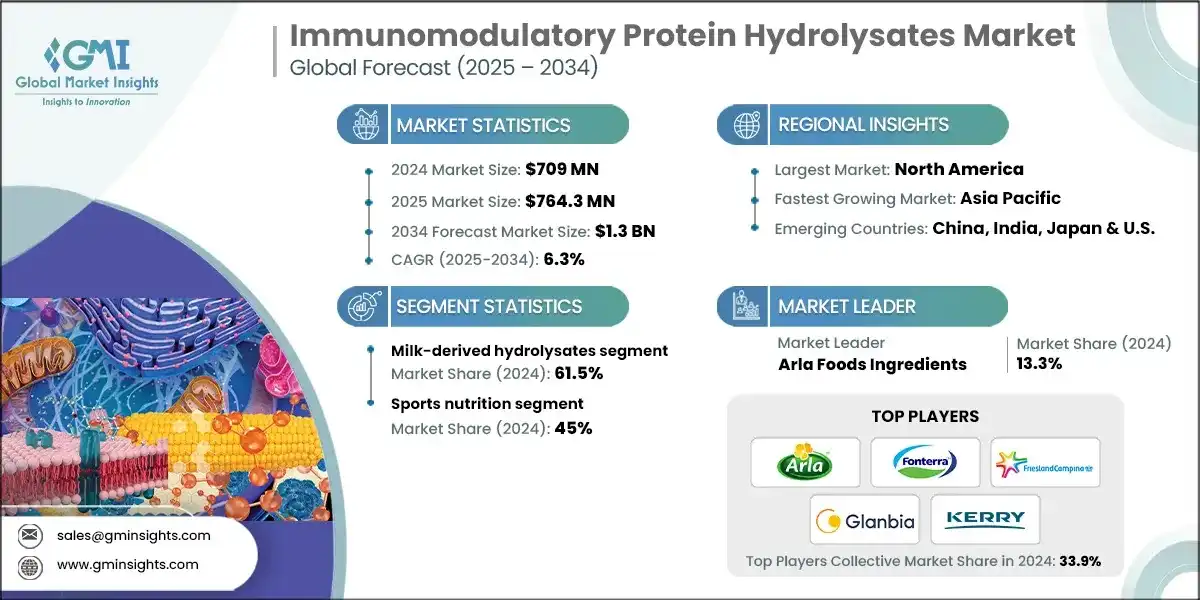
The global immunomodulatory protein hydrolysates market size was estimated at USD 709 million in 2024. The market is expected to grow from USD 764.3 million in 2025 to USD 1.3 billion in 2034, at a CAGR of 6.3% according to latest report published by Global Market Insights Inc.
Immunomodulatory Protein Hydrolysates Market Key Takeaways
Market Size & Growth
- 2024 Market Size: USD 709 Million
- 2025 Market Size: USD 764.3 Million
- 2034 Forecast Market Size: USD 1.3 Billion
- CAGR (2025–2034): 6.3%
Key Market Drivers
- Increasing awareness of immunity and immune disorders.
- Advancements in extraction and purification technologies.
- Strategic collaborations and partnerships.
Challenges
- Regulatory challenges.
- High production cost.
Opportunity
- Rising demand for functional foods and dietary supplements.
- Growing research and innovation.
- Personalized nutrition and preventive healthcare.
Key Players
- Market Leader: Arla Foods Ingredients led with over 13.3% market share in 2024.
- Leading Players: Top 5 players in this market include Arla Foods Ingredients, Fonterra (NZMP), FrieslandCampina Ingredients, Glanbia PLC, Kerry Group, which collectively held a market share of 33.9% in 2024.
Get Market Insights & Growth Opportunities
- The market for immunomodulatory protein hydrolysates is greatly benefiting from growing awareness of immunity and rise in knowledge of immune disorders. These bioactive compounds derive from proteins enzymatically broken down into smaller peptides, which can regulate the immune system either by boosting up immune responses or dampening inflammation. These compounds are highly valued for their role in augmenting immune function within the categories of functional foods, dietary supplements, and pharmaceuticals.
- Immunomodulatory protein hydrolysates benefit immune resilience to mitigate infection risk and aid recovery. The trade of these compounds depends upon the high bioavailability, safety, targeted immune support, and no side effects. The market is positively driven by growing consumer preference toward natural and functional ingredients.
- Market opportunities are abundant, owing to the increasing trends in personalized nutrition and preventive healthcare. An enormous demographic segment is represented by the aging population, increasingly vulnerable to immune-related concerns. In addition, the bolstered research on novel bioactive peptides exhibiting immunomodulatory properties brings in opportunities toward product development. The food and beverage industries increasingly employ hydrolysates in energy drinks, nutrition bars, and functional foods. The therapeutics of autoimmune disorders and enhancing vaccine efficacy are being explored in pharmaceutical studies as well.
- North America is the largest market for immunomodulatory protein hydrolysates due to advancement in technology and research facilities in U.S. & Canada.
- Asia Pacific is the fastest growing region for immunomodulatory protein hydrolysates market, due to increasing R&D capabilities, also the region can enhance its performance in this market in the coming years.
To get key market trends
Immunomodulatory Protein Hydrolysates Market Trends
- The major growth drivers for the market are growing consumer awareness regarding immune health and the greater inclination toward natural, functional ingredients. Market assessment for the immunomodulatory protein hydrolysates market is optimistic-giving key drivers that lead to growth.
- Advancements in enzymatic hydrolysis and extraction methods have been contributing to increasing the yield, purity, and bioavailability of biologically active protein hydrolysates. This helps the manufacturers to formulate more efficacious and precise products for functional foods, dietary supplements, and nutraceuticals. In addition, improvements in microencapsulation and delivery systems provide stability and efficacy and, in turn, enhance consumer acceptance and product performance.
- In several regions, the approval process for immunomodulatory ingredients is increasingly set toward less cumbersome methods with clearly defined criteria regarding safety and efficacy. However, regulatory challenges remain, as in some countries they apply stringent standards and demand more than sufficient clinical substantiation of health claims. There is a significant investment in research and compliance with these regulatory frameworks, while they may pose hindrances to the smaller players, but encourage innovations of better quality.
- Product innovation is a great factor driving the market, wherein companies are focusing on the development of different hydrolysate formulations from sources such as dairy, plant proteins, and marine organisms. One trend-on-the-rise is the area of personalized nutrition, where hydrolysates can be tailored to specific immune responses. This is also the point where clean-label products and allergen-free ones are becoming quite hot, having the research being directed toward coming up with newer and sustainable sources of protein hydrolysates.
Immunomodulatory Protein Hydrolysates Market Analysis
Learn more about the key segments shaping this market
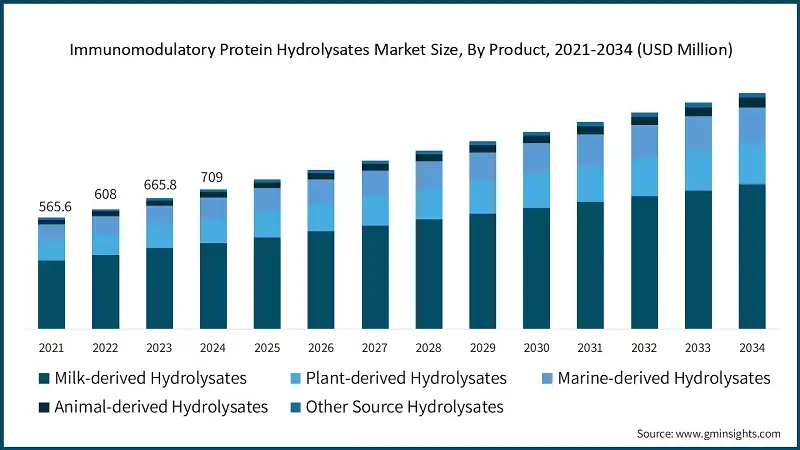
Based on product, the immunomodulatory protein hydrolysates market is segmented into milk-derived hydrolysates, plant-derived hydrolysates, marine-derived hydrolysates, animal-derived hydrolysates, and other source hydrolysates.
- The milk-derived hydrolysates are the most popular and biggest segment in the immunomodulatory protein hydrolysates, with market shares of 61.5% in 2024. This is because of its scientific validation established production infrastructure and proven immune modulation applications. Top dairy firms such as Arla Foods Ingredients and FrieslandCampina have invested heavily in advanced hydrolysis technologies to provide high-quality milk-derived hydrolysates with consistent bioactive profiles.
- Plant-derived hydrolysates on the other hand comprise a very fast-growing segment with a 17.7% market share during the year 2024 and an increasing consumer preference for more plant-based nutrition and sustainability concerns which is driving the trend. Soy, pea, rice, and hemp proteins are the principal sources of plant-derived immunomodulatory hydrolysates, making them advantageous for vegan and vegetarian consumers. This segment is yet to replicate the levels of bioactivity rendered by milk-derived products but has the additional benefit of lower allergenicity and environmental sustainability.
- Marine-derived hydrolysates have a 15% market share in 2024, as this is an area where interest in novel bioactive-composition commodities from marine sources is growing. Fish, shellfish, and algae proteins-of all kinds show unique sequences of peptides with demonstrated immunomodulatory property.
Learn more about the key segments shaping this market
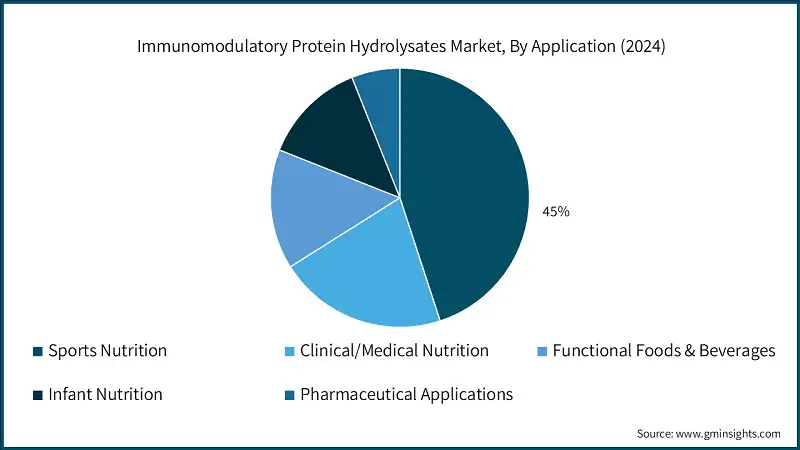
Based on application, the immunomodulatory protein hydrolysates market is segmented into sports nutrition, clinical/medical nutrition, functional foods & beverages, infant nutrition, and pharmaceutical applications.
- During the year 2024, with 45% of the market share, sports nutrition leads the application segments due to the athlete's demands for immune support during hard training phases. Exercise-induced immunosuppression constitutes a vast market for immunomodulatory protein hydrolysates which help in maintaining immune function during heavy training loads. Products usually combine immunomodulatory hydrolysates with other performance ingredients such as branched-chain amino acids and creatine, hence supplying complete nutritional support.
- Clinical/medical nutrition captures 21% of market share in the year 2024, with a focus on therapeutic applications for immune-compromised patients and individuals with specific medical conditions. A specialty within this segment encompasses nutritionally tailored products directed toward cancer patients receiving chemotherapy, elderly people experiencing immune decline due to aging, and patients with autoimmune conditions.
- With a CAGR of 5.2%, functional foods & beverages occupy 15% of the market share, thereby reflecting the mainstream consumer penetration of immune-supporting ingredients during 2024. This segment encompasses fortified beverages, nutrition bars, yogurt, and other food items that contain immunomodulatory hydrolysates to impart functional health advantages. The whole area is driven by consumer demand for convenient yet superbly tasting products with established health benefits.
Based on processing methods, the immunomodulatory protein hydrolysates market is segmented into enzymatic hydrolysis, advanced technologies, fermentation-derived, and acid/alkaline hydrolysis.
- The enzymatic hydrolysis process is preferred overall due to its specificity, safety and ability to produce bioactive peptides with higher immunomodulatory action. Fermentation-derived processes are also gaining traction for their natural and sustainable benefits, encapsulated in the clean label trend, and to produce unique bioactive agents upon the action of microbes. These processes are also capable of designing new hydrolysates having customized immunomodulatory effects, thereby opening the market.
- Advanced technologies such as membrane filtration, ultrafiltration and enzymatic engineering are further optimizing the efficiency and yield of hydrolysis processes. These advances reduce the cost of production while simultaneously ensuring some degree of product uniformity, both of which are vital for commercialization. Although traditional, acid and alkaline hydrolysis are continuously being fine-tuned to reduce unwanted contaminants produced as by-products while adhering to safety standards and remain relevant in the marketplace.
Looking for region specific data?
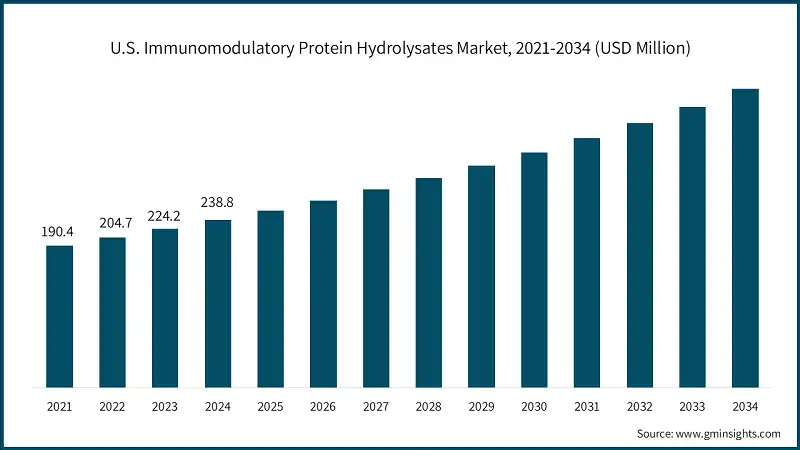
North America accounted for a decent share of the immunomodulatory protein hydrolysates market with 42.1% of the market share in 2024 and 6.4% CAGR to 2034 while US occupying largest market with USD 238.8 million in 2024.
- The North American market is growing at a very robust pace owing to the factors like consumer awareness regarding functional foods and nutraceuticals. It is an important market in the region, which, with its desire for health and wellness, has an impressive collection of key industry players and highly advanced R&D infrastructure, all of which are propelling innovation in enzyme technology and fermentation processes. The U.S. constitutes the major market due to high consumer acceptance and extensive product development, due to which companies are pouring a lot of finances into research to create new hydrolysates with improved immunomodulatory benefits.
Europe immunomodulatory protein hydrolysates accounted for USD 197.9 million in 2024 and is anticipated to show steady growth over the forecast period.
- The immunomodulatory protein hydrolysates market in Europe is highly characterized by attention around clean-label, organic, and sustainable products. The stringent regulations regarding safety and health claims regarding food are pushing organizations to adopt advanced enzymatic and fermentation technologies to ensure the quality of their products. Germany, France, and the UK are the most innovative countries, targeting consumer preferences for natural and plant-based ingredients. Increasing awareness concerning immune health along with the growing aging population remains an impetus for market growth.
The Asia Pacific immunomodulatory protein hydrolysates market is anticipated to grow at the CAGR of 6.5% during the analysis timeframe for 2034.
- The immunomodulatory protein hydrolysates market in Asia-Pacific is booming rapidly owing to rising health consciousness, increasing disposable income, and an expanding middle class. The traditional diet has merged into modern science, creating a fertile soil for successful innovation in functional foods. China, Japan, and India are increasingly investing in fermentation and enzymatic technologies for the development of locally available and cheap hydrolysates. Huge population potential, combined with the prevalence of immune-related health issues, offers a considerable market opportunity.
Latin America immunomodulatory protein hydrolysates accounted for 5% market share in 2024 and is anticipated to show growth over the forecast period.
- The Latin American market for immunomodulatory protein hydrolysates is an emergent one, increasingly capturing attention on immune health and the growing trend for natural supplements. Strong economic growth and improved health infrastructures are making the adoption of products easier in Brazil and Mexico, among others. The clean-label and plant-based trends are affecting the course of product development. As a contribution by local manufacturers, enzymatic and fermentation technologies are being used to manufacture bioactive peptides. It also includes partnerships with global players and government initiatives regarding promoting nutritional health.
Middle East & Africa immunomodulatory protein hydrolysates accounted for 2.9% market share in 2024 and is anticipated to show lucrative growth over the forecast period.
- The MEA market is still taking shape in immunomodulatory protein hydrolysates market, with factors like an increasing awareness of immune health and investment in healthcare infrastructure providing the driving force. Examples include South Africa, UAE, as these countries experience increasing demand for dietary supplements and functional foods with bioactive peptides. Adoption of advanced processing technologies, such as enzymatic hydrolysis, is slowly increasing, supported by local startups and international companies entering the market.
Immunomodulatory Protein Hydrolysates Market Share
The top 5 companies in the immunomodulatory protein hydrolysates industry include Arla Foods Ingredients, Fonterra (NZMP), FrieslandCampina Ingredients, Glanbia PLC, Kerry Group. These are prominent companies operating in their respective regions covering 33.9% of the market share. These companies hold strong positions globally due to their experience in immunomodulatory protein hydrolysates market. Their diverse product portfolios, backed by robust production capabilities and distribution networks, enable them to meet the rising demand across various regions.
- Arla Foods Ingredients is a leading company in the North American hydrolysates of immunomodulatory proteins, with large knowledge in bioactive dairy-based ingredients. It pushes innovation and manufacturing capacities for high quality to make clinician certified nutrition delivery for their nutraceutical and functional food needs. A wide variety of R&D capabilities and cooperation focus on manufacturing for its customized production in line with the fast-growing immune health products realization.
- Fonterra NZMP represents a giant entity, becoming a top table dairy producer of New Zealand dairy products. With its great knowledge in underpinning dairy, the company takes great advantage of the global supply chain in producing many recipes for the immunomodulatory protein hydrolysates of proper quality. It infuses big sums in R&D to innovate and elevate the skill in extraction and hydrolysis technology for continued bioactivity and medicinal properties of its raw materials.
- FrieslandCampina Ingredients are renowned in the world for innovative dairy and dairy-based ingredients. The worldwide know-how for making dairy embedded, into scientific basis for health claims, gives an edge. Bioactive peptides that support immune health are increasingly being integrated into product portfolios to meet the rising consumer demand for functional and health-oriented foods.
- Glanbia Nutritionals is a well-recognized player with quite diverse businesses and strong dairy and nutritional ingredients. With a thrust at innovation from big investments in R&D, it earned a great reputation positioned for immune-modifying peptides. Glanbia offers production capabilities of scale efficiency by its manufacturing footprint and key strategic alliances to yield upon timely deliverability of those high-quality ingredients customized.
- Kerry is the global leader in food and beverage transformation, with a massive presence in the immunomodulatory protein hydrolysates market. The organization's strength derives from the promise of integrated approach that pairs ingredient innovation with application knowledge.
Immunomodulatory Protein Hydrolysates Market Companies
Major players operating in the immunomodulatory protein hydrolysates industry include:
- Arla Foods Ingredients
- Azelis Group
- Cargill, Incorporated
- DSM-Firmenich
- Fonterra (NZMP)
- FrieslandCampina Ingredients
- Glanbia PLC
- Hilmar Cheese Company, Inc.
- Kerry Group
- PB Leiner
- Roquette
- Tatua
Immunomodulatory Protein Hydrolysates Market Report Attributes
| Key Takeaway | Details |
|---|---|
| Market Size & Growth | |
| Base Year | 2024 |
| Market Size in 2024 | USD 709 Million |
| Market Size in 2025 | USD 764.3 Million |
| Forecast Period 2025 - 2034 CAGR | 6.3% |
| Market Size in 2034 | USD 1.3 Billion |
| Key Market Trends | |
| Drivers | Impact |
| Increasing awareness of immunity and immune disorders | Growing consumer understanding of immune health benefits is boosting demand for natural immune-boosting ingredients like hydrolysates. |
| Advancements in extraction and purification technologies | Technological innovations are improving the bioavailability, safety, and efficacy of hydrolysates, making them more attractive to manufacturers. |
| Strategic collaborations and partnerships | Alliances between biotech firms, food companies, and pharmaceutical players facilitate innovation, product launches, and market expansion. |
| Pitfalls & Challenges | Impact |
| Regulatory challenges | Variations in regulatory frameworks across regions may hinder product approval and market entry, impacting growth. |
| High production cost | The complex processes involved in extraction and purification can result in higher costs, affecting pricing and competitiveness. |
| Opportunities: | Impact |
| Rising demand for functional foods and dietary supplements | Increasing consumer interest in health and wellness is driving the incorporation of immunomodulatory hydrolysates into energy drinks, nutrition bars, and other functional foods. |
| Growing research and innovation | Ongoing scientific studies are identifying new bioactive peptides with immunomodulatory properties, leading to product development and diversification. |
| Personalized nutrition and preventive healthcare | A shift towards tailored nutrition solutions, especially for the aging population, is prompting companies to develop targeted immune-support products. |
| Market Leaders (2024) | |
| Market Leaders |
13.3% |
| Top Players |
Collective Market Share 33.9% in 2024 |
| Competitive Edge |
|
| Regional Insights | |
| Largest Market | North America |
| Fastest Growing Market | Asia Pacific |
| Emerging Country | China, India, Japan & U.S. |
| Future Outlook |
|
What are the growth opportunities in this market?
Immunomodulatory Protein Hydrolysates Industry News
- In November 7, 2024, Arla Foods Ingredients has launched Lacprodan DI-3092, a hydrolyzed whey protein for medical nutrition. It improves digestibility and absorption of amino acids, both of which have posed key challenges in medical nutrition applications.
- In May 2023, ADM and Air Protein established a Strategic Development Agreement to jointly conduct research and development on innovative, land-independent proteins. The goal of this collaboration is to expand the production of affordable, air-derived protein ingredients suitable for meat alternatives. Plans include constructing the first large-scale Air Protein production facility globally.
- In December 2022, Kerry introduced KerryNutri Guide, an innovative instrument designed to analyze a wide variety of food and drink products based on different front-of-pack nutritional labeling schemes. The tool assists users in improving the nutritional profile of their products to achieve better labeling scores.
This immunomodulatory protein hydrolysates market research report includes in-depth coverage of the industry, with estimates & forecasts in terms of revenue (USD Million) and volume (Kilo Tons) from 2025 to 2034, for the following segments:
Market, By Product
- Milk-derived protein hydrolysates
- Whey protein hydrolysates
- Casein protein hydrolysates
- Lactoferrin hydrolysates
- Plant-derived protein hydrolysates
- Soy protein hydrolysates
- Rice protein hydrolysates
- Pea protein hydrolysates
- Others
- Marine-derived protein hydrolysates
- Fish protein hydrolysates
- Algae & microalgae hydrolysates
- Marine invertebrate hydrolysates
- Animal-derived protein hydrolysates
- Egg protein hydrolysates
- Meat protein hydrolysates
- Collagen hydrolysates
- Other source hydrolysates
- Insect protein hydrolysates
- Microbial protein hydrolysates
- Single-cell protein hydrolysates
Market, By Application
- Sports nutrition applications
- Pre-workout immune support
- Post-exercise recovery & anti-inflammatory
- Endurance sports applications
- Clinical/medical nutrition applications
- Immunocompromised patient support
- Cancer therapy adjuvants
- Autoimmune disease management
- Wound healing & tissue repair
- Infant nutrition applications
- Hypoallergenic formula development
- Immune system development support
- Preterm infant specialized nutrition
- Functional foods & beverages
- Immune-boosting beverages
- Functional dairy products
- Bakery & snack applications
- Pharmaceutical applications
- Drug delivery systems
- Immunotherapy combinations
- Vaccine adjuvants
Market, by Processing Method
- Enzymatic hydrolysis
- Acid/alkaline hydrolysis
- Fermentation-derived hydrolysates
- Advanced processing technologies
The above information is provided for the following regions and countries:
- North America
- U.S.
- Canada
- Europe
- Germany
- UK
- France
- Spain
- Italy
- Rest of Europe
- Asia Pacific
- China
- India
- Japan
- Australia
- South Korea
- Rest of Asia Pacific
- Latin America
- Brazil
- Mexico
- Argentina
- Rest of Latin America
- Middle East and Africa
- Saudi Arabia
- South Africa
- UAE
- Rest of Middle East and Africa
Frequently Asked Question(FAQ) :
What is the market size of the immunomodulatory protein hydrolysates in 2024?
The market size was USD 709 million in 2024, with a CAGR of 6.3% expected through 2034. Increasing awareness of immunity and advancements in enzymatic hydrolysis are driving market growth.
What is the projected value of the immunomodulatory protein hydrolysates market by 2034?
The market is poised to reach USD 1.3 billion by 2034, driven by innovations in protein hydrolysate formulations and growing demand for functional foods and dietary supplements.
What is the expected size of the immunomodulatory protein hydrolysates industry in 2025?
The market size is projected to reach USD 764.3 million in 2025.
What was the market share of milk-derived hydrolysates in 2024?
Milk-derived hydrolysates held a dominant market share of 61.5% in 2024, attributed to their proven immune modulation applications and established production infrastructure.
What was the valuation of the clinical/medical nutrition segment in 2024?
The clinical/medical nutrition segment accounted for 21% of the market share in 2024, focusing on therapeutic applications for immune-compromised individuals and patients with specific medical conditions.
What is the growth outlook for the North American immunomodulatory protein hydrolysates sector?
North America accounted for 42.1% of the market share in 2024 and is set to grow at a CAGR of 6.4% through 2034.
What are the upcoming trends in the immunomodulatory protein hydrolysates market?
Trends include advancements in enzymatic hydrolysis, personalized nutrition, clean-label and allergen-free products, and the development of sustainable protein hydrolysate sources.
Who are the key players in the immunomodulatory protein hydrolysates industry?
Key players include Arla Foods Ingredients, Azelis Group, Cargill, Incorporated, DSM-Firmenich, Fonterra (NZMP), FrieslandCampina Ingredients, Glanbia PLC, Hilmar Cheese Company, Inc., and Kerry Group.
Immunomodulatory Protein Hydrolysates Market Scope
Related Reports