Summary
Table of Content

Iliac Stents Market
Get a free sample of this report
Form submitted successfully!
Error submitting form. Please try again.
Thank you!
Your inquiry has been received. Our team will reach out to you with the required details via email. To ensure that you don't miss their response, kindly remember to check your spam folder as well!
Request Sectional Data
Thank you!
Your inquiry has been received. Our team will reach out to you with the required details via email. To ensure that you don't miss their response, kindly remember to check your spam folder as well!
Form submitted successfully!
Error submitting form. Please try again.
Iliac Stents Market Size
The market is driven by numerous factors such as rising demand for minimally invasive procedures, technological advancements in stents design and materials and increasing prevalence of peripheral artery disease (PAD), among other factors.
Iliac Stents Market Key Takeaways
Market Size & Growth
- 2025 Market Size: USD 1 Billion
- 2026 Market Size: USD 1.1 Billion
- 2035 Forecast Market Size: USD 1.6 Billion
- CAGR (2026–2035): 4.7%
Regional Dominance
- Largest Market: Asia Pacific
- Fastest Growing Region: Latin America
Key Market Drivers
- Increasing prevalence of peripheral artery disease (PAD).
- Technological advancements in stents design and materials.
- Rising demand for minimally invasive procedures.
Challenges
- Stringent regulatory approvals.
- High cost of stent procedures and devices.
Opportunity
- Growing adoption of image-guided endovascular procedures.
Key Players
- Market Leader: Boston Scientific led with over 24% market share in 2025.
- Leading Players: Top 5 players in this market include Boston Scientific, Abbott Laboratories, Medtronic, Cook, Cordis, which collectively held a market share of 70% in 2025.
Get Market Insights & Growth Opportunities
Increasing clinical evidence supporting long-term stent efficacy, expansion of stent usage in complex iliac lesions and rising focus on personalized vascular treatment approaches are expected to fuel the industry's growth. Boston Scientific, Abbott Laboratories, Medtronic, Cook, and Cordis are among the leading players operating in the market. These players mainly focus on product innovation, geographic expansion, integration of advanced technologies, strong R&D, and collaboration with local or regional healthcare providers, among other factors.
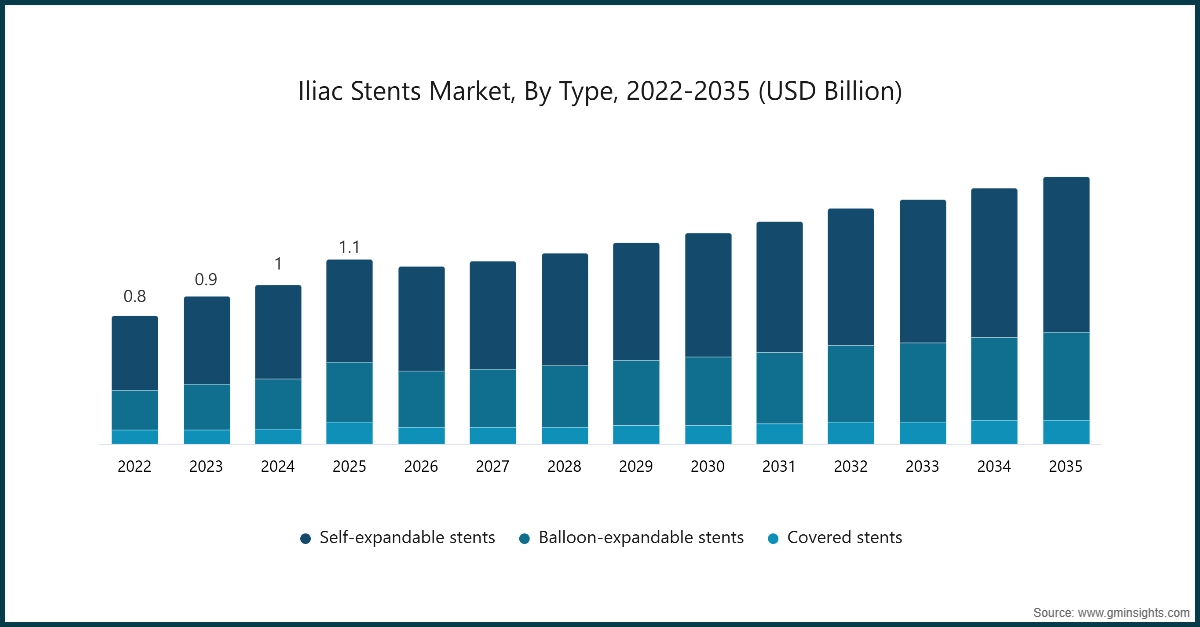
The market has increased from USD 0.8 billion in 2022 and reached USD 1 billion in 2024, with a historic growth rate of 6.1%. The increasing prevalence of peripheral artery disease (PAD) is contributing to the growing demand for iliac stents. As the population ages and risk factors such as diabetes, obesity, and smoking become more prevalent, the incidence of PAD is on the rise. More people are experiencing symptoms related to PAD, such as leg pain, cramping, and difficulty walking, which can significantly impact their quality of life.
For instance, according to the Centers for Disease Control and Prevention (CDC), the number of people affected by peripheral artery disease (PAD) in the U.S. is approximately 6.5 million people aged 40 and older. This condition primarily affects African American individuals, with similar or slightly higher rates for Hispanics compared to non-Hispanic white people. This rising prevalence of PAD necessitates highly accurate treatment procedures and related devices, thereby anticipating an increasing demand for iliac stents.
Iliac stents are medical devices used to treat blockages or narrowing (stenosis) in the iliac arteries, which are located in the pelvis and supply blood to the legs. The iliac stent is a small, mesh-like tube made of metal, usually stainless steel or nitinol that is inserted into the narrowed artery to hold it open.
The global iliac stents market was estimated at USD 1 billion in 2025. The market is expected to grow from USD 1.1 billion in 2026 to USD 1.6 billion in 2035, at a CAGR of 4.7% during the forecast period, according to the latest report published by Global Market Insights Inc.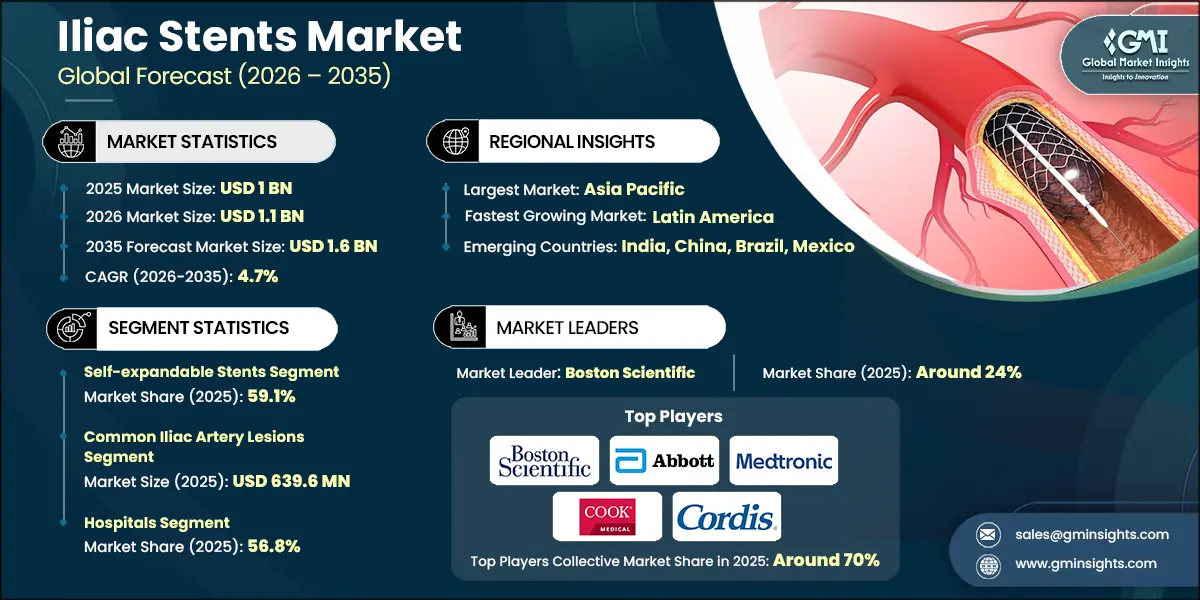
To get key market trends
Iliac Stents Market Trends
Recent advancements in iliac stent design and materials have been focused on enhancing efficiency and effectiveness. These advancements include the use of innovative technologies in the development of materials and production techniques that played a significant role in improving stent design, with a focus on optimizing geometric properties such as length, thickness, and scaffold design for better performance.
- Iliac stent design and materials have been driven by innovative technologies and materials to enhance their performance. One notable advancement is the use of four-dimensional (4D) printing technology to create dynamic stents, allowing for more tailored and efficient solutions.
- This technology enables the fabrication of stents with improved geometric properties and scaffold designs, optimizing their effectiveness in treating vascular conditions, thus expected to fuel their demand in the market.
- Furthermore, the development of drug-eluting stents has significantly impacted the field by reducing restenosis rates and improving patient outcomes. These stents are designed to release medication over time, preventing the re-narrowing of the arteries after stent placement. Such technological advancement are increasing the advantages associated with iliac stents and anticipating their increased market progress.
Iliac Stents Market Analysis
Learn more about the key segments shaping this market
Based on type, the iliac stents market is segmented into self-expandable stents, balloon-expandable stents, and covered stents. The self-expandable stents segment accounted for a majority share of 59.1% in 2025. Higher success rates of iliac angioplasty and stenting is anticipated to fuel the segmental growth. The segment is expected to reach USD 940.9 million by 2035, growing at a CAGR of 4.6% during the forecast period.
- Physician preference plays a significant role in device selection and adoption. Some interventional cardiologists and vascular surgeons may prefer balloon-expandable stents due to their familiarity with the deployment technique and perceived ease of use compared to other types of stents, which is anticipated to boost the segment expansion.
- Further, balloon-expandable stents are often made of durable materials, such as stainless steel or cobalt-chromium alloys, which provide long-term support to the vessel. This durability helps prevent stent collapse or migration over time, reducing the need for repeat interventions and the increase in demand.
- The balloon-expandable stents segment is anticipated to reach over USD 526.7 million by 2035. Balloon-expandable stents are generally well accepted for the treatment of iliac arteries because of their accuracy, precise positioning, collective radial strength, and reliable delivery via balloon catheters.
- In addition, with balloon-expandable stents, a professional can accurately place them in areas where controlled deployment is very important by using the expanding balloons to accurately position them.
- Furthermore, balloon-expandable stents’ rigid structures provide excellent scaffolding, making them ideal for treating lesions located near bifurcation or for lesions that require precise alignment.
Based on artery lesions, the iliac stents market is segmented into common iliac artery lesions, severe calcified lesions, and complete obstructive lesions. The common iliac artery lesions segment generated the highest revenue of USD 639.6 million in 2025.
- Risk factors for iliac artery lesions, such as diabetes, obesity, hypertension, and smoking, are becoming more prevalent worldwide. These risk factors accelerate the development and progression of atherosclerosis, which may result in a greater number of individuals requiring treatment for iliac artery lesions.
- Additionally, the development of minimally invasive endovascular procedures, such as angioplasty and stenting, has revolutionized the treatment of iliac artery lesions. This increase in the adoption of minimally invasive techniques is contributing to the growing demand for interventions targeting iliac artery lesions.
- The severe calcified lesions segment was valued at USD 271.8 million in 2025. Calcified lesions in the iliac circulation can be problematic for interventional treatment due to the presence of a hardened plaque that significantly reduces the elasticity of these vessels and complicates the navigation of devices through the blockages.
- In addition, to overcome the obstructed narrowed artery and to ensure long-term patency, stents that can deliver high radial force at the time of expansion may be needed for successful treatment. Before placing stents in calcified lesions, the physician might use adjunctive devices, such as atherectomy or high-pressure ballooning, to improve the chances of obtaining successful results with stent placement.
- Further, the durability, resistance to fracture, and ability to conform to rigid vessel walls are important factors when selecting a stent type for calcified lesions.
Learn more about the key segments shaping this market
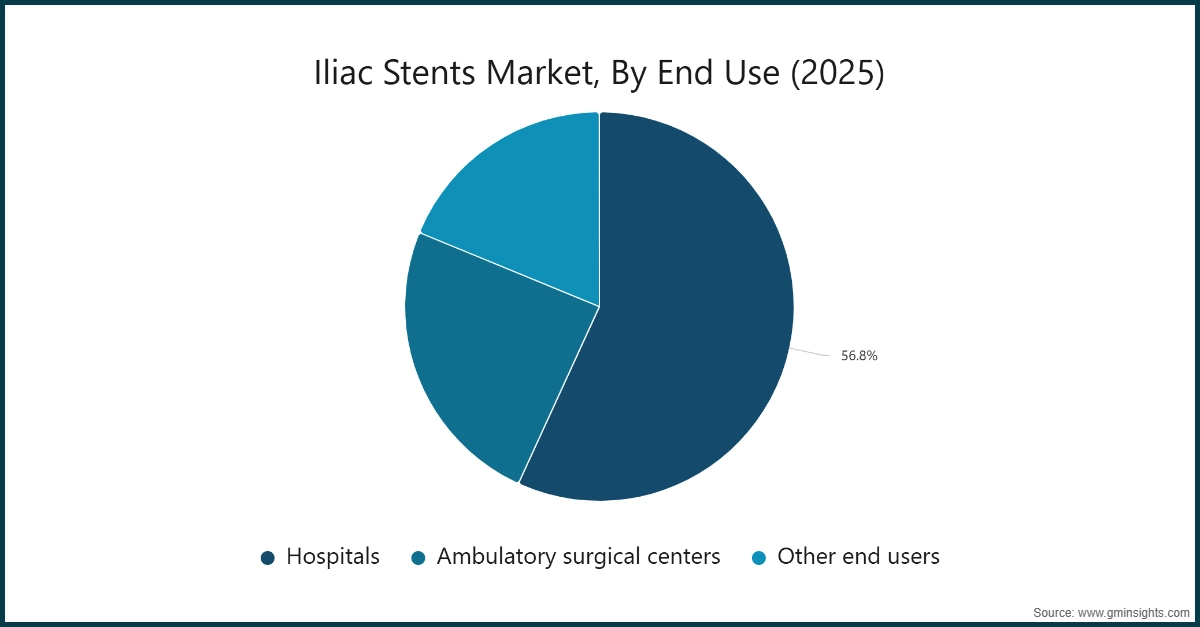
Based on end use, the iliac stents market is segmented into hospitals, ambulatory surgical centers, and other end-users. The hospitals segment accounted for the leading market share of 56.8% in 2025.
- Hospitals typically have specialized departments or units dedicated to interventional cardiology, vascular surgery, or interventional radiology. These departments are staffed with skilled healthcare professionals, including cardiologists, vascular surgeons, and radiologists, who have the expertise to diagnose and treat conditions such as peripheral artery disease (PAD) requiring iliac stenting, making hospitals the primary end user.
- Additionally, hospitals, with their access to a wide range of resources, including medical supplies, medications, and support staff, are well-equipped to facilitate the successful execution of iliac stenting procedures. This increased accessibility may position them as the key end users of iliac stents.
- The ambulatory surgical centers segment was valued at USD 248.7 million in 2025 and is expected to grow at a CAGR of 5.3% during the forecast period. Ambulatory surgical centers (ASCs) are becoming increasingly important settings for iliac stent procedures as healthcare systems shift toward outpatient vascular care.
- Furthermore, providing shorter turnaround times, lower procedure costs, and streamlined processes has allowed ASCs to become preferred locations for minimally invasive procedures.
- Progressive advancement in imaging, catheter technology, and rapid recovery protocols now permits safe iliac stenting to be completed safely outside traditional hospital environments.
- Additionally, physicians gain greater scheduling flexibility while patients benefit from shorter waiting times and faster discharges.
Looking for region specific data?
North America Iliac Stents Market
The North America iliac stents industry accounted for a significant share of 23.6% in 2025 and is anticipated to show notable growth over the forecast period.
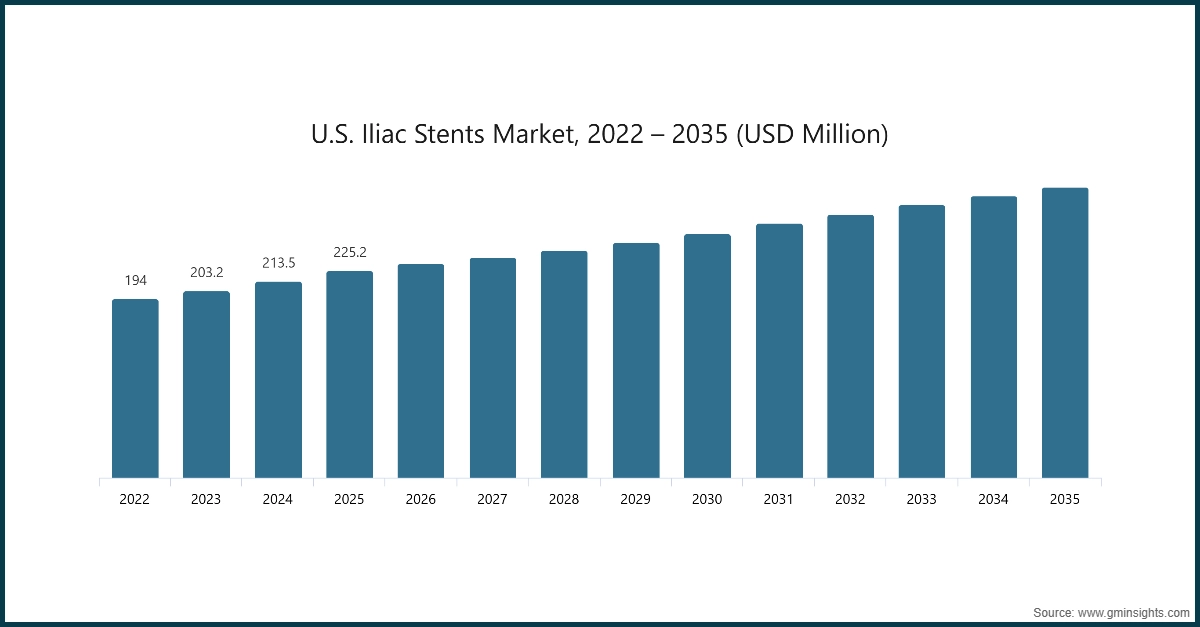
- The U.S. market was valued at USD 225.2 million in 2025, up from USD 213.5 million in 2024. Rising incidence of diabetes and obesity contributing to arterial disorders and increasing R&D investments are among the key factors supporting the industry growth.
- Increasing awareness among patients and healthcare providers about vascular diseases and available treatment options, leading to earlier diagnosis and intervention. Patient education initiatives promote proactive management of vascular conditions, further contributing to the growing demand for iliac stents in North America.
- Additionally, strong clinical evidence supporting the efficacy and safety of iliac stenting, along with clinical practice guidelines recommending endovascular interventions for iliac artery lesions, influence clinical decision-making and drive the demand for these procedures in the region.
Europe Iliac Stents Market
Europe accounted for a substantial share of the iliac stents industry and was valued at USD 116.1 million in 2025.
- The iliac stents market is showing a continuing growth trend in Europe due to an aging demographic and the large number of peripheral artery disease cases affecting major European countries.
- In addition, there has been increased emphasis on early vascular screenings, as well as very high adoption of minimally invasive endovascular procedures clinically, resulting in accelerated demand for iliac stenting.
- Further, the well-established healthcare system in Europe has provided for the rapid deployment of new, advanced stenting technologies and allowed physicians to become more familiar with complex iliac vessel interventions.
- Furthermore, the growing investment in outpatient vascular services and broader reimbursement coverage will contribute to increased numbers of procedures performed in both western and central European countries.
Asia Pacific Iliac Stents Market
The Asia Pacific iliac stents industry accounted for a majority share of the market and was valued at USD 584.4 million in 2025.
- The iliac stent market in the Asia Pacific is witnessing high growth driven by expanding healthcare access, the rise in prevalence of vascular disease and diabetes, and the continued use of minimally invasive treatment options.
- Additionally, increased urbanization and lifestyle changes have fueled the incidence of peripheral artery disease, leading health systems to fortify their interventional cardiology and vascular programs. Countries such as China, India, and Southeast Asia are making substantial investments into modernizing their hospitals and improving their advanced imaging capabilities to allow for greater utilization of endovascular stenting.
- Moreover, local manufacturing initiatives are boosting device affordability, supporting broader penetration across mid‑income populations.
Latin America Iliac Stents Market
The Latin American iliac stents industry is anticipated to exhibit remarkable growth during the analysis period.
- The Latin American market for iliac stents is growing rapidly because healthcare providers have a keen focus on treating cardiovascular and peripheral vascular diseases. The growth of iliac stenting is supported by improvements to hospitals, especially in Brazil, Mexico, Colombia, and Chile.
- In addition, as the population ages and more people have complicated vascular problems, there has been an increase in the number of procedures performed using minimally invasive angioplasty and stenting.
- Further, the continued growth of private health care networks and government initiatives aimed at improving vascular health are positively affecting the growth of iliac stent procedures.
Middle East and Africa Iliac Stents Market
The Middle East and Africa iliac stents industry is expected to experience substantial growth over the analysis timeframe.
- The iliac stent market is experiencing an upsurge due to rising rates of diabetes and obesity, as well as peripheral artery disease, in addition to increasing need for iliac stents through growing health care budgets.
- Investment activities taking place in Gulf States on the development of advanced cardiovascular centers have resulted in a rapid increase in the use of minimally invasive vascular procedures.
- Additionally, this demand is also witnessing growth due to improvements made in diagnostic capabilities (including increased screening programs), expansion of catheterization labs, and overall growth in demand for these types of procedures.
- Further, establishing partnerships with international medical teams and the gradual introduction of modern stenting technologies are closing the infrastructure gaps.
Iliac Stents Market Share
The iliac stents industry is consolidated product category in which competition is primarily driven by innovations, clinical performance, as well as global distribution capabilities. A handful number of multinational medical device companies dominate the market, each leveraging their unique ability to maintain its presence in the market.
Most of the top iliac stent manufacturers focus on technological differentiation based on advanced materials, improved radial strength and flexibility, and new designs such as drug delivery systems. In addition to product performance, manufacturers compete for market share at the level of product design through ease of deployment, patency rates, and long-term delivery system accuracy to meet the different needs of various patients with multiple complex vascular anatomies.
Strong physician training programs, along with the availability of clinical trial assistance and partnerships that enable physicians to use endovascular therapy more broadly, also create competitive factors for products to be innovative. Further, Many of the companies that are well established and have a large portfolio focused on cardiovascular products use the synergies available among their diagnostic, imaging, and interventional product segments to provide integrated treatment solutions.
Emerging companies and mid‑tier manufacturers focus on differentiating their product offerings by targeting niche markets, manufacturing low-cost stents, and expanding into fast-growing regions of the world experiencing rapid growth in peripheral arterial disease. These companies also try to address the healthcare system's transition to outpatient endovascular procedures by creating simple device designs. Overall, competitive intensity is rising as manufacturers pursue better safety profiles, lower restenosis rates, and enhanced deliverability among other parameters.
Iliac Stents Market Companies
A few of the prominent players operating in the iliac stents industry include:
- Abbott Laboratories
- Alvimedica
- B. Braun
- Becton, Dickinson and Company
- Biotronik
- Boston Scientific
- Cook
- Cordis
- Getinge
- iVascular
- Medtronic
- W. L. Gore & Associates, Inc.
- Boston Scientific
Boston Scientific emphasizes portfolio diversification, continuous product innovation in vascular therapies, strategic acquisitions, strong physician‑training programs, and expanding presence in high‑growth regions to improve procedural outcomes and strengthen competitive positioning.
Cook Medical focuses on specialized peripheral vascular solutions, customized physician‑driven device development, expanding manufacturing capabilities, maintaining strong clinical partnerships, and entering underserved markets with durable, reliable stent technologies tailored to complex anatomies.
Iliac Stents Market Report Attributes
| Key Takeaway | Details |
|---|---|
| Market Size & Growth | |
| Base Year | 2025 |
| Market Size in 2025 | USD 1 Billion |
| Market Size in 2026 | USD 1.1 Billion |
| Forecast Period 2026-2035 CAGR | 4.7% |
| Market Size in 2035 | USD 1.6 Billion |
| Key Market Trends | |
| Drivers | Impact |
| Increasing prevalence of peripheral artery disease (PAD) | Growing PAD cases are increasing patient volumes requiring iliac interventions, driving steady demand for stents and expanding procedure frequency across healthcare systems |
| Technological advancements in stents design and materials | Improved stent flexibility, strength, and deliverability are enhancing procedural outcomes, boosting physician confidence and accelerating adoption in complex iliac anatomies |
| Rising demand for minimally invasive procedures | Patient preference for faster recovery and reduced hospital stays is pushing healthcare providers toward endovascular stenting, increasing utilization across outpatient and inpatient settings |
| Pitfalls & Challenges | Impact |
| Stringent regulatory approvals | Lengthy approval timelines slow product introductions, limiting availability of next‑generation stents and delaying technological progress in certain regions |
| High cost of stent procedures and devices | Elevated device and procedure costs restrict access for lower‑income populations and strain budgets of healthcare systems with limited reimbursement support |
| Opportunities: | Impact |
| Growing adoption of image-guided endovascular procedures | Wider integration of advanced imaging will improve precision, reduce complications, and expand suitability for complex iliac cases, significantly increasing procedural volumes and technology demand |
| Market Leaders (2025) | |
| Market Leader |
Around 24% |
| Top Players |
Top 5 Players Collective Market Share Around 70% |
| Competitive Edge |
|
| Regional Insights | |
| Largest Market | Asia Pacific |
| Fastest growing market | Latin America |
| Emerging countries | India, China, Brazil, Mexico |
| Future outlook |
|
What are the growth opportunities in this market?
Iliac Stents Industry News:
- In July 2025, Cook Medical announced the commercial availability of its Zenith iliac branch device (ZBIS) in the U.S. The US Food and Drug Administration (FDA) has approved it as an endovascular treatment option for aortoiliac or iliac aneurysmal disease. This product launch may enable the company to improve its business prospects.|
- In March 2025, Boston Scientific Corporation announced that the U.S. Food and Drug Administration (FDA) had approved its Express LD Iliac Premounted Stent System for use in iliac arteries. It is the first and only low-profile, premounted, balloon-expandable stent approved by the FDA for use in treating iliac artery disease. This development may further improve the company's industry presence.
- In March 2024, Becton, Dickinson and Company initiated an international study to expand treatment options for patients with peripheral arterial disease (PAD). The study aims to assess the safety and effectiveness of the BD Vascular Covered Stent for the treatment of PAD. This initiative may enhance the company’s reach and may enhance its position in the iliac market.
The iliac stents market research report includes an in-depth coverage of the industry with estimates and forecasts in terms of revenue in (USD Million) from 2022 - 2035 for the following segments:
Market, By Type
- Self-expandable stents
- Balloon-expandable stents
- Covered stents
Market, By Artery Lesions
- Common iliac artery lesions
- Severe calcified lesions
- Complete obstructive lesions
Market, By End Use
- Hospitals
- Ambulatory surgical centers
- Other end users
The above information is provided for the following regions and countries:
- North America
- U.S.
- Canada
- Europe
- Germany
- UK
- France
- Spain
- Italy
- Netherlands
- Asia Pacific
- China
- Japan
- India
- Australia
- South Korea
- Latin America
- Brazil
- Mexico
- Argentina
- MEA
- South Africa
- Saudi Arabia
- UAE
Frequently Asked Question(FAQ) :
What was the market size of the iliac stents in 2025?
The market size was USD 1 billion in 2025, growing at a CAGR of 4.7% through 2035. Growth is driven by the increasing prevalence of peripheral artery disease (PAD), advancements in stent design, and rising demand for minimally invasive procedures.
What is the projected value of the iliac stents market by 2035?
The market is poised to reach USD 1.6 billion by 2035, fueled by technological innovations and the growing burden of vascular diseases.
What is the expected size of the iliac stents industry in 2026?
The market size is projected to reach USD 1.1 billion in 2026.
How much revenue did the self-expandable stents segment generate in 2025?
The self-expandable stents segment accounted for approximately 59.1% of the market share in 2025 and is projected to grow at a CAGR of 4.6% through 2035.
What was the valuation of the common iliac artery lesions segment in 2025?
The common iliac artery lesions segment was valued at USD 639.6 million in 2025, driven by increasing prevalence of risk factors such as diabetes, obesity, and hypertension.
What is the growth outlook for the hospitals segment from 2026 to 2035?
The hospitals segment held a 56.8% market share in 2025 and is expected to grow steadily through 2035 due to the presence of specialized departments and skilled healthcare professionals for vascular treatments.
Which region leads the iliac stents sector?
The United States leads the market, with a valuation of USD 225.2 million in 2025, supported by rising incidences of diabetes and obesity along with increasing R&D investments.
What are the upcoming trends in the iliac stents market?
Key trends include adoption of 4D printing technology for dynamic stents, development of drug-eluting stents to reduce restenosis rates, and advancements in scaffold design and geometric optimization.
Who are the key players in the iliac stents industry?
Prominent players include Abbott Laboratories, Alvimedica, B. Braun, Becton, Dickinson and Company, Biotronik, Boston Scientific, Cook, Cordis, Getinge, and iVascular.
Iliac Stents Market Scope
Related Reports