Summary
Table of Content

Europe Advanced Wound Care Market
Get a free sample of this report
Form submitted successfully!
Error submitting form. Please try again.
Thank you!
Your inquiry has been received. Our team will reach out to you with the required details via email. To ensure that you don't miss their response, kindly remember to check your spam folder as well!
Request Sectional Data
Thank you!
Your inquiry has been received. Our team will reach out to you with the required details via email. To ensure that you don't miss their response, kindly remember to check your spam folder as well!
Form submitted successfully!
Error submitting form. Please try again.
Europe Advanced Wound Care Market Size
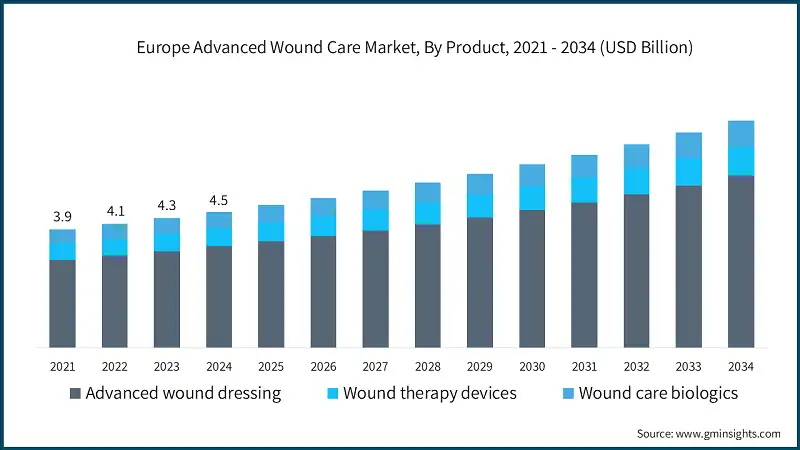
The Europe advanced wound care market size was valued at USD 4.5 billion in 2024. The market is expected to grow from USD 4.7 billion in 2025 to USD 7.5 billion in 2034, at a CAGR of 5.3% during the forecast period, according to the latest report published by Global Market Insights Inc. The advanced wound care market is experiencing constant growth, propelled by rising prevalence of chronic diseases, technological advancements in wound care products, increasing surgical procedures and post-operative wounds.
Europe Advanced Wound Care Market Key Takeaways
Market Size & Growth
- 2024 Market Size: USD 4.5 Billion
- 2025 Market Size: USD 4.7 Billion
- 2034 Forecast Market Size: USD 7.5 Billion
- CAGR (2025–2034): 5.3%
Regional Dominance
- Largest Market: Germany
- Fastest Growing Country: UK
Key Market Drivers
- Rising prevalence of chronic diseases.
- Technological advancements in wound care products.
- Increasing surgical procedures and post-operative wounds.
- Increasing aging population.
Challenges
- High cost of advanced products.
- Shortage of skilled wound care specialists.
Opportunity
- Expansion of homecare and remote monitoring.
Key Players
- Leading Players: Top 5 players in this market include Smith & Nephew, Mölnlycke Health Care, ConvaTec Group, Coloplast, HARTMANN International, which collectively held a market share of 60% in 2024.
Get Market Insights & Growth Opportunities
The Europe advanced wound care market is witnessing sharp growth, expanding from USD 3.9 billion in 2021 to USD 4.3 billion in 2023. This growth is closely linked to the rising prevalence of chronic conditions such as diabetes, which significantly increases the risk of complex wounds like diabetic foot ulcers. According to IDF Europe Region, the number of adults (aged 20–79) living with diabetes has surged from 22.4 million in 2000 to 65.6 million in 2024, with projections reaching 72.4 million by 2050. This rise underscores the growing need for specialized wound care technologies that support healing, prevent infection, and reduce hospital readmissions.
Europe’s healthcare systems are responding to this challenge by integrating advanced wound care products such as bioactive dressings, negative pressure wound therapy, and antimicrobial solutions into chronic disease management. The situation is particularly urgent in countries like Italy, Denmark, Israel, and the United Kingdom, where recent studies have highlighted a sharp increase in diabetes-related complications requiring wound care interventions.
Additionally, older adults are more likely to suffer from chronic conditions such as diabetes, vascular diseases, and immobility all of which contribute to the development of complex wounds like pressure ulcers, venous leg ulcers, and diabetic foot ulcers. These wounds require specialized care, often involving advanced wound care products that promote faster healing, prevent infection, and reduce hospitalization. Advanced wound care technologies such as hydrocolloid dressings, foam dressings, are increasingly being adopted in geriatric care settings, including hospitals, nursing homes, and home healthcare. The growing elderly population directly translates into a larger patient base needing these solutions, making it a critical growth factor for the market. For instance, according to European commission on 1 January 2024, the EU population was estimated at 449.3 million, with 21.6% aged 65 years and over. This means that nearly one in five Europeans is in an age group highly susceptible to chronic wounds and post-surgical complications. As this demographic continues to expand, the demand for effective wound care solutions will rise proportionally.
Advanced wound care refers to specialized treatments and products designed to manage complex, chronic, or non-healing wounds. It goes beyond traditional dressings by using technologies such as moisture-retentive dressings, bioengineered tissue, and smart monitoring systems. These solutions aim to accelerate healing, reduce infection risks, and improve patient outcomes in cases like diabetic ulcers, pressure injuries, and surgical wounds.

To get key market trends
Europe Advanced Wound Care Market Trends
- Europe’s advanced wound care market is being transformed by rapid technological innovations aimed at improving healing outcomes and reducing healthcare costs. Smart wound care systems are now capable of monitoring wound conditions in real time tracking moisture levels, temperature, and infection markers.
- These technologies help clinicians to make timely decisions, reducing complications and hospital stays. The shift toward outpatient and home-based care has further accelerated the adoption of portable and intelligent wound care devices across European healthcare settings.
- Advanced dressings in Europe have evolved to include features such as antimicrobial coatings, moisture-balancing layers, and enhanced adhesion tailored to specific wound types. Products like smart hydrocolloid and foam dressings are gaining popularity for their ability to adapt to wound environments and signal early signs of infection.
- Additionally, the integration of wound care devices with digital platforms and telemedicine is enabling remote monitoring and continuous care, especially for elderly and chronic wound patients in rural or underserved regions.
- The adoption of advanced wound care technologies is accelerating across hospitals, specialized clinics, and home care environments in Europe. This growth is driven by the increasing need for personalized, efficient, and cost-effective wound management solutions. As chronic illnesses such as diabetes and vascular conditions become more widespread, and surgical procedures continue to rise, the demand for innovative wound care products is expected to expand steadily. These trends are positioning Europe as a key market for advanced wound care, supported by technological progress and evolving healthcare delivery models.
Europe Advanced Wound Care Market Analysis
Learn more about the key segments shaping this market
In 2021, Europe market was valued at USD 3.9 billion. The following year, it saw a rise to USD 4.1 billion, and by 2023 the market further climbed to USD 4.3 billion.
Based on product, Europe market is segmented into advanced wound dressings, wound therapy devices, and wound care biologics. Among these, advanced wound dressings dominate the market, accounting for approximately 74.5% of the total share in 2024. Their widespread use is attributed to their versatility, clinical effectiveness, and ability to manage a broad spectrum of wound types, from chronic ulcers to post-operative incisions.
- Advanced wound dressings incorporate innovative materials such as hydrocolloids, alginates, foams, and antimicrobial layers. These dressings are designed to maintain optimal moisture levels, reduce infection risks, and accelerate tissue regeneration. Their adaptability makes them essential for treating diabetic foot ulcers, pressure injuries, surgical wounds, and burns, conditions that are increasingly prevalent across Europe’s aging and chronically ill population.
- The effectiveness of advanced dressings in improving healing outcomes and reducing hospital stays has led to their rapid adoption across European hospitals, outpatient clinics, and homecare settings. According to NIH, Europe performs around 20 million major surgeries annually, creating a substantial need for post-operative wound care solutions.
- Additionally, the high prevalence of pressure ulcers 14.5% in Europe according to a 2020 global study further creates demand for specialized products like collagen dressings, which support tissue repair and reduce complications in chronic wound management.
- Advanced wound dressings continue to play a pivotal role in Europe’s wound care landscape. Their proven clinical benefits, ease of use, and compatibility with modern healthcare delivery models make them a cornerstone of effective wound management.
- As surgical volumes rise and chronic conditions become more widespread, the demand for these technologically advanced solutions is expected to grow.
Based on application, Europe advanced wound care market is segmented into chronic wounds and acute wounds. The acute wound was worth USD 2.8 billion in 2024.
- The growing prevalence of chronic diseases such as diabetes, obesity, and vascular disorders across Europe is significantly contributing to the rise in non-healing wounds.
- Individuals with diabetes are vulnerable to complications like diabetic foot ulcers (DFUs) due to poor circulation and impaired healing.
- For instance, according to MedTech Europe the population prevalence of wounds is estimated at 3–4 per 1,000 people In Europe, translating to approximately 1.5–2 million individuals affected at any given time, with an annual incidence of 4 million new cases. Additionally, 25–50% of acute hospital beds are occupied by patients with wounds, many of which are acquired during hospitalization, highlighting the significant burden on healthcare systems.
- Europe is witnessing a surge in the adoption of Negative Pressure Wound Therapy (NPWT), bioactive dressings, and electrotherapy devices, which are proving effective in accelerating healing and reducing treatment durations for chronic wounds. NPWT, in particular, has shown promising results in improving outcomes for diabetic ulcers and pressure injuries. These technologies are increasingly integrated into both hospital and homecare settings, enhancing accessibility and enabling more efficient wound care delivery.
- As the region continues to face chronic health conditions, the demand for advanced wound care solutions is expected to grow steadily.
Learn more about the key segments shaping this market
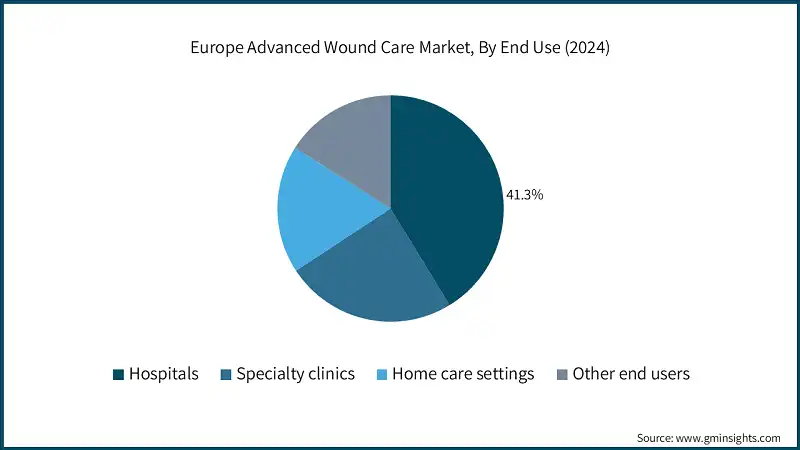
Based on end use, the Europe advanced wound care market is categorized into hospitals, specialty clinics, home care setting and other end users. Among these, hospitals segment dominated the market in 2024, accounting for 41.3% of the total market share. This dominance is projected to continue, with the segment expected to reach USD 3.1 billion by 2034
- Home care settings are becoming increasingly important in Europe’s advanced wound care market, fueled by a growing preference for outpatient and remote treatment options. Patients dealing with chronic wounds, post-operative incisions, and pressure injuries are opting for home-based care to minimize hospital stays and reduce healthcare expenses. This shift is boosting demand for portable, user-friendly wound care technologies such as Negative Pressure Wound Therapy (NPWT) systems, advanced dressings, and smart monitoring tools.
- In European households, advanced wound care products are widely used to manage conditions like diabetic foot ulcers, venous leg ulcers, and pressure sores. Compact NPWT devices and intelligent dressings allow patients to receive continuous therapy without needing hospitalization, enhancing convenience and treatment adherence. Remote monitoring via telemedicine platforms enables healthcare professionals to track wound healing progress and improving outcomes in both urban and rural settings.
- Home care emphasizes both cost-effectiveness and patient comfort. Advanced wound care technologies designed for self-use or caregiver support help reduce the strain on hospitals while maintaining high clinical standards. These solutions are particularly valuable in regions with aging populations and limited access to specialized wound care facilities, making home-based treatment a practical and scalable alternative.
- With chronic wound cases on the rise and European healthcare systems increasingly promoting decentralized care, home settings are expected to play a pivotal role in the future of wound management.
Looking for region specific data?
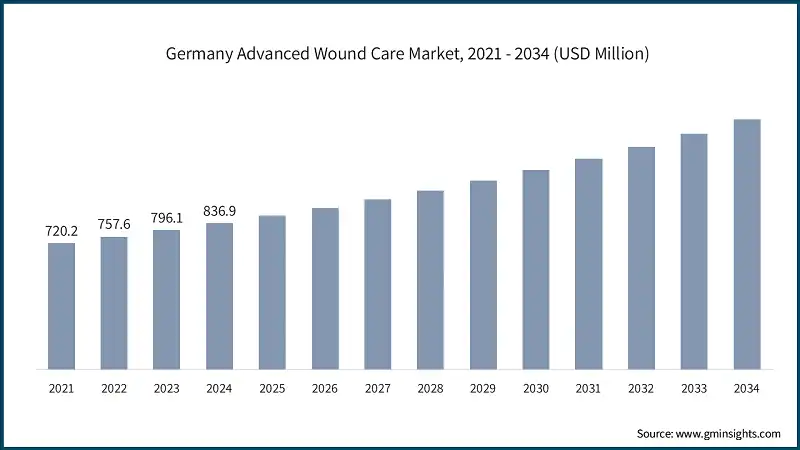
Germany dominates the Europe advanced wound care market, showcasing strong growth potential.
- Germany plays a pivotal role in the European advanced wound care market, supported by its robust healthcare infrastructure, commitment to clinical innovation, and aging population. By 2050, the number of people aged 65 and above in Germany is projected to reach 24 million, representing nearly a third of the population. This demographic shift is expected to significantly increase the incidence of chronic wounds such as pressure ulcers, diabetic foot ulcers, and venous leg ulcers, driving demand for advanced wound care solutions.
- Additionally, pressure ulcers remain a significant concern in Germany. According to the IQTIG Quality Indicators Report (2020), 21.6% of pressure ulcers treated in German hospitals were hospital-acquired. In 2021, over 395,980 pressure ulcers were treated nationwide, with more than 82,000 cases originating during hospitalization. Between 2012 and 2021, pressure ulcers contributed to an average of 743 deaths annually due to related complications. These figures highlight the urgent need for effective wound prevention and management strategies, particularly in long-term care and surgical recovery settings.
- As a result of rising chronic conditions and an aging population, demand for effective wound management solutions will continue to accelerate across the region.
The UK advanced wound care market is anticipated to grow at the 5.9% CAGR during the analysis timeframe.
- The increasing prevalence of chronic diseases, particularly diabetes, is a major driver of growth in Europe’s advanced wound care market. Diabetes significantly raises the risk of developing diabetic foot ulcers (DFUs), which are among the most challenging wounds to treat.
- For instance, according to Wounds UK, nearly 7,000 lower limb amputations occur annually in the UK due to diabetic foot complications. Alarmingly, 80% of these amputations are preceded by diabetic foot ulcers (DFUs), and the five-year mortality rate for patients with diabetes who develop a foot ulcer is 50%, exceeding that of many common cancers.
- As chronic conditions like diabetes continue to rise across Europe, the demand for advanced wound care solutions, especially those targeting DFUs, will intensify, making this segment a critical focus for innovation and investment in the region.
France advanced wound care market is estimated to grow with a significant CAGR in the Europe advanced wound care market.
- As diabetes continues to rise in France, so does the incidence of diabetic foot ulcers (DFUs) a serious complication that often leads to long-term wound care needs. With 8.6% of adults affected, totaling 3,942,900 cases, the growing diabetic population is contributing to a surge in chronic wounds requiring specialized treatment.
- DFUs demand advanced wound care solutions such as bioactive dressings, NPWT systems, and smart monitoring tools, driving market growth across hospitals, clinics, and homecare settings.
- The increasing burden of diabetes in France is fueling demand for innovative wound care technologies, positioning the country as a key driver in the expansion of Europe’s advanced wound care market.
Spain advanced wound care market is estimated to grow with a significant CAGR in the Europe advanced wound care market.
- Spain is facing a growing diabetes burden, with 4.7 million adults currently living with the condition, making it the fifth highest in the IDF Europe Region. As diabetes prevalence increases, so does the incidence of diabetic foot ulcers (DFUs) a serious complication that often leads to infection, hospitalization, and even amputation.
- Treating DFUs requires prolonged, specialized care, which is boosting demand for advanced wound care solutions including therapeutic dressings, portable NPWT devices, and smart wound monitoring technologies.
- The rising number of diabetes cases in Spain is creating the need for effective wound care technologies, positioning the country as a key contributor to the growth of Europe’s advanced wound care market.
Italy advanced wound care market to experience substantial growth in the Europe advanced wound care market in 2024.
- Italy’s aging population is a major factor driving growth in the advanced wound care market. Older adults are more prone to chronic wounds such as pressure ulcers, venous leg ulcers, and diabetic foot ulcers due to reduced mobility, slower healing, and higher rates of comorbidities
- For instance, according to Eurostat, Italy is the oldest country in the European Union, with a median age above 48 and 24% of its population aged 65 and over roughly one in four residents. This demographic shift is creating sustained demand for advanced wound care solutions that support faster recovery and reduce complications.
- With one of the highest elderly populations in Europe, Italy is poised to see continued growth in the advanced wound care market, driven by the need for specialized, effective, and patient-friendly wound management technologies.
Europe Advanced Wound Care Market Share
Leading companies such as Smith & Nephew, Mölnlycke Health Care, Coloplast, HARTMANN International and ConvaTec are actively expanding their footprint across Europe through strategic acquisitions, regional partnerships, and innovation-driven collaborations. The top 5 players are contributing 60% of market share. These efforts aim to strengthen their presence in key European markets and support long-term growth in the evolving advanced wound care landscape.
Their product portfolios now include innovative wound care technologies such as bioengineered dressings, smart wound monitoring systems, and advanced biologics. By integrating digital tools and enabling remote wound management, these companies are enhancing treatment accuracy, scalability, and patient comfort across diverse care settings.
Collaboration with European healthcare providers and regulatory bodies ensures alignment with clinical standards and safety protocols. At the same time, initiatives focused on improving access in aging populations and underserved regions are making advanced wound care more inclusive and widely available.
Through continuous innovation and a patient-centric approach, these companies are reshaping wound care delivery in Europe reducing complications, shortening recovery times, and supporting more sustainable healthcare systems across the region.
Europe Advanced Wound Care Market Companies
Prominent players operating in the Europe market are as mentioned below:
- Solventum
- Accel-Heal Technologies
- B. Braun
- Cardinal Health
- Coloplast
- ConvaTec Group
- DeRoyal Industries, Inc.
- HARTMANN International
- Hollister Incorporated
- Integra LifeSciences Corporation
- Medela AG
- Medline Industries
- Mölnlycke Health Care
- Organogenesis
- Sky Medical Technology
- Smith & Nephew
- Talley Group Ltd
- Vomaris Innovations
- HARTMANN International
Paul Hartmann AG (HARTMANN) offers a broad portfolio of wound care products tailored for both acute and chronic wound management. Its solutions are widely used in hospitals and care facilities across Europe. HARTMANN’s long-standing clinical partnerships reinforce its market leadership.
Coloplast is a key provider of wound care solutions focused on moisture balance and exudate management. Its offerings are designed to support healing in chronic and acute wounds. Coloplast’s commitment to user-friendly design and clinical education strengthens its role in European care settings.
Integra LifeSciences Corporation is a recognized provider of advanced wound care solutions. It focuses on regenerative technologies and tissue repair for complex and chronic wounds. Integra supports clinical outcomes through biologically derived therapies and strategic partnerships with healthcare institutions.
Europe Advanced Wound Care Market Report Attributes
| Key Takeaway | Details |
|---|---|
| Market Size & Growth | |
| Base Year | 2024 |
| Market Size in 2024 | USD 4.5 Billion |
| Market Size in 2025 | USD 4.7 Billion |
| Forecast Period 2025 – 2034 CAGR | 5.3% |
| Market Size in 2034 | USD 7.5 Billion |
| Key Market Trends | |
| Drivers | Impact |
| Rising prevalence of chronic diseases | Drives sustained demand for long-term wound care solutions, especially for diabetic foot ulcers and pressure injuries. |
| Technological advancements in wound care products | Technological advancements in wound care products |
| Increasing surgical procedures and post-operative wounds | Expands the need for effective post-surgical wound management across healthcare facilities. |
| Increasing aging population | Boosts market growth due to higher incidence of chronic wounds and slower healing among elderly patients. |
| Pitfalls & Challenges | Impact |
| High cost of advanced products | Limits accessibility and adoption, especially in cost-sensitive healthcare systems and smaller clinics. |
| Shortage of skilled wound care specialists | Hampers effective treatment delivery and slows the implementation of advanced wound care protocols. |
| Opportunities: | Impact |
| Expansion of homecare and remote monitoring | Enables more accessible and cost-effective wound management, reducing hospital dependency and improving patient convenience. |
| Market Leaders (2024) | |
| Market Leaders |
28.82 % market share |
| Top Players |
Collective market share in 2024 is 60% |
| Competitive Edge |
|
| Regional Insights | |
| Largest market | Germany |
| Fastest growing market | UK |
| Emerging countries | Germany, France, Italy |
| Future outlook |
|
What are the growth opportunities in this market?
Europe Advanced Wound Care Industry News
- In June 2022, Smith+Nephew announced a major investment exceeding USD 100 million to build a new research and development and manufacturing facility for its Advanced Wound Management division near Hull, UK. Supported by a UK government grant, the facility is designed to foster innovation and collaboration, aiming to support over USD 10 billion in sales within its first decade. The site will serve as a hub for developing next generation wound care technologies, reinforcing Smith+Nephew’s commitment to improving care standards for the NHS and global markets. This move also highlights the UK’s strategic role in advancing life sciences and medical technology across Europe.
- In October 2023, Mölnlycke Health Care, a leading European MedTech company in wound care, announced a research collaboration with Transdiagen (TDG), a precision medicine firm focused on chronic wound healing and tissue regeneration. The partnership aimed to leverage TDG’s novel wound gene signatures to enhance Mölnlycke’s product development and understanding of chronic wound mechanisms. This initiative marked a significant advancement in evidence-based wound care within the European advanced wound care market.
The Europe advanced wound care research report includes in-depth coverage of the industry with estimates and forecast in terms of revenue in USD million and volume in Units from 2021 - 2034 for the following segments:
Market, By Product
- Advanced wound dressing
- Foam dressings
- Hydrocolloid dressings
- Film dressings
- Alginate dressings
- Hydrogel dressings
- Collagen dressings
- Other advanced dressings
- Wound therapy devices
- Negative pressure wound therapy
- Oxygen and hyperbaric oxygen equipment
- Electric stimulation devices
- Pressure relief devices
- Other wound therapy devices
- Wound care biologics
- Skin Substitutes
- Biological
- Allograft
- Xenograft
- Other biologicals
- Synthetic
- Biological
- Topical Agents
- Skin Substitutes
Market, By Application
- Chronic
- Diabetic ulcer
- Pressure ulcer
- Venous legs ulcer
- Other chronic applications
- Acute
- Surgical Wounds
- Traumatic wounds
- Burns
Market, By End Use
- Hospitals
- Specialty clinics
- Home care settings
- Other End Use
The above information is provided for the following countries:
- Germany
- UK
- France
- Spain
- Italy
- Netherlands
Frequently Asked Question(FAQ) :
What is the market size of the Europe advanced wound care market in 2024?
The market size was USD 4.5 billion in 2024, driven by the rising prevalence of chronic conditions such as diabetes, growing aging population, and increasing adoption of technologically advanced wound care products across healthcare facilities.
What is the projected market value of the Europe advanced wound care market by 2034?
The Europe market is expected to reach USD 7.5 billion by 2034, growing at a CAGR of 5.3%, supported by the integration of AI-enabled smart dressings, remote wound monitoring, and regenerative medicine.
What is the estimated market size of the Europe advanced wound care industry in 2025?
The market is projected to reach USD 4.7 billion in 2025, fueled by rising surgical procedures, increasing post-operative wound cases, and demand for home-based care solutions.
Which product segment dominated the Europe advanced wound care industry in 2024?
The advanced wound dressings segment dominated the market with a 74.5% share in 2024, due to their versatility, moisture-retentive properties, and proven clinical efficacy in managing chronic and post-surgical wounds.
Which application segment generated the highest revenue in 2024?
The acute wounds segment accounted for USD 2.8 billion revenue in 2024, driven by the surge in surgical procedures, traumatic injuries, and burn cases across Europe.
Which end-use segment held the largest market share in 2024?
The hospitals segment led the market with a 41.3% share in 2024 and is projected to reach USD 3.1 billion by 2034, owing to high patient inflow, availability of advanced wound management infrastructure, and skilled medical professionals.
Which region leads the Europe advanced wound care market?
Germany dominated the market in 2024, driven by its robust healthcare system, and large geriatric population requiring long-term wound management solutions.
Which country is the fastest-growing market for advanced wound care in Europe?
The United Kingdom is expected to grow at a CAGR of 5.9% through 2034, supported by increased diabetic foot ulcer (DFU) incidence.
Who are the key players in the Europe advanced wound care market?
Key players include Smith & Nephew, Mölnlycke Health Care, ConvaTec Group, Coloplast, HARTMANN International, B. Braun, Integra LifeSciences, Solventum, Medline Industries, Medela AG, Hollister Incorporated, and Cardinal Health.
Europe Advanced Wound Care Market Scope
Related Reports