Summary
Table of Content

Electrophysiology Market
Get a free sample of this report
Form submitted successfully!
Error submitting form. Please try again.
Thank you!
Your inquiry has been received. Our team will reach out to you with the required details via email. To ensure that you don't miss their response, kindly remember to check your spam folder as well!
Request Sectional Data
Thank you!
Your inquiry has been received. Our team will reach out to you with the required details via email. To ensure that you don't miss their response, kindly remember to check your spam folder as well!
Form submitted successfully!
Error submitting form. Please try again.
Electrophysiology Market Size
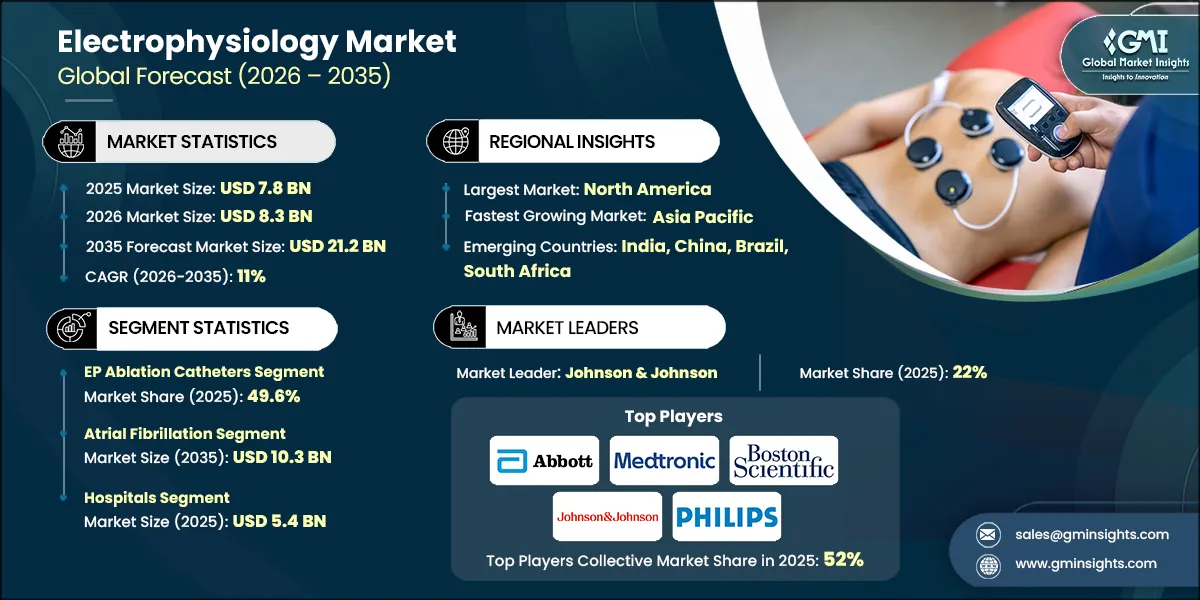
The global electrophysiology market was valued at USD 7.8 billion in 2025 and is projected to grow from USD 8.3 billion in 2026 to USD 21.2 billion by 2035, expanding at a CAGR of 11%, according to the latest report published by Global Market Insights Inc.
To get key market trends
The global electrophysiology market is driven to a great extent by the increased prevalence of atrial fibrillation. For example, it is expected that more than one million are suffering from atrial fibrillation in the UK, as stated in an estimate by the Stroke Foundation in 2020. With the increased prevalence of seniors in England, 80.5% of the 65+ age group in England are expected to have AF in the coming few years. The increased prevalence shows that there is an urgent need to address these factors with sophisticated electrophysiological solutions that are expected to improve patient outcomes, thus propelling the market development.
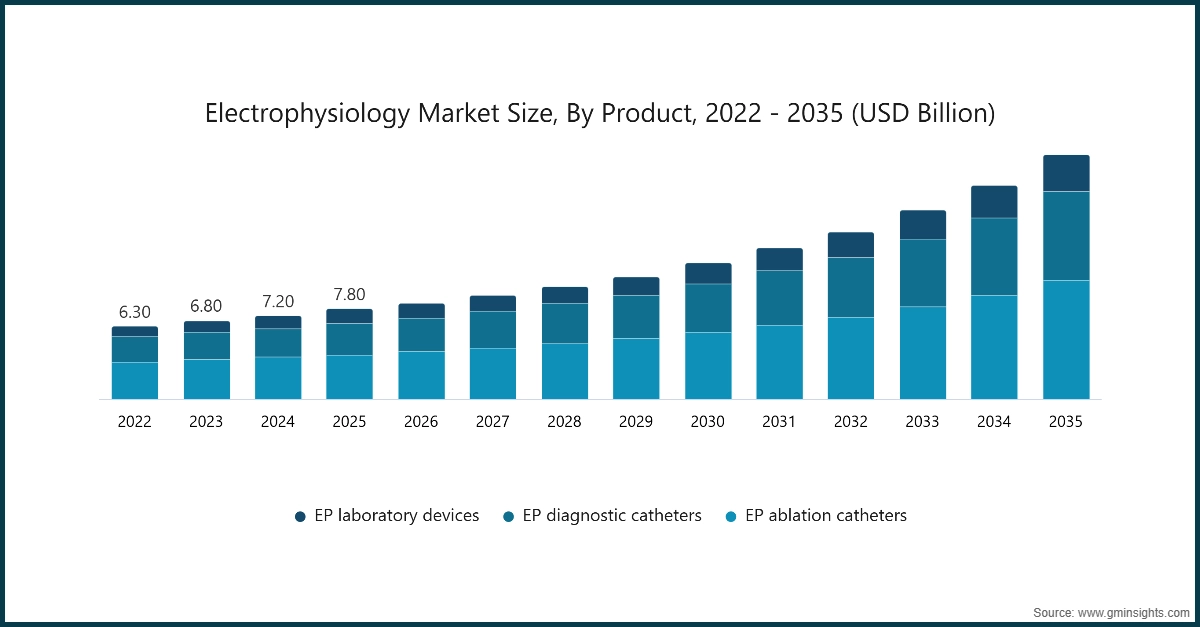
The market grew from USD 6.3 billion in 2022 to USD 7.2 billion in 2024. In addition to that, the technological developments in the field of electrophysiology equipment are also contributing vastly to the growth of the market, along with the increasing acceptance of electrophysiology catheter ablation procedures. Also, the top 5 players in the market are Abbott Laboratories, Medtronic, Boston Scientific Corporation, Johnson & Johnson and Koninklijke Philips.
Furthermore, the global population aged 65 years and older is expanding rapidly, driven by increased life expectancy and declining birth rates. This demographic shift significantly impacts the electrophysiology market because older adults are at a higher risk of developing cardiac arrhythmias, particularly atrial fibrillation (AF), which is the most common sustained arrhythmia.
Age-related structural and electrical changes in the heart, such as atrial enlargement, fibrosis, and impaired conduction pathways, increase susceptibility to rhythm disorders. This trend translates into a growing demand for electrophysiology procedures, including catheter ablation and advanced mapping technologies, as clinicians seek effective solutions to manage arrhythmia and reduce associated risks like stroke and heart failure.
Electrophysiology is the branch of physiology that studies the electrical properties of biological cells and tissues. It focuses on the generation and propagation of electrical signals within cells, particularly in nerve and muscle cells. This field encompasses various techniques to measure and analyze electrical activity, such as electrocardiography (ECG), electromyography (EMG), and patch-clamp recordings.
Electrophysiology Market Report Attributes
| Key Takeaway | Details |
|---|---|
| Market Size & Growth | |
| Base Year | 2025 |
| Market Size in 2025 | USD 7.8 Billion |
| Market Size in 2026 | USD 8.3 Billion |
| Forecast Period 2026-2035 CAGR | 11% |
| Market Size in 2035 | USD 21.2 Billion |
| Key Market Trends | |
| Drivers | Impact |
| Increasing prevalence of atrial fibrillation (AF) | Rising AF cases worldwide significantly boost demand for electrophysiology procedures, particularly catheter ablation and advanced mapping systems, as healthcare providers seek effective solutions to reduce stroke risk and improve patient outcomes. |
| Technological advancements in electrophysiology devices | Innovations such as contact force-sensing catheters, 3D mapping systems, and pulsed-field ablation technologies enhance procedural accuracy, reduce complications, and shorten procedure times, driving adoption across hospitals and EP labs. |
| Rising geriatric population | Aging populations are more susceptible to arrhythmias like AF and atrial flutter, increasing the need for minimally invasive EP interventions. This demographic trend accelerates market growth as providers focus on early diagnosis and treatment for elderly patients. |
| Increasing preference for electrophysiology catheter ablation | Growing clinical evidence supporting catheter ablation as a first-line therapy for arrhythmias, combined with patient preference for minimally invasive procedures, is fueling demand for ablation catheters and associated EP lab equipment. |
| Pitfalls & Challenges | Impact |
| High investment towards development of electrophysiology devices | Significant R&D costs for advanced technologies and integrated imaging solutions increase financial burden on manufacturers. |
| Dearth of skilled professionals in emerging nations | Shortage of trained electrophysiologists and specialized EP lab staff in developing regions hampers adoption of complex procedures. |
| Opportunities: | Impact |
| Growing preference for outpatient and ambulatory settings | Shift toward minimally invasive procedures in ambulatory surgery centers creates demand for compact, cost-effective EP lab devices and disposable catheters. |
| Artificial intelligence in cardiac electrophysiology | AI-driven mapping and real-time imaging solutions can improve procedural accuracy and efficiency. |
| Market Leaders (2025) | |
| Market Leader |
Market share of 22% |
| Top Players |
Collective market share is 52% in 2025 |
| Competitive Edge |
|
| Regional Insights | |
| Largest Market | North America |
| Fastest growing market | Asia Pacific |
| Emerging countries | India, China, Brazil, South Africa |
| Future outlook |
|
What are the growth opportunities in this market?
Electrophysiology Market Trends
Technological advancements in electrophysiology devices have significantly enhanced the precision, efficiency, and effectiveness of diagnostics and therapeutic interventions in cardiology and neurology. These innovations span various aspects, including miniaturization, integration of technology, and the incorporation of advanced algorithms and imaging techniques.
One major advancement is the development of high-resolution mapping systems, which allow for detailed visualization of electrical activity in the heart. These systems utilize advanced catheter technologies equipped with multiple electrodes, enabling clinicians to map electrical signals with greater accuracy. As a result, improved identification of arrhythmogenic substrates leads to more targeted interventions.
For instance, the Thermocool Smarttouch catheter integrates contact-force sensing technology, providing in-depth catheter stability and evaluation of catheter-to-myocardial contact force. Additionally, the emergence of electroanatomic mapping has significantly increased mapping capabilities, enhancing the overall effectiveness of procedures.
Moreover, the integration of electrophysiology devices with imaging technologies, such as magnetic resonance imaging (MRI) and computed tomography (CT), has transformed procedural planning and execution. Real-time imaging allows for better visualization of anatomical structures alongside electrical signals, thereby improving the safety and efficacy of procedures such as catheter ablation.
Furthermore, advanced algorithms and artificial intelligence in healthcare (AI), are increasingly utilized in electrophysiology devices to automate data analysis. These technologies enhance the speed and accuracy of interpreting complex electrical signals, reducing the potential for human error and facilitating quicker clinical decision-making.
Electrophysiology Market Analysis
Learn more about the key segments shaping this market
Based on product, the electrophysiology market is divided into EP ablation catheters, EP diagnostic catheters, and EP laboratory devices. Further, EP ablation catheters segment is segmented into radiofrequency (RF), cryoablation, laser, and other EP ablation catheters. The EP ablation catheters segment dominated the market accounting for 49.6% of revenue share in 2025.
- EP ablation catheters direct energy toward the specific tissue responsible for arrhythmias. The ES high-resolution mapping systems paired with the catheter aid in identifying the regions releasing these abnormal electrical signals, ensuring proper treatment while preserving functional healthy tissues.
- Moreover, clinicians can use cryoablation devices and other catheter-based devices with radio frequency (RF) or laser energy. This choice can be made considering the arrhythmia and patient condition, each having its benefits where effective tissue destruction is necessary; use of RF while the goal should be less thermal damage, cryoablation is perfect.
- Further, modern ablation catheters include sophisticated technologies that allow physicians to track the ablation process in real-time using temperature sensing and impedance monitoring. These features ensure effective and safe energy application, which leads to market growth.
Based on indication, the electrophysiology market is bifurcated into atrial fibrillation, ventricular tachycardia, atrial tachycardia, atrial flutter, WOLFF-Parkinson-white (WPW) syndrome, and atrioventricular nodal reentry tachycardia. The atrial fibrillation segment accounted for a 46.3% market share in 2025 and is projected for significant growth to reach USD 10.3 billion by 2035.
- AF is a very common form of heart arrhythmia caused by abnormal and fast rhythms of the heart. AF is the most prevalent abnormal heart rhythm diagnosed around the world, impacting millions each year. It is linked to an increased probability of stroke, deterioration of the heart, and other heart-related issues.
- This is coupled by the accessibility of modern electrophysiology catheter ablation and mapping technologies.
- Also, emerging general and clinical awareness of AF consequences as well as benefits of timely treatment.
Learn more about the key segments shaping this market
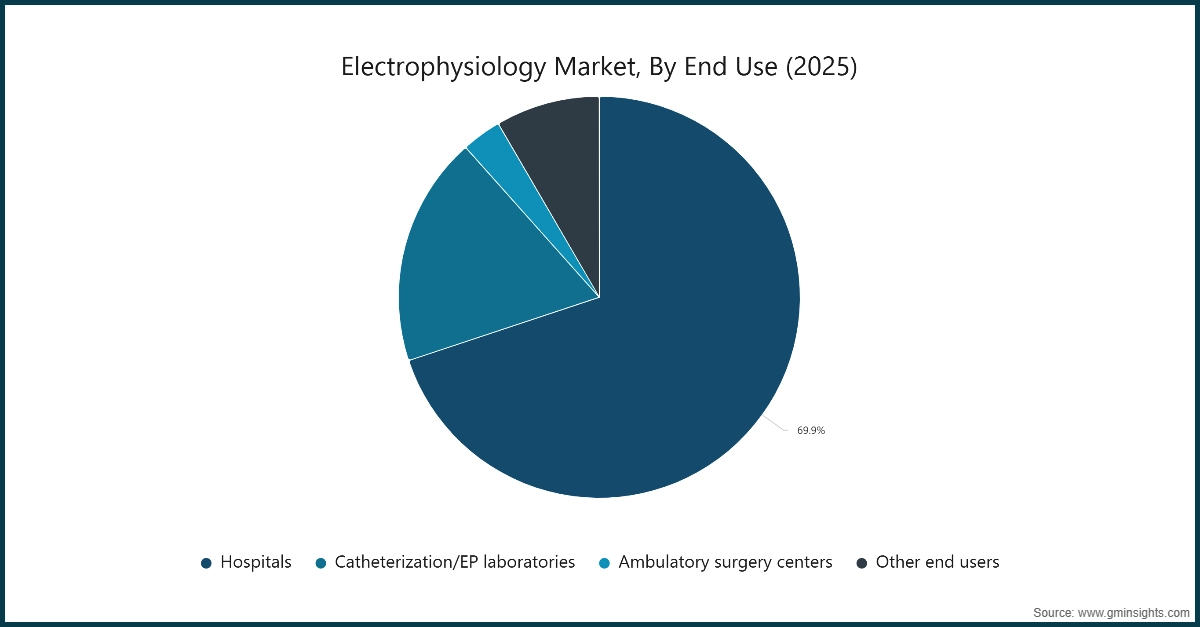
Based on end use, the electrophysiology market is bifurcated into hospitals, catheterization/EP laboratories, ambulatory surgery centers, and other end users. The hospitals segment accounted for a USD 5.4 billion in 2025.
- Hospitals with dedicated electrophysiology departments often have specialized staff, including electrophysiologists, nurses, and technicians with extensive training and experience in managing complex arrhythmias. This expertise ensures high-quality care and better outcomes for patients undergoing electrophysiological procedures.
- These hospitals are equipped with cutting-edge diagnostic technologies, such as 3D mapping systems, intracardiac echocardiography, and high-resolution electrophysiology recording systems. These tools enhance the accuracy of diagnoses and allow for detailed assessments of the heart's electrical activity.
- Specialized hospitals often lead in the adoption of new technologies and techniques in electrophysiology. This includes advanced catheter technologies, hybrid procedures combining surgery and catheter ablation, and novel ablation techniques, giving patients access to the latest advancements in care.
- Hence, the aforementioned factors are aiding the growth of the market.
North America Electrophysiology Market
Looking for region specific data?
- The North America region accounted for the largest share of the global electrophysiology market in 2025, supported by advanced healthcare infrastructure, high adoption of minimally invasive cardiac procedures, and strong regulatory frameworks.
- A major growth driver is the burden of atrial fibrillation (AF) reflected in mortality data in 2021, AF was mentioned on 232,030 U.S. death certificates and was the underlying cause of death in 28,037 cases, underscoring the critical need for effective diagnosis and treatment pathways.
- This burden accelerates demand for catheter ablation, mapping systems, and EP lab technologies across hospitals and dedicated EP centers.
- Because AF is associated with a markedly higher risk of ischemic stroke and significant hospitalizations, providers continue to invest in advanced technologies to improve outcomes and reduce complications.
- With continuous technology innovation, robust clinical standards, and expanding EP lab capacity, North America is expected to maintain its dominant position in the global electrophysiology market throughout the forecast period.
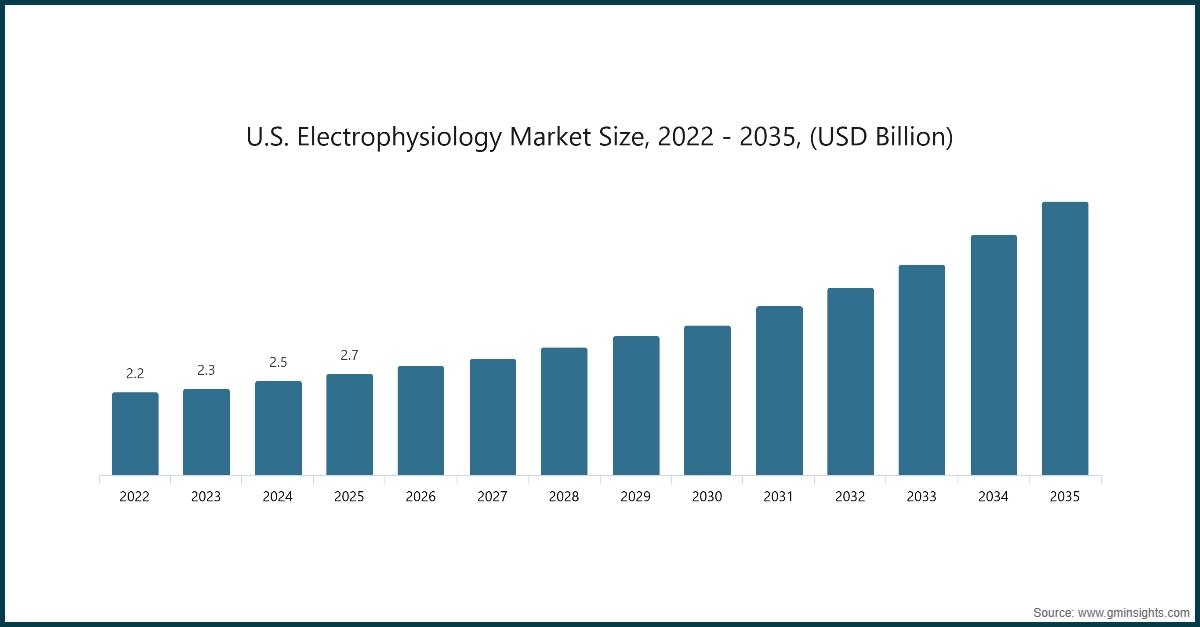
The U.S. electrophysiology market was valued at USD 2.2 billion and USD 2.3 billion in 2022 and 2023, respectively. The market size reached USD 2.7 billion in 2025, growing from USD 2.5 billion in 2024.
- The U.S. has a well-established healthcare system with advanced hospitals and specialized electrophysiology labs equipped with state-of-the-art technologies. This infrastructure supports comprehensive EP services, including diagnostic mapping and therapeutic interventions such as catheter ablation.
- More than 454,000 hospitalizations with atrial fibrillation (AF) as the primary diagnosis occur annually in the U.S., according to CDC data. This high clinical burden underscores the need for effective arrhythmia management, driving demand for advanced EP devices like ablation catheters, mapping systems, and recording technologies.
- The U.S. Food and Drug Administration (FDA) provides a structured regulatory environment that promotes the approval and commercialization of innovative electrophysiology devices. The FDA’s rigorous safety and efficacy standards ensure that new technologies meet high benchmarks before reaching the market, instilling confidence among providers and patients.
Europe Electrophysiology Market
Europe electrophysiology market accounted for USD 2.1 billion in 2025 and is anticipated to show lucrative growth over the forecast period.
- Europe holds a significant position in the global electrophysiology market, supported by advanced healthcare infrastructure, strong clinical standards, and active research collaborations. The region is home to leading academic institutions and hospitals that drive innovation in arrhythmia management through joint efforts with industry players.
- The UK, Germany, and France are key contributors, with hospitals increasingly equipped with cutting-edge electrophysiology technologies such as 3D mapping systems, contact force-sensing catheters, and pulsed-field ablation platforms. This access enables healthcare providers to deliver effective and minimally invasive treatments for atrial fibrillation and other complex arrhythmias.
- Government-backed initiatives promoting cardiovascular health, combined with rising awareness of arrhythmia-related complications, are accelerating adoption of advanced EP solutions. Continuous technological advancements and expanding EP lab capacity ensure that Europe will maintain a strong and growing presence in the global electrophysiology market throughout the forecast period.
The electrophysiology market in Germany is expected to experience significant and promising growth from 2025 to 2034.
- Germany is a key contributor to the European electrophysiology market, supported by its strong healthcare infrastructure and advanced cardiac care facilities. The country is home to leading hospitals and research institutions actively engaged in developing innovative arrhythmia management solutions through collaborations with industry players.
- With approximately 1.6 million people affected in Germany, atrial fibrillation (AF) is the most common arrhythmia, creating a significant clinical burden and driving demand for effective diagnostic and therapeutic interventions such as catheter ablation and advanced mapping systems.
- German hospitals are increasingly equipped with cutting-edge electrophysiology technologies enabling minimally invasive treatments for complex arrhythmias.
- With a focus on precision-guided procedures, technology-driven workflows, and continuous investment in healthcare infrastructure, Germany is expected to maintain its strong position in the European electrophysiology market throughout the forecast period.
Asia Pacific Electrophysiology Market
The Asia Pacific region is projected to show a lucrative growth of about 11.5% during the forecast period.
- Asia-Pacific is emerging as one of the fastest-growing regions in the global electrophysiology market, driven by a large patient population, improving healthcare infrastructure, and rising awareness of arrhythmia management.
- Atrial fibrillation (AF) and other cardiac arrhythmias are becoming increasingly prevalent across the region, fueled by aging populations and lifestyle-related risk factors. This growing disease burden underscores the need for advanced diagnostic and therapeutic solutions, including catheter ablation and high-density mapping systems.
- Rising adoption of minimally invasive procedures, coupled with government-backed initiatives to strengthen cardiac care, is accelerating demand for electrophysiology devices in countries such as China, India, and Japan.
- With a large population base, improving access to advanced cardiac care, and continuous innovation, Asia-Pacific is expected to remain one of the fastest-growing regions in the global electrophysiology market throughout the forecast period.
Japan electrophysiology market is anticipated to witness lucrative growth between 2025 – 2034.
- Japan is a key market in Asia-Pacific for electrophysiology, supported by advanced healthcare infrastructure and strong regulatory standards. The country faces a growing burden of cardiac arrhythmias, particularly atrial fibrillation (AF), which is closely linked to its aging population.
- An estimated 716,000 patients currently have AF in Japan, with a prevalence of 0.56% in the general population. Due to demographic trends, this number is projected to exceed 1 million by 2050, with prevalence surpassing 1%, highlighting the urgent need for effective arrhythmia management solutions.
- Japan’s aging society significantly increases the demand for electrophysiology services, driving adoption of advanced technologies for minimally invasive treatment.
- The Pharmaceuticals and Medical Devices Agency (PMDA) provides a structured regulatory framework that facilitates the approval and commercialization of innovative electrophysiology devices. This environment encourages technological advancement while ensuring high safety and efficacy standards.
- With a strong focus on precision-guided procedures, continuous innovation, and a growing elderly population, Japan is expected to remain a critical growth market for electrophysiology in Asia-Pacific throughout the forecast period.
Latin America Electrophysiology Market
Brazil is experiencing significant growth in the market.
- The growth of Brazil’s market is strongly driven by the rising burden of atrial fibrillation (AF), demographic shifts, and modernization of healthcare infrastructure.
- According to the Global Burden of Disease 2021, AF prevalence among Brazilians aged 55 and older is estimated at 4.6% in men and 3.6% in women. Each year, approximately 170,000 new AF cases and 240,000 stroke events occur in the country, highlighting the urgent need for advanced arrhythmia management solutions.
- Brazil’s population is aging rapidly, with the share of individuals aged 65 and older projected to triple by 2050, significantly increasing vulnerability to cardiovascular conditions. This demographic trend is fuelling demand for catheter ablation systems, diagnostic mapping technologies, and minimally invasive EP procedures.
- With a focus on precision-guided interventions, technology-driven workflows, and expanding healthcare investments, Brazil is expected to remain a key growth market for electrophysiology in Latin America throughout the forecast period.
Middle East and Africa Electrophysiology Market
The market in Saudi Arabia is expected to experience significant and promising growth from 2025 to 2034.
- The Saudi government is actively investing in healthcare infrastructure under its Vision 2030 initiative, aiming to modernize hospitals and expand specialized services, including electrophysiology. These investments are creating a strong foundation for advanced cardiac care and the adoption of cutting-edge EP technologies.
- Atrial fibrillation (AF) and stroke remain significant health concerns in Saudi Arabia, mirroring global trends. The growing prevalence of AF, coupled with an aging population and lifestyle-related risk factors, underscores the need for effective arrhythmia management solutions such as catheter ablation and high-density mapping systems.
- Saudi hospitals are increasingly equipped with state-of-the-art electrophysiology technologies, including 3D mapping platforms, and emerging pulsed-field ablation systems, enabling minimally invasive treatments for complex arrhythmias.
- Rising healthcare spending and government-backed initiatives to improve cardiovascular care are accelerating the adoption of AI-driven mapping systems, telehealth-enabled monitoring, and integrated EP lab solutions, ensuring compliance with international standards and improving patient outcomes.
- With continuous technological advancements, strong regulatory frameworks, and strategic investments in cardiac care, Saudi Arabia is expected to remain a key growth market for electrophysiology in the Middle East throughout the forecast period.
Electrophysiology Market Share
The electrophysiology industry is highly competitive, comprising major global players and specialized firms focused on arrhythmia management. Leading companies are actively strengthening their market positions through strategic acquisitions, partnerships, and technology-driven collaborations, aiming to meet the growing demand for minimally invasive and precision-guided cardiac procedures.
Top players Abbott Laboratories, Medtronic, Boston Scientific Corporation, Johnson & Johnson (Biosense Webster), and Koninklijke Philips collectively hold 52% share of the global electrophysiology market.
Close collaboration with hospitals, EP labs, and regulatory authorities remains central to their strategy, ensuring compliance with stringent safety standards and accelerating adoption of innovative solutions. At the same time, these players are expanding their presence in emerging markets through infrastructure modernization initiatives, making advanced electrophysiology technologies more accessible worldwide.
Electrophysiology Market Companies
Some of the eminent market participants operating in the electrophysiology industry include:
- Abbott Laboratories
- Atricure
- Biotronik
- Boston Scientific Corporation
- CardioFocus
- GE Healthcare Technologies
- Japan Lifeline
- Johnson & Johnson
- Koninklijke Philips
- Medtronic
- Microport Scientific Corporation
- Merit Medical Systems
- Siemens Healthineers
- Stereotaxis
- Abbott Laboratories
Abbott is a leading innovator in electrophysiology solutions, offering advanced technologies that enhance precision and efficiency in arrhythmia management. Its flagship product, the EnSite X EP System, revolutionizes high-density cardiac mapping with next-generation capabilities. Abbott’s focus on integrating cutting-edge mapping technology with sensor-enabled catheters positions it as a key player in improving procedural outcomes and streamlining workflows in EP labs worldwide.
Medtronic is a global leader in electrophysiology solutions, driving innovation with its Affera Mapping and Ablation System. This next-generation platform delivers a fully integrated high-resolution mapping and therapeutic solution, enabling physicians to accurately map and ablate. By combining flexibility, precision, and efficiency, Affera empowers clinicians to perform complex arrhythmia procedures with greater predictability and streamlined workflows. Medtronic’s commitment to dual-energy technology and advanced mapping capabilities positions it at the forefront of minimally invasive cardiac care.
Johnson & Johnson, through its Biosense Webster division, is a leading innovator in cardiac electrophysiology solutions. The company offers advanced therapeutic catheters, mapping systems, and ablation technologies designed to improve the diagnosis and treatment of cardiac arrhythmias. Its flagship product, QDOT MICRO Catheter, incorporates real-time temperature monitoring and automatic adjustment of power and fluid output, enabling optimized temperature control during ablation procedures.
Electrophysiology Industry News:
- In October 2024, Boston Scientific Corporation announced that it had received FDA approval for the navigation-enabled FARAWAVE NAV Ablation Catheter for treating paroxysmal atrial fibrillation (AF) and 510(k) clearance for the FARAVIEW system. This achievement underscored the company’s commitment to advancing electrophysiology and enhancing treatment options for AF patients.
- In May 2021, Japan Lifeline and Galaxy Medical entered into an exclusive distribution agreement for the ALPHA1 ablation catheter in the U.S., developed by Japan Lifeline for use with the Galaxy CENTAURI Pulsed Electric Field (PEF) System. This collaboration positioned both companies at the forefront of innovation in ablation technology, enabling them to introduce new therapies for the millions of individuals affected by cardiac arrhythmias worldwide.
The electrophysiology market research report includes an in-depth coverage of the industry with estimates and forecast in terms of revenue in USD Billion from 2022 - 2035 for the following Segments:
Market, By Product
- EP ablation catheters
- Radiofrequency (RF)
- Cryoablation
- Laser
- Other EP ablation catheters
- EP diagnostic catheters
- Conventional
- Advanced
- Ultrasound
- EP laboratory devices
- Mapping systems
- Recording systems
- Other EP laboratory devices
Market, By Indication
- Atrial fibrillation
- Ventricular tachycardia
- Atrial tachycardia
- Atrial flutter
- WOLFF-Parkinson-white (WPW) syndrome
- Atrioventricular nodal reentry tachycardia
Market, By End use
- Hospitals
- Catheterization/EP laboratories
- Ambulatory surgery centers
- Other end users
The above information is provided for the following regions and countries:
- North America
- U.S.
- Canada
- Europe
- Germany
- UK
- France
- Spain
- Italy
- Russia
- Ukraine
- Poland
- Switzerland
- Belgium
- Greece
- Czech Republic
- Netherlands
- Sweden
- Asia Pacific
- China
- Japan
- India
- Australia
- South Korea
- Malaysia
- Indonesia
- Thailand
- Singapore
- Taiwan
- Philippines
- Vietnam
- Latin America
- Brazil
- Mexico
- Argentina
- Middle East and Africa
- South Africa
- Saudi Arabia
- Kuwait
- UAE
Frequently Asked Question(FAQ) :
Who are the key players in the electrophysiology industry?
Key players include Abbott Laboratories, Atricure, Biotronik, Boston Scientific Corporation, CardioFocus, GE Healthcare Technologies, Japan Lifeline, Johnson & Johnson, Koninklijke Philips, and Medtronic.
What was the valuation of the atrial fibrillation segment in 2025?
The atrial fibrillation segment accounted for a 46.3% market share in 2025 and is set to grow significantly, reaching USD 10.3 billion by 2035.
Which region leads the electrophysiology sector?
The U.S. leads the market, with a valuation of USD 2.7 billion in 2025. The country’s advanced healthcare infrastructure and specialized electrophysiology labs drive its dominance.
What are the upcoming trends in the electrophysiology market?
Key trends include high-resolution mapping advances, MRI and CT integration, AI-based data analysis, and electroanatomic mapping systems improving procedural effectiveness.
How much revenue did the EP ablation catheters segment generate in 2025?
The EP ablation catheters segment generated approximately 49.6% of the market revenue in 2025, led by their ability to target arrhythmogenic tissues effectively while preserving healthy tissues.
What is the expected size of the electrophysiology industry in 2026?
The market size is projected to reach USD 8.3 billion in 2026.
What is the projected value of the electrophysiology market by 2035?
The market is poised to reach USD 21.2 billion by 2035, driven by technological advancements, increased adoption of high-resolution mapping systems, and integration with imaging technologies.
What is the market size of the electrophysiology in 2025?
The market size was valued at USD 7.8 billion in 2025, with a CAGR of 11% expected through 2035. The rising prevalence of atrial fibrillation and advancements in electrophysiological solutions are driving market growth.
Electrophysiology Market Scope
Related Reports