Summary
Table of Content

Dialysis Catheters Market
Get a free sample of this report
Form submitted successfully!
Error submitting form. Please try again.
Thank you!
Your inquiry has been received. Our team will reach out to you with the required details via email. To ensure that you don't miss their response, kindly remember to check your spam folder as well!
Request Sectional Data
Thank you!
Your inquiry has been received. Our team will reach out to you with the required details via email. To ensure that you don't miss their response, kindly remember to check your spam folder as well!
Form submitted successfully!
Error submitting form. Please try again.
Dialysis Catheters Market Size
The market is driven by several factors, including the growing trend of treatments in homecare settings, increasing prevalence of chronic kidney disorders & end-stage renal disease, shortage of kidney donors, and rising number of renal replacement therapies, among other factors. Increased rates of diabetes and hypertension, technological advancements in catheter materials, and public–private partnerships for renal care improvement are expected to fuel the industry's growth. Becton, Dickinson and Company, Baxter International, Merit Medical Systems, Medtronic, and Teleflex are among the leading players operating in the market. These players mainly focus on product innovation, geographic expansion, use of novel materials, strong R&D, and collaboration with local or regional healthcare providers, among other factors.
Dialysis Catheters Market Key Takeaways
Market Size & Growth
- 2025 Market Size: USD 1.17 Billion
- 2026 Market Size: USD 1.25 Billion
- 2035 Forecast Market Size: USD 2.2 Billion
- CAGR (2026–2035): 6.4%
Regional Dominance
- Largest Market: Asia Pacific
- Fastest Growing Region: Asia Pacific
Key Market Drivers
- Increasing prevalence of chronic kidney disorders & end-stage renal disease.
- Rising number of renal replacement therapy.
- Growing trend of treatments in homecare settings.
- Shortage of kidney donors globally.
Challenges
- Growing preference for fistulas and grafts over catheters.
- Complications associated with dialysis catheters.
Opportunity
- Development of antimicrobial and infection‑resistant catheters.
- Growth of home hemodialysis adoption.
Key Players
- Market Leader: Becton, Dickinson and Company led with over 11% market share in 2025.
- Leading Players: Top 5 players in this market include Baxter International, Merit Medical Systems, Medtronic, Teleflex, Becton, Dickinson and Company, which collectively held a market share of 36% in 2025.
Get Market Insights & Growth Opportunities
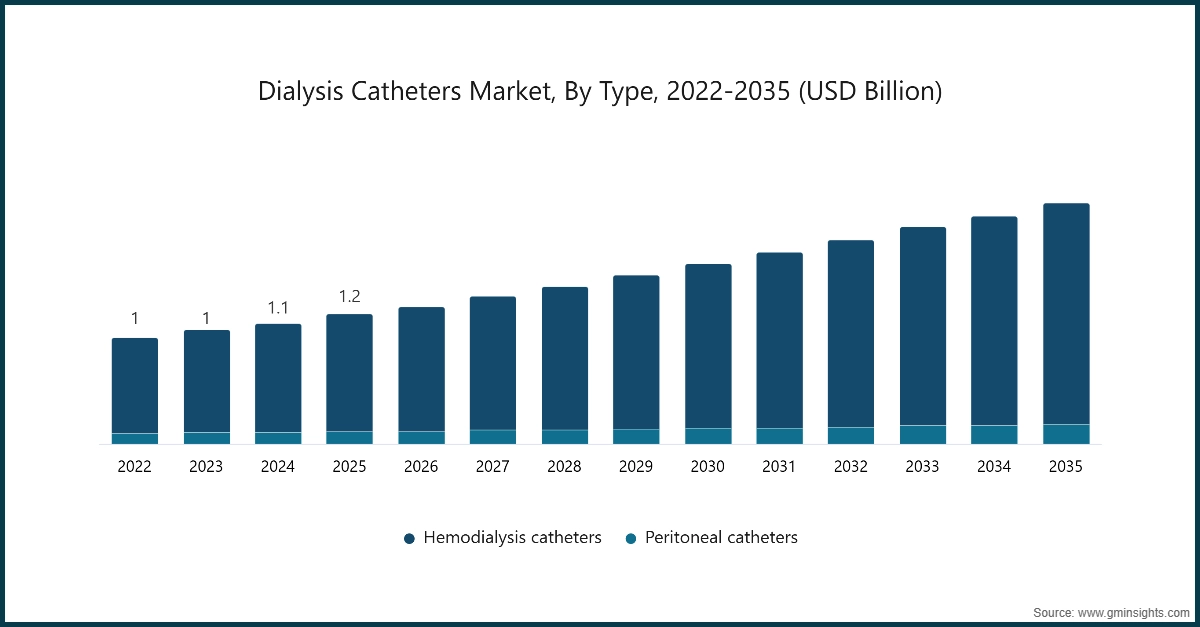
The dialysis catheters market has increased from USD 0.96 billion in 2022 and reached USD 1.09 billion in 2024, with a historic growth rate of 6.6%. With the increasing incidence of CKD, there is a parallel increase in the number of patients requiring dialysis to manage their condition. For instance, as per the data reported by the U.S. Renal Data System (USRDS), the number of people on dialysis or living with a functioning kidney transplant exceeded 0.8 million in the U.S. by 2023. This indicates a continuous rise in the utilization of renal replacement therapies, such as dialysis, to manage end-stage renal disease (ESRD) and other kidney-related conditions.
Additionally, the shortage of kidney donors globally is another key factor anticipated to contribute to the rising demand for dialysis catheters. For example, the United Network for Organ Sharing (UNOS), the organization responsible for managing the organ transplant system in the U.S., reports a significant shortage of kidney donors in the country. As of January 2026, UNOS reported that over 90,000 individuals were on the waiting list for kidney transplants in the country, while the number of deceased and living donor kidney transplants performed in 2025 was approximately 27,573. Hence, the shortage of kidney donors globally, coupled with the rise in renal replacement therapies, has led to increased demand for dialysis catheters catering to the rising number of patients undergoing dialysis treatment worldwide.
Dialysis catheters are specialized medical devices used in dialysis procedures, which are employed to remove waste products and excess fluid from the blood when the kidneys are unable to perform this function adequately. Hemodialysis catheters and peritoneal dialysis catheters are the two types of dialysis catheters considered in the report.
The global dialysis catheters market was estimated at USD 1.17 billion in 2025. The market is expected to grow from USD 1.25 billion in 2026 to USD 2.2 billion in 2035, at a CAGR of 6.4% during the forecast period, according to the latest report published by Global Market Insights Inc.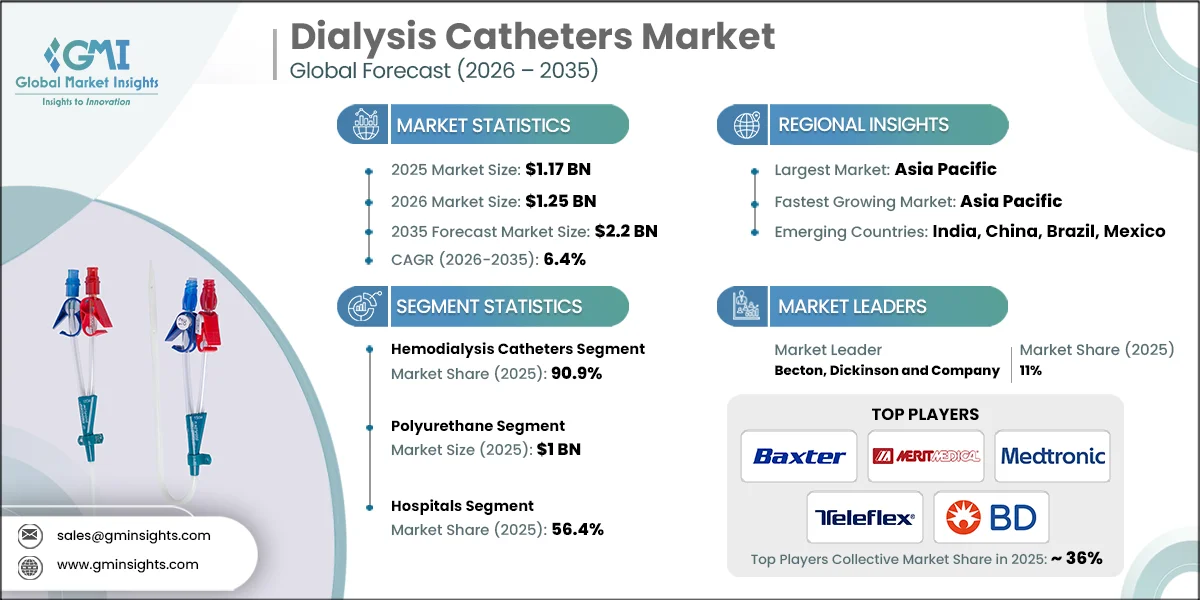
To get key market trends
Dialysis Catheters Market Trends
The growing shift toward homecare settings is driving market growth by expanding access to home dialysis and improving patient outcomes. Technological advancements are anticipated to play a significant role in enabling this trend.
- For instance, the development of portable dialysis machines has made it easier for patients to perform dialysis at home, increasing the demand for reliable and efficient dialysis catheters. These catheters provide secure vascular access for home-based treatments, allowing patients to manage their condition conveniently without frequent hospital visits.
- Additionally, improvements in dialysis catheter design, such as reduced infection rates and increased durability, have made them suitable for long-term use in homecare settings. Patients can now undergo dialysis at home with improved planning and access to supportive infrastructure, knowing that they have access to reliable vascular access devices that minimize the risk of complications.
- Furthermore, smartphone apps and wearable medical devices have empowered patients to actively participate in their healthcare management by tracking their health metrics and treatment progress. These tools provide patients with greater autonomy and support in managing their dialysis treatment, further fueling the demand for dialysis catheters suitable for home use.
- Overall, the combination of advancements in technology and the increasing preference for home care treatments is driving the growth of the market.
Dialysis Catheters Market Analysis
Learn more about the key segments shaping this market
Based on type, the dialysis catheters market is segmented into hemodialysis catheters and peritoneal catheters. The hemodialysis catheters segment accounted for a majority share of 90.9% in 2025. The growing number of patients undergoing hemodialysis is anticipated to fuel the segmental growth. The segment is expected to reach USD 2 billion by 2035, growing at a CAGR of 6.5% during the forecast period.
- Patients undergoing hemodialysis require reliable and comfortable vascular access to ensure the effectiveness of their treatment and minimize complications. Hemodialysis catheters that prioritize patient safety, comfort, and ease of use are in high demand, leading to increased adoption in clinical settings.
- Additionally, hemodialysis sessions, which require catheters, typically last a few hours, and are performed several times a week, offering patients the flexibility to schedule treatments around their daily activities, which makes it more convenient for some patients.
- Further, hemodialysis catheters are inserted into large veins, typically in the neck or chest area, eliminating the need for regular catheter maintenance and exit-site care required with peritoneal catheters.
- The peritoneal catheters segment is anticipated to reach over USD 168 million by 2035. The use of peritoneal catheters in the delivery and removal of dialysate from the abdomen is a critical component in performing peritoneal dialysis.
- In addition, the design characteristics of peritoneal catheters allow them to be utilized for extended periods and therefore must possess high biocompatibility to reduce the risk of peritoneal catheter irritation, infection, and mechanical malfunction.
- Furthermore, manufacturers are focused on improving the durability, kink resistance, antimicrobial characteristics, and placement ease of peritoneal catheters to decrease complications associated with the procedures used to insert them.
Based on material, the dialysis catheters market is segmented into silicone and polyurethane. The polyurethane segment generated the highest revenue of USD 1 billion in 2025.
- Polyurethane catheters are known for their flexibility and durability, making them less prone to kinking or bending during insertion and use. This characteristic allows for smoother insertion and reduces the risk of catheter malfunction, contributing to their popularity among healthcare providers.
- Additionally, polyurethane catheters have smoother surfaces compared to silicone catheters, which may reduce the risk of thrombosis (blood clot formation) and catheter-related complications. This makes polyurethane catheters particularly suitable for long-term use in hemodialysis patients.
- The silicone segment was valued at USD 149.3 million in 2025. Silicone is widely used in dialysis catheter manufacturing due to its excellent biocompatibility, flexibility, and smooth surface characteristics. These qualities serve to reduce irritation, risk of thrombosis, and tissue injury during long-term use.
- Further, as silicone possesses excellent chemical stability, it has a high level of resistance to degradation thereby ensuring the maintain catheter performance over extended periods.
- Furthermore, silicone is compatible with antimicrobial coatings, therefore enabling the ability of the catheter to provide infection control.
Learn more about the key segments shaping this market
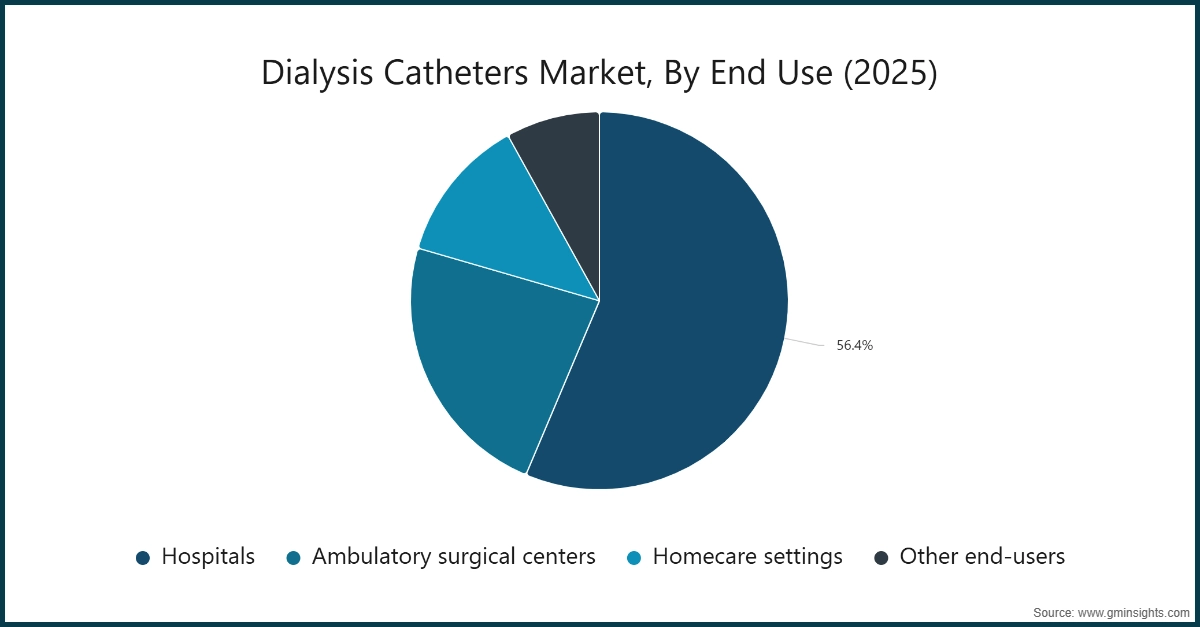
Based on end use, the dialysis catheters market is segmented into hospitals, ambulatory surgical centers, homecare settings, and other end-users. The hospitals segment accounted for the leading market share of 56.4% in 2025.
- Hospitals typically have specialized dialysis units equipped with advanced hemodialysis machines and trained healthcare professionals who can perform hemodialysis treatments safely and effectively. These units often have dedicated staff who specialize in vascular access management and catheter care, ensuring optimal patient outcomes.
- In addition, hospitals serve a wide range of patients with acute kidney injury (AKI) or sudden kidney failure, who require immediate dialysis intervention. Hemodialysis catheters provide rapid vascular access for these patients, allowing healthcare providers to initiate lifesaving dialysis treatment promptly.
- The ambulatory surgical centers segment was valued at USD 269.6 million in 2025 and is expected to grow at a CAGR of 6.9% during the forecast period. Due to their high efficiency, low costs, and ability to improve patient flow, ambulatory surgical centers (ASCs) are playing an increasing role in catheter placement for dialysis.
- Further, these centers offer minimally invasive catheter insertions in a controlled outpatient environment, reducing hospital dependency and improving scheduling flexibility.
- The focus on rapid turnaround time and using standardized protocols, as well as adherence to strict infection control, may provide an optimal environment for routine tunnel and non-tunneled catheter placement.
- Moreover, ASCs are experiencing significantly increased utilization from the growing demand for urgent access to dialysis.
Looking for region specific data?
North America Dialysis Catheters Market
The North America market accounted for share of 38.8% in 2025 and is anticipated to show notable growth over the forecast period.
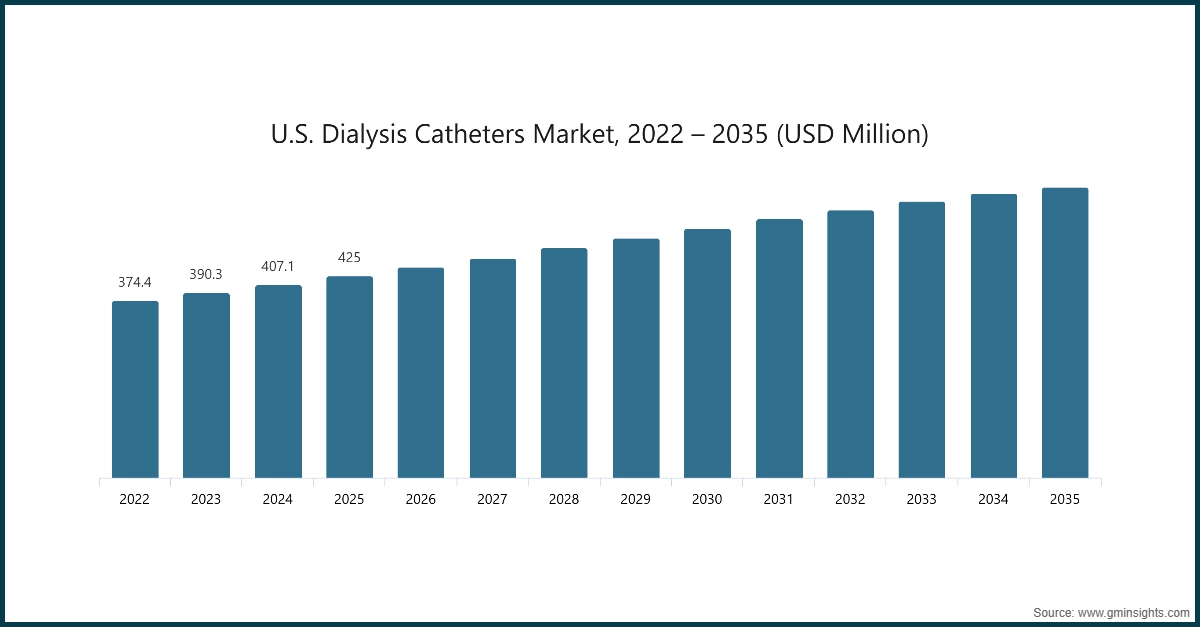
- The U.S. dialysis catheters industry was valued at USD 425 million in 2025, up from USD 407.1 million in 2024. Improved reimbursement policies for dialysis treatment and rapid expansion of dialysis centers are among the key factors supporting the industry growth.
- The region is characterized by a strong focus on healthcare innovation and investment in medical technology. Technological advancements in dialysis catheters, such as improved materials, design, and coatings, contribute to the growth of the market by enhancing safety, efficacy, and patient comfort.
- Additionally, reimbursement policies and insurance coverage play a crucial role in determining access to dialysis treatments and related products. Adequate reimbursement can drive demand by ensuring affordability for patients and healthcare facilities.
Europe Dialysis Catheters Market
Europe accounted for a substantial share of the market and was valued at USD 162.3 million in 2025.
- The European dialysis catheters industry is expanding rapidly due to the increasing burden of chronic kidney disease among the older population as well as other non-communicable health issues.
- Strong healthcare infrastructure and mature dialysis networks enable a strong demand for reliable vascular access devices.
- Further, stringent infection control practices in many regional countries promote the adoption of advanced catheter designs with improved safety features.
- Home-based care also has an impact on the catheter requirement as patients are seeking more comfortable and longer-lasting options.
Asia Pacific Dialysis Catheters Market
The Asia Pacific market accounted for a majority share of the market and was valued at USD 497.3 million in 2025.
- The dialysis catheter market in the Asia-Pacific region is growing rapidly due to a combination of rising prevalence of diabetes, hypertension, and chronic kidney disease (CKD), along with expansion of healthcare infrastructure and government initiatives aimed at improving patient access to renal services in regional countries.
- Additionally, developing countries are building new dialysis facilities that may create a broader base of demand for vascular access devices.
- In addition, the increased public awareness of kidney health, improvements in dialysis diagnostics, and growing popularity of home dialysis options are giving notable momentum to this fast-growing industry, making Asia Pacific one of the most rapidly growing regions globally.
Latin America Dialysis Catheters Market
The Latin American market is anticipated to exhibit remarkable growth during the analysis period.
- The dialysis catheter market expansion in Latin America is influenced by the increasing number of patients requiring treatment for chronic kidney disease (CKD) and the gradual improvement in access to dialysis in both urban and semi-urban areas.
- In addition, as providers focus on decreasing their rate of infection among patients and being more efficient with their procedures, there is an increasing demand for catheters that are safe and durable.
- Further, home-based dialysis adoption is slowly growing, further influencing catheter preferences.
Middle East and Africa Dialysis Catheters Market
The Middle East and Africa market is expected to experience substantial growth over the analysis timeframe.
- The MEA region is witnessing rising demand for dialysis catheters due to increasing cases of diabetes, hypertension, and hereditary kidney conditions.
- In addition, many countries are expanding renal‑care infrastructure, introducing new dialysis centers, and improving specialist availability, which supports steady market growth.
- Further, awareness campaigns and early screening initiatives are gradually improving CKD detection rates, expanding the treatment‑eligible population.
Dialysis Catheters Market Share
The dialysis catheter industry is characterized by intense competition, with numerous large multinationals and smaller companies competing for market dominance. Major players include Becton, Dickinson and Company, Baxter International, Medtronic, Teleflex, Merit Medical Systems, etc. All of them have different strengths to compete in areas such as product innovation, clinical support, and global supply chain capabilities. They are continuously advancing in catheter material, insertion technology, and infection control, which demonstrates the shift of the industry from traditional catheters towards more advanced coatings (antimicrobial) and biocompatible materials to be the key differentiators in helping to reduce the incidence of catheter-related bloodstream infections.
Key market strategies for manufacturers in this sector include the continuous development and introduction of novel catheters that offer enhanced efficiency and cost-effectiveness. This focus on innovation is enhancing the industry's competitiveness and ongoing advancements. By introducing new technologies and improving existing products, manufacturers strive to increase their market share and meet the rising demand for advanced dialysis catheters.
Furthermore, the growing global need for dialysis due to an increase in the prevalence of chronic kidney disease has resulted in greater innovation and product capacity across competing companies. A shift towards safer, high-performing catheters with a focus on balancing durability, ease of insertion, and long-term dependability has occurred due to the emphasis placed by physicians on clinical outcomes and preventing infection.
Dialysis Catheters Market Companies
A few of the prominent players operating in the global dialysis catheters industry include:
- Amecath Medical Technologies
- Angiplast
- B Braun
- Baxter International
- Becton, Dickinson and Company
- Cook Medical
- Medtronic
- Merit Medical Systems
- PFM Medical, Inc.
- Poly Medicure
- Teleflex
- Vygon
BD focuses on expanding its advanced vascular access portfolios, enhancing infection‑prevention technologies, strengthening global manufacturing capacity, and driving strategic partnerships to improve clinical outcomes and broaden adoption across hospitals and dialysis centers.
Merit Medical Systems emphasizes expanding its minimally invasive product portfolio, improving catheter performance, investing in R&D‑driven design enhancements, and leveraging targeted acquisitions to strengthen its position in vascular access and interventional therapies.
Dialysis Catheters Market Report Attributes
| Key Takeaway | Details |
|---|---|
| Market Size & Growth | |
| Base Year | 2025 |
| Market Size in 2025 | USD 1.17 Billion |
| Market Size in 2026 | USD 1.25 Billion |
| Forecast Period 2026-2035 CAGR | 6.4% |
| Market Size in 2035 | USD 2.2 Billion |
| Key Market Trends | |
| Drivers | Impact |
| Increasing prevalence of chronic kidney disorders & end-stage renal disease | Rising CKD and ESRD cases are increasing long‑term dialysis dependence, directly boosting demand for reliable vascular access solutions like dialysis catheters. |
| Rising number of renal replacement therapy | More patients undergoing renal replacement therapy increases procedure volumes, strengthening sustained need for catheters across hospitals, dialysis centers, and acute‑care environments. |
| Growing trend of treatments in homecare settings | Shift toward home‑based dialysis increases demand for safe, easy‑to‑use catheter designs supporting remote monitoring and patient‑managed treatment routines. |
| Shortage of kidney donors globally | Limited transplant availability prolongs reliance on dialysis, expanding long‑term catheter usage among chronic renal failure patients who lack immediate transplant options. |
| Pitfalls & Challenges | Impact |
| Growing preference for fistulas and grafts over catheters | Shift toward longer‑lasting fistulas reduces long‑term catheter use, limits catheter demand and encouraging providers to prioritize alternative vascular access routes. |
| Complications associated with dialysis catheters | Infection risks, clotting, and flow issues reduce provider preference, increasing scrutiny on catheter use and pushing demand toward safer alternatives. |
| Opportunities: | Impact |
| Development of antimicrobial and infection‑resistant catheters | Next‑generation antimicrobial coatings will significantly reduce infection rates, improve catheter safety, prolonging functional life, and encouraging wider clinical acceptance in long‑term dialysis. |
| Growth of home hemodialysis adoption | Rising home‑dialysis uptake will drive demand for user‑friendly, low‑risk catheter designs supporting independent treatment, remote monitoring, and improved patient convenience. |
| Market Leaders (2025) | |
| Market Leader |
11% Market Share |
| Top Players |
Top 5 Players Collective Market Share ~ 36% |
| Competitive Edge |
|
| Regional Insights | |
| Largest Market | Asia Pacific |
| Fastest growing market | Asia Pacific |
| Emerging countries | India, China, Brazil, Mexico |
| Future outlook |
|
What are the growth opportunities in this market?
Dialysis Catheters Industry News
- In August 2023, Teleflex announced that it released its Arrow ErgoPack complete kits with hemodialysis and large-bore catheters in the U.S. This development streamlined the insertion workflow for clinicians, thus improving the company's presence in the market.
- In June 2023, Merit Medical announced that it acquired two dialysis catheter lines for a combined value of USD 132.5 million. The company bought these lines from AngioDynamics and Bluegrass Vascular Technologies. This strategic development may improve the company's manufacturing capabilities and industry positioning.
- In July 2022, B. Braun Medical Inc. announced the launch of the Introcan Safety 2 IV Catheter with one-time blood control, which is designed to make IV access safer for clinicians by reducing the risk of needlestick injuries and their exposure to blood. This launch helped expand the company’s customer base and improve its sales prospects.
The global dialysis catheters market research report includes an in-depth coverage of the industry with estimates and forecasts in terms of revenue in (USD Million) from 2022 - 2035 for the following segments:
Market, By Type
- Hemodialysis catheters
- Short-term hemodialysis catheters
- Long-term hemodialysis catheters
- Peritoneal catheters
Market, By Material
- Silicone
- Polyurethane
Market, By End Use
- Hospitals
- Ambulatory surgical centers
- Homecare settings
- Other end-users
The above information is provided for the following regions and countries:
- North America
- U.S.
- Canada
- Europe
- Germany
- UK
- France
- Spain
- Italy
- Netherlands
- Asia Pacific
- China
- Japan
- India
- Australia
- South Korea
- Latin America
- Brazil
- Mexico
- Argentina
- MEA
- South Africa
- Saudi Arabia
- UAE
Frequently Asked Question(FAQ) :
What was the market size of the dialysis catheters industry in 2025?
The global market was valued at USD 1.17 billion in 2025, driven by rising prevalence of chronic kidney disease and end-stage renal disease.
What is the projected size of the dialysis catheters market in 2026?
The market is expected to reach USD 1.25 billion in 2026, supported by increasing renal replacement therapies and homecare dialysis adoption.
What is the forecasted value of the dialysis catheters market by 2035?
The market is projected to reach USD 2.2 billion by 2035, expanding at a CAGR of 6.4% during 2026–2035, fueled by technological advancements and shortage of kidney donors.
Which type of dialysis catheter dominates the dialysis catheters industry?
Hemodialysis catheters accounted for 90.9% share in 2025 and are expected to reach USD 2 billion by 2035, driven by growing patient dependence on hemodialysis.
Which material segment leads the dialysis catheters market?
Polyurethane catheters generated USD 1 billion in revenue in 2025, favored for durability, flexibility, and reduced risk of thrombosis.
What was the value of the U.S. dialysis catheters industry in 2025?
The U.S. market was valued at USD 425 million in 2025, driven by improved reimbursement policies and expansion of dialysis centers.
Who are the key players in the dialysis catheters market?
Leading companies include Becton, Dickinson and Company (~11% share), Baxter International, Merit Medical Systems, Medtronic, and Teleflex, collectively holding ~36% of the market in 2025.
Dialysis Catheters Market Scope
Related Reports