Summary
Table of Content

Diabetic Ketoacidosis Treatment Market
Get a free sample of this report
Form submitted successfully!
Error submitting form. Please try again.
Thank you!
Your inquiry has been received. Our team will reach out to you with the required details via email. To ensure that you don't miss their response, kindly remember to check your spam folder as well!
Request Sectional Data
Thank you!
Your inquiry has been received. Our team will reach out to you with the required details via email. To ensure that you don't miss their response, kindly remember to check your spam folder as well!
Form submitted successfully!
Error submitting form. Please try again.
Diabetic Ketoacidosis Treatment Market Size
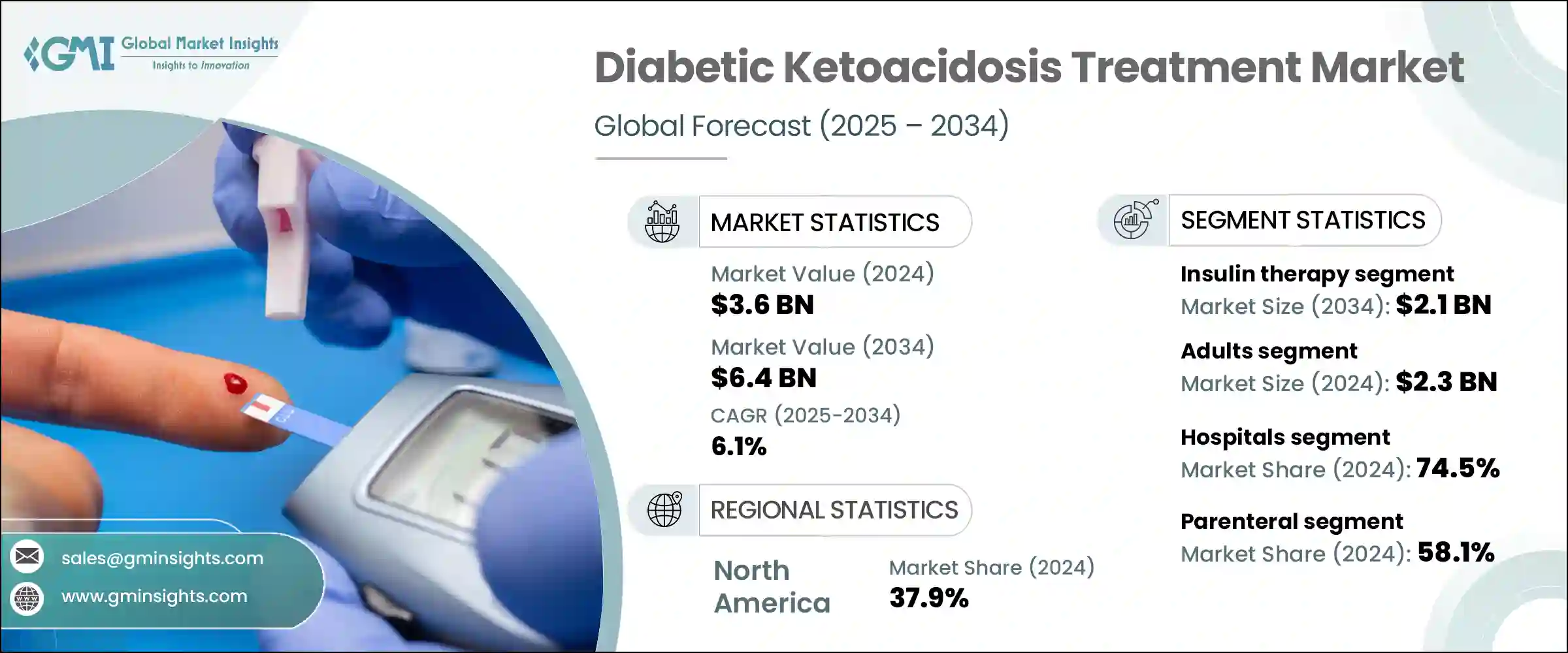
The global diabetic ketoacidosis treatment market was valued at USD 3.6 billion in 2024 and is projected to grow from USD 3.8 billion in 2025 to USD 6.4 billion by 2034, registering a CAGR of 6.1% during the forecast period. This growth is primarily driven by the rising prevalence of diabetes, particularly type 1 diabetes, and the increasing adoption of advanced insulin delivery systems. Innovations such as automated insulin pumps and continuous glucose monitoring (CGM) technologies are enhancing treatment precision and improving patient outcomes.
To get key market trends
Additionally, therapies like fluid replacement and balanced electrolyte solutions are enabling faster recovery and reducing complications. Increased healthcare investments and government initiatives aimed at raising awareness about diabetes and improving emergency care infrastructure are further supporting market expansion across both developed and emerging economies. Standard diabetic ketoacidosis treatment protocols typically include fast-acting insulin analogs, intravenous fluids, and electrolyte replenishment to stabilize patients effectively. Key players such as Novo Nordisk, Eli Lilly, Sanofi, Medtronic, and Pfizer are driving market growth by developing next-generation therapies and forming strategic partnerships to strengthen their global presence.
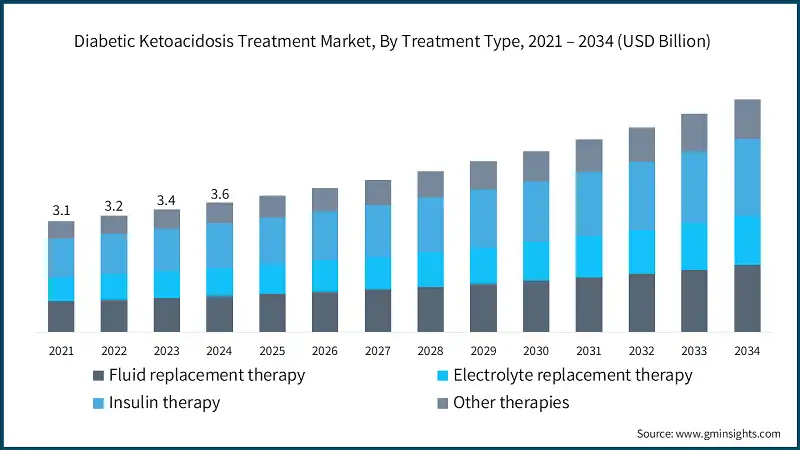
The market expanded from USD 3.1 billion in 2021 to USD 3.4 billion in 2023, fueled by the growing incidence of diabetes and increased awareness of early detection. The adoption of advanced insulin therapies and AI-powered glucose monitoring systems also surged, supported by government programs focused on diabetes management and advancements in emergency care technologies.
According to the International Diabetes Federation (IDF), approximately 589 million people were living with diabetes in 2024, and this figure is projected to reach 853 million by 2050. This significant rise is directly linked to an increased incidence of diabetic ketoacidosis, which requires immediate medical intervention. Consequently, the demand for fluid replacement, insulin therapies, and electrolyte management is growing, particularly in emergency care settings.
Advancements in insulin delivery systems, such as automated insulin pumps and CGM-integrated platforms, are transforming diabetic ketoacidosis management. Devices like Medtronic’s MiniMed 780G and Insulet’s Omnipod 5 offer real-time glucose monitoring and AI-powered dosing, improving treatment precision and reducing recovery times. These technologies are effective in both hospital and home care settings, providing better outcomes and greater convenience for patients. As healthcare systems increasingly adopt personalized and remote care solutions, these advancements are becoming integral to diabetic ketoacidosis treatment strategies through promoting timely diabetic therapies, which drives global market growth and adoption.
Diabetic ketoacidosis treatment involves managing this severe diabetes complication, characterized by high blood glucose levels, metabolic acidosis, and ketone buildup in the bloodstream.
Diabetic Ketoacidosis Treatment Market Report Attributes
| Key Takeaway | Details |
|---|---|
| Market Size & Growth | |
| Base Year | 2024 |
| Market Size in 2024 | USD 3.6 Billion |
| Forecast Period 2025 - 2034 CAGR | 6.1% |
| Market Size in 2034 | USD 6.4 Billion |
| Key Market Trends | |
| Drivers | Impact |
| Rising global prevalence of type 1 and type 2 diabetes | The growing patient population requiring diabetic ketoacidosis treatment is driving the demand for therapeutic solutions. |
| Advancements in insulin delivery and glucose monitoring technologies | Improved treatment precision and outcomes are fostering the adoption of advanced diabetic ketoacidosis management tools. |
| Increased awareness and early diagnosis of diabetic ketoacidosis | Timely intervention is reducing mortality rates, thereby increasing the demand for diagnostic solutions. |
| Pitfalls & Challenges | Impact |
| High cost of diabetic ketoacidosis treatment and insulin therapies | The high cost of advanced solutions restricts adoption in smaller clinics and price-sensitive regions. |
| Limited access to advanced care in low-income and rural regions | Market penetration is hindered by the lack of adequate emergency infrastructure and trained personnel. |
| Opportunities: | Impact |
| Expansion into emerging markets with rising diabetes burden | Facilitates the generation of new revenue streams in rapidly growing regions such as Asia Pacific and Africa. |
| Integration of telemedicine and digital health tools for remote management | Enhances healthcare accessibility in remote areas through virtual consultations and remote monitoring solutions. |
| Market Leaders (2024) | |
| Market Leaders |
22% Market Share |
| Top Players |
Collective Market Share in 2024 is 70% |
| Competitive Edge |
|
| Regional Insights | |
| Largest market | North America |
| Fastest growing market | Asia Pacific |
| Emerging countries | India, Brazil, Mexico, South Africa |
| Future outlook |
|
What are the growth opportunities in this market?
Diabetic Ketoacidosis Treatment Market Trends
- The global market is undergoing rapid transformation due to efforts to standardize clinical practices and incorporate advanced technologies. Hospitals are increasingly adopting protocol-driven care pathways that emphasize early detection and collaboration among healthcare providers. These approaches are improving treatment timelines and enhancing outcomes, particularly for high-risk patient groups.
- Advancements in fluid replacement therapies, including balanced crystalloid solutions like Plasma-Lyte, are improving electrolyte management and reducing complications such as hypokalemia and hyperchloremia. These solutions are increasingly utilized in emergency departments and intensive care units (ICUs).
- The integration of Electronic Health Records (EHR) with predictive analytics tools is reshaping care delivery. Hospitals are leveraging data-driven platforms to identify high-risk patients and implement early interventions, reducing recurrence rates and hospital readmissions.
- Telemedicine, projected to reach a market size of USD 503.8 billion by 2032, is playing a significant role in post-diabetic ketoacidosis care. Virtual follow-ups and real-time glucose monitoring for recovering patients have notably decreased emergency visits in certain healthcare facilities.
- Key market players are focusing on the development of advanced insulin analogs and oral electrolyte supplements, many of which are currently in clinical trials. Products like Novo Nordisk’s ultra-rapid insulin analog are anticipated to set new benchmarks for treatment, enhancing recovery efficiency and expanding access to outpatient care.
Diabetic Ketoacidosis Treatment Market Analysis
Learn more about the key segments shaping this market
The global market was valued at USD 3.1 billion in 2021 and reached USD 3.4 billion in 2023, up from USD 3.2 billion in 2022.
By treatment type, the market is segmented into fluid replacement therapy, electrolyte replacement therapy, insulin therapy, and other therapies. The insulin therapy segment dominated the market in 2024, holding the largest share due to its essential role in managing hyperglycemia and ketone production. This segment was valued at USD 1.2 billion in 2024 and is projected to reach USD 2.1 billion by 2034, growing at a CAGR of 5.6%.
The growth is driven by the increasing adoption of rapid-acting insulin analogs and automated insulin delivery systems, which are critical for acute diabetic ketoacidosis management in both hospital and outpatient settings. In comparison, the fluid replacement therapy segment, valued at USD 994.6 million in 2024, is expected to grow to USD 1.8 billion by 2034, with a slightly higher CAGR of 6.5%, supported by advancements in balanced crystalloid solutions and their widespread application in emergency care.
- Insulin therapy remains the cornerstone of diabetic ketoacidosis management, accounting for the largest market share due to its pivotal role in reversing hyperglycemia and halting ketone production. Rapid-acting insulin analogs, such as insulin lispro (Humalog) and insulin aspart (NovoLog), are widely used in emergency settings for their quick action and reliable outcomes.
- One significant trend in this segment is the development of automated insulin delivery systems and closed-loop platforms. These systems integrate CGM with AI-powered dosing algorithms, enabling real-time blood sugar management, reducing hypoglycemia risks, and optimizing therapy adjustments.
- For example, Medtronic’s MiniMed 780G and Insulet’s Omnipod 5 are notable innovations that seamlessly connect with CGM devices. These systems dynamically adjust insulin doses based on glucose trends, transforming diabetic ketoacidosis management in both hospital and home settings.
- Additionally, personalized insulin regimens, including ultra-rapid and weekly basal analogs, are enhancing patient adherence and reducing hospital stays. These therapies are increasingly integrated with telemedicine platforms, facilitating remote monitoring and timely medical interventions.
The diabetic ketoacidosis treatment market, segmented by age group, includes pediatric and adults. In 2024, the adults segment dominated the market, valuing at USD 2.3 billion.
- The adult segment holds a dominant position in the market due to the higher global prevalence of diabetes among adults. The incidence of both Type 1 diabetes and insulin-requiring Type 2 diabetes is significantly higher in this demographic, increasing the likelihood of diabetic ketoacidosis cases. According to the Diabetic Atlas 2025 of the International Diabetes Federation (IDF), approximately 1 in 9 adults aged 20 to 79 years is affected by diabetes. As a result, the healthcare system encounters a greater number of diabetic ketoacidosis cases within the adult population, driving the demand for treatment solutions.
- Additionally, adults often face additional risk factors, including poor glycemic control, comorbidities, and delayed diagnosis, which contribute to the increased frequency and severity of diabetic ketoacidosis episodes. These complications necessitate aggressive pharmacological interventions, such as insulin therapy and electrolyte management, making adults a key target group for pharmaceutical companies. This demographic typically requires more complex and tailored therapeutic approaches.
- Moreover, adults are more likely to require hospitalization for diabetic ketoacidosis due to complications and lifestyle-related triggers. This leads to higher utilization of hospital-based therapies, including branded insulin and intravenous fluids, further driving the demand for treatment options within this segment.
The diabetic ketoacidosis treatment market, segmented by route of administration, includes parenteral, subcutaneous, oral, and other routes of administration. In 2024, the parenteral segment dominated the market, accounting for a 58.1% share.
- Insulin, fluids, and electrolytes are critical therapies for managing diabetic ketoacidosis, and their timely administration is best achieved through parenteral routes, which contributes to the higher share of the segment. Intravenous delivery ensures the fastest absorption and onset of action, which is essential in emergency cases of acute diabetic ketoacidosis to stabilize blood glucose levels and address acidosis caused by dehydration.
- In addition, symptoms such as vomiting, altered consciousness, and severe dehydration associated with diabetic ketoacidosis make oral administration impractical or unsafe in these scenarios. Parenteral delivery allows healthcare providers to bypass the gastrointestinal tract, enabling precise dosing tailored to the patient’s condition and facilitating rapid responses to any changes in their status. As a result, the parenteral route is the preferred method in hospital and intensive care unit settings due to its reliability and effectiveness.
- Further, clinical protocols worldwide recommend intravenous insulin and fluids as the standard of care for moderate to severe cases of diabetic ketoacidosis. This widespread adoption highlights the efficacy and safety of parenteral therapies, as well as their seamless integration into healthcare systems across both developed and emerging economies. Consequently, the dominance of parenteral delivery in managing diabetic ketoacidosis is supported by robust clinical evidence and its alignment with established hospital infrastructure.
Learn more about the key segments shaping this market
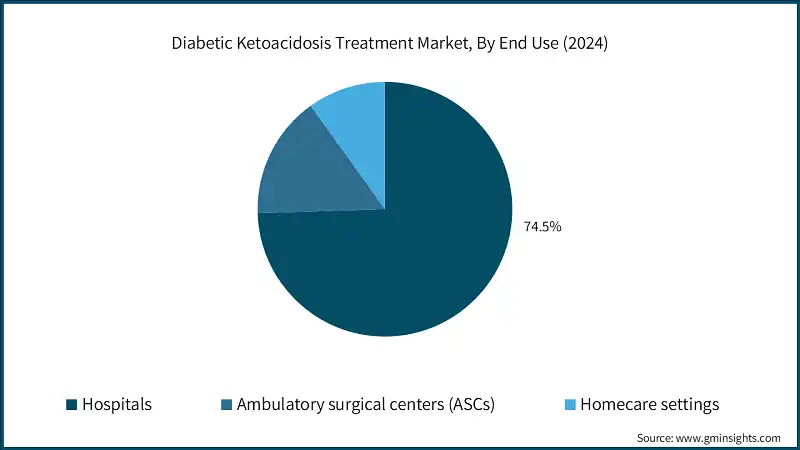
The diabetic ketoacidosis treatment market, segmented by end use, includes hospitals, ambulatory surgical centers (ASCs), and homecare settings. In 2024, the hospitals segment dominated the market, accounting for a 74.5% share.
- The hospitals segment held the largest share due to advanced emergency care infrastructure and the availability of skilled endocrinologists. Hospitals serve as primary centers for managing diabetic ketoacidosis, offering comprehensive insulin therapy, fluid resuscitation, and electrolyte correction.
- Additionally, hospitals benefit from high patient volumes, government-supported diabetes management programs, and integrated clinical systems such as electronic health records (EHR) and clinical decision support systems (CDSS), which streamline processes and improve patient outcomes. Rapid-acting insulin analogs are widely used in hospital settings for effective treatment.
- The ambulatory surgical centers segment is witnessing growth due to the increasing adoption of outpatient diabetes management. These facilities focus on protocol-driven care, enabling rapid stabilization and discharge, particularly for mild diabetic ketoacidosis cases.
- The homecare settings segment is expected to register the highest CAGR of 7.5% during the forecast period. This growth is driven by the adoption of wearable insulin pumps and CGM systems, which facilitate remote monitoring and post-discharge recovery, reducing dependency on hospital-based care.
Looking for region specific data?
North America dominated the global diabetic ketoacidosis treatment market with the highest market share of 37.9% in 2024. The region benefits from advanced healthcare infrastructure, widespread access to insulin therapies, and high adoption of innovative treatment technologies. The U.S. alone accounted for 90.1% of the regional revenue, driven by a high prevalence of type 1 diabetes and robust emergency care systems.
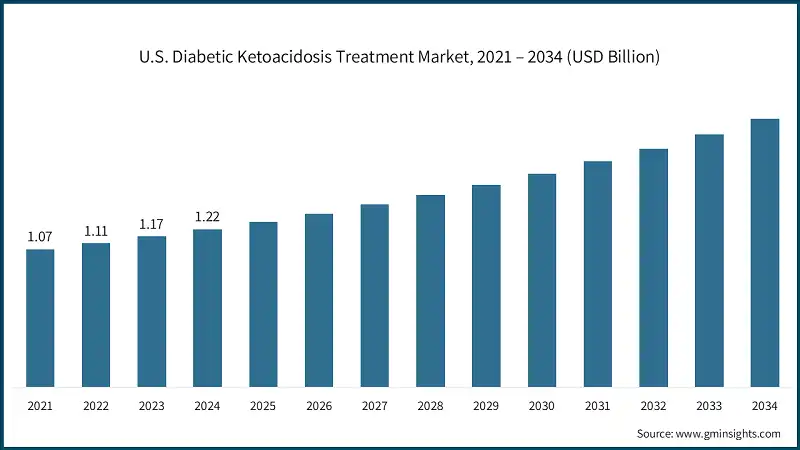
- The U.S. market was valued at 1.07 billion and USD 1.11 billion in 2021 and 2022, respectively. In 2024 the market size reached USD 1.22 billion from USD 1.17 billion in 2023.
- The country observed a surge in the number of type 1 diabetic patients over the years. According to the Centers for Disease Control and Prevention (CDC), about 1.9 million people in the country have type 1 diabetes.
- Also, regulatory clarity, strong R&D investment, and public awareness campaigns further support the rollout of advanced insulin delivery platforms and hospital-based diabetic ketoacidosis protocols. The integration of AI-powered insulin pumps and EHR-linked monitoring tools is enhancing treatment precision and reducing hospitalization time.
Europe diabetic ketoacidosis treatment market accounted for USD 989 million in 2024 and is anticipated to show lucrative growth over the forecast period.
- The growth in the region is driven by the increasing prevalence of type 1 diabetes, the adoption of digital diabetes management technologies, and advancements in emergency care infrastructure.
- The WHO reports that the European Region has the highest burden of type 1 diabetes globally, with diabetes being one of the most common chronic diseases in the area. By 2045, it is projected that 1 in 10 individuals in this region will have diabetes, highlighting the rising demand for acute care solutions such as diabetic ketoacidosis treatment.
- Countries like Germany, France, and the UK are at the forefront of implementing CGM-integrated insulin pumps, AI-driven dosing systems, and standardized diabetic ketoacidosis treatment protocols. These advancements are supported by public-private collaborations and national diabetes initiatives, further driving market growth.
Germany diabetic ketoacidosis treatment market is projected to experience steady growth between 2025 and 2034.
- Germany is experiencing a rising prevalence of type 1 diabetes, supported by a robust hospital infrastructure and the widespread adoption of automated insulin delivery systems. The country also benefits from strong reimbursement policies and has been an early adopter of AI-powered glucose monitoring tools.
- Additionally, Germany's advancements in medical technology and the integration of EHR-linked insulin dosing platforms establish it as a significant player in the European market. Ongoing investments in R&D and digital health infrastructure are anticipated to drive sustained growth through 2034.
The Asia Pacific region is projected to be valued at USD 912 million in 2025 and is expected to reach USD 1.7 billion by 2034.
- The region is anticipated to record the highest growth rate due to increasing awareness about diabetic ketoacidosis, the expansion of government-led health initiatives, and rising disposable incomes. Additionally, the prevalence of diabetic ketoacidosis cases in the region is on the rise.
- For instance, as per the IDF Diabetes Atlas 2025, the number of individuals with diabetes in the Southeast Asia region is expected to grow by 73%, reaching 185 million by 2050. The prevalence rate is projected to increase by 36%, reaching 13.2%, with 42.7% of cases remaining undiagnosed, the third-highest globally.
Japan diabetic ketoacidosis treatment market is poised to witness lucrative growth between 2025 to 2034.
- Japan is a leading adopter of advanced insulin delivery systems and CGM technologies. These tools significantly enhance glycemic control and facilitate real-time management of diabetic ketoacidosis.
- Additionally, government-led initiatives promoting the integration of digital health solutions, coupled with public awareness campaigns, are improving access to diabetes care. These developments position Japan as a key market in the Asia-Pacific diabetic ketoacidosis treatment landscape.
Brazil in Latin America is experiencing significant growth in the diabetic ketoacidosis treatment market, driven by its expanding adoption of chronic disease management.
- Brazil has one of the highest diabetes burdens in the region; the number of type 1 and type 2 diabetes cases is increasing, contributing to a rise in diabetic ketoacidosis incidence. Growing awareness and enhanced diagnostic capabilities are facilitating earlier detection and treatment.
- The country's healthcare system is increasingly adopting automated insulin pumps, CGM platforms, and telemedicine-based follow-up care, particularly in urban centers. These technologies are helping to reduce hospitalizations and improve patient outcomes.
Saudi Arabia diabetic ketoacidosis treatment market in Middle East and Africa is expected to experience significant and promising growth from 2025 to 2034.
- The increasing prevalence of diabetes in Saudi Arabia is a significant factor driving the growth of this market. According to the Saudi Diabetes Federation, there were approximately 4.3 million reported cases of diabetes among Saudi adults in 2021.
- Additionally, the healthcare system in Saudi Arabia is enhancing access to CGM systems and automated insulin delivery systems, particularly in urban areas. Public health initiatives and improved insurance coverage are anticipated to further contribute to the market's growth. Efforts to manage diabetes-related complications, such as diabetic ketoacidosis, are also expected to play a crucial role in market expansion.
Diabetic Ketoacidosis Treatment Market Share
- The top five players, including Novo Nordisk, Eli Lilly, Sanofi, Baxter International, and Pfizer, collectively account for about 70% share of the global market. These companies maintain their leadership through robust insulin portfolios, continuous innovation in delivery systems, regulatory approvals, and strategic partnerships with hospitals and diabetes care centers.
- Novo Nordisk holds the majority revenue share in this market, driven by its fast-acting insulin analogs, such as NovoRapid, which are widely adopted for acute diabetic ketoacidosis management. The company's strengths lie in product efficacy, extensive global reach, and integration with digital monitoring platforms, making it a preferred choice in both hospital and homecare settings.
- Meanwhile, emerging players like Biocon, Wockhardt, and Oramed Pharmaceuticals are gaining traction by offering cost-effective insulin therapies and region-specific solutions.
- To expand market share, companies are introducing artificial intelligence-enabled insulin pumps, smart glucose monitors, and integrated care platforms that support real-time analytics and remote diabetic ketoacidosis management. Innovations in subcutaneous insulin delivery, electrolyte balancing solutions, and telemedicine integration are reshaping the competitive dynamics of the market.
Diabetic Ketoacidosis Treatment Market Companies
Few of the prominent players operating in the diabetic ketoacidosis treatment industry include:
- Global Players
- Baxter International
- Eli Lilly and Company
- Fresenius Kabi
- Merck & Co.
- Novo Nordisk
- Pfizer
- Sanofi
- Wockhardt
- Regional Players
- Biocon
- Julphar
- Otsuka Pharmaceutical
- Tonghua Dongbao
- Yuria-Pharm
- Emerging Players
- Adocia
- Cipla
- Gufic Biosciences
- Hanmi Pharmaceuticals
- Yiling Pharmaceutical
- Novo Nordisk
Novo Nordisk offers innovative products like Fiasp and NovoRapid that have positioned the company as one of the key players in diabetes care. These fast-acting insulins are particularly suitable for emergency diabetic ketoacidosis treatment. The company continues to lead insulin research and development, investing in next-generation analogs and advanced delivery systems tailored for acute care applications.
- Eli Lilly and Company
Eli Lilly and Company offers a diverse portfolio of insulin products, including Humalog and Basaglar, at competitive prices. The company has taken significant steps to enhance affordability by ensuring the availability of low-cost insulin options, which have a substantial impact across underserved regions.
- Pfizer
Pfizer's competitive advantage in the diabetic ketoacidosis treatment market lies in its extensive pharmaceutical expertise and strategic collaborations, such as its partnership with Bristol Myers Squibb for Eliquis. While Eliquis primarily addresses cardiovascular conditions, this partnership highlights Pfizer's commitment to multidisciplinary approaches in managing chronic illnesses. Pfizer's unique selling proposition is its global presence and robust research and development capabilities, allowing it to integrate diabetes care within a broader framework of metabolic and cardiovascular health, ultimately improving overall patient outcomes.
Diabetic Ketoacidosis Treatment Industry News:
- In January 2025, Novo Nordisk received FDA approval for an innovative ultra-rapid insulin analog designed to significantly enhance the treatment of diabetic ketoacidosis. This formulation accelerates glycemic control, reducing recovery time by up to 30% compared to existing insulins, thereby improving patient outcomes in acute hospital settings.
- In April 2025, Sanofi entered a strategic partnership with a major Chinese pharmaceutical distributor to expand insulin access across the Asia Pacific region. This collaboration aims to address the rising prevalence of diabetes and increasing cases of diabetic ketoacidosis in the region, thereby strengthening Sanofi’s market presence in high-growth markets.
The diabetic ketoacidosis treatment market research report includes an in-depth coverage of the industry with estimates and forecast in terms of revenue in USD Million and from 2021 – 2034 for the following segments:
Market, By Treatment Type
- Fluid replacement therapy
- Electrolyte replacement therapy
- Insulin therapy
- Other therapies
Market, By Age Group
- Pediatric
- Adults
Market, By Route of Administration
- Parenteral
- Subcutaneous
- Oral
- Other routes of administration
Market, By End Use
- Hospitals
- Ambulatory surgical centers (ASCs)
- Homecare settings
The above information is provided for the following regions and countries:
- North America
- U.S.
- Canada
- Europe
- Germany
- UK
- France
- Italy
- Spain
- Netherlands
- Asia Pacific
- China
- India
- Japan
- Australia
- South Korea
- Latin America
- Brazil
- Mexico
- Argentina
- Middle East and Africa
- Saudi Arabia
- South Africa
- UAE
Frequently Asked Question(FAQ) :
Which region leads the diabetic ketoacidosis treatment market?
North America dominated with 37.9% market share in 2024, with the U.S. accounting for 90.1% of regional revenue due to advanced healthcare infrastructure and high type 1 diabetes prevalence.
Who are the key players in the diabetic ketoacidosis treatment market?
Key global players include Baxter International, Eli Lilly and Company, Fresenius Kabi, and Merck & Co.
What was the valuation of the parenteral segment?
The parenteral segment held 58.1% market share in 2024, driven by the necessity of administering insulin, fluids, and electrolytes through parenteral routes.
How much revenue did the adults segment generate?
The adults segment generated USD 2.3 billion in 2024, dominating the market due to higher prevalence of diabetes among adults.
What are the key market trends in diabetic ketoacidosis treatment?
The market is evolving through standardized clinical practices, protocol-driven care pathways, and advanced fluid replacement therapies like Plasma-Lyte for improved electrolyte management.
What is the market size of the diabetic ketoacidosis treatment in 2024?
The global diabetic ketoacidosis treatment market was valued at USD 3.6 billion in 2024, driven by the increasing prevalence of diabetes and adoption of advanced insulin delivery systems.
What is the projected value of the diabetic ketoacidosis treatment industry by 2034?
The market is expected to reach USD 6.4 billion by 2034, registering a CAGR of 6.1% during the forecast period.
What is the projected size of the diabetic ketoacidosis treatment market in 2025?
The market is expected to reach USD 3.8 billion in 2025.
Diabetic Ketoacidosis Treatment Market Scope
Related Reports