Summary
Table of Content

Dermatology Drugs Market
Get a free sample of this report
Form submitted successfully!
Error submitting form. Please try again.
Thank you!
Your inquiry has been received. Our team will reach out to you with the required details via email. To ensure that you don't miss their response, kindly remember to check your spam folder as well!
Request Sectional Data
Thank you!
Your inquiry has been received. Our team will reach out to you with the required details via email. To ensure that you don't miss their response, kindly remember to check your spam folder as well!
Form submitted successfully!
Error submitting form. Please try again.
Dermatology Drugs Market Size
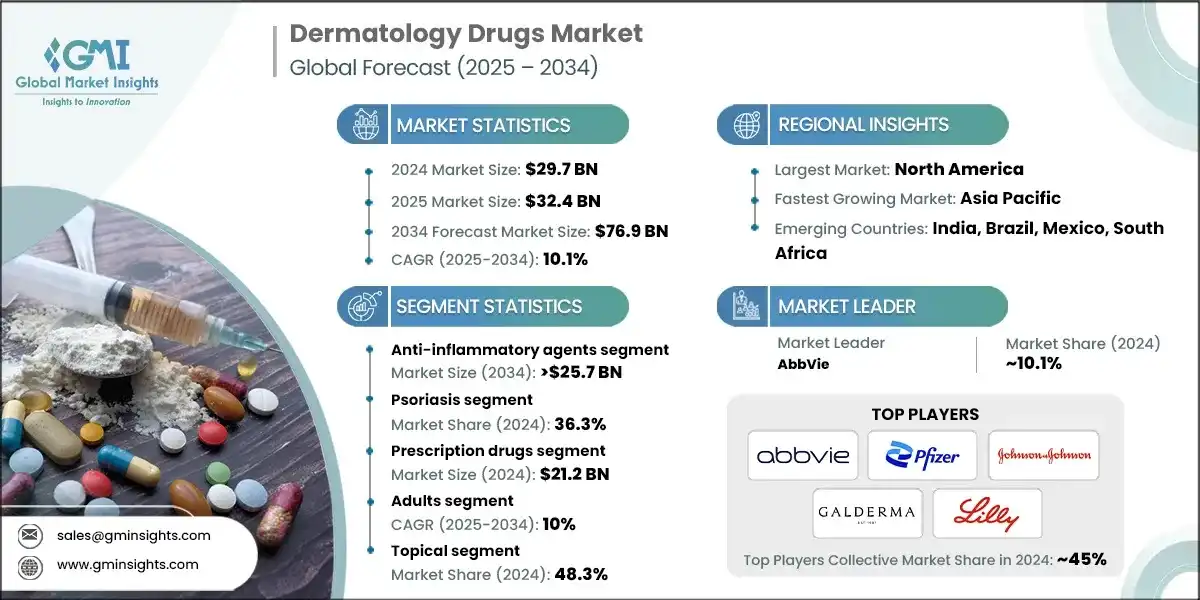
The global dermatology drugs market was estimated at USD 29.7 billion in 2024. The market is expected to grow from USD 32.4 billion in 2025 to USD 76.9 billion in 2034, at a CAGR of 10.1%, according to the latest report published by Global Market Insights Inc.
To get key market trends
This rising growth is stimulated by the global prevalence of dermatological conditions such as psoriasis and acne and increasing awareness of various rare skin disorders. According to NIH, dermatological skin diseases are known to be the 4th leading cause of non-fatal disease burden globally, stimulating the market demand for dermatology therapeutics.
Additionally, rising cases of acne, especially in teenage group aging from 15 to 19 further escalates the market demand for acne medication and solutions. According to a study by Pierre Fabre, globally 1 in 5 people experience from acne with a global prevalence of more than 28.3%.
Moreover, advancements in targeted therapies, especially monoclonal antibodies and small molecule inhibitors, are improving treatment outcomes and quality of life. Additionally, the growing incidence of treatment-resistant and chronic skin conditions is stimulating demand for innovative therapies such as dupilumab and ruxolitinib. These drugs are increasingly used to manage disease progression and improve patient comfort across various stages of the condition.
Dermatology drug treatments include medications administered topically, orally, and via injection, available through hospitals, dermatology clinics, and homecare platforms. These therapies span categories such as corticosteroids, immunomodulators, biologics, and combination therapies, and are used to treat both acute and chronic skin disorders. The market is characterized by the presence of several global pharmaceutical companies. The top players include AbbVie, Pfizer, Johnson and Johnson, Eli Lilly, and Galderma, collectively accounting for a significant share of the market.
The market has seen investment in research and development, leading to the approval of novel therapies and expanding indications. Precision dermatology and biomarker-specific treatments are reshaping the therapeutic landscape, with drugs tailored to specific inflammatory pathways showing increased efficacy and reduced side effects.
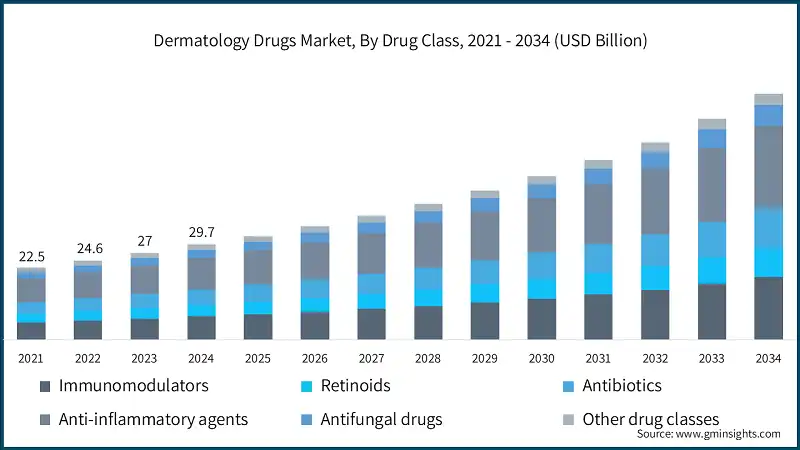
The global dermatology drugs market has witnessed consistent growth, rising from USD 22.5 billion in 2021 to USD 27 billion in 2023, escalated by improved diagnostic capabilities, early detection, and the adoption of personalized medicine. The increasing focus on targeted therapies and the integration of companion diagnostics are further accelerating market expansion.
These treatment solutions are regulated by global health authorities to ensure safety, efficacy, and quality. They are available in various dosage forms including creams, gels, tablets, and injectable solutions, allowing for flexible administration based on patient needs and disease severity.
Dermatology Drugs Market Report Attributes
| Key Takeaway | Details |
|---|---|
| Market Size & Growth | |
| Base Year | 2024 |
| Market Size in 2024 | USD 29.7 Billion |
| Market Size in 2025 | USD 32.4 Billion |
| Forecast Period 2025 - 2034 CAGR | 10.1% |
| Market Size in 2034 | USD 76.9 Billion |
| Key Market Trends | |
| Drivers | Impact |
| Increasing prevalence of chronic skin conditions | Rising global incidence of diseases like eczema, acne, and psoriasis is driving demand for long-term dermatological therapies. |
| Demographic shifts and lifestyle factors | Aging populations and urban lifestyles contribute to higher rates of skin disorders, expanding the treatment base. |
| Advancements in biologics and small molecule drugs | Introduction of next-generation therapies is improving treatment precision and patient outcomes. |
| Growing awareness of skin health and aesthetics | Increased public focus on dermatological wellness and cosmetic dermatology is boosting market demand. |
| Pitfalls & Challenges | Impact |
| Adverse effects and drug resistance | Side effects and reduced efficacy over time may hinder patient adherence and treatment success. |
| Limited access in low-resource settings | High costs and lack of dermatology specialists restrict access to advanced treatments in underserved regions. |
| Opportunities: | Impact |
| Expansion of personalized dermatology | Genomic profiling and biomarker-based therapies are paving the way for individualized treatment plans. |
| Integration of AI and telehealth dermatology | Digital platforms and AI-driven diagnostics are enhancing accessibility and early detection. |
| Market Leaders (2024) | |
| Market Leaders |
~10.1% |
| Top Players |
Collective market share in 2024 is ~45% |
| Competitive Edge |
|
| Regional Insights | |
| Largest Market | North America |
| Fastest Growing Market | Asia Pacific |
| Emerging Country | India, Brazil, Mexico, South Africa |
| Future Outlook |
|
What are the growth opportunities in this market?
Dermatology Drugs Market Trends
- The increasing shift towards personalized dermatology and biomarker-driven treatments is reshaping the market, with patients seeking targeted therapies that offer improved efficacy and reduced side effects for chronic skin conditions.
- Integration of AI-powered diagnostics and digital dermatology platforms is accelerating early detection and treatment planning, enhancing accessibility and precision in skin disease management.
- Rising costs of hospital-based care and injectable therapies are encouraging adoption of topical and oral dermatology drugs that are more affordable and suitable for long-term use.
- The market is witnessing growing interest in rare skin disease research, stimulating demand for orphan drugs and supporting innovation in niche dermatological indications.
- Emergence of combination therapy strategies is appealing to dermatologists aiming to overcome resistance and improve outcomes in complex and treatment-resistant cases.
- Increasing investment in tele health and remote monitoring tools is improving access to specialized care, especially in underserved regions, and supporting adherence to chronic treatment regimens.
- Growing awareness of relapse and flare-up risks is prompting dermatologists and patients to explore multi-line therapies and maintenance plans, further expanding the market.
- Development of patient-centric formulations such as long-acting creams, foam-based applications, and mutation-specific dosing regimens is improving convenience and compliance, supporting broader adoption of dermatology treatment devices.
Dermatology Drugs Market Analysis
Learn more about the key segments shaping this market
Based on drug class, the dermatology drugs market is categorized into immunomodulators, retinoids, antibiotics, anti-inflammatory agents, antifungal drugs and other drug classes. The anti-inflammatory agents segment accounted for 32.6% of the market in 2024 which is stimulated due to targeted mechanism of action for broad application for multiple skin conditions such as psoriasis, atopic dermatitis and others. The segment is expected to exceed USD 25.7 billion by 2034, growing at a CAGR of 10.4% during the forecast period.
- The anti-inflammatory agents segment dominated the dermatology drugs market, due to rising demand for medications such as corticosteroids along with non-steroidal formulations that provide rapid relief from symptoms and are generally widely prescribed for both acute and chronic skin conditions. NIH mentions, corticosteroids are known to be the first line therapy for various skin conditions that include atopic dermatitis and psoriasis.
- Additionally, increased awareness of skin inflammation and its impact have helped dermatologists to prioritize anti-inflammatory therapies, especially in combination with moisturizers and barrier-repair agents for long-term management.
- The drugs are available in various formulations such as creams, ointments, foams, and lotions, corticosteroids offer flexibility in treatment and are often used as first-line therapy or in combination with other agents for enhanced efficacy.
- The segment benefits from broad clinical acceptance, low cost, and easy accessibility, making it a preferred choice for both patients and healthcare providers. Despite concerns over long-term use and potential side effects, corticosteroids remain a cornerstone in psoriasis management, especially for short-term flare control and localized lesions.
- The immunomodulators segment is expected to grow at a CAGR of 10.6%, stimulated by the increasing prevalence of autoimmune skin disorders such as atopic dermatitis and vitiligo, and the emergence of targeted therapies such as calcineurin inhibitors and JAK inhibitors.
- Moreover, the antibiotics segment accounted for a market share of 16.4%, which is primarily used to treat bacterial skin infections, particularly acne and cellulitis, with rising concerns over antimicrobial resistance prompting innovation in narrow-spectrum and topical antibiotic formulations.
Based on indication, the dermatology drugs market is segmented into psoriasis, atopic dermatitis, acne, skin cancer and other indications. The psoriasis segment dominated the market in 2024 with a market share of 36.3% driven due to its high prevalence and chronic nature.
- The increasing cases of psoriasis especially plaque psoriasis stimulates the market demand. According to NIH, plaque psoriasis accounts for 90% of all the psoriasis cases and is the commonest clinical type of psoriasis.
- Moreover, psoriasis is a very common causing skin disease especially among adults and growing ag groups. The prevalence of psoriasis globally is estimated to affect over 125 million people as mentioned by the National Psoriasis Foundation, stimulating demand for effective and long-term treatment options.
- Additionally, the growing adoption of personalized therapies and mutation-specific biologics has further accelerated the segment’s growth, especially in moderate-to-severe cases requiring long-term management.
- Further, atopic dermatitis represents a niche but growing segment of the market, supported by the emergence of targeted therapies such as JAK inhibitors and biologics, and rising awareness of the disease’s chronic nature and impact on quality of life.
- Similarly, acne is a significant and expanding segment, particularly among adolescents and young adults due to the increasing unhealthy lifestyle settings and increasing demand for both prescription and over-the-counter treatments.
Based on mode, the dermatology drugs market is segmented into prescription drugs and over the counter drugs. The prescription drugs segment dominated the market in 2024 with USD 21.2 billion market size, stimulated by the clinical efficacy, regulatory approvals, and innovation associated with branded therapies.
- The prescription drugs are considered as the centre to dermatology treatment, particularly for skin disease varying from moderate to severe cases such as psoriasis, atopic dermatitis, and acne, where use of biologics, antifungals, and corticosteroids are preferred for long-term disease control. According to NIH, of all prescriptions, 17% prescriptions are anti-fungal and 16% are corticosteroids.
- Moreover, these therapies are strongly supported by clinical trial data, including dermatology guidelines and insurance coverage, making them widely accessible through hospital and specialty care settings.
- Additionally, the prescription drugs are beneficial from ongoing research and investments, that led to the development of next-generation therapies along with combination therapies that control drug resistance and improve patient outcomes.
- The OTC drugs segment continues to grow steadily, escalated by consumer demand for self-care solutions, particularly for mild acne, fungal infections, and allergic reactions, with topical agents and barrier-repair products dominating retail shelves.
Based on age group, the dermatology drugs market is segmented into paediatric, adults and geriatric. The adults segment dominated the market in 2024 with a growing CAGR of 10%, the segment domination is stimulated due to global urbanisation, unhealthy lifestyle and prone to infections and diseases.
- The adult population dominates as lifestyle factors such as stress, pollution, and hormonal changes contribute to increased incidence of skin disorders. According to NIH, 73.3% of people aged 20 or above experience acne, with women being more prone to it.
- Moreover, rising awareness of skin health and aesthetics among working-age individuals has stimulated demand for both therapeutic and cosmetic dermatology drugs, with biologics, retinoids, and immunomodulators being widely prescribed in this age group.
- The geriatric segment holds a significant share of the market, driven by age-related skin changes, reduced immunity, and increased susceptibility to chronic conditions, often require specialized care.
- The paediatric segment is also growing steadily, supported by rising cases of atopic dermatitis, diaper rash, and allergic skin reactions in infants and children, dermatology drugs for children are formulated for safety and tolerability, with increasing focus on non-steroidal and gentle topical agents.
Based on route of administration, the dermatology drugs market is segmented into parenteral, topical and oral. The topical segment dominated the market in 2024 with a market share of 48.3%, the segment domination is driven by its ease of application, minimal systemic side effects, and suitability for mild to moderate cases.
- Topical therapies are preferred option for initial treatment and maintenance, especially in outpatient settings, due to their accessibility and affordability formulations such as creams, foams, and gels.
- Moreover, topical administration is favoured for its convenience, allowing patients to manage symptoms independently without the need for clinical supervision, making it ideal for long-term use in mild cases.
- The oral segment holds a significant share of 34.2% in the dermatology drugs market, supported by the growing adoption of small-molecule therapies such as PDE4 and TYK2 inhibitors, which offer convenience and systemic control for moderate cases.
- The parenteral administration, are primarily used for biologic therapies targeting severe skin diseases, offering high efficacy and long-term disease control, especially in patients unresponsive to topical or oral treatments.
Learn more about the key segments shaping this market
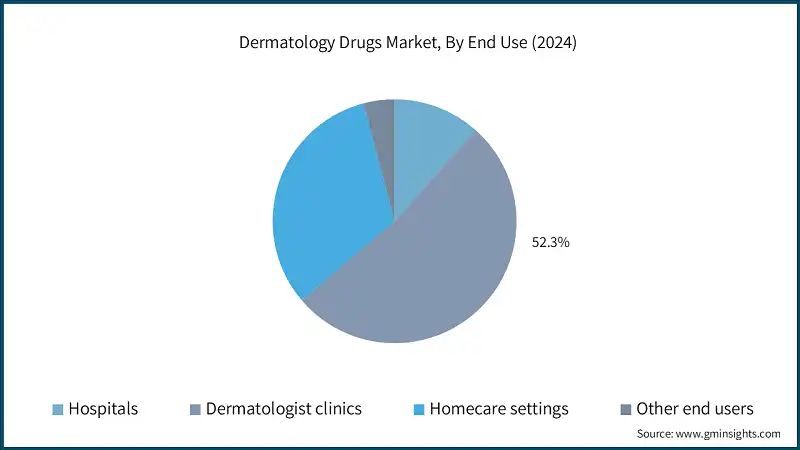
Based on end use, the dermatology drugs market is categorized into hospitals, dermatologist clinics, homecare settings and other end users. The dermatologist clinics segment is anticipated to reach USD 39.8 billion by 2034, growing with a significant CAGR of 10% during the analysis period, escalated due to the increasing requirement of specialized care and the presence of advanced therapeutic services available in the dermatologist clinics.
- The dermatologist clinics are the preferred end use settings for both initial consultations and follow-up treatments, offering treatment and care based on the disease severity, skin type of the patient and history. The presence of prescription drugs, anti-inflammatory, and combination therapies provided from these clinics ensures comprehensive care and better treatment outcome.
- Moreover, the increasing chronic and lifestyle-related issues causing skin disorders has increased patient visits to dermatology specialists, particularly in urban areas where awareness for skin diseases and access to care are more than other areas. Clinics also play a key role in early diagnosis and intervention, reducing the progression of skin diseases and improving quality of life.
- The segment benefits from growing demand for personalized medicine, with dermatologists increasingly using biomarker-based approaches and digital tools to guide therapy selection. This has led to improved outcomes and patient satisfaction, reinforcing the dominance of dermatologist clinics in the dermatology drugs market.
- Further, the homecare settings segment is growing steadily, supported by the availability of topical and oral therapies that can be self-administered for mild to moderate conditions. Patients prefer homecare for its convenience, especially for long-term maintenance of chronic skin diseases, and the rise of tele dermatology has further enabled remote monitoring and prescription renewals.
- Also, hospitals continue to play a vital role in managing severe and treatment-resistant dermatological conditions, particularly those requiring injectable biologics or multidisciplinary care. Hospitals are essential for complex cases and inpatient management, especially in public healthcare systems.
Looking for region specific data?
North America Dermatology Drugs Market
The North America market dominated the market with a market share of 40.4% in 2024. The market is stimulated by the rising prevalence of chronic skin conditions such as psoriasis, eczema, and acne, supported by advanced healthcare infrastructure and high treatment awareness.
- Growing adoption of personalized dermatology approaches, including biomarker-driven therapies and genomic profiling, is enhancing treatment precision and improving long-term patient outcomes.
- Countries such as the U.S., and Canada, contribute to regional growth through public health initiatives, expanding insurance coverage, and increasing demand for both prescription and specialty dermatology drugs.
- Moreover, presence of leading pharmaceutical companies such as AbbVie, Pfizer, Johnson & Johnson, and Eli Lilly drives innovation in dermatology drugs, biosimilars, and oral therapies.
- Additionally, favourable reimbursement policies and initiatives by government and various organizations enhance access to advanced dermatology treatments.
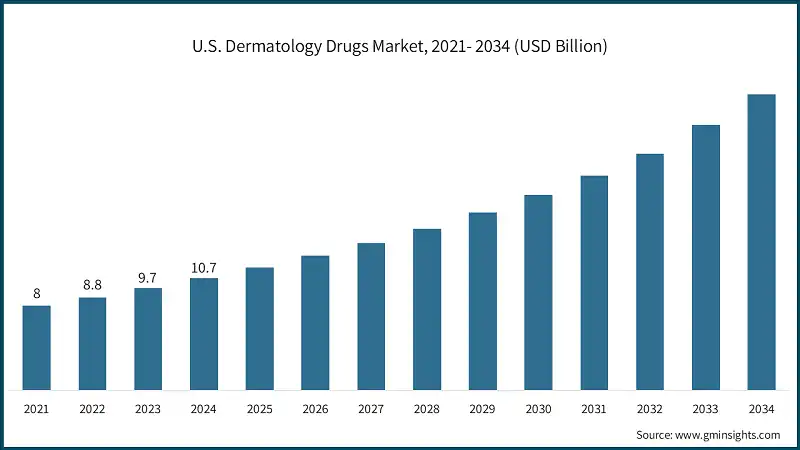
The U.S. dermatology drugs market was valued at USD 8 billion and USD 8.8 billion in 2021 and 2022, respectively. The market size reached USD 10.7 billion in 2024, growing from USD 9.7 billion in 2023.
- The U.S. experiences a high number of dermatological cases, within which acne is found to be the most prevalent condition. The American Academy of Dermatology mentions, acne affects 43% and 51% of male and female respectively, making it the leading skin disorder in the country.
- Moreover, Medscape mentions acne is most common skin condition in the country with more than 50 million people getting affected annually.
- Additionally, the rising awareness of good skin health and early diagnosis of chronic skin conditions such as psoriasis or cancer related to skin is encouraging more patients to seek prescription-based therapies, especially among adolescents and adults aged 18 to 44, who are the largest treatment-seeking demographic for acne and other chronic skin conditions.
- The U.S. market is also benefiting from the integration of telehealth dermatology and personalized treatment platforms, which are expanding access to care, improving diagnosis accuracy, and supporting long-term management of chronic skin diseases.
Europe Dermatology Drugs Market
Europe market accounted for USD 8.1 billion in 2024 and is anticipated to show lucrative growth over the forecast period.
- In countries such as Germany and France, rising skin diseases screening rates and access to advanced dermatological diagnostics are leading to earlier detection of chronic skin conditions, increasing the number of patients eligible for targeted therapies.
- Moreover, European-based companies such as LEO Pharma and Novartis are expanding skin treatment portfolios through acquisitions and innovation, contributing to greater availability of biologic and oral therapies across the region.
- Countries such as UK, Italy, and Spain are strengthening national dermatology care programs, improving access to high-cost treatments for eligible patients.
Germany dermatology drugs market is anticipated to witness considerable growth over the analysis period.
- Germany experiences a high burden of dermatological conditions such as atopic dermatitis. According to Deutsches Arzteblatt, in Germany one year prevalence of atopic dermatitis is at least 7% in children and 4-5% of adults. This occurrence of the condition is stimulating demand for effective dermatology drug therapies such as atopic dermatitis drugs, especially in pediatric and adolescent populations where the disease is most common.
- Additionally, increased public awareness and improved diagnostic capabilities are leading to earlier identification of dermatological cases, allowing more patients to enter the treatment pathway and benefit from both topical drug delivery and systemic therapies.
Asia Pacific Dermatology Drugs Market
The Asia Pacific market is anticipated to grow at the highest CAGR of 10.4% during the analysis timeframe.
- Key markets in the region include China, India, Japan, South Korea, and Australia, where rising cases and growing healthcare investments are stimulating demand for advanced treatment solutions.
- Additionally, increasing growth in the number of hospitals, diagnostic centers, and dermatology care clinics particularly in urban areas is stimulating the expansion of the market.
China dermatology drugs market is predicted to grow significantly over the forecast period.
- Rising urbanization and lifestyle changes are contributing to increased dermatology diseases prevalence such as and demand for advanced therapies. According to BioMed Central, psoriasis affects over 474 individuals per 100,000 population.
- Additionally, the market in China is expanding rapidly, supported by increased healthcare spending, rising awareness of skin health, and a shift toward prescription-based treatments for chronic conditions such as psoriasis and skin cancer.
- The increasing availability of dermatology-focused clinical trials and government-backed healthcare initiatives is enhancing access to new therapies and supporting the expansion of both domestic and international pharmaceutical companies in the Chinese market.
Latin America Dermatology Drugs Market
Brazil is experiencing significant growth in the Latin America market due to the increasing demand for skin treatment solutions and long-term care.
- The presence of tropical and humid climate in the country contributes to the high prevalence of skin conditions that can be fungal infections or seborrheic dermatitis, and heat-induced break out chronic diseases such as psoriasis and eczema, escalating demand for dermatological drugs.
- For instance, according to SciELo Brasil, the most frequent consultations in the country are for acne with 8% prevalence and nonmelanoma skin cancer for 5.4% cases, advancing the use of treatment solutions.
- The country is also witnessing increased demand for prescription-based treatments for chronic skin diseases, supported by growing urban populations, rising awareness of skin health, and expanding access to dermatological care through public and private healthcare systems.
Middle East and Africa Dermatology Drugs Market
Saudi Arabia market is poised to witness substantial growth in Middle East and Africa market during the forecast period.
- The market in the country is expanding rapidly, driven by increased pollution and lifestyle changes that contribute to skin disorders such as acne, eczema, and psoriasis.
- The future vision 2030 held by the government is stimulating expansion of skin disease care, including specialized clinics, mobile health units, and diagnostic labs.
- Moreover, national programs for skin care and strong support for use of advanced therapies, contributing to dermatology drugs market.
Dermatology Drugs Market Share
Leading companies such as AbbVie, Pfizer, Johnson & Johnson, Galderma, and Eli Lilly collectively hold a dominant share of approximately 45% of the global dermatology drugs market. These companies maintain leadership through extensive biologic portfolios, strategic acquisitions, regulatory expertise, and continued investment in targeted immunotherapies and oral agents for chronic skin conditions such as psoriasis, eczema, and atopic dermatitis.
AbbVie holds a strong competitive advantage with Humira and Skyrizi, offering broad coverage across psoriasis subtypes and deep market penetration. Pfizer strengthens its position with Cibinqo and Eucrisa, focusing on atopic dermatitis and leveraging its immunology expertise. Johnson & Johnson leads with Stelara and Tremfya, targeting IL-12/23 and IL-23 pathways for chronic plaque psoriasis and psoriatic arthritis. Galderma stands out as a pure-play dermatology leader, with a diverse portfolio in acne, rosacea, and prescription-based treatments, and growing investment in biologics and innovative formulations. Eli Lilly competes with Taltz and Omzura, leveraging dual expertise in biologics and TYK2 inhibitors for precision therapy in autoimmune skin conditions.
Emerging and niche players such as Amgen, Novartis, Merck KGaA, F. Hoffmann-La Roche, Sanofi, Bausch Health, Almirall, Incyte, Dermavant Sciences, Biogen, LEO Pharma, Bristol-Myers Squibb, UCB Pharma, Sun Pharma, Boehringer Ingelheim, Arcutis Biotherapeutics, and Biocon are gaining traction with biosimilars, topical innovations, and regional strategies. These companies contribute to market growth through cost-effective alternatives, localized distribution networks, and innovation in steroid-sparing and advanced-stage treatment options.
Dermatology Drugs Market Companies
Few prominent players operating in the dermatology drugs industry includes:
- AbbVie
- Almirall
- Amgen
- AstraZeneca
- Bausch Health
- Dermavant Sciences
- Eli Lilly and Company
- F. Hoffmann La Roche
- Galderma
- GlaxoSmithKline
- Incyte
- Johnson & Johnson
- Leo Pharma
- Merck KGaA
- Novartis
- Pfizer
- Sanofi
AbbVie leads the dermatology drugs market with a 10.1% market share, driven by its flagship biologics Humira and Skyrizi, which offer broad coverage across multiple psoriasis subtypes and chronic inflammatory skin conditions. The company’s deep immunology expertise, global reach, and continued investment in next-generation therapies reinforce its leadership in both moderate and severe dermatology indications.
Pfizer plays a critical role in the dermatology market through its innovative treatments such as Cibinqo and Eucrisa, targeting atopic dermatitis and inflammatory skin disorders. Its strong presence in immunology, commitment to real-world evidence, and integration of patient support programs contribute to its sustained relevance in both pediatric and adult dermatology care.
Johnson & Johnson maintains a strong position with Stelara and Tremfya, which target IL-12/23 and IL-23 pathways, respectively, offering effective solutions for chronic plaque psoriasis and psoriatic arthritis. The company’s legacy in immunology, strategic expansion into autoimmune dermatology, and robust clinical data continue to support its impact across global dermatology markets.
Dermatology Drugs Market Industry News
- In July 2025, Boehringer Ingelheim and LEO Pharma entered an exclusive global agreement to commercialize and further develop SPEVIGO (spesolimab) for generalized pustular psoriasis (GPP). The collaboration enhanced LEO Pharma’s and Boehringer’s impact in rare skin disease treatment.
- In January 2025, Gilead Sciences and LEO Pharma partnered to advance the development of oral STAT6 inhibitors for inflammatory diseases. The collaboration expanded Gilead’s inflammation pipeline and strengthened LEO Pharma’s dermatology innovation strategy.
- In September 2024, Organon acquired Dermavant Sciences, including its FDA-approved non-steroidal topical therapy VTAMA (tapinarof) cream, 1% for plaque psoriasis. This move extended Organon’s dermatology capabilities into the U.S. market and strengthened its presence in immuno-dermatology.
- In May 2024, Johnson & Johnson acquired Proteologix, gaining access to bispecific antibody candidates targeting IL-13, TSLP, and IL-22 for atopic dermatitis and asthma. The acquisition strengthened Johnson & Johnson’s dermatology pipeline aimed at immune-mediated skin conditions.
The dermatology drugs market research report includes in-depth coverage of the industry with estimates and forecast in terms of revenue in USD Billion from 2021 - 2034 for the following segments:
Market, By Drug Class
- Immunomodulators
- Retinoids
- Antibiotics
- Anti-inflammatory agents
- Antifungal drugs
- Other drug classes
Market, By Indication
- Psoriasis
- Atopic dermatitis
- Acne
- Skin cancer
- Other indications
Market, By Mode
- Prescription drugs
- Over the counter drugs
Market, By Age Group
- Paediatric
- Adults
- Geriatric
Market, By Route of Administration
- Parenteral
- Topical
- Oral
Market, By End Use
- Hospitals
- Dermatologist clinics
- Homecare settings
- Other end use
The above information is provided for the following regions and countries:
- North America
- U.S.
- Canada
- Europe
- Germany
- UK
- France
- Italy
- Spain
- Netherlands
- Asia Pacific
- China
- Japan
- India
- Australia
- South Korea
- Latin America
- Brazil
- Mexico
- Argentina
- Middle East and Africa
- South Africa
- Saudi Arabia
- UAE
Frequently Asked Question(FAQ) :
Who are the key players in the dermatology drugs market?
Key players include AbbVie, Pfizer, Johnson & Johnson, Eli Lilly, Galderma, Novartis, Amgen, Sanofi, Bausch Health, Incyte, LEO Pharma, AstraZeneca, Biogen, UCB Pharma, Sun Pharma, Boehringer Ingelheim, and Dermavant Sciences.
What are the upcoming trends in the dermatology drugs industry?
Key trends include adoption of biomarker-driven therapies, integration of AI-powered tele-dermatology platforms, rise of biosimilars, expansion in rare skin disease research, and growth of patient-centric formulations.
Which region leads the dermatology drugs market?
North America led the market with 40.4% share in 2024, supported by high prevalence of psoriasis, eczema, and acne, advanced healthcare infrastructure, and early adoption of innovative therapies.
What is the market size of the dermatology drugs market in 2024?
The market size was USD 29.7 billion in 2024, with a CAGR of 10.1% expected through 2034 driven by the rising prevalence of chronic skin conditions, lifestyle changes, and growing demand for targeted biologics and small-molecule therapies.
What is the projected value of the dermatology drugs market by 2034?
The market is expected to reach USD 76.9 billion by 2034, supported by expansion of personalized dermatology, biologic innovations, and AI-driven diagnostics.
What was the valuation of the prescription drugs segment?
The prescription drugs segment generated USD 21.2 billion in 2024, supported by high adoption of biologics, antifungals, and corticosteroids for moderate to severe skin disorders.
What is the projected size of the dermatology drugs industry in 2025?
The dermatology drugs market is expected to reach USD 32.4 billion in 2025.
How much revenue did the anti-inflammatory agents segment generate?
The anti-inflammatory agents segment accounted for 32.6% share in 2024 and is projected to exceed USD 25.7 billion by 2034, driven by widespread use of corticosteroids and non-steroidal formulations for multiple skin conditions.
Dermatology Drugs Market Scope
Related Reports