Summary
Table of Content

Chatbot-Based Mental Health Apps Market
Get a free sample of this report
Form submitted successfully!
Error submitting form. Please try again.
Thank you!
Your inquiry has been received. Our team will reach out to you with the required details via email. To ensure that you don't miss their response, kindly remember to check your spam folder as well!
Request Sectional Data
Thank you!
Your inquiry has been received. Our team will reach out to you with the required details via email. To ensure that you don't miss their response, kindly remember to check your spam folder as well!
Form submitted successfully!
Error submitting form. Please try again.
Chatbot-Based Mental Health Apps Market Size
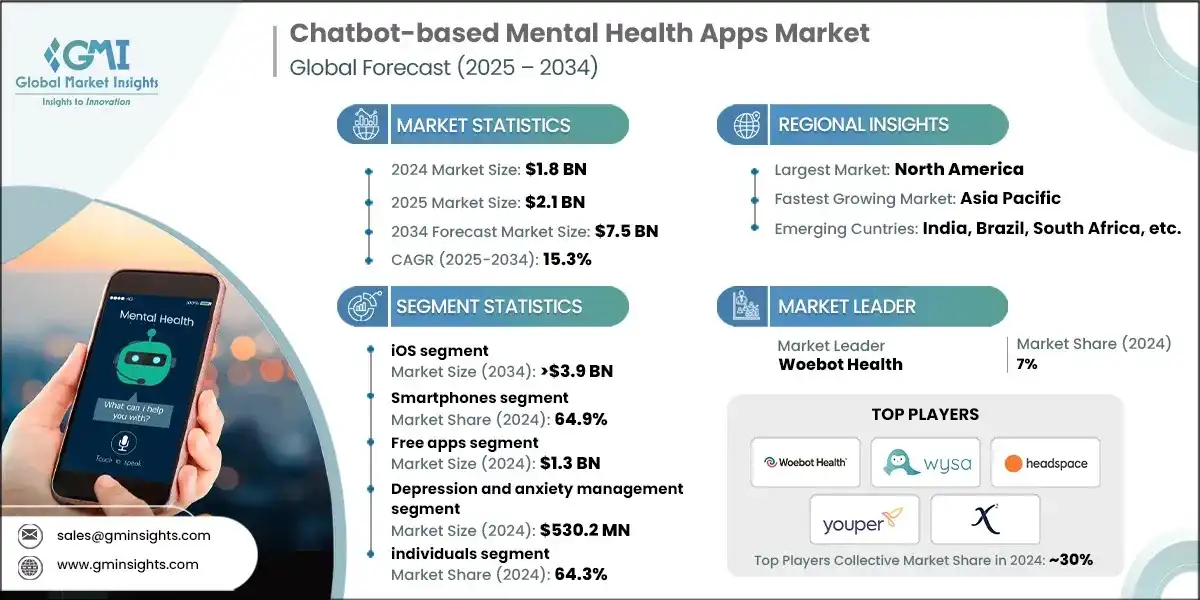
The global chatbot-based mental health apps market size was estimated at USD 1.8 billion in 2024. The market is expected to grow from USD 2.1 billion in 2025 to USD 7.5 billion in 2034, at a CAGR of 15.3% during the forecast period, according to the latest report published by Global Market Insights Inc. The market is driven by rising prevalence of mental health disorders, growing adoption of digital health technologies for mental wellness, increased funding and investments in AI-driven mental health platforms, and round-the-clock accessibility and destigmatization benefits, among other factors.
Chatbot-Based Mental Health Apps Market Key Takeaways
Market Size & Growth
- 2024 Market Size: USD 1.8 Billion
- 2025 Market Size: USD 2.1 Billion
- 2034 Forecast Market Size: USD 7.5 Billion
- CAGR (2025–2034): 15.3%
Key Market Drivers
- Rising prevalence of mental health disorders.
- Growing adoption of digital health technologies for mental wellness.
- Round-the-clock accessibility and destigmatization benefits.
Challenges
- Data privacy and connectivity issues.
Opportunity
- Integration with wearable technology.
- Growing focus on preventive and personalized wellness.
Key Players
- Market Leader: Woebot Health led with over 7% market share in 2024.
- Leading Players: Top 5 players in this market include Woebot Health, Wysa, Headspace, youper, X2AI, Inc., which collectively held a market share of 30% in 2024.
Get Market Insights & Growth Opportunities
Growing smartphone penetration and internet accessibility, clinical validation and evidence-based therapeutic frameworks, and partnerships with healthcare providers and insurance companies are among the key factors propelling the industry growth. Woebot Health, Wysa, Headspace, Youper, and X2AI, Inc. are among the leading players operating in the market. These players mainly focus on product innovation, improved integration across different platforms, data security, and collaboration with healthcare providers to boost their industry presence.
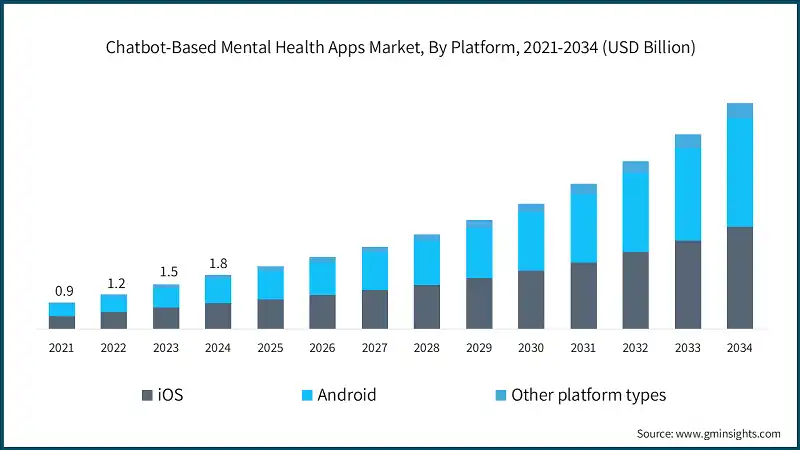
The market reached USD 1.5 billion in 2023 from USD 900 million in 2021. The accelerated adoption of mental wellness technologies is being driven by the rapid digital transformation in healthcare. Telehealth platforms, mobile apps, and AI technologies have become common, providing convenience and accessibility. These technologies are easily adaptable into the daily lives of users while enhancing proactive and preventive mental healthcare. Digital mental health technologies have further increased in popularity due to the rising number of smartphones and internet access even in financially weaker populations. As this transition from in-person visits to digital access continues, there is growing momentum towards new digital-first models in healthcare.
Mental health issues, such as depression, anxiety, and stress, are becoming more prevalent throughout the world as a result of changing lifestyles, social pressures, and economic uncertainty. For instance, as reported in the World Health Organization (WHO) report, over 332 million people are suffering from depression in the world. The same document highlights that in 2021, more than 0.7 million people committed suicide due to mental health issues.
Due to the high target patient population, it creates a large gap between the demand for and availability of traditional mental health services. Automated chatbot-based applications fill this gap by providing scalable, affordable, and immediate help to millions of individuals. Chatbot applications provide evidence-based interventions rooted in CBT and mindfulness exercises that help reduce the reliance on face-to-face therapy. As awareness increases and stigma decreases, individuals are expected to be more willing to utilize digital problem-solving resources, making these chatbot applications an essential solution for addressing a growing mental health crisis and strengthening the overall market.
Further, a key benefit associated with all chatbot-based mental health applications is their 24/7 availability. People can always access support, which removes barriers such as scheduling a therapy session with an expert or distance to a therapy center. This is important for accessibility, especially for people in crisis or those not yet comfortable seeking regular mental health services from a therapist. Chatbot apps enable users to express themselves and try to manage their emotions in a stable, caring, and non-judgmental private space where trust is built, increasing the percentage that the user may use the app again.
Chatbot-based mental health apps are digital platforms powered by AI that support mental health through conversational interfaces, including engaging users in behaviors related to tracking mood, managing stress, and assisting with therapy. These apps provide an accessible, personalized, and stigma-free solution that is easily available via mobile or web app formats.
To get key market trends
Chatbot-Based Mental Health Apps Market Trends
Integration with wearables and telehealth, a focus on multilingual capabilities, advancements in AI and NLP, and corporate wellness adoption are among the key trends driving the market growth.
- Organizations are increasingly including mental health chatbots in employee assistance programs due to the growing pressure of stress in the workplace and the need for improved productivity, leading to strong demand for subscription-based solutions.
- Additionally, the implementation of advanced AI and natural language processing empowers chatbots to provide increasingly empathic, context-appropriate responses. This leads to greater user engagement and trust, thereby resulting in broader adoption of digital mental health tools.
- Developers are increasingly focusing on multilingual functionality, as well as culturally responsive content, to engage with audiences born or residing outside of Western cultures. This trend expands reach in underserved markets around the globe, especially emerging economies where the awareness and availability of mental health services are limited.
- Further, chatbots are being integrated with wearable technologies and telehealth services to provide real-time feedback and personalized interventions to improve prevention and early diagnosis of mental health concerns and improve adoption rates.
Chatbot-Based Mental Health Apps Market Analysis
Learn more about the key segments shaping this market
In 2021, the market was valued at USD 900 million and grew to USD 1.2 billion in 2022, reaching USD 1.5 billion by 2023. Technological advancements in AI and NLP, growing target population and increasing adoption of telehealth platforms are among the key variables contributing to industry growth.
Based on platform, the global market is segmented into iOS, Android, and other platform types. The iOS segment accounted for a leading share of 48% in 2024. Rising smartphone penetration globally is anticipated to fuel the market growth. The segment is expected to exceed USD 3.9 billion by 2034, growing at a CAGR of 14.7% during the forecast period.
- The iOS category leads among users of premium mental health apps, benefitting from the inherent trust users have in Apple’s privacy protocols and also the seamless integration with the iPhone and Apple Watch.
- Developers often target iOS first for market entry because monetization is often easier on iOS due to inherently more robust subscription models. iOS also has a sophisticated ecosystem that supports advanced AI features while managing sensitive data, attractive for users interested in credible and clinically tested mental health solutions.
- Further, companies with corporate wellness programs prefer iOS apps for employees who are already using Apple devices, thus benefiting the overall iOS mental health app segment.
- The Android segment was valued at USD 797.8 million in 2024. Android has a significant share of the mental health app market fueled by its tremendous size of global users and affordability options. Android’s open-source platform allows developers to create uniquely different and lower-cost mental health apps for emerging markets.
- Furthermore, Android’s compatibility with a wider-ranging variety of devices also makes it more accessible at varying levels of income; particularly when scaling mental health solutions, it is the go-to category with the most significant growth opportunities.
- Moreover, Android’s integration with Google’s own AI features, along with easy sync capability with various other wearable devices, leads to high levels of personalization and engagement. This category is also developing rapidly as smartphone penetration increases in Asia-Pacific, Latin America, and Africa.
Based on device, the global chatbot-based mental health apps market is segmented into smartphones, tablets, and laptops/desktops. The smartphones segment accounted for a dominating share of 64.9% in 2024.
- Smartphones dominate the market due to their portability, constant connectivity, and integration with daily life. Smart devices are well-established user preferences as technology continues to expand with an increased use of smartphones, accessible mental health content, tracking of mood status, and delivery of therapy sessions for flexible daily use.
- Smartphones have become the main user device due to total global smartphone adoption and the availability of high-speed internet access. The convenience of some push notifications to facilitate engagement, voice interaction options, and synchronization with wearables makes smartphones a key component within the app user experience.
- Overall, smartphones are the leading device segment for chatbot-based mental health apps because of their general and user-centered convenience and affordability.
- The tablets segment was valued at USD 408.4 million in 2024. Tablets serve as an alternative for users seeking larger screens and better visual experiences for mental health apps. Tablets are a favorable device choice for individuals who prefer a deeply immersive experience with therapy sessions, guided meditation, or interactive exercises.
- In addition, tablets are often considered to deliver an enhanced user experience because they are better suited for telehealth, or video-based content, and can be incorporated into hybrid care models.
Based on revenue model, the global chatbot-based mental health apps market is segmented into free apps, and subscription-based. The free apps segment accounted for a leading share and was valued at USD 1.3 billion in 2024.
- Free mental health chatbot apps experience a broad user base as they deliver basic features like mood tracking, stress management tips, or guided exercises. Because these features are free, they can serve as entry points for people who may be hesitant to invest in paid options.
- Free mental health chatbot apps also frequently serve either ad-based or freemium models where certain features require a fee to upgrade. The efficiency of using a free mental health app has made these popular in many emerging markets and among younger individuals.
- However, due to restricted functionality, free mental health chatbot apps can cause users to get bored, leading them to eventually move on to a subscription-based mental health app for personalized care from clinically validated techniques.
- The subscription-based segment was valued at USD 514 million in 2024. Subscription-based mental health apps emphasize a premium experience through AI-based therapy modules or cognitive-behavioral therapy (CBT) techniques. They often include features like video consultations, progress tracking, and integration with corporate wellness programs. The subscription model is expected to continue to attract revenues while generating retention among highly engaged users.
- Subscriptions can also provide value to users due to the consistent flow of updates to the apps and exclusive content availability. As mental health awareness continues to grow and employers are making employee well-being a priority, estimates indicate subscription-based mental health apps are anticipated to be responsible for the majority of new revenues and drive long-lasting growth in this market in the coming years.
Based on application, the global chatbot-based mental health apps market is segmented into depression and anxiety management, meditation management, stress management, wellness management, and other applications. The depression and anxiety management segment accounted for a leading share and was valued at USD 530.2 million in 2024.
- This category represents the largest segment, as depression and anxiety are among the most prevalent mental health conditions globally. Chatbot-based applications offer evidence-based interventions such as CBT, guided journaling, and mood trackers for effective management of symptoms. The immediate availability of support when needed and the lack of stigma associated with use make these interventions attractive to people who may have limited access to in-person therapy.
- Additionally, the development of telehealth and additional AI-based recommendations that support individualized care continue to boost the uptake of this category, representing a major contributor to the overall growth in the market.
- The meditation management segment was valued at USD 454.2 million in 2024. Meditation-centered chatbot apps are designed to meet the needs of individuals who want to practice mindfulness and learn relaxation techniques in order to improve their emotional well-being.
- These apps offer users guided meditation exercises, breathing techniques, and stress-relief practices through an interactive conversational interface, thus enabling both novices and experienced practitioners to meditate. The mindfulness practice trend, which is used as a tool for stress reduction and productivity improvement, has led to a higher number of individual users as well as corporate wellness programs.
- Furthermore, stress management apps demonstrate an increased need for strategies to cope with the factors of stress in hectic lives. Chatbots provide real-time support through calming procedures, mood checks, and personalized recommendations to help lower a user's stress levels.
- Stress management apps are particularly prevalent among working professionals and students who experience stressful conditions. Stress management mobile apps that incorporate wearable devices for physiological monitoring (such as heart rate and sleep tracking) are becoming popular because they help with proactive intervention management.
Learn more about the key segments shaping this market
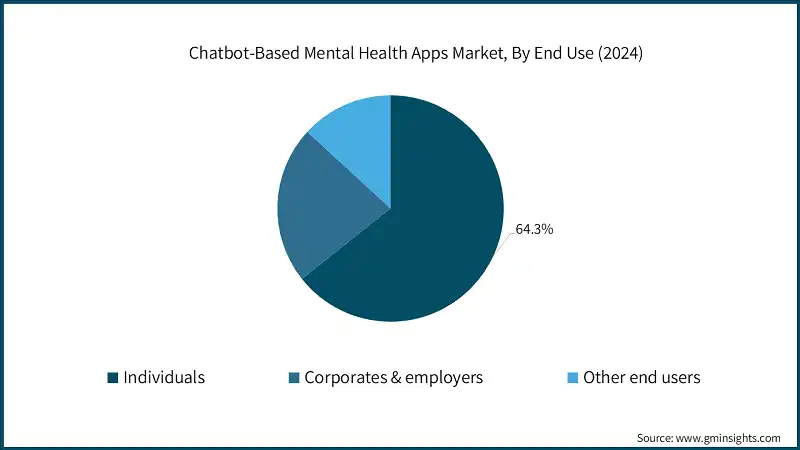
Based on end use, the chatbot-based mental health apps market is segmented into individuals, corporates & employers, and other end users. The individuals segment accounted for the leading market share of 64.3% in 2024 as individuals prefer to take therapies from the comfort of their own place.
- Individuals are the major end-user segment, which has grown as a result of increased awareness of mental health and the convenience of receiving support 24/7. Chatbot programs attract individuals who seek low-cost, stigma-free, flexible solutions to address their mental health conditions, including stress, anxiety, and wellness.
- Individuals prefer to engage with chatbot programs that have mood tracking, guided therapy, and personalized recommendations. The increase in smartphone penetration and the preference for self-help mental health tools are promoting adoption rates to continue to grow in younger populations, especially in urban centers.
- Additionally, the corporates & employers segment was valued at USD 405.3 million in 2024. Corporations and employers are implementing chatbot-based mental health applications in employee wellness programs with increasing frequency. Mental health has become a priority for employers as stress in workplace settings has increased and employers have begun to witness the need to enhance worker productivity.
- Further, chatbot systems are scalable methods of delivering their program for stress management, mindfulness, and emotional well-being, and they lessen levels of absenteeism and enhance levels of organizational resilience.
- Moreover, subscription-based pricing and the incorporation of chatbots into HR programs attract enterprises. As organizations increasingly create strategies for holistic wellness programs, the market is expected to record fast growth due to the demand for preventive care and mental health access for employees in the workplace.
Looking for region specific data?
North America Chatbot-Based Mental Health Apps Market
North America market accounted for majority share of 56.7% in 2024 in the global market and is anticipated to show notable growth over the forecast period.
- North America leads the market due to high awareness of mental health issues and strong digital infrastructure. The region benefits from widespread smartphone penetration, advanced AI adoption, and a culture that increasingly prioritizes mental wellness.
- Corporate wellness programs and insurance-backed digital health initiatives have accelerated adoption, making chatbot apps a mainstream solution for stress, anxiety, and depression management.
- Additionally, the presence of leading players and partnerships with healthcare providers further strengthens growth. In addition, integration with telehealth platforms and wearable devices may enhance personalization and preventive care, ensuring sustained market expansion.
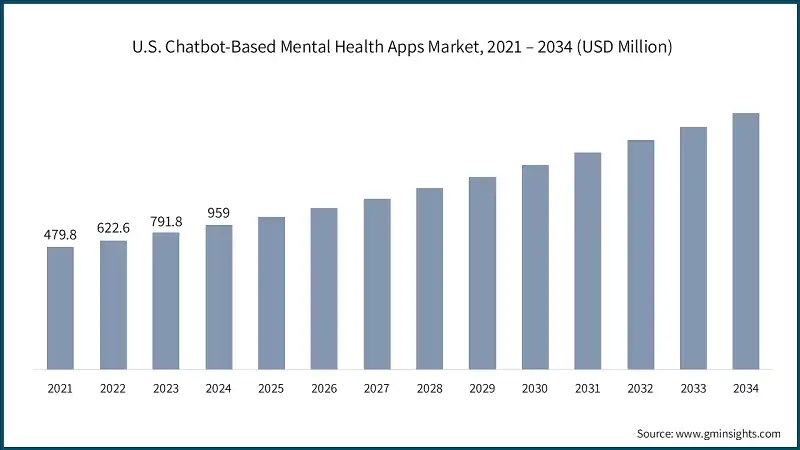
The U.S. chatbot-based mental health apps market was valued at USD 479.8 million and USD 622.6 million in 2021 and 2022, respectively. In 2024 the market size was valued at USD 959 million from USD 791.8 million in 2023. The significant focus on integrating advanced AI models with improved security updates protecting customer data is projected to fuel market growth.
- The U.S. dominates the North American market with large investments in digital health and mental wellness tech. For instance, as per a recently published article, the U.S. dominated the global digital health venture funding in 2024, accounting for around 70 percent of the total funding. Growing incidences of anxiety and depression with rising acceptance for telehealth have increased demand for chatbot-based mental health apps.
- In addition, employers incorporating these solutions into wellness programs enhance productivity by mitigating absenteeism.
- Further, high smartphone penetration and advanced AI capabilities have transformed the U.S. into the home of innovation in personalized mental health care.
Europe Chatbot-Based Mental Health Apps Market
Europe accounted for a significant share in the global market and was valued at USD 516.8 million in 2024.
- Europe is witnessing steady growth that is fueled by increasing awareness around mental health and government efforts to promote digital therapeutics. The countries across the region emphasize strict data privacy compliance, which makes the use of secure chatbot platforms very appealing.
- The ability to offer multilingual and culturally-sensitive options is expected to be critical to success in diverse markets. Adoption of corporate wellness programs is on the rise, especially in Western European countries, where employers place a strong emphasis on mental health as a part of holistic well-being initiatives.
- However, challenges in the industry include fragmented regulations across countries and slower adoption in rural areas. Partnerships with healthcare systems and integration with telemedicine platforms may support growth over the analysis period.
UK held significant share of the European chatbot-based mental health apps market, showcasing strong growth potential.
- The UK represents a significant market in Europe, and it is fueled by favorable national mental health campaigns and NHS-supported digital health initiatives, with substantial penetration of smartphones in the country.
- In addition, there is a growing demand for self-help tools for mental health support, particularly from younger people.
- Employers have begun using chatbot-based apps as part of wellness programs in their workspaces, which has provided additional sources of revenue. Consumer trust, data security, and GDPR compliance are important considerations for developers.
Asia Pacific Chatbot-Based Mental Health Apps Market
The Asia Pacific market accounted for a considerable share of the market and was valued at USD 150.3 million in 2024.
- The Asia Pacific region is growing rapidly due to a rising number of smartphone users, growing interest in mental health awareness, and a significant surge in use of the internet. Countries with emerging economies also have a priority on digital solutions that are affordable, leading to an appeal of chatbot-based apps that can provide mental health support to large segments of the population with no or limited access to psychotherapy.
- Additionally, urbanization, work stress, and anxiety-related issues are also driving growth in using mental well-being solutions. To succeed in diverse local cultures, apps with local support services and services that incorporate multilingual features may have a better preference.
- Further, future growth is anticipated in mental health apps that integrate wearable device monitoring and use AI-driven adaptation and personalization features connected to local health services to enhance trust.
China chatbot-based mental health apps market is estimated to grow with a robust CAGR, in the Asia Pacific market.
- The market for digital health in China is growing rapidly along with government support for increased mental health needs in the urban population. Integration with popular messaging platforms like WeChat and advanced AI-driven personalization boosts adoption.
- Additionally, a younger consumer base and a high volume of tech-savvy users increase demand for diversified, accessible solutions for mental health interventions and educational needs.
- Further, the future growth is anticipated to focus on hybrid care models, partnerships with healthcare institutions, and integration with wearable technology for real-time monitoring, positioning China as a major growth engine in the Asia Pacific region.
Latin America chatbot-based mental health apps Market
Brazil leads the Latin American market, exhibiting remarkable growth during the analysis period.
- Brazil shows strong potential as mental health awareness rises and smartphone penetration deepens. Affordable chatbot apps appeal to younger users and underserved communities, addressing gaps in traditional mental health services.
- Economic constraints make cost-effective solutions highly attractive, while partnerships with local healthcare providers enhance trust and accessibility.
- Future growth will be supported by government initiatives promoting digital health and increasing adoption of subscription-based models for corporate wellness programs, making Brazil a key emerging market in Latin America.
Middle East and Africa Chatbot-Based Mental Health Apps Market
Saudi Arabia market to experience substantial growth in the Middle East and Africa market in 2024.
- Saudi Arabia is experiencing growing adoption driven by cultural shifts toward mental health openness and government initiatives supporting digital health transformation.
- High smartphone usage and preference for private, stigma-free solutions make chatbot apps increasingly popular among individuals and corporates. Integration with Arabic language support and culturally sensitive content is critical for success.
- Future growth is anticipated to be fueled by partnerships with healthcare institutions, expansion of corporate wellness programs, and integration with telehealth platforms in the country.
Chatbot-Based Mental Health Apps Market Share
The competitive environment of the market consists of a combination of established digital health organizations, mental wellness startups, and technology-led platforms utilizing AI and NLP. Leading players focus on providing personalized mental health support through conversational agents, including mood tracking, cognitive behavioral therapy (CBT) modules, and guided meditations. Woebot Health, Wysa, Headspace, and Replika have recorded better traction due to their clinically validated approach, as well as their user-friendly interface.
The market is fragmented, and organizations differentiate themselves based on language support, cultural suitability, or integration into telehealth or wearable devices. Subscription-based payment models are gaining traction for use in corporate wellness programs, and an increasing number of opportunities for B2C partnerships are developing. Startups are beginning to utilize emotional AI and predictive analytics to drive engagement and identify mental health issues earlier.
Competitive pressures are expected to further increase as players focus and build multilingual functionality, gamification opportunities, or hybrid models that incorporate chatbot support and a human therapist. Overall, innovation, regulatory compliance, and data security remain important variables of success in this rapidly changing space.
Chatbot-Based Mental Health Apps Market Companies
Few of the prominent players operating in the global chatbot-based mental health apps industry include:
- Daylio
- EARKICK
- Headspace
- Luka, Inc.
- mindspa
- Sonia
- Woebot Health
- Wysa
- youper
- Yuna
- matellio
- X2AI, Inc.
- Woebot Health
Woebot Health focuses on clinically validated AI-driven CBT interventions, partnering with healthcare providers and insurers to integrate chatbot therapy into digital care pathways. Emphasizes research-backed solutions and regulatory compliance for credibility and adoption.
The company leverages AI and evidence-based techniques to deliver personalized mental health support. Targets both individual users and enterprise wellness programs, offering multilingual capabilities and scalable solutions for global reach.
It develops multilingual chatbot solutions for mental health, targeting underserved regions and healthcare institutions. Emphasizes cultural adaptability and integration with telehealth platforms to broaden accessibility and inclusivity.
Chatbot-Based Mental Health Apps Market Report Attributes
| Key Takeaway | Details |
|---|---|
| Market Size & Growth | |
| Base Year | 2024 |
| Market Size in 2024 | USD 1.8 Billion |
| Market Size in 2025 | USD 2.1 Billion |
| Forecast Period 2025 - 2034 CAGR | 15.3% |
| Market Size in 2034 | USD 7.5 Billion |
| Key Market Trends | |
| Drivers | Impact |
| Rising prevalence of mental health disorders | Increasing cases of anxiety and depression have pushed individuals and organizations to seek scalable solutions, making chatbot-based apps a preferred option for immediate, affordable mental health support. |
| Growing adoption of digital health technologies for mental wellness | The surge in telehealth and mobile health platforms has normalized digital-first care, driving rapid integration of chatbot apps into wellness routines and expanding their user base globally. |
| Round-the-clock accessibility and destigmatization benefits | 24/7 availability and anonymity encourage users to seek help without fear of judgment, significantly improving engagement and retention compared to traditional therapy models. |
| Pitfalls & Challenges | Impact |
| Data privacy and connectivity issues | Concerns over sensitive data security and inconsistent internet access in some regions limit adoption, especially among users wary of sharing personal mental health information online. |
| Opportunities: | Impact |
| Integration with wearable technology | Combining chatbots with wearables will enable real-time mood and stress monitoring, creating personalized interventions and predictive mental health care for proactive management. |
| Growing focus on preventive and personalized wellness | Personalized AI-driven solutions will dominate as users prioritize early detection and tailored therapy, positioning chatbot apps as essential tools in holistic mental health strategies. |
| Market Leaders (2024) | |
| Market Leaders |
Around 7% |
| Top Players |
Collective market share in 2024 is ~ 30% |
| Competitive Edge |
|
| Regional Insights | |
| Largest Market | North America |
| Fastest Growing Market | Asia Pacific |
| Emerging Country | India, Brazil, South Africa, etc. |
| Future Outlook |
|
What are the growth opportunities in this market?
Chatbot-Based Mental Health Apps Industry News:
- In October 2025, Lyra introduced the Lyra AI, a mental health AI app with a human touch. Lyra AI offers a lower-barrier entry point to help people to start their mental health care journey. This development is expected to improve the company's brand image and industry position.
- In June 2025, Wysa launches its AI-powered chatbot, Wysa Gateway, to streamline mental health patient intake in the U.S. The tool offers patients an engaging, stigma-free conversational experience accessible 24/7 on desktop, mobile, or tablet. This development may allow the company to further improve its position in the market and expand its product reach.
- In October 2024, mental health app Headspace launched a generative AI-powered chatbot called Ebb. It is designed to provide users with instant, personalized support through their mental health recovery journey. This product launch may enable the company to improve its industry presence in the coming years.
The global chatbot-based mental health apps market research report includes an in-depth coverage of the industry with estimates and forecasts in terms of revenue in (USD Million) from 2021 - 2034 for the following segments:
Market, By Platform
- iOS
- Android
- Other platform types
Market, By Device
- Smartphones
- Tablets
- Laptops/Desktops
Market, By Revenue Model
- Free apps
- Subscription-based
Market, By Application
- Depression and Anxiety Management
- Meditation management
- Stress management
- Wellness management
- Other applications
Market, By End Use
- Individuals
- Corporates & employers
- Other end use
The above information is provided for the following regions and countries:
- North America
- U.S.
- Canada
- Europe
- Germany
- UK
- France
- Spain
- Italy
- Netherlands
- Asia Pacific
- China
- Japan
- India
- Australia
- South Korea
- Latin America
- Brazil
- Mexico
- Argentina
- MEA
- South Africa
- Saudi Arabia
- UAE
Frequently Asked Question(FAQ) :
What is the market size of the chatbot-based mental health apps market in 2024?
The market size was USD 1.8 billion in 2024, driven by rising mental health disorders, increasing digital health adoption, and wider acceptance of AI-powered mental wellness tools.
What is the projected value of the chatbot-based mental health apps market by 2034?
The market is expected to reach USD 7.5 billion by 2034, supported by advanced AI capabilities, integration with wearables, and growing demand for personalized and preventive mental health solutions.
How much revenue did the iOS platform segment generate in 2024?
The iOS platform accounted for 48% market share and generated approximately USD 864 million in 2024 due to strong trust in Apple’s privacy ecosystem and seamless device integration.
What was the valuation of the smartphones device segment in 2024?
The smartphones segment dominated with 64.9% share, generating around USD 1.17 billion in 2024, fueled by high global smartphone penetration and round-the-clock accessibility.
What is the growth outlook for subscription-based revenue models from 2025 to 2034?
Subscription-based apps are projected to grow at a 16%+ CAGR, driven by demand for premium therapy modules, corporate wellness adoption, and AI-driven personalized care.
Which region leads the chatbot-based mental health apps industry?
North America leads the market with a 56.7% share, valued at USD 959 million in 2024, driven by strong digital infrastructure, high mental health awareness, and broad adoption of telehealth platforms.
Who are the key players in the chatbot-based mental health apps market?
Major players include Woebot Health, Wysa, Headspace, Youper, X2AI, Daylio, Earkick, Luka Inc., mindspa, Sonia, Yuna, and matellio.
What is the market size of the chatbot-based mental health apps market in 2025?
The market is expected to reach USD 2.1 billion in 2025, supported by rapid expansion of digital therapeutic adoption, increased investment in mental wellness solutions, and rising demand for AI-based emotional support tools.
Chatbot-Based Mental Health Apps Market Scope
Related Reports