Summary
Table of Content

Antiques and Collectibles Market
Get a free sample of this report
Form submitted successfully!
Error submitting form. Please try again.
Thank you!
Your inquiry has been received. Our team will reach out to you with the required details via email. To ensure that you don't miss their response, kindly remember to check your spam folder as well!
Request Sectional Data
Thank you!
Your inquiry has been received. Our team will reach out to you with the required details via email. To ensure that you don't miss their response, kindly remember to check your spam folder as well!
Form submitted successfully!
Error submitting form. Please try again.
Antiques and Collectibles Market Size
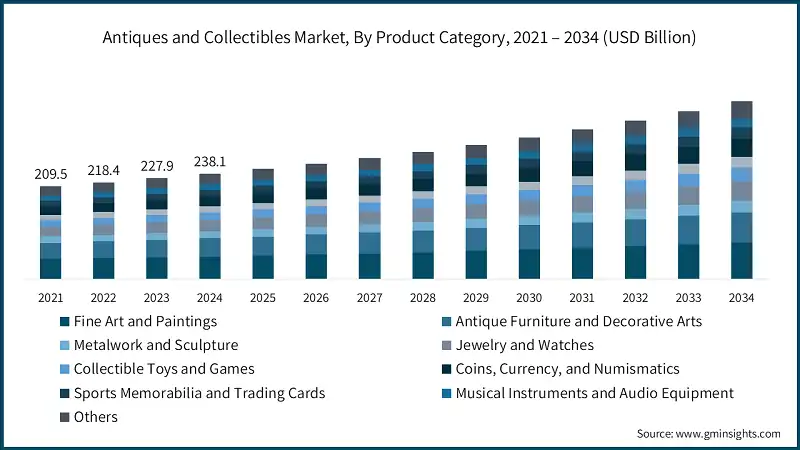
The global antiques and collectibles market was estimated at USD 238.1 billion in 2024. The market is expected to grow from USD 249.2 billion in 2025 to USD 402.9 billion in 2034, at a CAGR of 5.5%, according to Global Market Insights Inc.
Antiques and Collectibles Market Key Takeaways
Market Size & Growth
- 2024 Market Size: USD 238.1 Billion
- 2034 Forecast Market Size: USD 402.9 Billion
- CAGR (2025–2034): 5.5%
Regional Dominance
- Largest Market: North America
- Fastest Growing Region: Europe & Asia Pacific
Key Market Drivers
- Growing interest in art and history.
- Cultural and historical appeal.
- Investment in potential antiques and collectibles.
- Rising disposable income.
Challenges
- Authentication and provenance issues.
- Regulatory and legal challenges.
Opportunity
- Expansion of online marketplaces.
- Cultural tourism and heritage promotion.
Key Players
- Leading Players: Top 5 players in this market include Sothebys, Hakes Auctions, Christies, Heritage Auctions, eBay, Bonhams, which collectively held a market share of 11% in 2024.
Get Market Insights & Growth Opportunities
- The market is growing due to a mix of cultural, emotional, and economic factors. One of the growth drivers is the increasing interest in art and history, particularly among generations like millennials and Gen Z. Unlike mass-produced items, these artifacts offer uniqueness and historical significance, appealing to a generation that wishes meaningful and personalized experiences. This shift in demographics is changing the market and creating a demand for rare and unique collectibles that represent cultural and historical richness.
- Desire to conserve heritage and nostalgia is also a key driver in the growth of the market. The market is also driven by emotional attachment to the past and a desire to possess belongings with memories of ages gone by or to represent family heritage. As antiques and collectibles are real symbols of the past, this desire to connect with the past has raised demand for them. The emotional value associated with owning a piece of the past is driving more individuals to invest in these timeless artifacts, further expanding the market. For example, adults are increasingly turning to vintage toys, such as Barbie dolls and action figures from the 1980s and 1990s, to relive cherished childhood memories, leading to a notable resurgence in their popularity.
- Apart from cultural and emotional motivators, antiques and collectibles are now also being seen as alternative investment. During times of economic volatility, these objects provide a portfolio diversifier and the potential for big payouts. As opposed to conventional financial products, antiques and collectibles are physical assets that tend to increase in value over time, hence a desirable investment for investors with an interest in stability and long-term appreciation. This phenomenon is most common among high-net-worth entities and institutional investors who perceive these products as a market volatility hedge. For instance, the 1933 Double Eagle gold coin. This rare collectible fetched over USD 7.5 million at auction, underscoring the impressive financial returns that collectibles can command.
- In addition, increasing disposable incomes, particularly of the upper and middle classes, are facilitating more consumer participation in the antiques and collectibles. As people become more discretionary spendable, they are more likely to spend money on luxury goods that have both personal gratification and financial worth. This increased wealth is increasing the market for collectibles and antiques, as more individuals consider these as a symbol of status, sophistication, and cultural awareness. Bought for personal satisfaction or as an investment, antiques and collectibles are finding their way into the luxury goods sector.

To get key market trends
Antiques and Collectibles Market Trends
- The dawn of digital technology and the emergence of non-fungible tokens (NFTs) have added new dimensions to the marketplace. NFTs enable digital goods to be purchased, sold, and exchanged with ownership and scarcity assurance. For instance, digital pieces of art from artists such as Beeple have been sold for millions of dollars, while Beeple's "Everydays: The First 5000 Days" set a record USD 69 million at a Christie's auction. This innovation has not only broadened the scope of what is considered collectible but has also drawn a tech-aware generation interested in digital ownership.
- Celebrities and media attention have been instrumental in fueling demand for collectibles. When celebrities highlight their collections or support items, their popularity can be boosted enormously. For example, the sale of Michael Jackson memorabilia, such as legendary costumes and accessories, generated huge interest and bidding prices. Likewise, the demand for celebrity-owned products, such as Elvis Presley's guitars or Marilyn Monroe's products, exemplifies how celebrity power influences demand and increases the market price of collectibles.
- Pop culture trends usually determine demand for certain collectibles. Collectibles from well-known films, TV series, or games can become extremely popular. The popularity of franchises like Marvel and Star Wars has created a big market for associated collectibles, such as posters, action figures, and limited-issue releases. For instance, action figures of the original 1970s- and 1980s-Star Wars lines, especially those in their original condition, have been collector's items. The expanding popularity of emerging pop culture trends also drives the demand for such memorabilia.
Antiques and Collectibles Market Analysis
Learn more about the key segments shaping this market
Based on product category, the market of antiques and collectibles is categorized into fine art and paintings, antique furniture and decorative arts, metalwork and sculpture, jewellery and watches, collectible toys and games, books manuscripts, and paper ephemera, coins, currency, and numismatics, sports memorabilia and trading cards, musical instruments and audio equipment and others (automotive and transportation collectibles). The fine art and paintings accounted for revenue of around USD 50.5 billion in 2024 and is anticipated to grow at a CAGR of 5.1% from 2025 to 2034.
- This growth is attributed to its long-term popularity as a status symbol and a sound investment asset. High-net-worth individuals and buyers are being more attracted to fine art due to its value-appreciating potential, particularly under economic uncertainty. Moreover, the spread of online auction sites and virtual galleries has helped fine art reach a wider global consumer base, drawing new investors and buyers.
- Moreover, rising numbers of international art fairs and exhibitions continue to contribute significantly to encouraging cross-border dealings and driving the dynamic global art market. Furthermore, innovation in authentication technologies and tracking provenance has improved the confidence of buyers, mitigating the risks from forgery and guaranteeing the genuineness of high-value artwork. All these, coupled with the aesthetic and emotional value that fine art brings to customers, are likely to maintain the segment's growth pace over the next few years.
Learn more about the key segments shaping this market
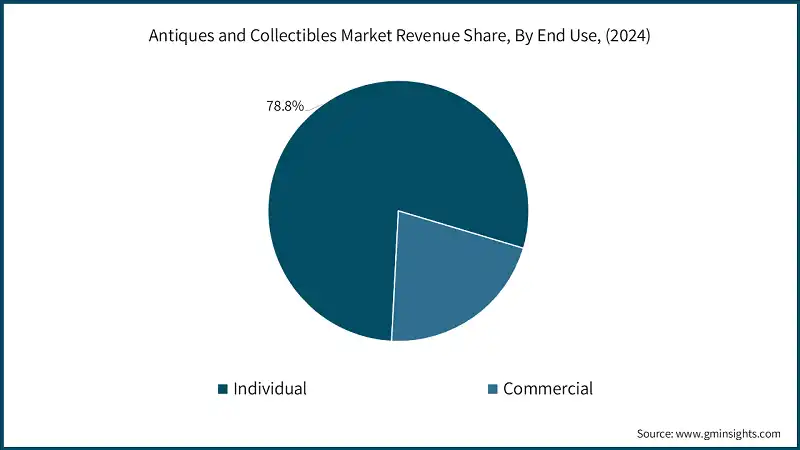
Based on end use, antiques and collectibles market consist of individual and commercial. The individual emerged as leader and held 78.8% of the total market share in 2024 and is anticipated to grow at a CAGR of 5.6% from 2025 to 2034.
- This leadership is further bolstered by the growing number of personal collectors and enthusiasts who are actively engaging in the market, motivated by passion, sentiment, and a need for distinguishing or historically relevant possessions. The democratization of access via internet auction sites and virtual marketplaces has empowered individuals to find, acquire, and exchange antiques and collectibles from remote locations around the globe, overcoming traditional geographic boundaries and enlarging the base of potential buyers. Increased disposable incomes, particularly among younger generations, have continued to drive the trend, with more individuals seeing antiques and collectibles as not just luxury purchases but also as meaningful investments and statements about their own personal taste.
Based on distribution channel, antiques and collectibles market consist of online and offline. The offline emerged as leader and held 67.2% of the total market share in 2024 and is anticipated to grow at a CAGR of 5.3% from 2025 to 2034.
- Offline stores such as antique stores, auctions, flea markets, and estate sales provide a hands-on experience that collectors truly enjoy. These stores allow customers to touch products to verify authenticity, quality, and condition, all crucial when purchasing rare or costly collectibles.
- In addition, face-to-face interaction provides the ability to build trust with traders and specialists, which is extremely crucial in a marketplace where history and authenticity of goods are greatly valued. The interest of discovering antique fairs and showrooms also keeps individuals engaged, so offline locations are not only locations to purchase and sell but also fun locations for enthusiasts and specialists.

Looking for region specific data?
The U.S. dominates an overall North America antiques and collectibles market and valued at USD 65.2 billion in 2024 and is expected to grow at a CAGR of 5.4% during the forecast period from 2025 to 2034.
- This growth is the result of the country's rich heritage, large base of affluent collectors, and a well-established network of auction houses, galleries, and dealers. The U.S. market also enjoys a rich tradition of collecting, keen demand for domestic as well as international art and antiques, and the existence of large industry events and exhibitions that draw purchasers from across the globe. Moreover, the widespread adoption of online websites and digital markets has further enhanced access and participation, allowing more diverse individuals to take part in the market. These trends, coupled with increasing disposable incomes and a heightened sensitivity to art, history, and one-of-a-kind collectibles, are set to continue driving growth in the U.S. market in the years ahead.
The antiques and collectibles market in Europe, Germany is expected to experience significant and promising growth from 2025 to 2034.
- The growth is supported by Germany's rich cultural heritage, firm tradition of craftsmanship, and well-developed network of antique houses, antique dealerships, and art fairs. The country's expanding large base wealthy collectors, along with mounting interest among young generations in keeping heritage alive and investing in one-of-a-kind pieces, is fueling demand in different product categories.
The Asia Pacific antiques and collectibles market, the China held 32.4% market share in 2024 and is expected to grow at a CAGR of 6.3% during the forecast period from 2025 to 2034.
- The growing demand for traditional Chinese art, ceramics, jade, and calligraphy, both locally and globally, has also further fueled demand. Furthermore, the growth in online auction platforms and the increasing role played by international art fairs within main Chinese cities have facilitated collectors' access to exclusive and valuable goods. Coupled with government support policies and an overall active local market, these elements are poised to maintain China's dominance in the Asia Pacific market in the next few years. For example, the market for rare Chinese antiques and art witnessed significant growth in 2023, exemplified by the sale of a Ming Dynasty vase for USD 24.5 million at auction.
In the Middle East and Africa antiques and collectibles market, South Africa held 29.4% market share in 2024 and is anticipated to grow at a CAGR of 4.2% from 2025 to 2034.
- The growing number of auction houses, art galleries, and cultural events in major urban centers has increased market accessibility and visibility. The improvement in disposable incomes and the ever-growing collector and investor community are further fueling market growth. With digital platforms and online auctions becoming increasingly common, South Africa is poised to continue and even deepen its dominance in the market of the region during the forecast period.
Antiques and Collectibles Market Share
- In 2024, the prominent manufacturers in antiques and collectibles industry are Christie’s, Sotheby’s, Heritage Auctions, eBay, Bonhams and Hakes Auctions together these companies hold the market share of ~11%.
- To remain competitive, they are spending money on R&D innovation and product development. They are also adapting customer-focused marketing strategies such as that of eBay, where users can easily buy and sell items, and ComicConnect who focus their marketing on comic book collectors to ensure they stay top of mind.
- Some market participants are adopting sustainable and green solutions to remain competitive. For instance, Bonhams and Christie's are placing greater emphasis on the sale of vintage and rare timeless pieces through highly advocated sustainability via the recycling and reuse of collectible items as it becomes more fashionable.
Antiques and Collectibles Market Companies
Major players operating in the market include:
- BiddingForGood
- Bonhams
- Christie’s International
- ComicLink
- eBay
- Funko
- Golden Auctions
- Hake’s Americana & Collectibles
- Hasbro
- Heritage Auctions
- Invaluable
- Julien's Auctions
- Lelands
- PWCC Marketplace
- RR Auction
- Skinner
- Sotheby's
- Stanley Gibbons Group
- The Upper Deck Company
eBay is a leading company, facilitates millions to trade in toys, collectibles, rare comics, and memorabilia as a platform. The company has also started to provide further services such as authentication of high value items for trade, especially on sports cards where they partner with PSA. Along with the sustainability driven initiatives, eBay actively focuses on improving user experience and promoting better eco-friendly consumer habits through the resale of products.
Golden Auctions is famous for their exclusive high sales of sports memorabilia, comic books, and other collectables like rare baseball cards. Over time the auction house has built a reputation for itself on exclusive items, making it a household name in the business. Golden Auctions also integrates technology to enhance its competitive stance by providing the option to host online auctions in real time for global participation which has eased the bidding process immensely.
Antiques and Collectibles Market Report Attributes
| Key Takeaway | Details |
|---|---|
| Market Size & Growth | |
| Base Year | 2024 |
| Market Size in 2024 | USD 238.1 Billion |
| Forecast Period 2025 - 2034 CAGR | 5.5% |
| Market Size in 2034 | USD 402.9 Billion |
| Key Market Trends | |
| Drivers | Impact |
| Growing interest in art and history | Increases demand for unique and rare antiques and collectibles. |
| Cultural and historical appeal | Attract buyers seeking meaningful and story-rich items. |
| Investment in potential antiques and collectibles | Draws investors looking for alternative assets and portfolio diversification. |
| Rising disposable income | Expands the customer base able to purchase high-value collectibles. |
| Pitfalls & Challenges | Impact |
| Authentication and provenance issues | Undermines buyer confidence and can lead to market distrust. |
| Regulatory and legal challenges | Restrict cross-border trade and complicated transactions. |
| Opportunities: | Impact |
| Expansion of online marketplaces | Broadens market reach and facilitates global transactions. |
| Cultural tourism and heritage promotion | Boosts interest and sales through increased exposure to antiques and collectibles. |
| Market Leaders (2024) | |
| Market Leaders |
~4 Market Share |
| Top Players |
Collective market share in 2024 is ~11% |
| Competitive Edge |
|
| Regional Insights | |
| Largest Market | North America |
| Fastest growing market | Europe & Asia Pacific |
| Emerging countries | U.S., Germany, China & Japan |
| Future outlook |
|
What are the growth opportunities in this market?
Antiques and Collectibles Industry News
- In 2024, Darren Rovell launched an innovative media brand focused on collectibles. Darren described CLLCT as a pioneering platform for sports memorabilia enthusiasts, highlighting its distinctive integration of roles as collectors, reporters, and advocates. This approach allows the platform to deliver unparalleled insights, exclusive content, and compelling stories tailored to its audience.
- In 2023, Mattel, Inc. announced plans to upgrade its Mattel Creations Virtual Collectibles Platform with the introduction of a peer-to-peer marketplace. This enhancement will enable owners of Mattel's virtual collectibles to showcase, trade, and sell their assets effortlessly. Furthermore, the launch of Series 5 of the Hot Wheels NFT Garage is set to align with this platform update.
- In November 2023, eBay Inc. announced a partnership with COMC, a leading company in the sports trading cards industry, to drive the growth of the trading card hobby. As part of this collaboration, eBay has also made an investment in COMC, demonstrating its commitment to supporting the community's sellers and collectors. The partnership aims to introduce innovative solutions that will inspire and assist enthusiasts in their collecting activities. COMC, established to redefine the trading card collecting experience, utilizes technology and creative approaches to address common challenges and help collectors fully engage with their interests.
- In September 2023, Youtooz, a key player in the global market, is transforming the licensed products industry with its wide selection of popular figures. The company recently secured significant funding from Decathlon Capital Partners, enabling further growth. Having released over 500 limited-edition figures, Youtooz specializes in capturing the essence of internet personalities, including memes, musicians, and content creators. This unique approach distinguishes Youtooz and strengthens its expanding presence in the collectibles market.
The antiques and collectibles market research report includes in-depth coverage of the industry, with estimates & forecast in terms of revenue (USD Billion) and volume (Million Units) from 2021 to 2034, for the following segments:
Market, By Product Category
- Fine art and paintings
- Antique furniture and decorative arts
- Metalwork and sculpture
- Jewelry and watches
- Collectible toys and games
- Books, manuscripts, and paper ephemeral
- Coins, currency, and numismatics
- Sports memorabilia and trading cards
- Musical instruments and audio equipment
- Others (automotive and transportation collectibles)
Market, By Price Range
- Low
- Medium
- High
Market, By End Use
- Individual
- Commercial
- Museum
- Institutions
- Others
Market, By Distribution Channel
- Online
- Dedicated antique platforms
- E-commerce platforms
- Offline
- Traditional auction houses
- Brick-and-mortar dealers
- Antique fairs and shows
- Estate sales and liquidations
The above information is provided for the following regions and countries:
- North America
- U.S.
- Canada
- Europe
- Germany
- UK
- France
- Italy
- Spain
- Asia Pacific
- China
- Japan
- India
- South Korea
- Australia
- Indonesia
- Malaysia
- Latin America
- Brazil
- Mexico
- Argentina
- MEA
- Saudi Arabia
- UAE
- South Africa
Frequently Asked Question(FAQ) :
What is the market size of the antiques and collectibles industry in 2024?
The antiques and collectibles market was valued at USD 238.1 billion in 2024, with a CAGR of 5.5% projected from 2025 to 2034 driven by growing interest in art, history, and cultural preservation.
What is the current antiques and collectibles industry size in 2025?
The market size is projected to reach USD 249.2 billion in 2025.
What is the projected value of the antiques and collectibles market by 2034?
The antiques and collectibles industry is expected to reach USD 402.9 billion by 2034, supported by alternative investment appeal, rising disposable incomes, and global expansion of online marketplaces.
How much revenue did the fine art and paintings category generate in 2024?
Fine art and paintings generated USD 50.5 billion in 2024, maintaining their position as a leading investment and status symbol in the antiques market.
What was the valuation of the offline distribution channel in 2024?
Offline distribution channels, including auctions, fairs, and antique stores, held 67.2% market share and generated the largest revenue in 2024.
Which region leads the antiques and collectibles market?
The U.S. market was valued at USD 65.2 billion in 2024. Growth is driven by a rich collecting heritage, affluent buyers, and a well-established network of auction houses and dealers.
What are the upcoming trends in the antiques and collectibles industry?
Key trends include the rise of NFTs and digital collectibles, growing demand for pop culture memorabilia, celebrity-driven collectibles, and the expansion of online marketplaces.
Who are the key players in the antiques and collectibles market?
Key players include Sotheby’s, Christie’s, Heritage Auctions, eBay, Bonhams, Hake’s Auctions, Golden Auctions, ComicLink, Julien’s Auctions, and Stanley Gibbons Group.
Antiques and Collectibles Market Scope
Related Reports