Summary
Table of Content

Anti-venom Market
Get a free sample of this report
Form submitted successfully!
Error submitting form. Please try again.
Thank you!
Your inquiry has been received. Our team will reach out to you with the required details via email. To ensure that you don't miss their response, kindly remember to check your spam folder as well!
Request Sectional Data
Thank you!
Your inquiry has been received. Our team will reach out to you with the required details via email. To ensure that you don't miss their response, kindly remember to check your spam folder as well!
Form submitted successfully!
Error submitting form. Please try again.
Anti-venom Market Size
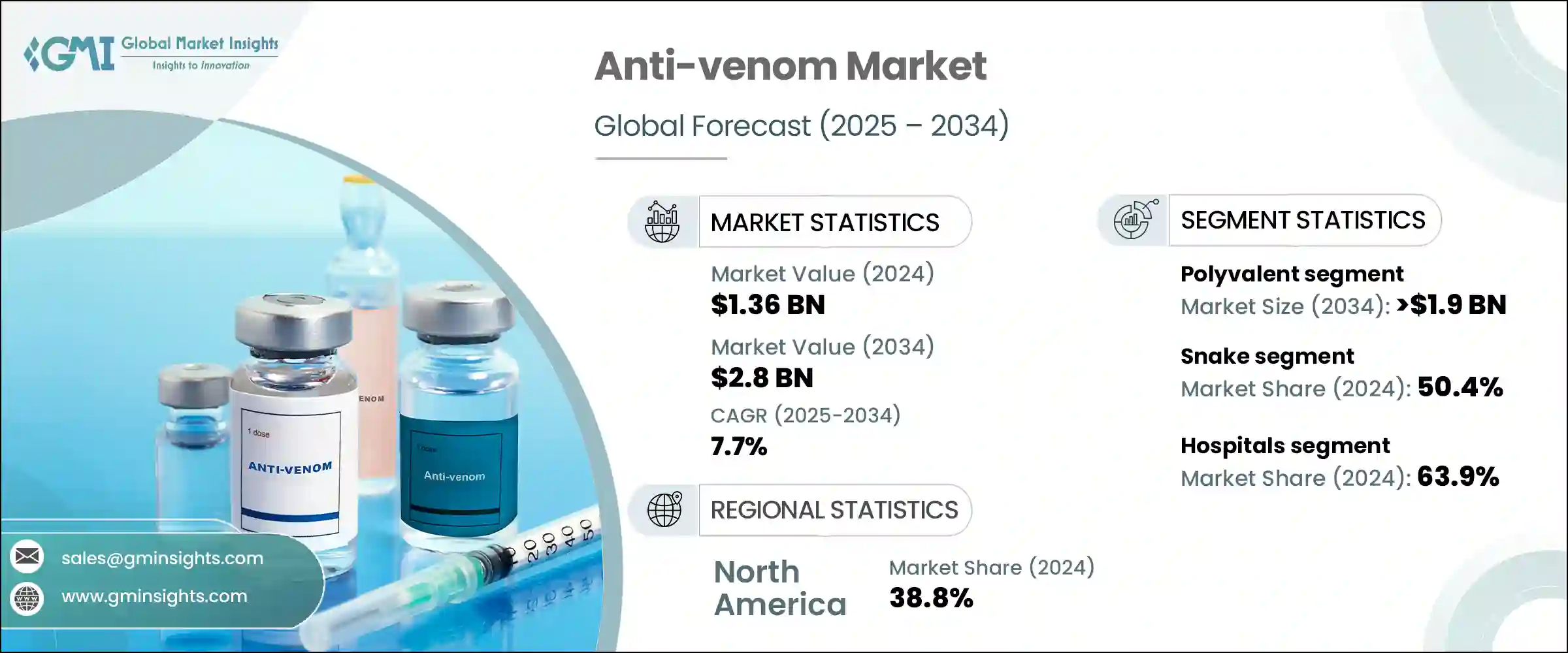
The global anti-venom market was estimated at USD 1.36 billion in 2024. The market is expected to grow from USD 1.44 billion in 2025 to USD 2.8 billion in 2034, growing at a CAGR of 7.7%. The market is experiencing significant growth due to the increasing global incidence of snakebites and envenomation from other venomous creatures such as spiders and scorpions.
Anti-venom Market Key Takeaways
Market Size & Growth
- 2024 Market Size: USD 1.36 Billion
- 2034 Forecast Market Size: USD 2.8 Billion
- CAGR (2025–2034): 7.7%
Key Market Drivers
- Rising incidence of snakebites and scorpion stings globally.
- Government and NGO initiatives to improve access to anti-venoms.
- Technological advancements in anti-venom production.
- Growing awareness and training programs for healthcare professionals in managing envenomation.
Challenges
- High cost and limited affordability of anti-venoms in low-income countries.
- Lack of standardized manufacturing practices, leading to variations in safety and efficacy.
Opportunity
- Emergence of biotechnology and nanotechnology in creating next-generation anti-venoms.
- Increased investments in research to improve efficacy, reduce allergic reactions, and develop recombinant solutions.
Get Market Insights & Growth Opportunities
As per the World Health Organization (WHO), approximately 5.4 million people are bitten by snakes annually, with 1.8 to 2.7 million resulting in envenomation. In the U.S. alone, the Centers for Disease Control and Prevention (CDC) report that around 7,000–8,000 individuals are bitten by venomous snakes each year, with roughly 5 fatalities. The incidence is significantly higher in Latin America, where Brazil reports the highest number of cases, between 26,000 and 29,000 annually, followed by Venezuela (7,000), Colombia (3,000), Ecuador (1,400–1,600), Peru (1,400–1,500), and Bolivia (1,000).
In sub-Saharan Africa, South Asia, and Latin America, snakebite accidents continue to be high, with several cases resulting in death or permanent disability if left untreated. With healthcare systems in these regions increasingly prioritizing the prevention of avoidable fatalities, the demand for effective anti-venom solutions is growing, propelling the market forward.
Antivenom is a biologically derived therapeutic product utilized to counteract the toxic effects of venom from bites or stings inflicted by venomous animals such as snakes, scorpions, or spiders. Market players such as CSL Limited, Merck, BTG International, Bharat Serums and Vaccines, and Pfizer are the key players in the global market owing to their extensive product lines of regionally specific anti-venoms and extensive distribution chains. Collectively, these companies play a vital role in supplying anti-venoms to high-burden countries in Asia, Africa, and Latin America, filling important gaps in access and contributing to global efforts in controlling envenomization-related morbidity and mortality.
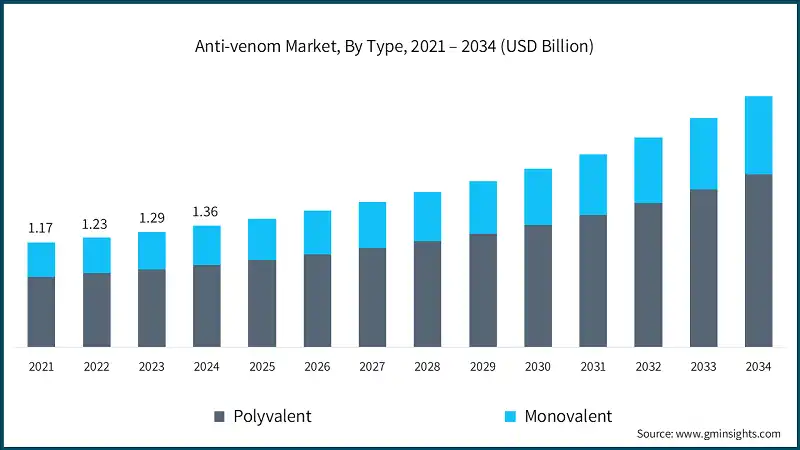
The anti-venom market witnessed steady growth, growing from USD 1.17 billion in 2021 to USD 1.29 billion in 2023. Between 2021 and 2023, one of the most important trends in the anti-venom industry has been the growing movement towards safer and more specific therapy development, specifically recombinant and monoclonal antibody-based anti-venoms. During this period, substantial research investments were directed toward minimizing the adverse side effects commonly associated with traditional equine-derived anti-venoms. In addition, collaborative efforts between governments, international health agencies, and private manufacturers became more prominent, and emphasis was placed on consolidating distribution networks and revising clinical treatment guidelines for envenoming, thus contributing to the overall market growth.
Anti-venoms are produced by immunizing animals such as horses or sheep with small, nonfatal amounts of venom. The antibodies generated in response are then extracted and purified for therapeutic use. They play a key role in minimizing the severity of the symptoms, averting long-term sequelae, and saving lives, especially in areas where venomous encounters are frequent and access to healthcare access is low.
To get key market trends
Anti-venom Market Trends
- The anti-venom industry is undergoing a technological revolution, with an increasing move away from conventional animal-derived anti-venoms towards recombinant and synthetic options.
- For example, in 2021, Ophirex initiated its BRAVO clinical trial study to evaluate the safety, tolerability, and efficacy of a multi-dose regimen of oral varespladib in subjects bitten by venomous snakes. Similarly, several universities and research institutions are actively involved in recombinant anti-venom research, including the University of California, San Francisco, and the California Academy of Sciences.
- These newer products are engineered to address age-old challenges like allergic responses, variable potency, and cold chain requirements.
- Biopharmaceutical companies and research organizations are working on monoclonal antibodies and recombinant technologies that possess increased specificity and stability, paving the way for safer next-generation anti-venom treatments.
- Another important trend is increasing engagement by public health authorities and global institutions. In June 2017, WHO categorized snakebite envenomation into Category A of the Neglected Tropical Diseases (NTD). This new classification allowed access to new funding, resulting in wider and deeper research. It also expands the accessibility of anti-venoms.
- Collaborative strategies among NGOs, governments, and drug manufacturers are resulting in more coordinated action, in the form of better procurement systems, healthcare worker training, and community awareness campaigns, especially in regions with high incidence rates.
- The industry is also seeing a move towards more region-specific anti-venom production. Rather than using broad-spectrum products, companies are now developing anti-venoms to attack the venom profiles of locally occurring snakes, scorpions, or spider species.
- For instance, Bharat Serums and Vaccines Limited (BSV) partnered with IISc’s ‘Evolutionary Venomics Lab’ to develop region-specific anti-venoms. This partnership aims to drive anti-venom development that will deliver efficient snakebite therapy in India. Such efforts enhance treatment success and reduce the threat of undertreatment or adverse effects.
- Furthermore, the adoption of digital health technologies is becoming an important asset within the market. Mobile apps and data platforms are being employed to track the incidence of snakebites, manage stock, and inform clinical decision-making in real time. These digital technologies assist in optimizing supply chains, enhancing demand planning, and enabling quicker access to treatment in rural or resource-constrained environments, thereby expanding the reach of anti-venom therapies.
Anti-venom Market Analysis
Learn more about the key segments shaping this market
The global market was valued at USD 1.17 billion in 2021. The market size reached USD 1.29 billion in 2023, from USD 1.23 billion in 2022.
Based on the type, the market is segmented into polyvalent and monovalent. The polyvalent segment dominated the market with a market share of 67.6% in 2024, owing to its wider range of efficacy in more than one species of poisonous animals. The segment is expected to exceed USD 1.9 billion by 2034, growing at a CAGR of 7.9% during the forecast period. On the other hand, the monovalent segment was valued at USD 441.5 million in 2024. The monovalent segment holds the second-largest market share because of its specific therapeutic effect and higher efficacy against a certain venom type. It is most favored in areas with a single venomous snake species, as identifying them is easy and has less cross-species envenoming risk.
- In contrast to monovalent anti-venoms, which neutralize venom from only one species, polyvalent anti-venoms neutralize toxins from more than one species in a region. This adaptability makes them a suitable option in countries where there are several venomous species, and precise identification of the species involved in a bite is generally complicated.
- Hence, rural and semi-urban health facilities, especially in Asia, Africa, and Latin America, extensively rely on polyvalent preparations to offer timely and effective therapy.
- Additionally, the cost-effectiveness and practical benefit in emergencies also aid in segmental growth. Polyvalent anti-venoms provide easier access, making response faster, with better clinical outcomes and lower mortality rates.
- Public health networks and government-led anti-venom distribution programs prefer polyvalent ones for stockpiling and distribution, providing extensive coverage in areas subject to snakebites and stings, thus adding to their demand in the market.
Based on the species, the anti-venom market is segmented into snakes, scorpions, spiders, and other species. The snake segment accounted for the highest market share of 50.4% in 2024. The widespread global prevalence of snakebite envenomation, especially among low- and middle-income nations, has increased the adoption of snake anti-venoms.
- As per the Global Burden of Disease study, 63,400 people died globally from snakebites in 2019. Similarly, in regions such as sub-Saharan Africa, snakebites account for 20,000 to 32,000 annual deaths. This common incidence has established a chronic and urgent need for snake-specific anti-venoms.
- On the other hand, the scorpion segment is anticipated to grow at a CAGR of 8.2% over the forecast period.
- The scorpion segment is witnessing strong growth in the anti-venom market owing to the increasing prevalence of scorpion stings in arid and tropical climates, especially in regions such as some areas of North Africa, the Middle East, India, Mexico, and Brazil.
- Scorpion envenomation is a serious health hazard in most of these regions, primarily affecting children, and can result in potentially lethal complications like cardiovascular or respiratory collapse.
- Greater awareness, better sting surveillance, and the inclusion of scorpion anti-venoms in regional healthcare schemes have collectively supported consistent market demand.
Learn more about the key segments shaping this market
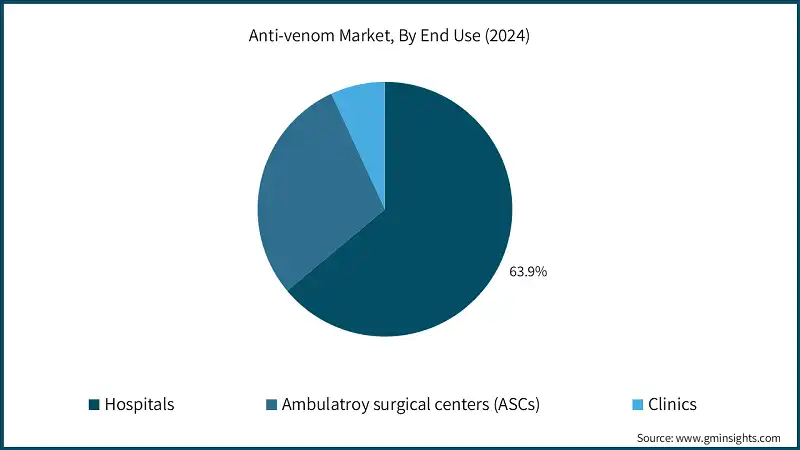
Based on the end use, the anti-venom market is segmented into hospitals, ambulatory surgical centers (ASC’s), and clinics. The hospitals segment accounted for the highest market share of 63.9% in 2024, primarily because hospitals are best equipped to handle the complex and potentially life-threatening nature of venomous bites and stings.
- The administration of anti-venom requires close medical supervision, resuscitation equipment, and supportive therapy like IV fluid, antihistamines, and occasionally ventilation. These needs are typically fulfilled only within hospitals, particularly in instances of serious systemic envenoming where prompt and proper intervention is essential for patient survival. This generates a steady demand for anti-venom in hospitals.
- Increasing healthcare infrastructure, such as hospital network expansions in emerging markets, is driving this segment further.
- The ambulatory surgical centers held the second-largest market share in the global anti-venom market with a revenue of USD 397.4 million in 2024, owing to their increasing contribution to the timely treatment of uncomplicated envenomation cases. In areas where healthcare systems are developing, ASCs act as inexpensive and easily accessible substitutes for hospitals.
- With increasing awareness of venom bite treatment, ASCs are being better equipped with critical anti-venoms, thus solidifying their position in the treatment process.
- The clinics segment is anticipated to witness growth at a CAGR of 7.8% between 2025 - 2034. Clinics command a small but rising percentage in the market, essentially as the first line of treatment in most rural and remote areas where venomous bites are prevalent.
Looking for region specific data?
North America dominated the global anti-venom market with the highest market share of 38.8% in 2024.
- North America holds a high market share in the market as a result of its well-developed healthcare infrastructure, established regulatory frameworks, and high concentration of leading pharmaceutical companies.
- The region has a strong supply chain and optimized emergency treatment protocols that guarantee quick access to anti-venom therapies.
- Ongoing investment in research and development further establishes North America at the forefront in the development and accessibility of anti-venoms.
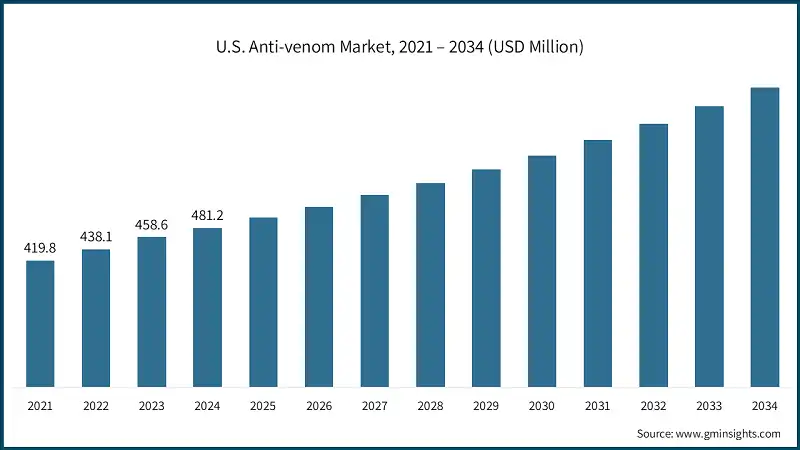
The U.S. anti-venom market was valued at 419.8 million and USD 438.1 million in 2021 and 2022, respectively. In 2024, the market size reached USD 481.2 million from USD 458.6 million in 2023.
- The country hosts various venomous species of snakes, including rattlesnakes, copperheads, cottonmouths/water moccasins, and coral snakes, triggering a steady demand for effective anti-venom treatment.
- Drugs such as CroFab and Anavip are widely available in U.S. hospitals and emergency rooms, facilitated by extensive availability and compliance with clinical treatment guidelines.
- Additionally, insurance coverage and reimbursement policies also facilitate the high rate of anti-venom treatment uptake.
Europe anti-venom market accounted for USD 355.3 million in 2024.
- Europe is experiencing steady growth in the market due to growing recognition of envenomation hazard and increased access to emergency services in the southern and eastern parts of the continent where venomous bites occur.
- In 2023, the annual incidence of snakebites in Europe, including European Russia and Turkey, was estimated to be around 7,992 cases. This translates to an average incidence rate of approximately 1.06 per 100,000 inhabitants.
- With an upsurge in travel and outdoor recreation throughout the continent, human-snake interaction has become a risk, leading to increased readiness by healthcare centers.
- Meanwhile, countries like France, the UK, and the Netherlands maintain specialized anti-venom depots to treat rare envenomation from exotic species, often associated with zoos or travelers returning from high-risk regions.
Germany holds a leading position in the Europe anti-venom market.
- The country has several leading biopharmaceutical firms and research organizations that are responsible for the development as well as local distribution of anti-venoms.
- The country’s emphasis on upgrading healthcare infrastructure, coupled with enabling public health policy, has further reinforced its position in the market.
- The country not only develops and distributes anti-venoms locally but also exports to other European nations. Additionally, medical facilities and emergency units now have enhanced anti-venom and treatment protocols, enhancing demand and market growth within the country.
Asia Pacific anti-venom market is expected to witness rapid growth at a CAGR of 8.4% over the analysis period.
- Asia Pacific is witnessing high growth in the market due to the widespread incidence of snake and scorpion bites, especially in India, Bangladesh, Myanmar, Thailand, and Vietnam.
- For example, in Vietnam, there are approximately 30,000 snakebite cases reported annually. Similarly, in Thailand, approximately 10,000 cases of snakebites are reported each year.
- This public health issue has pushed governments and healthcare providers to enhance access to anti-venom treatments by means of national supply programs and subsidies.
- Furthermore, increasing domestic anti-venom manufacturing capacity and better healthcare infrastructure will aid in market growth.
India holds a substantial market share in the Asia Pacific anti-venom market as it has a high incidence of snakebite envenomation, especially in rural and farming areas.
- India, which reports over 1 million snakebites annually and an estimated 58,000 deaths, holds a substantial share in the regional market. The high burden of envenomation in India, especially in rural and agricultural regions, is driving the expansion of anti-venom production facilities and public awareness campaigns.
- Additionally, growing R&D investments in monoclonal antibody-based and recombinant anti-venoms, coupled with improved healthcare infrastructure, are accelerating market development.
- The high demand, combined with continuous campaigns to enhance public knowledge, supports India's stronghold in the regional market for anti-venoms.
Latin America is poised for considerable growth in the anti-venom market due to the high incidence of venomous scorpion and snake bites.
- Countries such as Brazil, Mexico, Colombia, and Argentina have thousands of reported cases of envenoming every year, generating high demand for accessible and effective anti-venoms.
- Governments and public health agencies are increasingly focusing on the development and provision of anti-venoms to cut mortality and morbidity rates, which has induced investments in domestic manufacturing.
- Brazil leads the region in both production and distribution, with public institutes like Butantan Institute and Vital Brazil manufacturing polyvalent anti-venoms for both domestic use and export.
- Additionally, increasing initiatives and enhanced healthcare access are speeding up early diagnosis and timely treatment with anti-venom, thereby driving market demand.
The Middle East and Africa region is also witnessing considerable growth in the anti-venom market because of the immense burden of snakebites, particularly in sub-Saharan Africa.
- This region experiences an estimated 90,000–400,000 snakebite incidents annually, with a significant number resulting in death or long-term disability.
- Nigeria, for instance, is actively working to establish domestic anti-venom production facilities through public-private partnerships to address high mortality and reduce dependence on imports.
- Countries such as Egypt, Tunisia, and Morocco are producing scorpion-specific anti-venoms, while South Africa supplies anti-venoms for various venomous species, including spiders and snakes.
- Regional governments, with support from WHO and global NGOs, are focusing on improving anti-venom accessibility through better cold-chain logistics, training for healthcare workers, and inclusion of anti-venom therapies in national treatment guidelines.
- Additionally, collaborations with global pharmaceutical companies are fostering innovation and aiding in the development of region-specific products.
Anti-venom Market Share
Leading companies like CSL Limited, Merck, Pfizer, BTG International, and Bharat Serums and Vaccines Limited together hold between 54% of the market share in the global market. These businesses maintain their dominance by combining strong product lines, business alliances, legal clearances, and ongoing innovation. CSL is engaged in developing, manufacturing, and supplying anti-venoms specifically tailored for a wide range of venomous species found in Australia and other regions.
Its anti-venom portfolio addresses bites and stings from snakes, spiders, and marine creatures, and is the result of close collaboration with hospitals, venom research institutions, and public health agencies.
Emerging biotech firms are leveraging synthetic biology, recombinant antibodies, and plant-based platforms to develop next-generation anti-venoms that are potentially safer, more affordable, and easier to produce at scale. These companies are also exploring oral formulations and rapid diagnostic tools to improve treatment accessibility in remote and underserved regions.
Anti-venom Market Companies
Few of the prominent players operating in the anti-venom industry include:
- Alomone Labs
- Bharat Serums and Vaccines Limited (BSV)
- BTG International
- CSL Limited
- Haffkine Bio-Pharmaceutical Corporation Limited
- Incepta Pharmaceuticals Limited
- Instituto Butantan
- Inosan Biopharma
- Merck
- MicroPharm
- Pfizer
- Rare Disease Therapeutics
- South African Vaccine Producers
- Serum Institute of India
- ViNS Bioproducts
- CSL Limited
CSL Limited is one of the leading players in the anti-venom market, with a complete portfolio of anti-venoms for domestic venomous animals such as snakes, spiders, and sea creatures. With decades of experience and close connections with public health, CSL has an instrumental position in treating envenomation in high-risk areas. The firm's anti-venoms are renowned for their quality and specificity, and ongoing research aims to improve safety and efficacy, reinforcing its status as a cornerstone of international anti-venom supply, particularly in the Asia-Pacific region.
- MicroPharm
MicroPharm is known for developing targeted therapies against venomous snakebites, particularly in sub-Saharan Africa. The company has focused on producing region-specific anti-venoms like those for carpet vipers and cobras. With a strong emphasis on clinical effectiveness and local impact, MicroPharm plays a key role in addressing envenomation in underserved areas.
- BGI International
BTG International is known in the anti-venom field for CroFab, the only FDA-approved treatment for North American pit viper bites (including rattlesnakes, copperheads, and cottonmouths), which has treated over 50,000 patients since launch. Beyond the product itself, BTG has invested in digital innovations such as its Snakebite 911 app and a blockchain-based platform in partnership with OMNY, to enhance real-time tracking of hospital anti-venom stock levels, ensuring faster access during emergencies. This combination of a proven biologic therapy with advanced logistics tools positions BTG as a digitally forward and clinically essential player in snakebite response.
Anti-venom Market Report Attributes
| Key Takeaway | Details |
|---|---|
| Market Size & Growth | |
| Base Year | 2024 |
| Market Size in 2024 | USD 1.36 Billion |
| Forecast Period 2025 - 2034 CAGR | 7.7% |
| Market Size in 2034 | USD 2.8 Billion |
| Key Market Trends | |
| Drivers | Impact |
| Rising incidence of snakebites and scorpion stings globally | Increased number of snakebites and scorpion stings directly increases the patient base, prompting governments and healthcare providers to increase procurement and stockpiling of anti-venoms to manage the growing caseload. |
| Government and NGO initiatives to improve access to anti-venoms | Government and NGO initiatives have enhanced supply chains, reduced the cost of treatment through subsidies, and improved access at the community level, driving up demand and broader market penetration. |
| Technological advancements in anti-venom production | Technological advances in production methods have enhanced safety profiles and efficacy, leading to increased adoption in both public and private healthcare systems. |
| Growing awareness and training programs for healthcare professionals in managing envenomation | Increased awareness and training initiatives have resulted in faster diagnosis and earlier treatment, rising the rate of anti-venom utilization and lowering the incidence of complications from untreated envenomation. |
| Pitfalls & Challenges | Impact |
| High cost and limited affordability of anti-venoms in low-income countries | The expensive nature of anti-venoms deters extensive purchases in low-resource countries, reducing the total market size even with high medical demand. |
| Lack of standardized manufacturing practices, leading to variations in safety and efficacy | Inconsistencies in quality and efficacy across manufacturers erode trust in available products and create barriers to regulatory approval and international procurement. |
| Opportunities | Impact |
| Emergence of biotechnology and nanotechnology in creating next-generation anti-venoms | Advanced platforms offer the potential for precise neutralization of venom components and reduced immunogenicity, improving treatment outcomes and acceptance. |
| Increased investments in research to improve efficacy, reduce allergic reactions, and develop recombinant solutions | Investments into new formulations (such as recombinant anti-venoms) speed up product advancement and can substitute traditional serums with safer and more effective versions. |
| Market Leaders (2024) | |
| Market Leader |
|
| Top Players |
Collective market share in 2024 is 54% |
| Competitive Edge |
|
| Regional Insights | |
| Largest Market | North America |
| Fastest growing market | Asia Pacific |
| Emerging countries | China, India, Brazil, Mexico, South Africa |
| Future outlook |
|
What are the growth opportunities in this market?
Anti-venom Industry News:
- In June 2024, MicroPharm Limited announced the acquisition of Sanofi Pasteur’s anti-venom equine immunoglobulin product range, comprising Viperfav, Bothrofav Scorpifav, Fav-Afrique, and Favirept. This helped the company expand its product range.
- In March 2022, Ophirex, Inc. announced that the U.S. FDA granted Fast Track designation to varespladib-methyl (commonly known as "oral varespladib") for snakebite treatment. Ophirex is currently conducting clinical trials of oral varespladib, its leading investigational drug candidate, aimed at developing a broad-spectrum antidote for snakebites in both the U.S. and India.
- In April 2021, Rare Disease Therapeutics announced that the U.S. Food & Drug Administration (FDA) approved a new expanded indication for ANAVIP (crotalidae immune F(ab’)2 (equine)), an equine-derived antivenin, for the management of adult and pediatric patients with North American Pit Viper envenomation.
- In January 2019, BTG partnered with OMNY to improve visibility of inventory data for its anti-venom product CroFab, using distributed ledger technology. Using the OMNY platform, the company can now track real-time data about CroFab stock levels at participating healthcare institutions.
The anti-venom market research report includes an in-depth coverage of the industry with estimates and forecast in terms of revenue in USD Million and from 2021 – 2034 for the following segments:
Market, By Type
- Polyvalent
- Monovalent
Market, By Species
- Snakes
- Scorpions
- Spiders
- Other species
Market, By End Use
- Hospitals
- Ambulatory surgical centers (ASC’s)
- Clinics
The above information is provided for the following regions and countries:
- North America
- U.S.
- Canada
- Europe
- Germany
- UK
- France
- Italy
- Spain
- Netherlands
- Asia Pacific
- China
- Japan
- India
- Australia
- South Korea
- Latin America
- Brazil
- Mexico
- Argentina
- Middle East and Africa
- South Africa
- Saudi Arabia
- UAE
Frequently Asked Question(FAQ) :
What is the market size of the anti-venom market in 2024?
The market size was USD 1.36 billion in 2024, with a CAGR of 7.7% expected through 2034, driven by the increasing global incidence of snakebites and envenomation from other venomous creatures.
What is the projected value of the anti-venom market by 2034?
The market is expected to reach USD 2.8 billion by 2034, supported by advancements in recombinant and synthetic anti-venom technologies.
What is the projected size of the anti-venom market in 2025?
The market is expected to reach USD 1.44 billion in 2025.
What was the market share of the snake segment in 2024?
The snake segment accounted for 50.4% of the market in 2024, driven by the widespread prevalence of snakebite envenomation, particularly in low- and middle-income countries.
What was the market share of the hospitals segment in 2024?
The hospitals segment held a 63.9% market share in 2024, as hospitals are best equipped to handle the complex and life-threatening nature of venomous bites and stings.
What was the valuation of the U.S. anti-venom industry in 2024?
The U.S. market was valued at USD 481.2 million in 2024, up from USD 458.6 million in 2023.
What are the key trends in the anti-venom market?
Key trends include a shift from traditional animal-derived anti-venoms to recombinant and synthetic alternatives, as well as ongoing research and clinical trials, such as Ophirex's BRAVO study for oral varespladib.
Who are the key players in the anti-venom industry?
Key players include Alomone Labs, Bharat Serums and Vaccines Limited (BSV), BTG International, CSL Limited, and Haffkine Bio-Pharmaceutical Corporation Limited.
Anti-venom Market Scope
Related Reports