Summary
Table of Content

Ophthalmic Anti-VEGF Therapeutics Market
Get a free sample of this report
Form submitted successfully!
Error submitting form. Please try again.
Thank you!
Your inquiry has been received. Our team will reach out to you with the required details via email. To ensure that you don't miss their response, kindly remember to check your spam folder as well!
Request Sectional Data
Thank you!
Your inquiry has been received. Our team will reach out to you with the required details via email. To ensure that you don't miss their response, kindly remember to check your spam folder as well!
Form submitted successfully!
Error submitting form. Please try again.
Ophthalmic Anti-VEGF Therapeutics Market Size
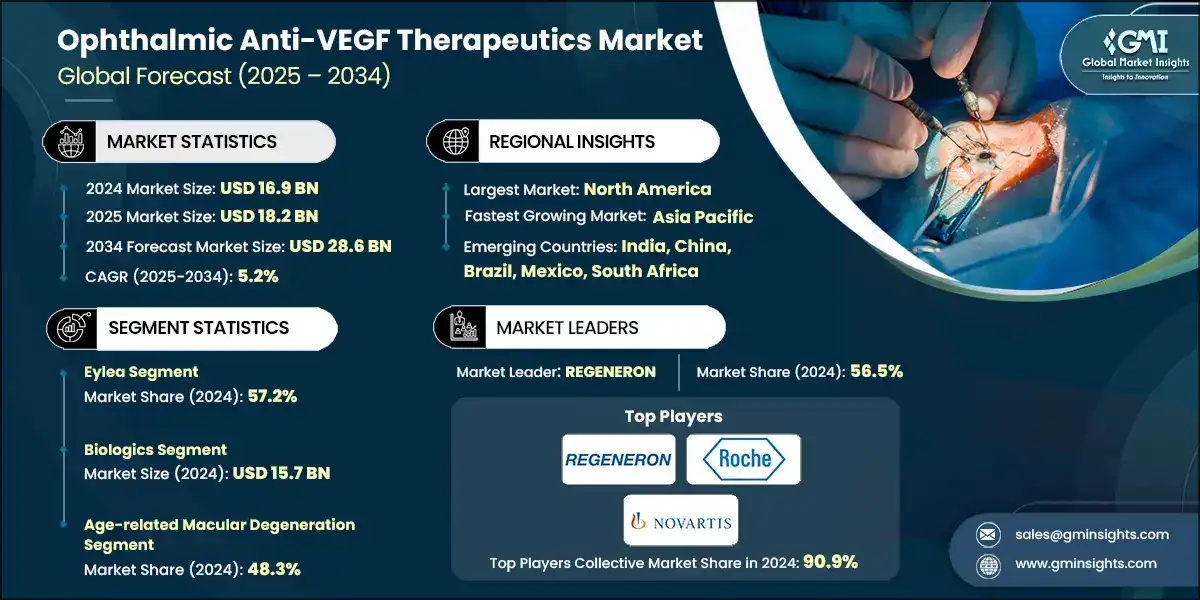
The global ophthalmic anti-VEGF therapeutics market was valued at USD 16.9 billion in 2024. The market is expected to reach from USD 18.2 billion in 2025 to USD 28.6 billion in 2034, growing at a CAGR of 5.2% during the forecast period, according to the latest report published by Global Market Insights Inc. The high market growth is attributed to the rising prevalence of retinal disorders, increased diabetes burden, growing ageing global population, and expansion of hospital and specialty eye clinics, among other contributing factors.
Ophthalmic Anti-VEGF Therapeutics Market Key Takeaways
Market Size & Growth
- 2024 Market Size: USD 16.9 Billion
- 2025 Market Size: USD 18.2 Billion
- 2034 Forecast Market Size: USD 28.6 Billion
- CAGR (2025–2034): 5.2%
Regional Dominance
- Largest Market: North America
- Fastest Growing Region: Asia Pacific
Key Market Drivers
- Increasing prevalence of eye diseases.
- Rise in aging population.
- Technological advancements in drug development.
- Growing awareness towards timely treatment of ophthalmic disorders.
Challenges
- High cost of treatment.
- Side effects and safety concerns.
Opportunity
- Biosimilars and lower-cost alternatives expanding access.
- Expansion into emerging markets with growing healthcare access.
Key Players
- Market Leader: REGENERON led with over 56.5% market share in 2024.
- Leading Players: Top 5 players in this market include REGENERON, Roche, NOVARTIS, which collectively held a market share of 90.9% in 2024.
Get Market Insights & Growth Opportunities
Ophthalmic anti-VEGF therapeutics are a group of drugs that inhibit VEGF protein activity, which is the main cause for the abnormal growth of blood vessels (angiogenesis). These medications are offered to patients with ocular diseases such as age-related macular degeneration (AMD), diabetic macular edema (DME), and retinal vein occlusion (RVO) by preventing excessive blood vessel growth and leakage in the retina.
Leading players in the ophthalmic anti-VEGF therapeutics industry include REGENERON, Roche, and NOVARTIS. These companies maintain their competitive edge through continuous product innovation, global market presence, and significant investments in research and development.
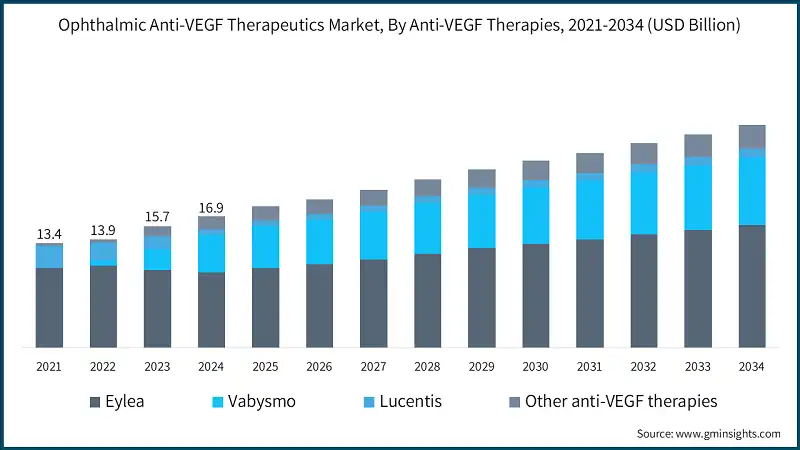
The market has increased from USD 13.4 billion in 2021 and reached USD 15.7 billion in 2023, with the historic growth rate of 8.1%. The market growth was driven by advancing treatment uptake in retinal disorders, expanding reimbursement coverage, growing prevalence of AMD and diabetic retinopathy, and the launch of next-generation long-acting anti-VEGF therapies.
Moreover, the diabetic retinopathy (DR), diabetic macular edema (DME), and age-related macular degeneration (AMD) incidence continues to rise due to aging populations, diabetes burden, and sedentary lifestyles. For instance, according to the International Diabetes Federation (IDF), approximately 589 million adults (20-79 years) are living with diabetes in 2024, and is projected to rise to 853 million by 2050.
Additionally, the World Health Organization (WHO) reported in 2023 that over 2.2 billion people globally suffer from vision impairment, with a significant portion attributed to DR and AMD. These conditions are chronic, vision-threatening, and require long-term therapy, sustaining high anti-VEGF demand. Emerging markets amplify volume growth.
Furthermore, robust R&D activity introduces improved safety, durability, and multi-target mechanisms. Competition expands market by creating sub-segments (treatment-naïve, switch therapy, extended dosing). Innovation also drives premium pricing sustainability.
To get key market trends
Ophthalmic Anti-VEGF Therapeutics Market Trends
The ophthalmic anti-VEGF therapeutics industry is growing considerably with the shift toward extended-dosing & long-acting therapies, growing switch & combination therapy segment, increased use of AI-driven retinal diagnostics supporting treatment decisions, and rising penetration in non-metropolitan and community eye centres, among other factors collectively driving industry growth.
- Manufacturers are prioritizing higher-molar concentration and long-acting formulations to reduce injection frequency. This trend improves adherence, lowers clinic burden, and increases real-world persistence. Drugs enabling 8–16 week or longer intervals are gaining preference among physicians and payers.
- The next-generation therapies like bispecific antibodies that target VEGF along with the co-passed (e.g., angiopoietin-2) are the ones which future the most. This, in turn, results in treatment durability and vision outcomes improvement as compared to single-target agents. The trend signals a transition from efficacy alone to efficacy + dosing efficiency as the new benchmark.
- Moreover, emerging regions are investing in local manufacturing, fill-finish capacity, and biosimilar launches to lower cost-of-therapy. Biosimilars are driving competitive pricing, improving access, and expanding patient pools in Asia, LATAM, and MEA. This trend increases volumes even when average selling price reduces, thereby sustaining market growth.
Ophthalmic Anti-VEGF Therapeutics Market Analysis
Learn more about the key segments shaping this market
The global ophthalmic anti-VEGF therapeutics industry was valued at USD 13.4 billion in 2021. The market size reached USD 15.7 billion in 2023, from USD 13.9 billion in 2022.
Based on the anti-VEGF therapies, the market is segmented into eylea, vabysmo, lucentis, and other anti-VEGF therapies. The eylea segment has asserted its dominance in the market by securing a significant market share of 57.2% in 2024 owing to its proven efficacy and safety across key retinal disorders, together with extended dosing intervals, especially following the introduction of the 8 mg high-dose version, which reduces injection burden and increases patient/physician preference. The segment is expected to exceed USD 15.8 billion by 2034, growing at a CAGR of 4.9% during the forecast period.
On the other hand, the vabysmo segment is expected to grow with a CAGR of 5.4%. The growth of this segment is driven by its novel dual-pathway mechanism (blocking both VEGF-A and Ang-2) leading to durable efficacy and allowing extended dosing intervals (up to 16 weeks), which reduces treatment burden and improves patient/physician adoption.
- The eylea segment continues to dominate the market. Eylea has deep clinical validation in diabetic macular edema and diabetic retinopathy. Given the rising diabetes burden globally, predictable and progressive diabetic retinal complications ensure a stable long-term user base. This drives high annual vial/syringe consumption, especially in countries with large diabetic populations.
- Eylea is included in major national and private insurance reimbursement lists across high-income countries. Predictable procedure-linked reimbursement encourages hospitals to scale injection capacity. Payers maintain trust due to strong safety and durability economics, reducing patient deferral.
- The vabysmo segment held a revenue of USD 4.8 billion in 2024, with projections indicating a steady expansion at 5.4% CAGR from 2025 to 2034. The segmental growth is driven by strong real-world evidence generation through post-launch registries and increasing use of personalized treat-and-extend protocols, enabling clinicians to tailor dosing based on patient response rather than fixed intervals. This supports differentiated clinical positioning and deeper penetration in high-vein academic retina centres.
- The lucentis segment accounted for significant revenue in 2024 and is anticipated to grow at a CAGR of 4.7% over the forecast period. Lucentis demand is driven by continued trust as a clinically established therapy, strong brand recognition in retina practices, and its adoption in healthcare systems prioritizing long-standing safety familiarity for high-risk or complex multi-morbid patients.
Based on drug type, the ophthalmic anti-VEGF therapeutics market is segmented into biologics and biosimilars. The biologics segment dominated the market in 2024, accounting for USD 15.7 billion and is anticipated to grow at a CAGR of 4.9% during the forecast period.
- Biologics offer highly targeted intervention against vascular endothelial growth factor pathways, thus allowing controlled inhibition of abnormal retinal angiogenesis. This exactness is the main reason for better anatomical results than those obtained by non-biologic alternatives. Physicians rely on biologics as a scientifically validated, predictable therapeutic option.
- Leading global ophthalmology and retinal societies have constituted biologic anti-VEGF therapies as the first-line treatment for wet AMD, DME, and DR. Their inclusion in protocols guarantees continuous demand from hospitals and retina clinics. This factor is a main reason behind biologics being non-negotiable formulary inclusions in high-volume centres.
- The biosimilars segment accounted for significant revenue in 2024 and is anticipated to grow at a CAGR of 8.2% over the forecast period. The growth of the segment is driven by increasing cost sensitivity among healthcare providers and payers, which encourages wider adoption through lower-priced alternatives while maintaining comparable efficacy to reference anti-VEGF therapies.
Learn more about the key segments shaping this market
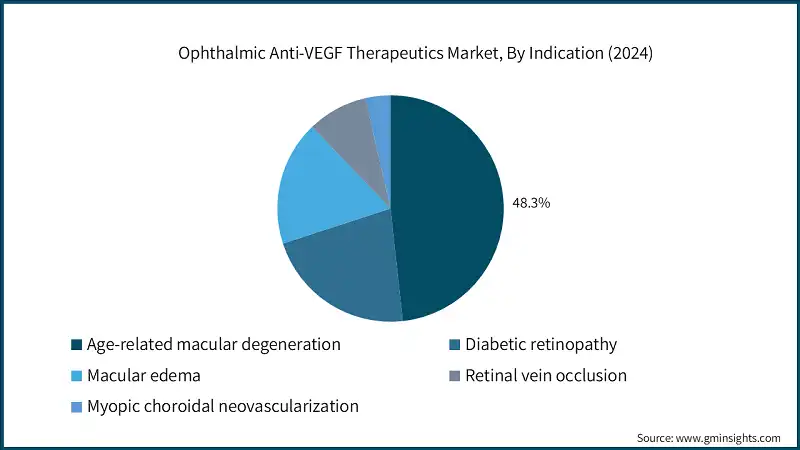
Based on indication, the ophthalmic anti-VEGF therapeutics market is classified into age-related macular degeneration, diabetic retinopathy, macular edema, retinal vein occlusion, and myopic choroidal neovascularization. The age-related macular degeneration segment dominated the market with a revenue share of 48.3% in 2024 and is expected to reach USD 13.2 billion within the forecast period.
- AMD is a disorder that mostly affects people over 50 years of age, and its prevalence is increasing with the global aging trend. The countries that are developing elderly populations are witnessing higher patient pools. This is what is pushing the demand for anti-VEGF therapy as a standard of care to be not only consistent, but also growing.
- WET AMD causes fast loss of the central vision, making the performance of the usual daily activities difficult. Anti-VEGF therapy is the only intervention that can effectively stabilize or improve vision. The urgent clinical need for the therapy keeps market growth going, as well as the frequent intravital injections.
- The diabetic retinopathy segment accounted for significant revenue in 2024 and is anticipated to grow at a CAGR of 5.7% over the forecast period. The segment is driven by the rising global prevalence of diabetes, leading to increased screening and early intervention with anti-VEGF therapies to prevent vision loss.
- The macular edema segment held a revenue of USD 3 billion in 2024, with projections indicating a steady expansion at 6.1% CAGR from 2025 to 2034. The segment is driven by advancements in early diagnostic imaging, enabling timely identification and treatment with anti-VEGF therapies to preserve visual acuity.
Looking for region specific data?
North America Ophthalmic Anti-VEGF Therapeutics Market
North America dominated the global ophthalmic anti-VEGF therapeutics industry with the highest market share of 64.8% in 2024.
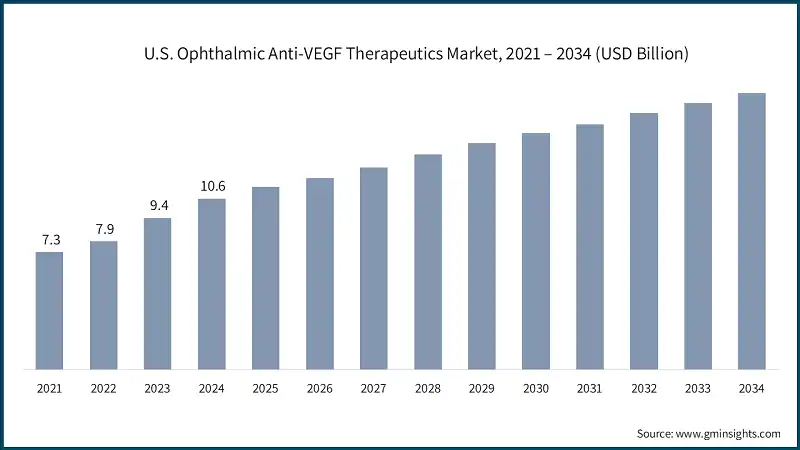
- The U.S. market was valued at USD 7.3 billion and USD 7.9 billion in 2021 and 2022, respectively. The market size reached USD 10.6 billion in 2024, growing from USD 9.4 billion in 2023, and is anticipated to grow at a CAGR of 4.7% between 2025 to 2034.
- In North America, the patient population with age-related macular degeneration (AMD), diabetic macular edema (DME), and diabetic retinopathy (DR) is significantly large due to aging and the high prevalence of diabetes. The huge patient pool is therefore a source of steady demand for anti-VEGF therapies and frequent intravitreal injections.
- The region has well-established retina specialty centres, ambulatory surgical centres, and ophthalmology clinics. High procedural capacity, cold-chain management, and trained specialists ensure efficient delivery of Anti-VEGF injections.
- Further, the region hosts leading ophthalmology R&D and clinical trials for next-generation Anti-VEGF molecules. Continuous innovation in bispecific antibodies and longer-acting therapies drives both adoption and incremental market growth.
Europe Ophthalmic Anti-VEGF Therapeutics Market
Europe market accounted for USD 3.2 billion in 2024 and is anticipated to show lucrative growth over the forecast period.
- The majority of Western European countries (Germany, UK, France, Italy) maintain public healthcare systems that provide full coverage for anti-VEGF treatments and intravitreal procedures. Hence, the cost paid directly by the patient is significantly reduced, which facilitates the initial uptake of therapy and continuous long-term compliance.
- Moreover, the region has one of the fastest-growing elderly populations globally, particularly in Germany, Italy, and Spain. Age-related macular degeneration prevalence rises accordingly, driving consistent demand for Anti-VEGF therapies over long treatment durations.
Asia Pacific Ophthalmic Anti-VEGF Therapeutics Market
The Asia Pacific market is anticipated to grow at the highest CAGR of 7.1% during the analysis timeframe.
- Sedentary lifestyles, high-calorie diets, and rising obesity contribute to a higher incidence of retinal vascular disorders. The resulting growth in AMD, DME, and DR cases expands the addressable patient pool for intravitreal biologics.
- Emerging APAC countries are investing in specialized retina centers, modern hospitals, and ambulatory surgery centers. Improved access to trained ophthalmologists and injection facilities boosts therapy adoption.
- Moreover, countries like Japan, South Korea, and Australia have aging populations, leading to higher incidence of wet AMD. This drives consistent long-term demand for Anti-VEGF therapies in elderly cohorts.
Latin America Ophthalmic Anti-VEGF Therapeutics Market
The Latin America market is experiencing robust growth over the analysis timeframe.
- In Latin America, the market is primarily driven by the rising prevalence of diabetes and associated retinal disorders, such as diabetic retinopathy and diabetic macular edema, fuelled by urbanization and lifestyle changes. Limited awareness and historically low screening rates are gradually improving due to government and NGO-led eye health campaigns, increasing early diagnosis and treatment initiation.
- Expansion of specialty ophthalmology centres and improved access to trained retina specialists in urban hubs enhance the reach of anti-VEGF therapies. Growing availability of lower-cost biosimilars and public-private partnerships is improving affordability in price-sensitive populations.
- Additionally, supportive reimbursement frameworks in countries like Brazil and Mexico, along with increasing patient preference for minimally invasive therapies, are encouraging broader therapy adoption and sustained market growth.
Middle East & Africa Ophthalmic Anti-VEGF Therapeutics Market
The Middle East & Africa (MEA) market is experiencing robust growth over the analysis timeframe.
- Retina specialists are limited in many MEA countries outside the Gulf, leading hospitals to adopt standardized protocols recommended by major biologic manufacturers. Clinics rely on well-studied biologics with low complexity dosing guides. This elevates market pull-through for trusted, approved biologic brands over experimental or less validated alternatives.
- In addition, countries such as the UAE, Saudi Arabia, and South Africa attract cross-border patients seeking high-quality retinal therapy. Hospitals position anti-VEGF biologics as part of premium retina treatment packages. This inbound patient flow expands drug volumes beyond domestic epidemiology-driven demand.
Ophthalmic Anti-VEGF Therapeutics Market Share
The global ophthalmic anti-VEGF therapeutics industry is highly consolidated, with competition dominated by a few multinational pharmaceutical companies that have established biologic portfolios. Market players focus on continuous innovation, launching longer-acting formulations, bispecific antibodies, and prefilled syringe formats to improve patient adherence and reduce injection burden.
Key players include REGENERON, Roche, and NOVARTIS, collectively accounting for 90.9% of the total market share. These companies leverage strong clinical evidence, robust R&D pipelines, and strategic partnerships with hospitals and retina specialty centres to maintain leadership.
Competition is further shaped by the entry of biosimilars and regional players in emerging markets, which are increasing access and affordability in price-sensitive regions. Strategic initiatives, such as licensing agreements, co-promotion deals, and local manufacturing partnerships, allow companies to expand geographic reach and optimize supply chains.
Additionally, aggressive marketing, physician training programs, and patient support initiatives strengthen brand loyalty and reinforce market dominance, making it challenging for new entrants to capture significant share.
Ophthalmic Anti-VEGF Therapeutics Market Companies
A few of the prominent players operating in the ophthalmic anti-VEGF therapeutics industry include:
- AMGEN
- Astellas
- Biocon Biologics
- Biogen
- CELLTRION
- Intas Pharmaceuticals
- KANGHONG PHARMACEUTICALS
- LUPIN
- NOVARTIS
- REGENERON
- Reliance Life Sciences
- Roche
- SANDOZ
- STADA
- teva
- Regeneron
Regeneron’s Eylea’s proven efficacy across multiple retinal indications and extended dosing intervals, reducing injection frequency and improving patient adherence. The company also benefits from strong physician trust and extensive real-world clinical data supporting long-term outcomes.
Roche differentiates through Vabysmo’s dual-target mechanism (VEGF + Ang-2), allowing longer dosing intervals and addressing patients with suboptimal response to conventional anti-VEGF therapy. Its broad portfolio, including Lucentis, ensures coverage across diverse retinal disorders and patient segments.
Novartis Lucentis long-standing clinical track record and wide adoption in established healthcare systems, offering reliable safety and efficacy. The company leverages brand recognition and global distribution to maintain strong market presence and early adoption in new treatment protocols.
Ophthalmic Anti-VEGF Therapeutics Market Report Attributes
| Key Takeaway | Details |
|---|---|
| Market Size & Growth | |
| Base Year | 2024 |
| Market Size in 2024 | USD 16.9 Billion |
| Market Size in 2025 | USD 18.2 Billion |
| Forecast Period 2025 - 2034 CAGR | 5.2% |
| Market Size in 2034 | USD 28.6 Billion |
| Key Market Trends | |
| Drivers | Impact |
| Increasing prevalence of eye diseases | Drives consistent demand for Anti-VEGF therapies for AMD, DME, and DR, expanding treated patient pools and repeat procedures. |
| Rise in aging population | Increases susceptibility to retinal vascular and degenerative conditions, sustaining long-term therapy adoption rates. |
| Technological advancements in drug development | Enables higher efficacy, longer durability, and reduced dosing frequency, improving clinical outcomes and preference for premium brands. |
| Growing awareness towards timely treatment of ophthalmic disorders | Boosts early diagnosis and intravitreal treatment initiation, improving patient footfall at retina clinics and reducing therapy drop-off. |
| Pitfalls & Challenges | Impact |
| High cost of treatment | Limits affordability and adherence, increasing payer scrutiny, cost-containment policies, and slower uptake in price-sensitive regions. |
| Side effects and safety concerns | Causes patient hesitation for injections, increases monitoring needs, and drives demand for safer, long-acting, and non-injection alternatives. |
| Opportunities: | Impact |
| Biosimilars and lower-cost alternatives expanding access | It is expected to increase overall treatment penetration, reduce cost barriers, accelerate volume growth in hospitals/retina centers, and intensify price competition among brands. |
| Expansion into emerging markets with growing healthcare access | This will unlock high-growth patient populations, improve drug availability through broader distribution and payer coverage, and drive above-market regional CAGR in Asia, MEA, and LATAM. |
| Market Leaders (2024) | |
| Market Leaders |
56.5%market share |
| Top Players |
Collective market share in 2024 is 90.9% |
| Competitive Edge |
|
| Regional Insights | |
| Largest Market | North America |
| Fastest growing market | Asia Pacific |
| Emerging countries | India, China, Brazil, Mexico, South Africa |
| Future outlook |
|
What are the growth opportunities in this market?
Ophthalmic Anti-VEGF Therapeutics Industry News
- In June 2025, Biocon Biologics announced that Health Canada had granted a Notice of Compliance for Yesafili (aflibercept), making it the first approved biosimilar to Eylea in Canada. The approval is expected to strengthen the company’s ophthalmology portfolio, further enhancing its global market position.
- In April 2025, Amgen announced that the European Commission granted marketing authorisation for its Pavblu (aflibercept 2 mg), a biosimilar to Bayer/Regeneron’s Eylea, for nAMD and visual impairment due to macular oedema secondary to retinal vein occlusion (RVO), diabetic macular oedema (DME), or myopic choroidal neovascularisation (CNV). This approval allowed Amgen to enter the European anti-VEGF market, expanding its presence in key retinal indications.
- In April 2023, Astellas completed its acquisition of Iveric Bio, securing Izervay as a cornerstone asset in its ophthalmology portfolio. This strategic move positioned Astellas as a major player in retinal disease treatment and expanded its focus on blindness and regeneration therapies.
The ophthalmic anti-VEGF therapeutics market research report includes an in-depth coverage of the industry with estimates and forecast in terms of revenue in USD Million from 2021 – 2034 for the following segments:
Market, By Anti-VEGF Therapies
- Eylea
- Vabysmo
- Lucentis
- Other anti-VEGF therapies
Market, By Drug Type
- Biologics
- Biosimilars
Market, By Indication
- Age-related macular degeneration
- Diabetic retinopathy
- Macular edema
- Retinal vein occlusion
- Myopic choroidal neovascularization
The above information is provided for the following regions and countries:
- North America
- U.S.
- Canada
- Europe
- Germany
- UK
- France
- Spain
- Italy
- Netherlands
- Asia Pacific
- China
- Japan
- India
- Australia
- South Korea
- Latin America
- Brazil
- Mexico
- Argentina
- Middle East and Africa
- South Africa
- Saudi Arabia
- UAE
Frequently Asked Question(FAQ) :
What is the market size of the ophthalmic anti-VEGF therapeutics market in 2024?
The market size was USD 16.9 billion in 2024, supported by rising treatment adoption for retinal disorders. Growing aging population and diabetes burden continue to fuel long-term therapy demand in the industry.
What is the current ophthalmic anti-VEGF therapeutics market size in 2025?
The market size is projected to reach USD 18.2 billion in 2025, driven by higher diagnostic rates and broader access to specialty eye care.
What is the projected value of the ophthalmic anti-VEGF therapeutics market by 2034?
The ophthalmic anti-VEGF therapeutics market is expected to reach USD 28.6 billion by 2034, with a CAGR of 5.2%. Growth is driven by next-generation long-acting therapies, increasing biosimilar penetration, and expanding retinal care capacity.
How much revenue did the biologics drug type segment generate in 2024?
Biologics generated USD 15.7 billion in 2024, dominating the anti-VEGF industry. Strong clinical outcomes and established use in wet AMD, DME, and DR support its continued leadership.
What was the valuation of the eylea (anti-VEGF therapy) segment in 2024?
The eylea segment held 57.2% market share in 2024, representing the largest anti-VEGF therapy category. Its proven safety, extended dosing intervals, and strong physician preference drive its market dominance.
What is the growth outlook for the biosimilars segment from 2025 to 2034?
The biosimilars segment is projected to grow at a CAGR of 8.2% through 2034. This growth is fueled by increasing cost sensitivity, payer acceptance, and broader access in emerging regions.
Which region leads the ophthalmic anti-VEGF therapeutics market?
The U.S. market reached USD 10.6 billion in 2024, representing the largest regional share within North America. The region leads due to a large retinal patient pool, well-established retina centers, and strong R&D activity driving therapy adoption.
What are the upcoming trends in the ophthalmic anti-VEGF therapeutics market?
Key trends include rapid uptake of long-acting and extended-dosing anti-VEGF therapies, growing biosimilar penetration, and higher use of AI-driven retinal diagnostics. The industry is also shifting toward dual-pathway agents and personalized treat-and-extend protocols to reduce treatment burden.
Who are the key players in the ophthalmic anti-VEGF therapeutics market?
Key players include Regeneron, Roche, Novartis, Amgen, Astellas, Biocon Biologics, Celltrion, Lupin, Kanghong Pharmaceuticals, Sandoz, and STADA. These companies maintain strong market positions through advanced biologic portfolios, R&D investments, and global distribution networks.
Ophthalmic Anti-VEGF Therapeutics Market Scope
Related Reports