Summary
Table of Content

Algae Protein Hydrolysates Market
Get a free sample of this report
Form submitted successfully!
Error submitting form. Please try again.
Thank you!
Your inquiry has been received. Our team will reach out to you with the required details via email. To ensure that you don't miss their response, kindly remember to check your spam folder as well!
Request Sectional Data
Thank you!
Your inquiry has been received. Our team will reach out to you with the required details via email. To ensure that you don't miss their response, kindly remember to check your spam folder as well!
Form submitted successfully!
Error submitting form. Please try again.
Algae Protein Hydrolysates Market Size
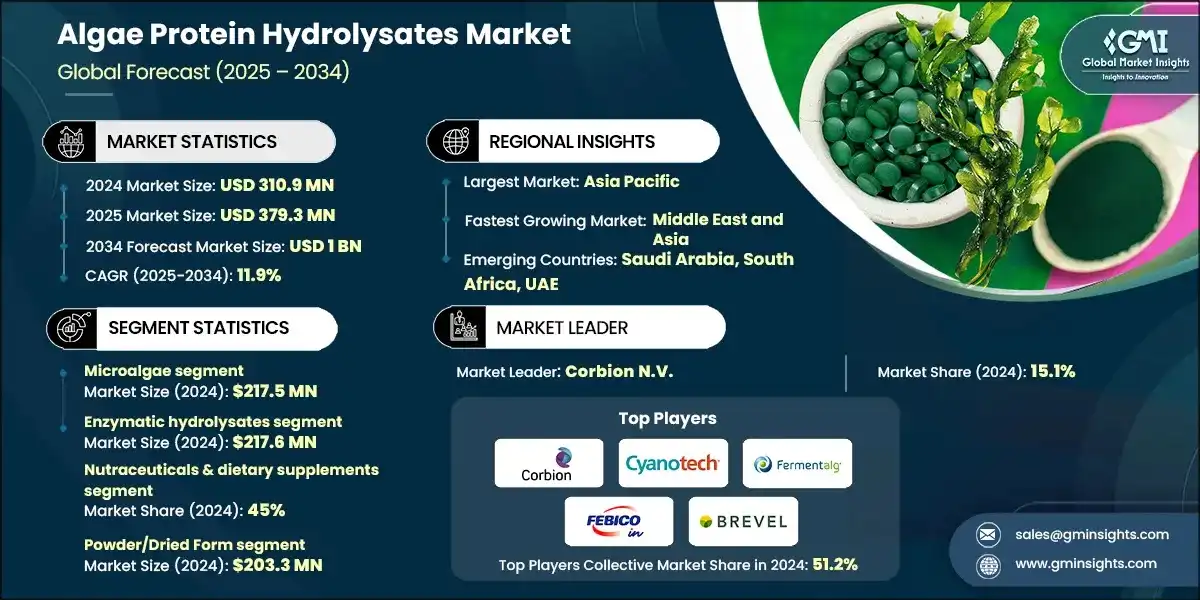
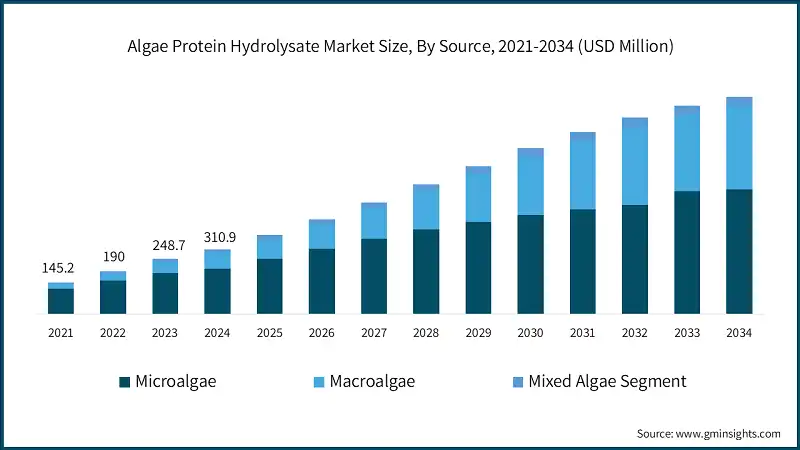
The global algae protein hydrolysates market was valued at USD 310.9 million in 2024. The market is expected to grow from USD 379.3 million in 2025 to USD 1 billion in 2034, at a CAGR of 11.9% according to the latest report published by Global Market Insights Inc.
Algae Protein Hydrolysates Market Key Takeaways
Market Size & Growth
- 2024 Market Size: USD 310.9 Million
- 2025 Market Size: USD 379.3 Million
- 2034 Forecast Market Size: USD 1 Billion
- CAGR (2025–2034): 11.9%
Regional Dominance
- Largest Market: Asia Pacific
- Fastest Growing Region: Middle East and Asia
Key Market Drivers
- Rising demand for sustainable proteins.
- Nutritional and functional advantages.
- Technological advancements in production.
Challenges
- High production and processing costs.
- Scalability and supply chain issues.
Opportunity
- Growth in functional foods and beverages.
- Expansion in cosmetics and personal care.
- Agricultural and aquafeed applications.
Key Players
- Market Leader: Corbion N.V. led with over 15.1% market share in 2024.
- Leading Players: Top 5 players in this market include Corbion N.V., Cyanotech Corporation, Fermentalg S.A., FEBICO (Far East Bio-Tec), Brevel Ltd., which collectively held a market share of 51.2% in 2024.
Get Market Insights & Growth Opportunities
- Bioactive compounds obtained from algae protein hydrolysates that can be further reduced into smaller peptides or individual amino acids by enzymatic hydrolysis. These hydrolysates have been extracted from either microalgae or macroalgae sources and are considered nutritionally valuable and possess greater solubility and digestibility than intact proteins.
- The production of algae protein hydrolysates has been completely transformed by advances in bioprocessing and enzymatic technologies. Current techniques using enzymatic hydrolysis optimized enzyme mixtures, refined parameters of reaction processes, and membrane filtration for improved yield and purity of peptides. To further enhance the production towards sustainability and cost-effectiveness, the use of bioreactor systems and proper optimization of microalgae cultivation have been supplemented with green extraction systems such as supercritical fluid extraction and ultrasound-assisted hydrolysis. All these new advances have maximized the quality and scalability of protein ingredients derived from algae for industrial applications.
- Algae protein hydrolysates are gaining attention because of their multifunctional benefits and contribution to sustainability. Algae can be grown on non-arable land using little freshwater and capturing carbon dioxide during the process.
- Hydrolysates not only serve as supplements of high-quality protein but also as bio-stimulants in agriculture to promote plant growth and resilience. Furthermore, their use in aquafeed is also expected to contribute to better growth of aquatic species, though with fewer negative effects on the environment than the traditional feed constituents.
To get key market trends
Algae Protein Hydrolysates Market Trends
- The plant-based diet and sustainable ingredients perspective are among the expanding demands being created in the market for protein hydrolysates derived from algae. Naturalness, renewability, and nutrient rich protein are attributes consumers are looking for in protein alternatives, thereby favouring the algae. This growing market also conforms to the global sustainability agenda and thus support long-term growth.
- New developments in enzymatic hydrolysis, membrane filtration, and bioreactor systems are leading to improved efficiency and increasing the scalability of algae protein hydrolysates production. Such technologies allow to produce products with more purity, great taste and lower cost. This means that producers are now able to manufacture high-end products for various industrial uses.
- The increasingly high investment from biotechnology companies, food manufacturers, and government agencies is accelerating a fast-paced research and commercialization effort in the algae protein hydrolysates market. Strategic partnerships and collaborations help in product development and regulatory compliance, as well as market penetration. This very collaborative approach is giving way to a more vibrant and innovative industry space.
- The application of algae protein hydrolysates in cosmetic agents and personal care products continues to increase, capitalizing on its antioxidant, moisturizing, and anti-aging properties. Many brands have therefore incorporated the products into their skin, hair, and beauty formulations, specifically to attract consumers who prefer these products in their formulations. This has opened new opportunities and diversified applications of proteins from algae beyond food and nutrition.
Algae Protein Hydrolysates Market Analysis
Learn more about the key segments shaping this market
Based on source, the market is segmented into microalgae, macroalgae and mixed algae segment. The microalgae hold the largest market value of USD 217.5 million in 2024.
- Microalgae hold the highest market value microalgae hold the highest value because they have a better nutritional profile and processing flexibility. Microalgae are highly regarded for their rich protein contents, essential amino acids, and bioactive peptides for applications in functional foods, dietary supplements, and cosmetics. These microalgae can be grown throughout the year with the minimal consumption of resources, making themselves highly appropriate about global demands for sustainable and high-efficiency sources of protein.
- Macroalgae are however, slowly diversifying into niche markets. They are gaining interest because of the presence of bioactive compounds for agricultural and aquaculture purposes. Mixed or hybrid algae hydrolysates are being marketed as a newer functional formulation to leverage both types of algae. With growing studies and advancing processing techniques, these segments potentially provide diversity and better nutritional specifications across industries.
The algae protein hydrolysates market by hydrolysis method is segmented into enzymatic hydrolysates, chemical hydrolysates, thermal hydrolysate and emerging technologies. The enzymatic hydrolysates hold the largest market value of USD 217.6 million in 2024.
- Enzymatic hydrolysis method leads the algae protein hydrolysates market, as it is very precise and efficient and maintains nutritional integrity in algal proteins. Enzymatic processes produce the best hydrolysates in terms of solubility, digestibility, and bioactivity that are prioritized in food, nutraceutical and cosmetic formulations. Besides being eco-friendly, the method generates very less amount of chemicals as waste, which is aligned with current emphasis on sustainable manufacturing practices.
- Chemical and thermal hydrolysis methods are cost-effective and suitable for industrial scale production but result in gradually losing nutritional and thus degrading the quality and have severe environmental impact. Emerging technologies are gaining attention because of their ability to enhance yield, reduce processing time, and minimize energy consumption.
Learn more about the key segments shaping this market
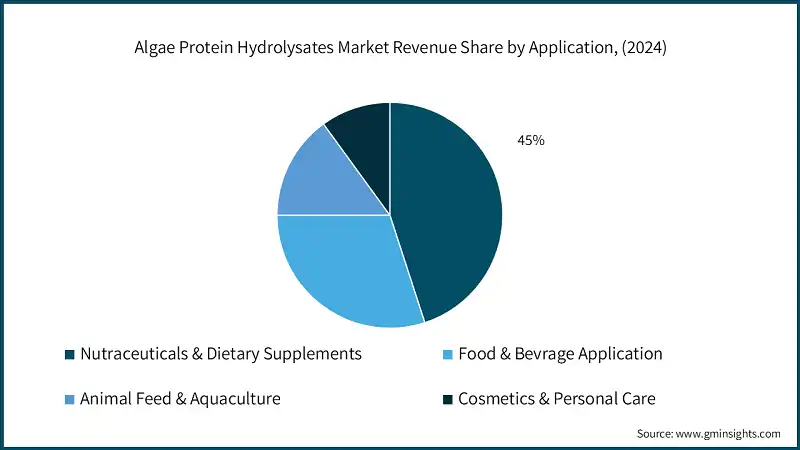
The algae protein hydrolysates market by application is segmented into nutraceuticals & dietary supplements, food & beverage application, animal feed & aquaculture and cosmetics & personal care. The nutraceuticals & dietary supplements hold the highest market share of 45% in 2024.
- The nutraceuticals and dietary supplements segment are the leading segment among other parts of the algae protein hydrolysates market, as it has been fuelled by consumers becoming aware of plant-based and functional proteins. These hydrolysates also consist of bioactive peptides and essential amino acids, and they are getting into energy supplements, protein powders, and other combinations aimed at boosting the immune system. The food and drink segment seems to be growing fast with the trend that many manufacturers are taking up algae-derived proteins in fortified foods, drinks, and functional snacks to give the market what its consumers have been asking for-clean label sustainability.
- The animal feed and aquaculture segment is steadily growing, supported by the demand for sustainable nutrient-dense feed alternatives for enhancing animal health and growth performance. The cosmetics and personal care segment are gaining momentum, with algae protein hydrolysates because of their antioxidant, moisturizing, and anti-aging properties.
Based on product from, the algae protein hydrolysates market is segmented into powder/ dried form, liquid form and encapsulated form. The Powder/Dried Form holds the highest market value of USD 203.3 million in 2024.
- The powder or dried form of algal protein hydrolysate dominates in terms of market due to its longer shelf life and formulation versatility. It has found application in numerous nutraceuticals, food and beverage, and animal feed applications due to easy blending with other components and stable properties. Liquid forms appear to be important in cosmeceuticals and personal care, as well as food and beverages requiring rapid solubility and incorporation.
- Encapsulated forms of algae protein hydrolysates constitute a niche, but rapidly emerging segment driven by stability, controlled release, and bioavailability of bioactive components relevant for nutraceuticals and functional foods of high value.
Looking for region specific data?
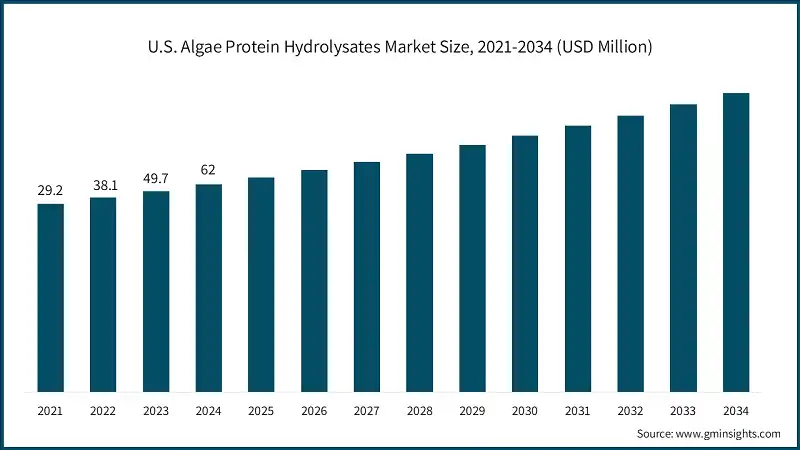
The U.S. algae protein hydrolysates market accounted for USD 62 million in 2024.
- North American markets are strongly driven by the U.S., where there is strong consumer demand for plant-based and alternative proteins, especially in functional foods and nutraceuticals. The United States has a highly developed regulation and an even larger consumer market for supplements and health-oriented products into which algae-based hydrolysates are being integrated. Canada and Mexico are also contributors through research investment and aquaculture-feeds innovation, allowing for a wide regional growth base.
The algae protein hydrolysates market in the Germany is expected to experience significant and promising growth from 2025 to 2034.
- This market growth is observed in European countries, especially Germany due to demand for sustainable, traceable, and eco-friendly protein sources. Germany is considered as a centre for nutrition, functional foods, and cosmetic applications of algae protein hydrolysates. It is here that strong regulatory frameworks and environmental initiatives encourage sustainable production practices from the prospect of valorisation of algal biomass. Furthermore, awareness about nutritional and health benefits of algae-based proteins is also growing across other European countries. This mix of consumer trends and regulatory support is steadily propping up the growth of the European market.
The algae protein hydrolysates market in China is expected to experience significant and promising growth from 2025 to 2034.
- The Asia-Pacific region, particularly China and India, is seeing tremendous growth for algae protein hydrolysates driven by urbanization, soaring disposable incomes, and shifting dietary habits toward protein-rich and functional foods. In this regard, extensive aquaculture and algae cultivation industries in China support industrial demand for algae protein hydrolysates, while fast-emerging nutraceuticals and health supplement markets in India fuel regional growth. Other factors supporting the acceptance of algae protein hydrolysates in this region are application in animal feed, increasing public awareness of health and wellness, and demand for high-quality nutrition.
UAE market is expected to experience significant and promising growth from 2025 to 2034.
- Algae protein hydrolysates market is growing in Middle Eastern and African nations due to the increased production from aquaculture and livestock farming. These two countries include the United Arab Emirates and South Africa. In the UAE, there is a surge in demand for high-end, sustainable ingredient treatments in human nutrition and pet food, whereas the latter focuses on the consumption of algae biomass and marine sources to make functional ingredients in protein. Some of the major drivers to demand are urbanization, health consciousness, and campaigns on sustainable protein sourcing. Government efforts towards food security correlate with ingredient traceability in the region, thus strengthening market development and acceptance by consumers.
Brazil algae protein hydrolysates market is expected to experience significant and promising growth from 2025 to 2034.
- In Latin America, algal protein hydrolysates is expanding due to increasing popularity as consumers seek diversity-rich ingredients catered by the growing health-conscious consumer base in the region and the increased demand for affordable sources of quality protein. Brazil is producing protein hydrolysates for both food and feed by focusing on the sustainable cultivation and bioprocessing of algae and Mexico focuses on export-oriented manufacturing of functional protein ingredients.
Algae Protein Hydrolysates Market Share
Algae Protein hydrolysates industry are moderately consolidated with players like Corbion N.V., Cyanotech Corporation, Fermentalg S.A., FEBICO (Far East Bio-Tec), Brevel Ltd. holding 51.2% market share and Corbion N.V. being the market leader holding the market share of 15.1% in 2024.
- Continuous investments in advanced technologies like enzymatic, thermal and chemical helps companies to provide competitive edged in the algae protein hydrolysates market.
- With a strong focus on producing high-quality and bioactive protein hydrolysates for application in food, feed, nutraceuticals, and pharmaceuticals, the innovations introduced in enzymatic processing, ultrafiltration and peptide fractionation enable producers to increase yield, maintain consistency, and customize functional properties to match different end-use requirements.
- Sustainability is the core driver for the development of competitive strategies and thus helps the competitors to maintain their position. The producers optimize their processes to minimize energy consumption, water usage and waste, while fisheries or byproducts are their sources of raw materials.
- Compliance with regulations, quality certifications, and traceable frameworks distinguish another factor for providing competitive advantage. Following the food safety standards, and international quality guidelines, caters trust the users in the global markets.
Algae Protein Hydrolysates Market Companies
Major players operating in the algae protein hydrolysates industry are:
- A4F AlgaFuel S.A.
- Algaia Ltd.
- Algalif Iceland ehf.
- Algama Foods
- Algosource Technologies SAS
- Brevel Ltd.
- Corbion N.V.
- Cyanotech Corporation
- FEBICO (Far East Bio-Tec Co., Ltd.)
- Fermentalg S.A.
- Fitoplancton Marino S.L.
- Microphyt SAS
- Necton S.A.
- Ocean Rainforest Sp/F
- Solar Foods Oy
Corbion N.V. is an Amsterdam-based, global business pioneering sustainable ingredients. It has developed its proprietary technology platform to produce microalgae via closed fermentation for use all around the world. The brand focuses on these high-performance sustainable ingredients that encapsulate algae-derived omega-3s as well as bio-active lipids replacements for marine-based components, thereby enabling traceable, low-impact production.
Cyanotech Corporation cultivates microalgae in clean, unspoiled nature in Hawaii while specializing in high-value nutritional products like Spirulina and astaxanthin. Their mission delivers whole health to people with full priority on the stewardship of the environment, reproduction of grow systems, and recognizable content in supplements for the nutrition of men.
Fermentalg S.A. based in France that develops bio-solutions from aquatic microorganisms, including microalgae, for applications in nutrition and health as well as environment. Its portfolio offers proteins, lipids, and natural colorants, and is being built to offer sustainable alternatives to conventional feeding and nutrient sources.
FEBICO (Far East Bio-Tec) has been growing microalgae (especially spirulina and chlorella) for decades. Today, it benefits from a robust reputation in offering raw materials and finished products, as well as supplements from certified organic, clean-environment cultivations, and broad applications in nutraceuticals, cosmetics, and health supplements.
Brevel Ltd. is an innovative Israeli food-tech company that develops microalgal protein for human nutrition. It uses a unique combined light/fermentation platform to generate flavour-neutral, functional algae protein for use in food and beverage applications. This company is focusing on next-generation sustainable protein as a plant-based alternative.
Algae Protein Hydrolysates Market Report Attributes
| Key Takeaway | Details |
|---|---|
| Market Size & Growth | |
| Base Year | 2024 |
| Market Size in 2024 | USD 310.9 Million |
| Market Size in 2025 | USD 379.3 Million |
| Forecast Period 2025 - 2034 CAGR | 11.9% |
| Market Size in 2034 | USD 1 Billion |
| Key Market Trends | |
| Drivers | Impact |
| Rising demand for sustainable proteins | The global shift toward plant-based and eco-friendly nutrition is driving the demand for algae protein hydrolysates. They offer a renewable and ethical alternative to animal-derived proteins. |
| Nutritional and functional advantages | Algae protein hydrolysates are rich in essential amino acids, highly digestible, and possess antioxidant and anti-inflammatory properties. These benefits increase their use in food, nutraceutical, and cosmetic applications. |
| Technological advancements in production | Innovations in enzymatic hydrolysis and green extraction technologies have improved yield, purity, and efficiency. These advancements make large-scale production more feasible and cost-effective. |
| Pitfalls & Challenges | Impact |
| High production and processing costs | The need for specialized enzymes, reactors, and energy-intensive processes makes production costly, limiting price competitiveness with traditional protein sources. |
| Scalability and supply chain issues | Producing uniform algal biomass at large scales is technically complex. Maintaining steady supply chains and optimizing yields are ongoing barriers to expansion. |
| Opportunities: | Impact |
| Growth in functional foods and beverages | The rising demand for healthy and protein-fortified foods creates opportunities to use algae hydrolysates in snacks, drinks, and supplements. Their bioactive properties enhance nutritional value. |
| Expansion in cosmetics and personal care | Due to their antioxidant and moisturizing effects, algae protein hydrolysates are being explored as natural ingredients in skincare, haircare, and anti-aging products. |
| Agricultural and aquafeed applications | Algae hydrolysates can act as bio-stimulants, improving plant growth and soil health, while serving as sustainable protein sources in aquafeed formulations. |
| Market Leaders (2024) | |
| Market Leaders |
15.1% market share |
| Top Players |
Collective market share of 51.2% in 2024 |
| Competitive Edge |
|
| Regional Insights | |
| Largest Market | Asia Pacific |
| Fastest growing market | Middle East and Asia |
| Emerging country | Saudi Arabia, South Africa, UAE |
| Future outlook |
|
What are the growth opportunities in this market?
Algae Protein Hydrolysate Industry News
- In October 2025, Nutrition from Water (NXW), a New Zealand company, has partnered with SIG, an advanced packaging solutions provider, for the manufacture of beverages based on algae-derived protein with aseptic packaging technology. The collaboration will bring nutritious, protein-rich beverages to as many consumers as possible, from basic to enhanced premium options. The Marine Whey range of NXW contains highly digestible non-GMO proteins and fibres that can replace whey. Its aseptic technology is also instrumental in bringing shelf life without refrigeration, thus advancing rapid innovation and global dissemination of sustainable algae-based nutrition solutions.
- In March 2023, JRS Group based in Germany has acquired Algaia SA, a French supplier of biomarine ingredients to cater to the fast-increasing demand for seaweed products. Algaia, which is based in Brittany, manufactures seaweed extracts and hydrocolloids for food and other industries. The acquisition, including Algaia's R&D facility in Saint-Lô and production site in Lannilis, boosts JRS's existing alginate business and supports sustainable harvesting methods in France.
The algae protein hydrolysates market research report includes an in-depth coverage of the industry with estimates and forecast in terms of revenue in USD Million and volume in terms of kilo tons from 2021-2034 for the following segments:
Market, By Source
- Microalgae-derived hydrolysates
- Spirulina (Arthrospira platensis) hydrolysates
- Chlorella vulgaris hydrolysates
- Nannochloropsis hydrolysates
- Haematococcus pluvialis hydrolysates
- Other microalgae species
- Macroalgae-derived hydrolysates
- Brown algae hydrolysates
- Red algae hydrolysates
- Green algae hydrolysates
- Mixed algae hydrolysates
- Micro-macroalgae combinations
- Multi-species blends
Market, By Hydrolysis Method
- Enzymatic hydrolysates
- Alcalase-based hydrolysis
- Pepsin-based hydrolysis
- Trypsin-based hydrolysis
- Neutrase & other proteases
- Multi-enzyme systems
- Chemical hydrolysates
- Acid hydrolysis
- Alkaline hydrolysis
- Combined chemical processes
- Thermal/physical hydrolysates
- High temperature hydrolysis
- Pressure-assisted hydrolysis
- Ultrasonic-assisted hydrolysis
- Microwave-assisted hydrolysis
- Emerging hydrolysis technologies
- Pulsed electric field (PEF) processing
- Supercritical fluid extraction
- Deep eutectic solvent systems
Market, By Application
- Nutraceutical & dietary supplements
- Capsules & tablets
- Powder formulations
- Liquid supplements
- Specialized health products
- Food & beverage applications
- Functional foods & fortified products
- Protein supplements & sports nutrition
- Beverages & liquid formulations
- Bakery & confectionery applications
- Dairy alternatives & plant-based products
- Animal feed & aquaculture
- Aquaculture feed additives
- Livestock feed supplements
- Pet food applications
- Poultry & swine nutrition
- Cosmetics & personal care
- Anti-aging formulations
- Skin conditioning products
- Hair care applications
- Functional cosmetics
Market, By Product Form
- Powder/dried hydrolysates
- Spray-dried powders
- Freeze-dried products
- Drum-dried formulations
- Liquid hydrolysates
- Aqueous solutions
- Concentrated formulations
- Stabilized liquid systems
- Encapsulated/stabilized forms
- Microencapsulated products
- Tablet & compressed forms
- Coated & protected systems
The above information is provided for the following regions and countries:
- North America
- U.S.
- Canada
- Europe
- Germany
- UK
- France
- Spain
- Italy
- Rest of Europe
- Asia Pacific
- China
- India
- Japan
- Australia
- South Korea
- Rest of Asia Pacific
- Latin America
- Brazil
- Mexico
- Argentina
- Rest of Latin America
- Middle East and Africa
- Saudi Arabia
- South Africa
- UAE
- Rest of Middle East & Africa
Frequently Asked Question(FAQ) :
What is the market size of the algae protein hydrolysates in 2024?
The market size was USD 310.9 million in 2024, with a CAGR of 11.9% expected through 2034 driven by rising demand for renewable, plant-based, and eco-friendly protein alternatives.
What is the projected value of the algae protein hydrolysates market by 2034?
The algae protein hydrolysates market is expected to reach USD 1 billion by 2034, propelled by technological advancements in production, nutritional and functional advantages, and rising demand for sustainable proteins.
What is the current algae protein hydrolysates market size in 2025?
The market size is projected to reach USD 379.3 million in 2025.
How much revenue did the microalgae segment generate in 2024?
Microalgae segment generated USD 217.5 million in 2024, leading the source segment due to superior nutritional profile, rich protein content, and processing flexibility.
What was the valuation of enzymatic hydrolysates segment in 2024?
Enzymatic hydrolysates held the largest market value of USD 217.6 million in 2024, dominating due to precision, efficiency, and ability to maintain nutritional integrity.
Which region leads the algae protein hydrolysates market?
The U.S. algae protein hydrolysates market reached USD 62 million in 2024, driven by strong regional demand for plant-based and alternative proteins in functional foods and nutraceuticals.
What are the upcoming trends in the algae protein hydrolysates market?
Key trends include rising demand for plant-based and sustainable ingredients, advancements in enzymatic hydrolysis and bioreactor systems, increasing investment from biotechnology companies, and expanding applications in cosmetics and personal care products.
Who are the key players in the algae protein hydrolysates market?
Key players include A4F AlgaFuel S.A., Algaia Ltd., Algalif Iceland ehf., Algama Foods, Algosource Technologies SAS, Brevel Ltd., Corbion N.V., Cyanotech Corporation, FEBICO (Far East Bio-Tec Co., Ltd.), Fermentalg S.A., Fitoplancton Marino S.L., Microphyt SAS, Necton S.A., Ocean Rainforest Sp/F, and Solar Foods Oy.
Algae Protein Hydrolysates Market Scope
Related Reports