Market Size - By Product (Cardiac Monitoring Devices, Blood Pressure Monitoring Devices, Neurological Monitoring Devices, Respiratory Monitoring Devices, Multiparameter Monitoring Devices, Blood Glucose Monitoring Devices, Fetal and Neonatal Monitoring Devices, Sleep Monitoring Devices, Other Monitoring Devices), By Application (Cardiovascular Diseases, Cancer, Diabetes, Neurological Disorders, Infectious Diseases, Respiratory Diseases, Other Applications), and By End Use (Home-Care Settings, Long-Term Care, Other End Users), Growth Forecast. The market forecasts are provided in terms of revenue (USD Million).
Report ID: GMI5563
|
Published Date: April 2026
|
Report Format: PDF
Download Free PDF
Remote Patient Monitoring Devices Market Size
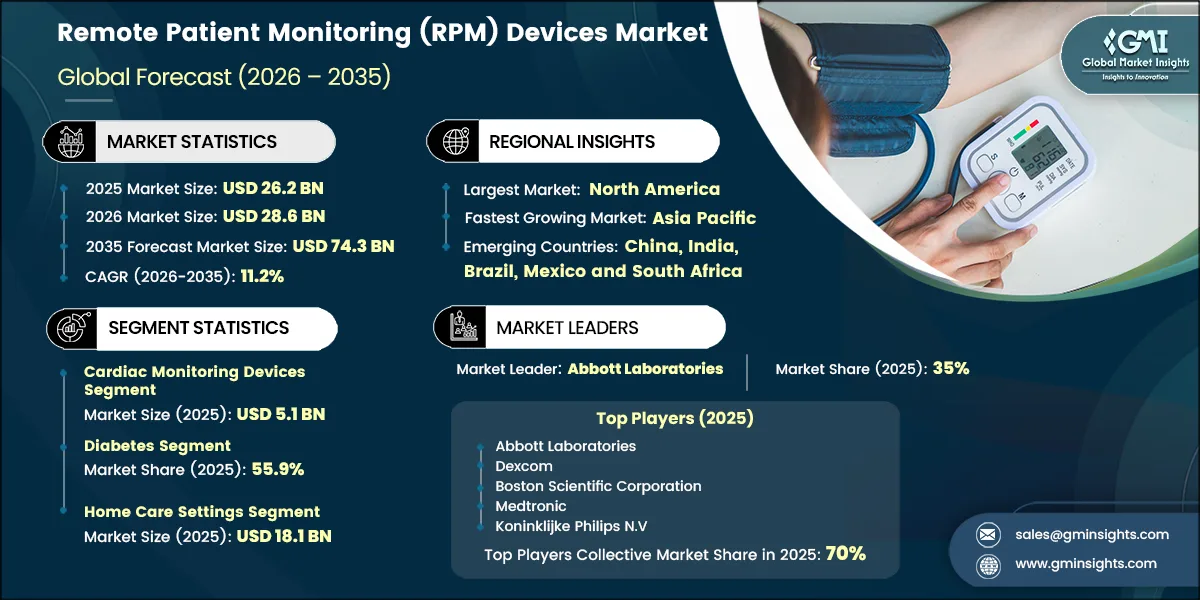
The remote patient monitoring devices market size was valued at USD 26.2 billion in 2025. The market is expected to grow from USD 28.6 billion in 2026 to USD 74.3 billion in 2035, growing at a CAGR of 11.2% from 2026 to 2035, according to the latest report published by Global Market Insights Inc.
The market is driven by the rising incidence of chronic diseases across the globe, growing disposable income, and healthcare expenditure in emerging countries, technological advancements in developed nations, and the increasing adoption of remote patient monitoring devices.
The increasing prevalence of chronic diseases, such as diabetes, cardiovascular diseases, cancer, and chronic kidney diseases (CKD), is a significant factor driving market growth. For instance, in 2021, according to data from the World Health Organization (WHO), non-communicable diseases were responsible for 43 million deaths worldwide. Among these, cardiovascular diseases accounted for at least 19 million deaths, followed by cancer with 10 million and chronic respiratory diseases with 4 million. These alarming statistics highlight the growing need for remote patient monitoring devices to support early detection, continuous management, and timely intervention in managing chronic disorders such as cardiovascular conditions.
Furthermore, the rising adoption of remote patient monitoring devices is driven by government-backed initiatives promoting digital health transformation, which serves as a substantial catalyst for market growth. RPM devices enable real-time health data collection, allowing for early detection of irregularities and timely interventions. For instance, according to the National Institute of Health (NIH) report, in the U.S., between March 2020 and 2021, the use of RPM devices grew fourfold among individuals. The usage of RPM devices surged during the COVID-19 pandemic across the U.S. Thus, growing disposable income and healthcare expenditure in emerging countries, along with rising technological advancements in developed nations, are key factors contributing to the growth of the market.
Remote patient monitoring (RPM) devices are technologically advanced tools that allow for the continuous, real-time tracking of a patient’s health beyond traditional clinical methods. These devices range from wearable sensors to implantable and handheld instruments, which monitor numerous physiological parameters such as heart rate, blood pressure, and blood glucose levels. By using RPM devices, data is transferred wirelessly to healthcare providers, enabling real-time health assessments, increasing patient engagement, and supporting value-based healthcare models.
Remote Patient Monitoring Devices Market Trends
Technological advancements in remote patient monitoring (RPM) devices are transforming healthcare in developing countries. Innovations in artificial intelligence in healthcare, which are estimated to reach USD 281.2 billion by 2032, along with developments in wearable technology, sensor accuracy, and telehealth integration, have enabled more effective and personalized monitoring solutions.
Modern RPM devices integrate the Internet of Things (IoT) and artificial intelligence (AI). These technologies enable real-time data collection, analysis, and automated decision-making. AI algorithms analyze data trends to predict potential health issues, improving early diagnosis and personalized care.
For example, in January 2024, Blue Spark Technologies launched its first multi-sensor remote patient monitoring platform, VitalTraq, which uses AI-driven contactless technologies. It utilizes a 30 to 60-second selfie scan, allowing patients, clinicians, and researchers to collect digital measurements, including heart rate variability, blood pressure, and respiratory rate vital signs, in a single contactless manner. This innovation set a new standard in patient-centered vital sign monitoring.
Additionally, innovations in wearable technology, including smartwatches and fitness trackers, have enhanced RPM capabilities. These devices continuously monitor vital signs such as heart rate, blood pressure, and glucose levels, providing valuable data for both patients and healthcare professionals.
For instance, in June 2024, Prevounce Health launched Pylo GL1-LTE, a cellular-connected blood glucose meter designed for use in RPM programs for diabetes management.
Furthermore, advancements in biosensor technology have resulted in more accurate and reliable monitoring devices. Modern sensors can track a wide range of physiological parameters, such as blood oxygen levels, respiratory rates, and even sleep patterns.
Remote Patient Monitoring Devices Market Analysis
Based on product, the market is divided into cardiac monitoring devices, blood pressure monitors, neurological monitoring devices, respiratory monitoring devices,multiparameter monitoring devices, blood glucose monitoring devices, fetal and neonatal monitoring devices, sleep monitoring devices, and other monitoring devices. The cardiac monitoring devices segment held revenues of USD 5.1 billion in the year 2025.
Rapid technological advancements are driving stronger demand for cardiac remote patient monitoring devices, enabling more accurate, reliable, and continuous monitoring of cardiac health outside clinical settings. The integration of artificial intelligence and next-generation sensor technologies has significantly enhanced the precision of these devices in capturing critical cardiac parameters.
For example, Medtronic’s LINQ II insertable cardiac monitor leverages the AccuRhythm AI algorithm to accurately identify and classify arrhythmias, supporting timely diagnosis and improved remote cardiac surveillance.
Similarly, Abbott’s Confirm Rx insertable cardiac monitor incorporates SharpSense technology and Bluetooth-based connectivity, enabling seamless wireless transmission of cardiac data to smartphones and allowing clinicians to access near real-time patient insights.
Continuous remote monitoring also supports early detection of conditions such as atrial fibrillation, irregular heart rhythms, and potential cardiac events, improving treatment outcomes and reducing complication risks, thereby accelerating market growth.
Based on application, the remote patient monitoring devices market is bifurcated into cardiovascular diseases, cancer, diabetes, neurological disorders, infectious diseases respiratory diseases and other applications. The diabetes segment dominated the market with 55.9% market share in 2025.
The increasing prevalence of diabetes has significantly created the demand for remote patient monitoring devices. For instance, according to the International Diabetes Federation (IDF), in 2024, approximately 589 million adults aged 20–79 years were living with diabetes worldwide. This number is projected to rise significantly, reaching an estimated 853 million by 2050, underscoring the growing global burden of the disease.
Further, diabetes management requires continuous monitoring of key health metrics, including blood glucose levels, HbA1c, and insulin administration. Thus, to tackle this, RPM devices provide continuous real-time monitoring, allowing for better glucose control.
Additionally, RPM devices help in the early detection of potential complications associated with diabetes, such as hypoglycemia, hyperglycemia, and others. This early detection permits timely intervention, potentially preventing severe outcomes and hospitalizations, further contributing to the growth of the market.
Based on end use, the remote patient monitoring devices market is bifurcated into home-care settings, long-term care, and other end users. The home care settings segment accounted for USD 18.1 billion in 2025.
Home care environments are increasingly adopting remote patient monitoring devices to support continuous health assessment, early risk identification, and routine management of chronic conditions outside hospital settings. Patients can monitor vital parameters such as cardiac activity, glucose levels, blood pressure, and other physiological indicators at home, reducing dependency on frequent clinical visits.
The growing transition toward home-based and decentralized care models is significantly boosting demand for remote patient monitoring devices, particularly for chronic disease management, post-discharge follow-up, and aging population care.
Improvements in device usability, connected platforms, and automated data analytics have made remote patient monitoring solutions well-suited for non-clinical users in homecare settings. Features such as remote clinician access, algorithm-driven alerts, and telehealth connectivity increase patient confidence, adherence, and effectiveness of home-based monitoring programs.
North America Remote Patient Monitoring Devices Market
The North America region accounted for 42.3% of the global remote patient monitoring devices market in 2025, driven by the region’s advanced healthcare infrastructure and technological advancements.
The U.S. market size reached USD 10.2 billion in 2025, growing from USD 9.4 billion in 2024.
The growth of the remote patient monitoring devices market in the U.S. is strongly supported by high healthcare spending capacity and widespread access to advanced medical technology.
The rising incidence of diabetes significantly contributes to the market's notable expansion. For instance, according to the 2023 National Diabetes Statistics Report by the Centers for Disease Control and Prevention (CDC), more than 40 million Americans, approximately 12% of the population, are living with diabetes, including over 2 million individuals with type 1 diabetes.
Additionally, remote patient monitoring devices, such as smart blood pressure monitors, remote ECG devices, and pulse oximeters, facilitate continuous monitoring of these chronic conditions in real time, thereby propelling market growth.
Europe Remote Patient Monitoring Devices Market
The Europe market accounted for USD 7 billion in 2025 and is anticipated to show lucrative growth over the forecast period.
The rising prevalence of chronic diseases in the region, coupled with increasing government initiatives to enhance healthcare infrastructure, is anticipated to spur the growth of the market.
Moreover, advancements in remote patient monitoring devices, such as wearable sensors, blood glucose monitoring devices, and other devices for accurate diagnosis, will boost the growth of the remote patient monitoring devices market in the Europe region.
The presence of key market players in the region reinforces Europe’s strength in the market. These companies are actively participating in innovation through the development of innovative solutions, thereby aiding market growth.
The market in the Germany is expected to experience significant and promising growth from 2026 to 2035.
The growth of the remote patient monitoring devices market in this country is anticipated to be bolstered by the rising cases of chronic conditions such as cardiovascular diseases, hypertension, and diabetes in Germany.
For instance, according to the International Diabetes Federation (IDF) estimates, 6,199,900 people in Germany were living with diabetes in 2021. Additionally, nearly 10% of the adult population had a prevalence of diabetes.
Further, the growth of the remote patient monitoring devices industry in this region is anticipated to be strengthened by the German government’s commitment to tackling chronic conditions via initiatives such as public health campaigns and guidelines promoting a healthier lifestyle, which is contributing to market growth.
Asia Pacific Remote Patient Monitoring Devices Market
The Asia-Pacific region is projected to show lucrative growth of about 11.6% during the forecast period.
The remote patient monitoring devices industry in the Asia Pacific region is expanding rapidly due to the growing burden of chronic diseases, rising health awareness, and continuous advancements in remote patient monitoring devices.
Countries such as China, India, and Japan are adopting remote patient monitoring technology, driven by the growing demand for advanced diagnostic solutions and expanding access to healthcare services.
Additionally, rapid growth in the number of hospitals and diagnostic centers, along with government policies aimed at improving diagnostic capabilities, is further contributing to the growth of the market in the region.
The China market is anticipated to witness lucrative growth during the forecast period.
The country has one of the fastest-aging populations, which necessitates frequent health monitoring.
For instance, as per estimates from the World Health Organization in 2019, approximately 254 million people aged 65 and above were residing in the country. This number is projected to rise significantly, with 402 million people expected to be over the age of 60 by 2040.
Individuals in this age group are at high risk of developing chronic health conditions such as diabetes, cardiovascular diseases, cancer, and neurological disorders, among others. This, necessitates the need for advanced remote patient monitoring devices that enable continuous health monitoring and early detection of complications, support proactive disease management, and significantly contribute to the growth of the market.
Latin America Remote Patient Monitoring Devices Market
The rising prevalence of chronic diseases such as cancer, cardiovascular diseases, neurological disorders, and others is contributing to the growth of the market in the country.
For instance, according to the Brazilian National Health Survey in 2019, there were approximately 12.95 million individuals diagnosed with cardiovascular disease (CVD) in Brazil, with 51% of the affected population being male.
Additionally, growing awareness about the benefits of early disease detection and prevention, driven by public health initiatives and education campaigns, is encouraging individuals to undergo health check-ups. This trend is expected to foster market growth.
Middle East and Africa Remote Patient Monitoring Devices Market
The market in Saudi Arabia is expected to experience significant and promising growth from 2026 to 2035.
The government of Saudi Arabia is significantly investing in healthcare infrastructure to incorporate advanced medical devices, such as remote patient monitoring devices, within hospital settings to provide the utmost care to individuals suffering from chronic conditions in the country.
According to the Saudi Ministry of Health, in 2023, the government allocated around USD 50.4 billion for healthcare infrastructure and social development.
Moreover, rising awareness regarding the benefits of RPM devices and physical fitness across various age groups in the country is further propelling market growth.
Remote Patient Monitoring Devices Market Share
The top five players in the global remote patient monitoring devices industry are Abbott Laboratories, Dexcom, Boston Scientific Corporation, Koninklijke Philips N.V., and Medtronic. Together, they account for 70% of the overall market revenue. These companies maintain their competitive strength through continuous innovation in connected monitoring technologies, such as continuous glucose monitoring, remote cardiac rhythm management, multiparameter vital sign monitoring, and long-term physiological data capture. This aligns with the rising demand for non-invasive and remote patient care solutions.
Manufacturers operating in the remote patient monitoring devices market are increasingly focusing on cost-efficiency and geographic expansion strategies, particularly in emerging and underpenetrated regions. Key initiatives include localized production, modular and scalable device platforms, tailored offerings for regional healthcare needs, and targeted training programs for clinicians and patients. These efforts aim to improve adoption rates and optimize long-term device utilization.
Emerging trends shaping the remote patient monitoring devices market include the incorporation of artificial intelligence, real-time biosignal interpretation, interoperable data standards, and cloud-enabled monitoring platforms. The growing emphasis on continuous monitoring, long-term patient data analysis, and personalized remote care supported by AI-driven insights and seamless integration with healthcare systems is driving adoption across hospitals, homecare environments, and structured RPM programs, supporting sustained market expansion.
Some of the eminent market participants operating in the remote patient monitoring devices industry include:
Abbott Laboratories
Baxter International
Boston Scientific Corporation
BIOTRONIK SE & Co. KG
DexCom
F. Hoffmann-La Roche
GE Healthcare
Johnson & Johnson
Koninklijke Philips
Medtronic
OMRON Corporation
Sotera Wireless
VitalConnect
Abbott Laboratories
Abbott Laboratories holds a leading position in the remote patient monitoring devices market through its strong portfolio of continuous glucose monitoring(CGM) and biosensing technologies.
Dexcom
Dexcom maintains a robust competitive position in the remote patient monitoring devices market through continuous investment in advanced biosensor innovation, miniaturized electronics, and real‑time data analytics.
Boston Scientific Corporation
Boston Scientific Corporation has strong product portfolio leading to larger adoption and significant market expansion. Boston specializes in implantable cardiac monitoring solutions, such as LATITUDE, a remote patient monitoring system.
Remote Patient Monitoring Devices Industry News
In October 2023, VitalConnect partnered with Fifth Eye Inc., to enhance its remote patient monitoring solutions by integrating Fifth Eye’s AHI system, the only FDA cleared software used to detect hemodynamic instability before the vital signs indicate deterioration. Thus, this partnership strengthened the company’s position in the industry.
In August 2022, Medtronic plc formed a strategic partnership with BioIntelliSense for exclusive U.S. distribution rights of the BioButton wearable, supporting continuous, connected monitoring. This partnership increased Medtronic's remote monitoring capabilities and enhanced its market presence.
The remote patient monitoring devices market research report includes an in-depth coverage of the industry with estimates and forecast in terms of revenue in USD Million from 2022 – 2035 for the following segments:
Market, By Product
Cardiac monitoring devices
Blood pressure monitoring devices
Neurological monitoring devices
Respiratory monitoring devices
Multiparameter monitoring devices
Blood glucose monitoring devices
Fetal and neonatal monitoring devices
Sleep monitoring devices
Other monitoring devices
Market, By Application
Cardiovascular diseases
Cancer
Diabetes
Neurological disorders
Infectious diseases
Respiratory diseases
Other applications
Market, By End Use
Home-care settings
Long-term care
Other end users
The above information is provided for the following regions and countries:
1.7.1.1 Mathematical impact of growth parameters on forecast
1.8 Research transparency addendum
1.8.1 Source attribution framework
1.8.2 Quality assurance metrics
1.8.3 Our commitment to trust
Chapter 2 Executive Summary
2.1 Industry 360° synopsis
2.1.1 Key market trends
2.1.2 Product trends
2.1.3 Application trends
2.1.4 End use trends
2.1.5 Regional trends
2.2 CXO perspectives: Strategic imperatives
Chapter 3 Industry Insights
3.1 Industry ecosystem analysis
3.2 Industry impact forces
3.2.1 Growth drivers
3.2.1.1 Rising incidence of chronic diseases across the globe
3.2.1.2 Growing disposable income and healthcare expenditure in emerging countries
3.2.1.3 Technological advancement in developed nations
3.2.1.4 Growing adoption of remote patient monitoring devices
3.2.2 Industry pitfalls and challenges
3.2.2.1 High cost of devices
3.2.2.2 Stringent regulatory framework
3.2.3 Market opportunity
3.2.3.1 Increasing adoption of AI-powered predictive monitoring tools
3.2.3.2 Emergence of wearable biosensors for continuous, real-time health tracking
3.3 Growth potential analysis
3.4 Regulatory landscape (Driven by Primary Research)
3.4.1 North America
3.4.2 Europe
3.4.3 Asia Pacific
3.5 Technological landscape (Driven by Primary Research)
3.5.1 Current technologies
3.5.1.1 Connected vital signs monitoring devices
3.5.1.2 Bluetooth and cellular enabled RPM devices
3.5.1.3 Cloud based monitoring platforms and clinical dashboards
3.5.1.4 Telehealth integrated rpm solutions
3.5.2 Emerging technologies
3.5.2.1 AI powered predictive monitoring and clinical decision support
3.5.2.2 Wearable biosensors and skin-integrated monitoring patches
3.5.2.3 Multi parameter monitoring wearables
3.5.2.4 Interoperable RPM ecosystems with standardized data protocols
3.6 Future market trends (Driven by Primary Research)
3.7 Patent analysis (Driven by Primary Research)
3.8 Impact of AI and Generative AI on the market (Driven by Primary Research)
3.9 Porter’s analysis
3.10 PESTEL analysis
Chapter 4 Competitive Landscape, 2025
4.1 Introduction
4.2 Company market share analysis
4.3 Company matrix analysis
4.4 Competitive analysis of major market players
4.5 Competitive positioning matrix
4.6 Key developments
4.6.1 Merger and acquisition
4.6.2 Partnership and collaboration
4.6.3 New product launches
4.6.4 Expansion plans
Chapter 5 Market Estimates and Forecast, By Product, 2022 – 2035 ($ Mn)
5.1 Key trends
5.2 Cardiac monitoring devices
5.3 Blood pressure monitoring devices
5.4 Neurological monitoring devices
5.5 Respiratory monitoring devices
5.6 Multiparameter monitoring devices
5.7 Blood glucose monitoring devices
5.8 Fetal and neonatal monitoring devices
5.9 Sleep monitoring devices
5.10 Other products
Chapter 6 Market Estimates and Forecast, By Application, 2022 – 2035 ($ Mn)
6.1 Key trends
6.2 Cardiovascular diseases
6.3 Cancer
6.4 Diabetes
6.5 Neurological disorders
6.6 Infectious diseases
6.7 Respiratory diseases
6.8 Other applications
Chapter 7 Market Estimates and Forecast, By End Use, 2022 – 2035 ($ Mn)
7.1 Key trends
7.2 Home-care settings
7.3 Long-term care
7.4 Other end users
Chapter 8 Market Estimates and Forecast, By Region, 2022 – 2035 ($ Mn)
8.1 Key trends
8.2 North America
8.2.1 U.S.
8.2.2 Canada
8.3 Europe
8.3.1 Germany
8.3.2 UK
8.3.3 France
8.3.4 Spain
8.3.5 Italy
8.3.6 Netherlands
8.4 Asia Pacific
8.4.1 China
8.4.2 Japan
8.4.3 India
8.4.4 Australia
8.4.5 South Korea
8.5 Latin America
8.5.1 Brazil
8.5.2 Mexico
8.5.3 Argentina
8.6 Middle East and Africa
8.6.1 South Africa
8.6.2 Saudi Arabia
8.6.3 UAE
Chapter 9 Company Profiles
9.1 Abbott Laboratories
9.2 Baxter International
9.3 Boston Scientific Corporation
9.4 BIOTRONIK SE & Co. KG
9.5 DexCom
9.6 F. Hoffmann-La Roche
9.7 GE Healthcare
9.8 Johnson & Johnson
9.9 Koninklijke Philips
9.10 Medtronic
9.11 OMRON Corporation
9.12 Sotera Wireless
9.13 VitalConnect
Don't see your key competitors?
The companies listed in this report are a curated selection - not the full competitive universe.
Our market revenue calculations use a bottom-up methodology that accounts for all players across all regions - including manufacturers, distributors, and specialists not individually profiled. The profiles section spotlights strategically significant players; it does not define the scope of our market sizing.
Your competitive landscape may also include
Regional or domestic-only leaders not in the global top tier
Distributors and channel partners who control market access
Emerging disruptors, startups, or adjacent-industry entrants
Niche players focused on a specific application or end-use
Free customization - up to 20% of report value
Need specific data? Request customization and get the insights tailored to your exact requirements.
Authors: Monali Tayade, Jignesh Rawal
For inquiries regarding discounts, bulk purchases, or customization requests, please contact us at[email protected]



Remote Patient Monitoring Devices Market Size
The remote patient monitoring devices market size was valued at USD 26.2 billion in 2025. The market is expected to grow from USD 28.6 billion in 2026 to USD 74.3 billion in 2035, growing at a CAGR of 11.2% from 2026 to 2035, according to the latest report published by Global Market Insights Inc.
The market is driven by the rising incidence of chronic diseases across the globe, growing disposable income, and healthcare expenditure in emerging countries, technological advancements in developed nations, and the increasing adoption of remote patient monitoring devices.
The increasing prevalence of chronic diseases, such as diabetes, cardiovascular diseases, cancer, and chronic kidney diseases (CKD), is a significant factor driving market growth. For instance, in 2021, according to data from the World Health Organization (WHO), non-communicable diseases were responsible for 43 million deaths worldwide. Among these, cardiovascular diseases accounted for at least 19 million deaths, followed by cancer with 10 million and chronic respiratory diseases with 4 million. These alarming statistics highlight the growing need for remote patient monitoring devices to support early detection, continuous management, and timely intervention in managing chronic disorders such as cardiovascular conditions.
Furthermore, the rising adoption of remote patient monitoring devices is driven by government-backed initiatives promoting digital health transformation, which serves as a substantial catalyst for market growth. RPM devices enable real-time health data collection, allowing for early detection of irregularities and timely interventions. For instance, according to the National Institute of Health (NIH) report, in the U.S., between March 2020 and 2021, the use of RPM devices grew fourfold among individuals. The usage of RPM devices surged during the COVID-19 pandemic across the U.S. Thus, growing disposable income and healthcare expenditure in emerging countries, along with rising technological advancements in developed nations, are key factors contributing to the growth of the market.
Remote patient monitoring (RPM) devices are technologically advanced tools that allow for the continuous, real-time tracking of a patient’s health beyond traditional clinical methods. These devices range from wearable sensors to implantable and handheld instruments, which monitor numerous physiological parameters such as heart rate, blood pressure, and blood glucose levels. By using RPM devices, data is transferred wirelessly to healthcare providers, enabling real-time health assessments, increasing patient engagement, and supporting value-based healthcare models.
Remote Patient Monitoring Devices Market Trends
Remote Patient Monitoring Devices Market Analysis
Based on product, the market is divided into cardiac monitoring devices, blood pressure monitors, neurological monitoring devices, respiratory monitoring devices, multiparameter monitoring devices, blood glucose monitoring devices, fetal and neonatal monitoring devices, sleep monitoring devices, and other monitoring devices. The cardiac monitoring devices segment held revenues of USD 5.1 billion in the year 2025.
Based on application, the remote patient monitoring devices market is bifurcated into cardiovascular diseases, cancer, diabetes, neurological disorders, infectious diseases respiratory diseases and other applications. The diabetes segment dominated the market with 55.9% market share in 2025.
Based on end use, the remote patient monitoring devices market is bifurcated into home-care settings, long-term care, and other end users. The home care settings segment accounted for USD 18.1 billion in 2025.
North America Remote Patient Monitoring Devices Market
The North America region accounted for 42.3% of the global remote patient monitoring devices market in 2025, driven by the region’s advanced healthcare infrastructure and technological advancements.
The U.S. market size reached USD 10.2 billion in 2025, growing from USD 9.4 billion in 2024.
Europe Remote Patient Monitoring Devices Market
The Europe market accounted for USD 7 billion in 2025 and is anticipated to show lucrative growth over the forecast period.
The market in the Germany is expected to experience significant and promising growth from 2026 to 2035.
Asia Pacific Remote Patient Monitoring Devices Market
The Asia-Pacific region is projected to show lucrative growth of about 11.6% during the forecast period.
The China market is anticipated to witness lucrative growth during the forecast period.
Latin America Remote Patient Monitoring Devices Market
Middle East and Africa Remote Patient Monitoring Devices Market
The market in Saudi Arabia is expected to experience significant and promising growth from 2026 to 2035.
Remote Patient Monitoring Devices Market Share
Remote Patient Monitoring Devices Market Companies
Some of the eminent market participants operating in the remote patient monitoring devices industry include:
Abbott Laboratories holds a leading position in the remote patient monitoring devices market through its strong portfolio of continuous glucose monitoring (CGM) and biosensing technologies.
Dexcom maintains a robust competitive position in the remote patient monitoring devices market through continuous investment in advanced biosensor innovation, miniaturized electronics, and real‑time data analytics.
Boston Scientific Corporation has strong product portfolio leading to larger adoption and significant market expansion. Boston specializes in implantable cardiac monitoring solutions, such as LATITUDE, a remote patient monitoring system.
Remote Patient Monitoring Devices Industry News
The remote patient monitoring devices market research report includes an in-depth coverage of the industry with estimates and forecast in terms of revenue in USD Million from 2022 – 2035 for the following segments:
Market, By Product
Market, By Application
Market, By End Use
The above information is provided for the following regions and countries: