Summary
Table of Content

Wearable Bioelectronic Skin Patches Market
Get a free sample of this report
Form submitted successfully!
Error submitting form. Please try again.
Thank you!
Your inquiry has been received. Our team will reach out to you with the required details via email. To ensure that you don't miss their response, kindly remember to check your spam folder as well!
Request Sectional Data
Thank you!
Your inquiry has been received. Our team will reach out to you with the required details via email. To ensure that you don't miss their response, kindly remember to check your spam folder as well!
Form submitted successfully!
Error submitting form. Please try again.
Wearable Bioelectronic Skin Patches Market Size
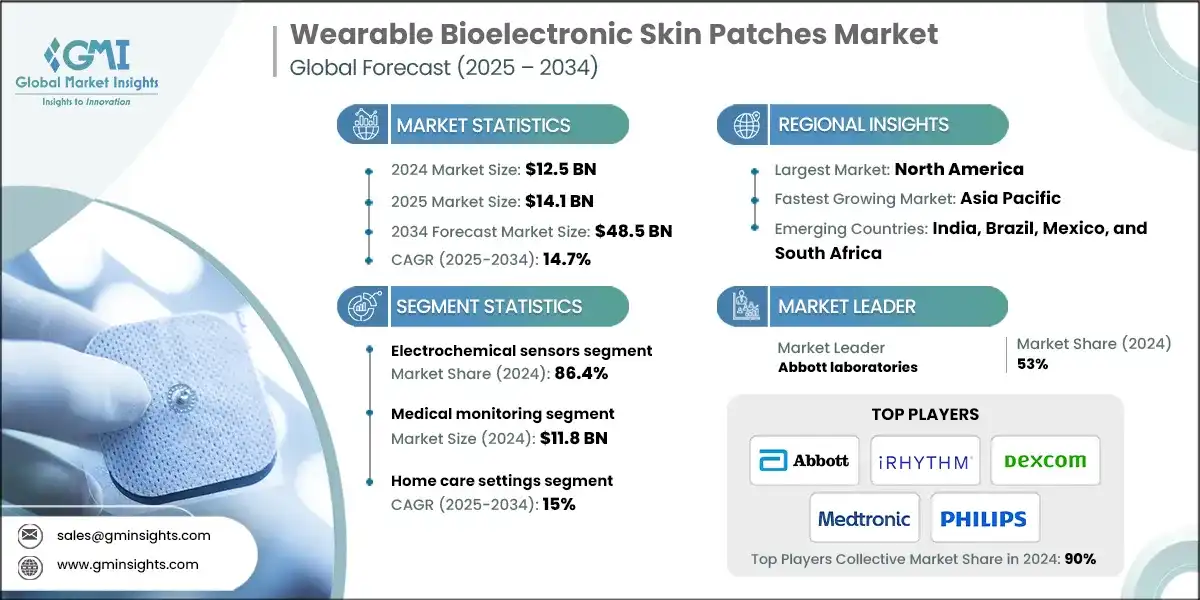
The global wearable bioelectronic skin patches market was estimated at USD 12.5 billion in 2024. The market is expected to grow from USD 14.1 billion in 2025 to USD 48.5 billion in 2034, growing at a CAGR of 14.7%, according to the latest report published by Global Market Insights Inc. The growth of the global market is largely influenced by rising demand for non-invasive and real-time health monitoring solutions, technological advancements in flexible and stretchable electronics, and growing prevalence of chronic diseases.
Wearable Bioelectronic Skin Patches Market Key Takeaways
Market Size & Growth
- 2024 Market Size: USD 12.5 Billion
- 2025 Market Size: USD 14.1 Billion
- 2034 Forecast Market Size: USD 48.5 billion
- CAGR (2025–2034): 14.7%
Regional Dominance
- Largest Market: North America
- Fastest Growing Region: Asia Pacific
Key Market Drivers
- Rising demand for non-invasive and real-time health monitoring solutions.
- Technological advancements in flexible and stretchable electronics.
- Growing prevalence of chronic diseases.
- Increasing health awareness and fitness consciousness.
Challenges
- High development and manufacturing costs.
- Concerns regarding data privacy and the security.
Opportunity
- Remote health monitoring.
- Integration with AI and IoT for personalized healthcare.
Key Players
- Market Leader: Abbott laboratories led with over 53% market share in 2024.
- Leading Players: Top 5 players in this market include Abbott laboratories, iRhythm Technologies, Dexcom, Medtronic plc, Koninklijke Philips N.V., which collectively held a market share of 90% in 2024.
Get Market Insights & Growth Opportunities
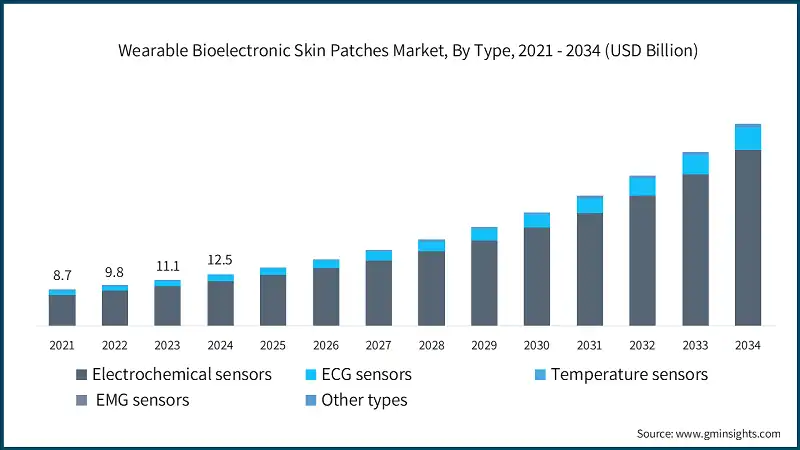
The wearable bioelectronic skin patches market has seen notable growth, rising from USD 8.7 billion in 2021 to USD 11.1 billion in 2023, largely fueled by the rising prevalence of chronic diseases that demand continuous monitoring. Conditions such as cardiovascular disorders, diabetes, and respiratory illnesses often require real-time tracking to prevent complications and improve patient outcomes. Traditional monitoring methods typically involve periodic hospital visits, which can delay intervention and increase healthcare costs. Wearable patches offer a convenient, non-invasive solution for real-time monitoring of vital signs, enabling proactive care and reducing dependency on hospitals.
According to the CDC, 6 in 10 adults in the U.S. have at least one chronic disease, while 4 in 10 suffer from two or more. These illnesses account for 90% of the nation’s USD 4.9 trillion annual healthcare expenditure, highlighting the urgent need for cost-effective solutions. Globally, the WHO reports that noncommunicable diseases, including heart disease, stroke, cancer, and diabetes, cause 74% of all deaths, reinforcing the importance of advanced monitoring technologies. As healthcare systems shift toward preventive and remote healthcare, wearable bioelectronic skin patches are emerging as a critical tool for improving outcomes and reducing costs.
The wearable bioelectronic skin patches market is witnessing strong growth, fueled by rising demand for non-invasive and real-time health monitoring. Traditional diagnostic methods often involve invasive procedures and frequent hospital visits, which can be stressful and costly for patients. In contrast, wearable patches provide a painless, convenient alternative, enabling continuous tracking of vital signs such as heart rate, hydration, and glucose levels without disrupting daily routines. This shift aligns with healthcare systems prioritizing patient comfort, early detection, and continuous care.
For instance, according to the Centers for Medicare & Medicaid Services (CMS), remote patient monitoring (RPM) services have surged, with Medicare spending on RPM increasing from USD 15 million in 2019 to USD 300 million in 2022, signaling strong adoption of connected health technologies. Similarly, according to NIH nearly one in three U.S. adults uses a wearable device, and over 80% of these users are willing to share data with clinicians, underscoring growing acceptance. Leading innovations include Abbott’s FreeStyle Libre for continuous glucose monitoring and Epicore Biosystems’ sweat-sensing patches for hydration and electrolyte tracking. As digital health adoption accelerates, wearable bioelectronic skin patches are becoming integral to preventive care and personalized medicine.
The wearable bioelectronic skin patches market includes advanced, flexible electronic devices designed to monitor physiological signals, deliver therapies, or support diagnostics through direct skin contact. These patches integrate sensors and wireless communication for real-time health monitoring across medical, fitness, and wellness applications.
To get key market trends
Wearable Bioelectronic Skin Patches Market Trends
- The evolution of flexible and stretchable electronics is transforming the market. These advancements enable devices that conform seamlessly to the human body, ensuring accurate and comfortable health monitoring. Unlike traditional rigid electronics, which often fail to maintain consistent skin contact, flexible designs improve reliability and user experience.
- Rigid components have challenges in wearable technology, leading to discomfort and inaccurate readings. Recent breakthroughs in materials science and circuit design have addressed these limitations by introducing ultra-thin, elastic substrates and conductive polymers. These innovations mimic the skin’s mechanical properties, allowing patches to move naturally with the body.
- Government-backed research underscores the importance of these developments. The NIH highlights that next-generation bioelectronics must achieve biocompatibility and mechanical compliance to support continuous monitoring without irritation or motion artifacts. This focus ensures that wearable patches can deliver precise data while maintaining user comfort over extended periods.
- Regulatory approvals further validate this progress. The FDA’s clearance of X-trodes’ Smart Skin system, a wireless, flexible patch for electrophysiological monitoring demonstrates confidence in these technologies for clinical use. As flexible electronics advance, they are paving the way for more effective, patient-friendly solutions in remote health monitoring and personalized care.
Wearable Bioelectronic Skin Patches Market Analysis
Learn more about the key segments shaping this market
The global wearable bioelectronic skin patches industry was valued at USD 8.7 billion in 2021. The market size reached USD 11.1 billion in 2023, from USD 9.8 billion in 2022.
Based on type, the global wearable bioelectronic skin patches market is segmented into electrochemical sensors, ECG sensors, temperature sensors, EMG sensors, and other types. The electrochemical sensors segment has asserted its dominance in the market by securing a significant market share of 86.4% in 2024 and is anticipated to grow at a CAGR of 14.8% over the forecast years.
- Electrochemical sensors dominate the wearable bioelectronic skin patch market, primarily because of their capability to provide precise biochemical readings in real time.
- These sensors function by detecting chemical reactions occurring on the electrode surface, enabling accurate tracking of biomarkers such as glucose, lactate, electrolytes, and pH levels. Their high sensitivity, low energy requirements, and adaptability to flexible substrates make them well-suited for integration into skin patches designed for continuous health monitoring.
- The rising incidence of diabetes and metabolic disorders is a major growth driver for this electrochemical sensor.
- Additionally, electrochemical sensors are extensively utilized in glucose-monitoring patches, which have become indispensable for diabetes management without invasive blood sampling. Beyond glucose, these sensors are increasingly applied in sweat analysis to monitor hydration and electrolyte balance, serving both clinical and athletic purposes.
- Ongoing technological progress is accelerating adoption. Advances in nanomaterials, microfluidics, and enzyme-based detection have enhanced sensor precision and durability, while wireless connectivity ensures smooth data transfer to smartphones and healthcare platforms. Furthermore, the incorporation of AI algorithms supports predictive analytics, enabling early identification of health irregularities.
- With robust demand from medical monitoring and sports performance sectors, electrochemical sensors are projected to retain their leadership in the wearable bioelectronic skin patch market. Their versatility, affordability, and proven clinical reliability position this segment for sustained expansion, especially as personalized and preventive healthcare gains global traction.
Based on application, the global wearable bioelectronic skin patches market is classified into fitness and wellness, medical monitoring, and other applications. The medical monitoring segment accounted for the highest market revenue of USD 11.8 billion in 2024 and is projected to grow at a CAGR of 14.7% during the analysis period.
- Medical monitoring is the leading application segment, providing continuous evaluation of critical health metrics beyond conventional clinical environments. Unlike periodic checks in hospitals, these patches deliver uninterrupted data streams for conditions requiring long-term observation, such as cardiac arrhythmias, diabetes, and post-surgical recovery.
- For instance, remote patient monitoring programs in North America have shown annual savings of up to USD 8,000 per patient by reducing complications and emergency visits. Bioelectronic patches are central to these programs, tracking ECG signals, blood pressure patterns, and biochemical indicators without invasive methods.
- Recent innovations are reshaping the capabilities of medical monitoring patches. Moving beyond basic vital sign tracking, next-generation designs now feature advanced sensing technologies with diagnostic-level accuracy. For instance, modern patches integrate ultrasound and biochemical sensors to capture deep-tissue data, enabling clinicians to evaluate vascular health and metabolic changes without invasive procedures. These solutions are increasingly linked to cloud-based platforms for secure data exchange and real-time analysis.
- Machine learning algorithms further elevate performance by detecting trends in physiological signals, facilitating early complication detection and personalized treatment adjustments. This synergy of hardware advancements and intelligent analytics is transforming patches from simple monitoring devices into comprehensive health management systems.
Learn more about the key segments shaping this market
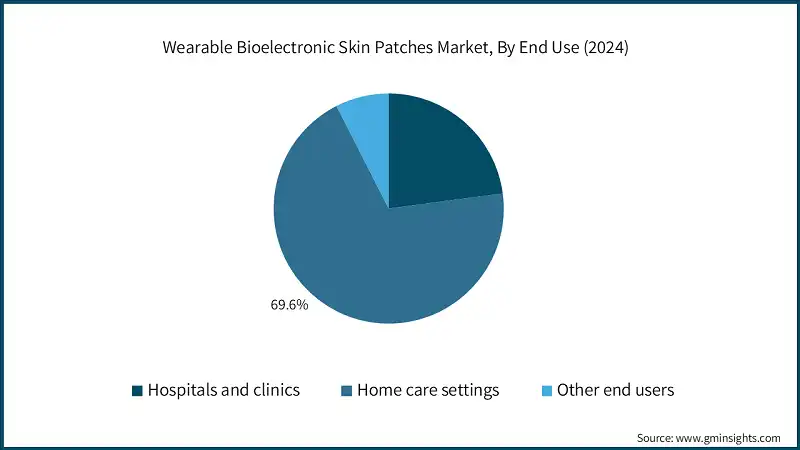
Based on end use, the global wearable bioelectronic skin patches market is classified into hospitals and clinics, home care settings, and other end users. The home care settings segment is projected to grow at a CAGR of 15% during the analysis period.
- Homecare care settings increasingly rely on wearable bioelectronic patches to monitor patients with chronic conditions, post-surgical recovery needs, and age-related health issues. Continuous data collection at home helps reduce hospital admissions and improves patient comfort.
- The adoption of wearable patches in homecare is accelerating because they deliver hospital-grade monitoring without requiring bulky equipment or frequent hospital visits. For example, patches equipped with sensors for vital signs and biochemical markers enable early intervention and better disease management, particularly for elderly and post-operative patients.
- Homecare workflows benefit from integrating wearable patches with telehealth platforms and electronic health records, ensuring seamless data sharing and remote consultations. This connectivity supports preventive care and hybrid models, allowing patients to transition from hospital to home without losing clinical oversight.
- Additionally, hospitals and insurers are increasingly promoting homecare programs to alleviate pressure on healthcare infrastructure. Bioelectronic skin patches offer a cost-effective, scalable solution for continuous monitoring, making them highly attractive for both patients and providers.
Looking for region specific data?
North America Wearable Bioelectronic Skin Patches Market
The North America market dominated the global wearable bioelectronic skin patches industry with a market share of 44.4% in 2024.
- North America’s wearable bioelectronic skin patch market is experiencing rapid growth, fueled by technological innovation, regulatory backing, and public health priorities. Research programs supported by the NIH highlight the region’s leadership in advancing these technologies. For instance, NIH scientists have developed a flexible ultrasound patch capable of monitoring deep-artery blood pressure waveforms, showcasing how next-generation devices can deliver hospital-grade diagnostics beyond clinical environments.
- Canada faces a substantial chronic disease burden, with 44% of adults living with at least one condition and these illnesses accounting for 67% of all deaths. Diabetes alone imposes an annual cost of CAD 30 billion on the healthcare system, underscoring the need for non-invasive glucose monitoring solutions.
- Additionally, regulatory progress is accelerating the adoption of wearable skin patches. The U.S. FDA has approved several systems, including X-trodes’ Smart Skin, which enables remote monitoring of brain, heart, and muscle activity. These clearances reflect strong regulatory support for connected health while ensuring safety standards, though challenges around reimbursement and device classification persist.
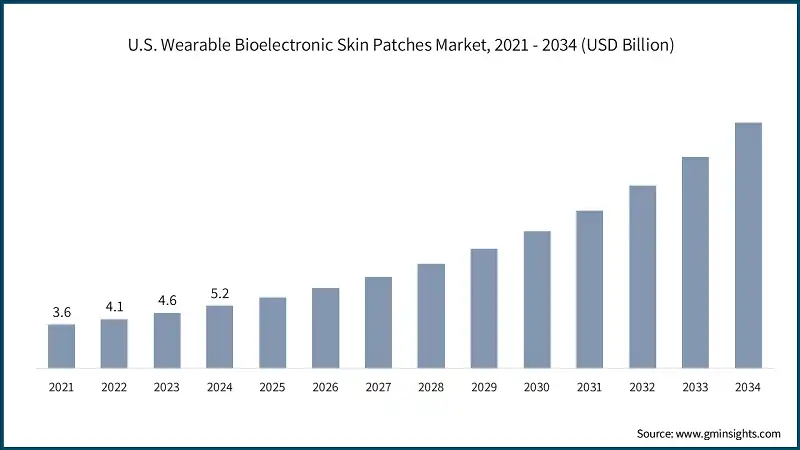
The U.S. wearable bioelectronic skin patches market was valued at USD 3.6 billion and USD 4.1 billion in 2021 and 2022, respectively. The market size reached USD 5.2 billion in 2024, growing from USD 4.6 billion in 2023.
- The market in the U.S. is expanding steadily, driven by the growing need for continuous health monitoring and personalized care. These patches are increasingly used for applications such as cardiovascular tracking, neurological monitoring, and metabolic assessments, offering real-time data without invasive procedures.
- For instance, according to the CDC, in 2023, 919,032 people died from cardiovascular disease equivalent to 1 in every 3 deaths. This staggering figure underscores the urgent need for advanced monitoring solutions. Wearable bioelectronic skin patches provide a convenient way to track vital signs and disease markers across hospitals, outpatient facilities, and homecare settings.
- As chronic disease prevalence rises, so does the need for innovative, technology driven solutions that improve patient outcomes, enable early intervention, and reduce overall healthcare costs through remote monitoring and predictive analytics.
Europe Wearable Bioelectronic Skin Patches Market
Europe market accounted for USD 3.3 billion in 2024 and is anticipated to show lucrative growth over the forecast period.
- The European wearable bioelectronics skin patches market is expanding steadily, driven by the rising burden of chronic diseases across the region. Conditions such as diabetes, cardiovascular disorders, and chronic wounds are increasing the demand for advanced monitoring and therapeutic solutions. Wearable bioelectronic skin patches offer continuous health tracking, real-time data transmission, and targeted therapy, making them highly suitable for managing these long-term conditions.
- According to the International Diabetes Federation (IDF), the number of adults aged 20-79 living with diabetes in Europe has surged from 22.4 million in 2000 to 65.6 million in 2024 and is projected to reach 72.4 million by 2050. This sharp rise underscores the growing need for innovative technologies that support early intervention and personalized care.
- Healthcare providers across hospitals, outpatient clinics, and homecare settings are increasingly adopting wearable bioelectronic skin patches to improve patient outcomes, reduce complications, and lower overall treatment costs. These devices are becoming integral to chronic disease management strategies, particularly in remote monitoring and preventive care.
Germany wearable bioelectronic skin patches market is anticipated to witness considerable growth over the analysis period.
- The German market is growing steadily, driven by the increasing prevalence of chronic conditions such as diabetes, cardiovascular disorders, and respiratory diseases. Rising demand for continuous health monitoring and remote care solutions is fueling adoption of advanced wearable technologies across clinical and homecare settings.
- For instance, according to IDF Germany has an adult population of approximately 62 million, with a diabetes prevalence of 10%, meaning around 6.2 million adults are affected. This significant disease burden creates strong demand for continuous glucose monitoring and real-time health tracking solutions. Wearable bioelectronic skin patches address this need by offering non-invasive, accurate, and connected monitoring, reducing hospital visits and improving patient outcomes
- As chronic disease burden continues to rise, demand for wearable bioelectronic skin patches is expected to surge, driving innovation in flexible electronics and smart sensors.
Asia Pacific Wearable Bioelectronic Skin Patches Market
The Asia Pacific market is anticipated to grow at the CAGR of 15.1% during the analysis timeframe.
- Asia Pacific’s wearable bioelectronic skin patch market is witnessing steady growth, driven by the rising prevalence of chronic illnesses, better healthcare accessibility, and increased government spending on acute care infrastructure.
- Nations like China, India, and Japan are experiencing a sharp rise in ischemic stroke and pulmonary embolism cases, fueled by aging demographics, rapid urbanization, and sedentary habits. According to WHO, stroke ranks as the second leading cause of death in Southeast Asia, impacting millions every year.
- As a result, the region’s growing disease burden and healthcare investments are accelerating adoption of wearable bioelectronic skin patches across the region.
China wearable bioelectronic skin patches market is predicted to grow significantly over the forecast period.
- Technological advancements such as AI-powered analytics, electrochemical sensors, and flexible electronics are transforming patch functionality. These innovations enable real-time biomarker tracking, personalized treatment plans, and improved patient comfort, addressing the growing demand for non-invasive monitoring.
- Additionally, integration with telemedicine platforms and mobile health apps is accelerating adoption, allowing remote diagnostics and continuous care across urban and rural regions. This trend supports China’s push toward preventive healthcare and home-based treatment models.
- As a result, China’s market is being reshaped by smart, connected solutions that enhance clinical outcomes, reduce hospital visits, and deliver cost-effective care. These developments position wearable bioelectronic skin patches as a cornerstone of China’s digital health ecosystem.
Latin America Wearable Bioelectronic Skin Patches Market
- Latin America is witnessing a growing prevalence of chronic diseases such as diabetes and cardiovascular disorders. According to the Pan American Health Organization (PAHO), noncommunicable diseases account for nearly 81% of deaths in the region, creating strong demand for continuous health monitoring solutions.
- Wearable bioelectronic skin patches enable real-time tracking of vital signs and biochemical markers, helping reduce hospital visits and improve disease management. This capability is driving adoption in both clinical environments and homecare settings, offering patients greater convenience and better health outcomes.
- Overall, the market is positioned for steady growth, supported by demographic trends, rising healthcare investments, and improved diagnostic infrastructure. Additionally, Strategic partnerships, regional manufacturing, and regulatory harmonization will be essential to unlocking future opportunities in this evolving sector.
Middle East and Africa Wearable Bioelectronic Skin Patches Market
Saudi Arabia wearable bioelectronic skin patches industry is poised to witness substantial growth in the Middle East and Africa market during the forecast period.
- Saudi Arabia is witnessing a sharp rise in chronic conditions such as diabetes, cardiovascular disorders, and hypertension, largely driven by sedentary lifestyles and an aging population. This trend is fueling demand for innovative technologies that can support proactive and personalized care.
- Wearable bioelectronic skin patches address this challenge by enabling real-time monitoring of vital signs and biochemical markers, such as glucose levels and cardiac rhythms. These patches offer a non-invasive, convenient alternative to traditional diagnostic methods, reducing hospital visits and improving disease management. Integration with mobile apps and telemedicine platforms further enhances accessibility, allowing patients in both urban and remote areas to receive timely care and personalized treatment plans.
- In conclusion, the growing burden of chronic diseases is a major catalyst for market expansion in Saudi Arabia. Combined with government-led digital health initiatives under Vision 2030 and rising investments in telehealth infrastructure, wearable bioelectronic skin patches are set to become a cornerstone of preventive healthcare, improving outcomes while reducing costs across the healthcare system.
Wearable Bioelectronic Skin Patches Market Share
- Leading companies such as Abbott laboratories, iRhythm Technologies, Dexcom Medtronic plc, and Koninklijke Philips N.V., are actively expanding their global footprint through strategic initiatives. These include acquisitions, partnerships, and technology-driven collaborations aimed at strengthening their position in the rapidly growing wearable bioelectronic skin patches market. These leading top 5 companies collectively held 90% of the total market share.
- Their product portfolios now feature advanced bioelectronic solutions, including flexible sensor patches, AI-enabled health monitoring systems. By enabling real-time data collection and remote patient monitoring, these innovations improve treatment accuracy, scalability, and patient convenience across clinical and homecare settings.
- Close collaboration with healthcare providers and regulatory authorities remains central to their strategy, ensuring compliance with evolving standards and patient safety norms. At the same time, efforts to expand access in emerging markets and underserved regions are making wearable bioelectronic skin patches more inclusive and widely adopted.
- Through continuous research and development and integration of AI, cloud analytics, and telehealth capabilities, these companies are transforming preventive care and chronic disease management. Their commitment to personalized healthcare and evidence-based practices is shaping modern clinical workflows and supporting sustainable health systems worldwide.
Wearable Bioelectronic Skin Patches Market Companies
Some of the eminent market participants operating in the wearable bioelectronic skin patches solutions industry include:
- 2M Engineering
- Abbott Laboratories
- Biolinq
- Baxter International
- Boston Scientific
- Dexcom
- Epicore Biosystems, Inc.
- GE Healthcare Technologies Inc.
- GENTAG, Inc.
- Insulet Corporation
- iRhythm Technologies, Inc.
- Koninklijke Philips N.V.
- LifeSignals, Inc.
- Medtronic plc
- Sinocare
- SmartCardia Inc.
- VitalConnect
- VivaLNK, Inc.
- Medtronic plc
Medtronic plc is a global leader in medical technology, offering advanced wearable bioelectronic solutions for cardiac and diabetes care. Its portfolio includes continuous glucose monitoring systems and cardiac monitoring patches integrated with AI-driven analytics. Medtronic focuses on remote patient management and telehealth integration, supporting better outcomes for chronic disease patients.
Koninklijke Philips leverages its expertise in connected health and imaging to deliver wearable bioelectronic skin patches for real-time monitoring. Philips emphasizes interoperability with digital health platforms, enabling seamless data sharing between patients and clinicians. Its strategy centers on preventive care and home-based monitoring solutions, aligned with global telemedicine trends.
Sinocare specializes in diabetes management technologies, offering cost-effective wearable patches for glucose monitoring. The company focuses on affordability and accessibility, targeting emerging markets and underserved populations. Sinocare’s approach combines biosensor innovation with mobile health applications, making personalized care more inclusive.
Wearable Bioelectronic Skin Patches Market Report Attributes
| Key Takeaway | Details |
|---|---|
| Market Size & Growth | |
| Base Year | 2024 |
| Market Size in 2024 | USD 12.5 Billion |
| Market Size in 2025 | USD 14.1 Billion |
| Forecast Period 2025 – 2034 CAGR | 14.7% |
| Market Size in 2034 | USD 48.5 billion |
| Key Market Trends | |
| Drivers | Impact |
| Rising demand for non-invasive and real-time health monitoring solutions | Drives adoption of wearable patches for continuous, patient-friendly monitoring. |
| Technological advancements in flexible and stretchable electronics | Enables development of comfortable, durable patches with enhanced functionality. |
| Growing prevalence of chronic diseases | Increases need for long-term monitoring and personalized care solutions. |
| Increasing health awareness and fitness consciousness | Expands consumer base for wellness-focused wearable patches beyond clinical use. |
| Pitfalls & Challenges | Impact |
| High development and manufacturing costs | Limits market penetration and slows adoption, especially in price-sensitive regions. |
| Concerns regarding data privacy and the security | Creates regulatory hurdles and reduces consumer trust, impacting widespread acceptance. |
| Opportunities: | Impact |
| Remote health monitoring | Expands access to care, reduces hospital visits, and supports home-based treatment models. |
| Integration with AI and IoT for personalized healthcare | Enables predictive analytics and tailored treatment plans, improving patient outcomes and efficiency. |
| Market Leaders (2024) | |
| Market Leaders |
53% market share |
| Top Players |
Collective market share in 2024 is 90% |
| Competitive Edge |
|
| Regional Insights | |
| Largest market | North America |
| Fastest growing market | Asia Pacific |
| Emerging countries | India, Brazil, Mexico, and South Africa |
| Future outlook |
|
What are the growth opportunities in this market?
Wearable Bioelectronic Skin Patches Industry News
- In October 2024, Researchers developed a skin patch that used imperceptible electric currents to control bacterial infections without drugs. The team, led by Bozhi Tian of the University of Chicago, demonstrated that small electric currents could selectively influence Staphylococcus epidermidis bacteria in acidic environments such as healthy skin. This discovery offered a promising, drug-free alternative for treating infections and addressing antibiotic resistance challenges.
- In April 2024, Philips partnered with smartQare to integrate its viQtor solution with Philips’ clinical monitoring platforms, enabling continuous patient monitoring in and out of hospitals across Europe. As part of the agreement, smartQare acquired Philips’ Healthdot business to combine wearable bioelectronic skin patches with remote monitoring on a unified platform. This collaboration helped Philips streamline remote care offerings, reduce clinical workload, and strengthen its position in the European wearable health technology market.
The wearable bioelectronic skin patches market research report includes an in-depth coverage of the industry with estimates and forecast in terms of revenue in USD Million from 2021 - 2034 for the following segments:
Market, By Type
- Electrochemical sensors
- ECG sensors
- Temperature sensors
- EMG sensors
- Other types
Market, By Application
- Fitness and wellness
- Medical monitoring
- Other applications
Market, By End Use
- Hospitals and clinics
- Home care settings
- Other end use
The above information is provided for the following regions and countries:
- North America
- U.S.
- Canada
- Europe
- Germany
- UK
- France
- Spain
- Italy
- Netherlands
- Asia Pacific
- China
- Japan
- India
- Australia
- South Korea
- Latin America
- Brazil
- Mexico
- Argentina
- Middle East and Africa
- South Africa
- Saudi Arabia
- UAE
Frequently Asked Question(FAQ) :
What is the market size of the wearable bioelectronic skin patches industry in 2024?
The market size was USD 12.5 billion in 2024, with a CAGR of 14.7% expected through 2034 driven by rising demand for non-invasive and real-time health monitoring.
What is the current wearable bioelectronic skin patches market size in 2025?
The market size is projected to reach USD 14.1 billion in 2025.
What is the projected value of the wearable bioelectronic skin patches market by 2034?
The industry is expected to reach USD 48.5 billion by 2034. Key growth drivers include AI-enabled analytics, remote patient monitoring, and rising global healthcare digitization.
How much revenue did the electrochemical sensors segment generate in 2024?
Electrochemical sensors held 86.4% share in 2024, representing the leading product category in the market.
What was the valuation of the medical monitoring application segment in 2024?
The medical monitoring segment accounted for USD 11.8 billion in 2024. This segment leads the industry due to increasing need for continuous cardiac, metabolic, and post-surgical monitoring.
What is the growth outlook for home-care settings from 2025 to 2034?
The home-care settings segment is projected to grow at a 15% CAGR through 2034.
Which region leads the wearable bioelectronic skin patches market?
The U.S. market reached USD 5.2 billion in 2024, solidifying North America's leadership in the global landscape.
What are the upcoming trends in the wearable bioelectronic skin patches industry?
Key trends include flexible and stretchable electronics, AI-integrated diagnostic patches, and cloud-based remote monitoring platforms.
Who are the key players in the wearable bioelectronic skin patches market?
Major market players include Abbott Laboratories, iRhythm Technologies, Dexcom, Medtronic plc, Koninklijke Philips N.V., Epicore Biosystems, GE Healthcare Technologies, VitalConnect, and VivaLNK.
Wearable Bioelectronic Skin Patches Market Scope
Related Reports