Summary
Table of Content

Water Bottle Market
Get a free sample of this report
Form submitted successfully!
Error submitting form. Please try again.
Thank you!
Your inquiry has been received. Our team will reach out to you with the required details via email. To ensure that you don't miss their response, kindly remember to check your spam folder as well!
Request Sectional Data
Thank you!
Your inquiry has been received. Our team will reach out to you with the required details via email. To ensure that you don't miss their response, kindly remember to check your spam folder as well!
Form submitted successfully!
Error submitting form. Please try again.
Water Bottle Market Size
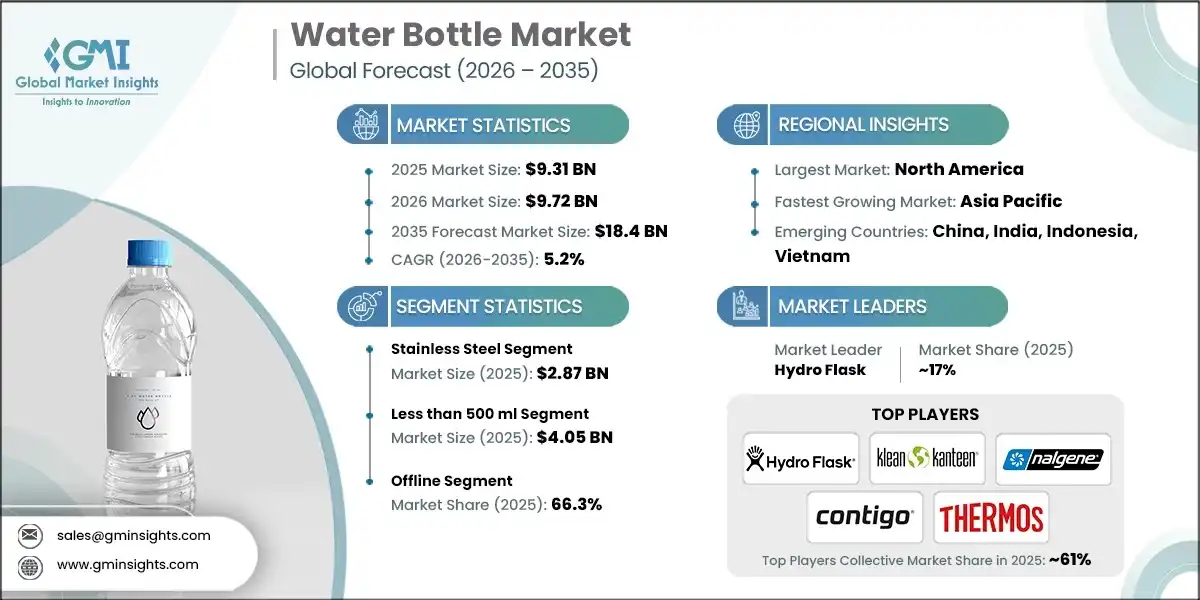
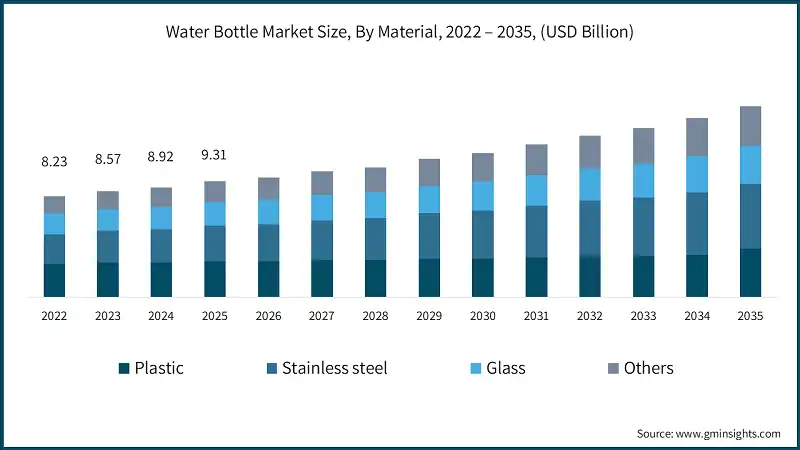
The global water bottle market was estimated at USD 9.31 billion in 2025. The market is expected to grow from USD 9.72 billion in 2026 to USD 18.4 billion in 2035, at a CAGR of 5.2%, according to latest report published by Global Market Insights Inc.
Water Bottle Market Key Takeaways
Market Size & Growth
- 2025 Market Size: USD 9.31 Billion
- 2026 Market Size: USD 9.72 Billion
- 2035 Forecast Market Size: USD 18.4 Billion
- CAGR (2026–2035): 5.2%
Regional Dominance
- Largest Market: North America
- Fastest Growing Region: Asia Pacific
Key Market Drivers
- Growing adoption of reusable products to reduce single-use plastic waste.
- Expansion of fitness, sports, and outdoor recreation activities.
- Increasing corporate and institutional use of branded water bottles.
Challenges
- Intense price competition and product commoditization.
- Durability concerns in low-cost plastic and metal bottles.
Opportunity
- Rising demand for smart water bottles with hydration tracking.
- Expansion of sustainable materials such as recycled plastics and bio-based polymers.
Key Players
- Market Leader: Hydro Flask led with over 17% market share in 2025.
- Leading Players: Top 5 players in this market include Hydro Flask, Klean Kanteen, Nalgene, Contigo, Thermos, which collectively held a market share of 61% in 2025.
Get Market Insights & Growth Opportunities
- The increasing use of reusable alternatives to single-used plastic products has led to an increase in the market for water bottles. Consumers have become increasingly concerned about the impact of single-use plastics on the environment and are looking for ways to reduce their daily plastic usage. In December?2024, the Council of the European Union adopted new packaging waste rules that set binding targets to decrease packaging waste and increase reuse, including future requirements that single?use plastic bottles incorporate a minimum percentage of recycled content and move towards reduced packaging and reuse models.
- Many governments and organizations have begun providing education and guidelines to consumers to help promote the use of reusable products as part of a more sustainable lifestyle. Schools, workplaces, and public buildings are working on creating habits of refilling bottles as part of their waste reduction initiatives. As a result, durable bottles made from stainless steel, glass, and BPA-free plastic are also becoming much more popular with consumers. Consumers are also interested in purchasing products that support sustainability and provide long-term cost savings. Retailers are responding by adding to their range of reusable bottle products to fulfill this growing demand.
- Increasing participation in fitness and sports activities and outdoor recreation is generating a strong demand for water bottles. The rise in fitness and sports participation has led to a greater need for portable hydration options. Athletes and fitness enthusiasts often prefer light weight, durable, and easy-to-carry water bottles. As outdoor recreation like hiking, camping, and adventure sports gains popularity, it has driven a greater interest in the development of water bottles that will not leak and are insulated.
- In 2025, the Sports & Fitness Industry Association reported that approximately 247.1?million Americans participated in at least one sport, fitness, or outdoor activity in 2024, representing an 80% participation rate, the highest since tracking began. Hydration is becoming an important part of a healthy lifestyle for health-conscious individuals, and sports clubs, gyms, and recreation centres promote reusable water bottles as a means of encouraging convenience and sustainability. Ergonomically designed grips and measurement markings are appealing to active users and have created consumer preferences through marketing targeting active lifestyles. Consumers are more likely to make repeated purchases of water bottles through high frequency use in sports and outdoor environments, and to become brand loyal.
- The demand for stainless steel water bottles has risen exponentially due to their ability to last long periods and be safe to drink from, while providing the capability of being able to keep liquids cold or hot for extended periods of time. The corrosion-resistant and impact-resistant characteristics of stainless steel also provide a long lifespan to the bottles, which is enhanced by sleek designs and lightweight construction. In addition, growing awareness regarding health, hygiene, and environmental sustainability has resulted in increased use of reusable stainless steel bottles, and there is also an increase in the use of these bottles due to growing trends associated with fitness, outdoor activities, and corporate gifting, showcasing the practicality and versatility associated with this product for everyday hydration needs.
To get key market trends
Water Bottle Market Trends
- Consumers are converting to reusable bottles so that they can cut down on single use plastic waste. Growing eco-consciousness and government initiatives have also driven consumers towards adopting sustainable practices in their everyday lives. Reusable bottles come in many forms, including stainless steel, glass, and BPA-free plastics, with manufacturers creating durable, leak-resistant, and easy-to-transport designs accordingly to suit consumer interests. Additionally, several individuals and organizations are taking an interest in supporting and encouraging green behaviors, which is leading to an increased use of these eco-friendly products.
- Consumers have begun to put greater emphasis on being properly hydrated in conjunction with being healthy. Health and fitness enthusiasts and athletes use lightweight, insulated, and easy-to-handle bottles while exercising, and infuser bottles and bottles with markings for indicating measurement help users to track their water intake even more accurately. Manufacturers are designing bottles that maintain temperature, purity, and convenience for everyday use, and awareness initiatives for consuming enough water every day have positively impacted overall consumption rates.
- Increased participation in outdoor recreation activities, like sports and adventure, contributes to the increasing popularity of portable water bottles. While hiking, cycling and camping, these types of enthusiasts demand durable and leak-proof bottles. Insulated designs are useful to keep beverages at a particular temperature, while traveling long distances or engaging in extreme weather conditions. Manufacturers of portable water bottles are developing new lightweight designs that offer ergonomic characteristics and features that allow consumers to easily carry their water while on the go. Retailers are exclusively targeting adventure and travel markets with specially designed products, which cater to the unique needs of these individuals.
- Personalized and customized water bottles provide consumers and businesses with a way to express themselves personally or promote their brand message through customizable graphics, text, and colors. Many companies use their logos on these bottles to promote their businesses as well as to give them as gifts to employees and customers. Manufacturers are creating high-quality products with durable materials to allow for long-lasting use, therefore maximizing product performance while allowing for continuous use. Custom products are also an effective way to increase brand awareness and build a relationship with the customer based on personalized service.
Water Bottle Market Analysis
Learn more about the key segments shaping this market
Based on material, the market is categorized into plastic, stainless steel, glass, and others. The stainless steel segment accounted for revenue of around USD 2.87 billion in 2025 and is anticipated to grow at a CAGR of 6.3% from 2026 to 2035.
- Manufacturers are now leading the beverage container industry by creating the strongest and most durable products using stainless steel in their products. Stainless steel provides superior insulation compared to other materials, allowing for maximum temperature retention of heated and cooled beverages over long periods of time. Due to its durability of being resistant to corrosion and physical impact, these containers are perfect for use by fitness enthusiasts, travelers, and in everyday situations.
- Increased awareness about the environment and an increased number of consumers choosing reusable products has led to increased demand for this segment of the beverage container market. Manufacturers are creating modern and lightweight designs for convenience and providing the option of carrying beverage containers in a backpack or purse. Manufacturers' increasing use of stainless steel water bottles in outdoor activities, corporate gifts, and wellness routines have made these products even more appealing to consumers in the global marketplace.
Based on capacity, the water bottle market is categorized into Less than 500 ml, 500 ml - 1 L, more than 1 L. The less than 500 ml segment accounted for revenue of around USD 4.05 billion in 2025 and is anticipated to grow at a CAGR of 4.6% from 2026 to 2035.
- The less than 500 ml segment holds a strong share in the market. Compact size supports easy portability for school, office, travel, and short-duration activities. Lightweight bottles suit children and commuters seeking convenient hydration without carrying excess volume. Rising urban lifestyles increase preference for smaller bottles that fit handbags and backpacks.
- Lower material usage enables affordable pricing, supporting frequent replacement and impulse purchases. High demand from fitness studios and events drives bulk procurement of small-capacity bottles. Growing focus on portion control and regular refilling further supports segment demand.
Learn more about the key segments shaping this market
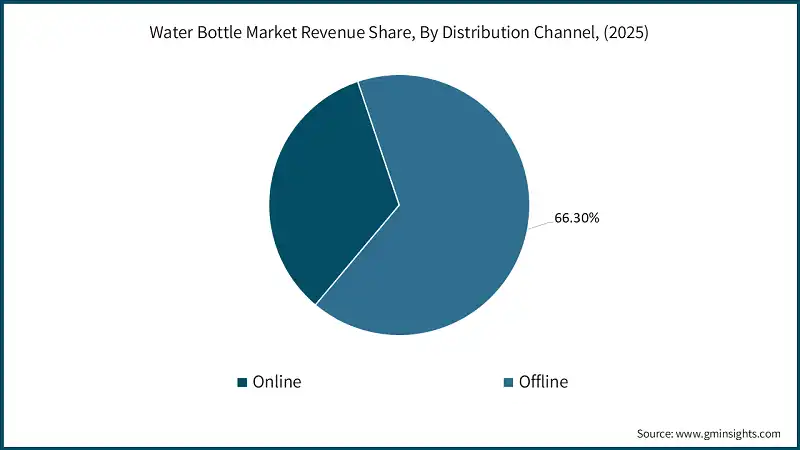
Based on distribution channel, water bottle market consists of online, and offline. The offline emerged as leader and held 66.3% of the total market share in 2025 and is anticipated to grow at a CAGR of 4.7% from 2026 to 2035.
- Offline sales channels such as retail stores, supermarkets, specialized retailers dominate the consumer water bottle market since most consumers want to see and touch the item they are purchasing. By being able to inspect the material and craftsmanship of a water bottle in person, consumers feel more confident in their purchase decision when buying a premium, reusable bottle. Additionally, the abundance of offline channels in urban and suburban areas allows for greater accessibility to consumers from all walks of life.
- The rise of branded water bottles has also contributed to the increase in sales through offline channels, as these brands establish partnerships with fitness facilities and specialty retailers. Many new customers find the tactile experience, immediate access to products, and post-sale support provided by offline channels to be valuable in choosing which product to purchase.
Looking for region specific data?
North America Water Bottle Market
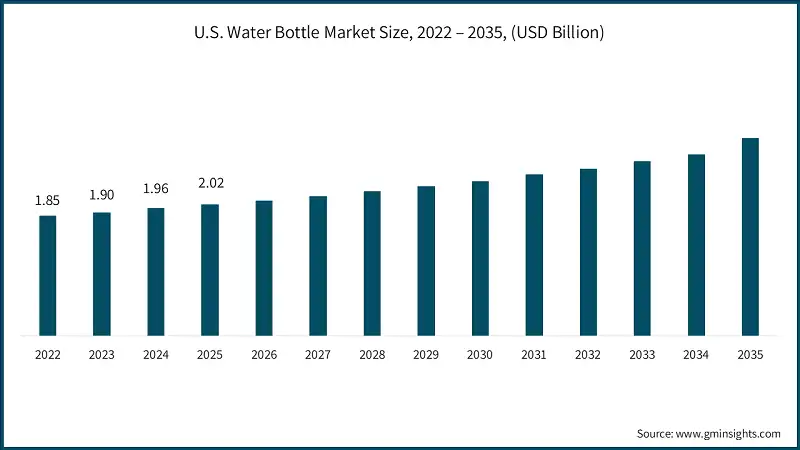
The U.S. dominates an overall North America market and valued at USD 2.02 billion in 2025 and is estimated to grow at a CAGR of 4.3% from 2026 to 2035.
- The rise in health-consciousness among American consumers has increased interest in reusable hydration products, which is driving growth in the U.S. market. Outdoor activities such as biking, running, and hiking are significant drivers behind the desire for a durable and portable bottle. Along with the rise in eco-friendly, sustainable products as alternatives to single-use plastic products, there is an increase in the demand for stainless steel and BPA-free bottles. Premium-quality and insulated hydration vessels are also becoming increasingly popular due to their insulation properties and convenience when traveling or away from home.
- The accessibility of water bottles has improved through the expansion of e-commerce platforms, which provide a broader range of shopping options than traditional brick-and-mortar retailers. Continually growing urban populations and the increase in active lifestyle trends influence the purchasing decisions made by water bottle consumers in a way that supports continued growth in both the traditional and niche segments of the market.
Europe Water Bottle Market
In the Europe market, Germany is expected to experience significant and promising growth from 2026 to 2035.
- The market in Europe has improved significantly because of increased environmental concerns and laws to limit single-use plastics. Consumers are increasingly using reusable bottles that are made from either stainless steel, glass, or BPA-free materials. Consumers living in urban areas of Germany, France, and the United Kingdom, are increasingly purchasing insulated and designer water bottles because of convenience and fashion. The increase in recreational activities, including cycling and hiking, provides a strong demand for lightweight, portable hydration systems.
- The continued growth of the retail industry through supermarkets, specialty retailers and online shopping will increase the accessibility of products. The ongoing interest in leading a sustainable lifestyle, as well as the corporate initiatives of many companies to encourage the use of reusable water bottles in the workplace and educational institutions, are encouraging the growth of this market.
Asia Pacific Water Bottle Market
In the Asia Pacific market, China held 38% market share in 2025 and is anticipated to grow at a CAGR of 6.1% from 2026 to 2035.
- The Asia Pacific water bottle industry is experiencing tremendous increase due to the increasing health consciousness throughout the region coupled with the ever-growing number of individuals engaging in recreational and fitness-related activities, outdoor sports, etc. Urban areas are seeing a large rise in demand from consumers for re-usable bottles that are made of stainless steel and BPA-free plastic due to their higher durability and better sanitation.
- The demand within the industry is currently being driven by China, because of the rapid urbanization and expansion of the middle class, which is looking for high-quality and insulated water bottles. E-commerce and modern retail channels provide much greater accessibility to consumers for branded, high-quality, and innovative products. Furthermore, schools, gyms, corporate offices, and other workplaces will continue to adopt reusable water bottles and support the overall growth of the water bottle industry throughout the Asia Pacific region.
Middle East and Africa Water Bottle Market
In the Middle East and Africa market, UAE held a significant market share in 2025 promising growth from 2026 to 2035.
- The market is primarily driven by an increase in awareness around hydration and wellness. This is particularly true in urban areas where the heat and the prevalence of outdoor activities have driven an increased demand for durable and insulated bottles to maintain temperature. As a result, the use of stainless steel and BPA-free bottled water has become favorable for consumers due to long-term health and safety concerns related to bottle hygiene. The increased consumer acceptance of premium and branded reusable bottles is driven by rapid urbanization and increases in disposable income.
- Tourism, sporting, and fitness usage within commercial and recreational sectors helps to maintain consistent numbers of reusable bottles. Environmental concerns regarding single-use plastic bottles have begun to influence consumer purchasing preferences throughout the Middle East and Africa, and consumers are becoming increasingly aware of the impact that single-use plastic bottles have on the environment. Therefore, consumers are transitioning towards more sustainable options that reduce their environmental footprint.
Water Bottle Market Share
- In 2025, the prominent manufacturers in market are Hydro Flask, Klean Kanteen, Nalgene, Contigo, and Thermos collectively held the market share of ~61%.
- Hydro Flask leads with premium insulated stainless steel bottles prized for temperature retention and rugged outdoor use. The company emphasizes innovation in vacuum insulation and expanding SKU variety, including smart cap features. Its strong D2C and specialty retail channels support brand loyalty among outdoor enthusiasts and eco-conscious consumers.
- Klean Kanteen differentiates on sustainability, producing durable stainless steel bottles with eco-friendly manufacturing and carbon-neutral operations. The brand appeals to environmentally conscious buyers and outdoor communities. Klean Kanteen continues to expand product lines and partnerships that support waste reduction, reinforcing its leadership in the reusable hydration segment.
Water Bottle Market Companies
Major players operating in the water bottle industry include:
- Aquasana
- CamelBak Products
- Chilly’s Bottles
- Contigo
- GobiLab
- HydraPak
- Hydro Flask
- Klean Kanteen, Inc.
- Nalgene
- Pacific Market International
- S’well
- SIGG Switzerland
- Thermos
- Tupperware Brands Corporation
- YETI Holdings
Nalgene is known for its durable, BPA-free plastic bottles that are popular with outdoor adventurers and everyday users. The brand’s functional, versatile products have longstanding outdoor credibility. Recent updates include limited-edition collections and design enhancements to maintain relevance among younger consumers.
Contigo, backed by Newell Brands, competes through spill-proof, user-friendly designs and broad availability in retail and e-commerce channels. Known for everyday hydration and commuter-oriented features, Contigo leverages its brand scale to expand global distribution and product range for diverse consumer needs.
Thermos combines long brand heritage with wide reach in insulated hydration products spanning bottles and food jars. The company emphasizes vacuum insulation technology, reliable performance and evolving eco-friendly materials. Thermos uses extensive retail presence to maintain broad consumer accessibility.
Water Bottle Market Report Attributes
| Key Takeaway | Details |
|---|---|
| Market Size & Growth | |
| Base Year | 2025 |
| Market Size in 2025 | USD 9.31 Billion |
| Market Size in 2026 | USD 9.72 Billion |
| Forecast Period 2026-2035 CAGR | 5.2% |
| Market Size in 2035 | USD 18.4 Billion |
| Key Market Trends | |
| Drivers | Impact |
| Growing adoption of reusable products to reduce single-use plastic waste | Sustainability-driven behavior accelerates demand for durable water bottles. |
| Expansion of fitness, sports, and outdoor recreation activities | Active lifestyles boost demand for portable and impact-resistant bottle designs. |
| Increasing corporate and institutional use of branded water bottles | Promotional and bulk purchases expand volume sales across commercial channels. |
| Pitfalls & Challenges | Impact |
| Intense price competition and product commoditization | Margin pressure limits profitability for manufacturers and private-label brands. |
| Durability concerns in low-cost plastic and metal bottles | Product failures reduce brand trust and repeat purchases. |
| Opportunities: | Impact |
| Rising demand for smart water bottles with hydration tracking | Connected features create differentiation and attract technology-focused consumers. |
| Expansion of sustainable materials such as recycled plastics and bio-based polymers | Eco-innovations open access to environmentally driven consumer segments. |
| Market Leaders (2025) | |
| Market Leaders |
Market share of ~17% |
| Top Players |
|
| Competitive Edge |
|
| Regional Insights | |
| Largest Market | North America |
| Fastest growing market | Asia Pacific |
| Emerging countries | China, India, Indonesia, Vietnam |
| Future outlook |
|
What are the growth opportunities in this market?
Water Bottle Machine Industry News
- In August?2025, S’well introduced a line of reusable water bottles made from 50% recycled materials as part of its sustainability efforts. The launch aims to reduce environmental impact and align with consumer demand for eco?friendly hydration products.
- In February?2025, Hydro Flask launched the Micro Hydro mini water bottle, a compact 6.7?oz insulated reusable bottle designed for portability and everyday hydration. The Micro Hydro features double?wall vacuum insulation and a leak?proof design, and it has quickly become a popular lifestyle accessory with rapid sell?outs and restocks in new colors.
- In May?2025, Hydro Flask expanded the Micro Hydro mini bottle line with new color options that sold out quickly, reflecting high consumer interest in compact, stylish hydration solutions. The limited color restocks included neutral and vibrant hues aimed at broad consumer appeal.
- In?2025, CamelBak introduced new Thrive water bottle models including the Thrive Flip Straw and Thrive Chug bottles, made with durable materials and designed for leak?proof on?the?go hydration. These bottles feature easy?to?clean designs, soft pivoting handles, and 100?% leak?proof caps for outdoor and everyday use.
The water bottle market research report includes in-depth coverage of the industry, with estimates & forecast in terms of revenue (USD Billion) and volume (Thousand Units) from 2022 to 2035, for the following segments:
Market, By Material
- Plastic
- Stainless steel
- Glass
- Others
Market, By Capacity
- Less than 500 ml
- 500 ml – 1 L
- More than 1 L
Market, By Distribution Channel
- Online
- Offline
The above information is provided for the following regions and countries:
- North America
- U.S.
- Canada
- Europe
- Germany
- UK
- France
- Italy
- Spain
- Asia Pacific
- China
- Japan
- India
- South Korea
- Australia
- Latin America
- Brazil
- Mexico
- Argentina
- MEA
- Saudi Arabia
- UAE
- South Africa
Frequently Asked Question(FAQ) :
How much is the water bottle industry worth?
Water bottle market size was USD 8.2 billion in 2022 and is anticipated to witness over 4.5% CAGR between 2023 and 2032 due to the growing focus on personal well-being and healthier beverage options over sugary alternatives
Why is the demand for plastic water bottles rising?
The plastic material segment held 34% share of the industry in 2022 owing to benefits, such as recyclability, reduced environmental concerns and sustainability
What is the value of the North America water bottle market?
North America garnered over 30% share of the water bottle industry in 2022 due to growing adoption of eco-friendly materials, such as recycled plastics and biodegradable options
Who are the major water bottle providers?
Some of the prominent market players include Contigo, S'well, Klean Kanteen, Hydro Flask, CamelBak, Nalgene, and Thermos
Which distribution channel led the water bottle market in 2025?
The offline distribution channel dominated the market with a 66.3% share in 2025 and is expected to grow at a CAGR of 4.7% from 2026 to 2035.
Which region leads the water bottle market?
The U.S. leads the North American market, valued at USD 2.02 billion in 2025, and is projected to grow at a CAGR of 4.3% from 2026 to 2035.
What are the upcoming trends in the water bottle industry?
Key trends include the shift towards reusable bottles to reduce single-use plastic waste, growing eco-consciousness, government initiatives promoting sustainability, and the rising demand for hydration-focused products such as insulated and infuser bottles.
Who are the key players in the water bottle market?
Major players include Aquasana, CamelBak Products, Chilly’s Bottles, Contigo, GobiLab, HydraPak, Hydro Flask, Klean Kanteen, Inc., Nalgene, Pacific Market International, S’well, and SIGG Switzerland.
Water Bottle Market Scope
Related Reports