Summary
Table of Content

Vitamin D Testing Market
Get a free sample of this report
Form submitted successfully!
Error submitting form. Please try again.
Thank you!
Your inquiry has been received. Our team will reach out to you with the required details via email. To ensure that you don't miss their response, kindly remember to check your spam folder as well!
Request Sectional Data
Thank you!
Your inquiry has been received. Our team will reach out to you with the required details via email. To ensure that you don't miss their response, kindly remember to check your spam folder as well!
Form submitted successfully!
Error submitting form. Please try again.
Vitamin D Testing Market Size
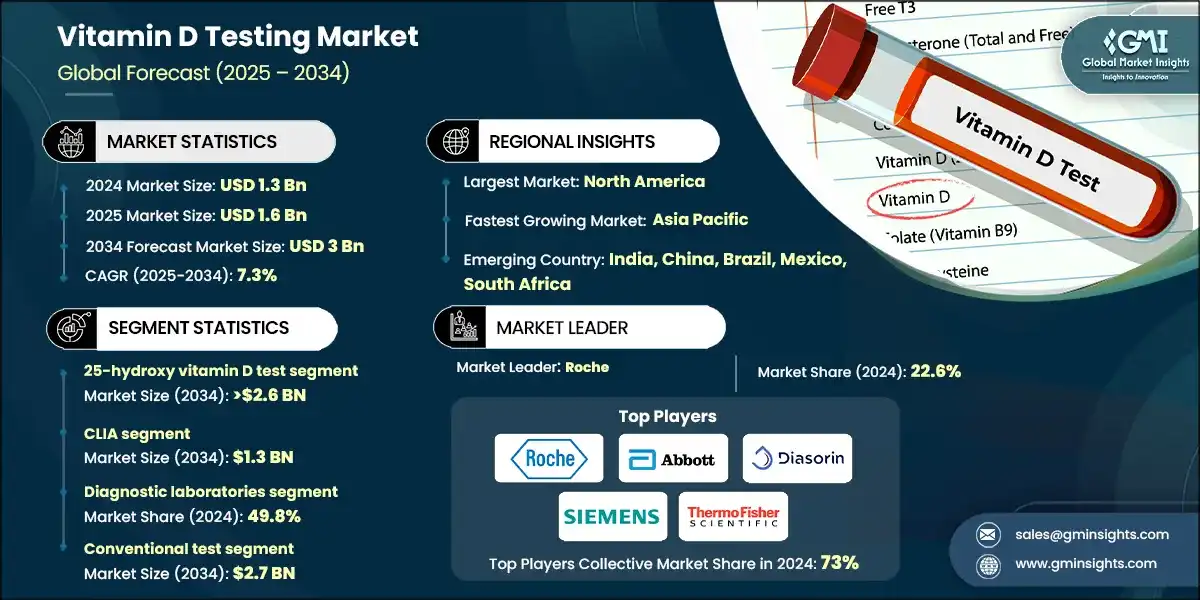
The global vitamin D testing market was valued at USD 1.3 billion in 2024. The market is expected to reach from USD 1.6 billion in 2025 to USD 3 billion in 2034, growing at a CAGR of 7.3% during the forecast period, according to the latest report published by Global Market Insights Inc. Growing incidence of vitamin D deficiency, increasing awareness of preventive healthcare, and the rising use of diagnostic testing propel market growth worldwide.
Vitamin D Testing Market Key Takeaways
Market Size & Growth
- 2024 Market Size: USD 1.3 Billion
- 2025 Market Size: USD 1.6 Billion
- 2034 Forecast Market Size: USD 3 Billion
- CAGR (2025–2034): 7.3%
Regional Dominance
- Largest Market: North America
- Fastest Growing Region: Asia Pacific
Key Market Drivers
- Increasing prevalence of vitamin D deficiency disorders.
- Rising awareness among consumers.
- Rise in public health campaigns and reimbursement policies.
- Increasing technological advancements.
Challenges
- High cost of advanced diagnostic methods.
Opportunity
- Expansion into point-of-care and home testing.
- Growth into emerging markets.
Key Players
- Market Leader: Roche led with over 22.6% market share in 2024.
- Leading Players: Top 5 players in this market include Roche, Abbott, DiaSorin, Siemens, Thermo Fisher Scientific, which collectively held a market share of 73% in 2024.
Get Market Insights & Growth Opportunities
The vitamin D testing business provides cutting-edge diagnostic solutions to payers, providers, life sciences organizations, and healthcare technology companies to upgrade regulatory compliance, clinical precision, and patient outcomes. Solutions are ELISA, chemiluminescence immunoassay, liquid chromatography–tandem mass spectrometry (LC-MS/MS), and digital diagnostic platforms that facilitate effective detection, monitoring, and management of vitamin D status, enabling preventive and personalized medicine.
Key players like F. Hoffmann-La Roche Ltd., Abbott Laboratories, DiaSorin S.p.A., Siemens Healthineers AG, and Thermo Fisher Scientific Inc. maintain their competitive edge with ongoing product innovation, prominent global reach, partnership deals, and heavy investments in research and development to keep up with growing diagnostic needs and further their market presence.
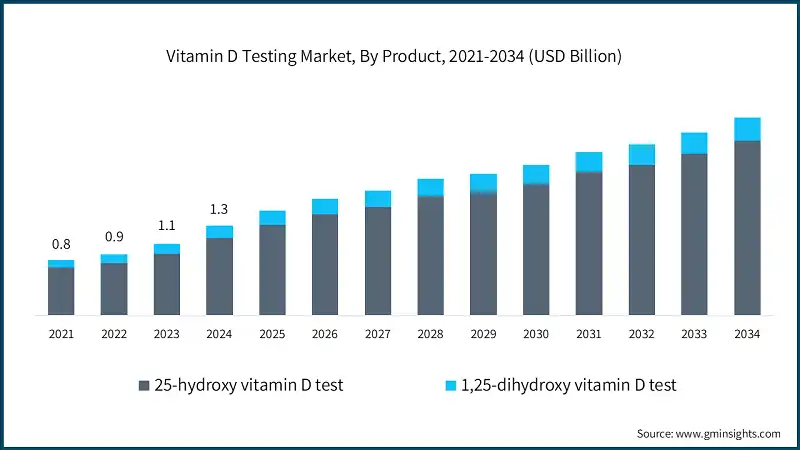
The market has increased from USD 831.9 million in 2021 and reached USD 1.1 billion in 2023. The global vitamin D testing market is expanding rapidly, driven by a convergence of clinical, technological, and societal factors that are reshaping how individuals and healthcare systems approach preventive health.
One of the most significant drivers is the rising global prevalence of vitamin D deficiency. Despite varying climates, deficiency is widespread across both developed and developing nations due to factors such as indoor lifestyles, air pollution, sunscreen use, and dietary insufficiencies. For instance, the numbers reported as per a pooled analysis of around 7.9 million people for the period 2000 to 2022, the prevalence of vitamin D deficiency was of 15.7% for serum 25-hydroxyvitamin D. This has led to increased awareness among healthcare providers and the public, prompting routine testing as part of general health assessments.
Another major factor is the growing burden of chronic diseases such as osteoporosis, diabetes, cardiovascular disorders, and autoimmune conditions where vitamin D plays a critical role in prevention and management. The below-mentioned figure highlights the major countries with diabetic population, which may be a key contributor in overall vitamin D deficient population. Physicians are increasingly incorporating vitamin D testing into diagnostic protocols to guide supplementation and monitor treatment outcomes.
Vitamin D testing is the process of measuring the levels of vitamin D and its metabolites, primarily 25-hydroxyvitamin D, in blood or serum to assess an individual’s vitamin D status. It is used to detect deficiencies, guide supplementation, and support the diagnosis and management of bone, mineral, and metabolic disorders. The testing can be performed using methods such as immunoassays, ELISA, CLIA, LC-MS, and point-of-care testing kits.
To get key market trends
Vitamin D Testing Market Trends
The increasing incidence of disorders related to vitamin D deficiency is one of the significant growth drivers for the market. The human body require vitamin D in order to adequately absorb calcium, have healthy bones, enhance immune function, and regulate inflammation.
- Although vitamin D possesses a high physiological significance, its deficiency is frequently observed globally. Nevertheless, contemporary lifestyles involving low sun exposure due to indoor jobs, urban residence, and the widespread application of sunscreen have resulted in an increase in deficiency cases in all age groups. For example, as per the data provided, approximately 1 billion individuals across the globe are afflicted with vitamin D deficiency. The information also pointed out that approximately 50% of the world's population suffer from vitamin D deficiency.
- This increase in deficiency is associated with the increasing number of health ailments, such as osteoporosis, rickets, cardiovascular illnesses, autoimmune diseases, and even mood disturbances like depression. With increasing awareness of these diseases, patients and healthcare professionals are now making earlier detection a priority through regular screening. Also, at-risk groups like the elderly, expectant mothers, and those with chronic diseases are being screened more intensively, pushing the demand further.
- Further, governments and health organizations are also promoting preventive healthcare, encouraging regular vitamin D assessments as part of general wellness checkups. For example, multiple studies have highlighted that despite having a significant exposure to sun for maximum period of the year, the South Asian (SA) countries including India, Bangladesh and Sri Lanka among other countries have a comparatively higher level of deficiencies. Further, the growing adoption and availability of home testing kits and advancements in diagnostic technologies have made testing more accessible and affordable, contributing to market expansion.
- Lastly, the widespread nature of vitamin D deficiency and its serious health implications have transformed vitamin D testing from a niche diagnostic tool into a mainstream health necessity, fuelling consistent and global market growth.
Vitamin D Testing Market Analysis
Learn more about the key segments shaping this market
Based on the product, the vitamin D testing market is bifurcated into 25-hydroxy vitamin D test and 1,25-dihydroxy vitamin D test. The 25-hydroxy vitamin D test segment has asserted its dominance in the market by securing a significant market share of 86.2% in 2024, as the segment is considered as the gold standard for assessing overall vitamin D status, driving its widespread adoption in clinical diagnostics. The segment is expected to exceed USD 2.6 billion by 2034, growing at a CAGR of 7.6% during the forecast period.
On the other hand, the 1,25-dihydroxy vitamin D test segment is expected to grow with a CAGR of 5.5%. The growth of this segment can be attributed to its use for specialized cases like kidney disorders and rare metabolic conditions, supporting its niche demand in the market.
- It is this 25-hydroxy vitamin D test segment that drives market growth with its wide range of applications. The test finds application in general health checkups, management of chronic diseases, maternal and children's health programs, and geriatric practice. The test is especially significant in assessing deficiency in those with restricted sun exposure, inadequate dietary intake, or conditions impairing vitamin D metabolism. Since the public becomes increasingly aware of the importance of vitamin D for bone health, immunity, and chronic disease prevention, testing is on the increase.
- Moreover, advancements in technology have also added to the growth of the market. Automated immunoassays, chemiluminescence platforms, and LC-MS/MS systems have enhanced test throughput and accuracy, facilitating large-scale screening in hospitals as well as diagnostic laboratories. Furthermore, the availability of at-home testing kits has also increased accessibility, enabling consumers to check their vitamin D levels at home.
- The 1,25-dihydroxy vitamin D test segment held a revenue of USD 185.5 million in 2024, with projections indicating a steady expansion at 5.5% CAGR from 2025 to 2034. The 1,25-dihydroxy vitamin D test segment fulfils a vital role in the vitamin D testing market. This test identifies the active hormonal form of vitamin D 1,25(OH)?D which the kidneys produce to help manage calcium and phosphate levels in the patient's body.
- Unlike the common 25(OH)D test used for general screening, healthcare providers recommend this specialized test when diagnosing specific health conditions. These include chronic kidney disease, high calcium levels (hypercalcemia), sarcoidosis, and disorders affecting the parathyroid glands. Medical specialists in kidney care, hormone disorders, and cancer treatment rely on this test for accurate diagnosis and treatment planning.
- Additionally, as more people develop kidney and metabolic disorders worldwide, the need for this test continues to grow. Modern healthcare's focus on personalized treatment has created more demand for precise diagnostic tools like the 1,25(OH)?D test. Due to advanced LC-MS/MS technology, doctors can now accurately measure this form of vitamin D in the blood, as it exists in very small percentages.
Based on technique, the vitamin D testing market is classified into CLIA, ELISA, LC-MS, radioimmunoassay, and other techniques. The CLIA segment dominated the market with a revenue share of 43.5% in 2024 and is expected to reach USD 1.3 billion within the forecast period.
- The chemiluminescence immunoassay (CLIA) segment is experiencing robust growth in the market, fueled by a mix of technological, clinical, and operational drivers. Its high analytical sensitivity and specificity over traditional immunoassays are one of the key drivers, allowing accurate quantification of 25-hydroxy vitamin D and 1,25-dihydroxy vitamin D metabolites, which are key biomarkers for the determination of deficiency and associated health risk.
- CLIA provides swift turnaround times, automation compatibility, and scalability, which makes it extremely ideal for big clinical labs and hospitals with high testing volumes. The rising global incidence of vitamin D deficiency associated with osteoporosis, rickets, autoimmune disorders, cardiovascular diseases, and chronic diseases has fueled demand for trustworthy testing alternatives, further driving adoption of CLIA.
- The ELISA segment held a revenue of USD 306.2 million in 2024, with projections indicating a steady expansion at 6.9% CAGR from 2025 to 2034. The enzyme-linked immunosorbent assay (ELISA) segment plays a vital role in the market by offering an effective balance of affordability, scalability, and reliable diagnostic results. Healthcare facilities widely use ELISA kits to measure 25-hydroxyvitamin D, which serves as the primary indicator of vitamin D levels in the body. These kits have become the go-to choice for clinical laboratories and research centers worldwide.
- The LC-MS segment held a revenue of USD 235 million in 2024, with projections indicating a steady expansion at 8% CAGR from 2025 to 2034.
Based on indication, the vitamin D testing market is classified into vitamin D deficiency, osteoporosis, cardiovascular, rickets, thyroid disorders, and other indications. The vitamin D deficiency segment dominated the market with a revenue share of 40.7% in 2024 and is expected to reach USD 1.3 billion within the forecast period.
- Vitamin D deficiency itself is the biggest and most straightforward force behind the vitamin D testing market. Worldwide, an estimated 1 billion people are deficient, with 40–50% of the population having low levels. Limited sun exposure, darker skin, indoor living, obesity, aging, and inadequate diet have produced widespread deficiency in both developed and developing worlds.
- Increased awareness among clinicians and consumers regarding the health consequences of low vitamin D such as compromised bone health, reduced immunity, cardiovascular risk, diabetes, and some cancers, has enormously increased test demand.
- The osteoporosis segment held a revenue of USD 316.8 million in 2024, with projections indicating a steady expansion at 6.6% CAGR from 2025 to 2034. Osteoporosis drives the demand for vitamin D testing across the world. Vitamin D helps the body absorb calcium and strengthen bones, which is vital for maintaining bone health. As people age, osteoporosis becomes more common, particularly affecting women after menopause and older men. This increase in target population leads to a rise in the number of diagnostic tests.
- Vitamin D deficiency is closely linked to decreased bone density and increased risk of fractures; therefore, physicians routinely order 25-hydroxyvitamin D tests as part of osteoporosis diagnosis, monitoring, and treatment optimization. For example, as reported by the Bone Health & Osteoporosis Foundation, approximately 10 million Americans are suffering from osteoporosis, and another 44 million have low bone density, resulting in fractures and other discomfort that burden healthcare systems with significant costs.
- The cardiovascular segment held a revenue of USD 154.7 million in 2024, with projections indicating a steady expansion at 7.5% CAGR from 2025 to 2034. The cardiovascular segment in the market is experiencing steady growth, driven by the increasing recognition of vitamin D deficiency as a modifiable risk factor for heart and vascular diseases. Research evidence indicates that low vitamin D levels are associated with hypertension, atherosclerosis, myocardial infarction, stroke, and heart failure, which has heightened clinical interest in routine vitamin D assessment for at-risk populations.
Based on patient, the vitamin D testing market is classified into adult and pediatric. The vitamin D deficiency segment dominated the market with a revenue share of 85.6% in 2024 and is expected to reach USD 2.6 billion within the forecast period.
- The adult segment dominates the market, driven by the growing prevalence of chronic diseases and lifestyle-related disorders. Adults are particularly susceptible to vitamin D deficiency due to limited sun exposure, sedentary lifestyles, obesity, and poor dietary intake. Rising awareness of vitamin D’s role in bone health, immunity, cardiovascular function, and metabolism is encouraging more individuals to undergo testing. Additionally, routine health check-ups and public health education initiatives are further supporting the uptake of vitamin D tests among adults.
- Moreover, the aging population in North America and Europe is a key driver of market growth, as declining vitamin D levels are strongly linked to bone-related conditions such as osteoporosis and higher fracture risk. In addition, a rising number of adults undergo testing due to chronic health concerns including diabetes, hypertension, autoimmune disorders, and cancer that are frequently associated with vitamin D deficiency. Women represent a significant share of those tested, as physicians routinely monitor vitamin D levels during pregnancy, after menopause, and in relation to broader reproductive health needs.
- The pediatric segment held a revenue of USD 193.7 million in 2024, with projections indicating a steady expansion at 4.3% CAGR from 2025 to 2034.
- The pediatric segment in the vitamin D testing market continues to witness healthy growth as doctors worldwide recognize that vitamin D deficiency poses a serious risk for children, potentially leading to rickets and poor bone development.
- Children in low- and middle-income countries face increased risks due to inadequate nutrition, low sunlight exposure, and spending more time indoors in urban environments. The widespread occurrence of rickets and slower growth in children has pushed doctors and health officials to make vitamin D screening a regular part of children's preventive healthcare.
Based on test type, the vitamin D testing market is classified into conventional test, and point-of-care test. The conventional test segment dominated the market with a revenue share of 92% in 2024 and is expected to reach USD 2.7 billion within the forecast period.
- The traditional market segment, comprising laboratory-based immunoassays, CLIA, HPLC, and LC-MS, is still the preferred option in the market. These are the methods adopted as a standard in the industry because they accurately and consistently quantify the levels of vitamin D within blood samples. Hospitals, diagnostic labs, and research institutions depend on these traditional tests because they yield accurate results every time, even when processing high volumes of samples.
- With vitamin D deficiency estimated to affect nearly half of the global population, healthcare practitioners increasingly recognize the importance of reliable testing. Deficiency is linked to a wide range of prevalent health conditions including osteoporosis, cardiovascular disease, diabetes, autoimmune disorders, and certain cancers making accurate assessment essential. Credible test results enable physicians to make informed decisions on supplementation and treatment strategies, ensuring better patient outcomes.
- The point-of-care test segment held a revenue of USD 107.8 million in 2024, with projections indicating a steady expansion at 9.4% CAGR from 2025 to 2034.
- The point-of-care (POC) vitamin D testing segment is witnessing robust growth as more people seek quick, convenient, and patient-friendly diagnostic solutions. Unlike traditional laboratory tests that take time for sample transport and processing, POC tests offer results within minutes at the testing location, including a clinic, pharmacy, or patient's home. This quick access to results helps both patients in need of immediate results and healthcare providers in community clinics and primary care settings.
Learn more about the key segments shaping this market
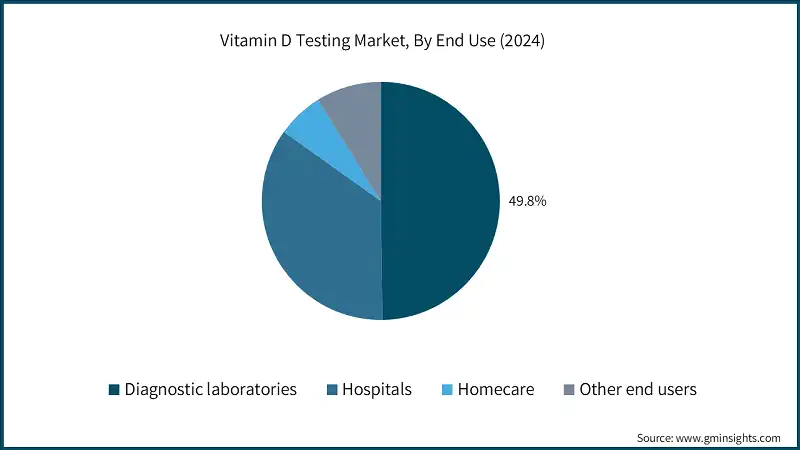
Based on end use, the vitamin D testing market is classified into diagnostic laboratories, hospitals, homecare, and other end users. The diagnostic laboratories segment dominated the market with a revenue share of 49.8% in 2024 and is expected to reach USD 1.5 billion within the forecast period.
- The two largest segments account for over 84.8% of the total market value. Diagnostic laboratories are the largest shareholding segment in the market, propelled by their expertise in high-throughput testing and their ability to enable both preventive and clinical healthcare. Among the key drivers, the increasing need for precise and scalable testing solutions is one of the main contributors. Vitamin D deficiency cuts across age groups, and diagnostic labs are capable of processing large numbers of samples quickly, thus being the best for population-level screening.
- Advances in automated immunoassays and liquid chromatography–mass spectrometry (LC-MS/MS) have made it possible for laboratories to provide accurate and consistent vitamin D testing. The technologies enable both vitamin D2 and D3 distinction, which is essential for clinical decision-making. The capability to handle thousands of tests per day with minimal labor intervention makes laboratories a desirable option for hospitals, clinics, and even direct-to-consumer laboratories.
- The hospital segment held a revenue of USD 470.6 million in 2024, with projections indicating a steady expansion at 7.1% CAGR from 2025 to 2034. Hospitals are the key end users of the vitamin D testing market due to their key role in managing both acute and chronic health conditions. One of the primary drivers is the clinical relevance of vitamin D in a wide range of diseases, especially bone disorders, autoimmune conditions, and cardiovascular issues.
- Physicians in hospital settings often order vitamin D tests to support diagnosis and treatment plans, particularly for patients with symptoms like fatigue, muscle weakness, or frequent infections.
Looking for region specific data?
North America Vitamin D Testing Market
North America dominated the global market with the highest market share of 37.7% in 2024.
- North America is a leading growth driver of the market, primarily because of its developed healthcare infrastructure, superior public health consciousness, and active policy of preventive care. The region has a heavy burden of vitamin D deficiency, particularly in northern latitudes with minimal exposure to sunlight in winter. This has created widespread testing programs across clinical, diagnostic, and homecare environments.
- Another major growth driver is the inclusion of vitamin D testing within regular health screening. Physicians also advise testing for patients suffering from such long-term conditions as osteoporosis, autoimmune diseases, and cardiovascular diseases.
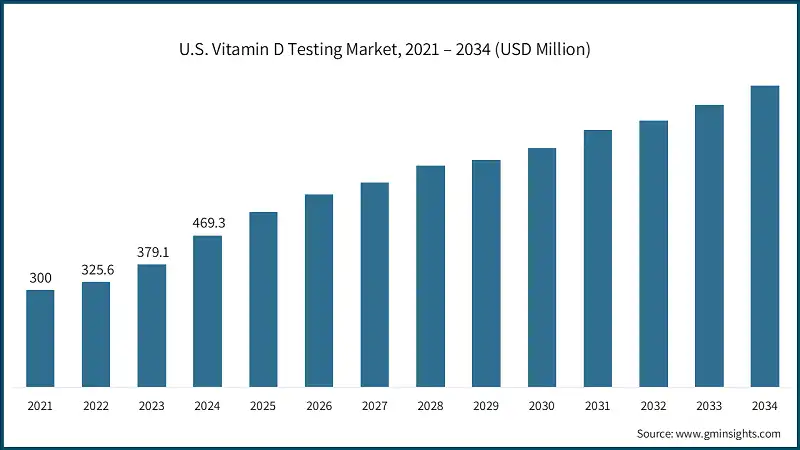
The U.S. vitamin D testing market was valued at USD 300 million and USD 325.6 million in 2021 and 2022, respectively. In 2024, the market size grew to USD 469.3 million from USD 379.1 million in 2023.
- The U.S. market has witnessed steady growth driven by multiple factors. A key driver is the increasing prevalence of vitamin D deficiency, linked to lifestyle changes, limited sun exposure, and dietary insufficiencies, which has created consistent demand for diagnostic testing.
- Growing awareness among patients and healthcare professionals about the role of vitamin D in bone health, immunity, and prevention of chronic conditions such as osteoporosis, cardiovascular disease, and diabetes further accelerates market adoption.
- Additionally, public health initiatives and screening recommendations by organizations encourage preventive testing, particularly among at-risk groups like elderly individuals, pregnant women, and those with chronic illnesses. The rising healthcare expenditure and insurance coverage for preventive diagnostics also play a vital role in market expansion.
Europe Vitamin D Testing Market
Europe market accounted for USD 389.4 million in 2024 and is anticipated to show lucrative growth over the forecast period.
- Europe market is driven by public health initiatives, an aging population, and significant seasonal variations in sun exposure. In Northern and Central European countries, long winters with limited UVB radiation contribute to a high prevalence of vitamin D deficiency affecting an estimated 13% of the population. As a result, governments and healthcare providers place strong emphasis on routine testing, particularly among high-risk groups such as the elderly, children, and pregnant women.
- The area also enjoys universal healthcare programs, which usually cover preventive testing such as vitamin D screening. Making such tests readily available in this way supports early diagnosis and treatment of related conditions like osteoporosis and autoimmune diseases.
Germany dominates the European vitamin D testing market, showcasing strong growth potential.
- Germany leads the European market, supported by its robust healthcare infrastructure, advanced diagnostic capabilities, and growing public health awareness. The country’s extensive network of hospitals, diagnostic laboratories, and private clinics ensures broad access to testing services. High deficiency rates particularly among the elderly, individuals with limited sun exposure, and patients with chronic conditions such as osteoporosis and autoimmune disorders continue to fuel demand.
- In addition, Germany’s strong focus on preventive healthcare and regular screening programs promotes early detection and effective management of deficiencies. Supportive reimbursement frameworks and government-backed health initiatives further enhance affordability and accessibility, reinforcing the country’s dominant market position.
Asia Pacific Vitamin D Testing Market
The Asia Pacific market is anticipated to grow at the highest CAGR of 9.1% during the analysis timeframe.
- The Asia Pacific market is witnessing rapid growth, driven by urbanization, changing lifestyles, and rising health awareness. Despite abundant sunlight in much of the region, deficiency remains prevalent due to indoor living, air pollution, and cultural practices that limit sun exposure.
- Countries such as India, China, Japan, and Australia are seeing increased demand for testing, fueled by rising incidences of bone-related disorders, diabetes, and cardiovascular diseases. In India, for example, vitamin D deficiency affects all age groups, prompting both public and private healthcare providers to promote regular screening programs.
China vitamin D testing market is estimated to grow with a significant CAGR in the Asia Pacific market.
- The China market is projected to grow at a significant CAGR within the Asia Pacific region, driven by multiple factors. Rising prevalence of vitamin D deficiency, especially in urban populations with limited sun exposure, is one of the major growth drivers.
- Increasing awareness among healthcare professionals and the general population about the health consequences of vitamin D deficiency, such as osteoporosis, rickets, and weakened immunity, is fueling the adoption of testing. Government-led public health initiatives and campaigns aimed at addressing nutritional deficiencies are further promoting screening practices.
- In addition, the rapid expansion of diagnostic laboratories, improved access to advanced testing technologies, and the growing preference for preventive healthcare are contributing to the market’s expansion.
Latin American Vitamin D Testing Market
Brazil leads the Latin American market, exhibiting remarkable growth during the analysis period.
- Leadership in the Latin American market for vitamin D testing is established by Brazil due to several related factors. Its high incidence of vitamin D deficiency in all age groups has led to high demand for diagnostic tests.
- Growing awareness among physicians and the public about the health implications of vitamin D deficiency ranging from bone disorders and immune dysfunction to chronic diseases has accelerated the adoption of testing. Additionally, the expansion of the nation’s healthcare infrastructure, including advanced diagnostic laboratories and point-of-care testing facilities, has improved accessibility in both urban and semi-urban areas.
- Public health campaigns and government policies advocating preventive health and monitoring of nutrition also contribute significantly to the popularity of vitamin D testing. Also, greater investment by private hospital chains and diagnostic chains in advanced laboratory technologies has enhanced test accuracy and turnaround time, leading to improved patient confidence.
Middle East and Africa Vitamin D Testing Market
Saudi Arabia market to experience substantial growth in the Middle East and Africa market in 2024.
- The Saudi Arabia market is expected to experience significant growth in 2024, driven by multiple factors. The high prevalence of vitamin D deficiency fueled by limited sun exposure and lifestyle patterns has created strong demand for regular testing.
- Growing awareness among consumers and healthcare professionals about the health risks of deficiency, including osteoporosis, cardiovascular diseases, and immune dysfunction, is further encouraging proactive screening.
- Additionally, government-led public health initiatives and supportive reimbursement policies aimed at early detection and prevention are facilitating greater adoption of vitamin D testing across the country.
Vitamin D Testing Market Share
The market is highly competitive, with leading diagnostic companies focusing on technological innovation, automation, and strategic collaborations to strengthen their market positions. Rising prevalence of vitamin D deficiency, increasing public and physician awareness, and growing preventive healthcare initiatives are driving companies to leverage R&D investments, advanced immunoassay platforms, and high-throughput testing systems to improve diagnostic accuracy and patient outcomes. The global shift toward home-based, personalized, and value-driven healthcare is also encouraging players to develop cost-effective, patient-centric solutions and expand their presence in emerging markets.
Key players include Roche, Abbott, DiaSorin, Siemens, and Thermo Fisher Scientific, collectively accounting for 73% of the global market. These companies maintain leadership through extensive test portfolios, strong global distribution networks, and continuous advancements in automated immunoassays, chemiluminescent assays, and point-of-care testing platforms. Their dominance is reinforced by strategic partnerships with hospitals, laboratories, and diagnostic service providers to enhance accessibility and adoption.
Smaller and niche players are gaining traction by offering rapid, portable, and patient-friendly testing kits. Competitive differentiation is increasingly defined by the ability to deliver highly accurate, scalable, and cost-efficient vitamin D testing solutions. As the market evolves, competition is expected to intensify, with both established leaders and emerging firms pursuing innovation, digital health integration, and strategic alliances to capture greater market share.
Vitamin D Testing Market Companies
Few of the prominent players operating in the vitamin D testing industry include:
- Abbott
- bioMérieux
- Bio-Rad Laboratories
- Danaher (Beckman Coulter)
- Diasorin
- EUROIMMUN
- Roche
- Mindray Medical International
- NanoEnTek
- NanoSpeed Diagnostics
- Qualigen Therapeutics
- Randox Laboratories
- Siemens
- Thermo Fisher Scientific
- Tosoh
- Roche
Roche leads the vitamin D testing market with a share of 22.6% in 2024. Roche leverages its advanced automated immunoassay platforms and extensive global network to deliver highly accurate, high-throughput vitamin D testing, supporting large-scale clinical diagnostics and research, while strategic collaborations with hospitals and labs enhance accessibility and adoption worldwide.
Abbott’s USP lies in its rapid, point-of-care vitamin D testing solutions and integrated digital health systems, enabling convenient, patient-centric diagnostics. Strong R&D focus ensures precise and scalable assays, while partnerships with healthcare providers and laboratories expand market reach and improve early detection of deficiency.
Vitamin D Testing Market Report Attributes
| Key Takeaway | Details |
|---|---|
| Market Size & Growth | |
| Base Year | 2024 |
| Market Size in 2024 | USD 1.3 Billion |
| Market Size in 2025 | USD 1.6 Billion |
| Forecast Period 2025 - 2034 CAGR | 7.3% |
| Market Size in 2034 | USD 3 Billion |
| Key Market Trends | |
| Drivers | Impact |
| Increasing prevalence of vitamin D deficiency disorders | Growing deficiency cases fuel demand for routine testing, boosting diagnostic adoption across hospitals, clinics, and laboratories worldwide. |
| Rising awareness among consumers | Increasing health consciousness drives individuals toward preventive testing, encouraging early diagnosis and supporting steady market growth in both developed and developing regions. |
| Rise in public health campaigns and reimbursement policies | Government initiatives and supportive reimbursement frameworks improve accessibility, reduce testing costs, and encourage wider adoption of vitamin D testing services. |
| Increasing technological advancements | Innovations in automated analyzers and high-sensitivity diagnostic tools improve accuracy, turnaround times, and scalability, making vitamin D testing more reliable and efficient. |
| Pitfalls & Challenges | Impact |
| High cost of advanced diagnostic methods | Elevated expenses for specialized equipment and assays restrict widespread adoption, particularly in low-resource healthcare settings and cost-sensitive markets. |
| Opportunities: | Impact |
| Expansion into point-of-care and home testing | Growing demand for convenient, rapid, and portable diagnostics opens new market avenues, especially for self-monitoring and decentralized healthcare delivery models. |
| Growth into emerging markets | Rising healthcare investments, improved infrastructure, and increasing awareness in developing economies present significant untapped potential for market expansion and long-term growth. |
| Market Leaders (2024) | |
| Market Leaders |
Market Share 22.6% |
| Top Players |
Collective Market Share 73% |
| Competitive Edge |
|
| Regional Insights | |
| Largest Market | North America |
| Fastest growing market | Asia Pacific |
| Emerging countries | India, China, Brazil, Mexico, South Africa |
| Future outlook |
|
What are the growth opportunities in this market?
Vitamin D Testing Industry News:
- In March 2025, Danaher (Beckman Coulter) had announced FDA clearance for the DxC 500i Clinical Analyzer, a next-generation system integrating clinical chemistry and immunoassay testing in a single compact platform. The analyzer was designed to boost efficiency, reduce turnaround time, and support high-volume testing with enhanced automation. This clearance supported the market by enabling faster, more reliable immunoassay testing and strengthening Beckman Coulter’s presence in clinical laboratories.
- In January 2025, bioMérieux acquired SpinChip Diagnostics ASA, enhancing its immunoassay capabilities with a rapid point-of-care platform. While initially focused on cardiac markers, this technology integration strengthened bioMérieux’s overall diagnostics portfolio. Thus, it supported advancements in the vitamin D testing market by expanding rapid immunoassay applications and reinforcing the company’s innovation strategy.
- In August 2024, Bio-Rad Laboratories launched Specialty Immunoassay Plus (SPIA Plus), a liquid specialty immunoassay control aimed at enhancing precision and efficiency in laboratory testing. The product features clinically relevant analytes, including Procalcitonin, IL-6, Active Vitamin B12, and optimized Vitamin D ranges. This launch supports the market by improving quality control, ensuring reliable test results, and reinforcing Bio-Rad’s leadership in specialty diagnostics.
- In August 2024, Beckman Coulter introduced a new integrated chemistry and immunoassay analyzer to streamline laboratory operations and enhance diagnostic efficiency. The system combined high-throughput capabilities with advanced automation and strong connectivity features for clinical laboratories. This launch supported the market by improving testing efficiency, expanding assay capabilities, and strengthening Beckman Coulter’s integrated diagnostics portfolio.
- In March 2021, Bio-Rad Laboratories had expanded its partnership with a major diagnostics company to provide its InteliQ portfolio of quality controls across more laboratory platforms. The collaboration aimed to deliver ready-to-use, automation-friendly controls that improved workflow efficiency and consistency. This expansion reinforced the market by strengthening quality assurance processes and enhancing Bio-Rad’s global diagnostics presence.
The vitamin D testing market research report includes an in-depth coverage of the industry with estimates and forecast in terms of revenue in USD Million from 2021 – 2034 for the following segments:
Market, By Product
- 25-hydroxy vitamin D test
- 1,25-dihydroxy vitamin D test
Market, By Technique
- CLIA
- ELISA
- LC-MS
- Radioimmunoassay
- Other techniques
Market, By Indication
- Vitamin D deficiency
- Osteoporosis
- Cardiovascular
- Rickets
- Thyroid disorders
- Other indications
Market, By Patient
- Adult
- Pediatric
Market, By Test Type
- Conventional test
- Point-of-care test
Market, By End Use
- Diagnostic laboratories
- Hospitals
- Homecare
- Other end use
The above information is provided for the following regions and countries:
- North America
- U.S.
- Canada
- Europe
- Germany
- UK
- France
- Spain
- Italy
- Netherlands
- Asia Pacific
- China
- Japan
- India
- Australia
- South Korea
- Latin America
- Brazil
- Mexico
- Argentina
- Middle East and Africa
- South Africa
- Saudi Arabia
- UAE
Frequently Asked Question(FAQ) :
What is the market size of the vitamin D testing in 2024?
The market size was USD 1.3 billion in 2024, with a CAGR of 7.3% expected through 2034 driven by rising vitamin D deficiency cases, preventive healthcare focus, and diagnostic adoption.
What is the projected value of the vitamin D testing market by 2034?
The market is expected to reach USD 3 billion by 2034, supported by point-of-care testing expansion, technological advancements, and increasing public health initiatives.
What is the projected size of the vitamin D testing industry in 2025?
The vitamin D testing market is expected to reach USD 1.6 billion in 2025.
How much revenue did the 25-hydroxy vitamin D test segment generate?
The 25-hydroxy vitamin D test segment held 86.2% share in 2024, projected to exceed USD 2.6 billion by 2034.
What was the valuation of the CLIA technique segment?
The CLIA technique dominated with 43.5% share in 2024, expected to reach USD 1.3 billion by 2034.
Which region leads the vitamin D testing market?
North America led the market with 37.7% share in 2024, driven by advanced healthcare infrastructure, preventive care programs, and high deficiency prevalence.
What are the upcoming trends in the vitamin D testing industry?
Key trends include the adoption of point-of-care and home-based testing, AI-driven diagnostic platforms, rising government health campaigns, and growing integration with digital healthcare systems.
Who are the key players in the vitamin D testing market?
Key players include Roche, Abbott, DiaSorin, Siemens Healthineers, Thermo Fisher Scientific, Bio-Rad Laboratories, Danaher (Beckman Coulter), bioMérieux, and EUROIMMUN.
Vitamin D Testing Market Scope
Related Reports