Summary
Table of Content

Vial Adaptors Market
Get a free sample of this report
Form submitted successfully!
Error submitting form. Please try again.
Thank you!
Your inquiry has been received. Our team will reach out to you with the required details via email. To ensure that you don't miss their response, kindly remember to check your spam folder as well!
Request Sectional Data
Thank you!
Your inquiry has been received. Our team will reach out to you with the required details via email. To ensure that you don't miss their response, kindly remember to check your spam folder as well!
Form submitted successfully!
Error submitting form. Please try again.
Vial Adaptors Market Size
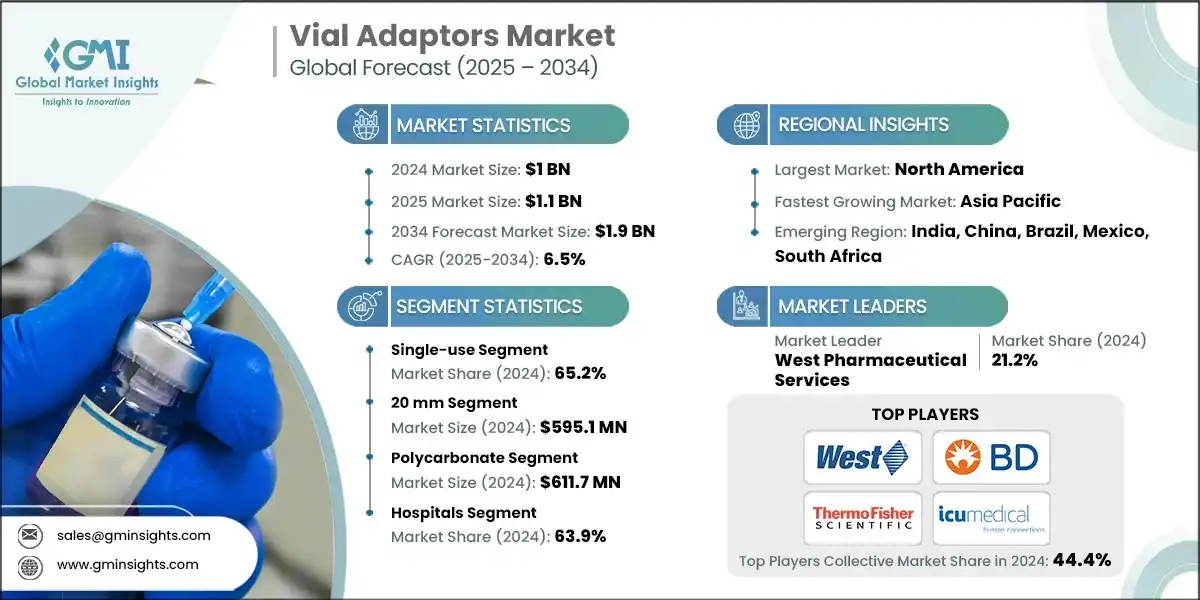
The global vial adaptors market was valued at USD 1 billion in 2024. The market is expected to grow from USD 1.1 billion in 2025 to USD 1.9 billion in 2034, at a CAGR of 6.5% from 2025 to 2034, according to the latest report published by Global Market Insights Inc. This high market growth is attributed to the increasing use of prefilled syringes and vial systems, growing need for more focused drug delivery in chronic illness management, rising infection control and patient safety measures, ongoing innovations in drug reconstitution technology, and an increased focus on the market for biologic and specialty drugs, among other contributing factors.
Vial Adaptors Market Key Takeaways
Market Size & Growth
- 2024 Market Size: USD 1 Billion
- 2034 Forecast Market Size: USD 1.9 Billion
- CAGR (2025–2034): 6.5%
Key Market Drivers
- Growing prevalence of chronic conditions.
- Rise in awareness regarding advantages of the vial adaptors.
- Increase in geriatric population.
Challenges
- Availability of substitutes.
Opportunity
- Expansion of biologics and biosimilars.
- Growing demand for needle-free drug delivery systems.
Key Players
- Market Leader: West Pharmaceutical Services led with over 21.2% market share in 2024.
- Leading Players: Top 5 players in this market include ICU Medical, Thermo Fisher Scientific, Becton, Dickinson and Company, West Pharmaceutical Services, which collectively held a market share of 44.4% in 2024.
Get Market Insights & Growth Opportunities
Vial adaptors are specialized devices used in pharmaceutical, biotechnology, and healthcare sectors for the aseptic transfer of liquids to and from vials and syringes as well as for the aseptic transfer of fluids. These devices form a sterile connection with vials, syringes, or other containers, making a sterile seal with syringes, vials, or other containers, which ensures the safety and integrity of pharmaceuticals during reconstitution, transfer, and administration.
Leading players in the vial adaptors market include West Pharmaceutical Services, Becton, Dickinson and Company, Medline, Thermo Fisher Scientific, and ICU Medical. These companies maintain their competitive edge through continuous product innovation, global market presence, and significant investments in research and development.
The market has increased from USD 802.2 million in 2021 and reached USD 942.7 million in 2023, with the historic growth rate of 5.8%. The market growth was driven by the rise in demand for aseptic drug reconstitution in regions like oncology and biologic therapies where sterility is vital. Increased use of single-use systems to prevent cross-contamination and meet strict infection control regulations is also driving growth. Widespread adoption of vial adaptors is also being fueled by the growing prevalence of chronic diseases as well as the increase in home care and outpatient care settings.
The demand for safer and more efficient drug delivery systems, including prefilled syringes, has driven the increased adoption of vial adaptors to reduce drug wastage and contamination. According to the FDA, medication errors in healthcare settings decreased by 28% between 2021 and 2023 following the implementation of closed transfer devices such as vial adaptors. In addition, the WHO reported in 2023 that healthcare facilities using vial adaptors experienced a 45% reduction in medication contamination incidents compared to those using traditional transfer methods.
Vial adaptors enable precise dosing for chronic conditions such as cancer, diabetes, and autoimmune disorders, while also facilitating accurate and frequent multidose administration. For instance, the World Heart Federation reported that in 2023 approximately 537 million adults were living with diabetes, and cancer cases reached 20.2 million in 2022. Similarly, the CDC estimated that 24% of U.S. adults in 2021 were living with multiple chronic conditions requiring scaled medication. By aiding in the reconstitution and transfer of lyophilized drugs, vial adaptors enhance patient compliance and reduce errors in long-term chronic therapies.
Moreover, there is a growing pipeline of complex biologic drugs that are often provided in a lyophilized form which requires efficient reconstitution tools such as vial adaptors. To improve drug stability, shelf life, and patient-friendly administration, pharmaceutical manufacturers are increasing the use of these components, which is aiding in expansion of the market.
To get key market trends
Vial Adaptors Market Trends
The market is witnessing significant growth, driven by the rising shift toward needle-free and aseptic technologies, growing adoption in home healthcare & self-administration, and surging need for single-use and disposable devices, among other factors are collectively boosting the industry growth.
- There is a substantial increase in demand for needle-free vial adaptors, as they help reduce needle-stick injuries and ensure safe drug transfer in injection-based drug delivery systems. These technologies are primarily adopted for enhanced patient and clinician safety, alongside stringent infection control, and are widely used in hospitals and homecare settings to minimize contamination risks. This trend strengthens the need for advanced, user-friendly, and tamper-proof drug delivery devices.
- The growth of home healthcare services is enabling patients to actively administer their own medications, often through devices such as vial adaptors. Chronic disease patients, particularly those with diabetes and autoimmune disorders, are the major beneficiaries. This trend is supported by the rising availability of medications designed for at-home use, prompting manufacturers to design devices that are simple, intuitive, and safe for non-clinical users.
- There is also an emerging preference for single-use vial adaptors over reusable ones, driven by convenience, safety, and reduced cross-contamination risks. This preference is especially strong in hospitals and clinical trials where sterility is critical. Disposable vial adaptors also support regulatory compliance and are often tailored to specific drugs or processes. Despite concerns over medical waste, their adoption continues to grow.
- Emerging markets such as Asia Pacific, Latin America, and the Middle East are creating new opportunities for vial adaptor adoption. Expansion of healthcare infrastructure, rising pharmaceutical funding, and large-scale vaccination drives are fueling demand for drug delivery devices in these regions. Hospitals and immunization programs are increasingly incorporating vial adaptors, and manufacturers are investing heavily to capture growth potential. Collectively, these factors are expected to positively drive market expansion.
Vial Adaptors Market Analysis

Learn more about the key segments shaping this market
Based on product type, the vial adaptors market is segmented into single-use and multi-use vial adaptors. The single-use segment dominated the market in 2024, accounting for 65.2% of the share, driven by the growing preference for aseptic and closed-system delivery, increasing adoption in home healthcare and self-administration, and its role in infection control and pandemic preparedness.
This segment is projected to exceed USD 1.3 billion by 2034, growing at a CAGR of 6.7%. In contrast, the multi-use vial adaptors segment is anticipated to expand at a CAGR of 5.9%, supported by their cost efficiency in high-volume clinical settings, compatibility with specialized drug delivery systems, and rising demand from resource-limited settings and public health programs.
- The single-use vial adaptors segment is gaining momentum in the vial adaptors market, driven by the growing focus on infection control, medication safety, and clinical workflow efficiency. Single-use systems are increasingly preferred in today’s healthcare environment as they enhance safety for both patients and healthcare workers by reducing the risk of cross-contamination and healthcare-associated infections (HAIs). These adaptors are also user-friendly, requiring no sterilization between uses, and are well-suited for automated, high patient turnover hospital and pharmacy settings where safe and efficient drug reconstitution and transfer are critical.
- Single-use vial adaptors enhance operational efficiency and support long-term cost reduction by eliminating labor-intensive sterilization processes and improving dosing accuracy. These benefits are particularly valuable in oncology, immunology, and rare disease treatments, where injectable biologics and high-cost drugs are frequently administered. Additionally, the rising demand for lyophilized (freeze-dried) drugs that require reconstitution prior to use is further driving the adoption of single-use adaptors.
- In low-resource or rural healthcare settings, single-use adaptors simplify mobile health and decentralized care programs by removing the need for centralized sterilization. This improves efficiency in mobile health initiatives and broadens access to safe drug delivery. Collectively, these factors are expected to drive the continued growth and adoption of single-use vial adaptors globally.
- The multi-use vial adaptors segment accounted for 34.8% of the market, valued at USD 355.7 million in 2024, and is projected to grow steadily in the coming years. Increasing emphasis on medication efficiency, dose accuracy, and sustainability is boosting demand for these products.
- Multi-use adaptors maximize the value of high-cost therapies such as biologics and oncology drugs by enabling multiple sterile accesses to a single vial, thereby reducing drug wastage. They are particularly suited for intensive care units, pediatrics, and outpatient clinics, especially in cases involving lyophilized and multi-dose biologics.
- Rising adoption of hospital-based compounding and batch preparation, combined with antimicrobial care strategies, is further driving use. By containing contamination risks, minimizing medical waste, and lowering overall treatment costs, multi-use vial adaptors are gaining traction among environmentally conscious healthcare providers.
Based on product size, the vial adaptors market is segmented as 13 mm, 20 mm, and other product sizes. The 20 mm segment dominated the market in 2024 accounting for USD 595.1 million and is anticipated to grow at a CAGR of 6.3% during the forecast period.
- The 20 mm segment is expected to witness significant growth as it is compatible with numerous standard vial types and is widely used in biologics, vaccines, and other high-value injectables. With pharmaceutical manufacturers increasingly shifting toward complex biologics and biosimilars often requiring sterile multi-dose delivery systems, the 20 mm vial adaptor is preferred for its standardized design and broad compatibility. Its balance between drug volume capacity and ease of handling makes it especially valuable in hospitals, clinics, and home healthcare settings.
- The rising incidence of chronic and infectious diseases such as cancer, rheumatoid arthritis, and COVID-19 has increased demand for parenteral drug formulations, making 20 mm vial adaptors essential for ensuring safe drug transfer and reducing contamination risks.
- Regulatory focus on aseptic handling in drug administration has also driven manufacturers to design 20 mm adaptors with advanced sealing mechanisms, tamper-evident features, and broad compatibility with diverse administration sets. As the pharmaceutical pipeline expands toward specialty injectables and personalized therapies, the 20 mm size will remain a dominant and indispensable component of safe and efficient drug delivery.
- The 13 mm segment accounted for 36.2% of the market in 2024 and is projected to reach USD 726.3 million by 2034. Its growth is attributed to wide applicability across therapeutic areas and compatibility with commonly used smaller vial formats, particularly in clinical and outpatient settings where lower drug volumes are administered.
- Demand for 13 mm vial adaptors is further supported by the increasing adoption of unit-dose packaging in biologics and specialty pharmaceuticals, where sterility, precision, and waste reduction are critical. Smaller vials are frequently used for high-value, high-potency drugs such as biologics, vaccines, and gene therapies, making 13 mm adaptors vital for ensuring accurate dosing and minimal exposure risk.
- The expanding use of pediatrics, geriatrics, and personalized medicine which require smaller dosing volumes is accelerating demand for compact, safe, and easy-to-use adaptor solutions.
- Additionally, the 13 mm segment is gaining traction in home infusion therapies and ambulatory care, where safety, user-friendliness, and reduced risk of needle-stick injuries are key priorities, further propelling its market growth.
Based on material, the vial adaptors market is segmented as polycarbonate, silicone, polyethylene, and other materials. The polycarbonate segment dominated the market in 2024 accounting for USD 611.7 million and is anticipated to grow at a CAGR of 6.8% during the forecast period.
- The polycarbonate segment is expected to witness notable growth due to its functional advantages, regulatory compliance, and expanding applications in biologics and biosimilar therapies. Its clarity, impact resistance, and chemical stability ensure safety and precision in injectable drug delivery, especially in sterile environments where biologics require repeated sterilization.
- Hospitals, clinics, and in-home care settings benefit from polycarbonate’s durability, as it is autoclavable and compatible with sterilization methods such as gamma irradiation and ethylene oxide. Its dimensional stability and moldability further enable the production of precise, leak-free adaptors.
- With the expansion of biologics and other complex medications, demand for polycarbonate will continue to rise as it provides high safety performance, long-lasting durability, and advanced material resilience, making it a dominant choice in the vial adaptors market.
- The silicone segment was valued at USD 210 million in 2024 and is projected to grow at a CAGR of 6.4%. Its biocompatibility, chemical resistance, and flexibility make it ideal for vial adaptors, ensuring airtight, leak-proof seals that preserve sterility and drug stability.
- Silicone’s ability to withstand a wide range of temperatures and pressures, combined with its inert nature, reduces contamination risks and supports its use in both single-use and multi-use vial adaptors for biologics and other sensitive drugs.
- The polyethylene segment held 11.7% of the market in 2024 and is expected to grow steadily. It is widely used due to its low cost, ease of molding, and chemical resistance, enabling large-scale production of single-use vial adaptors for hospitals and clinical settings where sterility and affordability are critical.
- Polyethylene’s compatibility with sterilization methods such as gamma and ethylene oxide irradiation, along with its lightweight, non-reactive nature, makes it suitable for safely transporting a wide range of pharmaceutical formulations, including sensitive drugs.
Learn more about the key segments shaping this market
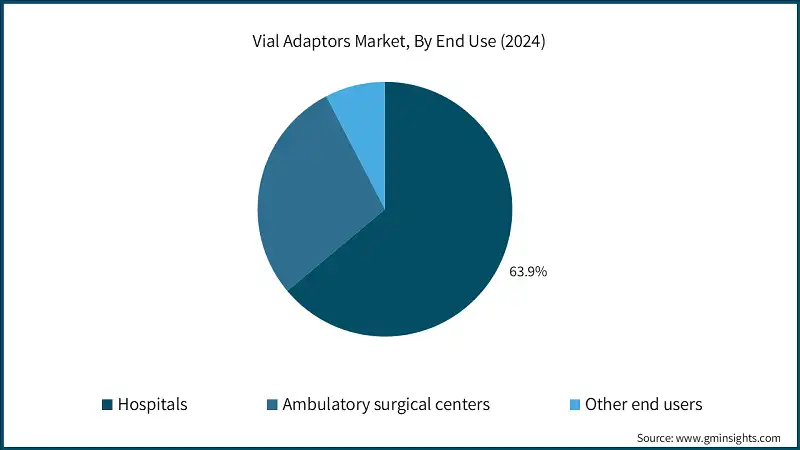
Based on end use, the vial adaptors market is classified into hospitals, ambulatory surgical centers, and other end users. The hospitals segment dominated the market with a revenue share of 63.9% in 2024.
- The top two end-use segments account for over 92.4% of total market value, with hospitals leading the market. This dominance is driven by rising global hospitalization rates, increasing complexity of drug regimens, and stricter infection prevention protocols. Hospitals remain the primary centers for biologics, chemotherapeutics, vaccines, and critical care medications many of which require precise reconstitution, dilution, or transfer to infusion vials and systems.
- Vial adaptors address these needs by enabling needle-free access, minimizing contamination risks, and reducing needle-stick injuries, while ensuring accurate dosing. Their role has become even more critical as regulatory authorities intensify infection control requirements due to the rising incidence of multi-drug resistant (MDRO) infections.
- The ambulatory surgical centers (ASCs) segment ranks second and is expected to grow at a CAGR of 6.7% during the forecast period. ASCs, as a rapidly expanding category of healthcare facilities, rely on operational efficiency, cost control, and aseptic practices to perform outpatient surgeries and administer drugs swiftly.
- The increasing demand for fast-acting therapeutic and anesthetic drugs in outpatient surgeries, combined with shorter recovery times, reinforces the need for vial adaptors. Single-use and compliant adaptor systems further enhance ASC workflows by ensuring sterility, reducing turnaround time, and improving patient throughput.
Looking for region specific data?
North America dominated the global vial adaptors market with the highest market share of 40.8% in 2024.
- The region benefits from a well-established healthcare infrastructure and a high rate of adoption of advanced drug delivery technologies, which accelerates the uptake of vial adaptors in hospitals, specialty clinics, and homecare settings. Rising prevalence of chronic diseases such as cancer, diabetes, and autoimmune disorders has fueled the demand for injectable and reconstituted drugs, thereby driving the need for efficient and safe adaptor systems.
- The growing utilization of biologics and lyophilized drugs, which require accurate reconstitution, further supports market expansion. Additionally, North America is home to leading pharmaceutical companies, contract manufacturing organizations (CMOs), and research institutions that increasingly integrate vial adaptor technologies into their processes to ensure sterility and reduce contamination risks.
- Regulatory emphasis on patient safety and drug integrity has also pushed adoption, as advanced adaptor systems minimize errors, enhance drug conservation, and improve workflow efficiency.
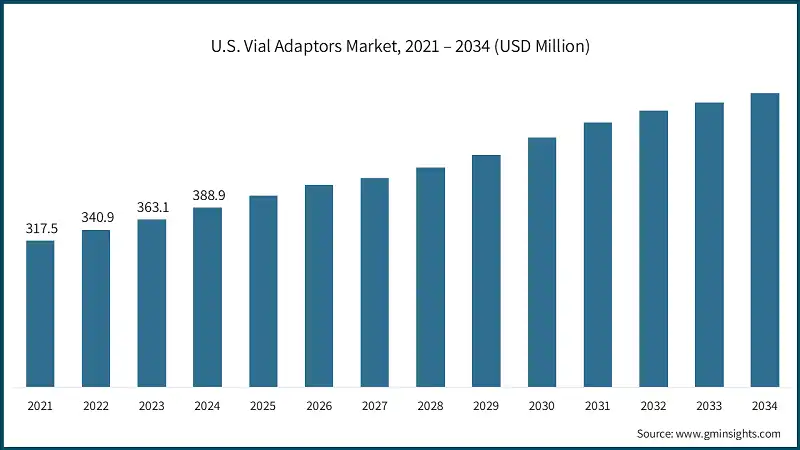
The U.S. vial adaptors market was valued at USD 317.5 million and USD 340.9 million in 2021 and 2022, respectively. The market size reached USD 388.9 million in 2024, growing from USD 363.1 million in 2023 and is anticipated to grow at a CAGR of 4.9% between 2025 to 2034 period.
- North America, particularly the U.S., has a high concentration of biopharmaceutical companies producing injectable drugs. Many of these medications require reconstitution prior to administration, creating strong demand for sterile vial adaptors. The expansion of biologics and biosimilars is further driving the need for specialty drug delivery systems in hospitals and specialty pharmacies, as the FDA approved 17 new biosimilar products in 2023, up from 7 in 2021.
- The adoption of vial adaptors and other advanced medical devices in the region is supported by a highly developed healthcare system and significant healthcare spending. U.S. healthcare expenditures reached approximately USD 4.5 trillion in 2022, reflecting a 4.1% increase over the previous year. Sterile and efficient drug reconstitution systems are increasingly used in healthcare facilities to streamline the preparation of complex medicines, enhance patient safety, and improve operational efficiency.
- In addition, the U.S. Department of Health and Human Services reported a 23% increase in home healthcare services between 2021 and 2023. Patients are increasingly able to self-administer treatments such as insulin, immunoglobulins, and hormones with the help of vial adaptors that enable safe and sterile drug transfer. CMS data from 2022 highlighted that home health spending reached USD 125 billion, a 15% increase from 2021, underscoring the growing shift of healthcare services to home settings and further supporting demand growth in the region.
Europe vial adaptors market accounted for USD 313.9 million in 2024 and is anticipated to show lucrative growth over the forecast period.
- Europe is the second-largest regional market for vial adaptors and is expected to maintain steady growth from 2025 to 2034. Growth is primarily driven by the rising incidence of chronic illnesses and the prevalence of autoimmune diseases. For example, according to NIH (2023), 19 autoimmune disorders had a combined prevalence of 10.2% in a population of 1,912,200 females and 668,264 males.
- The study further highlighted a socioeconomic gradient in several conditions such as pernicious anaemia, rheumatoid arthritis, Graves’ disease, and systemic lupus erythematosus. It also noted seasonal and regional variations in disease onset, which increases the need for injectable biologics that must be reconstituted under sterile conditions.
- An aging population also contributes significantly to demand. Eurostat (2024) reported that the EU population reached 449.3 million, with 21.6% aged 65 years and above. This demographic shift is driving the need for treatments targeting cancer, diabetes, and cardiovascular diseases, many of which require biologics supplied in vials.
- In addition, the European Medicines Agency’s Medical Device Regulation (MDR 2017/745), enforced from 2021, introduced stricter requirements for the sterilization of medicine delivery devices. Countries such as Germany, France, and the UK are emphasizing aseptic practices in hospitals and pharmacies, leading to increased adoption of multidose vial adaptors that help reduce contamination risks and dosing errors.
Germany dominates the European vial adaptors market, showcasing strong growth potential.
- Germany dominates the European market, supported by its advanced healthcare infrastructure, strong pharmaceutical manufacturing base, and high demand for innovative drug delivery solutions.
- The country hosts several leading pharmaceutical and biotechnology companies that actively invest in the research and development of biologics, specialty drugs, and injectables, thereby creating significant demand for safe and efficient vial adaptor systems.
- With the rising prevalence of chronic conditions such as cancer, autoimmune disorders, and infectious diseases, the need for accurate and contamination-free drug reconstitution has increased substantially, further driving adoption.
- Germany’s stringent regulatory standards on medication safety and sterility further encourage hospitals, clinics, and pharmaceutical manufacturers to adopt high-quality adaptor technologies that reduce medication errors and contamination risks.
The Asia Pacific vial adaptors market is anticipated to grow at the highest CAGR of 9.6% during the analysis timeframe.
- The Asia Pacific region is poised to drive significant growth in the vial adaptors market, supported by multiple strong factors. A primary catalyst is the rapid expansion of the biologics and biopharmaceutical sector. Biologics including monoclonal antibodies, recombinant proteins, vaccines, and cell- and gene-based therapies, accounted for the largest revenue share, with monoclonal antibodies leading the way. The growing production and administration of these therapies directly fuels demand for vial adaptors that are compatible with complex injectable biologics.
- Another key driver is the region’s rapidly aging population. According to the United Nations, in Asia and the Pacific, the number of older persons is projected to more than double, from 630 million in 2020 to nearly 1.3 billion by 2050. This demographic shift is bringing a surge in chronic, non-communicable diseases such as diabetes, cardiovascular disorders, and autoimmune conditions, all of which are major treatment areas for biologics and biosimilars.
Japan is estimated to grow with a significant CAGR, in the Asia Pacific vial adaptors market.
- Japan’s elderly population has reached a record 36.25 million, with those aged 65 and older now making up nearly one-third of the population, according to government data. This demographic shift sustains high demand for biologics, driving more frequent vial use and, consequently, greater need for vial adaptors.
- Expanding local manufacturing capabilities and rising CDMO/CDI investments are enhancing Japan’s fill-finish and biologics packaging infrastructure. These developments strengthen domestic supply chains and increase demand for vial adaptors in sterile drug delivery applications.
- Coupled with the growing prevalence of chronic diseases, improvements in healthcare infrastructure, and higher biologics output, these factors position Japan for strong CAGR growth in the market.
Brazil leads the Latin American vial adaptors market, exhibiting remarkable growth during the analysis period.
- Brazil leads the Latin American vial adaptors market, supported by its expanding healthcare infrastructure, growing pharmaceutical sector, and rising prevalence of chronic diseases requiring injectable therapies. Increasing demand for biologics and lyophilized drugs, which require safe and precise reconstitution, is accelerating the adoption of advanced vial adaptor systems in hospitals and clinics.
- Government initiatives to improve access to essential medicines and reduce medication errors further support the integration of efficient adaptor technologies. Combined with a growing patient base, higher healthcare expenditure, and expanding use of specialty drugs, Brazil offers significant growth opportunities for vial adaptor manufacturers across the region.
Saudi Arabia vial adaptors market to experience substantial growth in the Middle East and Africa market in 2024.
- Saudi Arabia is poised for substantial growth in the vial adaptors market within the Middle East and Africa, supported by rapidly expanding healthcare infrastructure, rising investments in hospital modernization, and increasing demand for advanced drug delivery solutions. The country’s growing burden of chronic diseases such as diabetes, cancer, and cardiovascular disorders is driving the need for injectable therapies, boosting vial adaptor adoption.
- Furthermore, government initiatives under Vision 2030 to strengthen the pharmaceutical and biotechnology sectors, along with a strong emphasis on medication safety and minimizing drug wastage, are accelerating market expansion in Saudi Arabia.
Vial Adaptors Market Share
The vial adaptors market is shaped by a mix of established global leaders and emerging innovators, creating a dynamic and moderately consolidated competitive landscape. Key players such as West Pharmaceutical Services, Thermo Fisher Scientific, Becton, Dickinson and Company, and ICU Medical, collectively account for 44.4% of the total market share. These industry leaders remain focused on innovation and customer-centric product development to expand their presence in this rapidly evolving segment.
The market is moderately fragmented, with participation from large multinational corporations, regional manufacturers, and innovative start-ups. Key players are leveraging various strategic initiatives such as acquisitions, product development, new product launches, and geographic expansion to strengthen their market positions and outperform competitors.
Notably, continued investment in both single-use and multi-use vial adaptors has emerged as a key trend. In addition, collaboration with healthcare providers, increased R&D focus, and expansion into emerging markets are core strategies aimed at addressing unmet medical needs and broadening their global footprint.
Vial Adaptors Market Companies
Few of the prominent players operating in the vial adaptors industry include:
- B. Braun
- Baxter International
- Becton, Dickinson and Company
- CODAN Medizinische Geräte
- Epic Medical
- EQUASHIELD
- Helapet
- ICU Medical
- Miltenyi Biotec
- Thermo Fisher Scientific
- VYGON
- West Pharmaceutical Services
- Yukon Medical
- West Pharmaceutical Services
West leads the vial adaptor market with a 21.2% share in 2024. The company distinguishes itself through proprietary technologies such as Vial2Bag and a strong focus on ready-to-use drug transfer solutions that enhance safety and efficiency. Strategic partnerships with biologic and injectable drug manufacturers further reinforce West’s dominance in the vial adaptor segment.
- Becton, Dickinson and Company
BD leverages its global scale and expertise in injection safety to provide user-friendly, high-quality vial adaptor systems tailored for hospitals and clinical environments. Its strong commitment to infection prevention and medication management has made BD a trusted player in critical care applications.
- Thermo Fisher Scientific
Thermo Fisher offers robust R&D capabilities and a broad product portfolio, often serving niche applications in laboratory and research settings. Its adaptability to customized drug delivery workflows gives the company a competitive edge in the biotech and pharmaceutical sectors.
Vial Adaptors Market Report Attributes
| Key Takeaway | Details |
|---|---|
| Market Size & Growth | |
| Base Year | 2024 |
| Market Size in 2024 | USD 1 Billion |
| Forecast Period 2025 - 2034 CAGR | 6.5% |
| Market Size in 2034 | USD 1.9 Billion |
| Key Market Trends | |
| Drivers | Impact |
| Growing prevalence of chronic conditions | Rising cases of diabetes, cancer, and autoimmune diseases increase demand for safe drug reconstitution via vial adaptors. |
| Rise in awareness regarding advantages of the vial adaptors | Providers adopt vial adaptors for reduced contamination and accurate dosing in hospitals and outpatient care. |
| Increase in geriatric population | The aging population, with its higher medication use, is driving demand for safe, simple, and efficient drug delivery solutions such as vial adaptors. |
| Pitfalls & Challenges | Impact |
| Availability of substitutes | Prefilled syringes, auto-injectors, and IV bags limit vial adaptor adoption by offering convenient drug delivery alternatives. |
| Opportunities: | Impact |
| Expansion of biologics and biosimilars | Growing biologics pipeline fuels demand for vial adaptors in sterile drug reconstitution and administration. |
| Growing demand for needle-free drug delivery systems | Rising shift toward safer needle-free drug delivery boosts adoption of vial adaptors in clinical and home care settings. |
| Market Leaders (2024) | |
| Market Leaders |
21.2% Market Share |
| Top Players |
Collective Market Share in 2024 is 44.4% |
| Competitive Edge |
|
| Regional Insights | |
| Largest Market | North America |
| Fastest Growing Market | Asia Pacific |
| Emerging Country | India, China, Brazil, Mexico, South Africa |
| Future Outlook |
|
What are the growth opportunities in this market?
Vial Adaptors Industry News:
- In December 2023, West Pharmaceutical Services received FDA 510(k) clearance and launched the Vial2Bag Advanced 13 mm admixture device, expanding its portfolio beyond the existing 20 mm version. This new offering facilitates seamless drug transfer from both 13 mm and 20 mm vials to IV bags, enhancing flexibility in clinical settings. The launch strengthens West’s competitive position, encourages broader adoption, and supports growth in the injectable drug delivery market.
- In May 2023, Helapet introduced a new line of vented and non-vented Swabable Vial Adaptors designed to improve safety during compounding of hazardous drugs, including cytotoxics. These adaptors help prevent drips and aerosol contamination, highlighting Helapet’s commitment to contamination control. The launch has reinforced the company’s market position, built trust among healthcare providers, and driven increased adoption in hospitals and pharmacies.
The vial adaptors market research report includes an in-depth coverage of the industry with estimates and forecast in terms of revenue in USD Million from 2021 – 2034 for the following segments:
Market, By Product Type
- Single-use vial adaptors
- Vented vial adaptors
- Non-vented vial adaptors
- Multi-use vial adaptors
- Vented vial adaptors
- Non-vented vial adaptors
Market, By Product Size
- 13 mm
- 20 mm
- Other product sizes
Market, By Material
- Polycarbonate
- Silicone
- Polyethylene
- Other materials
Market, By End Use
- Hospitals
- Ambulatory surgical centers
- Other end use
The above information is provided for the following regions and countries:
- North America
- U.S.
- Canada
- Europe
- Germany
- UK
- France
- Spain
- Italy
- Asia Pacific
- China
- Japan
- India
- Australia
- South Korea
- Latin America
- Brazil
- Mexico
- Argentina
- Middle East and Africa
- South Africa
- Saudi Arabia
- UAE
Frequently Asked Question(FAQ) :
What is the market size of the vial adaptors in 2024?
The market size was USD 1 billion in 2024, with a CAGR of 6.5% expected from 2025 to 2034, driven by the increasing adoption of prefilled syringes, innovations in drug reconstitution technology, and a growing focus on biologic and specialty drugs.
What is the projected value of the vial adaptors market by 2034?
The market is expected to reach USD 1.9 billion by 2034, fueled by advancements in needle-free technologies, rising demand for single-use devices, and the growing adoption of home healthcare solutions.
What is the projected size of the vial adaptors market in 2025?
The market is expected to reach USD 1.1 billion in 2025.
How much revenue did the polycarbonate segment generate?
The polycarbonate segment generated USD 611.7 million in 2024, dominating the market and projected to grow at a CAGR of 6.8% during the forecast period.
What was the valuation of the 20 mm product size segment?
The 20 mm product size segment held a valuation of USD 595.1 million in 2024 and is anticipated to grow at a CAGR of 6.3% during the forecast period.
Which region leads the vial adaptors market?
North America led the vial adaptors industry with a 40.8% share in 2024, driven by strong healthcare infrastructure and the adoption of advanced drug delivery systems.
What are the upcoming trends in the vial adaptors industry?
Key trends include the shift toward needle-free and aseptic technologies, increasing adoption of single-use and disposable devices, and the growing focus on user-friendly, tamper-proof drug delivery systems.
Who are the key players in the vial adaptors market?
Key players include B. Braun, Baxter International, Becton, Dickinson and Company, CODAN Medizinische Geräte, Epic Medical, EQUASHIELD, Helapet, ICU Medical, Miltenyi Biotec, and Thermo Fisher Scientific.
Vial Adaptors Market Scope
Related Reports