Summary
Table of Content

Vernal Keratoconjunctivitis Market
Get a free sample of this report
Form submitted successfully!
Error submitting form. Please try again.
Thank you!
Your inquiry has been received. Our team will reach out to you with the required details via email. To ensure that you don't miss their response, kindly remember to check your spam folder as well!
Request Sectional Data
Thank you!
Your inquiry has been received. Our team will reach out to you with the required details via email. To ensure that you don't miss their response, kindly remember to check your spam folder as well!
Form submitted successfully!
Error submitting form. Please try again.
Vernal Keratoconjunctivitis Market Size
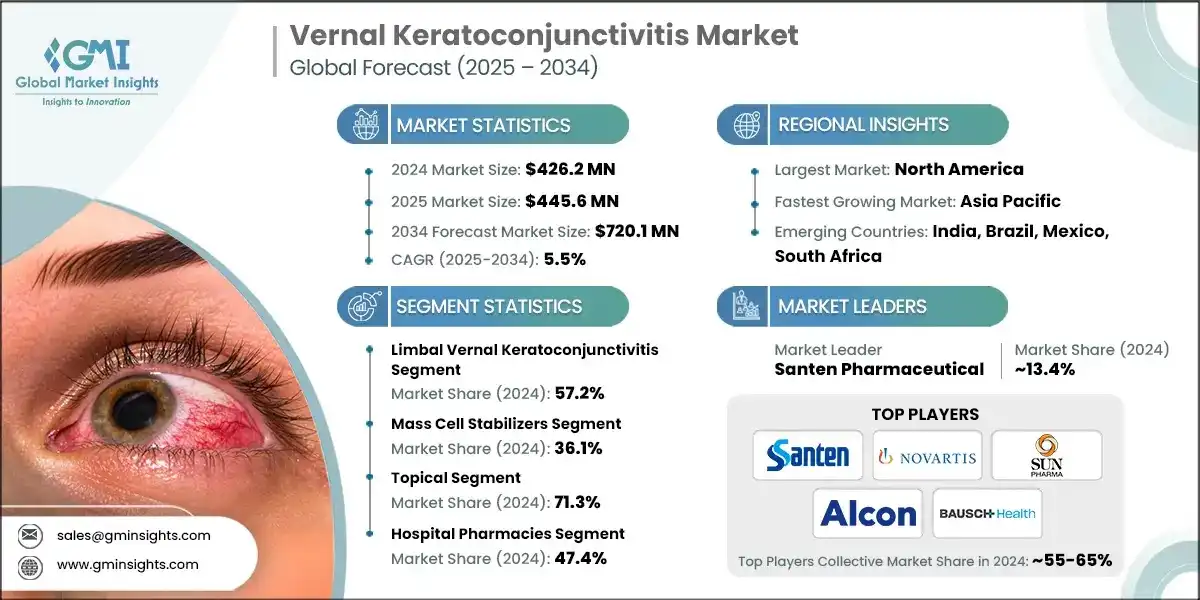
The global vernal keratoconjunctivitis market was estimated at USD 426.2 million in 2024. The market is expected to grow from USD 445.6 million in 2025 to USD 720.1 million in 2034, at a CAGR of 5.5%, according to the latest report published by Global Market Insights Inc. This growth is increasing due to increasing prevalence of allergic eye diseases, along with rising awareness among patients and healthcare professionals, with the growing development of advanced therapies.
To get key market trends
In addition, the growing burden of chronic ocular allergies, with advancements in drug delivery systems and biologics, further contributes to market expansion. According to Science Direct article, prevalence of allergic conjunctivitis was found to be more than 17.5% globally, stimulating the market demand for conjunctivitis treatment.
Moreover, the high cases in male, may also result in permanent visual impairment. For instance, NIH mentions 57.1% of all vernal keratoconjunctivitis cases are seen in men, stimulating the market for allergy therapeutics.
The vernal keratoconjunctivitis market is defined as the segment of the ophthalmic healthcare industry focused on the management and treatment of vernal keratoconjunctivitis. The market includes a wide range of therapeutic options such as antihistamines, mast cell stabilizers, corticosteroids, immunomodulators that include cyclosporine and tacrolimus, and emerging biologics.
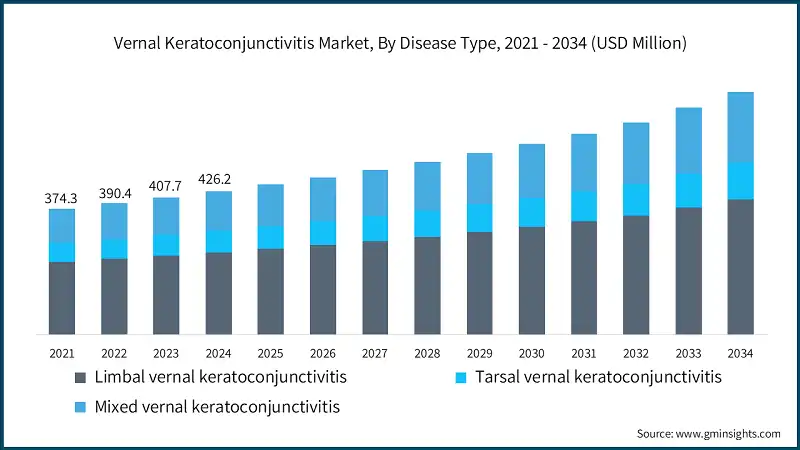
Vernal keratoconjunctivitis market has witnessed steady growth, increasing from USD 374.3 million in 2021 to USD 407.7 million in 2023. The growth of the market is driven by the rising number of diagnosed cases, especially among pediatric populations in tropical and subtropical regions.
Thus, the rapid increase in allergic eye conditions raises the demand for long-term and safe therapies that rely heavily on topical and systemic immunomodulators. Further, the growing concerns over ocular health, higher standards in allergy diagnosis, and increasing shift towards steroid-sparing therapies have stimulated market growth. Additionally, the increasing adoption of advanced formulations such as preservative-free eye drops, gel-based delivery systems, and biologics is reshaping the future landscape of vernal keratoconjunctivitis treatment by improving patient compliance and reducing side effects.
Moreover, national governments and ophthalmic associations are implementing awareness and treatment programs for allergic eye diseases, including vernal keratoconjunctivitis. These initiatives, along with regulatory approvals for safer and more effective therapies, are increasing the adoption of VKC treatments, thereby contributing to market growth. For instance, several countries have launched school-based screening programs and allergy awareness campaigns to promote early diagnosis and treatment of vernal keratoconjunctivitis.
The market is further strengthened by increasing investment in ophthalmic healthcare infrastructure in developing economies, particularly in the Asia-Pacific and Latin America regions. The vernal keratoconjunctivitis market is poised for significant growth owing to rising research and development initiatives aimed at developing novel therapeutics with improved efficacy and minimal side effects. Thus, the growing incidence of allergic eye diseases, coupled with advancements in ophthalmic care and drug innovation, is fostering growth within the market.
Vernal Keratoconjunctivitis Market Report Attributes
| Key Takeaway | Details |
|---|---|
| Market Size & Growth | |
| Base Year | 2024 |
| Market Size in 2024 | USD 426.2 Million |
| Market Size in 2025 | USD 445.6 Million |
| Forecast Period 2025 - 2034 CAGR | 5.5% |
| Market Size in 2034 | USD 720.1 Million |
| Key Market Trends | |
| Drivers | Impact |
| Rising global prevalence of vernal keratoconjunctivitis | Increasing incidence of vernal keratoconjunctivitis, especially in children and young adults, driving demand for effective therapies and long-term management solutions. |
| Growing aging population and rising allergy sensitivity | Older adults and individuals with chronic allergic conditions are more susceptible to vernal keratoconjunctivitis. |
| Expansion of tele-ophthalmology and e-pharmacy | Easier access to specialist consultations and prescription refills is accelerating therapy adoption. |
| Government and institutional awareness programs | National eye health campaigns and school-based screening initiatives are increasing awareness and early diagnosis of vernal keratoconjunctivitis. |
| Pitfalls & Challenges | Impact |
| High cost of branded immunomodulators and biologics | Limits access in low-income and developing regions, affecting global market penetration. |
| Limited awareness and diagnostic capabilities in rural areas | Lack of education and outreach in underserved regions hinders early detection and timely treatment. |
| Opportunities: | Impact |
| Development of combination and steroid-sparing therapies | Dual-action drugs and non-steroidal formulations improve treatment outcomes, reduce side effects, and enhance long-term safety. |
| Emerging markets with rising healthcare investment | Asia-Pacific and Latin America offer high growth potential due to expanding ophthalmic infrastructure and increasing healthcare spending. |
| Market Leaders (2024) | |
| Market Leaders |
~13.4% market share |
| Top Players |
Collective market share in 2024 is ~55-65% |
| Competitive Edge |
|
| Regional Insights | |
| Largest Market | North America |
| Fastest Growing Market | Asia Pacific |
| Emerging Country | India, Brazil, Mexico, South Africa |
| Future Outlook |
|
What are the growth opportunities in this market?
Vernal Keratoconjunctivitis Market Trends
- The global vernal keratoconjunctivitis industry is undergoing dynamic transformation, driven by the rising prevalence of allergic eye diseases and increasing awareness among paediatric and high-risk populations.
- The growing demand for long-term, steroid-sparing therapies is expanding the baseline need for immunomodulators, antihistamines, and biologics tailored for chronic ocular allergy management.
- Moreover, the increasing shift towards premium, preservative-free formulations and personalized care is stimulated by rising healthcare spending and improved insurance coverage in developed regions.
- Moreover, public health campaigns and school-based screening programs are creating periodic spikes in diagnosis and treatment demand, especially in regions with high vernal keratoconjunctivitis prevalence.
- Additionally, vernal keratoconjunctivitis treatment is evolving toward precision-based care, mirroring trends in human healthcare. Chronic conditions such as vernal keratoconjunctivitis require controlled, long-term drug administration, which has created demand for advanced delivery systems such as preservative-free eye drops, smart dispensers, and long-acting formulations.
- Moreover, caregivers and patients increasingly prefer therapies that can be safely administered at home. Manual dosing, especially for children, can be time-consuming and prone to errors. Home-based treatments enable families to manage vernal keratoconjunctivitis effectively without the need for frequent clinical visits.
- Regulatory bodies in North America and Europe are implementing stricter controls on ophthalmic preservatives and the long-term use of steroids. This is prompting clinics and manufacturers to shift toward safer alternatives, including non-steroidal therapies and preservative-free formulations.
- The vernal keratoconjunctivitis market is undergoing rapid transformation, driven by the increasing adoption of automated production lines, advanced formulation technologies, and high-speed packaging systems. These innovations are helping scale the production of allergy eye care products efficiently and safely.
Vernal Keratoconjunctivitis Market Analysis
Learn more about the key segments shaping this market
The market was valued at USD 374.3 million in 2021. The market size reached USD 407.7 million in 2023, from USD 390.4 million in 2022.
Based on disease type, the vernal keratoconjunctivitis market is categorized into limbal vernal keratoconjunctivitis, tarsal vernal keratoconjunctivitis and mixed vernal keratoconjunctivitis. The limbal vernal keratoconjunctivitis segment accounted for 57.2% of the market in 2024 which is stimulated by high prevalence in tropical regions and its chronic nature requiring long-term treatment. The segment is expected to exceed USD 402.1 million by 2034, growing at a CAGR of 5.2% during the forecast period.
- The limbal vernal keratoconjunctivitis segment leads the global vernal keratoconjunctivitis market, driven by its rising prevalence particularly among young males. According to the World Allergy Organization Journal, limbal vernal keratoconjunctivitis is the most frequently occurring type, with a global annual prevalence exceeding 54%. It is associated with high treatment costs and severe corneal complications, including ulcers, which affect approximately 9.7% of cases, along with other common ocular issues.
- The need for specialized ophthalmic care due to limbal vernal keratoconjunctivitis is driving demand for innovative treatment solutions, particularly in children. According to the NIH, the incidence of limbal vernal keratoconjunctivitis is notably higher among children, most of whom require specialized ophthalmological intervention.
- Additionally, the growing demand for early diagnosis and outpatient management is accelerating the adoption of topical and systemic treatments. Therapies for limbal vernal keratoconjunctivitis are widely preferred due to their effectiveness in managing symptoms and preventing complications. This trend is further supported by increasing awareness and improved accessibility to treatment options in both developed and developing regions.
- The tarsal vernal keratoconjunctivitis segment is projected to grow at a CAGR of 5.4%. This growth stems from the increasing complexity of tarsal manifestations and the need for tailored treatment protocols that address severe inflammation and mechanical complications.
- The mixed vernal keratoconjunctivitis segment is expected to grow at a CAGR of 6%. The growth of this segment results from the complex presentation involving both limbal and tarsal features, requiring comprehensive therapeutic approaches in severely affected patients.
Based on treatment, the vernal keratoconjunctivitis market is segmented into Mast cell stabilizers, antihistamines, corticosteroids, nonsteroidal anti-inflammatory drugs and other treatments. The Mast cell stabilizers segment accounted for the highest market share of 36.1% in 2024 due to its proven effectiveness in long-term vernal keratoconjunctivitis management and favourable safety profile.
- The mast cell stabilizers segment is driven by its ability to prevent allergic flare-ups by stabilizing mast cells, which play a central role in the pathophysiology of vernal keratoconjunctivitis.
- Mast cell stabilizers are widely used as first-line therapy, particularly in pediatric patients, due to their minimal side effects and suitability for long-term use.
- The growing trend of dual-acting agents, which combine mast cell stabilization with antihistaminic effects, has further boosted demand in this segment by offering both preventive and symptomatic relief.
- The corticosteroids segment holds a significant market share, owing to its effectiveness in managing moderate to severe cases of vernal keratoconjunctivitis. These therapies provide rapid relief from inflammation and ocular discomfort, making them essential during acute flare-ups.
- The antihistamines segment contributes steadily to the market, especially for mild to moderate cases, by offering quick symptomatic relief from itching and redness.
Based on route of administration, the vernal keratoconjunctivitis market is segmented into oral, topical and parenteral. The topical segment accounted for the highest market share of 71.3% in 2024 due the direct action offered by topical formulations, ease of use along with high patient compliance.
- The segment is driven by its superior ability to deliver vernal keratoconjunctivitis therapies directly to the ocular surface, ensuring faster relief and targeted treatment with minimal systemic exposure.
- Topical eye drops such as cyclosporine and tacrolimus are preferred due to non-invasive nature and suitability for long-term use in paediatric and adult patients.
- High trend in preservative-free and comfort-enhancing formulations has further boosted demand for topical vernal keratoconjunctivitis therapies, especially among sensitive and chronic-use patients.
- Topical treatments reduce the need for systemic medication, lowering the risk of side effects and making them the first-line choice for ophthalmologists managing vernal keratoconjunctivitis.
- The oral segment contributes steadily to the vernal keratoconjunctivitis market, particularly in cases requiring systemic antihistamine therapy. The rising demand for convenience and home-based care supports the increased use of oral medications.
- The parenteral segment holds a smaller market share but plays a crucial role in managing severe or refractory cases of vernal keratoconjunctivitis. It is primarily used in hospital settings where rapid intervention is needed to address acute inflammation or complications.
Based on gender, the vernal keratoconjunctivitis market is segmented into male and female. The male segment accounted for the highest market share of 65.3% in 2024 and is growing with a CAGR of 5.3% during the analysis.
- The growth of the segment is driven due to the higher disease prevalence among male population, especially in tropical and subtropical regions.
- Moreover, the segmental growth is driven by the higher biological susceptibility of males to vernal keratoconjunctivitis, particularly during childhood and adolescence, which leads to increased diagnosis and treatment rates. According to the Indian Journal of Clinical and Experimental Ophthalmology, 61.05% of vernal keratoconjunctivitis cases are reported in males, compared to 38.95% in females. This highlights a significantly higher prevalence among the male population.
- Rising awareness and early screening programs in schools have contributed to the dominance of the male segment, as boys are more frequently identified and treated in clinical settings.
- Male patients show a higher demand for long-term immunomodulatory therapies, such as cyclosporine and tacrolimus, due to the chronic and recurrent nature of vernal keratoconjunctivitis in this group.
- Healthcare providers often prioritize early intervention in male patients, given their higher risk of corneal complications and potential vision impairment. This drives consistent prescription volumes and regular follow-up care.
- In contrast, the female segment contributes steadily to the market, with increasing diagnosis rates among adolescent and adult females. Growing awareness of ocular allergies and improved access to ophthalmic care are supporting greater treatment uptake in this group.
Learn more about the key segments shaping this market
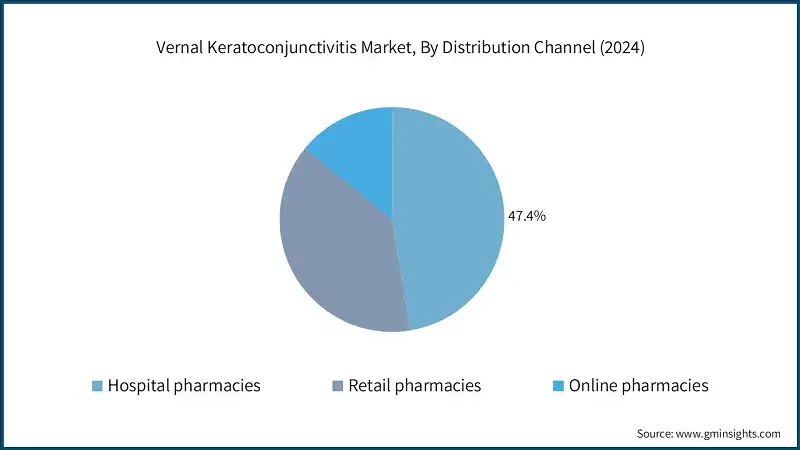
Based on distribution channel, the vernal keratoconjunctivitis market is categorized into hospital pharmacies, retail pharmacies, and online pharmacies. The hospital pharmacies segment accounted for the highest market share of 47.4% in 2024 due to easy availability and convenience, hospitals and clinics are a primary channel in the market.
- Hospital pharmacies dominated the market owing to centralized access to specialized ophthalmic treatments and immunomodulators. Rising vernal keratoconjunctivitis prevalence among teenage patients has made hospitals the primary channel for accurate diagnosis and prescription-based therapies.
- Increasing government-led allergy screening programs and clinical trials are strengthening the role of hospital pharmacies in vernal keratoconjunctivitis care. Their ability to manage controlled drug administration and monitor long-term treatment outcomes makes them critical for all three types of vernal keratoconjunctivitis management.
- Moreover, retail pharmacies have also been gaining traction due to rising demand for over-the-counter allergy relief and topical agents that are stimulating vernal keratoconjunctivitis product availability in retail pharmacies. These outlets offer convenience and accessibility, especially for mild cases and follow-up prescriptions.
- The online pharmacies segment is experiencing significant growth, driven by the increasing shift toward digital health and e-commerce platforms. This trend is expanding the reach of vernal keratoconjunctivitis products through online channels.
- Patients are increasingly opting for home delivery of prescribed eye drops and allergy medications, particularly in remote or underserved regions where access to physical pharmacies may be limited.
Looking for region specific data?
The North America vernal keratoconjunctivitis market dominated the global market with a market share of 36.1% in 2024.
- The market is stimulated by the rising prevalence of vernal keratoconjunctivitis infections and increased investment in susceptible populations.
- North America is a hub for biotech and pharmaceutical innovation, leading to the development of, biologics targeting specific inflammatory pathways and immunomodulatory agents with improved safety profiles. Moreover, companies such as Novartis, Alcon, and Santen are actively investing in VKC therapies in this region, that drives the growth of the market.
- The region's high per capita healthcare spending enables access to premium therapies. Insurance coverage for prescription medications, including newer VKC treatments, supports market growth.
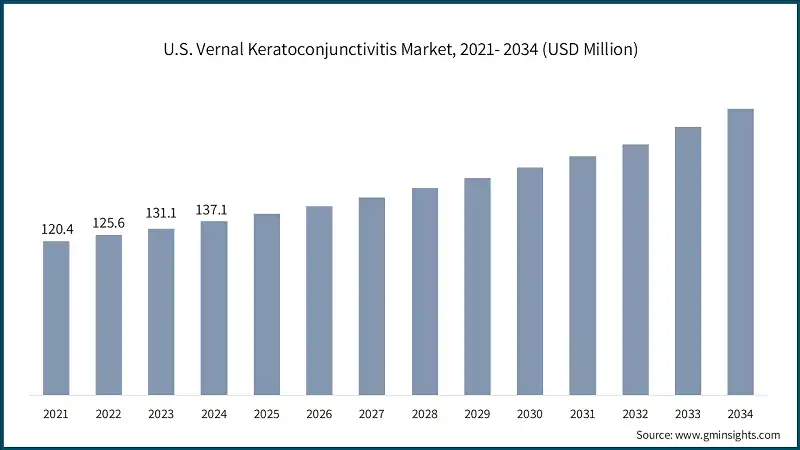
The U.S. vernal keratoconjunctivitis market was valued at USD 120.4 million and USD 125.6 million in 2021 and 2022, respectively. The market size reached USD 137.1 million in 2024, growing from USD 131.1 million in 2023.
- The increasing prevalence of vernal keratoconjunctivitis in the U.S., particularly among young males, is driving market growth for long-term, steroid-sparing therapies. This trend is also attracting greater clinical attention within allergy and ophthalmology practices.
- Additionally, the strong healthcare infrastructure and comprehensive insurance coverage in the U.S. support the adoption of premium treatment options, including cyclosporine emulsions and preservative-free formulations, enhancing patient access to advanced care.
Europe vernal keratoconjunctivitis market accounted for USD 110.4 million in 2024 and is anticipated to show lucrative growth over the forecast period.
- Rising awareness and the adoption of advanced therapies for vernal keratoconjunctivitis in Europe, combined with increasing government initiatives to strengthen ophthalmic healthcare infrastructure, are expected to drive market growth across the region. According to the NIH, the prevalence in Western Europe ranges from 1.16 to 10.55 per 10,000 people, indicating a growing need for effective treatment solutions.
- Advancements in ocular drug delivery technologies, including preservative-free formulations, immunomodulators, and biologics, along with the introduction of scalable and cost-effective treatment options, are boosting demand for vernal keratoconjunctivitis therapies throughout Europe.
Germany vernal keratoconjunctivitis market is anticipated to witness considerable growth over the analysis period.
- The rising incidence of allergic conditions in Germany is stimulating demand for innovative solutions to manage vernal keratoconjunctivitis. According to the NIH, more than 20% of the population in Germany suffers from at least one allergy, highlighting the need for effective ocular allergy treatments.
- Germany’s well-established healthcare infrastructure supports the recommendation and adoption of targeted drug therapies for vernal keratoconjunctivitis, including advanced formulations and long-term management options.
- In addition, the country’s robust pharmaceutical and hospital network—including specialized clinics, pharmacies, and digital health platforms ensures wide availability and accessibility of vernal keratoconjunctivitis treatments, making it easier for patients to receive timely and effective care.
The Asia Pacific vernal keratoconjunctivitis market is anticipated to grow at the highest CAGR of 6% during the analysis timeframe.
- Key markets in the Asia-Pacific region including China, India, Japan, South Korea, and Australia are witnessing a rise in vernal keratoconjunctivitis cases, coupled with growing healthcare investments. This is fueling demand for advanced therapeutics and expanding the regional market.
- The increasing number of hospitals, diagnostic centers, and respiratory care clinics, particularly in urban areas, is further stimulating market expansion. These developments are enhancing access to specialized ophthalmic care and supporting the adoption of innovative treatment solutions for vernal keratoconjunctivitis.
China vernal keratoconjunctivitis market is predicted to grow significantly over the forecast period.
- China holds the largest market share in the Asia-Pacific region, driven by rapid urbanization and healthcare modernization. These factors are contributing to a rise in vernal keratoconjunctivitis cases and stimulating demand for long-term protective therapies.
- According to ResearchGate, vernal keratoconjunctivitis accounts for more than 10.5% of all allergic conjunctivitis cases in China, with particularly high prevalence in central regions.
- Additionally, the Chinese government is investing heavily in healthcare infrastructure and digital platforms, aiming to improve the distribution and accessibility of treatments across both urban and rural areas. This is further supporting the growth of the market in the country.
Brazil is experiencing significant growth in the Latin America vernal keratoconjunctivitis market.
- Brazil’s hot and humid climate fosters the presence of airborne allergens, such as pollen and house dust mites, contributing to a higher incidence of allergic conditions. This environment stimulates market demand for effective vernal keratoconjunctivitis treatments.
- According to SciELO Brazil, vernal keratoconjunctivitis typically occurs within the first 10 years of life and affects approximately 80% of the population, with a higher prevalence among males.
- The growing pediatric population in Brazil further escalates market demand, as children are more susceptible to allergic eye conditions and require long-term management solutions.
- Additionally, government investments in healthcare infrastructure and digital platforms are improving access to treatment across both urban and rural areas, supporting the expansion of the market in the country.
Saudi Arabia vernal keratoconjunctivitis market is poised to witness substantial growth in Middle East and Africa vernal keratoconjunctivitis industry during the forecast period.
- The rising incidence of allergic diseases and the growing need for preventive care are driving market demand in Saudi Arabia. According to a study published by Lippincott, 7 out of 10 people residing in Saudi Arabia suffer from some form of allergic conjunctivitis.
- Government-led awareness campaigns and improved access to healthcare services are stimulating the adoption of vernal keratoconjunctivitis treatments, particularly among male populations, who show a higher prevalence. These efforts are contributing to consistent market growth across the country.
Vernal Keratoconjunctivitis Market Share
Leading companies such as Santen Pharmaceutical, Alcon, Bausch Health, Sun Pharmaceutical and Novartis collectively hold between 55-65% of the market share in the global market. These companies support dominance through specialized ophthalmic portfolios, strategic collaborations, regulatory strength, and continuous innovation.
Santen Pharmaceutical leads with its vernal keratoconjunctivitis-specific product Verkazia, widely adopted across paediatric care and allergy clinics. Alcon supports vernal keratoconjunctivitis treatment with advanced preservative-free formulations and a strong global distribution network. Bausch Health contributes to vernal keratoconjunctivitis care through its broad ophthalmic product line and focus on affordability and accessibility. Novartis enhances market presence with mast cell stabilizers and antihistamines, backed by robust research and development and strategic partnerships in clinical research and healthcare delivery.
Emerging and niche players such as Senju Pharmaceutical, and Meda Pharmaceuticals are gaining traction through targeted vernal keratoconjunctivitis therapies, regional distribution networks, and affordability-focused strategies. These companies contribute to the broader vernal keratoconjunctivitis therapeutic landscape through generics, immunomodulators, and innovative drug delivery systems, while also investing in research and expanding access in underserved markets.
Vernal Keratoconjunctivitis Market Companies
Few prominent players operating in the vernal keratoconjunctivitis industry includes:
- Abbott Laboratories
- AbbVie
- Alcon
- Allergan
- Bausch Health
- F Hoffmann La Roche
- Laboratoires Thea
- Meda Pharmaceuticals
- Novartis
- Santen Pharmaceutical
- Senju Pharmaceutical
- Sun Pharma
- Teva Pharmaceuticals
Santen Pharmaceutical leads the vernal keratoconjunctivitis market with a share of 13.4% and strong portfolio centered around Verkazia, a cyclosporine ophthalmic emulsion approved for pediatric use. Its leadership is driven by deep specialization in allergic eye diseases, global regulatory approvals, and innovation in preservative-free formulations.
Alcon stands out for its expertise in ophthalmic drug delivery and preservative-free technologies. While its broader portfolio spans multiple eye conditions, its advanced formulations and global distribution capabilities are increasingly applied to vernal keratoconjunctivitis management. Alcon’s strength lies in its innovation in comfort-enhancing drops and packaging systems, making it a trusted name in chronic allergy eye care.
Novartis specializes in antihistamines and mast cell stabilizers that are widely used in vernal keratoconjunctivitis treatment. With a strong research and development pipeline and strategic partnerships in ocular immunology, Novartis continues to expand its vernal keratoconjunctivitis offerings. The company’s global reach and commitment to clinical research position as key player in advancing next-generation vernal keratoconjunctivitis therapies.
Vernal Keratoconjunctivitis Industry News
- In July 2023, Harrow acquired U.S. and Canadian commercial rights to multiple ophthalmic products from Santen Pharmaceutical, including Verkazia for vernal keratoconjunctivitis, the acquisition strengthened Harrow’s presence in the North American ophthalmic market.
- In May 2022, Santen Pharmaceutical launched Verkazia, a cyclosporine ophthalmic emulsion 0.1%, for the treatment of vernal keratoconjunctivitis in paediatric patients. The launch expanded and strengthened its leadership in ophthalmic care across global markets.
The vernal keratoconjunctivitis market research report includes in-depth coverage of the industry with estimates and forecast in terms of revenue in USD Million from 2021 - 2034 for the following segments:
Market, By Disease Type
- Limbal vernal keratoconjunctivitis
- Tarsal vernal keratoconjunctivitis
- Mixed vernal keratoconjunctivitis
Market, By Treatment
- Mast cell stabilizers
- Antihistamines
- Corticosteroids
- Nonsteroidal anti-inflammatory drugs
- Other treatments
Market, By Route of Administration
- Oral
- Topical
- Parenteral
Market, By Gender
- Male
- Female
Market, By Distribution Channel
- Hospital pharmacies
- Retail pharmacies
- Online pharmacies
The above information is provided for the following regions and countries:
- North America
- U.S.
- Canada
- Europe
- Germany
- UK
- France
- Italy
- Spain
- Netherlands
- Asia Pacific
- China
- Japan
- India
- Australia
- South Korea
- Latin America
- Brazil
- Mexico
- Argentina
- Middle East and Africa
- South Africa
- Saudi Arabia
- UAE
Frequently Asked Question(FAQ) :
What are the upcoming trends in the vernal keratoconjunctivitis industry?
Key trends include the shift toward steroid-sparing therapies, adoption of preservative-free eye drops, expansion of tele-ophthalmology and e-pharmacy, and innovation in biologics and advanced drug delivery systems.
Who are the key players in the vernal keratoconjunctivitis market?
Major players include Santen Pharmaceutical, Novartis, Sun Pharma, Alcon, Bausch Health, Allergan, Teva Pharmaceuticals, Abbott Laboratories, AbbVie, F. Hoffmann-La Roche, Laboratoires Théa, Meda Pharmaceuticals, and Senju Pharmaceutical.
Which region leads the vernal keratoconjunctivitis market?
The U.S. market was valued at USD 137.1 million in 2024. Growth is driven by strong healthcare infrastructure, insurance coverage for premium therapies, and rising adoption of cyclosporine emulsions and biologics.
What is the growth outlook for topical administration from 2025 to 2034?
Topical therapies are projected to remain dominant with a CAGR of 5.4%, supported by high patient compliance, preservative-free formulations, and preference for non-invasive treatment.
What was the valuation of the mast cell stabilizers segment in 2024?
Mast cell stabilizers accounted for 36.1% of the market in 2024, owing to their effectiveness in long-term management and favorable safety profile.
What is the current vernal keratoconjunctivitis market size in 2025?
The market size is projected to reach USD 445.6 million in 2025.
What is the projected value of the vernal keratoconjunctivitis market by 2034?
The vernal keratoconjunctivitis industry is expected to reach USD 720.1 million by 2034, fueled by increasing diagnosis, steroid-sparing therapies, and adoption of biologics for chronic ocular allergy management.
How much revenue did the limbal vernal keratoconjunctivitis segment generate in 2024?
The limbal segment generated 57.2% share in 2024, driven by its chronic nature and high prevalence in tropical regions.
What is the market size of the vernal keratoconjunctivitis industry in 2024?
The market size was USD 426.2 million in 2024, with a CAGR of 5.5% expected through 2034 driven by rising global prevalence of allergic eye diseases and growing adoption of advanced therapies.
Vernal Keratoconjunctivitis Market Scope
Related Reports