Summary
Table of Content

U.S. Pediatric Home Healthcare Market
Get a free sample of this report
Form submitted successfully!
Error submitting form. Please try again.
Thank you!
Your inquiry has been received. Our team will reach out to you with the required details via email. To ensure that you don't miss their response, kindly remember to check your spam folder as well!
Request Sectional Data
Thank you!
Your inquiry has been received. Our team will reach out to you with the required details via email. To ensure that you don't miss their response, kindly remember to check your spam folder as well!
Form submitted successfully!
Error submitting form. Please try again.
U.S. Pediatric Home Healthcare Market Size
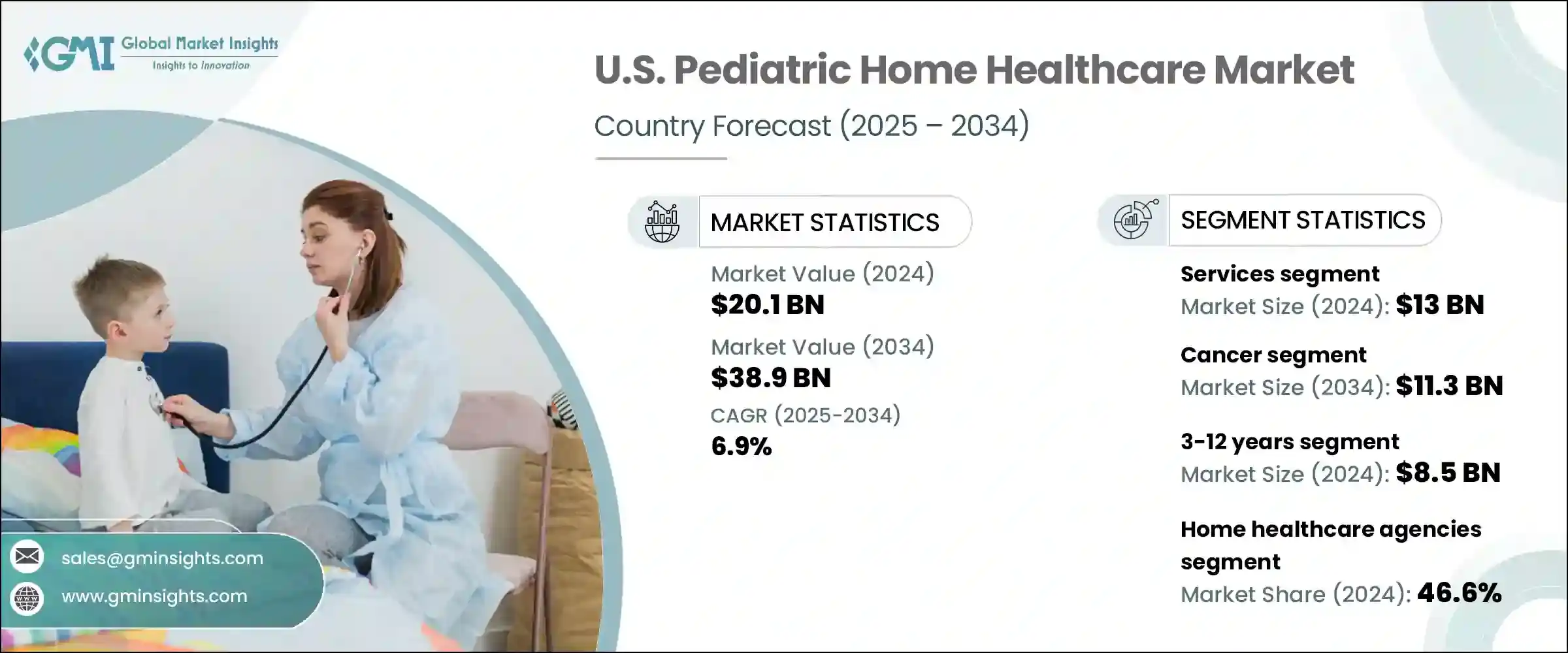
The U.S. pediatric home healthcare market was valued at USD 20.1 billion in 2024. The market is anticipated to grow from USD 21.4 billion in 2025 to USD 38.9 billion in 2034, growing at a CAGR of 6.9% from 2025 to 2034. The high growth of the market is primarily driven by the increasing prevalence of chronic ailments among infants, the rising number of home healthcare service providers, and advancements in home healthcare devices, among other factors.
U.S. Pediatric Home Healthcare Market Key Takeaways
Market Size & Growth
- 2024 Market Size: USD 20.1 Billion
- 2034 Forecast Market Size: USD 38.9 Billion
- CAGR (2025–2034): 6.9%
Key Market Drivers
- Improved life expectancy of premature infants.
- Emergence of advanced technologies for continuous care.
- Increasing prevalence of chronic ailments among infants.
- Technological advancements in home healthcare devices.
- Rising number of home healthcare service providers.
Challenges
- High cost of pediatric home healthcare services.
- Shortage of pediatric home care nurses.
Get Market Insights & Growth Opportunities
The high prevalence of diseases such as diabetes, cancer, and respiratory illnesses is a key factor driving market growth during the forecast period. For example, according to data reported by the National Cancer Institute, in 2024, approximately 14,910 pediatric patients, including children and adolescents up to 19 years old, were diagnosed with cancer in the U.S. The same study highlighted that around 1,600 patients succumbed to this condition in 2024. Similarly, the growing patient burden for various other disease conditions requiring proper medical care and regular visits to healthcare facilities is expected to boost the adoption of pediatric healthcare in the U.S.
The cost-effectiveness of pediatric home healthcare compared to hospitalization is a significant growth driver, as it substantially reduces overall healthcare expenditures. Visiting nursing services helps decrease the length and frequency of costly hospital admissions. Additionally, these services support the effective management of chronic conditions while alleviating financial strain on families, insurance providers, and government healthcare systems such as Medicaid. Families benefit from receiving precise care within the comfort of their homes.
The rapid increase in the number of pediatric home healthcare providers is further driving market growth by enhancing access and improving service availability. Over the past few years, the U.S. has witnessed a notable rise in pediatric home health aides, reflecting an expansion in provider capacity.
The term pediatric home healthcare refers to the provision of medical and ancillary care to children and adolescents in the home setting. Pediatric home healthcare is applicable for children suffering from chronic conditions, disabilities, postoperative factors, or complex multi-systemic conditions who need long-term treatment or routine surveillance but do not need inpatient admission.
To get key market trends
U.S. Pediatric Home Healthcare Market Trends
- The increasing adoption of portable medical devices, the shift toward home healthcare models, and support from advocacy groups are key trends driving industry growth.
- The use of portable medical devices, such as ventilators, infusion pumps, and other remote monitoring systems, is making home care more advanced. Virtual consultations and telehealth interventions are now possible with the help of such equipment.
- Policymakers are being urged to expand coverage and funding for pediatric home care services due to the efforts of advocacy groups such as Family Voices, among others.
- There is also a growing focus on involving parents in the child’s comprehensive treatment plan. Tailored multiservice pathways for conditions like autism and other neurodevelopmental disorders are being developed to enhance outcomes and satisfaction.
- Additionally, policy changes are increasingly promoting bundled payment systems, positioning home care as a preferred alternative to hospitalization. Furthermore, expanded reimbursement options from Medicaid, CHIP, and private insurers are improving affordability and increasing access.
U.S. Pediatric Home Healthcare Market Analysis
Learn more about the key segments shaping this market
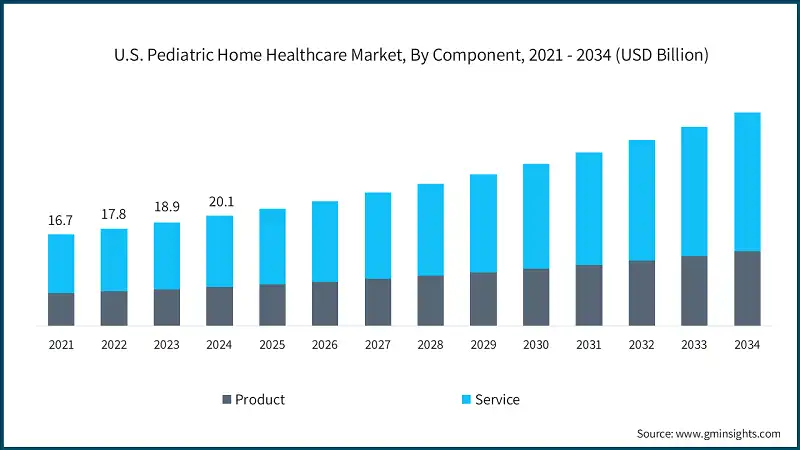
In 2021, the market was valued at USD 16.7 billion. The following year, it saw a slight increase to USD 17.8 billion, and by 2023, the market further climbed to USD 18.9 billion. Based on the number of component, the market is segmented into products and services. The services segment accounted for the leading market share and was valued at USD 13 billion in 2024.
- The service segment accounted for a dominant share of the market due to the rising demand for specialized and personalized care for children with chronic, complex, or post-acute health conditions. This segment includes services such as skilled nursing, rehabilitation therapy, and personal care assistance, among other home-based pediatric care options. Families are increasingly choosing these services as they help reduce hospital stays, lower overall costs, and ensure the comfort and emotional well-being of young patients.
- Moreover, among the various types of care, physical rehabilitation therapy, speech therapy, and occupational therapy have become particularly significant for children with developmental disorders or neurovascular conditions. Skilled nursing remains essential for managing ventilation, IV medications, or feeding tubes on a 24/7 basis.
- Additionally, the market is evolving as the prevalence of autism spectrum disorder, congenital anomalies, and mobility impairments continues to increase, driving the need for consistent and flexible professional care that home-based services uniquely provide. Expanded Medicaid eligibility, along with improved training programs for in-home aides, is further accelerating the demand for these services.
Based on indication, the U.S. pediatric home healthcare market is categorized into cancer, respiratory diseases, cardiovascular disorders, mobility disorders, neurovascular disorders, and other indications. The cancer segment accounted for the leading share in the market in 2024 and is expected to reach around USD 11.3 billion by 2034.
- The increasing number of children diagnosed with cancers such as leukemia, lymphoma, and brain tumors is driving demand for home-based care. Treatments like chemotherapy, immunotherapy, and palliative care can now be effectively managed at home. According to the American Cancer Society, leukemia is the most common cancer in children and teens, accounting for nearly one-third of all cancers in this age group. Families are increasingly opting for these therapies due to reduced hospital exposure and lower infection risks.
- Pediatric home healthcare enables continuous care, including medication management, pain control, nutritional counseling, and emotional support therapy, all within a familiar and comfortable environment. This approach not only enhances the quality of life for young patients but also reduces the emotional and financial burden on families.
- Additionally, due to the complexity of severe cases, specialized home-health agencies are now training nurses with oncology expertise to handle intricate pediatric cases while ensuring safety and comfort at home. As a result, cancer remains a significant health concern, driving innovations in pediatric home health services.
Based on the age group, the U.S. pediatric home healthcare market is segmented into up to 3 years, 3-12 years, and 12-18 years. The 3-12 years segment accounted for the leading market share and was valued at USD 8.5 billion in 2024.
- Chronic health conditions and developmental disorders requiring continuous medical interventions make pediatric patients in this age group (3-12 years) the most significant segment in the pediatric home healthcare market in the U.S.
- Therapeutic services such as physical therapy, occupational therapy, speech therapy, and education are crucial for children aged 3 to 12 years suffering from autism spectrum disorder (ASD), cerebral palsy, epilepsy, congenital heart disease, and cancer, as early intervention during this stage can provide substantial benefits.
- Children also gain from in-home nursing care, medication management, and support for mobility and behavior, which help them maintain normal life activities while ensuring continuity in learning. The emotional stress associated with clinical environments is challenging not only for children but also for their parents, who prefer treatment outside clinical settings.
- The availability of trained caregivers specializing in family-centered care, along with expanded Medicaid coverage, has further driven growth and created new opportunities in the pediatric home healthcare market, positively impacting the 3-12 age segment.
Learn more about the key segments shaping this market
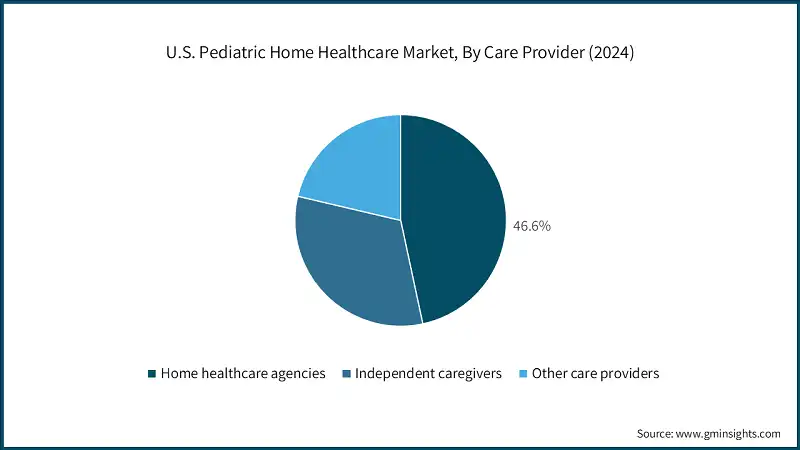
Based on care provider, the U.S. pediatric home healthcare market is classified into home healthcare agencies, independent caregivers, and other care providers. In 2024, the home healthcare agencies segment held the highest market share of 46.6% in 2024, and is expected to showcase significant growth over the analysis period.
- The responsiveness of home healthcare agencies in the U.S. pediatric system continues to grow due to their ability to provide organized, reliable, and multidisciplinary care. These agencies combine skilled nursing, rehabilitation therapies, and personal care aides within a single framework, ensuring continuity of care for children with chronic or complex health conditions.
- Furthermore, families prefer agency-based services as they employ trained pediatric personnel, conduct proper background checks, and follow clinical protocols, ensuring safety and consistency in the services provided.
- Additionally, agency involvement reduces the burden on families by managing caregiver schedules, documentation, insurance coordination, and other administrative tasks. The rising demand for home healthcare services, driven by neurological disorders, cancer treatment needs, and congenital anomalies, further increases reliance on these agencies.
- As the healthcare system shifts its focus toward early discharge and community-based care models, home healthcare agencies play an increasingly critical role in managing long-term pediatric health needs, offering greater comfort and satisfaction compared to hospital-centered care.
Looking for region specific data?
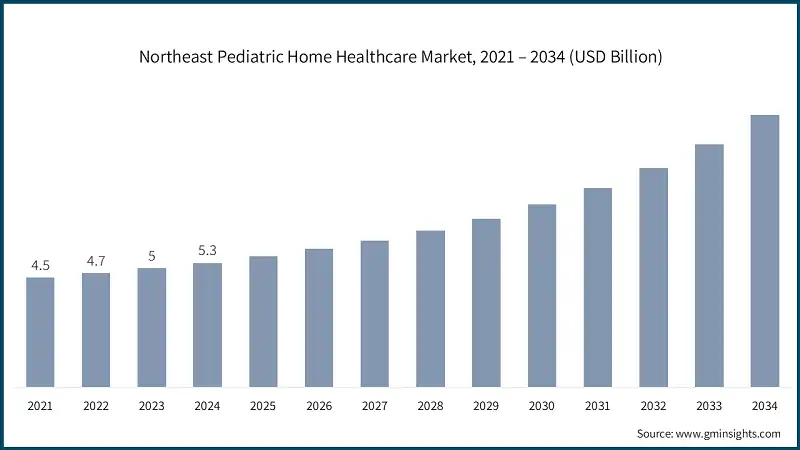
The Northeast pediatric home healthcare market was valued at USD 4.5 billion and USD 4.7 billion in 2021 and 2022, respectively. The market size reached USD 5.3 billion in 2024, growing from USD 5 billion in 2023.
- Pediatric home healthcare services are highly sought after in the Northeast Zone, including states like New York, Massachusetts, and Pennsylvania, which are known for their advanced healthcare systems and dense populations. The region benefits from extensive insurance coverage supporting home care models, pediatric specialty hospitals, and well-established healthcare infrastructure.
- Additionally, the early adoption of coordinated care approaches and Medicaid long-term aid waivers has significantly boosted the adoption of home healthcare services. Urban centers such as Boston and New York City report a higher prevalence of chronic pediatric conditions like asthma and cancer, necessitating nursing support and therapy. Parents prefer home healthcare as it effectively reduces the need for costly hospital visits.
- As per Icahn School of Medicine at Mount Sinai, an increasing number of children in New York State are experiencing chronic health issues linked to environmental factors such as exposures to hazardous materials and toxic chemicals, which is raising an increasing demand for pediatric home healthcare services.
- Moreover, increasing awareness of early intervention therapies has driven greater adoption among families with children, particularly those aged 3 years and above. The Northeast Zone remains a strong geographic market for these services, with demand continuing to grow steadily.
The South Atlantic pediatric home healthcare market accounted for a significant share and was valued at USD 4 billion in 2024. Favorable reimbursement policies, coupled with a rise in awareness levels and an increasing prevalence of chronic ailments among infants, are expected to drive regional growth.
- South Atlantic states, including Florida, Georgia, and North Carolina, have experienced a notable rise in the demand for pediatric home healthcare services. This increase is attributed to demographic shifts and a growing number of children with chronic medical conditions.
- In Florida, specifically, there is a high prevalence of congenital disorders requiring skilled nursing and rehabilitation services. Conditions such as congenital heart disease, autism spectrum disorders, and cerebral palsy are more common in the southern part of the state. Families in rural and suburban areas often prefer in-home care to avoid traveling long distances to specialized clinics.
- Additionally, cultural norms in the region tend to favor family-centered care models, which is further driving the demand for these services. Other contributing factors include the expansion of distance learning programs that enhance adaptive telehealth capabilities.
- The South Atlantic zone continues to be a key area for growth in pediatric home healthcare, as many providers are expanding their networks into underserved counties within this region.
U.S. Pediatric Home Healthcare Market Share
Customized home healthcare services cater to the specific needs of medically challenged pediatric patients, driving demand for key players in the market. Prominent industry players such as Aveanna Healthcare, Pediatric Home Healthcare, and BAYADA Home Health Care, among others, are expanding their service portfolios to address a variety of conditions, including mobility challenges, hearing impairments, and chronic illnesses.
These home healthcare agencies are preferred by families and medical institutions due to their extensive service offerings, which include skilled nursing, physical therapy (PT), speech therapy (ST), personal care aide support, and continuity of care. The combination of trained pediatric professionals and stringent clinical oversight ensures the delivery of high-quality, family-centered care, fostering patient retention.
Furthermore, some companies are adopting telehealth solutions to overcome geographical barriers and reach remote or underserved populations. The rising patient volume, along with increasing reimbursement support, places key players in a strong position as the trend continues to shift from hospitalization to at-home care.
U.S. Pediatric Home Healthcare Market Companies
Few of the prominent players operating in the U.S. pediatric home healthcare industry include:
- ANGELS OF CARE HOME HEALTH
- aveanna healthcare
- B. Braun
- BAYADA
- BD
- BrightStar Care
- drive DeVilbiss Healthcare
- eKidzCare
- interim
- INVACARE
- McKESSON
- MEDLINE
- Medtronic
- ParaMed
- PHILIPS
- Tendercare HOME HEALTH
- Koninklijke Philips N.V. has sophisticated technologies for remote patient monitoring and connected care systems that enable home healthcare for children. Their distinctive offerings incorporate diagnostics with telehealth systems, wearables, and chronic communication to provide proactive engagement with ongoing intervention and monitoring programs, as well as efficient communication between facilitators and families.
- BAYADA is recognized for its specialized programs for pediatrics which integrate skilled nursing with rehabilitative therapies and personal care. To ensure family-centered services, the company delivers clinically supervised care and compassion through professional pediatric providers trained in family-centric services.
- aveanna healthcare offers a wide range of pediatric home healthcare services including private duty nursing, personal care assistance, enteral nutrition therapy, and respiratory therapy, focusing on personalized care approaches as per the patients requirements, which helps in building trust with its patients.
U.S. Pediatric Home Healthcare Market Report Attributes
| Key Takeaway | Details |
|---|---|
| Market Size & Growth | |
| Base Year | 2024 |
| Market Size in 2024 | USD 20.1 Billion |
| Forecast Period 2025 – 2034 CAGR | 6.9% |
| Market Size in 2034 | USD 38.9 Billion |
| Key Market Trends | |
| Growth Drivers |
|
| Pitfalls & Challenges |
|
What are the growth opportunities in this market?
U.S. Pediatric Home Healthcare Industry News
- In April 2025, aveanna healthcare, a key player offering adult and pediatric focused services including rehabilitation therapy, among others, announced that it has signed an agreement to acquire Thrive Skilled Pediatric Care. The deal is expected to enable the company to improve its industry position in the coming years.
- In April 2024, BrightStar Care, a key home care and medical staffing company, expanded its service portfolio to include primary in-home clinician and transport services. The company has expanded its new services to two new markets in California and New Jersey. Such developments may enable the company to enhance its sales prospects through expanded capabilities across the country.
The U.S. pediatric home healthcare market research report includes in-depth coverage of the industry with estimates and forecast in terms of revenue in USD Million from 2021 – 2034 for the following segments:
Market, By Component
- Product
- Therapeutic
- Home IV pumps
- Insulin delivery devices
- Home respiratory therapy equipment
- Diagnostic
- Heart rate monitors
- Multi para diagnostic monitors
- Diabetic care unit
- Apnea and sleep monitors
- BP monitors
- Holter monitors
- Other diagnostics
- Mobility care
- Wheelchair
- Walking assist devices
- Home medical furniture
- Therapeutic
- Service
- Rehabilitation therapy services
- Skilled nursing services
- Personal care assistance
- Pediatric respite care
- Other services
Market, By Indication
- Cancer
- Respiratory diseases
- Cardiovascular disorders
- Mobility disorders
- Neurovascular disorders
- Other indications
Market, By Age Group
- Up to 3 years
- 3-12 years
- 12-18 years
Market, By Care Provider
- Home healthcare agencies
- Independent caregivers
- Other care providers
The above information is provided for the following zones and states:
- Northeast
- Connecticut
- Maine
- Massachusetts
- New Hampshire
- Rhode Island
- Vermont
- New Jersey
- New York
- Pennsylvania
- South Atlantic
- Delaware
- Florida
- Georgia
- Maryland
- North Carolina
- South Carolina
- Virginia
- West Virginia
- Washington, D.C.
- East North Central
- Illinois
- Indiana
- Michigan
- Ohio
- Wisconsin
- Pacific Central
- Alaska
- California
- Hawaii
- Oregon
- Washington
- West South Central
- Arkansas
- Louisiana
- Oklahoma
- Texas
- West North Central
- Iowa
- Kansas
- Minnesota
- Missouri
- Nebraska
- North Dakota
- South Dakota
- East South Central
- Alabama
- Kentucky
- Mississippi
- Tennessee
- Mountain States
- Arizona
- Colorado
- Utah
- Nevada
- New Mexico
- Idaho
- Montana
- Wyoming
Frequently Asked Question(FAQ) :
What was the size of the U.S. pediatric home healthcare market in 2024?
The U.S. pediatric home healthcare industry was valued at USD 20.1 billion in 2024. This growth is driven by rising chronic illness prevalence among children and increasing adoption of in-home medical services by families.
What is the projected market size for U.S. pediatric home healthcare in 2025?
The market is expected to reach USD 21.4 billion in 2025, supported by advances in home medical technologies, expanding service providers, and cost-effective alternatives to hospitalization.
How much will the U.S. pediatric home healthcare industry be worth by 2034?
The market is projected to reach USD 38.9 billion by 2034, indicating strong demand for at-home pediatric services including skilled nursing, respiratory care, and therapy solutions.
What is the CAGR of the U.S. pediatric home healthcare market from 2025 to 2034?
The market is anticipated to grow at a CAGR of 6.9% over the forecast period due to increasing service availability, enhanced reimbursement policies, and broader healthcare coverage for home-based care.
Which service segment led the U.S. pediatric home healthcare market?
The services segment dominated with USD 13 billion in 2024. Families increasingly preferred home-based options like skilled nursing and rehabilitation therapy for chronic or complex pediatric conditions.
How large was the cancer segment in U.S. pediatric home healthcare and what is its 2034 projection?
Cancer care was the leading indication segment and is projected to reach USD 11.3 billion by 2034, as treatments like chemotherapy and palliative care shift toward home-based delivery models.
What was the value of the 3–12 years age group segment?
Children aged 3 to 12 years represented the largest market share by age group, contributing USD 8.5 billion in 2024. This group benefits significantly from continuous therapies and early interventions.
Which region in the U.S. led the pediatric home healthcare market in 2024?
The Northeast region was among the top zones, with a market value of USD 5.3 billion in 2024, driven by robust Medicaid programs, dense urban populations, and a higher rate of chronic conditions in children.
What are the key growth drivers of the U.S. pediatric home healthcare market?
Key drivers include rising cases of chronic diseases in infants, advancements in portable healthcare devices, increasing provider availability, and strong support from Medicaid and telehealth expansions.
Who are the major players in the U.S. pediatric home healthcare industry?
Leading companies include Aveanna Healthcare, BAYADA, Angels of Care Home Health, BrightStar Care, and eKidzCare.
U.S. Pediatric Home Healthcare Market Scope
Related Reports