Summary
Table of Content

Urology Supplements Market
Get a free sample of this report
Form submitted successfully!
Error submitting form. Please try again.
Thank you!
Your inquiry has been received. Our team will reach out to you with the required details via email. To ensure that you don't miss their response, kindly remember to check your spam folder as well!
Request Sectional Data
Thank you!
Your inquiry has been received. Our team will reach out to you with the required details via email. To ensure that you don't miss their response, kindly remember to check your spam folder as well!
Form submitted successfully!
Error submitting form. Please try again.
Urology Supplements Market Size
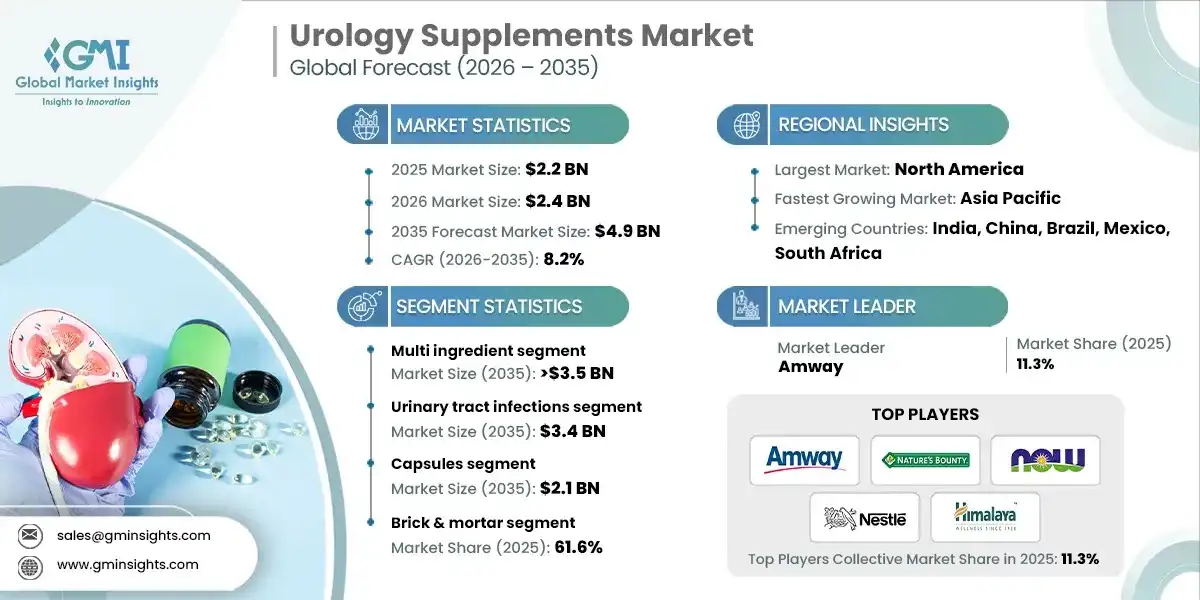
The global urology supplements market was valued at USD 2.2 billion in 2025. The market is expected to reach from USD 2.4 billion in 2026 to USD 4.9 billion in 2035, growing at a CAGR of 8.2% during the forecast period, according to the latest report published by Global Market Insights Inc. The market is driven by growing urinary disorders, rising prostate health concerns, increasing awareness of self-care, expanding access to e-commerce platforms, demand for natural ingredients, and adoption of preventive healthcare.
Urology Supplements Market Key Takeaways
Market Size & Growth
- 2025 Market Size: USD 2.2 Billion
- 2026 Market Size: USD 2.4 Billion
- 2035 Forecast Market Size: USD 4.9 Billion
- CAGR (2026–2035): 8.2%
Key Market Drivers
- Rising prevalence of urological disorders.
- Advancements in product formulations and delivery systems.
- Increasing emphasis on preventive healthcare.
Challenges
- Potential interactions and side effects.
Opportunity
- Expanding demand for personalized nutrition solutions.
- Rising penetration across emerging markets.
Key Players
- Market Leader: Amway led with over 11.3% market share in 2025.
- Leading Players: Top 5 players in this market include Amway, Natures Bounty, NOW Foods, Nestlé, Himalaya Wellness, which collectively held a market share of 11.3% in 2025.
Get Market Insights & Growth Opportunities
The global urology supplements market continues to expand as consumers increasingly seek clinically validated, natural solutions for urinary tract health, prostate support, kidney function, and overall urological wellness. Demand is rising due to growing UTI incidence, increasing prostate-related conditions among aging men, and the shift toward preventive, self-directed health care. In this evolving landscape, leading companies such as Amway, Nature’s Bounty, NOW Foods, Nestlé, Himalaya Wellness, and Theralogix strengthen market competitiveness through advanced formulation science, evidence-based botanical blends, and broad multichannel distribution across retail, e-commerce, and practitioner-led platforms.
These players emphasize premium ingredient quality, R&D investments, and consumer education to build trust and deliver targeted urology-focused solutions. Their strategic innovations, including plant-based protein, clinically dosed blends, and real-world evidence support, are redefining product performance standards and contributing to better urinary health outcomes.
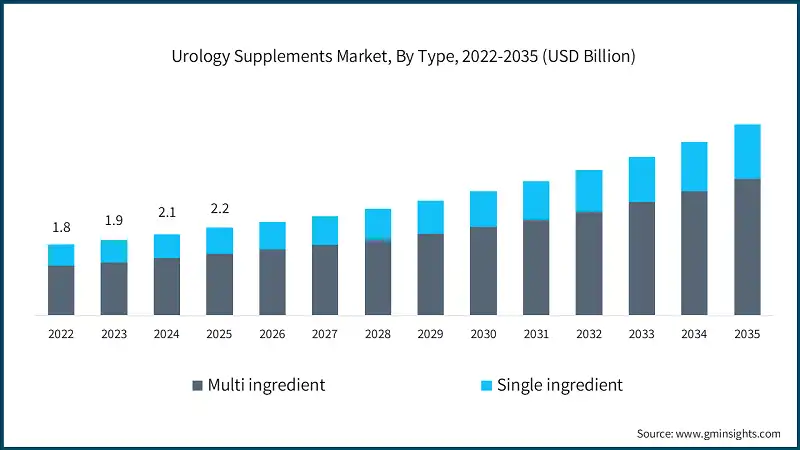
The market has increased from USD 1.8 billion in 2022 and reached USD 2.1 billion in 2024, with the historic growth rate of 6.8%. The global urology supplements market is experiencing strong growth driven by multiple demographic, clinical, and consumer-focused factors.
A primary driver is the rising global prevalence of urinary tract infections, prostate enlargement, kidney disorders, and bladder-related conditions, which is increasing demand for safe, accessible, and preventive health solutions outside traditional clinical settings. The growing aging population, particularly men over 50 who face higher prostate health risks, significantly expands the target consumer base. Increasing health awareness and the shift toward proactive wellness are further supporting supplement adoption as consumers seek natural, non-prescription approaches for long-term urinary and reproductive health.
Advancements in nutraceutical science, including clinically validated botanical extracts such as cranberry, D-mannose, beta-sitosterol, and saw palmetto, are enhancing product credibility and effectiveness. In addition, the rapid expansion of e-commerce platforms has improved accessibility, enabling consumers to compare formulations, access clinical information, and subscribe to personalized supplement regimens. Marketing by health-care professionals, midwives, and urologists is also increasing consumer trust.
Urology supplements are dietary formulations designed to support urinary tract, kidney, and prostate health. They typically include vitamins, minerals, botanicals, antioxidants, probiotics, and functional compounds that helps prevent infections, reduce inflammation, improve urinary flow, and maintain overall urinary system function for both men and women.
To get key market trends
Urology Supplements Market Trends
The main factor stimulating the growth of the market is the increasing prevalence of urological disorders, which significantly broadens consumer demand for preventive and supportive health solutions. The incidence of conditions such as UTIs, BPH, kidney stones, overactive bladder, and age-related prostate enlargement is growing worldwide owing to large aging populations, sedentary lifestyles, rising obesity, and poor dietary habits.
- Older adults, particularly men over 50, constitute a rapidly growing demographic, intensifying the need for safe, accessible, and non-prescription urological health products. This epidemiological shift is prompting consumers to adopt supplements as a first-line approach for maintaining urinary tract balance, reducing UTI recurrence, and supporting prostate function.
- Technological advancements are amplifying this trend by improving supplement efficacy and credibility. Innovations in botanical standardization, controlled-release delivery systems, clinically validated ingredient blends, and microbiome-targeted formulations are enhancing therapeutic outcomes. The integration of digital health tools, including symptom-tracking apps and personalized nutrition platforms, is further enabling tailored urology supplement regimens based on individual risk factors and health profiles.
- Macro-economic factors such as rising healthcare costs and increasing strain on hospital systems are pushing consumers toward preventive, over-the-counter wellness solutions. Growing disposable incomes in developing markets and expanding global e-commerce infrastructure are also driving market penetration, making urology supplements more accessible across regions.
- At the micro-economic level, consumer preference for natural, plant-based, and science-supported products is strengthening market momentum, encouraging companies to invest in research, product diversification, and high-quality ingredient sourcing.
- Overall, the rising burden of urological disorders, combined with technological innovation and favorable economic shifts is accelerating adoption of urology supplements worldwide. The trend is expected to intensify as populations age and preventive healthcare becomes integral to global wellness behaviors.
Urology Supplements Market Analysis
Learn more about the key segments shaping this market
Based on the type, the urology supplements market is bifurcated into multi ingredient and single ingredient. The multi ingredient segment has asserted its dominance in the market by securing a significant market share of 70.4% in 2025, driven by the rising consumer preference for comprehensive formulations addressing multiple urological issues simultaneously, enhancing efficacy and convenience, drives market growth. The segment is expected to exceed USD 3.5 billion by 2035, growing at a CAGR of 8.4% during the forecast period.
On the other hand, the single ingredient segment is expected to grow with a CAGR of 7.8%. The growing awareness of targeted therapies and natural remedies promotes single-ingredient supplements for specific urological health benefits, fueling demand globally.
- The multi-ingredient segment is driven by increasing consumer preference for comprehensive formulations that address multiple urological health concerns simultaneously. These supplements often combine herbal extracts, vitamins, minerals, and other bioactive compounds, offering synergistic benefits for conditions such as urinary tract infections, benign prostatic hyperplasia (BPH), and kidney health.
- Rising awareness of preventive healthcare has further propelled demand, as consumers seek products that provide holistic support rather than targeting a single condition. Additionally, advancements in research and development have enabled the creation of clinically validated formulations, enhancing consumer confidence and adoption.
- Marketing efforts emphasizing the convenience and efficacy of multi-ingredient products also contribute to growth, particularly in e-commerce and retail channels.
- The segment’s dominance is reinforced by increasing physician and pharmacist recommendations for multi-component supplements, reflecting a trend toward personalized and integrative approaches in urological health management.
- The single-ingredient segment held a revenue of USD 665.4 million in 2025, with projections indicating a steady expansion at a 7.8% CAGR from 2026 to 2035.
- The single-ingredient segment is primarily driven by consumer demand for targeted, simplified, and highly specific solutions. Supplements containing a single active component, such as saw palmetto, cranberry extract, or beta-sitosterol, appeal to individuals who prefer clear, defined efficacy and reduced risk of interactions or side effects.
- Growing awareness about particular urological conditions, such as urinary tract infections or prostate enlargement, has led to increased adoption of single-ingredient supplements as precise interventions.
- Regulatory clarity and standardized dosages also enhance consumer trust and facilitate market growth. Moreover, single-ingredient products are often perceived as more natural and minimally processed, aligning with wellness trends that favor clean-label and single-source ingredients.
- E-commerce platforms and health stores actively promote these supplements, increasing accessibility.
Based on application, the urology supplements market is classified into urinary tract infections, prostate health, kidney health, and bladder health. The urinary tract infections segment dominated the market with a revenue share of 67.8% in 2025 and is expected to reach USD 3.4 billion within the forecast period.
- The urinary tract infections (UTIs) segment dominates the market due to the rising prevalence of UTIs across all age groups, particularly among women. Increased awareness of the role of preventive nutrition and herbal supplements has driven consumer demand for products like cranberry extract, D-mannose, and probiotics, which help maintain urinary tract health and reduce infection recurrence.
- Advances in scientific research validating the effectiveness of these ingredients have boosted consumer confidence. Additionally, lifestyle changes, including poor hydration, high-sugar diets, and sedentary behavior, contribute to higher UTI incidence, further fueling demand.
- Growing emphasis on non-antibiotic interventions to prevent antimicrobial resistance has also increased preference for urology supplements. E-commerce channels and retail pharmacies facilitate easy access to these products, while marketing campaigns highlighting clinical evidence and convenience strengthen adoption.
- The prostate health segment held a revenue of USD 428.1 million in 2025, with projections indicating a steady expansion at an 8.1% CAGR from 2026 to 2035.
- The prostate health segment is driven by the increasing prevalence of benign prostatic hyperplasia (BPH) and prostate-related disorders in aging male populations globally. Supplements containing saw palmetto, beta-sitosterol, and pygeum extract are widely recognized for improving urinary flow and reducing prostate inflammation.
- Rising awareness of early detection and preventive healthcare has encouraged men to adopt dietary supplementation as a non-invasive strategy for maintaining prostate health. Clinical studies demonstrating the efficacy of specific ingredients further bolster market growth, while consumer preference for natural and safe alternatives to pharmaceuticals fuels adoption.
- The kidney health segment held a revenue of USD 122.7 million in 2025, with projections indicating a steady expansion at an 8.6% CAGR from 2026 to 2035.
- The kidney health segment in the urology supplements market is expanding due to the rising incidence of chronic kidney disease (CKD), nephrolithiasis, and other renal disorders, often associated with diabetes, hypertension, and aging populations.
- Consumers are increasingly seeking supplements containing antioxidants, vitamins, minerals, and herbal ingredients that support kidney function and reduce oxidative stress. Growing awareness about preventive healthcare and kidney-friendly nutrition has boosted the adoption of kidney health supplements.
- Technological advancements in research and formulation have enabled the development of clinically backed products, enhancing consumer confidence. Additionally, government and healthcare initiatives promoting early intervention and kidney disease management contribute to market growth.
Based on formulation, the urology supplements market is classified into capsules, softgels, tablets, powder, and other formulations. The capsules segment dominated the market with a revenue share of 43.8% in 2025 and is expected to reach USD 2.1 billion within the forecast period.
- The capsules segment dominates the market due to their ease of administration, precise dosage delivery, and better bioavailability compared to other formulations. Capsules can encapsulate both powdered and liquid extracts, allowing manufacturers to combine multiple active ingredients effectively, which aligns with the rising demand for multi-ingredient supplements.
- Consumers prefer capsules for their convenience, portability, and reduced aftertaste, making them suitable for daily use. Advances in capsule technology, including enteric coatings and delayed-release formulations, enhance the stability and absorption of sensitive nutrients, further boosting adoption.
- Additionally, healthcare practitioners often recommend capsule formulations due to their consistency and reliability in delivering therapeutic benefits. E-commerce and retail distribution channels have also expanded the availability of capsule-based urology supplements, making them more accessible globally.
- The softgels segment held a revenue of USD 480.2 million in 2025, with projections indicating a steady expansion at a 9% CAGR from 2026 to 2035. The softgels segment is driven by its superior absorption profile and consumer preference for convenient liquid-based supplements.
- Softgels can encapsulate oil-soluble ingredients such as saw palmetto oil, lycopene, and other essential nutrients, which enhances bioavailability and efficacy compared to solid forms. The soft, smooth texture makes them easy to swallow, appealing particularly to older adults who are more likely to experience urological health issues.
- Additionally, softgel formulations protect sensitive ingredients from oxidation and degradation, maintaining product potency over longer shelf life. The segment also benefits from increasing online sales and retail distribution, as consumers actively seek high-quality, convenient formulations.
- The tablets segment held a revenue of USD 388 million in 2025, with projections indicating a steady expansion at an 8.6% CAGR from 2026 to 2035. Tablets are easy to manufacture in large volumes, allowing companies to offer affordable options without compromising quality, which is critical for price-sensitive markets. They also provide precise dosing and stability for both single-ingredient and multi-ingredient supplements, supporting consistent therapeutic effects.
- Tablets can be formulated with controlled-release technologies, enhancing nutrient absorption over time and improving efficacy for chronic urological conditions such as benign prostatic hyperplasia (BPH) and urinary tract support.
Learn more about the key segments shaping this market
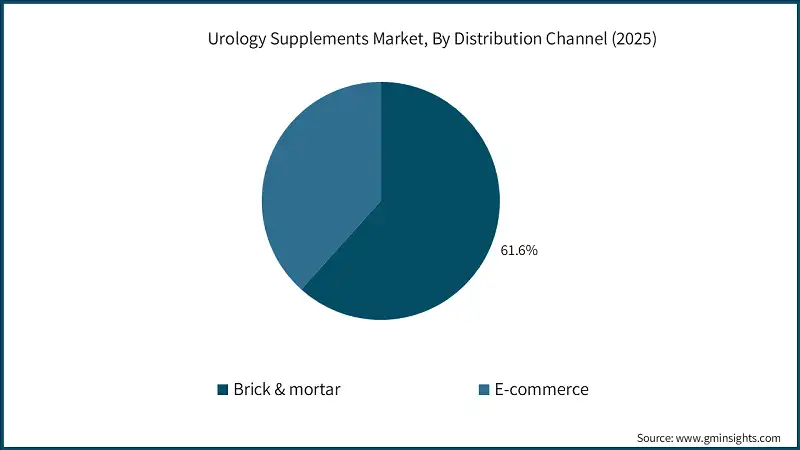
Based on distribution channel, the urology supplements market is bifurcated into brick & mortar and e-commerce. The brick & mortar segment dominated the market with a revenue share of 61.6% in 2025 and is expected to reach USD 3 billion within the forecast period.
- The brick & mortar segment dominates the market due to the continued preference of consumers for physically accessible stores where they can evaluate products before purchase. Pharmacies, health stores, and supermarkets provide direct consultation with pharmacists or store personnel, which enhances consumer trust and encourages informed buying decisions.
- Brand visibility and promotional activities in physical stores further drive sales, as consumers are more likely to purchase familiar and recommended products. Additionally, the segment benefits from an established retail infrastructure and loyal customer base, particularly among older populations who are more likely to seek urological supplements.
- Impulse purchases and bundled promotions also contribute to growth. Regional expansion of pharmacy chains in emerging markets and partnerships with healthcare providers further strengthen market penetration.
- The e-commerce segment held a revenue of USD 862.8 million in 2025, with projections indicating a steady expansion at an 8.4% CAGR from 2026 to 2035.
- The e-commerce segment is driven by increasing digital adoption and the convenience of online shopping. Consumers can easily access a wide range of products, compare formulations, and read reviews before making a purchase, which enhances informed decision-making.
- Online platforms also provide access to niche and international brands not available in local stores, broadening consumer choice. The segment benefits from aggressive digital marketing strategies, targeted advertisements, and subscription-based models that encourage repeat purchases.
- Rising smartphone penetration, faster delivery services, and secure online payment options have further accelerated adoption. Price comparison and frequent discounts offered online make e-commerce highly attractive to cost-conscious consumers.
Looking for region specific data?
North America Urology Supplements Market
North America dominated the market with the highest market share of 40.2% in 2025.
- North America dominates the market due to a combination of high awareness, advanced healthcare infrastructure, and rising prevalence of urological disorders. Increasing incidences of benign prostatic hyperplasia, urinary tract infections, and kidney-related health issues among the aging population have created strong demand for preventive and supportive supplements.
- Technological advancements in supplement formulation, including multi-ingredient and clinically validated products, further drive consumer adoption. A well-established retail and e-commerce ecosystem ensures easy availability of both domestic and international brands, enhancing market reach.
- Additionally, rising health consciousness and preventive healthcare trends encourage individuals to adopt nutraceuticals and dietary supplements proactively. Government regulations and stringent quality standards provide consumer confidence, promoting higher acceptance of certified products.
- Marketing campaigns, physician recommendations, and collaborations with healthcare institutions have also strengthened brand visibility and credibility.
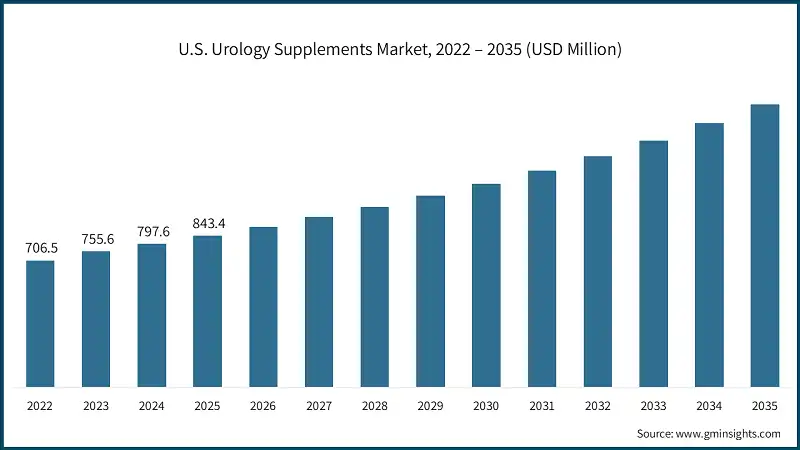
The U.S. urology supplements market was valued at USD 706.5 million and USD 755.6 million in 2022 and 2023, respectively. In 2025, the market size grew to USD 843.4 million from USD 797.6 million in 2024.
- The U.S. market is primarily driven by the growing prevalence of urological health issues, particularly among middle-aged and elderly populations. Conditions such as benign prostatic hyperplasia, urinary tract infections, and kidney disorders have increased demand for targeted supplements to support urinary and prostate health.
- Rising consumer awareness about preventative healthcare and wellness trends has led to higher adoption of nutraceuticals. The U.S. benefits from advanced research and development, with numerous companies launching clinically validated formulations, including multi-ingredient and single-ingredient products.
- E-commerce growth and established pharmacy networks have improved product accessibility, while marketing campaigns emphasize efficacy, safety, and natural ingredients, enhancing consumer trust.
- High disposable income and a strong focus on quality and safety further support market growth. Regulatory frameworks by the FDA ensure standardized manufacturing and labeling, boosting consumer confidence.
Europe Urology Supplements Market
Europe market accounted for USD 611.4 million in 2025 and is anticipated to show lucrative growth over the forecast period.
- The Europe urology supplements market is experiencing steady growth, driven by the rising prevalence of urological disorders such as benign prostatic hyperplasia (BPH), urinary tract infections (UTIs), and kidney-related conditions, particularly among the aging population.
- Increasing consumer focus on preventive healthcare and growing awareness of urinary and prostate health have led to higher adoption of dietary supplements aimed at supporting long-term wellness.
- Advancements in supplement formulation technologies, including standardized botanical extracts, multi-ingredient blends, and enhanced bioavailability delivery systems, have improved product efficacy and strengthened consumer trust.
- Economic stability, higher disposable incomes, and broader healthcare access across major European countries further support market expansion. Strong regulatory frameworks ensure product quality, safety, and compliance, reinforcing consumer confidence. In addition, the combination of expanding e-commerce channels and well-established pharmacy networks has significantly improved product availability and market penetration.
Germany dominates the European urology supplements market, showcasing strong growth potential.
- Germany, one of Europe’s most advanced healthcare markets, demonstrates strong growth in the urology supplements segment driven by a high prevalence of age-related urological conditions and increasing consumer awareness of prostate and urinary tract health.
- An aging demographic profile, combined with lifestyle-related risk factors such as stress, poor diet, and sedentary behavior, has heightened the demand for preventive and supportive supplementation.
- Germany’s robust healthcare infrastructure and strict regulatory environment ensure that urology supplements adhere to high standards of safety, quality, and efficacy, reinforcing consumer confidence. Technological advancements—including advanced extraction methods, standardized ingredients, and combination formulations—have further enhanced product performance and market adoption.
- Comprehensive distribution networks, spanning pharmacies, specialty health stores, and a rapidly expanding e-commerce sector, ensure broad accessibility of both domestic and international brands. Growing awareness initiatives, physician endorsements, and wellness-focused lifestyles continue to encourage proactive health management.
- High disposable income and overall economic stability enable German consumers to invest in premium, clinically validated urology supplements, supporting sustained market growth.
Asia Pacific Urology Supplements Market
The Asia Pacific market is anticipated to grow at the highest CAGR of 10.1% during the analysis timeframe.
- The Asia Pacific urology supplements market is experiencing strong growth, driven by demographic shifts, lifestyle changes, and evolving healthcare priorities. Rapid population aging in countries such as Japan, South Korea, China, and India has increased the incidence of urological disorders—including benign prostatic hyperplasia, urinary tract infections, and kidney-related conditions—leading to higher demand for preventive and supportive supplements.
- Rising health awareness and a growing emphasis on preventive healthcare have encouraged consumers to adopt nutraceutical solutions for urinary, prostate, and kidney health. Accelerated urbanization and lifestyle transitions, including higher stress levels, sedentary behavior, and dietary imbalances, further contribute to urological health issues, stimulating supplement uptake across the region.
- Advancements in supplement formulation, such as multi-ingredient blends, standardized herbal extracts, and enhanced bioavailability technologies, have improved efficacy and broadened consumer appeal. Additionally, the expansion of modern retail infrastructure, combined with the rapid rise of e-commerce and digital health platforms, has significantly improved product availability—even in semi-urban and remote areas—supporting widespread market penetration.
China urology supplements market is estimated to grow with a significant CAGR, in the Asia Pacific market.
- China’s urology supplements market is witnessing strong growth, driven by the rising prevalence of urological disorders among its rapidly aging population. Increasing cases of benign prostatic hyperplasia, urinary tract infections, and kidney-related conditions have elevated demand for preventive and therapeutic nutraceutical solutions.
- Rapid urbanization, high-stress lifestyles, and shifts toward processed and convenience-based diets have contributed to a higher incidence of urological health issues, further accelerating the adoption of supplements. Growing consumer awareness regarding wellness—supported by health campaigns, digital media influence, and improved healthcare education—continues to strengthen uptake.
- Technological advancements in supplement formulation, including standardized herbal extracts, clinically supported botanicals, and multi-ingredient blends, have improved product efficacy, safety, and consistency, enhancing consumer trust in domestic and imported brands.
- Expanding retail networks and the rapid growth of e-commerce platforms, particularly major online marketplaces, have significantly improved product accessibility across urban, semi-urban, and even tier-2 and tier-3 regions. Supportive regulatory developments for nutraceuticals, along with increasing collaborations between local and global manufacturers, further enhance product quality, compliance, and overall market credibility.
Latin America Urology Supplements Market
Brazil leads the Latin America market, exhibiting remarkable growth during the analysis period.
- Brazil currently leads the Latin America urology supplements market, driven by a combination of demographic, economic, and healthcare factors. Rising prevalence of urological disorders including benign prostatic hyperplasia, urinary tract infections, and kidney-related conditionshas significantly boosted demand for targeted supplements.
- Increasing awareness of preventive healthcare and self-medication trends is further driving adoption, as Brazilian consumers increasingly prefer natural and non-prescription solutions. The expanding middle-class population, along with rising disposable incomes, supports higher spending on health and wellness products.
- E-commerce platforms have improved accessibility to both domestic and international urology supplement brands, enhancing convenience and market reach, particularly in urban areas.
- Marketing initiatives emphasizing the health benefits of both multi-ingredient and single-ingredient supplements strengthen consumer trust and encourage continued adoption.
- Supportive regulatory frameworks for supplement registration and commercialization have facilitated the introduction of innovative formulations, further stimulating market growth.
Middle East and Africa Urology Supplements Market
Saudi Arabia market to experience substantial growth in the Middle East and Africa market in 2025.
- Saudi Arabia exhibits strong growth in the market, driven by increasing health awareness, lifestyle-related urological disorders, and government initiatives promoting wellness. The country has seen a rising prevalence of urinary tract conditions, prostate-related disorders, and kidney health issues, largely influenced by sedentary lifestyles, dietary habits, and an aging population.
- Consumers are increasingly seeking preventive and natural health solutions, making urology supplements a preferred choice. Economic affluence and high disposable incomes enable investment in premium health products, while growing digital penetration and e-commerce adoption provide convenient access to both domestic and international brands.
- Retail expansion, including pharmacies, hypermarkets, and specialty health stores, ensures wide product availability, while marketing campaigns emphasizing clinical benefits and safety strengthen consumer confidence.
- Government initiatives aimed at improving public healthcare infrastructure and encouraging nutritional supplementation support market growth. Additionally, collaborations between local distributors and global manufacturers introduce innovative multi-ingredient and single-ingredient formulations.
- Overall, a combination of rising disease prevalence, growing health consciousness, strong retail and digital channels, and supportive economic and regulatory conditions drives the expansion of Saudi Arabia’s market.
Urology Supplements Market Share
The market operates as a moderately concentrated oligopoly, with Amway, Nature’s Bounty, NOW Foods, Nestlé, and Himalaya Wellness collectively accounting for 42.2% of the market share. This competitive structure emphasizes product efficacy, safety, scientific validation, and consumer trust as key differentiators.
Leading players maintain their market positions through extensive product portfolios, including single-ingredient, multi-ingredient, softgels, capsules, tablets, and liquid formulations targeting prostate health, urinary tract support, kidney function, and urinary incontinence. Strong global distribution networks spanning retail pharmacies, e-commerce platforms, and specialty health stores, along with collaborations with healthcare providers, wellness practitioners, and nutrition experts, ensure wide product accessibility.
Global market growth is driven by the rising prevalence of urological disorders, including benign prostatic hyperplasia (BPH), urinary tract infections, kidney issues, and prostate-related concerns, coupled with increasing consumer demand for preventive and therapeutic supplements. Companies are investing heavily in research and development to formulate bioactive, clinically validated, and high-bioavailability supplements that enhance efficacy and health outcomes. Technological innovations in product formulation, personalized nutrition, and digital direct-to-consumer platforms are influencing purchasing behavior. Additionally, growing health consciousness, increasing disposable incomes, and regulatory support for nutritional supplements continue to drive product development and market expansion in the global urology supplements sector.
Urology Supplements Market Companies
Few of the prominent players operating in the urology supplements industry include:
- Amway
- Better Being
- Biotexlife
- dsm-firmenich
- Himalaya Wellness
- Himalayan Organics
- Natrol
- Nature's Bounty
- Nestlé
- NOW Foods
- Puritan's Pride
- Solaray
- Szio+
- Theralogix
- ZAHLER
- Amway
Amway holds a market share of 6.4%. Amway leverages a strong direct-selling model and global presence to provide high-quality, clinically tested urology supplements. Its focus on multi-ingredient formulations, backed by scientific research and stringent quality standards, ensures efficacy and safety. Personalized consumer guidance and a trusted brand reputation enhance adoption and loyalty across key markets.
Nature’s Bounty emphasizes natural single- and multi-ingredient urology supplements with proven bioactive components. The company combines rigorous quality control, NSF-certified production, and innovative formulations. Extensive retail and e-commerce presence, strong brand recognition, and a focus on preventive health solutions strengthen consumer trust and support widespread adoption in the market.
Urology Supplements Market Report Attributes
| Key Takeaway | Details |
|---|---|
| Market Size & Growth | |
| Base Year | 2025 |
| Market Size in 2025 | USD 2.2 Billion |
| Market Size in 2026 | USD 2.4 Billion |
| Forecast Period 2026-2035 CAGR | 8.2% |
| Market Size in 2035 | USD 4.9 Billion |
| Key Market Trends | |
| Drivers | Impact |
| Rising prevalence of urological disorders | Increasing cases of UTIs, prostate enlargement, and kidney issues directly expand consumer demand for targeted supplements, driving sustained market growth across all major product categories. |
| Advancements in product formulations and delivery systems | Improved bioavailability, innovative botanical blends, and convenient formats boost consumer adoption, enhance clinical outcomes, and strengthen competitiveness among leading supplement manufacturers. |
| Increasing emphasis on preventive healthcare | Growing consumer preference for proactive wellness accelerates use of urology supplements as routine health support, boosting long-term demand and encouraging broader product diversification. |
| Pitfalls & Challenges | Impact |
| Potential interactions and side effects | Concerns around ingredient interactions, dosage safety, and inconsistent self-medication reduce consumer confidence, pushing regulators and companies to emphasize transparency, testing, and clinical validation. |
| Opportunities: | Impact |
| Expanding demand for personalized nutrition solutions | Rising interest in tailored supplement regimens encourages brands to adopt data-driven personalization, unlocking premium pricing, stronger customer loyalty, and differentiated market positioning. |
| Rising penetration across emerging markets | Growing healthcare awareness and retail expansion in developing regions create massive new consumer bases, fostering accelerated global expansion and long-term market scalability. |
| Market Leaders (2025) | |
| Market Leaders |
11.3% |
| Top Players |
|
| Competitive Edge |
|
| Regional Insights | |
| Largest Market | North America |
| Fastest Growing Market | Asia Pacific |
| Emerging Country | India, China, Brazil, Mexico, South Africa |
| Future Outlook |
|
What are the growth opportunities in this market?
Urology Supplements Industry News:
- In January 2025, Theralogix launched TheraCran Max, a cranberry and D-mannose urinary health supplement. NSF-certified and made in the USA, it is available globally through Theralogix’s official website and international e-commerce platforms, providing consumers worldwide with a convenient, high-quality option to support urinary tract health while ensuring safety, efficacy, and reliability.
- In January 2024, Theralogix expanded its global urology supplement portfolio with Mannose One, a D-mannose product that helps prevent bacterial adherence to the bladder lining and aids bacterial removal from the urinary tract. This launch provides an effective, accessible solution for urinary tract health for consumers across international markets.
- In August 2023, Modicare introduced its ‘Well’ range of dietary supplements in India, featuring multivitamins for men and women, along with a cranberry + D-mannose formula targeting urinary health. The product line, distributed via Modicare consultants, exemplifies efforts to provide preventive and convenient urology supplement solutions for wellness-focused consumers.
- In August 2021, Nestlé Health Science completed the acquisition of the core brands of The Bountiful Company, a major global supplier of vitamins, minerals, and herbal supplements. This strategic move strengthened Nestlé’s international health and nutrition portfolio, expanded its urology-focused offerings, and enhanced its global distribution and sales channels.
The urology supplements market research report includes an in-depth coverage of the industry with estimates and forecast in terms of revenue in USD Million from 2022 – 2035 for the following segments:
Market, By Type
- Multi ingredient
- Single ingredient
Market, By Application
- Urinary tract infections
- Prostate health
- Kidney health
- Bladder health
Market, By Formulation
- Capsules
- Softgels
- Tablets
- Powder
- Other formulations
Market, By Distribution Channel
- Brick & mortar
- E-commerce
The above information is provided for the following regions and countries:
- North America
- U.S.
- Canada
- Europe
- Germany
- UK
- France
- Spain
- Italy
- Netherlands
- Asia Pacific
- China
- Japan
- India
- Australia
- South Korea
- Latin America
- Brazil
- Mexico
- Argentina
- Middle East and Africa
- South Africa
- Saudi Arabia
- UAE
Frequently Asked Question(FAQ) :
What was the market size of the urology supplements market in 2025?
The market was valued at USD 2.2 billion in 2025, driven by increasing urinary disorders, rising prostate health concerns, and growing awareness of preventive healthcare.
What is the projected value of the urology supplements market by 2035?
The market is expected to reach USD 4.9 billion by 2035, growing at a CAGR of 8.2% during the forecast period, fueled by demand for natural ingredients and expanding e-commerce platforms.
What was the market share of the multi-ingredient segment in 2025?
The multi-ingredient segment held a significant market share of 70.4% in 2025, driven by consumer preference for comprehensive formulations addressing multiple urological issues.
What is the projected revenue of the multi-ingredient segment by 2035?
The multi-ingredient segment is expected to exceed USD 3.5 billion by 2035, growing at a CAGR of 8.4% during the forecast period.
Which application segment dominated the urology supplements market in 2025?
The urinary tract infections segment dominated the market with a revenue share of 67.8% in 2025 and is projected to reach USD 3.4 billion within the forecast period.
What was the market share of the capsules segment in 2025?
The capsules segment led the market with a revenue share of 43.8% in 2025 and is expected to reach USD 2.1 billion during the forecast period.
Which distribution channel held the largest market share in 2025?
The brick & mortar segment dominated the market with a 61.6% revenue share in 2025 and is projected to reach USD 3 billion within the forecast period.
Which region led the urology supplements market in 2025?
North America held the largest market share of 40.2% in 2025, driven by strong healthcare infrastructure and increasing awareness of urological health.
What are the key trends in the urology supplements market?
Key trends include the adoption of supplements for preventive healthcare, advancements in botanical standardization, controlled-release delivery systems, microbiome-targeted formulations, and the integration of digital health tools for personalized regimens.
Who are the key players in the urology supplements market?
Prominent players include Amway, Better Being, Biotexlife, dsm-firmenich, Himalaya Wellness, Himalayan Organics, Natrol, Nature's Bounty, Nestlé, NOW Foods, and Puritan's Pride.
Urology Supplements Market Scope
Related Reports