Summary
Table of Content

Underwater Bikes Market
Get a free sample of this report
Form submitted successfully!
Error submitting form. Please try again.
Thank you!
Your inquiry has been received. Our team will reach out to you with the required details via email. To ensure that you don't miss their response, kindly remember to check your spam folder as well!
Request Sectional Data
Thank you!
Your inquiry has been received. Our team will reach out to you with the required details via email. To ensure that you don't miss their response, kindly remember to check your spam folder as well!
Form submitted successfully!
Error submitting form. Please try again.
Underwater Bikes Market Size
In terms of units, the year 2025 is accounting for around 51.3 thousand underwater bike units sold. The underwater bike units are projected to surpass around 66.1 thousand units by 2035 at a CAGR of around 2.6% between 2026 and 2035.
Underwater Bikes Market Key Takeaways
Market Size & Growth
- 2025 Market Size: USD 32.8 Million
- 2026 Market Size: USD 33.6 Million
- 2035 Forecast Market Size: USD 44.3 Million
- CAGR (2026–2035): 3.1%
Regional Dominance
- Largest Market: Europe
- Fastest Growing Region: Asia Pacific
Key Market Drivers
- Rising health & wellness consciousness driving aquatic fitness adoption.
- Growth in adventure tourism & underwater recreation activities.
- Advancements in underwater bike designs and technology.
- Increasing investment in luxury resorts & aquatic wellness facilities.
Challenges
- Safety concerns & regulatory challenges in open-water applications.
- Competition from alternative water sports & fitness equipment.
Opportunity
- Untapped potential in rehabilitation & therapeutic applications.
- Expansion of rental models through coastal tourism operators.
- Growing demand in corporate wellness & hotel amenity programs.
Key Players
- Market Leader: Endless Pools led with over 16.9% market share in 2025.
- Leading Players: Top 5 players in this market include Aqua Creek, Endless Pools, Hydrorider, SEABIKE, Zhejiang Fenglang, which collectively held a market share of 47.9% in 2025.
Get Market Insights & Growth Opportunities
Underwater bikes are devices that help people move underwater using pedals. They are used in swimming pools and open water. At present, underwater bikes are mainly used for fitness. They are great for low-impact workouts that are easy on the joints. Fitness centers, rehab facilities, and aquatic gyms use these bikes for cardio exercises. The water environment makes it safer for people recovering from injuries or looking for gentle exercise routines. This has made underwater bikes popular for wellness programs.
The research segment is smaller, yet significant. Underwater bikes are used for marine explorations, body movement studies, and water-based research. These bikes are useful in shallow water for research, environmental monitoring, and human physiology studies. Investment in underwater technology, particularly in Europe and North America, has been driving the growth of the segment.
These bikes are sold directly by manufacturers and through other channels like distributors, fitness retailers, and online stores. Manufacturers are working with retailers and improving their online presence to make these bikes more available, especially in areas where people are just starting to learn about aquatic fitness. A strong supply chain and online sales are important for reaching new markets outside big cities.
Individual users of these bikes install them in home pools for personal use, driven by wellness trends. Commercially, gyms, hotels, resorts, spas, dive operators, and rehab centers are using these bikes to offer more fitness and therapy options. This demand from both personal and commercial users is helping the market grow steadily.
In January 2026, the City of Orlando’s Families, Parks and Recreation Department introduced Aquabikes at the College Park Pool. These aquabikes are made by Hydrorider. They provide a fun and low-impact cycling workout that helps people burn calories and improve their heart health.
The global underwater bikes market was valued at USD 32.8 million in 2025. The market is expected to grow from USD 33.6 million in 2026 to USD 44.3 million in 2035 at a CAGR of 3.1%, according to latest report published by Global Market Insights Inc.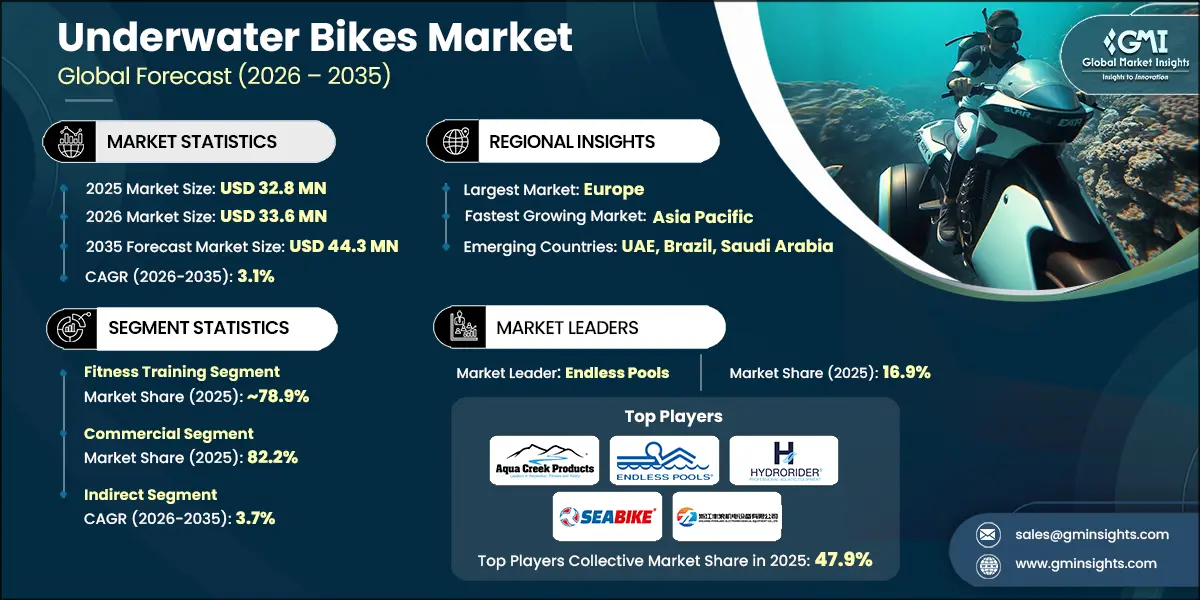
To get key market trends
Underwater Bikes Market Trends
Underwater bikes which need to be made of materials that can sustain them in the water for so long that end users can’t bear the load of replacements. In this market, manufacturers are innovating their products by using advanced, corrosion-resistant materials to make their products last longer in different water environments.
Premium bikes are now made with marine-grade stainless steel and composite coatings to withstand saltwater and chlorine. This emphasis on materials is also eco-friendly and meets safety requirements. The ergonomics and hydrodynamic frames provide better performance and comfort, which is why these bikes are popular among businesses and individuals.
There is an increased number of health-conscious individuals, and this has led to an increased demand for underwater bikes. Underwater bikes are an ideal means of cardiovascular training. According to experts, it is possible to burn up to 800 calories per hour through underwater cycling. This is essential in maintaining weight and functional training. Underwater biking is also essential in reducing cellulite; therefore, it is part of fitness training. This has led to an increased demand for underwater bikes, which can be used in fitness centers and homes as individuals look to engage in low-impact training to avoid joint damage from high-impact training.
Hotels, spas, and resorts are adding underwater bikes to their wellness facilities as part of their luxury offerings. These bikes are included in premium amenities to attract health-focused travelers and stand out in the wellness tourism market. They combine fitness with aquatic leisure, improving guest experiences and encouraging repeat visits.
Sales channels like online marketplaces have made it easy for consumers to purchase these types of products, and for manufacturers, e-commerce is providing them with new opportunities and new revenue streams. Big marketplaces like Amazon and Alibaba have already listed numerous underwater bikes. This makes it easier for individuals and small businesses to buy them. Online platforms allow customers to compare prices, read reviews, and discover more brands. Manufacturers are using both online and offline channels to increase sales and reach health-conscious buyers outside of major fitness hubs.
Underwater Bikes Market Analysis
Learn more about the key segments shaping this market
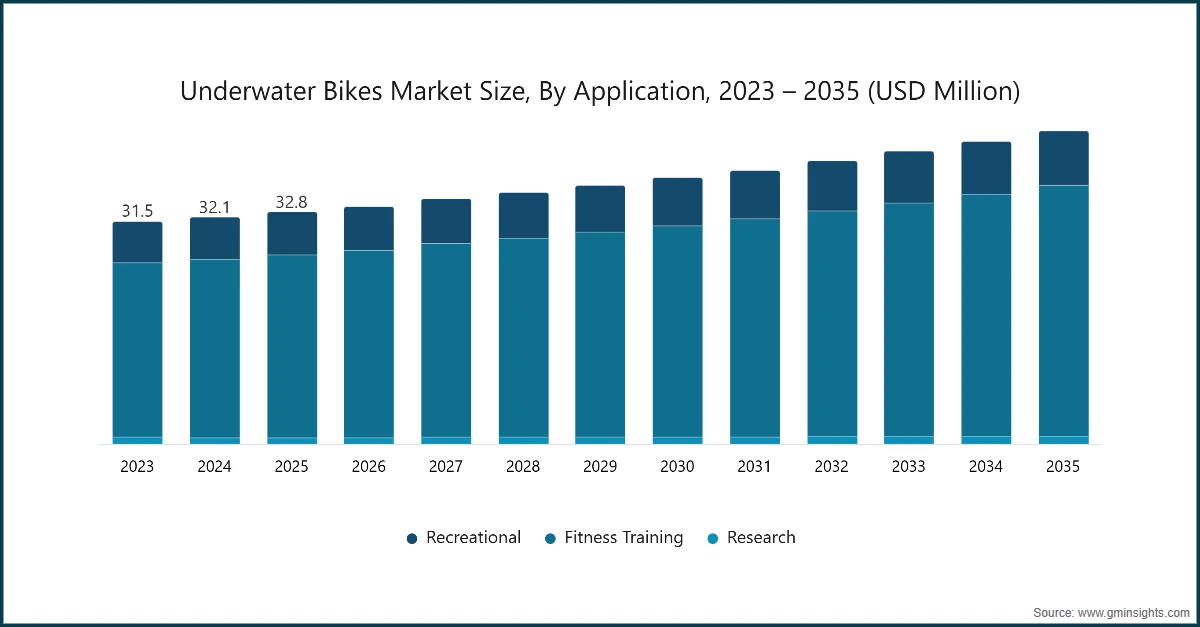
Based on application, the underwater bikes market is divided into recreational, fitness training and research. The fitness training segment dominated the market with market share of around 78.9% and generating revenue of around USD 25.9 million in 2025.
- Based on the estimates for the year 2025, underwater bikes are seen their most use in the fitness training application. Industry experts suggest that water resistance is an effective form of muscle engagement with minimal stress on joints. This is considered an advantage over other exercise equipment such as stationary bikes and treadmills. Underwater bikes have been found to be effective for cardiovascular exercise, strength toning, and burning calories. It is considered ideal for seniors and individuals with joint problems.
- In addition to this, awareness campaigns by influencers, organizations, and government bodies regarding fitness have also increased awareness of health and assimilation of health with mainstream fitness culture, thus creating a demand for water cycling. With water cycling increasingly recognized as an activity that has positive health benefits with regard to calorie burning, circulation of blood, and endurance, there is an active promotion of aqua cycling as a form of exercise.
- For instance, in January 2026, the Families, Parks and Recreation department of the City of Orlando introduced Hydrorider Aquabikes at College Park Pool, with the emphasis being placed on having fun with low-impact cardio exercises that promote heart health.
Learn more about the key segments shaping this market
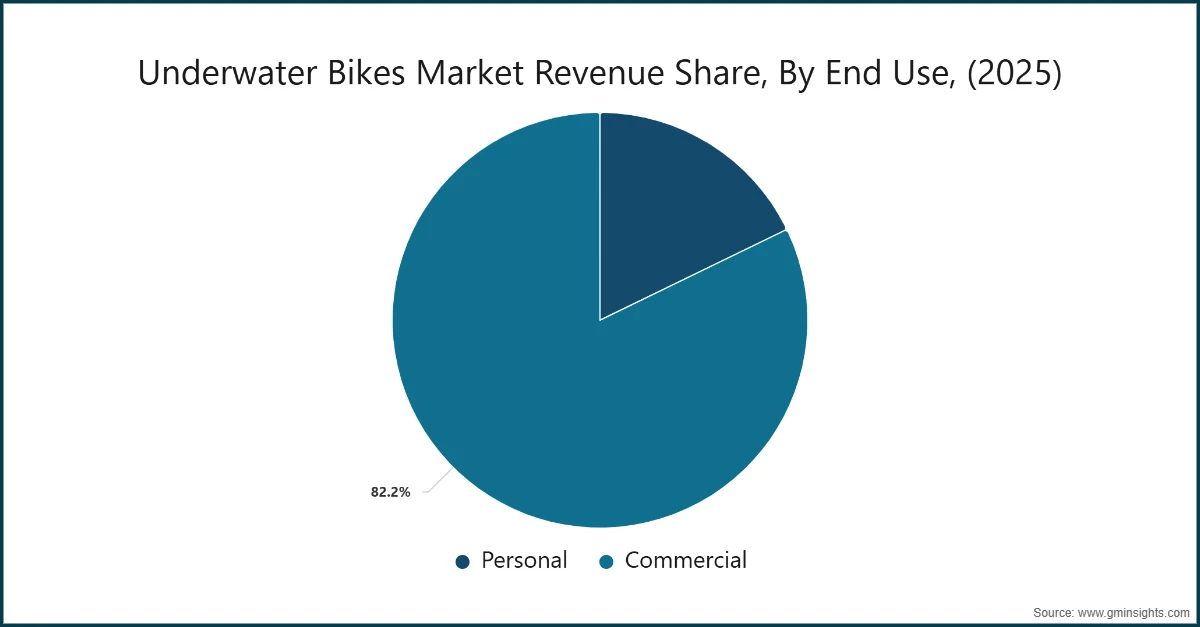
Based on end use, the underwater bikes market is divided into personal and commercial. The commercial segment accounts for 82.2% in 2025 and is expected to grow at a CAGR of around 3.4% between 2026 and 2035.
- The commercial segment is leading in the market as many fitness centers, hotels, resorts, and aquatic centers consider underwater bikes as part of their core business. They spend on these bikes to offer fitness, recreational activities, and attract customers who are fitness-conscious.
- Commercial facilities utilize underwater bikes to offer a structured fitness routine, rehabilitation, and aquatic therapy sessions. Water bikes are a perfect medium to offer cardiovascular and strength training, especially in rehabilitation centers, spas, and fitness centers.
- For example, recently, the City of Orlando’s Families, Parks, and Recreation Department launched Hydrorider Aquabikes in College Park Pool, offering a fun and healthy way to work out, improving heart health, and burning calories. Such institutional efforts help in creating awareness and thus increase the demand compared to individual buyers who may not have facilities and information to purchase underwater bikes.
- The availability of high-tech and specific underwater bikes designed for commercial use are also favored in the market’s new heights. For instance, MoveSea’s Seabike, which was released in early 2026, has been designed to be strong, portable, and efficient in various aquatic settings. The Seabike can operate at speeds of up to 2.2 m/s and comes in various models, such as basic, titanium, and carbon models.
Based on distribution channel, the underwater bikes market is divided into direct and indirect. The indirect segment is expected to grow at the fastest CAGR of 3.7% between 2026 and 2035.
- The indirect distribution segment is growing significantly due to the increase in authorized distributors and independent fitness equipment stores, which increase accessibility to a wider market beyond urban centers and business buyers. Underwater bikes are reaching gyms, resorts, rehabilitation centers, and individual buyers, who would not buy directly from manufacturers. Manufacturers are thus reaching emerging markets and increasing penetration, leading to consistent growth.
- The increasing compound annual growth rate of e-commerce is another major aspect that is responsible for the overall growth of indirect channels. This is because underwater bikes are easily accessible to personal users and small commercial entities without involving direct interaction with the manufacturer. For instance, by offering products like Hydrorider Aquabikes and MoveSea Seabikes, end-users are easily able to access basic and high-tech versions of underwater bikes, which is a major reason for the high CAGR of the segment.
Looking for region specific data?
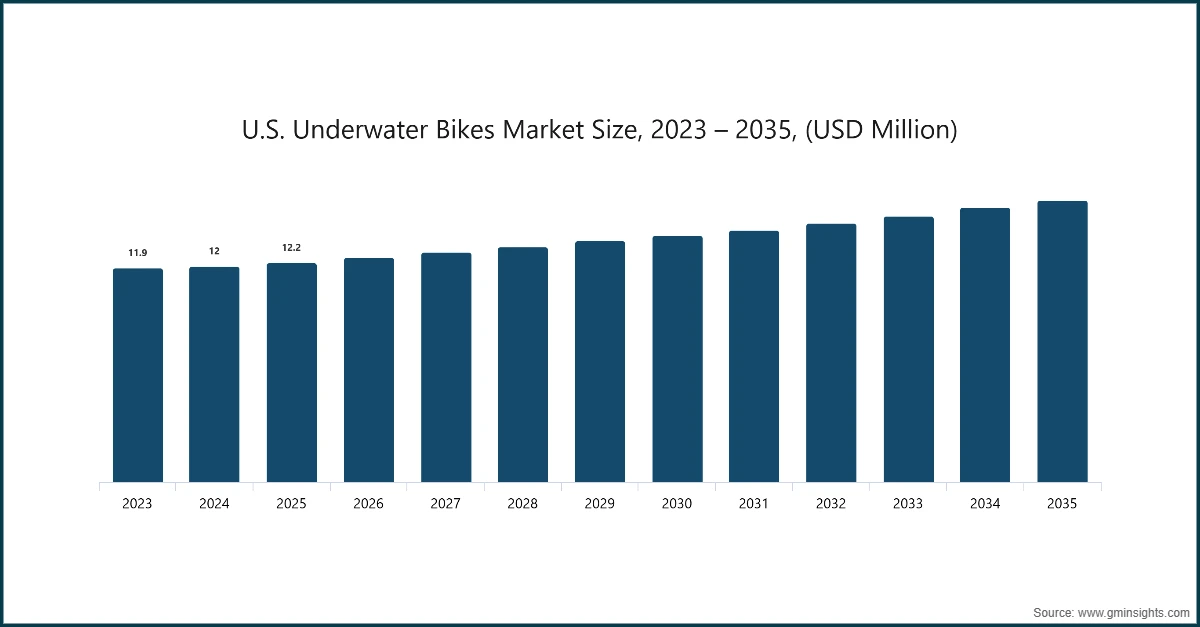
The US underwater bikes market reached USD 12.2 million in 2025 and growing at a CAGR of 2.6% between 2026-2035.
- The United States is one of the most developed markets for underwater bikes, particularly due to a well-developed health and wellness market and high levels of consumer spending in health and wellness products and services. According to data from the wellness industry, the US is considered to be the largest national wellness market in the world, generating nearly one-third (32%) of the total global wellness economy in 2024 valued at USD 2 trillion.
- Aquatic fitness and therapy are becoming more integrated into rehabilitation programs, sports medicine clinics, and fitness clubs, and aquatic workouts are becoming more popular because they provide several benefits for heart health, joint mobility, and muscle activity without high impact stress. Research and recommendations from organizations such as the Aquatic Exercise Association (AEA) and the American College of Sports Medicine (ACSM) support guidelines for aquatic programming, thereby indirectly supporting the value proposition for underwater bikes.
The North America region is valued at USD 13.9 million in 2025. In terms of volume, the underwater bikes market is estimated to be around 22.4 thousand units in the same year.
- North America is an important market for underwater bikes, driven by high disposable income, state-of-the-art leisure facilities, and high fitness and rehabilitation center density. This market holds a share of over 43% in 2025.
- The market demand for underwater bikes in North America is driven by consumers’ preference for innovative fitness equipment, such as underwater bikes, for low-impact fitness. This market has seen an increase in the use of underwater bikes in aquatic fitness and rehabilitation facilities. This has been complemented by the presence of a strong aquatic exercise culture, including comprehensive fitness programming and robust wellness club participation.
- The inclusion of coverage codes such as 97113 in aquatic therapy has created a comprehensive framework for water-based treatments in the U.S. This could indirectly encourage institutional investors to invest in aquatic equipment, including underwater bikes.
The Europe region holds 34.6% of the automotive touch screen control system market in 2025 and is expected to grow at a CAGR of 2.4% between 2026 and 2035.
- Europe is in the second position in the underwater bikes market, which is valued at 17.2 million USD in 2025. The basis of this market is the spa culture, well-developed wellness centers, and awareness of hydrotherapy benefits. Germany, France, Italy, Spain, and many other countries are some of the key players in this market due to well-developed rehabilitation programs and incorporation of water fitness in their leisure activities.
- Fitness activities, such as aquatic fitness, among the German population, especially the middle-aged and elderly, have been rising. This is largely due to the culture of aquatic fitness, low-impact aquatic workouts, rehabilitation programs, and hydrotherapy. This culture has been responsible for the integration of underwater bikes in aquatic facilities, where people are eager to experience diverse fitness activities.
The Asia Pacific region is expected to grow the fastest at the CAGR of 4.5% between 2026 and 2035 in the automotive touch screen control system market.
- The region’s growth is primarily supported by increasing health awareness, tourism, and growth in the hospitality sector. Countries such as China, Japan, Australia, and Southeast Asian nations are increasingly adopting this trend in luxury resorts and hotels. High disposable income that let people access recreational activities and tourism that is becoming the reason of higher growth of the region.
- With the rise in urbanization and the growing middle-class demographic, the demand for premium fitness experiences, including water-based workouts and rehabilitation, will continue to grow. The tourism industry in the region also contributes to the market’s growth, with water bike therapy being integrated into many tourism facilities as an additional activity.
- Underwater bikes market in China is in an emerging stage and is being driven by increased consumer awareness of health and fitness and investments in fitness and rehabilitation centers. The market is estimated to have significant market share in the Asia Pacific region due to high per capita income in urban areas and increased awareness of healthy lifestyles.
Brazil is estimated to grow with a CAGR of 3.7% between 2026 and 2035, in the Latin America underwater bikes market.
- Brazil has an established market for underwater bikes due to its strong culture of water-based recreational activities and extensive natural water resources. The country has over 7,400 km of Atlantic Ocean coastline and extensive river systems, allowing inhabitants to engage in various types of water-based activities, including surfing, boating, and water-based tours. The strong outdoor culture has encouraged the use of water-based fitness equipment and has therefore increased latent demand for underwater bikes from water sports clubs and tourism operators.
- Domestic Aquatic Recreation Trends also have a part to play. The Brazilian Ministry of Tourism has pointed out “hidrobike” activities in Manaus, Amazonas, in which tourists are allowed to pedal in river routes, bringing together sport and tourism. This connection between tourism and aquatic activity further underlines the experiential potential of underwater bikes in Brazil’s tourism and leisure sectors.
UAE to experience substantial growth in the Middle East and Africa underwater bikes market in 2025.
- The UAE market for underwater bikes is intrinsically linked to the UAE’s wellness and luxury tourism market and fitness culture, which has witnessed significant and rapid expansion over the last few years. The hospitality and wellness market are significant economic drivers in the UAE, and this is reflected in the fact that between January and November 2025, there were as many as 29.1 million guests in hotels in the UAE. This is indicative of the high demand for luxury tourism in the region.
- Another emerging trend in the UAE is the incorporation of water-based fitness classes such as aqua cycling into mainstream fitness programming. For instance, Aquafit’s aqua cycling classes in Dubai and Abu Dhabi incorporate low-impact water exercise with cardiovascular benefits through the use of stationary bikes in water. This is in line with consumer demand for unique water exercise that is healthy and provides maximum calorie burn with reduced impact on joints.
Underwater Bikes Market Share
The top 7 companies in the underwater bikes industry are Aqua Creek, Endless Pools, Hydrorider, POOLBIKING, SEABIKE, Waterflex and Zhejiang Fenglang contributing 57.6% of the market in 2025.
- Aqua Creek’s Tidalwave Pool Bike is made of stainless steel. It has adjustable seats and handlebars, multiple resistance levels, and a flywheel design. It is suitable for low-impact cycling in pools, rehabilitation, and fitness classes.
- Endless Pools’ Aqua Bike is a lightweight stationary bike for water use. It has adjustable seats, handlebars, and legs. It uses water resistance to provide joint-friendly workouts and core exercises in home or commercial pools.
- Hydrorider’s AquaBike models are made of marine-grade stainless steel. They have adjustable seats and handlebars and offer resistance through paddle or flywheel systems. These bikes are designed for water cycling and conditioning in pools.
- POOLBIKING’s aquatic bikes adjust resistance based on pedaling effort. They are durable and provide consistent resistance, making them good for water exercise and rehabilitation.
- SEABIKE makes underwater pedal-powered bikes. These bikes turn leg motion into water propulsion, offering a fun underwater cycling experience for recreation and movement in water.
- Waterflex’s aquabikes are made of marine-quality materials. They have adjustable resistance and ergonomic seats. These bikes are used for fitness, spinning, and rehabilitation in pools.
- Zhejiang Fenglang makes aluminum, corrosion-resistant underwater bikes. These bikes are designed for low-impact muscle training and stability during adult pool workouts.
Underwater Bikes Market Companies
Major players operating in the underwater bikes industry are:
- Aqua Body Strong
- Aqua Creek
- Endless Pools
- Evoke Fitness
- EWAC medical
- Hydrorider
- POOLBIKING
- SEABIKE
- Waterflex
- Zhejiang Fenglang
- Aqua Creek makes strong aquatic bikes for low-impact fitness and rehabilitation. These bikes have adjustable seats and stainless steel frames. They can be used in commercial pools, therapy pools, and home pools.
- Endless Pools makes lightweight and adjustable aquabikes that work with their Endless Pools systems. These bikes are made for low-impact cardio workouts using water resistance. They are comfortable and easy to use for both home and commercial fitness users.
- Hydrorider makes high-quality aquatic fitness bikes with strong steel frames. These bikes have adjustable resistance paddles and comfortable designs. They are used in gyms, spas, and rehabilitation centers for water-based workouts.
- POOLBIKING, a Spanish brand, makes professional aquabikes with advanced designs. These bikes have progressive resistance and strong stainless steel frames. They are used in fitness clubs, rehabilitation centers, and wellness areas in hotels and resorts.
- SEABIKE makes portable underwater bikes that use leg power to move in water. These bikes are good for fun water activities and improving swimming workouts. Their simple design makes them easy to use in pools and for leisure activities.
- Waterflex, a European brand, makes underwater bikes with adjustable resistance. These bikes are made with lightweight aluminum and steel frames. They are used for fitness, rehabilitation, and wellness programs in commercial and home pools.
- Zhejiang Fenglang makes and exports aquatic fitness equipment, including aquabikes. They focus on research and development, large-scale production, quality control, and offer customized products through OEM and ODM services.
Underwater Bikes Market Report Attributes
| Key Takeaway | Details |
|---|---|
| Market Size & Growth | |
| Base Year | 2025 |
| Market Size in 2025 | USD 32.8 Million |
| Market Size in 2026 | USD 33.6 Million |
| Forecast Period 2026-2035 CAGR | 3.1% |
| Market Size in 2035 | USD 44.3 Million |
| Key Market Trends | |
| Drivers | Impact |
| Rising health & wellness consciousness driving aquatic fitness adoption | Increasing consumer awareness of low-impact aquatic workouts is boosting demand for underwater bikes, supporting fitness, rehabilitation, and overall wellness-focused exercise programs. |
| Growth in adventure tourism & underwater recreation activities | Expansion of recreational and adventure tourism is promoting underwater bike experiences, attracting tourists seeking novel fitness and aquatic recreational activities. |
| Advancements in underwater bike designs and technology | Technological improvements such as adjustable resistance, ergonomic designs, and corrosion-resistant materials enhance performance, usability, and safety, driving market growth. |
| Increasing investment in luxury resorts & aquatic wellness facilities | Resorts and wellness centers adopting underwater bikes for premium guest experiences stimulate sales, expanding market penetration in hospitality and leisure sectors. |
| Pitfalls & Challenges | Impact |
| Safety concerns & regulatory challenges in open-water applications | Regulatory restrictions and safety risks limit open-water adoption, requiring compliance and supervision, potentially slowing expansion in adventure tourism or unmonitored pool environments. |
| Competition from alternative water sports & fitness equipment | Availability of substitutes such as aqua treadmills, rowing machines, or traditional gym equipment challenges underwater bike adoption in fitness and recreational markets. |
| Opportunities: | Impact |
| Untapped potential in rehabilitation & therapeutic applications | Growing recognition of aquatic therapy benefits opens opportunities for underwater bikes in medical rehabilitation, physiotherapy centers, and post-injury recovery programs. |
| Expansion of rental models through coastal tourism operators | Rental services at resorts and coastal locations create a flexible revenue stream, increasing underwater bike accessibility to tourists and short-term users. |
| Growing demand in corporate wellness & hotel amenity programs | Corporates and hotels integrating underwater bikes into wellness programs enhance employee engagement and guest experiences, driving demand across commercial and hospitality sectors. |
| Market Leaders (2025) | |
| Market Leader |
16.9% market share |
| Top Players |
Collective market share in 2025 is 47.9% |
| Competitive Edge |
|
| Regional Insights | |
| Largest Market | Europe |
| Fastest growing market | Asia Pacific |
| Emerging countries | UAE, Brazil, Saudi Arabia |
| Future outlook |
|
What are the growth opportunities in this market?
Underwater Bikes Industry News
- In January 2026, MoveSea introduced the Seabike, a lightweight water bike that is worn around the waist. It uses pedal power to help swimmers and divers move faster with less effort. The Seabike does not need batteries or electricity and is easy to carry. It works in both fresh and saltwater. There are different models available, from basic ones to advanced versions made with titanium and carbon. The Seabike can reach speeds of up to 2.2 m/s, making it a new and efficient way to travel in water using human power.
- In January 2026, the City of Orlando’s Families, Parks and Recreation department introduced Aquabikes at the College Park Pool. These aquabikes are made by Hydrorider. They provide a fun and low-impact cycling workout that helps people burn calories and improve their heart health.
The underwater bikes market research report includes in-depth coverage of the industry with estimates & forecasts in terms of revenue ($ Mn/Bn) and volume (units) from 2022 to 2035, for the following segments:
Market, By Application
- Recreational
- Fitness Training
- Research
Market, By End Use
- Personal
- Commercial
- Gyms & fitness centers
- Hotels, resorts & spas
- Dive operators & marine tour companies
- Rehabilitation centers
Market, By Distribution Channel
- Direct
- Indirect
- Authorized distributors
- Independent fitness equipment stores
- Third-party e-commerce marketplaces
The above information is provided for the following regions and countries:
- North America
- US
- Canada
- Europe
- Germany
- UK
- France
- Italy
- Spain
- Russia
- Netherlands
- Nordics
- Asia Pacific
- China
- India
- Japan
- South Korea
- Australia
- Singapore
- Indonesia
- Thailand
- Latin America
- Brazil
- Mexico
- Argentina
- Colombia
- MEA
- South Africa
- Saudi Arabia
- UAE
Frequently Asked Question(FAQ) :
What was the market size of the underwater bikes in 2025?
The market size was USD 32.8 million in 2025, growing at a CAGR of 3.1% through 2035, driven by increasing use in fitness and rehabilitation.
What is the projected value of the underwater bikes market by 2035?
The market is poised to reach USD 44.3 million by 2035, supported by advancements in materials, wellness tourism, and rising health awareness.
What is the expected size of the underwater bikes industry in 2026?
The market size is expected to reach USD 33.6 million in 2026.
How much revenue did the fitness training segment generate in 2025?
The fitness training segment generated USD 25.9 million in 2025, accounting for around 78.9% share, making it the dominant segment.
What was the valuation of the commercial segment in 2025?
The commercial segment held 82.2% of the market in 2025 and is projected to grow at a CAGR of 3.4% through 2035.
What is the growth outlook for the indirect distribution segment from 2026 to 2035?
The indirect distribution segment is expected to grow at the fastest CAGR of 3.7% through 2035, driven by expansion of distributors and fitness equipment stores.
Which region leads the underwater bikes sector?
The United States leads the market, valued at USD 12.2 million in 2025, and is expected to grow at a CAGR of 2.6% through 2035.
What are the upcoming trends in the underwater bikes market?
Key trends include corrosion-resistant materials, eco-friendly designs, integration in wellness tourism, and rising online sales channels.
Who are the key players in the underwater bikes industry?
Key players include Aqua Body Strong, Aqua Creek, Endless Pools, Evoke Fitness, EWAC Medical, Hydrorider, POOLBIKING, SEABIKE, Waterflex, and Zhejiang Fenglang.
Underwater Bikes Market Scope
Related Reports