Summary
Table of Content

Total Knee Replacement Market
Get a free sample of this report
Form submitted successfully!
Error submitting form. Please try again.
Thank you!
Your inquiry has been received. Our team will reach out to you with the required details via email. To ensure that you don't miss their response, kindly remember to check your spam folder as well!
Request Sectional Data
Thank you!
Your inquiry has been received. Our team will reach out to you with the required details via email. To ensure that you don't miss their response, kindly remember to check your spam folder as well!
Form submitted successfully!
Error submitting form. Please try again.
Total Knee Replacement Market Size
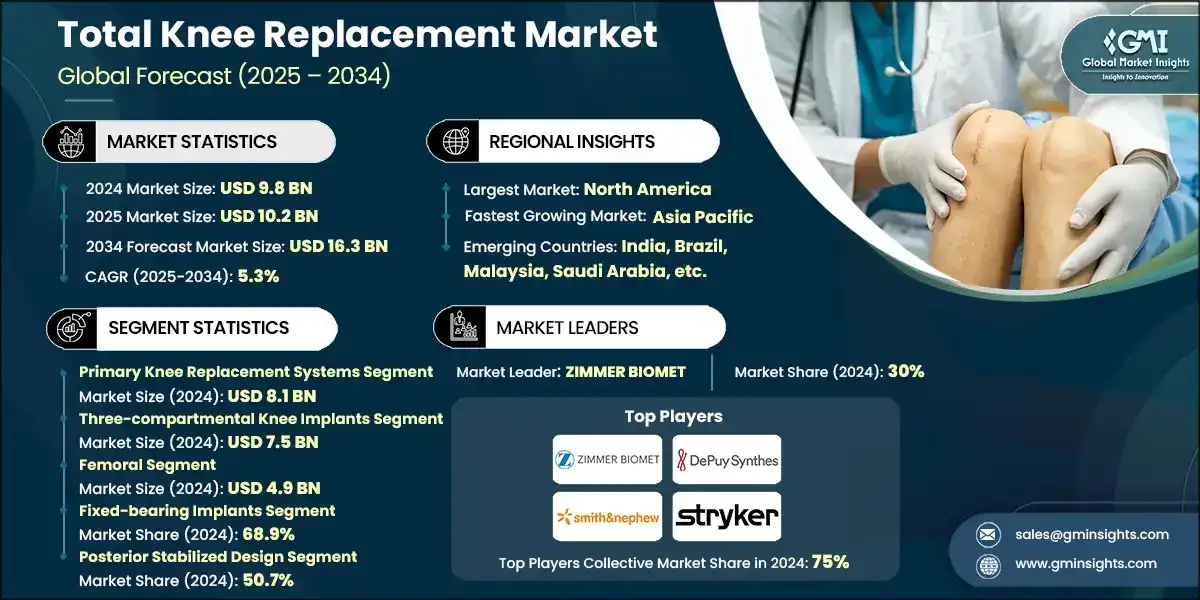
The global total knee replacement market was estimated at USD 9.8 billion in 2024. The market is expected to grow from USD 10.2 billion in 2025 to USD 16.3 billion in 2034, at a CAGR of 5.3% during the forecast period, according to the latest report published by Global Market Insights Inc.
To get key market trends
The total knee replacement market is driven by the increasing prevalence of arthritis and osteoporosis, growing infection rates contributing to a rise in knee revisions, and advancements in surgical techniques coupled with the expansion of outpatient and ambulatory surgical centers, among other factors.
Adoption of robotic-assisted and AI-driven surgical systems, growth in sports injuries and post-traumatic arthritis cases, and increasing incidence of obesity and related joint disorders are other factors supporting the industry growth. ZIMMER BIOMET, Smith+Nephew, Stryker, Depuy Synthes (Johnson & Johnson), and B. BRAUN are the leading players operating in the market. These players mainly focus on product innovation, adoption of novel materials in implants, and collaboration with local or regional players to further their geographical expansion plans, among others.
Osteoarthritis and osteoporosis lead to joint degeneration, significantly impacting the overall growth of the total knee replacement industry. As the population ages and more lifestyle-related health concerns emerge, the prevalence of osteoarthritis and osteoporosis is likely to continue to rise in the coming years. For instance, according to the data reported in The International Osteoporosis Foundation (IOF) report, over 23 million people in the regions are at high risk of osteoporotic fractures. Individuals suffering from osteoarthritis may have chronic pain and decreased mobility, while osteoporosis results in decreased bone density, contributing to the risk of damage to joints, future complications, and chronic pain. A total knee replacement is a recommended procedure to restore function and alleviate pain, particularly in older adults. This trend in demand is leading to innovation in implant design and techniques that meet the growing demands of patient needs.
Additionally, there is a significant increase in the need for personalized and patient-specific implants since patients seek improved fit, comfort, and long-term results from their knee replacement surgery. Implants are designed to fit each person's anatomy with advanced imaging and digital planning tools, thus reducing the risk of complication while enhancing mobility. This trend is majorly attributed to advancements in the industry, including 3D printing and AI-based modeling, enabling customization at a larger scale. In addition, as patients and caregivers continue to expect personalized care, manufacturers are working to develop products that better align with the patient's profile and surgical choices.
Moreover, sports injuries, particularly in younger and/or active patients, are a significant contributor to knee replacement surgery. High-impact activities and competitive sports often lead to ligament tears, cartilage damage, and/or post-traumatic arthritis, which may require surgery. Improvements in minimally invasive procedures and fast-track rehabilitation protocols for the knee result in better acceptance of surgery. Hence, all the aforementioned parameters are anticipated to spur the product demand over the forecast period.
Total knee replacement is a surgical method in which the impaired or worn surfaces of the knee joint are replaced with mechanical components to restore mobility, decrease pain, and improve joint function in patients with severely compromised knees.
Total Knee Replacement Market Report Attributes
| Key Takeaway | Details |
|---|---|
| Market Size & Growth | |
| Base Year | 2024 |
| Market Size in 2024 | USD 9.8 Billion |
| Market Size in 2025 | USD 10.2 Billion |
| Forecast Period 2025 – 2034 CAGR | 5.3% |
| Market Size in 2034 | USD 16.3 Billion |
| Key Market Trends | |
| Drivers | Impact |
| Increasing prevalence of arthritis and osteoporosis | Rising cases of joint degeneration are leading to higher demand for knee replacement procedures, especially among aging populations seeking pain relief and restored mobility. |
| Need for personalized and patient- specific implants | Surgeons and patients increasingly prefer implants tailored to individual anatomy, improving fit, reducing complications, and enhancing post-operative outcomes. |
| Growing infection rates contributing to rise in knee revisions | Post-surgical infections are prompting more revision surgeries, increasing demand for durable implants and advanced surgical protocols to minimize risks. |
| Increasing usage of unicondylar knee procedures | Partial knee replacements are becoming more common for early-stage arthritis, offering quicker recovery and less invasive options for suitable patients. |
| Pitfalls & Challenges | Impact |
| Increased number of knee implant recalls | Product recalls due to design flaws or safety concerns are affecting patient trust and increasing regulatory scrutiny on manufacturers. |
| High cost associated with the surgery | Expensive procedures and limited insurance coverage in some regions are restricting access, especially for low-income and uninsured patients. |
| Opportunities: | Impact |
| Smart implants and IoT integration | Sensor-enabled implants will offer real-time data on joint performance, enabling proactive care and personalized rehabilitation strategies. |
| Expansion in emerging markets | Improved healthcare infrastructure and rising awareness in developing regions will unlock new patient segments and drive global market growth. |
| Market Leaders (2024) | |
| Market Leaders |
Around 30% market share |
| Top Players |
Collective market share in 2024 is 75% |
| Competitive Edge |
|
| Regional Insights | |
| Largest market | North America |
| Fastest growing market | Asia Pacific |
| Emerging countries | India, Brazil, Malaysia, Saudi Arabia, etc. |
| Future outlook |
|
What are the growth opportunities in this market?
Total Knee Replacement Market Trends
Integration of digital planning and smart implants, a shift toward outpatient and ambulatory care, growing preference toward personalized care, and adoption of robotic-assisted surgery are among the key trends shaping the market growth.
- Digital technology, such as 3D imaging and AI-based planning, is facilitating treatment approaches with the possibility for customization. Smart implants with sensors provide real-time data on joints, allowing clinicians to monitor recovery and intervene at the earliest moment if needed. Digital tools improve patient outcomes while contributing to the long-term success of implants.
- In addition, advanced robotic-assisted systems are improving knee replacement surgeries through enhanced accuracy during surgery, leading to shorter recovery times in comparison to traditional procedures and improved overall outcomes. For instance, in June 2025, Johnson & Johnson MedTech announced the launch of their KINCISE 2 Surgical Automated System, a next-generation automated tool engineered to improve surgical efficiency and reduce the physical burden on surgeons during both primary and revision knee and hip replacement procedures. Such developments allow surgeons to perform pre-planned procedures that offer a greater level of accuracy as well as reduce soft tissue harm and implant misalignment.
- Further, increased demand for the transition from inpatient care to outpatient settings is also supporting market growth. Ambulatory surgical centers provide an efficient and cost-effective option for surgery with a shorter facility stay. Furthermore, advances in pre-operative and post-operative pain management protocols facilitate this shift, making knee replacement more appealing and cost-competitive to a larger patient base.
Total Knee Replacement Market Analysis
Learn more about the key segments shaping this market
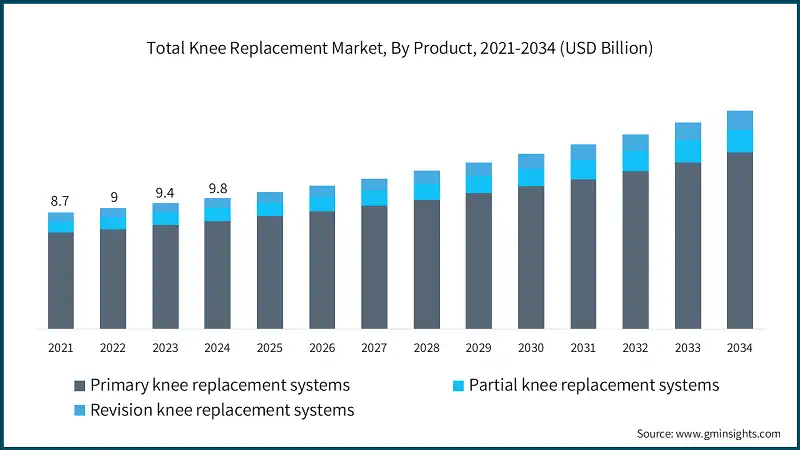
In 2021, the market was valued at USD 8.7 billion and grew to USD 9 billion in 2022, reaching USD 9.4 billion by 2023. The growing prevalence of orthopedic disorders, rise in procedural volume, and favorable reimbursement scenario are among the key variables contributing to industry growth.
Based on product, the market is classified into primary knee replacement systems, partial knee replacement systems, and revision knee replacement systems. The primary knee replacement systems segment generated the highest revenue of USD 8.1 billion in 2024. Increasing incidence of obesity and related joint disorders, use of 3D printing, and smart sensor technologies in implants are anticipated to drive segmental progression. The segment is expected to exceed USD 13.1 billion by 2034, growing at a CAGR of 5.1% during the forecast period.
- The strong demand for primary knee replacement systems is anticipated to maintain the trend throughout the analysis period due to their established use in treating advanced cases of osteoarthritis and joint degeneration. Primary knee replacements are the go-to procedure for first-time patients due to their reliability in clinical outcomes and durable long-term efficacy.
- Additionally, once the implant designs are established, they provide surgeons with the broad applicability of adoption for varying patient anatomies. The primary system is expected to remain the backbone of the knee market due to the growing aging demographic and increased awareness of joint issues or degeneration.
- Further, the partial knee replacement segment was valued at USD 980.2 million in 2024. Partial knee replacement technology continues to gain traction for patients with localized joint damage, particularly in younger, active patients.
- Partial knee replacements are a less invasive alternative to a total knee replacement that preserves healthy bone and ligaments. Patients are highly motivated for partial knee operations due to shorter recovery times, less postoperative pain, and better functioning joints.
- The revision knee replacement segment is anticipated to record robust growth with a CAGR of 6.9% through the analysis timeframe. Increased need for revision knee replacement systems stems from an uptick in implant failures, infections, and implant wear over time. Revision systems are meant to address the complex cases that may require replacement components from a previously implanted system.
- Furthermore, surgeons depend on these systems for structural support and to accommodate complex anatomical conditions. As the number of primary procedures increases around the globe, revision systems may record growth similarly, which is projected to drive manufacturers to develop systems made of durable and infection-resistant materials.
Based on device type, the global total knee replacement market is segmented into three-compartmental knee implants, bicompartmental knee implants, and unicompartmental knee implants. The three-compartmental knee implants segment accounted for a leading share and was valued at USD 7.5 billion in 2024.
- Three-compartmental knee implants have become a common choice for total knee replacement surgery and are specifically designed to address damage to all compartments of the knee. The implants are designed for total joint resurfacing and are often recommended by orthopedic surgeons for patients with significant joint wear.
- Orthopedic surgeons prefer these implants as they feel confident in utilizing them due to their ability to provide successful durability and functional outcomes, making them a common choice for use in surgical hospitals or outpatient surgical destinations.
- The bicompartmental knee replacement segment was valued at USD 1.4 billion in 2024. Bicompartmental knee replacements are gaining interest for significant damage to two knee compartments and a healthy third compartment. Bicompartmental knee replacements represent an opportunity between total and unicompartmental knee replacement with less invasiveness and retention of the natural mechanics of the knee joint.
- Moreover, there is a growing demand for this implant as patients with moderate arthritis seek enhanced recovery and better range of mobility. In addition, surgeons are using bicompartmental knee replacements to bridge the gap between total and partial replacement as surgical techniques advance, imaging technology improves, and refinement of indications and contraindications for patient selection and procedural success.
- The unicompartmental knee implants segment is expected to witness the fastest growth, with a CAGR of 6.7% over the forecast period. Unicompartmental knee implants are becoming increasingly popular for early degenerative arthritis that involves only one compartment.
- These implants have the ability to preserve bone and ligaments and promote quicker recovery with less postoperative pain. The demand is increasing, particularly from younger and active patients who prefer a minimally invasive option.
- Further, as the awareness of this procedure increases, unicompartmental implants are expected to be among the fundamental options to consider when designing patient-centered orthopedic treatment.
Based on component, the global total knee replacement market is segmented into femoral, tibial, and patellar. The femoral segment accounted for a majority share and was valued at USD 4.9 billion in 2024.
- There is a significant demand for femoral components as they are pivotal in ensuring the moving and load-bearing function of the femoral bone. Since femoral components experience significant stress and wear, manufacturers are focused on variable durability and anatomical design.
- In addition, surgeons are primarily interested in femoral components with stable fixation, compatible with a variety of surgical approaches, and suitable for long-term performance, which continues to drive implant selection and surgical success.
- The tibial segment was valued at USD 3.7 billion in 2024. Tibial components support the lower leg and help share loads through the knee joint. There is increased interest in tibial component designs that provide reliable fixation and reduce wear over time.
- Further, new designs are incorporating locking mechanisms and surface coatings to improve implant longevity and decrease revision rates. Surgeons are opting for tibial components with a reliable interface to the femoral component, which may allow for consistent performance throughout different patient anatomy and activity levels.
- The patellar segment is expected to witness robust growth, with a CAGR of 4.8% over the forecast period. There is a greater demand for designs that are anatomically contoured to improve comfort and reduce friction. These components are particularly important in total knee replacements when patellar resurfacing is indicated.
- Furthermore, manufacturers are making strides in developing materials that reduce the risk of complications and try to replicate the feel and function of natural cartilage, which may improve patient satisfaction and lead to better long-term results.
Based on implant type, the global total knee replacement market is segmented into fixed-bearing implants, mobile-bearing implants, medial pivot implants, and other implant types. The fixed-bearing implants segment accounted for a dominating share of 68.9% in 2024.
- Fixed-bearing implants are the most popular type used in total knee arthroplasty as they are simple, durable, and effective. These implants allow reliable articulation between the femoral and tibial components of the joint, which makes them applicable for a wide range of patient populations. There is a strong demand from older patients and patients with lower activity levels.
- Additionally, surgeons favor fixed-bearing implants due to their relative simplicity and long-term reliability in traditional surgical settings.
- The mobile-bearing implants segment is anticipated to record the fastest growth with a CAGR of 8.6% over the analysis period. Mobile-bearing implants have become more popular due to their ability to more closely duplicate physiologic knee movement. Allowing for a slight rotation of the bearing surface, mobile-bearing devices may reduce wear and improve the function of the joint.
- In addition, a considerable percentage of younger and more active patients are demanding increased mobility and durability of their implant.
- Further, surgeons are using mobile-bearing implants for enhanced mobility and reduced stress on the implant. Increased accuracy in surgery and superior implant designs have further promoted the adoption of mobile-bearing implants.
Based on design, the total knee replacement market is segmented into posterior stabilized design and cruciate retaining design. The posterior stabilized design segment accounted for a leading share of 50.7% in 2024.
- Posterior-stabilized implants are popular among patients with absent or deficient posterior cruciate ligaments. These designs provide a high degree of stability and constrained motion, making them suitable for a wide variety of procedures.
- The demand for posterior-stabilized implants remains high as they offer consistent performance, are predictable, and are easy to implant. Surgeons prefer this design because they are able to simulate natural knee function while supporting the patient, particularly for total knee replacements, where greater stability of the joint is essential.
- Moreover, the cruciate-retaining design segment was valued at USD 3.9 billion in 2024. Cruciate-retaining implants are increasingly becoming common among patients who have intact posterior cruciate ligaments. The designs maintain the normal mechanics of the knee and allow better proprioception and knee function.
- Furthermore, surgeons acknowledge the improvements in patient outcomes and satisfaction, particularly avoiding bone resection when possible and preserving ligamentous integrity.
Based on surgery type, the global total knee replacement market is segmented into traditional surgery type and technology-assisted surgery type. The traditional surgery type segment accounted for a dominating share and was valued at USD 8.5 billion in 2024.
- Conventional knee replacement surgery is a widespread practice, especially in areas where access to advanced technology is limited. There is a continued demand for the procedure due to its effectiveness, familiarity, and high usage by surgeons.
- It is majorly based on manual approaches, which are performed with standard instruments that fit a wide range of patient populations.
- In addition, the traditional surgical method is considered generally a reliable option, especially in high-volume centers and low-resource settings.
- On the other hand, the technology-assisted surgery type segment is expected to witness higher growth with a CAGR of 8.8% over the forecast period. Surgery supported by advanced technology and related equipment is expected to witness significant demand owing to the rising preference for precision, customization, and better results. Robotic systems, navigation systems, and digital planning tools have notably improved accuracy and lowered complication rates in surgery.
- Patients are seeking a faster recovery process and joint function. Surgeons have received enhanced insight and real-time feedback based on data, which has improved predictability in surgical procedures. Further, as healthcare systems evolve, technology-assisted surgery is expected to become the go-to choice for patients in urban and specialized care settings.
Based on fixation material, the global total knee replacement market is segmented into cemented, cementless, and hybrid. The cemented segment accounted for a majority share and was valued at USD 7.9 billion in 2024.
- Cemented fixation continues to be the most used method in knee replacement due to its reliability and early stability. Specifically, surgeons prefer it in older populations and patients with lower bone density.
- The demand for cemented fixation is consistent as it provides a secure fixation of the implant with better and predictable outcomes. The industry players are putting significant effort and resources into focusing on improving the bonding of cement and the implant surface in order to reduce loosening over time.
- The cementless segment was valued at USD 1.3 billion in 2024. The cementless fixation method is being used more frequently, especially in younger and active patients. Cementless implants depend on the patient's bone growing into porous surfaces to achieve stability for long-term use, thus reducing the need for bone cement.
- Further, owing to the ongoing advances made to surfaces that promote osseointegration, it is a key variable in segmental growth.
- The hybrid segment is expected to witness the highest growth, with a CAGR of 6.2% over the forecast period. Hybrid fixation uses both cemented and cementless strategies, generally employing cement for the tibial component and press-fit for the femoral component. The hybrid strategy benefits from immediate stability while leveraging long-term biological fixation.
- The segmental demand is being promoted by surgeons that prefer a patient-specific approach based on anatomy and bone quality. Thus, the use of combination strategies provides versatility and is expected to witness increased adoption in complex cases.
Based on material, the global total knee replacement market is segmented into metal-on-plastic, ceramic-on-plastic, metal-on-metal, and ceramic-on-ceramic. The metal-on-plastic segment accounted for a majority share of 59.1% in 2024.
- Implants composed of metal and plastic are among the most utilized, mainly due to their durability, cost-effective nature, and reliable function. The metal femoral component articulates with a polyethylene tibial insert, allowing for smooth movement with less wear.
- Additionally, manufacturers continue to improve plastic quality and surface treatments to extend life and minimize the generation of wear particles. As a result, metal and plastic remain the standard and most widely used across knee replacement surgeries.
- The ceramic-on-plastic segment is anticipated to record robust growth with a CAGR of 5.5% over the analysis period. Ceramic-on-plastic implants are on the rise due to their biocompatibility and lower wear rates. Ceramic materials exhibit less friction and smoother surfaces that may increase longevity and lower complication rates in the implant life cycle.
- The increasing demand for ceramic-on-plastic implants is mainly from the younger patient demographic that seeks long-lasting implants with less inflammatory response. The surgeons use them based on their ability to decrease osteolysis and joint function related to implants, especially in patients with metal sensitivity.
Based on polyethylene inserts, the total knee replacement market is segmented into antioxidant polyethylene inserts, highly cross-linked polyethylene inserts, and conventional polyethylene inserts. The antioxidant polyethylene inserts segment accounted for a leading share of 40% in 2024.
- The demand for antioxidant polyethylene inserts is increasing due to their improved resistance to oxidative degradation, extended life of the implant, and reduced complications of wear. These antioxidant inserts retain mechanical strength while limiting particle generation, which improves the longevity of joint mechanics.
- Orthopedic surgeons more commonly use these types of inserts for younger patients because of their enhanced durability. In addition, industry players are investing in adding antioxidant technologies for improved implant longevity and reduced revisions.
- The highly cross-linked polyethylene inserts segment was valued at USD 3.7 billion in 2024. Highly cross-linked polyethylene inserts have a significant adoption rate due to their mechanical properties and wear resistance. There is substantial demand for long-lasting implants, especially by active patients.
- These inserts lower the risk of osteolysis and contribute to implant survivorship. Surgeons prefer this insert type as they have a well-established and proven record for minimizing wear particles and maintaining joint function.
- Further, continued advancement in cross-linking techniques is expected to increase the utility of highly cross-linked polyethylene for improvement in both primary and revision cases.
Learn more about the key segments shaping this market
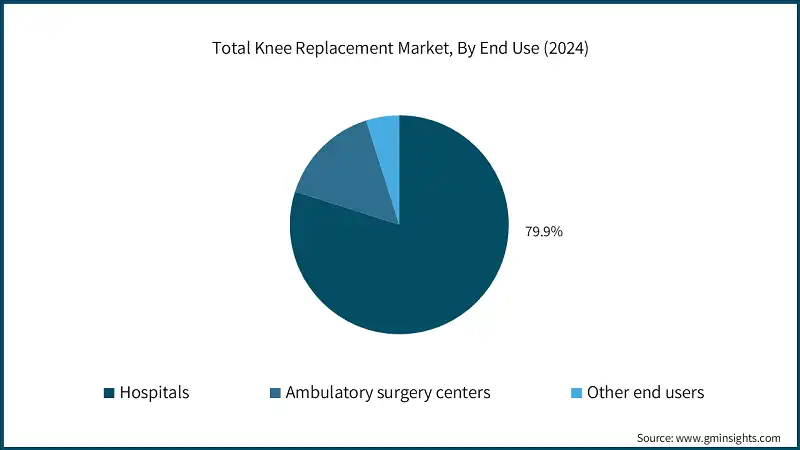
Based on end use, the total knee replacement market is segmented into hospitals, ambulatory surgical centers, and other end users. The hospitals segment accounted for the dominating market share of 79.9% in 2024 as it recorded high patient footfall, including both public and private hospital settings.
- Knee replacement procedures continue to be primarily performed in hospitals due to their established infrastructure, skilled surgical teams, and availability of the latest technologies. There is a growing demand for total knee arthroplasty (TKA) procedures across both public and private settings.
- Hospital facilities are among the primary adopters in integrating advanced robotic-assisted systems and custom/patient-specific implants, making them a center of innovation and high-volume surgical procedures.
- In addition, they play an important role in training and research, which continues to further consolidate their dominance within the industry.
- On the other hand, the ambulatory surgical centers segment is expected to record the highest growth with a CAGR of 6.7% over the forecast period. There is a growing increase in demand for knee replacement procedures at ambulatory surgery centers (ASCs) as they are more cost-effective, offer shorter recovery periods, and provide better delivery of care. These centers provide minimally invasive procedures, as the settings are equipped with robotic systems for surgeons and offer patients same-day joint replacements.
- Further, the rise in the number of ASCs, as they are appealing to both surgeons and patients, is expected to further push the industry’s growth.
Looking for region specific data?
North America total knee replacement market accounted for over 54.1% market share in 2024 and is anticipated to show notable growth over the forecast period.
- The market is influenced by a mix of technological advancements, aging demographic trends, and a robust healthcare system. Hospitals and surgical centers are increasingly using robotic-assisted systems and smart implants in their surgeries, significantly improving precision and rehabilitation outcomes.
- Additionally, the region has a favorable environment for minimally invasive and outpatient care, supported by established reimbursement processes. For example, according to the published data in a journal, in 2022, the average Medicaid reimbursement for TKA was USD 1,316 and USD 1,325, respectively, in comparison to USD 1,277 and USD 1,280 for Medicare.
- In addition, manufacturing partners are placing an emphasis on personalized implants and optimizing clinical workflows.
- The competition is intense, with the presence of numerous companies that are investing in surgeon training and educational platforms. The total knee replacement market also benefits from collaborative support between device manufacturers and healthcare providers to improve efficiency in care delivery.
- Moreover, the regional TKR market continues to benefit from technologies related to novel implant materials, data-driven surgical planning, and remote monitoring solutions to continue to expand the market.
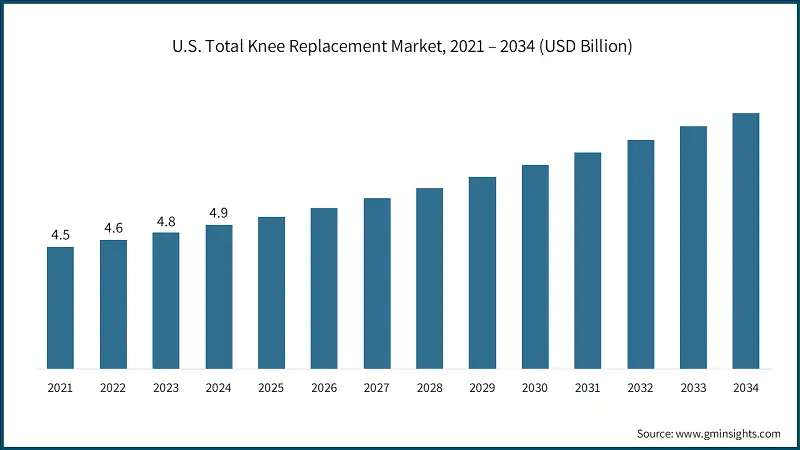
The U.S. total knee replacement market was valued at USD 4.5 billion and USD 4.6 billion in 2021 and 2022, respectively. In 2024 the market size was valued at USD 4.9 billion, up from USD 4.8 billion in 2023. The growing preference towards patient specific implants is a key factor driving the country’s market growth.
- The total knee replacement market in the U.S. is driven by a combination of clinical advancement, growing procedural volume, and supportive healthcare policy. Growing preference towards
outpatient facilities owing to the availability of robotics-assisted systems and minimally invasive surgical approaches is contributing to enhancing surgical accuracy and minimizing recovery periods. - Additionally, increasing procedure volumes attributable to an aging population and growing incidence of joint-related conditions is a key growth driver. For example, as per the published data, the total number of TKA procedural volumes recorded a rise of around 5 percent between 2021 and 2022 and totaled around 1.3 million TKA procedures, from 1.23 million in 2021. In addition, implant manufacturers are shifting their focus to the development of prostheses with longer durability and better anatomical fit, often with the aid of digital planning tools.
- Further, reimbursement models and bundled payment initiatives influence how procedures are performed and priced to improve patient experience. Both surgeon training and patient education programs are necessary components for increasing the expansion of the market, with emphasis on personalized treatment plans.
- Moreover, as the U.S. is home to numerous device makers and distribution partners, competitive forces in the region compete to differentiate themselves on technology, service, and clinical support. Overall, the market continues to evolve with the focus on innovation, access, and improved focus on enhancing patients’ quality of life.
Europe accounted for a 20.6% share of the total knee replacement industry globally and was valued at USD 2 billion in 2024.
- The total knee replacement market in Europe is influenced by several factors, including a strong public healthcare system, early adoption of innovative surgical techniques, and a growing elderly population. Regional countries emphasize clinical outcomes and cost-effectiveness, resulting in the increased adoption of minimally invasive procedures and patient-specific implants.
- In addition, hospitals and clinics continue to invest in digital planning tools and robotic-assisted systems in order to improve surgical accuracy and reduce recovery time. Competition in the market includes both global and regional players and an expansive offering of product solutions designed for various types of patients.
- Further, providers prioritize and recommend the importance of post-service care and effective rehabilitation services to improve long-term outcomes. Growing awareness related to joint health is projected to further drive demand for early intervention, pre-operative care, and personalized care, which is substantially helpful in regional growth to incorporate new technologies into existing orthopedic care.
UK held significant share of the European total knee replacement market, showcasing strong growth potential.
- The market for total knee replacement in the UK is expanding steadily, driven by an aging population and increased awareness around joint health. The National Health Service (NHS) is at the heart of access to orthopedic care and is constantly working to address the issue of surgical waiting times and improve patient outcomes.
- Various hospitals have adopted robotic-assisted surgery systems and digital planning tools to increase surgical accuracy and efficiency. There is a growing trend for personal implants and minimally invasive surgical techniques, often due to patient demand for faster recovery and better mobility in long-term outcomes.
- Additionally, the market is further driven by product affordability and clinical performance, where procurement techniques are promoted based on value-based care. Education and training for surgeons and the inclusion of postoperative rehabilitation services have all improved outcomes for patients.
- Furthermore, as demand increases, manufacturers are focusing on custom solutions and partnerships with healthcare professionals to drive innovation and boost access to orthopedic procedures in both the public and private sectors.
The Asia Pacific total knee replacement market accounted for the substantial share in the market and was valued at USD 1.8 billion in 2024.
- The total knee replacement industry in Asia Pacific is growing at a rapid pace due to improved access to healthcare, increasing awareness of joint health issues, and a rise in the number of orthopedic diseases. Development of healthcare infrastructure in key regional countries such as India and China is facilitating the adoption of advanced techniques in orthopedic procedures. The region is expected to witness high demand for minimally invasive surgeries and robotic-assisted systems, especially in the urban landscape.
- Manufacturers are developing products with a focus on region-specific patient needs, with an emphasis on affordability, durability, and ease of product usage. Supportive government initiatives and public health education campaigns are assisting with education and improvement of early intervention.
- Additionally, well-planned training programs for surgeons and partnerships with international healthcare practices are improving the quality of procedures. The market is highly dynamic, with global and local players entering to capture the growth opportunities in the region. In addition, the increase in lifestyle-related joint disorders is expected to further contribute to the region's innovation, accessibility, and sustainable market growth.
China total knee replacement industry is estimated to grow with a healthy CAGR in the Asia Pacific region.
- China's total knee replacement market is experiencing significant positive changes due to healthcare reforms, urbanization, and a growing elderly population. The government is investing considerably in its efforts and resources to provide orthopedic access and treatment in public hospitals and regional medical centers.
- Emerging local manufacturers are expanding in other key regions in the knee replacement market with innovative, more affordable implantation options for custom domestic requirements.
- Additionally, centralized procurement policies are changing access and pricing trends, which promotes a rise in overall TKA procedural volume. There is a growing trend towards training physicians both through exchange programs with foreign hospitals and facility-based training programs to expand the surgeon skill set and develop expertise in surgery. Further, the market is shifting towards patient-specific implants, especially in urban settings, thereby contributing to industry growth.
Brazil leads the Latin American total knee replacement market, exhibiting remarkable growth during the analysis period.
- The Brazil is anticipated to record substantial growth, driven by improvements in public healthcare accessibility and awareness of orthopedic solutions. Due to the growing aging population and the high prevalence of lifestyle-related joint conditions, there is a growing demand for joint replacement surgeries in the country. Hospitals and surgical centers are adopting advanced technologies and techniques, such as minimally invasive procedures, robotically assisted surgical systems, and improved post-operative care.
- Local manufacturers are focusing on the development of products that cater to regional patient demands, affordability, durability, and other variables. Additionally, government initiatives directed at strengthening healthcare delivery and expanding orthopedic practices are expected to facilitate the expansion of services in Brazil.
- Further, with increasing awareness and investment in the healthcare system, Brazil is a dominant contributor in the Latin American market with significant and sustained growth potential.
Saudi Arabia’s total knee replacement market is expected to experience substantial growth in the Middle East and Africa through 2034.
- The Saudi Arabia is witnessing robust expansion, supported by national healthcare reforms and the allocation of funds for medical infrastructure improvements. The kingdom is taking strides toward improving the availability of specialty orthopedic care in the country and other urban areas, especially with hospitals investing in advanced surgical technologies.
- Robotic-assisted surgeries and personalized implants are becoming popular and increasingly common as healthcare providers seek to improve both surgical precision and patient outcomes.
- Private healthcare providers are also facilitating market expansion by offering premium services and quicker access to care. Further, as demand for mobility restoration continues to rise in the country, the adoption of advanced orthopedic solutions, with a strong focus on innovation, availability, and long-term patient care, is expected to fuel the industry's growth.
Total Knee Replacement Market Share
The total knee replacement industry is consolidated in nature and is driven by innovation, changing demographics, and novel surgical practices. The key market participants, including Stryker, Zimmer Biomet, Smith+Nephew, and DePuy Synthes, are engaged in implant innovations, robotic-assisted surgery, and custom solutions to maintain their market positions. In addition, these companies have invested significantly in R&D innovation in areas such as implant quality and patient outcomes and have reduced recovery time.
Robotic platforms and minimally invasive surgical procedures are changing preferences in surgery as robotics, 3D printing, and smart sensors improve the focus on customization and monitoring. Local and regional companies, especially from the Asia-Pacific region, are expected to support the industry's growth owing to the high aging population, product affordability, and other parameters.
Additionally, the competitive environment of the industry continues to shape the pricing, surgeon training, and regulatory aspects of the market. The shift toward outpatient procedures and ambulatory surgical centers is further driving the industry competition, forcing OEMs to diversify product offerings and clinical pathways for surgery.
Total Knee Replacement Market Companies
Few of the prominent players operating in the global total knee replacement industry include:
- Allegra
- amplitude
- B BRAUN
- Corin
- Depuy Synthes (Johnson & Johnson)
- enovis
- exactech
- Medacta International
- MicroPort Orthopedics
- ORTHO Development
- restor3d
- Smith+Nephew
- stryker
- Waldemar LINK
- ZIMMER BIOMET
- ZIMMER BIOMET
Zimmer Biomet held the leading position in the market with a share of around 30% in 2024. Zimmer Biomet focuses on smart implant innovation (e.g., Persona IQ), premium pricing, and clinical outcomes. It maintains market leadership through advanced technology, strategic partnerships, and a diversified product portfolio across ambulatory and hospital settings.
Smith+Nephew emphasizes personalized care via its CORI robotic platform. Its strategy includes data-driven planning tools, targeted robotic placement, and expanding access through CPT coding and ASC adoption.
Stryker leverages competitive pricing and strong sales of its Triathlon system. It invests in robotic-assisted surgery (MAKO), aims for clinical excellence, and is positioned to challenge market leaders through innovation and volume growth.
Total Knee Replacement Industry News:
- In November 2024, Zimmer Biomet announced that it had received the CE mark for the Persona Revision Knee System. This development highlights the company's commitment to offering personalized solutions, providing surgeons with advanced tools for revision knee arthroplasty.
- In September 2024, restor3D announced the launch of its latest patient-centric innovation, the Kinos Range articulating surface, the company's 3D printed medical implant product, in addition to the Kinos Total Ankle System. This new offering of vitamin E, highly crosslinked polyethylene, and 3D printed cobalt chrome implants represents a significant advancement in personalized knee implants. This development may enhance the company's brand image and sales prospects in the industry.
- In June 2024, DePuy Synthes (Johnson & Johnson) received the 510(k) FDA clearance for the clinical application of the VELYS Robotic-Assisted Solution in Unicompartmental Knee Arthroplasty (UKA). The company's VELYS Robotic-Assisted Solution platform has received clearance in 20 markets to be used in total knee arthroplasty procedures.
The global total knee replacement market research report includes an in-depth coverage of the industry with estimates and forecasts in terms of revenue in (USD Million) and volume (Units) from 2021 - 2034 for the following segments:
Market, By Product
- Primary knee replacement systems
- Partial knee replacement systems
- Revision knee replacement systems
Market, By Device Type
- Three-compartmental knee implants
- Bicompartmental knee implants
- Uni-compartmental knee implants
Market, By Component
- Femoral
- Tibial
- Patellar
Market, By Implant Type
- Fixed-bearing implants
- Mobile-bearing implants
- Medial pivot implants
- Other implant types
Market, By Design
- Posterior stabilized design
- Cruciate retaining design
- Other designs
Market, By Surgery Type
- Traditional surgery type
- Technology assisted surgery type
Market, By Fixation Material
- Cemented
- Cementless
- Hybrid
Market, By Material
- Metal-on-plastic
- Ceramic-on-plastic
- Metal-on-metal
- Ceramic-on-ceramic
Market, By Polyethylene Inserts
- Antioxidant polyethylene inserts
- Highly cross-linked polyethylene inserts
- Conventional polyethylene inserts
Market, By End Use
- Hospitals
- Ambulatory surgery centers
- Other end users
The above information is provided for the following regions and countries:
- North America
- U.S.
- Canada
- Europe
- Germany
- UK
- France
- Spain
- Italy
- Netherlands
- Asia Pacific
- China
- Japan
- India
- Australia
- South Korea
- Thailand
- Malaysia
- Latin America
- Brazil
- Mexico
- Argentina
- MEA
- South Africa
- Saudi Arabia
- UAE
Frequently Asked Question(FAQ) :
Who are the key players in the total knee replacement market?
Key players include ZIMMER BIOMET, Depuy Synthes (Johnson & Johnson), Smith+Nephew, Stryker, B. BRAUN, Allegra, amplitude, Corin, enovis, exactech, Medacta International, MicroPort Orthopedics, ORTHO Development, restor3d, and Waldemar LINK.
What are the upcoming trends in the total knee replacement market?
Key trends include integration of smart implants with IoT sensors, AI-driven surgical planning, expansion of ambulatory surgical centers, and growing adoption of personalized patient-specific implants using 3D printing technology.
Which region leads the total knee replacement market?
North America held 54.1% market share in 2024, driven by advanced healthcare infrastructure, robotic-assisted systems adoption, and favorable reimbursement policies.
What is the growth outlook for technology-assisted surgery from 2025 to 2034?
Technology-assisted surgery is projected to grow at a CAGR of 8.8% through 2034, due to enhanced precision, robotic systems, and digital planning tools driving better surgical outcomes.
What was the valuation of three-compartmental knee implants segment in 2024?
Three-compartmental knee implants held a leading share and were valued at USD 7.5 billion in 2024.
How much revenue did the primary knee replacement systems segment generate in 2024?
Primary knee replacement systems generated USD 8.1 billion in 2024, leading the market and expected to exceed USD 13.1 billion by 2034.
What is the current total knee replacement market size in 2025?
The market size is projected to reach USD 10.2 billion in 2025.
What is the projected value of the total knee replacement market by 2034?
The total knee replacement market is expected to reach USD 16.3 billion by 2034, propelled by robotic-assisted surgery adoption, personalized implants, and increasing prevalence of obesity-related joint disorders.
What is the market size of the total knee replacement in 2024?
The market size was USD 9.8 billion in 2024, with a CAGR of 5.3% expected through 2034 driven by rising arthritis and osteoporosis cases, growing knee revision rates, and advancements in surgical and outpatient care.
Total Knee Replacement Market Scope
Related Reports