Summary
Table of Content

Stroke Management Market
Get a free sample of this report
Form submitted successfully!
Error submitting form. Please try again.
Thank you!
Your inquiry has been received. Our team will reach out to you with the required details via email. To ensure that you don't miss their response, kindly remember to check your spam folder as well!
Request Sectional Data
Thank you!
Your inquiry has been received. Our team will reach out to you with the required details via email. To ensure that you don't miss their response, kindly remember to check your spam folder as well!
Form submitted successfully!
Error submitting form. Please try again.
Stroke Management Market Size
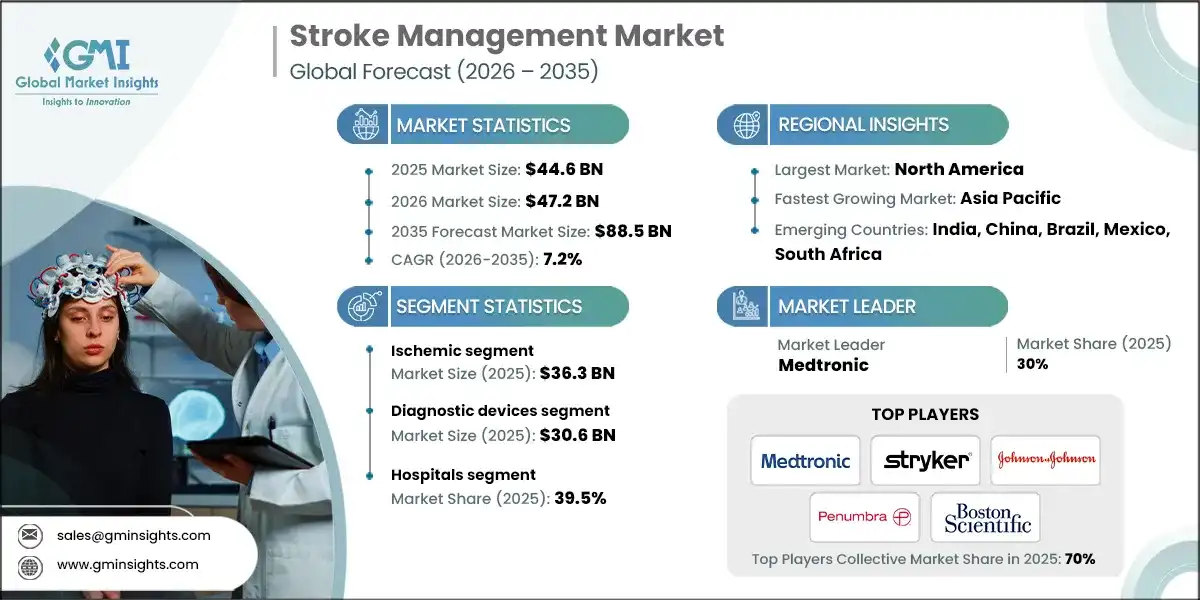
The global stroke management market was valued at USD 44.6 billion in 2025 and is projected to grow from USD 47.2 billion in 2026 to USD 88.5 billion by 2035, expanding at a CAGR of 7.2%, according to the latest report published by Global Market Insights Inc. This steady growth is driven by the growing preference for minimally invasive procedures, increasing prevalence of stroke and cardiovascular diseases worldwide, and technological advancement in stroke management.
To get key market trends
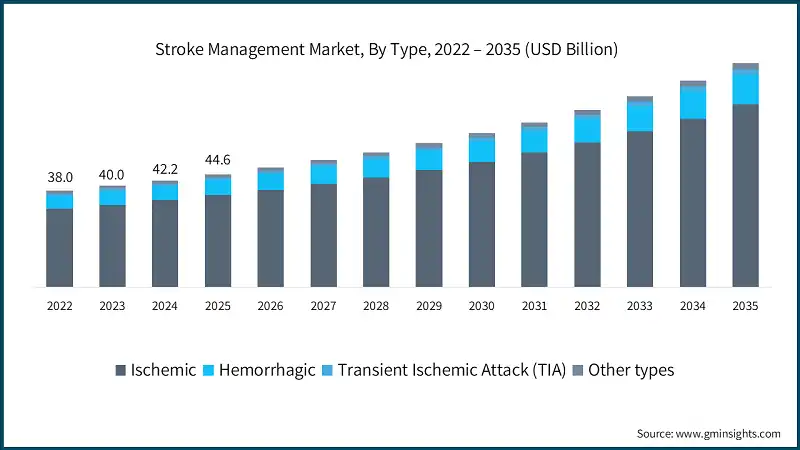
The market increased from USD 38 billion in 2022 to USD 42.2 billion in 2024. The increasing prevalence of stroke worldwide is a major factor driving this growth. For instance, according to the World Stroke Organization (WSO), over 12 million people globally will experience their first stroke in 2025, and approximately 6.5 million will die as a result. Furthermore, more than 100 million individuals worldwide have already suffered a stroke, making it one of the leading causes of death and long-term disability.
While stroke incidence rises significantly with age, it is not limited to older populations over 60% of strokes occur in people under 70, and 16% affect those under 50, highlighting its growing impact on younger demographics. This alarming trend underscores the urgent need for advanced stroke management solutions, including rapid diagnostic imaging, AI-powered decision support, mechanical thrombectomy devices, and thrombolytic therapies. Healthcare systems are increasingly prioritizing early intervention and comprehensive rehabilitation to reduce mortality and improve quality of life for survivors.
The growing burden of stroke also drives investments in telemedicine and mobile stroke units to expand access to care in underserved regions. As global health authorities emphasize prevention and timely treatment, demand for innovative technologies and integrated care models is expected to surge, fueling expansion of the stroke management market worldwide.
Additionally, the increasing prevalence of cardiovascular diseases (CVDs) worldwide is a critical factor driving growth in this market. According to the World Health Organization (WHO), CVDs were the leading cause of death globally in 2022, claiming approximately 19.8 million lives and accounting for nearly 32% of all deaths. Notably, 85% of these fatalities were due to heart attacks and strokes, and more than three-quarters occurred in low and middle-income countries, highlighting significant differences in healthcare access and outcomes.
Furthermore, in 2021, CVDs were responsible for 38% of the 18 million premature deaths caused by noncommunicable diseases, underscoring their growing impact on younger populations.The strong correlation between CVDs and stroke incidence creates an urgent need for advanced stroke management solutions. Conditions such as hypertension, atrial fibrillation, and coronary artery disease significantly increase stroke risk, driving demand for rapid diagnostic imaging, AI-powered decision support, and minimally invasive interventions like mechanical thrombectomy. Healthcare systems are investing heavily in integrated care models to manage these comorbidities effectively, reduce mortality, and improve long-term outcomes.
Stroke management involves immediate emergency care (like clot-busting drugs or removal), critical care (ICU), hospital ward stabilization, and extensive rehabilitation (physical, occupational, speech, cognitive therapy) to restore function, aiming to minimize brain damage by restoring blood flow quickly, preventing complications, and aiding recovery through multidisciplinary care and strategies like thrombolysis, thrombectomy, and therapy.
Stroke Management Market Report Attributes
| Key Takeaway | Details |
|---|---|
| Market Size & Growth | |
| Base Year | 2025 |
| Market Size in 2025 | USD 44.6 Billion |
| Market Size in 2026 | USD 47.2 Billion |
| Forecast Period 2026 - 2035 CAGR | 7.2% |
| Market Size in 2035 | USD 88.5 Billion |
| Key Market Trends | |
| Drivers | Impact |
| Growing preference for minimally invasive procedures | Drives demand for advanced neurovascular devices and catheter-based interventions, boosting market growth. |
| Increasing prevalence of stroke and cardiovascular diseases worldwide | Expands the patient pool, creating sustained demand for stroke management solutions across prevention and treatment. |
| Technological advancement in stroke management | Accelerates adoption of AI-driven imaging, robotics, and next-gen thrombectomy systems, enhancing market competitiveness. |
| Rising geriatric population | Increases incidence of stroke and related comorbidities, fueling long-term growth in diagnostic and interventional solutions. |
| Pitfalls & Challenges | Impact |
| Stringent regulatory framework | Slows product approvals and increases compliance costs, delaying market entry for innovative solutions. |
| High cost of procedures | Limits accessibility in emerging markets and strains healthcare budgets, reducing adoption rates. |
| Opportunities: | Impact |
| Telemedicine and telestroke services | Expands access to timely stroke diagnosis and treatment in remote areas, driving market penetration and improving patient outcomes. |
| Market Leaders (2025) | |
| Market Leaders |
30% market share |
| Top Players |
|
| Competitive Edge |
|
| Regional Insights | |
| Largest Market | North America |
| Fastest Growing Market | Asia Pacific |
| Emerging Countries | India, China, Brazil, Mexico, South Africa |
| Future outlook |
|
What are the growth opportunities in this market?
Stroke Management Market Trends
- Technological innovations in stroke management devices are a key factor fueling the growth of the market. Advanced tools and systems are enabling faster diagnosis, improved treatment precision, and better patient outcomes. These innovations address the critical challenge of time in stroke care and help healthcare providers reduce mortality and disability rates. As hospitals and stroke centers adopt cutting-edge solutions, the demand for integrated and efficient technologies continues to rise, stimulating market growth.
- Recent advancements include AI-powered imaging platforms, portable diagnostic devices, and robotic-assisted interventions. AI-based software such as Viz.ai and RapidAI uses automated image analysis to detect large vessel occlusions within minutes, significantly reducing time-to-treatment. Portable imaging solutions like Hyperfine’s Swoop Portable MRI and EMVision’s helmet-style brain scanner allow rapid stroke detection in ambulances and rural clinics, improving access to care in underserved regions. These technologies are transforming pre-hospital and in-hospital workflows, ensuring timely intervention and better outcomes.
- The integration of these technologies into stroke management protocols is driving adoption across healthcare systems. Hospitals are investing in AI-driven decision support, advanced neuroimaging, and minimally invasive thrombectomy devices to enhance efficiency and reduce complications. These solutions not only improve clinical outcomes but also lower healthcare costs by reducing hospital stays and long-term disability care.
- As a result, technological advancements are reshaping the stroke management landscape by enabling faster diagnosis, precision treatment, and expanded access to care. With AI, portable imaging, and robotic systems gaining traction, healthcare providers can deliver timely and effective interventions, ultimately improving survival rates and quality of life for stroke patients. As these innovations become standard practice, they will continue to stimulate growth in market.
Stroke Management Market Analysis
Learn more about the key segments shaping this market
Based on type, the market is segmented into ischemic, hemorrhagic, transient ischemic attack, and others. The ischemic segment was valued at USD 36.3 billion in 2025 and held a significant market share of 81.4%.
- Ischemic strokes occur when a blood clot or other obstruction blocks blood flow to the brain, depriving brain tissue of oxygen and nutrients. This blockage leads to rapid cell death and severe neurological impairment if not treated promptly. Because ischemic strokes are highly time-sensitive, they require advanced diagnostic imaging, rapid intervention therapies, and comprehensive rehabilitation solutions, making this segment a major focus for healthcare providers and technology developers.
- For instance, according to the Centers for Disease Control and Prevention (CDC), about 87% of all strokes are ischemic strokes, where blood flow to the brain is blocked. This prevalence underscores the critical need for rapid diagnosis and intervention. The high incidence of ischemic strokes also drives continuous innovation in treatment protocols, imaging systems, and telemedicine solutions, as healthcare systems strive to reduce disability and improve recovery rates.
- Treatment options such as intravenous thrombolysis, mechanical thrombectomy, and advanced neuroimaging systems are in high demand to manage these cases effectively. Hospitals and stroke centers are investing heavily in AI-powered imaging platforms, portable diagnostic devices, and minimally invasive thrombectomy tools to improve patient outcomes and reduce mortality rates.
- This growing adoption of innovative technologies and integrated care models is fueling revenue growth across the global market.
Based on product, the stroke management market is segmented into diagnostic devices and therapeutic devices. The diagnostic devices segment was valued at USD 30.6 billion in 2025.
- Diagnostic devices play a critical role in stroke management by enabling rapid and accurate identification of stroke type and severity. Common diagnostic tools include Magnetic Resonance Imaging (MRI) and Computed Tomography (CT) scans, which are essential for differentiating between ischemic and hemorrhagic strokes.
- MRI provides detailed images of brain tissue and blood vessels, while CT scans offer quick visualization of bleeding or blockages. These technologies are often the first step in stroke care, guiding treatment decisions and improving patient outcomes.
- Additionally, rapid and precise diagnosis is crucial because treatment options vary depending on stroke type. Hospitals and stroke centers are investing in high-resolution MRI systems, portable CT scanners, and AI-powered imaging platforms to reduce diagnosis time and improve accuracy. This trend is supported by increasing healthcare budgets, government initiatives for stroke care, and rising demand for early intervention, all of which contribute to market expansion.
- For instance, MAGNETOM Vida by Siemens Healthineers is the first 3T MRI scanner designed to embrace patient variability and deliver consistent, high-quality imaging. Its advanced technology reduces rescans, ensures predictable scheduling, and provides personalized exams for both routine clinical use and research. By addressing challenges such as motion and anatomical differences, MAGNETOM Vida improves diagnostic accuracy and workflow efficiency. This innovation represents a paradigm shift in MRI, supporting faster stroke detection and better treatment planning, ultimately enhancing patient outcomes and driving growth in stroke management.
- Diagnostic devices such as MRI and CT scans form the backbone of stroke management by ensuring accurate and timely diagnosis. Their integration with AI and portable technologies is transforming stroke care, improving accessibility, and reducing treatment delays.
Learn more about the key segments shaping this market
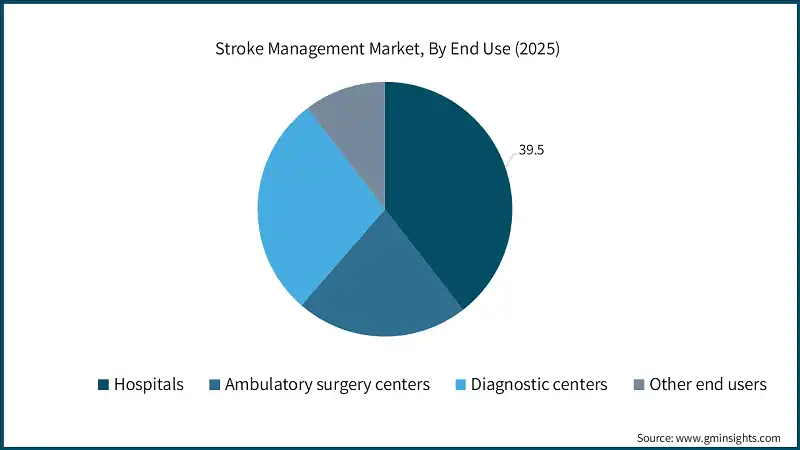
Based on end use, the stroke management market is segmented into hospitals, ambulatory surgical centers (ASCs), diagnostics centers, and other end users. The hospitals segment held a significant market share of 39.5% in 2024.
- Hospitals and clinics remain the primary point of care for patients with suspected or confirmed stroke, as they offer comprehensive diagnostic capabilities and access to advanced imaging technologies. These facilities are equipped to perform critical procedures such as CT scans, MRI, and angiography, which are essential for rapid stroke detection and treatment planning.
- The segment’s dominance is supported by the availability of skilled neurologists, specialized stroke units, and integration of high-end diagnostic systems like AI-powered imaging platforms and portable CT scanners. Hospitals also serve as hubs for acute interventions such as intravenous thrombolysis and mechanical thrombectomy, making timely diagnosis and treatment crucial for reducing mortality and disability.
- Growing adoption of telemedicine and remote monitoring programs within hospital networks is further driving demand. Many hospitals now leverage cloud-based platforms and telestroke solutions to extend care beyond inpatient settings, enabling faster consultations, improving continuity of care, and reducing treatment delays for patients in rural or underserved areas.
- As stroke prevalence rises globally, hospitals and clinics will continue to play a pivotal role in stroke management, supported by investments in advanced imaging technologies, telehealth infrastructure, and integrated care models. Their ability to deliver rapid diagnosis, acute treatment, and comprehensive rehabilitation ensures sustained market growth in this segment.
Looking for region specific data?
North America Stroke Management Market
The North America region accounted for 33.7% of the market in 2025. The market in North America is experiencing robust expansion, driven by the region’s advanced healthcare infrastructure and technological advancements.
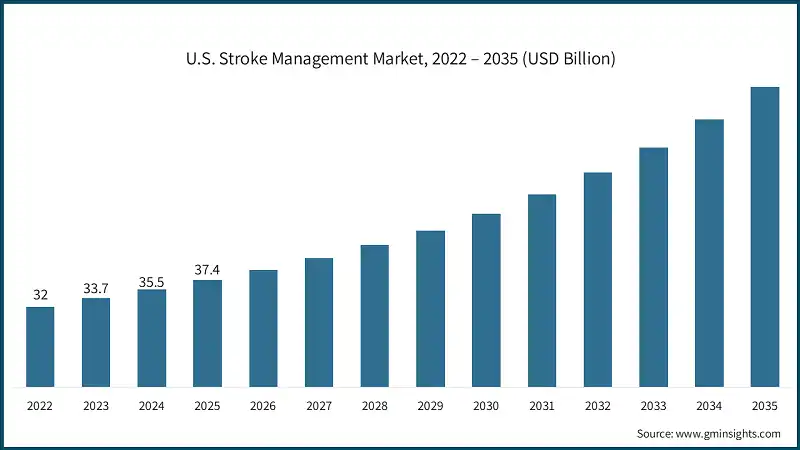
- The U.S. stroke management market was valued at USD 32 billion and USD 33.7 billion in 2022 and 2023, respectively. In 2025 the market size increased to USD 37.4 billion from USD 35.5 billion in 2024. This growth is primarily attributed to the increased prevalence of cardiac diseases.
- According to the CDC, in 2024, heart disease remained the leading cause of death across all racial and ethnic groups in the U.S., with one person dying from cardiovascular disease every 34 seconds. In 2023 alone, there were 919,032 deaths from cardiovascular diseases, accounting for 1 in every 3 deaths. This alarming prevalence of cardiovascular conditions is closely linked to stroke risk, as disorders like hypertension, atrial fibrillation, and coronary artery disease significantly increase the likelihood of ischemic and hemorrhagic strokes.
- The strong correlation between cardiovascular disease and stroke underscores the urgent need for advanced stroke management solutions. As CVD cases rise, healthcare systems are investing in rapid diagnostic imaging, AI-powered decision support tools, and minimally invasive interventions such as mechanical thrombectomy. These technologies enable timely treatment, reduce complications, and improve survival rates, driving demand for innovative stroke care solutions.
- The U.S. continues to lead in both the usage and development of advanced stroke management technologies due to its strong healthcare infrastructure, high stroke treatment volumes, and sustained investment in innovation. The country has a well-established network of comprehensive stroke centers equipped with cutting-edge diagnostic tools such as AI-powered imaging platforms and portable CT/MRI systems, as well as therapeutic devices like mechanical thrombectomy systems.
Europe Stroke Management Market
Europe market accounted for USD 13.2 billion in 2025 and is anticipated to show lucrative growth over the forecast period.
- The aging population in Europe is a major driver of the market. Stroke risk increases significantly with age, making older adults the most vulnerable group. As life expectancy rises and birth rates decline, Europe faces a demographic shift toward an older population, creating a growing need for advanced stroke care solutions, including diagnostics, acute interventions, and rehabilitation services.
- For instance, according to WHO The population aged 60 and older European region is projected to grow from 215 million in 2021 to 247 million by 2030, and over 300 million by 2050. Additionally, the number of people aged 80 and above is increasing at an even faster rate. This surge in the elderly population translates into higher stroke incidence, driving demand for comprehensive stroke management systems.
- The rapid growth of the elderly population in Europe is a key factor accelerating the market. With age being the strongest risk factor for stroke, the demand for advanced diagnostic tools, timely interventions, and integrated care models will continue to rise, stimulating the market growth.
Germany's stroke management market is projected to experience steady growth between 2026 and 2035.
- The rising incidence of stroke in Germany is a major driver of the stroke management market. Stroke remains one of the leading causes of death and long-term disability in the country, creating a significant burden on healthcare systems. As risk factors such as hypertension, diabetes, and cardiovascular disease become more prevalent, the demand for advanced diagnostic and therapeutic solutions continues to grow.
- For instance, In 2022, 37,292 people in Germany died due to stroke, corresponding to an age-standardized mortality rate of 36.9 per 100,000 persons. This high mortality rate underscores the urgent need for rapid diagnosis and timely intervention. Hospitals and stroke centers are increasingly adopting AI-powered imaging platforms, portable CT/MRI scanners, and mechanical thrombectomy devices to improve treatment speed and outcomes.
- In conclusion, the increasing prevalence of strokes in Germany is a stimulating the growth for the market. With thousands of lives lost annually and a high age-standardized mortality rate, the need for rapid diagnosis and effective treatment is increasing.
Asia Pacific Stroke Management Market
The Asia Pacific region is projected to show a lucrative growth of about 7.3% during the forecast period.
- The stroke management market in Asia-Pacific is expanding steadily, driven by the rising prevalence of strokes across the region. Stroke remains one of the leading causes of death and disability, and its incidence is increasing due to aging populations, urbanization, and lifestyle-related risk factors such as hypertension, diabetes, and obesity. This growing burden is creating an urgent need for advanced diagnostic and therapeutic solutions to improve patient outcomes.
- The increasing number of stroke cases is pushing healthcare systems to adopt innovative technologies for early detection and timely intervention. Hospitals and stroke centers are investing in AI-powered imaging platforms, portable CT/MRI scanners to reduce treatment delays and improve survival rates.
- Therefore, as the prevalence of stroke increases in the region, so does the requirement for advanced stroke management technologies, positively contributing to the growth of the market.
Japan stroke management market is poised to witness lucrative growth between 2026 – 2035.
- The aging population in Japan is a major driver of the market. Stroke risk rises significantly with age, and Japan consistently ranks as the country with the world’s oldest population. This demographic trend is creating a substantial demand for advanced stroke care solutions, including diagnostic imaging, acute interventions, and rehabilitation services.
- For instance, according to world economic forum more than 1 in 10 people in Japan are now aged 80 or older, and the proportion of elderly individuals continues to grow rapidly. With age being the strongest risk factor for stroke, this surge in the geriatric population directly correlates with higher stroke incidence.
- In conclusion, Japan’s rapidly aging population is a critical factor accelerating the stroke management market. As the number of people aged 80 and above continues to rise, the demand for innovative diagnostic tools, timely interventions, and integrated care models will increase.
Latin America Stroke Management Market
Brazil is experiencing significant growth in the market
- Cardiovascular diseases (CVDs) are a leading health challenge in Brazil and a major driver of the market. Stroke risk is closely linked to CVDs, as conditions like hypertension, atrial fibrillation, and coronary artery disease significantly increase the likelihood of ischemic and hemorrhagic strokes. This correlation underscores the urgent need for advanced stroke care solutions in the country.
- For instance, according to world heart federation, in 2021, Brazil recorded 374,765 deaths from cardiovascular diseases, with a crude CVD mortality rate of 170 per 100,000 population and an age-standardized mortality rate of 154 per 100,000. The age-standardized incidence of CVD was 547 per 100,000, reflecting the widespread nature of these conditions. Hypertension, a key stroke risk factor, affects 42.1% of women and 47.9% of men, further increasing stroke vulnerability across the population.
- This alarming prevalence of CVDs is driving demand for advanced stroke management technologies in Brazil. With high mortality and incidence rates, coupled with widespread hypertension, the need for innovative diagnostic tools, acute interventions, and integrated care models is growing rapidly
Middle East and Africa Stroke Management Market
- Saudi Arabia is witnessing a surge in demand for advanced stroke management solutions, driven by the rising prevalence of strokes and related risk factors such as hypertension, diabetes, and cardiovascular diseases. Hospitals and stroke centers are increasingly adopting innovative technologies to ensure rapid diagnosis and timely intervention, which are critical for improving survival rates and reducing long-term disability.
- Modern stroke management approaches, including AI-powered imaging platforms, portable CT/MRI scanners, offer significant advantages over traditional methods. These technologies enable faster diagnosis, minimally invasive treatment, and improved patient outcomes, while reducing hospital stays and overall healthcare costs.
- In conclusion, the rising burden of stroke and cardiovascular risk factors, combined with technological advancements, positions Saudi Arabia as a key growth market for stroke management technologies.
Stroke Management Market Share
- Leading companies such as Medtronic, Stryker Corporation, Johnson & Johnson (Cerenovus), Penumbra, and Boston Scientific are driving innovation to improve stroke care delivery worldwide. These top 5 players are contributing around 70% of the market. They are investing in AI-powered imaging platforms, portable diagnostic devices, to enable faster diagnosis and minimally invasive interventions. These advancements help reduce treatment delays, improve patient outcomes, and lower healthcare costs.
- Through acquisitions and global expansion strategies, these companies are reinforcing their leadership in the stroke management ecosystem. Partnerships with hospitals, stroke centers, and telemedicine platforms are enabling broader access to advanced technologies, particularly in emerging markets. This collaborative approach ensures timely intervention and better continuity of care.
- In conclusion, the focus on automation, real-time imaging, and regulatory compliance by these industry leaders will significantly shape the future of the market.
- Their commitment to innovation and strategic alliances will accelerate adoption globally, improve patient outcomes, and drive sustained market growth.
Stroke Management Market Companies
Few of the prominent players operating in the stroke management industry include:
- Medtronic
- Abbott laboratories
- GE HealthCare
- Siemens Healthineers
- Philips Healthcare
- Stryker Corporation
- Johnson & Johnson
- Penumbra
- Boston Scientific
- Imperative Care
- NeuroVasc Technologies
- Kaneka Medix Corp
- Johnson & Johnson
Cerenovus, a Johnson & Johnson company, specializes in neurovascular technologies for stroke intervention, including stent retrievers and aspiration systems. The company prioritizes research-driven innovation and physician education to improve patient outcomes, positioning itself as a key player in acute stroke treatment and neurovascular therapy.
Boston Scientific plays a critical role in stroke prevention, offering solutions such as left atrial appendage closure devices and carotid revascularization systems. Through strategic acquisitions and ongoing clinical research, the company focuses on reducing stroke risk in high-risk patients, positioning itself as a trusted partner in preventive stroke care worldwide.
Abbott is a prominent player in stroke prevention, offering advanced solutions such as insertable cardiac monitors for atrial fibrillation detection and left atrial appendage occlusion devices to reduce stroke risk. The company emphasizes innovation and clinical evidence to support early diagnosis and minimally invasive prevention strategies, strengthening its role in improving patient outcomes and reducing recurrent stroke globally.
Stroke Management Market News:
- In September 2022, Penumbra, Inc launched the RED Reperfusion Catheters technology in Europe. RED® reperfusion catheters are created with enhanced trackability and helped the physician to navigate the complicated anatomy of the brain and deliver effective method for the removal of blood clots. Such inventions and launches facilitated the firm to expand its global reach and product landscape.
The stroke management market research report includes an in-depth coverage of the industry with estimates and forecast in terms of revenue in USD Million and from 2021 – 2034 for the following segments:
Market, By Type
- Ischemic
- Hemorrhagic
- Transient Ischemic Attack (TIA)
- Other types
Market, By Product
- Diagnostic devices
- Magnetic Resonance Imaging (MRI)
- Computed Tomography Scan (CT scan)
- Electrocardiography
- Carotid Ultrasound
- Cerebral Angiography
- Other
- Therapeutic devices
- Magnetic Resonance Imaging (MRI)
- Computed Tomography Scan (CT scan)
- Electrocardiography
- Carotid Ultrasound
- Cerebral Angiography
- Other
Market, By End Use
- Hospitals
- Ambulatory Surgery Centers
- Diagnostic Centers
- Other end use
The above information is provided for the following regions and countries:
- North America
- U.S.
- Canada
- Europe
- Germany
- UK
- France
- Italy
- Spain
- Netherlands
- Asia Pacific
- China
- India
- Japan
- Australia
- South Korea
- Latin America
- Brazil
- Mexico
- Argentina
- Middle East and Africa
- Saudi Arabia
- South Africa
- UAE
Frequently Asked Question(FAQ) :
What was the market size of the stroke management market in 2025?
The market size was valued at USD 44.6 billion in 2025, with a CAGR of 7.2% projected through 2035, driven by the increasing prevalence of stroke and cardiovascular diseases, preference for minimally invasive procedures.
Which region led the global stroke management market in 2025?
North America led the market with a 33.7% share in 2025, supported by advanced healthcare infrastructure and technological innovations in stroke care.
How much revenue did the diagnostic devices segment generate in 2025?
The diagnostic devices segment generated USD 30.6 billion in 2025, driven by innovations in imaging and diagnostic technologies.
What was the market share of the hospitals segment in 2024?
The hospitals segment held a 39.5% market share in 2024, reflecting its critical role in stroke management and treatment delivery.
What was the valuation of the ischemic stroke segment in 2025?
The ischemic stroke segment was valued at USD 36.3 billion in 2025, accounting for a significant 81.4% market share.
What is the projected value of the global stroke management market by 2035?
The market is expected to reach USD 88.5 billion by 2035, fueled by advancements in diagnostic and therapeutic devices and the adoption of integrated technologies in stroke care.
Stroke Management Market Scope
Related Reports