Summary
Table of Content

Spine Growing Rods Market
Get a free sample of this report
Form submitted successfully!
Error submitting form. Please try again.
Thank you!
Your inquiry has been received. Our team will reach out to you with the required details via email. To ensure that you don't miss their response, kindly remember to check your spam folder as well!
Request Sectional Data
Thank you!
Your inquiry has been received. Our team will reach out to you with the required details via email. To ensure that you don't miss their response, kindly remember to check your spam folder as well!
Form submitted successfully!
Error submitting form. Please try again.
Spine Growing Rods Market Size
Spine growing rods for scoliosis are implantable devices intended for the treatment of early-onset scoliosis and other complex spinal deformities in pediatric patients. These devices enable controlled growth of the spine while correcting the scoliotic curvature.
The major players in the global spine growing rods market are Cresco, Globus Medical, and EUROS. These companies have strengthened their position through product innovation, surgeon collaboration, regulatory approvals across various countries, and portfolio expansion in growth‑friendly spinal technologies.
Spine Growing Rods Market Key Takeaways
Market Size & Growth
- 2025 Market Size: USD 41.7 Million
- 2026 Market Size: USD 45.7 Million
- 2035 Forecast Market Size: USD 97.6 Million
- CAGR (2026–2035): 8.8%
Regional Dominance
- Largest Market: North America
- Fastest Growing Region: RoW
Key Market Drivers
- Rising prevalence of early‑onset scoliosis (EOS).
- Demand for growth‑preserving spinal interventions.
- Technological advancements in spinal implant design.
Challenges
- High cost of growing rod implant systems.
- Risk of mechanical failure and rod breakage.
Opportunity
- Expansion of MCGR adoption in emerging economies.
- Integration of smart sensors in growing rod systems.
Key Players
- Market Leader: Globus Medical led with over 95.3% market share in 2025.
- Leading Players: Top 3 players in this market include Globus Medical, ERUOS, Cresco, which collectively held a market share of 100% in 2025.
Get Market Insights & Growth Opportunities
The market has increased from USD 32.1 million in 2022 to USD 37.9 million in 2024, with a historical growth rate of 8.7%. This growth has been supported by an increasing prevalence of early-onset scoliosis (EOS), rising awareness among patients and clinicians, improved surgical techniques, and greater access to specialized pediatric orthopedic care in developed and emerging markets.
The rising global prevalence of early‑onset scoliosis (EOS) has become a major driver of growth in the spine growing rods market. EOS, diagnosed in children under 10 years of age, presents substantial clinical challenges due to the rapid progression of spinal curvature during crucial developmental years.
Idiopathic scoliosis remains the most common subtype, representing approximately 80–85% of all diagnosed cases, underscoring its clinical dominance among pediatric spinal deformities. Beyond the physical implications, EOS has a profound psychosocial impact, often contributing to heightened levels of anxiety, reduced self‑esteem, and depressive symptoms in affected children and adolescents. Increasing prevalence, improved access to treatment and favorable reimbursement policies, along with technology advances continue to reinforce the demand for growth‑preserving treatment solutions such as spine growing rods.
The global spine growing rods market was valued at USD 41.7 million in 2025. The market is expected to reach from USD 45.7 million in 2026 to USD 97.6 million in 2035, growing at a CAGR of 8.8% during the forecast period, according to the latest report published by Global Market Insights Inc. The high market growth is attributed to the rising prevalence of early‑onset scoliosis (EOS) and demand for growth‑preserving spinal interventions.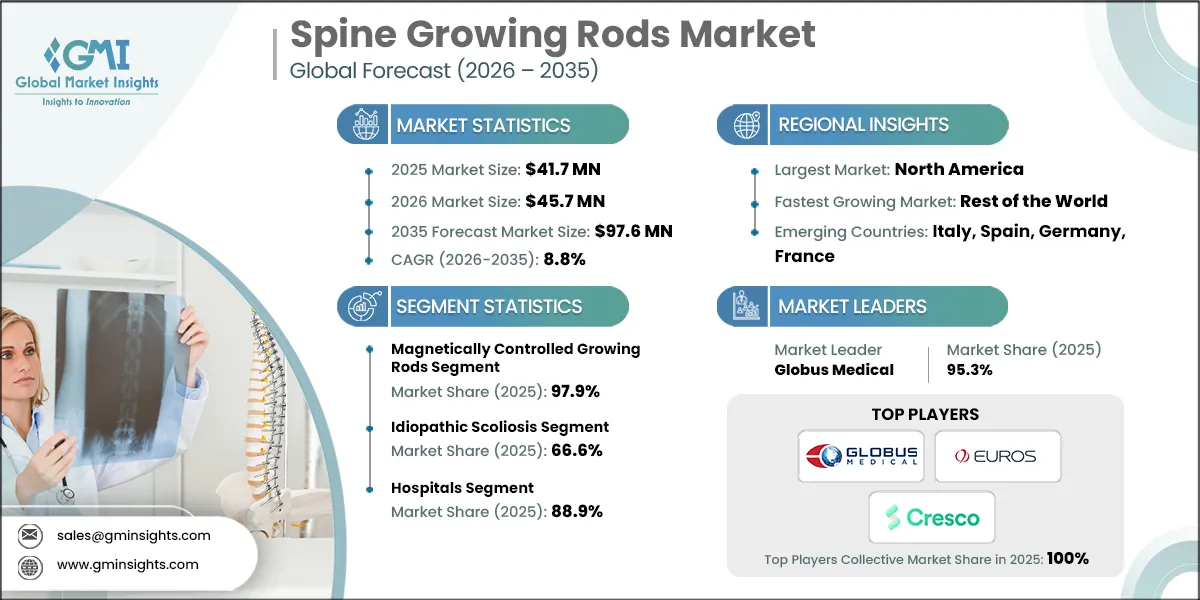
To get key market trends
Spine Growing Rods Market Trends
Technological innovation is emerging as a strong driving force for the growth of the spine growing rods industry. In recent years, innovations in material engineering, implant biomechanics, and deformity correction in pediatric patients have led to a substantial improvement in the treatment of early-onset scoliosis in children. The latest implant technology has shifted its focus to durability, growth compatibility, and minimizing complications, which is a drastic change from the previous versions of growing rods.
- The adoption of magnetically controlled growing rods (MCGR) represents one of the most groundbreaking technological advancements. The Globus Medical MAGEC System, a prominent MCGR product, enables non-invasive distraction using an external magnetic controller, which was previously only possible through repeated open surgeries using traditional growing rods.
- Modern growing rod systems are now engineered to be more lightweight, fatigue‑resistant, and anatomically adaptable, enabling surgeons to achieve more precise spinal alignment with fewer mechanical complications. Enhanced rod contourability, improved flexibility, and stronger actuator mechanisms reflect broader industry trends toward biomechanical optimization, faster recovery times, and better patient comfort throughout long‑term treatment.
- Additionally, improvements in fixation hardware, including stronger pedicle screws, reinforced connectors, and multi‑rod constructs, represent another important technological leap. These components are now manufactured using high‑strength titanium alloys and enhanced biomaterials that increase mechanical stability during distraction cycles and support safer, more predictable correction, especially in children with progressive deformities.
- Furthermore, when combined with the rising need for early-intervention scoliosis treatments, these technological advancements are expected to further accelerate growth in the market.
Spine Growing Rods Market Analysis
Learn more about the key segments shaping this market
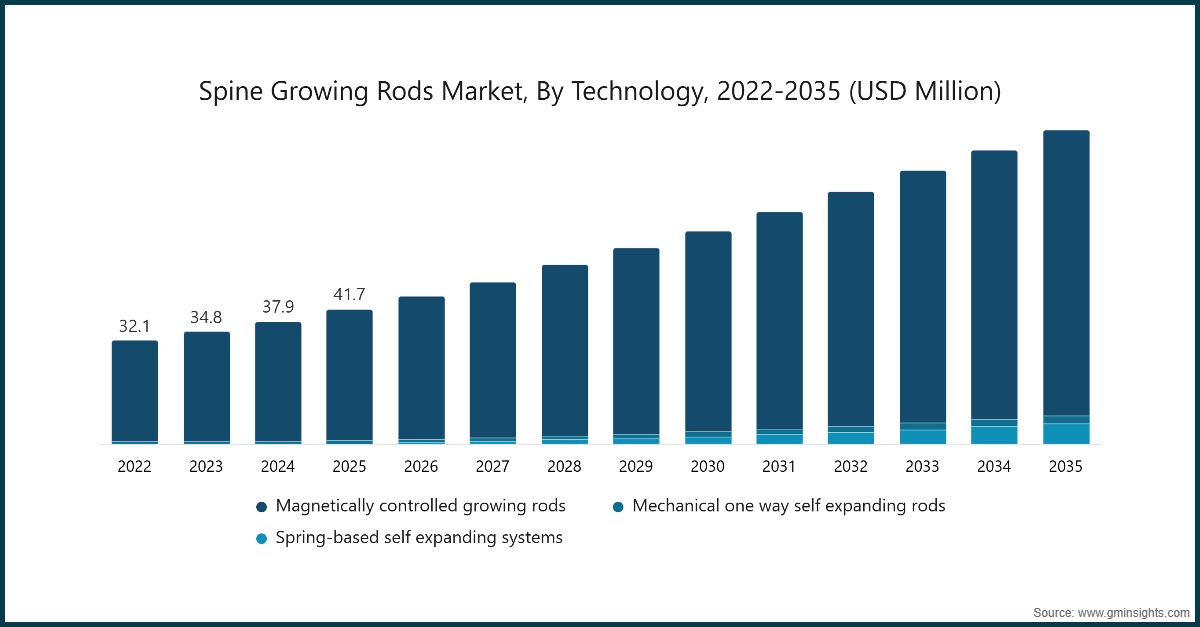
The global market was valued at USD 32.1 million in 2022. The market size reached USD 37.9 million in 2024, from USD 34.8 million in 2023.
Based on technology, the spine growing rods market is segmented into magnetically controlled growing rods, mechanical one way self expanding rods, and spring-based self expanding systems. The magnetically controlled growing rods segment asserted its dominance in the market by securing a significant market share of 97.9% in 2025, owing to its non-invasive rod lengthening ability, which has resulted in reduced number of revision and repeat surgeries, and lower treatment burden for pediatric patients with early-onset scoliosis. The segment is expected to exceed USD 89 million by 2035, growing at a CAGR of 8% during the forecast period.
- Magnetically controlled growing rods (MCGR) serve as an important segment in spinal implants, which are designed to stabilize the spine, maintain deformity correction, and support ongoing thoracic and spinal development in children with early-onset scoliosis (EOS). The MCGR system has an internal magnetically driven actuator, which provides non-invasive lengthening.
- MCGR devices are increasingly adopted due to their ability to provide reliable deformity correction while avoiding the frequent operative lengthening procedures required with traditional rod systems. Their use has expanded across idiopathic, neuromuscular, syndromic, and congenital EOS cases, demonstrating strong clinical performance in managing progressive curves and supporting spinal growth across a broad patient demographic.
- The mechanical one way self expanding rods segment was valued at USD 0.9 million in 2025 and is expected to reach USD 2.4 million by 2035. Mechanical one‑way self‑expanding rods represent an advanced class of growth‑friendly spinal implants designed primarily for the treatment of early onset scoliosis (EOS). These systems use an internal mechanical mechanism that allows the rod to gradually elongate as the child’s spine grows, without repeated surgical intervention.
- The spring-based self expanding systems segment in the spine growing rods industry is expected to see rapid growth at a CAGR of 39.9% due to its ability to provide continuous, physiological distraction using compressed helical springs that extend gradually with the child’s natural spinal movement, reducing the need for repeated surgical lengthening and lowering patient burden. These systems offer consistent, growth‑responsive forces that maintain curve correction, promote more natural spinal and thoracic development, and minimize complications compared to traditional growing rods.
Based on indication, the spine growing rods market is classified into idiopathic scoliosis, neuromuscular scoliosis, congenital scoliosis, and syndromic scoliosis. The idiopathic scoliosis segment dominated the market with a revenue share of 66.6% in 2025 and is expected to reach USD 67.2 million within the forecast period.
- The dominant position of this segment is mainly due to the fact that it encompasses the largest and most important indication for early spinal growth modulation procedures in children. According to the National Institutes of Health (NIH), the incidence of idiopathic scoliosis (IS) in children is estimated to be 2-3%, accounting for 80-85% of all pediatric spinal deformity cases, thus making it the most common type of scoliosis globally. This directly equates to high procedural volumes and ensures that idiopathic scoliosis retains its position as the anchor application segment for spine growing rods in pediatric orthopedics.
- The neuromuscular scoliosis segment was valued at USD 6.8 million in 2025 and is expected to grow at a CAGR of 8.7% during the forecast period. Neuromuscular scoliosis represents a clinically intensive application within spine growing rod utilization, supported by the rising prevalence of neuromuscular conditions such as cerebral palsy, spinal muscular atrophy, and muscular dystrophy. Improved survival rates among these patient groups due to advancments in pharmacological treatment options, is presenting a large pool of patients developing progressive spinal deformities.
- The congenital segment was valued at USD 4.8 million in 2025 and is expected to reach USD 10.6 million by 2035. The complex and unpredictable progression patterns associated with congenital vertebral anomalies reinforce the need for adaptable treatment solutions. Growing rod systems provide the flexibility to respond to asymmetric growth and evolving curvature, making them a preferred option in cases where sequential correction and monitoring are required. This adaptability enhances their clinical and commercial relevance in congenital scoliosis management.
- The syndromic scoliosis segment was valued at USD 2.2 million in 2025 and is poised to witness growth over the coming years. Syndromic scoliosis represents a clinically complex application within pediatric spinal deformity management, driven by the rising diagnosis of genetic and connective tissue disorders such as Marfan syndrome, Ehlers–Danlos syndrome, neurofibromatosis, Down syndrome, and Rett syndrome. The prevalence of scoliosis within syndromic populations is notably higher than in the general pediatric population, with early-onset spinal curvature frequently observed as part of a multisystem disease presentation. Improved awareness and genetic screening are increasing identification rates, directly stimulating demand for early intervention strategies.
Learn more about the key segments shaping this market
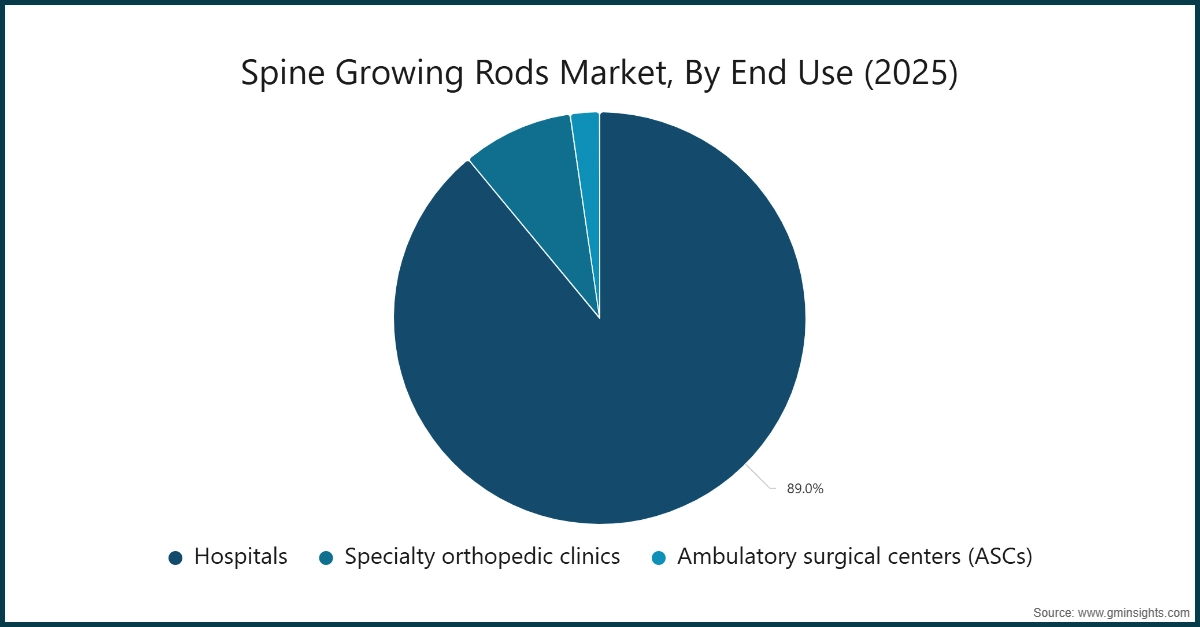
Based on end use, the spine growing rods market is classified into hospitals, specialty orthopedic clinics, and ambulatory surgical centers (ASCs). The hospitals segment dominated the market with a revenue share of 88.9% in 2025 and is expected to reach USD 87.3 million within the forecast period.
- Hospitals represent one of the most critical end-use settings for spine growing rod systems, driven by their role as primary referral centers for complex pediatric spinal deformities. The rising prevalence of early-onset scoliosis, including idiopathic, congenital, neuromuscular, and syndromic forms, continues to increase surgical volumes within tertiary and quaternary care hospitals.
- According to the National Scoliosis Foundation, each year, scoliosis patients account for more than 600,000 visits to private physician offices, reflecting a substantial and continuously engaged care-seeking population. A significant share of these encounters results in referrals to hospital settings for advanced imaging, specialist evaluation, and surgical intervention, underscoring the growing clinical demand concentrated within hospitals.
- The specialty orthopedic clinics segment was valued at USD 3.6 million in 2025 and is expected to reach USD 8.5 million by 2035. Specialty orthopedic clinics constitute an important and increasingly expanding end-use segment in the spine growing rods market, driven by the rising prevalence of early-onset scoliosis (EOS), congenital spinal deformities, and neuromuscular conditions in children below 10 years of age. These clinics focus on age-specific, deformity-targeted, and longitudinal spine care, where growth-preserving interventions are central to treatment strategies.
- The ambulatory surgical centers segment was valued at USD 1 million in 2025 and is expected to reach USD 1.8 million by 2035, growing at a CAGR of 6.3% during the forecast period. Ambulatory surgical centers (ASCs) represent a steadily evolving end-use segment in the market, gradually expanding their role as outpatient spine capabilities improve and patient-selection frameworks become more. ASCs are emerging as high-value hubs for pediatric scoliosis interventions, especially for procedures involving growing rod systems. Their ability to deliver streamlined, same-day surgeries is stimulating greater utilization, particularly for early-onset scoliosis cases that require periodic adjustments and follow-up interventions.
Looking for region specific data?
North America Spine Growing Rods Market
North America dominated the global market with the highest market share of 59.4% in 2025.
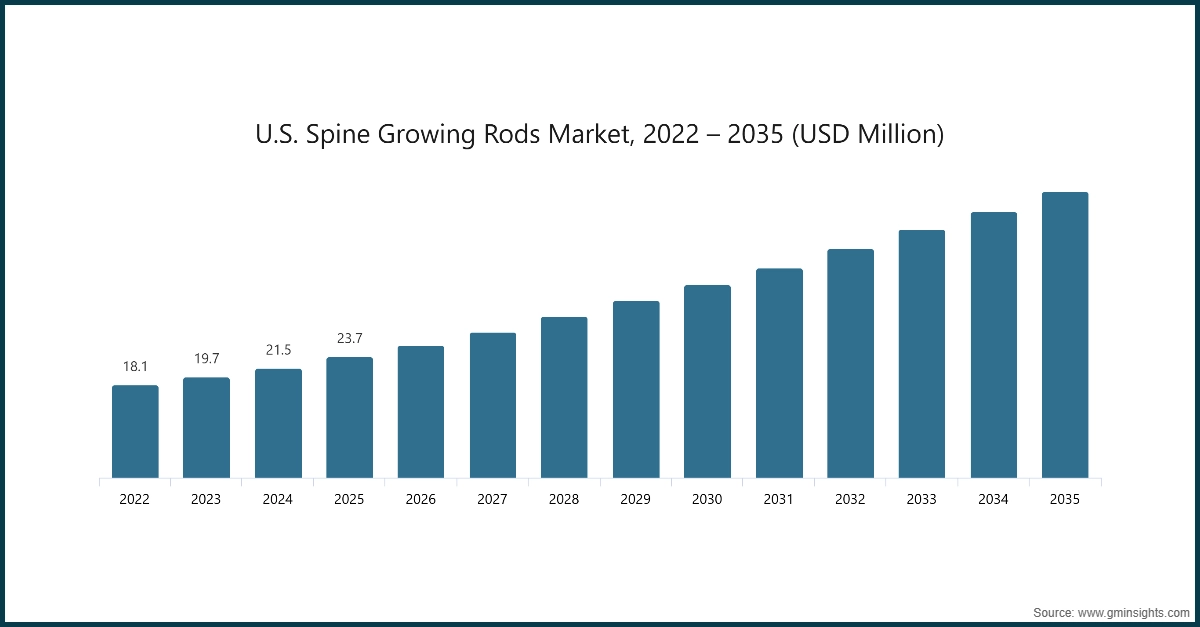
- The U.S. market was valued at USD 18.1 million and USD 19.7 million in 2022 and 2023, respectively. The market size reached USD 23.7 million in 2025, growing from USD 21.5 million in 2024, and is anticipated to grow at a CAGR of 9% from 2026 to 2035.
- North America represents a significant share of the global spine growing rods market, supported by well-established healthcare infrastructure, early adoption of advanced spinal implant technologies, and increasing clinical focus on growth-preserving interventions for children under 10 years of age with progressive spinal deformities.
- The U.S. dominated the North American market, driven by increasing diagnoses of congenital, idiopathic, and neuromuscular scoliosis in children younger than 10 years, where definitive spinal fusion is contraindicated, and growth-modulating implants are clinically preferred.
- Specialized pediatric spine centers and orthopedic clinics across North America increasingly rely on growing rod technologies to manage severe and progressive curves while preserving thoracic and spinal growth, supporting improved pulmonary development and long-term functional outcomes.
Europe Spine Growing Rods Market
Europe market accounted for USD 14.7 million in 2025 and is anticipated to show lucrative growth over the forecast period.
- The European spine growing rods industry continues to expand, driven by strengthening pediatric orthopedic care systems, rising prioritization of early deformity management, and the region's robust public healthcare infrastructure. National health authorities across Europe are placing increasing emphasis on childhood musculoskeletal health, thereby stimulating demand for growth-preserving spinal technologies.
- Across the region, children's health monitoring frameworks implemented by public health ministries and supported by school-based screening mechanisms are enabling earlier detection of spinal deformities, creating a steady clinical pathway that encourages the adoption of growing rod systems for progressive spinal curvature management.
Rest of World Spine Growing Rods Market
The rest of the world spine growing rods industry is anticipated to grow at the highest CAGR of 10.2% during the analysis timeframe.
- Healthcare infrastructure development is progressively improving the adoption landscape for spine growing rods in the rest of the world markets. Expansion of pediatric orthopedic training programs, establishment of regional spine centers, and increasing alignment with international treatment guidelines are enhancing surgical capabilities.
- Overall, the rest of the world spine growing rods market is supported by a clinically significant scoliosis burden. Combined with a large pediatric population, trauma- and infection-related deformities, and gradually improving access to specialized spine care, these factors position the rest of the world as an increasingly important growth engine within the global market.
Spine Growing Rods Market Share
The global spine growing rods industry is characterized by a near-monopoly structure, with a single dominant player accounting for the overwhelming majority of revenue. The competitive landscape is highly concentrated, driven primarily by technological leadership in magnetically controlled growing rod (MCGR) systems and established clinical adoption across major pediatric spine centers.
Key players in the market include Globus Medical, CRESCO, and EUROS. Among these, Globus Medical holds 95.3% of the total market share, supported by strong clinical validation, a well-established surgeon network, global distribution capabilities, and first-mover advantage in magnetically controlled growth rod technology.
Competitive intensity is beginning to increase following CRESCO’s recent FDA approval for its growing rod system, marking its formal entry into the U.S. market. This regulatory milestone is expected to gradually improve competitive dynamics, potentially influencing pricing structures and innovation cycles in the coming years.
EUROS currently maintains a limited regional presence, focusing on specialized pediatric spinal deformity solutions within select markets. However, as new approvals expand and alternative technologies gain clinical traction, the market is expected to slowly transition from a near-monopoly environment toward a more competitive structure over the forecast period.
Spine Growing Rods Market Companies
Few of the prominent players operating in the spine growing rods industry include:
- Cresco
- EUROS
- Globus Medical
- Globus Medical
Globus Medical leads the spine growing rods market with its magnetically controlled growing rod (MCGR) technology, offering non-invasive lengthening and reduced need for repeat surgeries. Its strong clinical evidence, established surgeon relationships, and global distribution network support widespread adoption across pediatric spine centers.
EUROS specializes in pediatric spinal deformity solutions with customizable growing rod systems tailored to complex early-onset scoliosis cases. Its focus on surgeon-friendly designs, cost-effective implants, and targeted regional distribution enables it to maintain a niche presence in select international markets.
CRESCO differentiates itself through recently FDA-approved growing rod systems designed to expand treatment options and introduce competitive pricing dynamics. The company focuses on innovation, regulatory expansion, and strategic market entry to challenge the dominant incumbent and increase accessibility.
Spine Growing Rods Market Report Attributes
| Key Takeaway | Details |
|---|---|
| Market Size & Growth | |
| Base Year | 2025 |
| Market Size in 2025 | USD 41.7 Million |
| Market Size in 2026 | USD 45.7 Million |
| Forecast Period 2026-2035 CAGR | 8.8% |
| Market Size in 2035 | USD 97.6 Million |
| Key Market Trends | |
| Drivers | Impact |
| Rising prevalence of early‑onset scoliosis (EOS) | Expanding pediatric patient population is directly increasing demand for growth-friendly spinal correction systems globally. |
| Demand for growth‑preserving spinal interventions | Increasing preference for motion- and growth-preserving treatments is accelerating adoption of growing rod systems over early spinal fusion procedures. |
| Technological advancements in spinal implant design | Innovations such as magnetically controlled growing rods (MCGR) and improved biomaterials are enhancing clinical outcomes and reducing repeat surgical burden. |
| Pitfalls & Challenges | Impact |
| High cost of growing rod implant systems | Elevated device and procedural costs limit accessibility in price-sensitive healthcare systems and emerging markets. |
| Risk of mechanical failure and rod breakage | Device-related complications and revision surgeries create clinical hesitation and increase long-term treatment costs |
| Opportunities: | Impact |
| Expansion of MCGR adoption in emerging economies | Growing investment in pediatric specialty care and advanced surgical infrastructure is expected to unlock new regional revenue streams. |
| Integration of smart sensors in growing rod systems | Development of sensor-enabled implants for real-time monitoring may improve post-operative management and differentiate next-generation products. |
| Market Leaders (2025) | |
| Market Leader |
95.3% Market Share |
| Top Players |
Collective market share in 2025 is 100% |
| Competitive Edge |
|
| Regional Insights | |
| Largest Market | North America |
| Fastest growing market | RoW |
| Emerging countries | Italy, Spain, Germany, and France |
| Future outlook |
|
What are the growth opportunities in this market?
Spine Growing Rods Industry News
- In January 2026, Cresco Spine announced that the U.S. Food and Drug Administration had granted 510(k) clearance for its Spring Distraction System (SDS), a dynamic, growth‑friendly implant for the treatment of early onset scoliosis. The product clearance is expected to support U.S. market entry, strengthen clinical adoption, and expand the role of dynamic growth‑preserving solutions in pediatric spine care for the company.
- In July 2023, Globus Medical, Inc. announced the commercial launch of its MARVEL Growing Rod System for pediatric patients with early-onset scoliosis. The system was designed to achieve and maintain spinal correction while supporting continued growth through minimally invasive distraction. MARVEL growing rods incorporated a powerful geared mechanism enabling reliable and efficient lengthening across a 40 mm or 60 mm expansion range. The rods featured PEEK polymer bearing surfaces to reduce wear, with lengthening performed through a small incision to minimize soft tissue disruption.
The spine growing rods market research report includes an in-depth coverage of the industry with estimates and forecasts in terms of revenue in USD Million from 2022 – 2035 for the following segments:
Market, By Technology
- Magnetically controlled growing rods
- Mechanical one way self expanding rods
- Spring-based self expanding systems
Market, By Indication
- Idiopathic scoliosis
- Neuromuscular scoliosis
- Congenital scoliosis
- Syndromic scoliosis
Market, By End Use
- Hospitals
- Specialty orthopedic clinics
- Ambulatory surgical centers (ASCs)
The above information is provided for the following regions and countries:
- North America
- U.S.
- Canada
- Europe
- Germany
- France
- Italy
- Spain
- Netherlands
- Sweden
- Rest of Europe
- RoW
Frequently Asked Question(FAQ) :
What is the spine growing rods market size in 2025?
The market size for spine growing rods is valued at USD 41.7 million in 2025. Increasing prevalence of early-onset scoliosis (EOS) and advancements in spinal implant technologies are driving market growth.
What is the market size of the spine growing rods industry in 2026?
The market size for spine growing rods is projected to reach USD 45.7 million in 2026, reflecting steady growth driven by rising demand for growth-preserving spinal interventions.
What is the projected value of the spine growing rods market by 2035?
The market size for spine growing rods is expected to reach USD 97.6 million by 2035, growing at a CAGR of 8.8%. This growth is fueled by technological advancements, such as magnetically controlled growing rods (MCGR), and increasing adoption in emerging economies.
What was the market share of the magnetically controlled growing rods segment in 2025?
The magnetically controlled growing rods segment accounted for 97.9% of the market in 2025. Its dominance is attributed to its non-invasive rod lengthening capability, which reduces the need for revision surgeries and lowers the treatment burden for pediatric patients.
What is the growth outlook for the idiopathic scoliosis segment from 2025 to 2035?
The idiopathic scoliosis segment is projected to grow significantly, reaching USD 67.2 million by 2035. Its leadership in the market is supported by its 66.6% revenue share in 2025 and increasing demand for effective treatment solutions.
Which end-use segment dominated the spine growing rods market in 2025?
The hospitals segment dominated the market with an 88.9% revenue share in 2025. It is expected to reach USD 87.3 million by 2035, driven by the availability of advanced surgical infrastructure and specialized care.
Which region leads the spine growing rods market?
North America led the global market with a 59.4% market share in 2025. Its dominance is driven by advanced healthcare infrastructure, high adoption of innovative spinal correction systems, and increasing prevalence of early-onset scoliosis.
What are the upcoming trends in the spine growing rods industry?
Key trends include the adoption of magnetically controlled growing rods (MCGR), integration of smart sensors for real-time monitoring, and advancements in biomaterials to improve clinical outcomes. Expansion in emerging economies and the development of next-generation products are also shaping the market.
Who are the key players in the spine growing rods market?
Key players include Globus Medical, Cresco, and EUROS. These companies are focusing on technological innovations, expanding their product portfolios, and strengthening their presence in emerging markets to maintain competitive advantage.
Spine Growing Rods Market Scope
Related Reports